8. how animals like sponges feed 9. holes in a sponge where water with food enters
13. simplest of all animals
14. underwater islands that from the limestone cases of corals
15. internal buds formed by sponges during droughts or cold weather
16. flexible extensions that surround the mouth of cnidarians
21. vase-shaped form of cnidarians with upright tentacles
22. outer cell layer of sponges & cnidarians
25. phylum containing marine comb jellies
26. class of cnidarians containing corals
27. cells in sponges that beat their flagella to bring in water
29. class of cnidarians containing the Portuguese man of war
32. phylum in which coral animals are found
33. nervous system shape of cnidarians
34. example of a freshwater cnidarian
35. a sponge’s ability to regrow missing body parts
36. regeneration is an example of this type of reproduction
37. free swimming larval stage of jellyfish
39. live attached to surfaces
Down
1. sponges that produce both eggs & sperm
2. organism that lives in the tentacles of coral (Nemo)
3. inner cell layer of cnidarians
5. stinging cells in the tentacles of cnidarians
7. large opening at the top of a sponge where excess water & wastes leave 10. phylum containing sponges 11. interior body cavity of corals & jellyfish 12. coiled filament inside a stinging cell of jellyfish
13. protein fibers making up the simple skeleton of a sponge
17. movable cells in a sponge that can pick & deliver food to other cells
18. example of a marine cnidarian
19. bell shaped form of cnidarians with tentacles the hang below the body 20. ability to produce their own light such as the ctenophorans
23. cnidarians have this arrangement of body parts
24. cells of ctenophorans that eject a sticky substance to capture prey
28. sponge has this arrangement of body parts
30. live in oceans & seas 31. any animal such as sponge without a backbone 38. material between the body wall of sponges for support
40. tiny hard spikelike calcium carbonate or silicon dioxide particles in a sponges skeleton
This presentation contains content that your browser may not be able to show properly. This presentation was optimized for more recent versions of Microsoft Internet Explorer.
If you type answers onto this page, they won’t be saved so be sure to PRINT this page! Answer sheet to download.
Exploring Protists
Domain Eukarya; Kingdom Protista
There are many types of protists, but organisms in this kingdom only have a few things in common:
They are eukaryotes – organisms that have cells with a nucleus and membrane-bound organelles.
They typically live in aquatic or moist environments.
Most protists are unicellular (made of only one cell) but they may live in colonies.
But there are some protists are are multicellular (containing more than one cell)
1. Are protists prokaryotes or eukaryotes?
2. What is a eukaryote?
3. What type of environment would you typically find protists living?
4. Are all protists unicellular? yes or no
5. What are unicellular protists that live together in clusters called?
Obtaining Food / Nutrition / Energy
Protists have a few different methods of obtaining nutrition (food):
Some contain chloroplasts (green pigments) like plants, and are autotrophs. Autotrophs can use photosynthesis to make their own food, for example Algae.
Then there are others that are heterotrophs and obtain their food by absorbing it from their surroundings, for example Paramecium.
But there are some that can do both autotrophic and heterotrophic methods of obtaining food, for example Euglena.
6. How do the heterotroph protists obtain their food?
7. How do the autotroph protists get their food? Name the process.
8. What is an example of a protist that can do both autotrophic and heterotrophic methods of obtaining food?
9. What is an example of a protist that absorbs their food?
10. What is an example of a protist that makes their own food?
Classifying Protists
Protists are classified by how they obtain food. Protists are organized into three main groups:
20. What is an example of a protozoa that uses a flagella for movement?
21. What type of protist phylum uses cilia?
Plant/Algal – Like Protists
Plant/Algal-like protists are eukaryotes that are similar to plants. Scientists classify these protists by the color of their pigments.
They are autotrophic and use chlorophyll and other pigments to harvest and use energy from sunlight. They produce oxygen for our environment.
They are not considered plants because they do not have true roots, stems or leaves and most have flagella for movement at some time in their life cycles.
The Giant Kelp or seaweed are also in this group of algae.
Green Algae
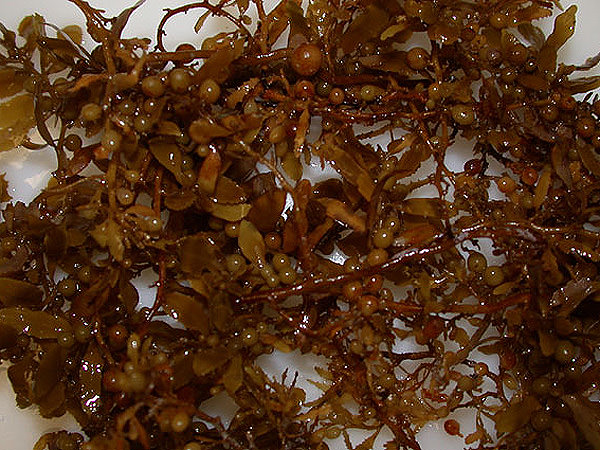
Brown Algae
Red Algae
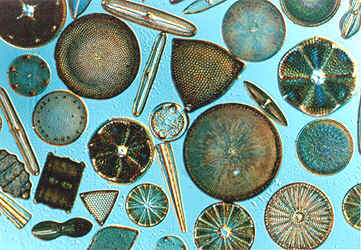
Diatoms
Dinoflagellates
Golden Algae
Euglena
22. What are plant/algal-like protists similar to?
23. How are they classified?
24. How do they obtain food/energy? autotroph or heterotroph?
25. What do they do for the environment?
26. Why are they not plants?
27. Why are diatoms and dinoflagellates so important? (Use the web to research this question)
28. Giant kelp are called what?
29. Red algae produce what substance used as a culture media in lab? (Use the web to research this question)
Fungal – Like Protists
Fungal-like protists are multicellular eukaryotes that are absorptive heterotrophs.
The job of fungal-like protists are decomposers breaking down dead organic matter. They improve the quality of dirt by putting nutrients back into the ground.
They are most commonly known as the slime molds or water molds. Do not confuse these with the mold you see growing on food or bread.
30. Are fungal-like protists unicellular OR multicellular?
31. How do they obtain their food?
32. What is the job of the fungal-like protists?
33. Give two examples of a fungal-like protist.
Protists – Review
Click on the box you choose for the correct answer for each question.
A common sight during the Cretaceous period was the soaring through the air of a large fur-covered creature called the pterosaur. Pterosaur means flying lizard. Wings of some pterosaurs were longer than the wings of a small plane. This creature lived on cliffs at the edge of lagoons and would sail from its nest to catch prey. The bones of one pterosaur, Scaphognathus crassirostris, were discovered in 1826 by the German scientist, August Goldfuss. The fossilized bones were located in a limestone quarry and were unbroken. Scaphognathus crassirostris was approximately the size of a large bat with a broad jaw and short tail.
Objective:
Students will reconstruct the skeleton of S. crassirostris and draw conclusions about its method of movement, feeding habits, and other adaptations.
Materials:
Scissors, tape, construction paper, glue, metric ruler, pencil
Fossil Cast of S. crassirostris
Procedure:
Use the drawings of S. crassirostris bones to cut out and reassemble a model of the flying reptile.
Glue the model bones to a sheet of construction paper being sure to center the model and keep all bones on the paper.
Use the metric ruler to measure the complete wingspan of the organism (tip to opposite tip).
Complete the characteristics in data table 1.
Data:
Table 1
Characteristics of S. crassirostris
Wingspan (centimeters)?
Jaw Shape?
Teeth adapted for?
Arms & hands adapted for?
Number of bones in lower arm?
Number of bones making up skull?
Number of fingers?
Finger adaptations?
Questions:
The bones of the lower arm and lower leg are fused (joined together). How might this be an adaptation for flight?
What would be the main function of the long bones of S. crassirostris little finger?
Noting the shape of the teeth and where S. crassirostris lived, what did it probably eat?
Name 3 characteristics that adapted S. crassirostris to flight.
The bones of S. crassirostris were hollow. How was this an adaptation?
The flap of skin that made up the wing of S. crassirostris was very delicate and could tear easily. How could this cause a problem with S. crassirostris competing with other gliding reptiles?
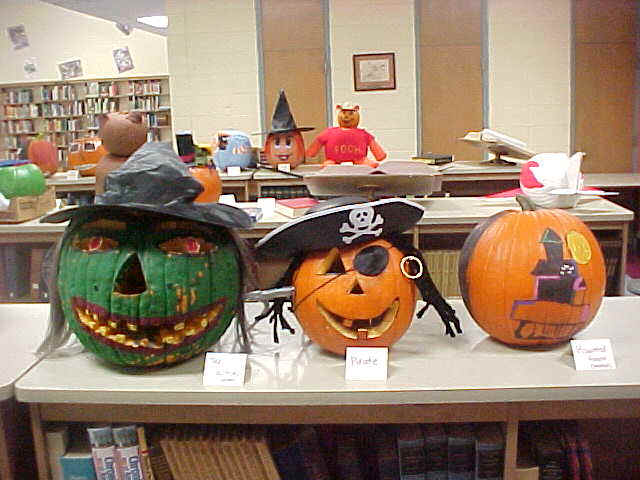
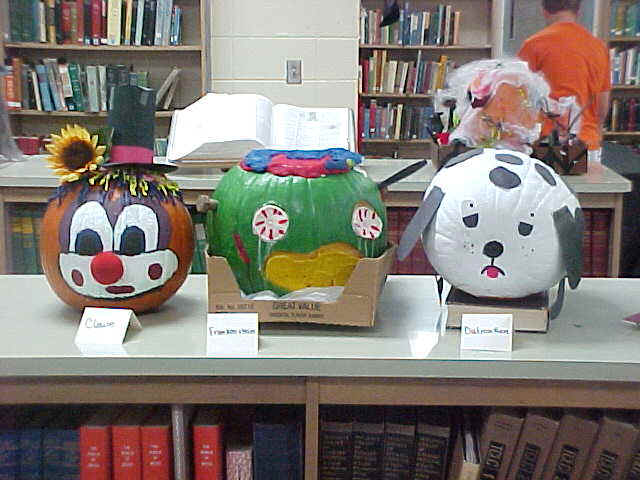
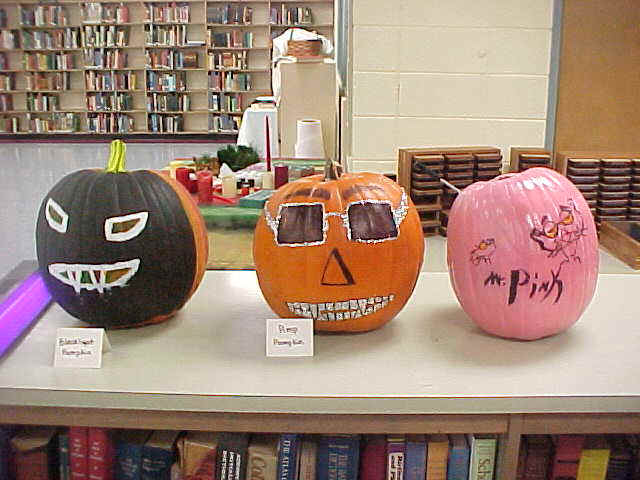
Pumpkin Decorating Contest Sponsored by SHS Biology Club
Rules: Any Club, group, or individuals may enter one or more decorated pumpkins
Cost to enter a pumpkin is $3.00 (pay to Ms. Massengale)
Pumpkins may be painted but not cut
Decorated pumpkins must be set up in the library by Monday, October 26
Prizes: Winning club, group, or individuals will be awarded a cash prize collected from the $3.00 entry fee An article with picture will be published in the newspaper & school annual for the winning group
Judging: The Biology Club will judge the pumpkins before school on October 27








.gif)