All Materials © Cmassengale |
 |
PLANT LIFE CYCLES:
- A life cycle includes all of the stages of an organism’s growth and development
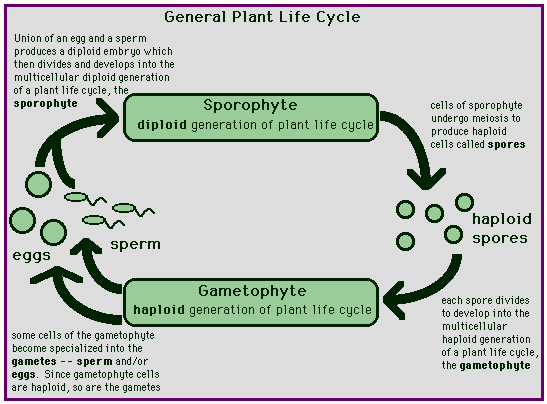
- A plant’s life cycle involves two alternating multicellular stages – a Diploid (2n) sporophyte stage and a Haploid (1n) gametophyte stage
- This type of life cycle is called Alternation of Generations
Moss Characteristics:
- Nonvascular (pass water cell-to-cell)
- Seedless (reproduce by spores)
- Low growing
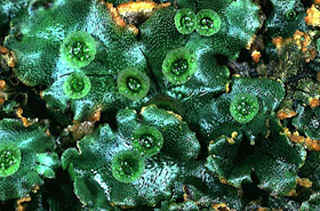
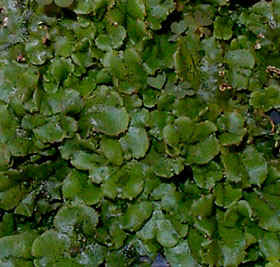
- Phylum Bryophyta (also includes liverworts & hornworts)
- Grow on moist brick walls, in sidewalks, as thick mats on forest floors, and on the shaded side of trees
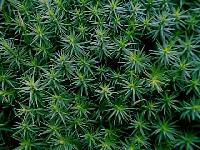
- Can survive periodic dry spells, reviving when water becomes available
- Require water for fertilization so sperm can swim to egg
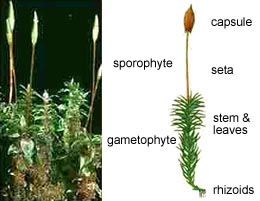
- Rhizoids (root like structures) anchor mosses
- Have waxy covering called cuticle on aerial parts to prevent desiccation
Moss Life Cycle:
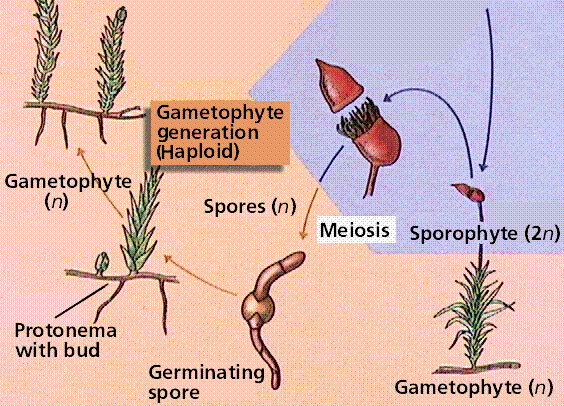
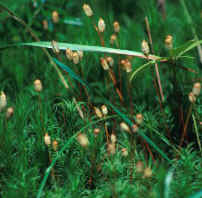
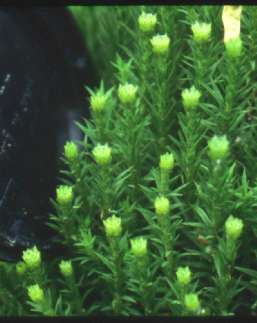
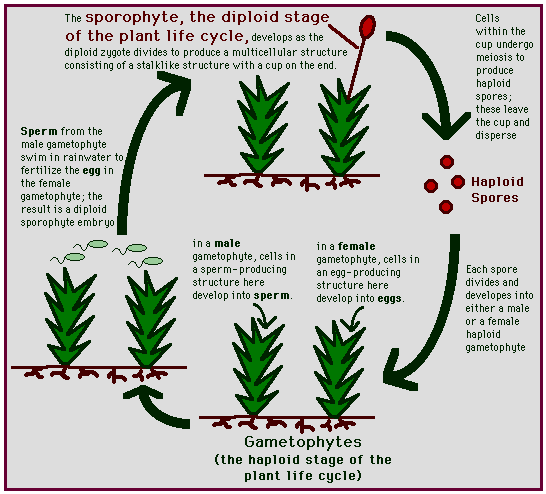
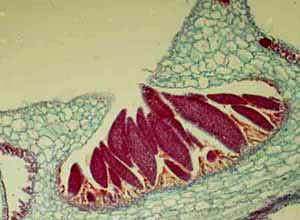
- Dominant form of a moss is a clump of leafy green gametophytes (photosynthetic)
- Moss alternates between a haploid (1n) gametophyte and diploid (2n) sporophyte
- Gametophyte generation produces gametes (eggs & Sperm)
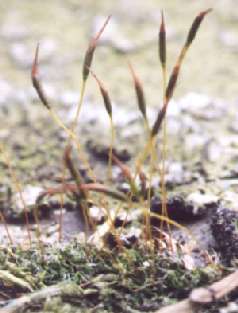
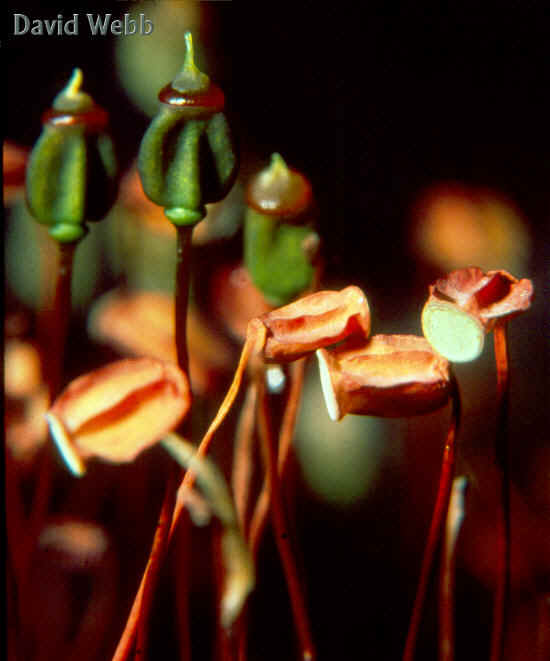
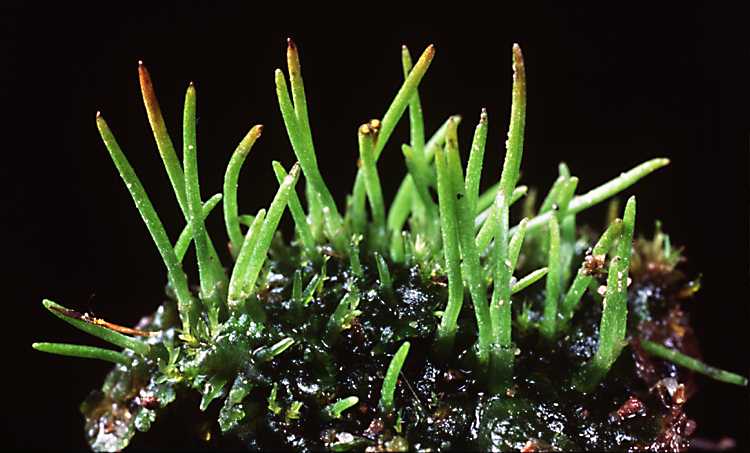
- Sporophyte generation forms at the top of the gametophytes and produces spores
- Stalk-like sporophytes lack chlorophyll
- Capsule at the top of the sporophyte forms haploid (1n) spores
Sexual reproduction in Moss:
- Moss produce 2 kinds of jacketed gametes — eggs & sperm
- Egg producing organ is called the archegonium
- Eggs are larger and nonmotile
- Sperm producing organ is called the antheridium
- Sperm are smaller, flagellated cells
- Antheridia & archegonia are both part of the gametophyte plant
- Fertilization can occur only during or soon after RAIN when the gametophyte is covered with Water
- Sperm swim to the egg by following a trail of chemicals released by the egg in the water
- Fertilization produces a zygote that becomes a sporophyte
- Mature sporophytes produce homosporous spores (all the same type)
- Mature capsules open & release spores spread by wind
- Spores landing on moist places germinate into protonema that become new gametophytes
Asexual Moss Reproduction:
- Small pieces may break off from a gametophyte & become a new plant (fragmentation)
- Small buds called gemmae may be washed off by rain and develop new moss plants
 Fern Characteristics & Life Cycle:
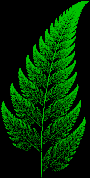
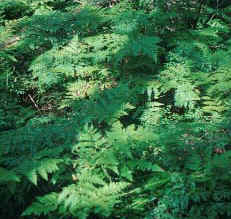
- Largest group of seedless, vascular plants
- Grow in moist places
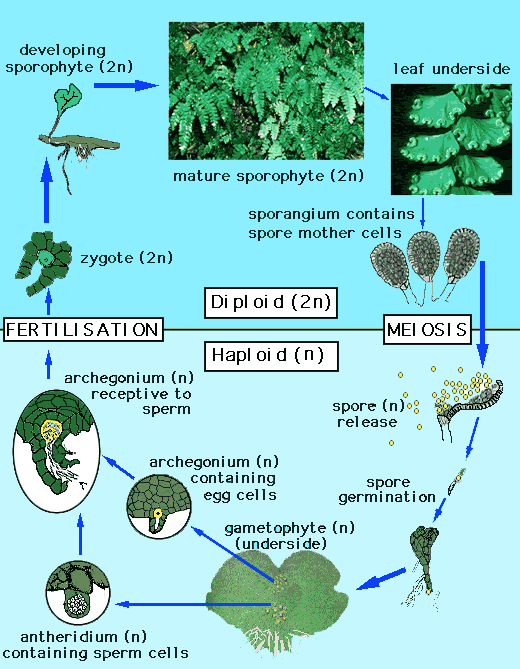
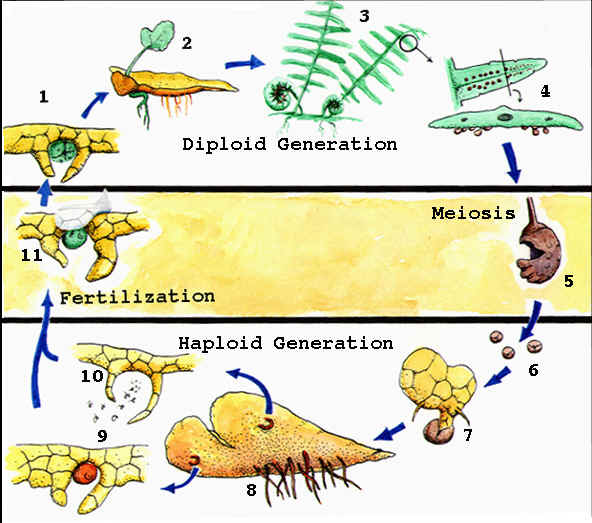
- Goes through alternation of generations
- Sporophyte phase is the dominant stage
- Fern gametophytes are small, flat plants anchored to the soil by root-like rhizoids
- Antheridia & archegonia form on the underside of fern gametophytes

- Sperm swim to egg through water droplets to form zygote (fertilized egg)
- Zygotes form new sporophytes with roots, stems, & leaves
- Spore cases called sori form on the underside of fern fronds (leaves)
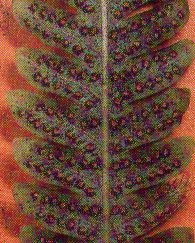
- Ferns are homosporous (single type of spore formed)
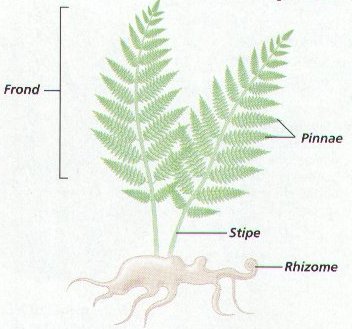
- New fronds form from an underground stem called the rhizome
- Vascular tissue carries nutrients & water between the parts of the fern
- Fronds are compound leaves attached by a short stalk called the stipe to the underground stem or rhizome
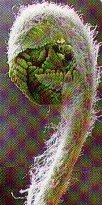
- Immature fronds or fiddleheads are coiled
 Characteristics & Life Cycle of Conifers:
- Called gymnosperms
- Have naked seeds that develop on scales of the female cones
- Sporophyte is the dominant stage
- Adapted to cooler climates
- Called evergreens (pine, cedar, spruce, fir…)
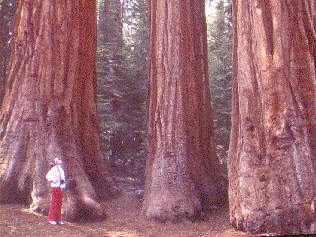
- Giant Redwood is one of the Earth’s largest organisms
- Bristlecone Pines are the oldest living organisms (some more than 5000 years old)
 |
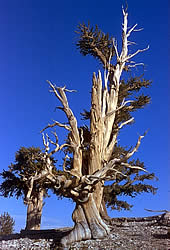 |
| Giant Redwood | Bristlecone Pine |
- Produce 2 types of spores (heterosporous)
- Male spores called microspores grow into male gametophytes
- Female spores called megaspores grow into female gametophytes
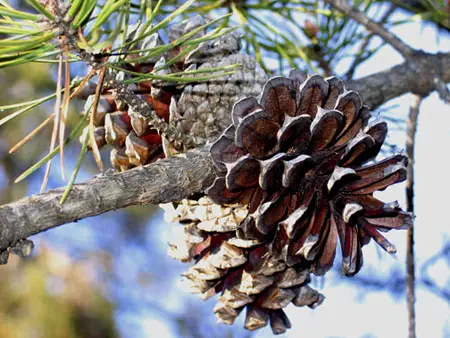
- A Pine cone is the female cone on a pine tree
- Male cones on pine trees are smaller & grow in clusters at the tips of branches
- Both male & female cones appear on the same tree
 |
 |
| Female Cones | Male Cones |
- The pine life cycle takes 2-3 years from the formation of cones until seeds are released
- Female cones have spirally-arranged scales with ovules at their base
- Female cones produce sticky resin
- Ovules contain an egg that will develop into a seed
- Male cones produce large amounts of pollen in the spring that is spread by wind to the female cones
- Resin traps the pollen so pollination can occur
- A tube from the pollen grain takes a year to grow to the ovule so a sperm can fertilize the egg and form seeds
Angiosperms or Flowering Plants:
- Bright colors, attractive shapes, and fragrant aromas help flowering plants attract their pollinators (insects, birds, mammals…)
- Flowers without bright colors and pleasing odors are usually wind or water pollinated (grasses)
- Called angiosperms
- Flowers, the reproductive part of a plant, have a swollen base or receptacle to attach to the stem
- Flowers have 4 whorls (modified leaves) attached to the receptacle — petals, sepals, pistils, and stamen
- Pistils (innermost whorl) are the female part of the flower, while Stamens are the male part
- Sepals (outermost whorl) are found below the petals and may look leaf-like (some may be the same color as petals)
- Sepals enclose the flower bud before it opens
- Sepals are collectively called the calyx
- Petals are often colorful to attract pollinators
- Petals are collectively called the corolla
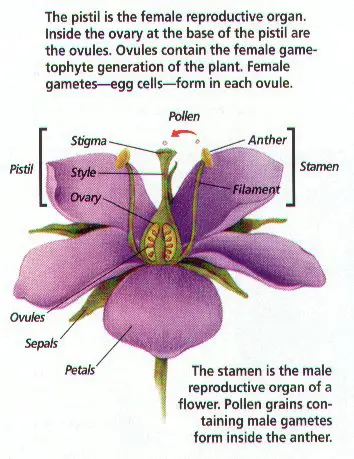
- Monocot flower parts are arranged in multiple of THREES, while dicots are in multiples of FOUR or FIVE
- Perfect flowers have both stamens & pistils (rose)
- Imperfect flowers are either a male (pistillate) or female (staminate) flower (pumpkin or melons)
- Some angiosperms have both male & female flowers on the SAME plant (monoecious)
- Other angiosperms have entire male OR female plants (dioecious)
Female Reproductive Structures:
- Called carpals
- Carpals may be fused to form the pistil
- Produce eggs
- Composed of 3 parts — stigma, style, and ovary
- Stigma is located at the top and may be sticky or have hairs to hold pollen grains landing there
- Style is a stalk-like connection between the stigma and the ovary
- Ovary is the enlarged base containing ovules with eggs
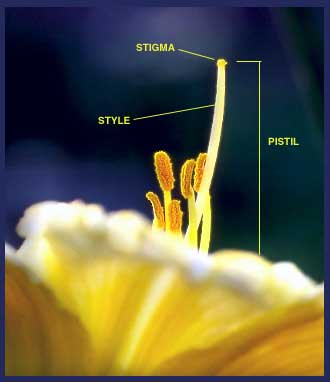
Pistil
Male Reproductive organs:
- Called stamens
- Produce pollen
- Composed of 2 parts — filament & anther (pollen sac)
- Anthers produce pollen grains containing sperm
- Filament is stalk-like & supports the pollen sacs
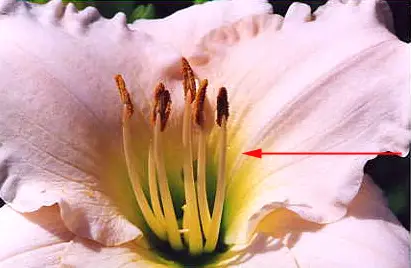
Stamen
Angiosperm Life Cycle:
- Undergo alternation of generations
- Sporophyte is dominant phase
- Gametophytes (flowers) form male & female gametes
- Anthers form pollen grains from microspores
- Pollen grains contain 2 cells — tube cell & generative cell (sperm)
- Two protective layers called integuments surround the megasporangium
- The entire structure including the integuments is the ovule and becomes the seed
- Each ovule has 4 megaspores (three disintegrate)
- The remaining megaspore undergoes mitosis to produce a large cell & polar nuclei
- When pollen lands on the stigma, a pollen tube grows through the style to the ovary
- Two sperm travel down the pollen tube — one fertilizes the egg and the other join with polar nuclei to form endosperm (stored food for Seed)
- Called Double Fertilization
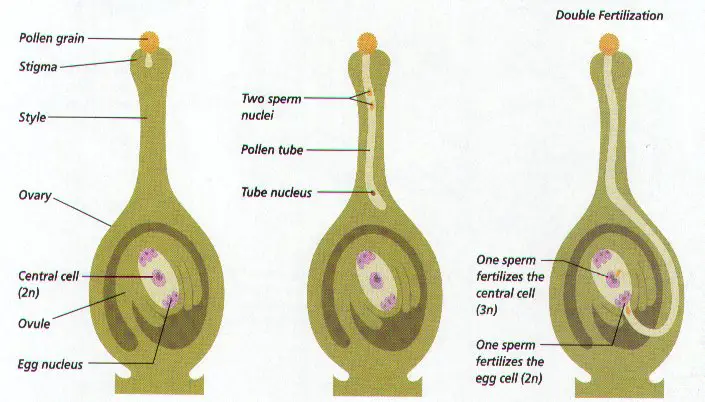
- After fertilization, ovule becomes the seed and the ovary & surrounding tissues form a protective fruit
- A fruit is a ripened ovary with seeds (apple, melon, cocklebur…)
- When seed land on moist soil, they germinate (sprout) and form new sporophyte plants
Pollination:
- Wind, water, and animals help spread pollen
- As pollinators drink nectar or eat the fruit, pollen gets on their bodies and is spread to other flowers
- Self pollination occurs whenever pollen from a flower lands on the stigma of that SAME flower (pea plants)
- Cross pollination occurs whenever pollen is spread to a different flower producing hybrids (more gene combinations)
Seeds & Fruit:
- Fruits are adaptations for dispersing seeds (coconuts float, cockleburs catch onto animal fur, some seeds eaten by birds aren’t digestible…)
- More energy is required to produce seeds than spores because they contain stored food
- Seeds may be dormant (inactive) for weeks or years protected by their seed coat
- Seeds contain a plant embryo and endosperm
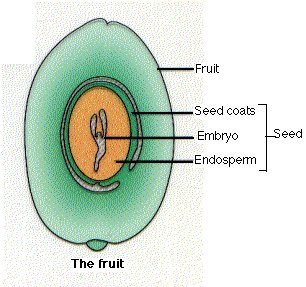
- Many fruits are fleshy & their seeds aren’t digested by the animals that eat them
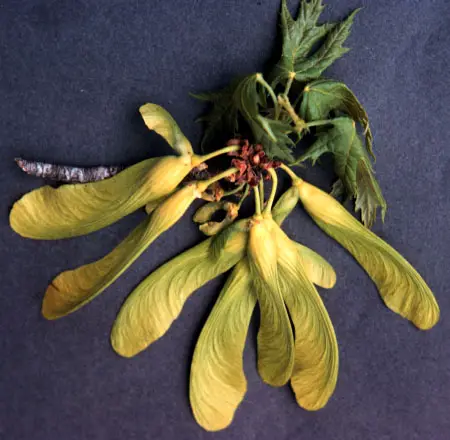
- Heavy seeds have adaptations such as wing-like structures (maple) or prickly coats (cocklebur) to help them disperse
 |
 |
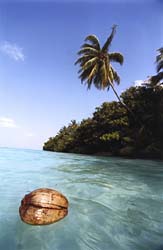 |
| maple seeds | Cockleburs | Coconut |
- Fruits may be dry or fleshy
- Three types of fruits exist — simple, aggregate, & multiple
- Simple fruits (apple) form from One pistil on a flower
- Aggregate fruits (raspberry) form from several pistils on a flower
- Multiple fruits (pineapple) form several flowers growing close together
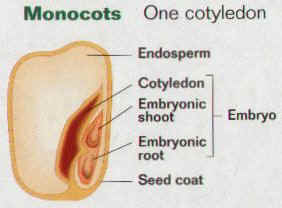
- Cotyledons are leaf-like structures of the plant embryo
- Monocot seeds have one seed leaf (Cotyledon), while dicots have two cotyledons
 |
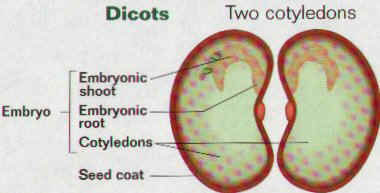 |
- The epicotyl is the part of the plant embryo ABOVE the cotyledon & becomes the stem
- The radicle is the part of the plant embryo BELOW the cotyledon & becomes the root
- The hypocotyl is the part of the plant embryo BETWEEN the cotyledon & the radicle
- The hilium is a scar along the seed edge where it was attached to the ovary
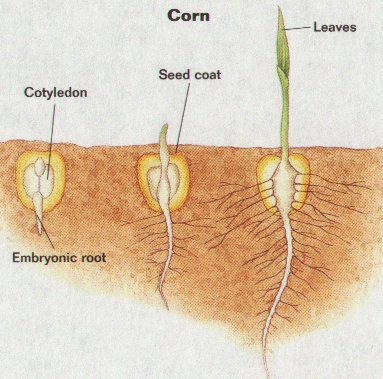
- In monocot seeds like corn, a sheath called the coleoptile grows out of the ground to protect the newly emerging plant
Germination:
- Many seeds require environmental factors, such as Water, Oxygen, and Temperature to trigger germination
- Some seeds only germinate after exposure to extreme cold or after passing through an animal’s digestive tract
- Water must FIRST be absorbed by the seed to break the seed coat & activate enzymes to change starch in the endosperm or cotyledons into simple sugars for energy
- The radicle emerges first
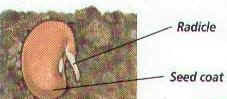
- Once the seed coat opens, OXYGEN is needed for cellular respiration carried on by the embryo plant
- The shoot (hypocotyl & embryonic leaves) begin to grow, synthesize chlorophyll, and carry on photosynthesis
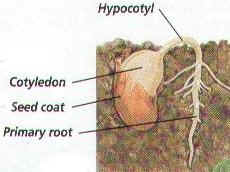
- After the stored food is used up in dicots, the cotyledons fall off
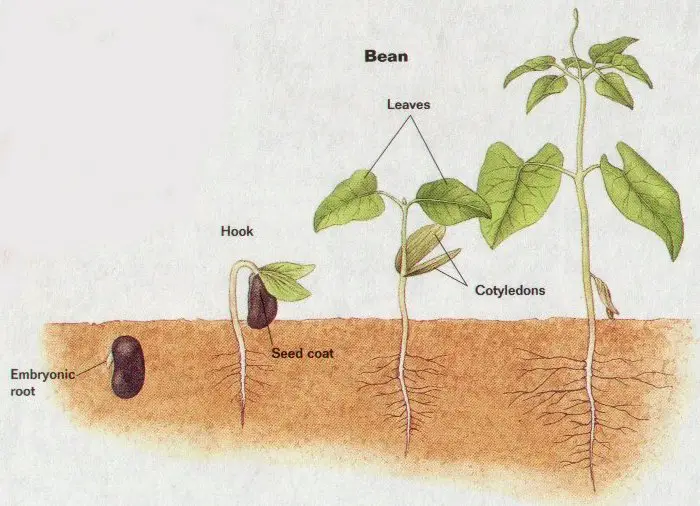
Dicot Seed Germination
- In Monocots like corn, the Cotyledon remains underground and transfers nutrients to the growing Embryo.
Asexual Reproduction in Plants:
- Asexual reproduction is FASTER and produces well-adapted offspring
- Called vegetative reproduction
- Occurs from non-reproductive parts such as roots, stem, or leaves
- Runners, Rhizomes, Bulbs, and Tubers can be used to produce new plants
- Cutting is taking a piece of Stem or Leaf and growing a new plant
- Grafting occurs whenever 2 cut ends of plant stems are fused
- Layering occurs when aerial roots touch soil & start growing new plants



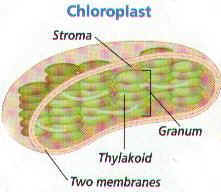 2. They begin with the ABSORPTION of Light in the organelle found in Plant Cells and algae called CHLOROPLASTS.
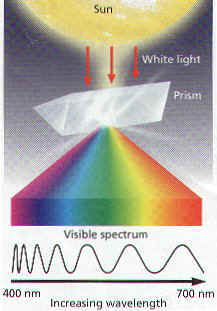 4. Sunlight is visible as White, it is actually a variety of Different Colors.
 1. Located in the Membrane of the Thylakoids are a variety of Pigments.
 6. The Process of Photosynthesis does NOT Happen all at Once; rather it occurs in THREE STAGES:
 7. Photosynthesis occurs in the Chloroplasts of Plant Cells and Algae and in the Cell Membranes of certain Bacteria.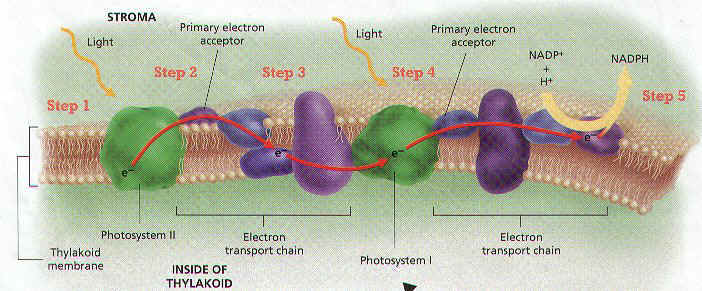
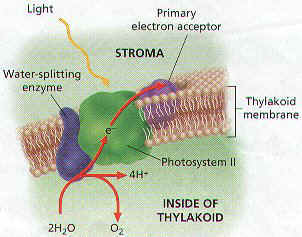 1. The Electrons from Chlorophyll Molecules on Photosystem II REPLACE the Electrons that Leave Chlorophyll Molecules in Photosystem I.
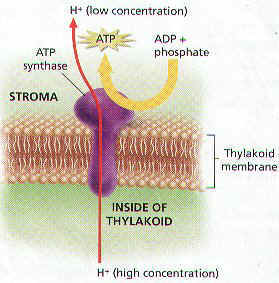 1. An important part of the Light Reaction is the SYNTHESIS of ATP through a process called CHEMIOSMOSIS.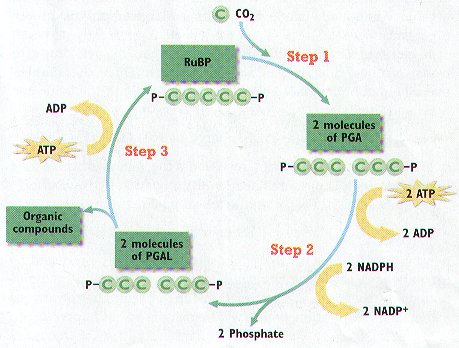
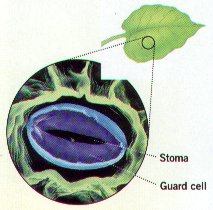 4. Under such conditions, plants can rapidly lose water to the air. Most of the water loss from plants occurs through Small Pores on the Undersurface of the Leaves called STOMATA. Plants obtain carbon dioxide for photosynthesis from the air. Plants must balance their neeed to open their Stomata to receive carbon dioxide and release oxygen with their need to close their Stomata to prevent water loss. A stoma is bordered by TWO Kidney Shaped GUARD CELLS, Guard Cells are modified cells that Regulate Gas and Water Exchange.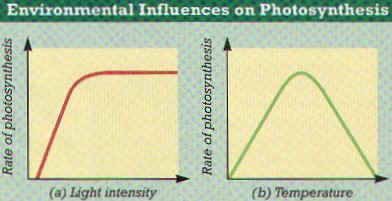







.GIF)