
Griffith’s Experiment
Griffith’s Experiment
| Finding Your Genetic Match |
Introduction:
Have you ever noticed that brothers or sisters often look alike? Their inherited traits are what make their physical appearance so similar. An inherited trait is a particular genetically determined characteristic that distinguishes a person. The traits of children are determined by the traits that are passed on from their parents. Some traits are obvious in a family — a child’s nose is shaped like their mother’s nose, but some traits are less obvious. You may have similar traits to many of your classmates even though you are not related to them. Some examples of often un-noticed human traits are the ability or not to roll your tongue, attached or unattached earlobes, dimples or freckles, naturally curly or straight hair, hitchhiker’s or straight thumb, straight or widow’s peak hairline, smooth or cleft chin, or colorblindness or normal vision.
There are numerous traits in humans, but some traits occur more frequently than others. Between 70-90% of the human population have free-hanging earlobes, can roll their tongue, are right-handed, and can taste a chemical called PTC. These traits are called high frequency traits.
Objective:
Students will determine the presence of certain high frequency traits in themselves & their classmates.
Materials:
Genetic Inventory sheet with pictures, paper, pencil, PTC taste strips.
Procedure:
| Human Trait Inventory | |
| Student: | |
| Tongue Roller | |
| Non-Tongue Roller | |
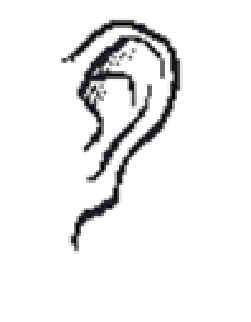
| Attached Earlobes | |
| Unattached earlobes | |
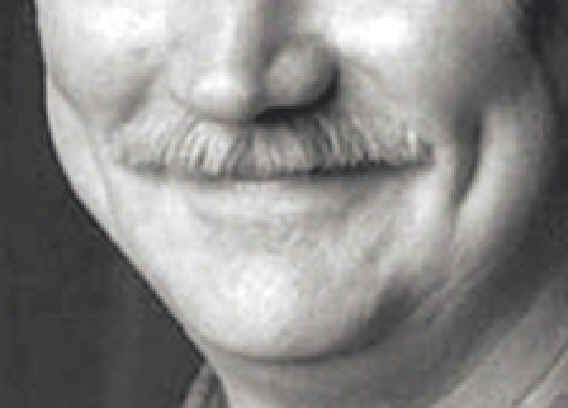
| Dimples | |
| No Dimples | |
| Right-handed | |
| Left-Handed | |
| Widow’s Peak | |
| Straight Hairline | |
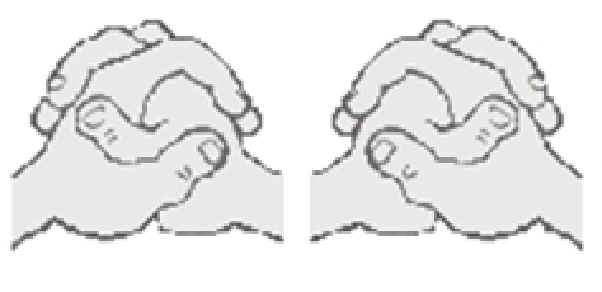
| Left Thumb on top when Hands Crossed | |
| Right Thumb on top when Hands Crossed | |
| Hair on mid-digit of hand | |
| No hair on mid-digit of hand | |
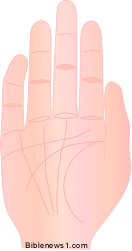
| Bent little finger | |
| Straight little finger | |
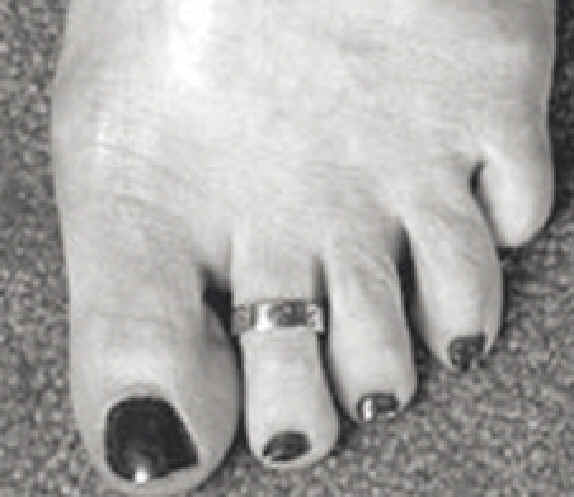
| Second toe longer than big toe | |
| Second toe not longer than big toe | |
| Can Taste PTC | |
| Can Not Taste PTC | |
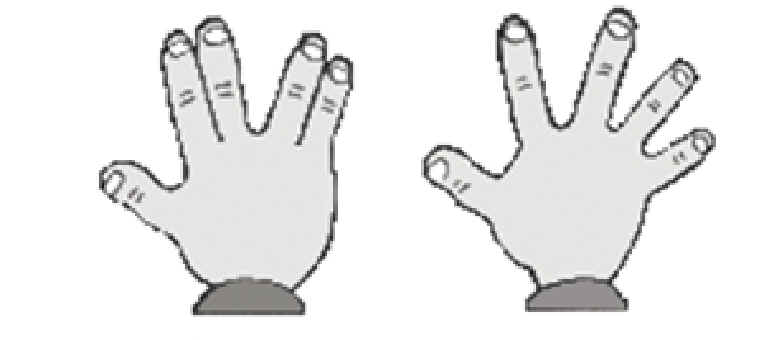
| Vulcan (Fingers spread 2 by 2) | |
| None Vulcan | |
| Class Match: | |
| Tongue Roller | Non Roller | Dimples | No Dimples |
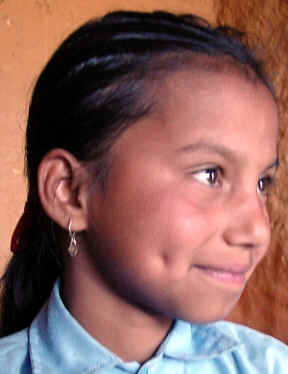 |
 |
||
| Attached Earlobes | Unattached Earlobes | Widow’s Peak | Straight Hairline |
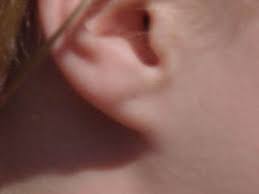 |
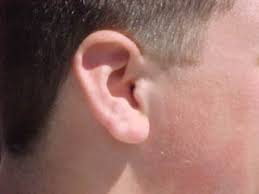 |
 |
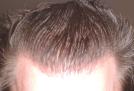 |
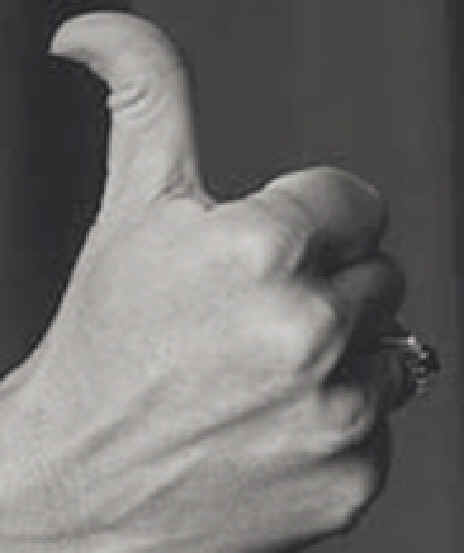
| Longer Second Toe | Short Second Toe | Bent Little finger | Hitchhiker’s Thumb |
 |
 |
 |
 |
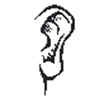
| Attached Ear lobes (left) Unattached ear Lobes (right) |
“VULCAN” or No “VULCAN” | Dimples | Right/Left Thumb on top |
  |
 |
 |
 |

| Mendelian Genetics PowerPoint Questions |
 |
||||||||||||||||||||||||||||||||
| Gregor Mendel
1. Who is responsible for our laws of inheritance? 2. What organism did Mendel study? 3. When was Mendel’s work recognized? 4. When did Mendel perform his experiments & how many plants did he grow? 5. What did Mendel notice about offspring traits? 6. How is Mendel referred to today? 7. In what country did Mendel do his research on peas? 8. Mendel stated that physical traits were inherited as _______________. 9. Today we know that particles are actually what? Terminology 10. Define these three terms:
b. heredity – c. genetics –
11. Name & describe two types of genetic crosses.
12. What is used to solve genetic crosses? 13. Sketch a Punnett square & show how they are used to solve a genetics problems.
14. Use a Punnett square to solve a cross between two parents that both have the genotype Yy.
15. What are alleles & what are the two forms?
16. Explain the difference between dominant & recessive alleles.
17. Using a letter of the alphabet, show how each allele would be represented.
18. What is a genotype and write 3 possible genotypes?
19. What is a phenotype and write possible phenotypes for your genotypes in question 18?
20. Using these alleles, R = red flower and r = yellow flowers, write all possible genotypes & phenotypes.
21. What are homozygous genotypes?
22. Write a homozygous dominant genotype. 23. Write a homozygous recessive genotype. 24. What is meant by a heterozygous genotype?
25. Write a heterozygous genotype. 26. Heterozygous genotypes are also called _____________. 27. What two things actually determine an organism’s characteristics? Pea Experiments 28. Give 4 reasons that Mendel used garden peas, Pisum sativum, for his experiments.
29. Name the male and female parts of a flowering plant and explain how pollination occurs.
30. What is the difference between self and cross pollination?
31. Explain how Mendel cross pollinated his pea plants.
32. How did Mendel get pure plants? 33. Name 8 pea plant traits and give the dominant & recessive form of each.
34. How did Mendel’s experimental results compare to the theoretical genotypic ratios? Explain.
35. What does P1 mean? 36. What is the F1 generation? 37. What is the F2 generation? 38. What results from this cross — TT x tt? 39. What results do you get from crossing two hybrids (Tt x Tt)?
40. Show all your work for solving a P1 monohybrid cross for seed shape. P1 cross: __________ x __________ Genotype ____________
41. The offspring of the above cross are called the _____ generation. 42. Show all your work for solving a F1 monohybrid cross for seed shape. F1 cross: __________ x __________ Genotype ____________ 43. Show all your work for solving both F2 monohybrid crosses for seed shape. Trait: F2 cross: ________ x ________ F2 cross: ________ x ________
Genotype ____________ Genotype ____________ Mendel’s Laws Complete the following question: 44. _________ are responsible for inherited traits. 45. Phenotype is based on _______________. 46. Each trait requires _____ genes, one from each ____________. 47. State the Law of Dominance and give an example.
48. State the Law of Segregation and tell when alleles are “recombined”.
49. State the Law of Independent assortment & tell what type of crosses show this.
50. Using the formula 2n where n = the number of heterozygotes, tell how many gametes will be produced by each of the following allele combinations: 51. What are the possible allele combinations in the egg and sperm from the following cross — RrYy x RrYy.
52. Show how to work an F1 dihybrid cross for seed shape & seed color. Traits:
F1 cross __________ x __________
GR Genotypes PR Phenotypes
53. Complete this cross or crosses for eye color & curliness of the hair — bbC__ x bbcc.
54. Draw a table summarizing Mendel’s 3 laws.
Incomplete and Co-Dominance 55. Incomplete dominance occurs in __________ and produces a phenotype _______________ the phenotype of the two parents. 56. Show your work solving a cross for flower color in snapdragons when there is incomplete dominance. Trait: Cross: RR x rr
Genotype ____________ 57. What is codominance & give an example?
58. Write the genotypes for each of these blood types: type A 59. Solve this codominance problem: IBIB x IAi.
60. Solve this codominance problem for blood type: ii x IAIB.
Sex-Linked Traits 61. What are sex linked traits?
62. Name the sex chromosomes. 63. Write the genotype for male and for female. 64. Most sex-linked traits are carried on what chromosome? 65. Give an example of a sex-linked trait in fruit flies. 66. Show the results of crossing a red-eyed male (XRY) with a white-eyed female (XrXr) fruit fly. Cross: __________ x __________
Genotype ____________ 67. What is meant by a female carrier?
68. Name a disease that can be carried in this manner.
|
|||||||||||||||||||||||||||||||||
| Extract DNA from Anything Living |  |
Introduction:
Since DNA is the blueprint for life, everything living contains DNA. DNA isolation is one of the most basic and essential techniques in the study of DNA. The extraction of DNA from cells and its purification are of primary importance to the field of biotechnology and forensics. Extraction and purification of DNA are the first steps in the analysis and manipulation of DNA that allow scientists to detect genetic disorders, produce DNA fingerprints of individuals, and even create genetically engineered organisms that can produce beneficial products such as insulin, antibiotics, and hormones.
DNA can be extracted from many types of cells. The first step is to lyse or break open the cell. This can be done by grinding a piece of tissue in a blender. After the cells have broken open, a salt solution such as NaCl and a detergent solution containing the compound SDS (sodiumdodecyl sulfate) is added. These solutions break down and emulsify the fat & proteins that make up a cell membrane. Finally, ethanol is added because DNA is soluble in water. The alcohol causes DNA to precipitate, or settle out of the solution, leaving behind all the cellular components that aren’t soluble in alcohol. The DNA can be spooled (wound) on a stirring rod and pulled from the solution at this point.
| Just follow these 3 easy steps:
Detergent, eNzymes (meat tenderizer), Alcohol
|
Objective:
To extract DNA from cells.
Materials:
Blender, split peas, salt, detergent, water, measuring cup and spoons, strainer, meat tenderizer, alcohol, test tube, glass stirring rod
Procedure:


And now, those 3 easy steps:


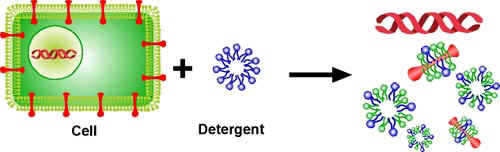
The detergent captures the proteins & lipids of the cell membrane.
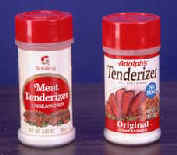
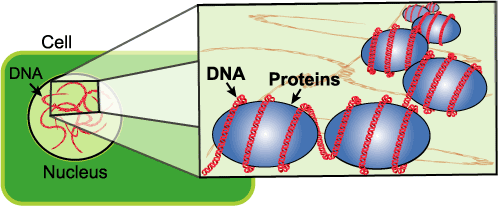
The DNA in the nucleus of the cell is molded, folded, and protected by proteins. The meat tenderizer cuts the proteins away from the DNA.


Questions:
1. Does the DNA have any color?
2. Describe the appearance of the DNA.
3. Do only living things contain DNA? Explain.
Frequently Asked Questions: 1. I’m pretty sure I’m not seeing DNA. What did I do wrong?
First, check one more time for DNA. Look very closely at the alcohol layer for tiny bubbles. Often, clumps of DNA are loosely attached to the bubbles.
If you are sure you don’t see DNA, then the next step is to make sure that you started with enough DNA in the first place. Many food sources of DNA, such as grapes, also contain a lot of water. If the blended cell soup is too watery, there won’t be enough DNA to see. To fix this, go back to the first step and add less water. The cell soup should be opaque, meaning that you can’t see through it. Another possible reason for not seeing any DNA is not allowing enough time for each step to complete. Make sure to stir in the detergent for at least five minutes. If the cell and nuclear membranes are still intact, the DNA will be stuck in the bottom layer. Often, if you let the test tube of pea mixture and alcohol sit for 30-60 minutes, DNA will precipitate into the alcohol layer.
2. Why does the DNA clump together?
Single molecules of DNA are long and stringy. Each cell of your body contains six feet of DNA, but it’s only one-millionth of an inch wide. To fit all of this DNA into your cells, it needs to be packed efficiently. To solve this problem, DNA twists tightly and clumps together inside cells. Even when you extract DNA from cells, it still clumps together, though not as much as it would inside the cell.
Imagine this: the human body contains about 100 trillion cells, each of which contains six feet of DNA. If you do the math, you’ll find that our bodies contain more than a billion miles of DNA!
3. Can I use this DNA as a sample for gel electrophoresis?
Yes, but all you will see is a smear. The DNA you have extracted is genomic, meaning that you have the entire collection of DNA from each cell. Unless you cut the DNA with restriction enzymes, it is too long and stringy to move through the pores of the gel; instead, all you will end up seeing is a smear.
4. Isn’t the white, stringy stuff actually a mix of DNA and RNA?
That’s exactly right! The procedure for DNA extraction is really a procedure for nucleic acid extraction. However, much of the RNA is cut by ribonucleases (enzymes that cut RNA) that are released when the cells are broken open.
 |
FERMENTATION – MAKING ROOT BEER David Fankhauser’s Main Page |
 |
Introduction:
Fermentation has been used by mankind for thousands of years for raising bread, fermenting wine and brewing beer. The products of the fermentation of sugar by baker’s yeast Saccharomyces cerevisiae (a fungus) are ethyl alcohol and carbon dioxide. Carbon dioxide causes bread to rise and gives effervescent drinks their bubbles. This action of yeast on sugar is used to ‘carbonate’ beverages, as in the addition of bubbles to champagne).
We will set up a fermentation in a closed system and capture the generated carbon dioxide to carbonate root beer. You may of course adjust the quantities of sugar and/or extract (Zatarain’s) to taste.
 |
|
|
INSTRUCTIONS:
 |
1) Assemble the necessary equipment and supplies |
|
2) With a dry funnel, add in sequence:
1 level cup of table sugar (cane sugar) (You can adjust the amount to achieve the desired sweetness.) |
 |
3) Add: 1/4 teaspoon powdered baker’s yeast ( fresh and active)
(Fleischmann’s or other brand) |
 |
4) You can see the yeast granules on top of the sugar. |
 |
5) Shake to distribute the yeast grains into the sugar. |
 |
6) Swirl the sugar/yeast mixture in the bottom to make it concave (to catch the extract). |
|
7) Add with funnel:
1 Tbl of root beer extract (I prefer Zatarain’s, but Hires, etc. will work.) on top of the dry sugar |
 |
8) The extract sticks to the sugar which will help dissolve the extract in the next steps. |
 |
9) Half fill the bottle with fresh cool tap water (the less chlorine, the better).
Rinse in the extract which sticks to the tablespoon and funnel. Swirl to dissolve the ingredients. |
 |
10) Q.s. [fill up] to the neck of the bottle with fresh cool tap water, leaving about an inch of head space, securely screw cap down to seal. Invert repeatedly to thoroughly dissolve. |
 |
11) Place at room temperature about three to four days until the bottle feels hard to a forceful squeeze. Move to a cool place (below 65 F). refrigerate overnight to thoroughly chill before serving. Crack the lid of the thoroughly chilled root beer just a little to release the pressure slowly.
NOTE: Do not leave the finished root beer in a warm place once the bottle feels hard. After a couple weeks or so at room temperature, especially in the summer when the temperature is high, enough pressure may build up to explode the bottle! There is no danger of this if the finished root beer is refrigerated. |
| 12) Move to a refrigerator overnight before opening. |
NOTE: There will be a sediment of yeast at the bottom of the bottle, so that the last bit of root beer will be turbid. Decant carefully if you wish to avoid this sediment.
A WORD ABOUT THE ALCOHOL IN HOME MADE ROOT BEER: The alcoholic content which results from the fermentation of this root beer and found it to be between 0.35 and 0.5 %. Comparing this to the 6% in many beers, it would require a person to drink about a gallon and a half of this root beer to be equivalent to one 12 ounce beer. I would call this amount of alcohol negligible, but for persons with metabolic problems who cannot metabolize alcohol properly, or religious prohibition against any alcohol, consumption should be limited or avoided.