Mitosis Quiz %CODE1% Mitosis What phase is this cell in? prophase metaphase anaphase telopase 2. During which phase do chromosomes become visible? telophase anaphase prophase interphase 3. Which phase is this cell in? prophase telophase metaphase interphase 4. A cell with 10 chromosomes undergoes mitosis and cell division. How many daughter cells are produced and what number of chromosomes do they have? 2 daughter cells, 5 chromosomes each 1 daughter cell, 10 chromosomes each 4 daughter cells, 20 chromosomes each 2 daughter cells, 10 chromosomes each 5. During which phase does the spindle form? prophase interphase metaphase anaphase 6. Which phase is the cell in? prophase telophase interphase metaphase 7. The process where the cytoplasm divides and forms two new cells is called: mitosis cytokinesis karyotype spindle formation 8. What phase is the cell in? anaphase interphase telophase prophase 9. Cytokinesis begins in: interphase metaphase telophase prophase 10. What is depicted in the illustration? mitosis of an animal cell cytokinesis of an animal cell mitosis of a plant cell cytokinesis of a plant cell
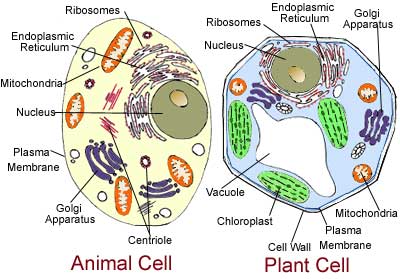
Cell Quiz %CODE1% Cells! 1. The door to your house is like the ___ of a cell membrane? phospholipid bilayer gated channel receptor protein recognition protein 2. The phospholipid bilayer of the cell membrane is like a(n): screen door plate glass window hot water heater oven 3. Facilitated diffusion ____ require energy and uses the help of ______ does, transport proteins does, cytoplasm does not, transport proteins does not, sodium pumps 4. A semi permeable membrane is stretched across a chamber filled with water. The membrane is only permeable to water. 60 mg of salt is added to the left side of the chamber. Which of the following will happen? water will move toward the right side salt will move toward the right side water will move toward the left side salt will move toward the left side 5. The lipid bilayer keeps the inside of the cell membrane: bipolar protein saturated dry wet 6. Which of the following could be found in BOTH the nucleus and the cytoplasm nucleolus ribosomes RNA both RNA & ribosomes 7. Amino acid chains built by the ribosomes then move to the: golgi apparatus lysosome endoplasmic reticulum mitochondria 8. Which of the following structures has a 9 + 2 arrangement? flagella ribosome mitochondria golgi apparatus 9. The centriole is most like the: lysosome flagella mitochondria chromatin 10. Which of the following is composed of a large and a small subunit? golgi apparatus endoplasmic reticulum mitochondria ribosome 11. A cell that is missing lysosomes would have difficulty doing what? digesting food storing energy packaging proteins moving cytoplasm 12. Which of the following cell parts is described as a “fluid mosaic”? chloroplast vacuole cell membrane endoplasmic reticulum 13. Some cells take in large molecules through the process of: protein synthesis endocytosis cytoplasmic streaming ATP 14. Which of the following organelles would NOT be found in a plant cell? chloroplast DNA food vacuole cell membrane Score = Correct answers: BACK
DNA QUIZ %CODE1% DNA QUIZ 1. Name this structure. deoxynucleic acid deoxyribonucleic acid denatured ribonucleic acid deoxoribonuclear acid2. The process by which RNA is made from DNA: synthesis translation transcription replication 3. Adenine always pairs with: thymine cytosine guanine ribose 4. The “rungs” of the DNA ladder are made of: phosphates and hydrogen glucose and sugars sugars and phosphates base pairs 5. The DNA molecule is held together by: magnetism glucose glue hydrogen bonds 6. The process by which DNA makes a copy of itself is called: synthesis replication transcription translation 7. A gene is: a segment of DNA that codes for a protein a set of homologous chromosomes a molecule within DNA a type of pants 8. The twisted ladder shape of DNA is called a: hydrogen twist deoxyribose flip double helix double membrane 9. The sugar found in DNA is: equal deoxyribose ribose glucose 10. Which of the following takes the genetic code to the cytoplasm: DNA deoxyribose tRNA mRNA 11. The three nucleotide sequence on RNA is called a: tRNA codon triplet gene 12. Three nucleotides code for: 1 amino acid 3 amino acids 1 protein 3 proteins 13. RNA differs from DNA in that: it has a different kind of sugar it is single stranded it has uracil all of these 14. DNA is called the “blueprint of life” because: it is like a fingerprint it has a blue color it contains the plans for building an organism it can relay messages to other molecules 15. The two men who established the structure of DNA were: Frederick and Alvers Watson and Crick Berkely and Fry Darwin and Lamarke Score = Correct answers:
Ecology Quiz %CODE1% Ecology Which two biomes are the most similar with regard to rainfall? tundra & taiga tundra & desert rain forest & savanna temperate forest & prairie Which biome is characterized by a layer of permafrost? taiga savanna chaparral tundra Biodiversity is greatest in which biome? taiga polar rain forest savanna The eastern portion of the United States is dominated by what biome? temperate forest desert taiga prairie In which biome of Africa would you find lions, giraffes, and elephants? savanna chaparral desert tropical rain forest All the different species of an ecoystem are referred to as the: biome community population abiotic factors Which of the following would represent an ecosystem? A lake A fish tank A prairie all of these All the nonliving parts of an ecosystem are referred to as: the community biotic factors abiotic factors biomes Which of the following would be a biotic factor in an ecosystem? bacteria soil temperature rainfall The types and numbers of species in a given area is most greatly determined by the area’s: biotic factors precipitation climate biodiversity Score = Correct answers:
Diffusion Across Membranes %CODE1% Diffusion Across membranes 1. Which of the following is NOT a type of passive transport? diffusion osmosis endocytosis facilitated diffusion 2. Chamber A contains 40% helium and Chamber B contains 20% helium. Chambers are connected by a tube the molecules are free to cross. Which of the following will occur? some helium will move from chamber A to chamber B some helium will move from chamber B to chamber A helium will remain concentrated in chamber A all of the helium will move into chamber B 3. What will happen to an animal cell placed in a salt water solution? The cell will shrink the cell will expand the cell will burst the cell will shrink and then expand and then shrink again 4. An animal cell placed in a hypotonic solution will: die take on water lose water divide 5. Which of the following is a type of active transport? sodium potassium pump endocytosis exocytosis all of these 6. Active transport requires: a concentration gradient osmosis energy a hypertonic solution Score = Correct answers: