Plant Taxonomy


Plant Origin & Classification
All Materials © Cmassengale


Overview of Plants:

  • All plants are multicellular & contain chlorophyll inside of chloroplasts
  • Plants (also called autotrophs or producers) trap energy from the sun by photosynthesis & store it in organic compounds
  • Heterotrophs or consumers get their energy directly or indirectly from plants
  • Plants also release oxygen needed by consumers
  • All plants are multicellular, eukaryotic organisms that reproduce sexually
  • Many medicines are produced by plants
  • Plants are very diverse & may be terrestrial or aquatic
  • Vary in size from 1 mm in width to more than 328 feet
  • May live a few weeks or some over 5000 years
  • Kingdom Plantae is divided into 12 phyla or Divisions
  • More than 270,000 plant species identified, but new species still unidentified in tropical rain forests

Terrestrial Adaptations:

  • Plants probably evolved from green algae
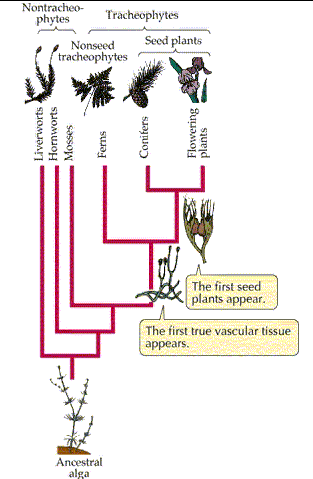
  • Both algae & plants have chlorophyll a & b, have cell walls made of cellulose, and store energy as starch
  • First land plants had to develop adaptations to scarcity of water & climate changes (air temperature changes more rapidly than water temperature)
  • Moving onto land allowed more sunlight, nutrients,  & CO2 for photosynthesis
  • A support adaptation included a compound called lignin (a hard substance that strengthens cell walls so they can support additional weight)
  • The origin of vascular tissue (specialized tissue for carrying food , water, & minerals) was an evolutionary breakthrough in the colonization of land
  • Plants with vascular tissue are known as Tracheophytes
  • Two types of vascular tissue developed — xylem & phloem

  • Xylem carries water & inorganic nutrients from the roots to the stem & leaves
  • Phloem carries carbohydrates made by the plants to wherever they’re needed or stored in the plant
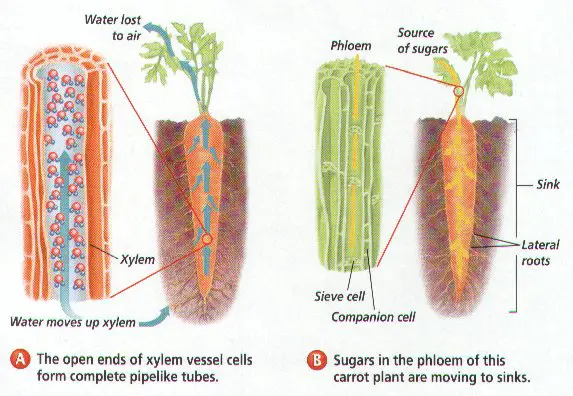

Copyright Holt, Rinehart, & Winston

  • Some plants formed woody tissue from xylem for extra support, while others kept a flexible, non-woody stem (herbaceous plants)
  • Greater amount of water lost by evaporation (transpiration) on land
  • A waxy covering or cuticle developed on all plant parts exposed to air which slowed transpiration (water loss)
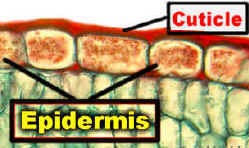
  • Gases (carbon dioxide & oxygen) had to be able to move into & out of the plant
  • Openings in the cuticle called stomata allowed movement of gases
  • Two guard cells on each side of a stoma helped open & close the opening
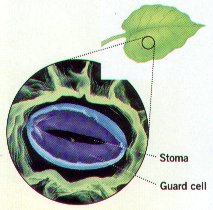

Copyright Holt, Rinehart, & Winston

  • When guard cells lose water & shrink, the stoma closes (prevents water loss in the hotter times of the day)
  • When guard cells swell with water, the stoma opens for gas exchange 
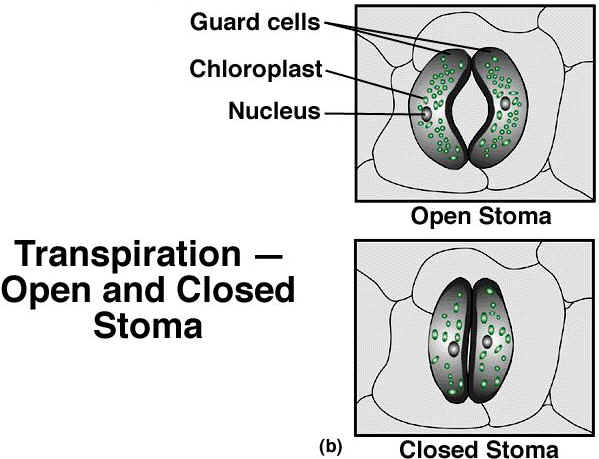

copyright McGraw-Hill

  • Other structural adaptations to land included roots for absorption of water and minerals leaves for gas exchange and photosynthesis

Reproductive Adaptations:

  • To be successful on land, plants had to develop protective seeds for their embryos with stored food or endoderm
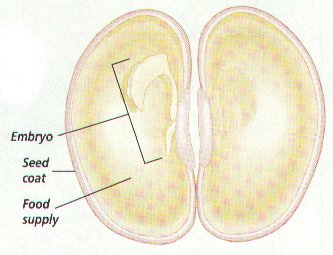

Copyright Holt, Rinehart, & Winston

  • Seeds are better at dispersal than spores

Classification of Plants:

  • They’re are 12 Divisions of plants divided into two main groups based on the presence of vascular tissue
  • Nonvascular plants lack vascular tissue and do not have true roots, stems, or leaves (mosses, liverworts, & hornworts)
  • Most plants have vascular tissue with true roots, stems, & leaves, but may or may not produce seeds
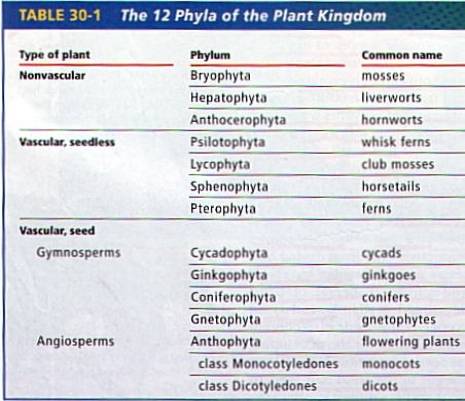

Copyright Holt, Rinehart, & Winston

  • Ferns, horsetails, & club mosses are seedless vascular plants that reproduce by spores
  • Plants that reproduce by seeds are divided into 2 groups — gymnosperms & angiosperms
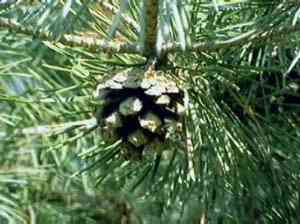
  • Gymnosperms have “naked” seeds usually protected by cones & includes pines, cedars, spruce, fir …
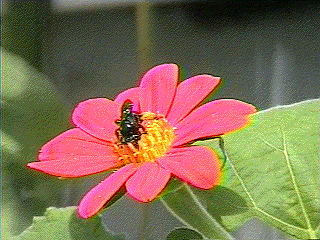
  • Angiosperms are flowering plants whose seeds are produced & protected within the fruit
Plant Life Cycles:

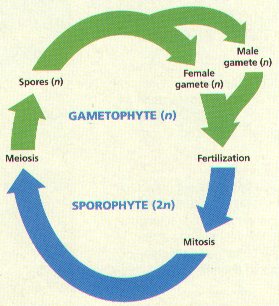
  • Plants have 2 phases in their life cycle called alternation of generation
  • The haploid gametophyte stage produces eggs & sperm, while the diploid sporophyte stage produces spores 

Copyright Holt, Rinehart, & Winston

  • Plant gametes are not directly produced by meiosis but rather by mitosis from the haploid multicellular stage
  • Meiosis instead produced specialized haploid cells called spores
  • These spores are released by most Seedless plants, but are retained by Seed plants
  • In nonvascular plants, the Gametophyte stage is dominant (mosses)
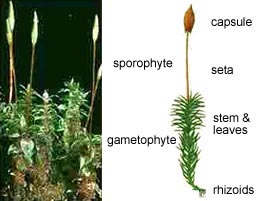
  • In vascular plants, the Sporophyte stage is dominant
  • Seedless vascular plants usually have a separate, small gametophyte plant
  • Sexual reproduction in plants ensures that there will be genetic recombination

Seed-Bearing, Vascular Plants:

  • The development of seeds with their protected embryo & stored food supply increased the reproductive success of seed plants
  • Seeds remain dormant or inactive when conditions aren’t favorable
  • Moisture & warmer temperature cause seeds to germinate or sprout
  • Young plant embryos use their endosperm as energy for early growth

  • Seeds plants are divided into 2 groups based on  the type of seed they produce

Gymnosperms:

  • Gymnosperms  produce seeds that not protected within an ovary
  • The seeds are exposed on the upper surfaces of a spore producing structure (e.g. cone scales in conifers)
  • Called “naked” seeds
  • Gymnosperms do not produce flowers or fruit
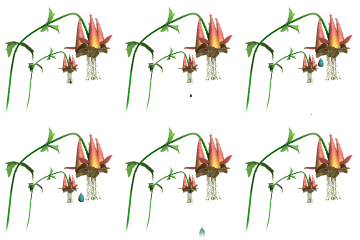
  • The four phyla of gymnosperms alive today include the cycads (Cycadophyta), the ginkgo (Gingkophyta), the gnetophytes (Gnetophyta), and the conifers (Coniferophyta)


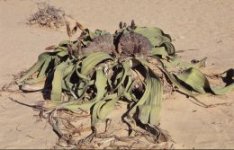
Cycad Welwitshcia
(gnetophyte)
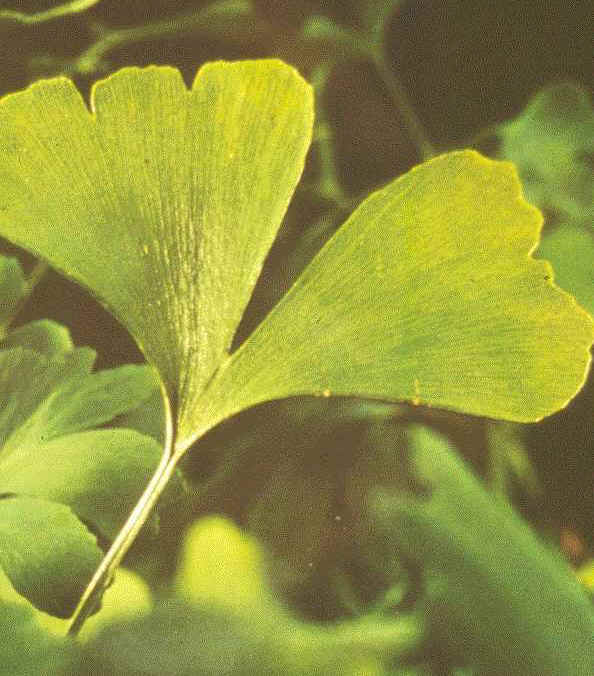
Gingko Fir Tree
(Conifer)


  • All gymnosperms have vascular tissue to conduct food, water & minerals and produce woody tissue
  • Two types of cones are made by gymnosperms — pollen cones & seed cones
  • Pollen cones are small & produce pollen containing the male gametophyte which is spread by wind or insects to the female gametophyte
  • Seed cones are larger and contain eggs on scales that form seeds when they are fertilized
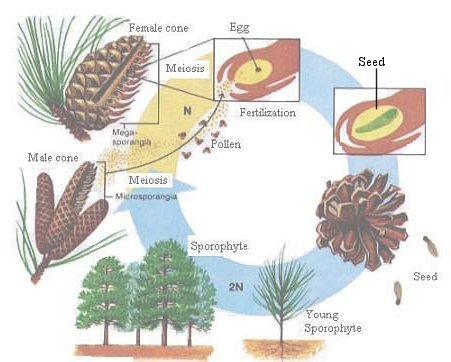
Division Cycadophyta:

  • Dominated earth when dinosaurs lived, but only about 100 species are alive today & are endangered
  • Most are slow growing, palm-like plants found mostly in tropical areas
  • All cycads bear cones, which are made up of seed bearing leaves (sporophylls)
  • They have large compound leaves, a short thick trunk, and are dioecious (either male or female plant)
  • Cycads bear naked seeds


Zamia (native to Georgia)

Division Gingkophyta:

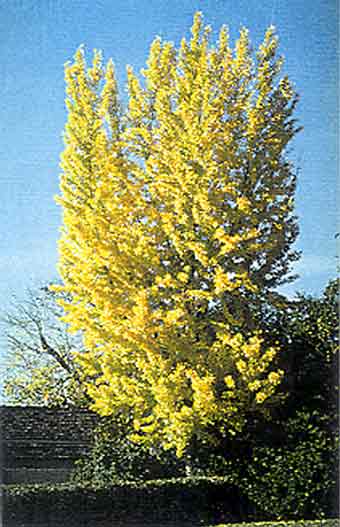
  • Ginkgoes were common in the Mesozoic period,  but today only one species of ginkgo remains (Ginkgo biloba)
  • Gingko trees have distinctive fan shaped leaves & are dioecious (each tree is either male or female but not both)
  • Commonly planted as an ornamental tree
  • Gingkoes are not native to North America (they are found growing wild only in China)
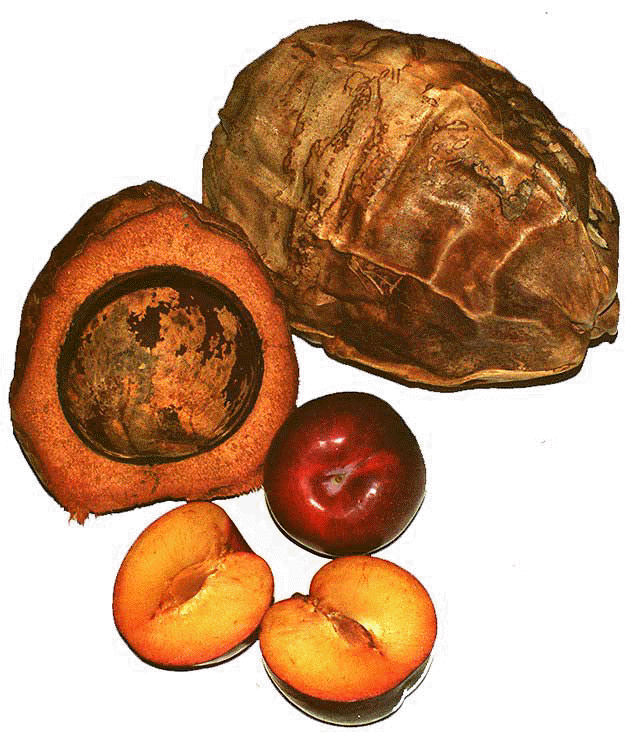
  • Deciduous tree (loses leaves in fall) with plum-shaped, fleshy seeds with a foul odor
Division Coniferophyta:

  • Largest group of gymnosperms
  • Called conifers 
  • Found in abundance in temperate zones
  • Include cedars, pines, spruce, fir, juniper, & bald cypress trees
  • Their leaves are characteristically needle-like, but may be scale-like
  • Usually trees or shrubs
  • Evergreens (don’t lose their leaves in the fall)
  • Almost all conifers are monoecious, producing both male and female cones on the same tree
  • Female cones are larger than male cones with woody scales containing the seeds


Pollen Cone Seed Cone


  • Conifers are dependent on the wind for pollination
  • Pollen grain has air bladders to help it stay aloft in the wind
  • Important source of wood, paper, turpentine, ornamental plants, Christmas trees
  • Redwoods and Giant Sequoia trees are the largest living organism on earth
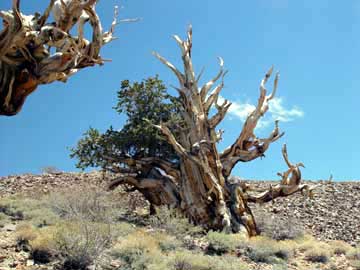
  • Bristlecone pines are the oldest living organism on earth
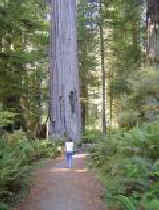
 

Redwood Tree Bristlecone pine Tree


Division Gnetophyta:

  • The phylum Gnetophyta consists of 3 genera that are not very closely related
  • Ephedra is the largest genus and consists of plants that resemble horsetails & grow in deserts
  • Welwitshcia is found only in the desert area of south western Africa and has 2 single, long leaves


Welwitshcia Ephedra


Division Anthophyta (Angiosperms):

  • Flowering plants are the most successful group of plants today
  • They live in almost all possible habitats
  • All flowering plants produce both flowers & fruit
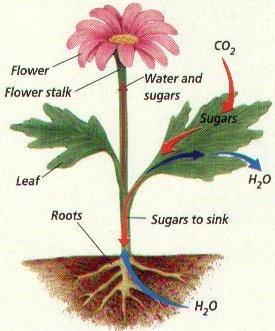
  • Fruit is a ripened ovary with its seeds (acorns, apples, dandelion seeds, etc)
  • Flowering plants co-evolved with their insect pollinators
  • May be herbaceous (grasses & snapdragons or woody (oaks & grape vines)
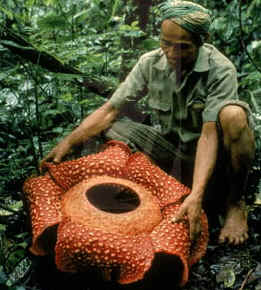
  • Rafflesia, the stinking corpse lily, is the world’s largest flower
  •  Flowering plants have diverse lifestyles (Sundew is carnivorous on insects; Spanish moss is an epiphyte living on another host plant; some orchids are saprophytes living on soil fungi)
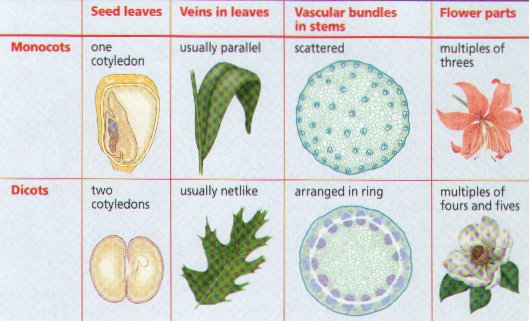
  • Subdivided into 2 classes based on the number of seed leaves or cotyledons in the plant embryo — Monocotyledons & Dicotyledons
  • Monocots have a single seed leaf, leaves with parallel venation, vascular tissue scattered in bundles throughout the stem, and flower parts in 3’s or multiples of 3

  • Dicots have a 2 seed leaf, leaves with net-veined venation, vascular tissue in rings in the stem, and flower parts in 4’s or 5’s multiples of 4 or 5

  • Monocots are usually herbaceous, while dicots often produce wood
Back


Preap Cell Division Study Guide


Cell Cycle & Cell Division Review  

1. Chromosomes are Rod Shaped structures made of _________ and ___________.

2. State the cell theory.

3. The phases in the life of a cell are called the ______________  _____________.

4. The cell cycle consists of ________, __________, __________, & division.

5. ________________ is a series of ______________ in cell division during which the _____________________ of a cell divides into __________  __________ with ____________   _____________ material.

6. _________________ only occurs  in _________________________  cells.

7. The period of cell growth prior to division is _________________________.

8.   Interphase consist of what three phases and describe each:
a.

b.

c.

9. The period during which DNA is copied ______________________.

10. DNA replication in a cell results in _________________  ____________________.

11. Replication is the process of copying _______________  ____________________.

12. Cell division is the process by which one _________ produces __________ new identical _________  ___________.

13.  Cell division involves 2 Steps called __________________  _____________  ________________________.

The steps are:
a.

b.

14. Step 1 of cell division is called ___________, and step 2 is called ______________.

15. During __________the cytoplasm of the cell divides into _______ new cells called ___________  ___________.

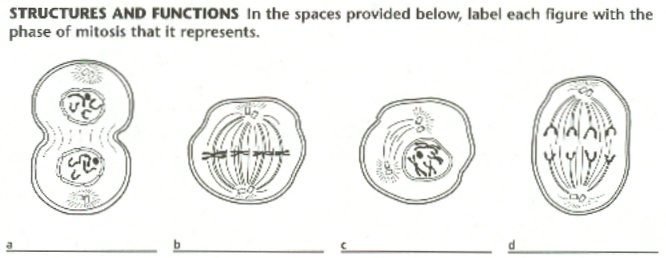
16. The steps or phases of Mitosis are ___________,  ____________,  ____________, and ________________.

17.   _________ is the process by which a nucleus gives rise to ___________ _________  _____________.

18. In anaphase, the sister Chromatids __________________________________.

19. The cell is pinched into two and cytokinesis begins during ____________________.

20. The assembling of microtubules that make up the spindle fibers occurs during _____________.

21. During prophase the _________ and  ________  ____________ disappear.

22. The center of the cell is called the ___________  _______________.

23.   ________________ condenses into chromosomes of two _________________  ____________________, joined together by the _____________________ during __________________________.

24.  The production of offspring from one parent is called ________________________  ________________________.

25.  During mitosis, centrioles are present only in _________________________ cells.

26.  Most organisms are capable of combining ______________________ from two parents to produce ______________________.

27. The phase of mitosis during which chromosomes move to opposite poles is called ____________________________________.

28. When chromosomes of two parents combined to produce offspring, the process is known as _____________________  _____________________.

29. The chromosomes that combine during sexual reproduction are contained in special reproductive cells called _________________________.

30. In most organisms,  ________________ can be either _____________  or _________________.

31. Eggs are _______________ than sperm, but are ______________________.

32. Sperm have ______________________ that help them swim to the ___________.

33. Gametes are formed by _______________________, a type of nuclear division in which _____________________ number is ______________________ and is followed by ________________  ______________________.

34. In humans, specialized reproductive cells with _________  chromosomes, called ____________________ cells, undergo ________________ and ___________ ________________ to give rise to egg or sperm that have only _______ chromosomes,  ___________________ cells.

35. Any cell that contains two complete sets of chromosomes is called a _____________________  ______________.

36. A cell with only one complete set of chromosomes is called a ____________________ ______________.

37. When an egg and sperm join to produce a new individual, the process is called _________________________________.

38. The single cell that results from fertilization is called a ____________________.

39. Matching pairs of chromosomes in a diploid cell are called ___________________ _________________.

40. During ______________________, the cytoplasm of a cell and its organelles separate into two New ______________________  _____________.

41. Cytokinesis proceeds differently in animal and plant cells.  In animal cells, the cytoplasm divides when a _______________ called the ________________ _________________ forms through the middle of the parent cell.  In a plant cell, the material form a  ______________  ____________ and __________________ gather and fuse along the equator or middle of the cell.

42. The term cleavage furrow refers to _______________________________________
________________________________________________.

43. The exchange of genes between pairs of homologous chromosomes is called _____________________ – ___________________________ and Only occurs during __________________________________ of meiosis.

44. What equally divides chromatids between offspring cells _________________  ____________________.

45. The time between cell division is called ________________________________.

46. The division of a prokaryotic cell into two offspring cells is called _______________________  ____________________________.

47. What equally divides an animal cell into two offspring cells (daughter cells) ________________________  _______________________.

48. Each protein in an organisms DNA is coded for an individual __________________.

49. If an organism has 12 chromosomes in each body cell, how many chromosomes would you expect to find in the organism’s gametes? _________________

50. During which phase of meiosis do tetrads form? ___________________________

51. The division of the cytoplasm of a eukaryotic cell is called _________________________________.

52. What event occurs during synapsis? ______________________  __________  ___________________________  _______________________.

53. During mitosis and meiosis, kinetochore fibers are thought to move __________________________________.

54. Histones are proteins that _______________ in the _______________ of __________________ in eukaryotic cells.

55. Spermatogenesis results in _______________  _______________ cells.

56. Each offspring cell produced by binary fission contains an ____________________  __________________ of the original cell’s  __________________________.

57. Crossing-over results in genetic recombination by permitting the ________________________ of genetic material between ____________________ and _______________________ chromosomes.

58. Two of the 46 human chromosomes are called _______________  _________________________, all others (44) are called _________________________.

59. The production of eggs is called ____________________________.

60. What structure not found in animal cells forms along the midline of a dividing plant cell? _________________________  ____________________________.

Answer the Following questions in paragraph form:

1. What is Cytokinesis?  How is it different in plant and animal cells?

2. Explain the difference between Mitosis and Meiosis?

3. What is the Difference (Contrast) between Sex Chromosomes and Autosomes?

4. List 2 ways that meiosis differs from mitosis.

5. Compare the structure of a prokaryotic chromosome with that of eukaryotic chromosomes.

6. What are homologous chromosomes?

7. Explain the difference between a haploid cell and a diploid cell?

8. What is your diploid and haploid Number?

9. What is DNA? What are histones?

10. What is independent assortment, and how does it affect the genetic makeup of offspring cells?

11. What are chromatids and what holds two chromatids together?

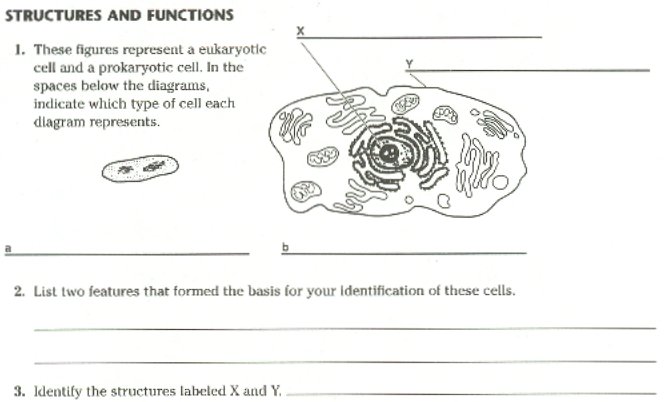
12. Describe how you could determine if a dividing cell is a prokaryote or an eukaryote. What structures would you look for?

13. Compare the products of mitosis with those of meiosis II.

14.  Describe the events of binary fission and what kind of organisms would use this.

15. What is the cell cycle?

16. How do the products of spermatogenesis and oogenesis differ?

17.  What is interphase?  What makes up and occurs during each part of interphase?

18.  What is mitosis and in order, What are the four phases of mitosis?

19.  What are kinetochore fibers and polar fibers? What are their functions?

20. Explain crossing-over, What is it? When does it occur? Why is it Important?

21. In what type of cell, Eukaryote, Prokaryote, or Both, does mitosis occur?
__________________________________________.  EXPLAIN WHY?

22. Explain the difference between Mitosis and Cytokinesis.

23. What is the difference between asexual and sexual reproduction?  Which has evolutionary value?  Why?

Population Genetics and Evolution

Population Genetics and Evolution
Introduction:
In 1908, G.H.Hardy and W. Weinberg independently suggested a scheme whereby evolution could be viewed as changes in frequency of alleles in a population of organisms. In this scheme, if A and a are alleles for a particular gene locus and each diploid individual has two such loci, then p can be designated as the frequency of the A allele and q as the frequency of the a allele. For example, in a population of 100 individuals ( each with two loci ) in which 40% of the alleles are A, p would be 0.40. The rest of the alleles would be ( 60%) would be a and q would be equal to 0.60. p + q = 1 These are referred to as allele frequencies. The frequency of the possible diploid combinations of these alleles ( AA, Aa, aa ) is expressed as p2 +2pq +q2 = 1.0. Hardy and Weinberg also argued that if 5 conditions are met, the population’s alleles and genotype frequencies will remain constant from generation to generation. These conditions are as follows:

  • The breeding population is large. ( Reduces the problem of genetic drift.)
  • Mating is random. ( Individual show no preference for a particular mating type.)
  • There is no mutation of the alleles.
  • No differential migration occurs. ( No immigration or emigration.)
  • There is no selection. ( All genotypes have an equal chance of surviving and reproducing.)

The Hardy-Weinberg equation describes an existing situation. Of what value is such a rule? It provides a yardstick by which changes in allelic frequencies can be measured. If a population’s allelic frequencies change, it is undergoing evolution.

Estimating Allele Frequencies for a Specific Trait within a Sample Population:
Using the class as a sample population, the allele frequency of a gene controlling the ability to taste the chemical PTC (phenylthiocarbamide) could be estimated. A bitter taste reaction is evidence of the presence of a dominant allele in either a homozygous (AA) or heterozygous (Aa) condition. The inability to taste the PTC is dependent on the presence of the two recessive alleles (aa). Instead of using the PTC paper the trait for tongue rolling may be substituted. To estimate the frequency of the PTC -tasting allele in the population, one must find p. To find p, one must first determine q ( the frequency of the non tasting allele).


Procedure:
1. Using the PTC taste test paper, tear off a short strip and press it to your tongue tip. PTC tasters will sense a bitter taste.

2. A decimal number representing the frequency of tasters (p2+2pq) should be calculated by dividing the number of tasters in the class by the total number of students in the class. A decimal number representing the frequency of the non tasters (q2) can be obtained by dividing the number of non tasters by the total number of students. You should then record these numbers in Table 8.1.

3. Use the Hardy-Weinberg equation to determine the frequencies (p and q ) of the two alleles. The frequency q can be calculated by taking the square root of q2. Once q has been determined, p can be determined because 1-q=p. Record these values in Table 8.1 for the class and also calculate and record values of p and q for the North American population.

Table 8.1 Phenotypic Proportions of Tasters and Nontasters and Frequencies of the Determining Alleles


Phenotypes
Allele Frequency Based on the H-W Equation
Tasters (p2+2pq)
Non Tastes(q2)
p
q
Class Population
#= %= #= %=
North American Population
0.55
0.45


Topics for Discussion:
1. What is the percentage of heterozygous tasters (2pq) in your class?
______________________.

2. What percentage of the North American population is heterozygous for the taster allele? _____________

Case Studies:
Case 1 ( Test of an Ideal Hardy-Weinberg Community)

The entire class will represent a breeding population, so find a large open space for its simulation. In order to ensure random mating, choose another student at random. In this simulation, we will assume that gender and genotype are irrelevant to mate selection.

The class will simulate a population of randomly mating heterozygous individuals with an initial gene frequency of 0.5 for the dominant allele A and the recessive allele a and genotype frequencies of 0.25AA, 0.50Aa, and 0.25aa. Record this on the Data page at the end of the lab. Each member of the class will receive four cards. Two cards will have A and two cards will have a. The four cars represent the products of meiosis. Each “parent” will contribute a haploid set of chromosomes to the next generation.

Procedure:
1. Turn the four cards over so the letters are not showing, shuffle them, and take the card on top to contribute to the production of the first offspring. Your partner should do the same. Put the cards together. The two cards represent the alleles of the first offspring. One of you should record the genotype of this offspring in the Case 1 section at the end of the lab. Each student pair must produce two offspring, so all four cards must be reshuffled and the process repeated to produce a second offspring.

2. The other partner should then record the genotype of the second offspring in the Case 1 section at the end of the lab. Using the genotypes produced from the matings, you and your partner will mate again using the genotypes of the two offspring. That is , student 1 assumes the genotype of the first offspring, and student 2 assumes the genotype of the second offspring.

3. Each student should obtain, if necessary, new cards representing their alleles in his or her respective gametes after the process of meiosis. For example, student 1 becomes the genotype Aa and obtains cards A,A,a,a; student 2 becomes aa and obtains cards,a,a,a,a. Each participant should randomly seek out another person with whom to mate in order to produce offspring of the next generation. You should follow the same mating procedure as for the first generation, being sure you record your new genotype after each generation in the Case 1 section. Class data should be collected after each generation for five generations. At the end of each generation, remember to record the genotype that you have assumed. Your teacher will collect class data after each generation by asking you to raise your hand to report your genotype.

Allele frequency: The allele frequencies, p and q, should be calculated for the population after five generations of simulated random mating.

Number of A alleles present at the fifth generation

Number of offspring with genotype AA _____________ X 2= _______________ A alleles

Number of offspring with genotype Aa _____________ X 1= ________________A alleles

Total = ____________ A alleles


p = Total number of A alleles =
Total number of alleles in the population


In this case, the total number of alleles in the population is equal to the number of students in the class X 2.

Number of a alleles present at the fifth generation

Number of offspring with genotype aa _____________ X 2= _______________ a alleles

Number of offspring with genotype Aa _____________ X 1= ________________A alleles

Total = ____________ a alleles


q =
Total number of a alleles
=
Total number of alleles in the population


1. What does the Hardy-Weinberg equation predict for the new p and q?.

_____________________________________________________________________

_____________________________________________________________________

2. Do the results you obtained in this simulation agree? __________ If not, why not?

_____________________________________________________________________

_____________________________________________________________________

3. What major assumption(s) were not strictly followed in this simulation?

_____________________________________________________________________

_____________________________________________________________________

Case 2 ( Selection )

In this case you will modify the simulation to make it more realistic. in the natural environment , not all genotypes have the same rate of survival; that is, the environment might favor some genotypes while selecting against others. An example is the human condition sickle-celled anemia. It is a condition caused by a mutation on one allele, in which a homozygous recessive does not survive to reproduce. For this simulation you will assume that the homozygous recessive individuals never survive. Heterozygous and homozygous dominant individuals always survive.

The procedure is similar to that for Case 1. Start again with your initial genotype, and produce your “offspring” as in Case 1. This time, However, there is one important difference. Every time your offspring is aa it does not reproduce. Since we want to maintain a constant population size, the same two parents must try again until they produce two surviving offspring. You may need to get new allele cards from the pool.

Proceed through five generations, selecting against the homozygous offspring 100% of the time. Then add up the genotype frequencies that exist in the population and calculate the new p and q frequencies in the same way as it was done in Case 1.

Number of A alleles present at the fifth generation

Number of offspring with genotype AA _____________ X 2= _______________ A alleles

Number of offspring with genotype Aa _____________ X 1= ________________A alleles

Total = ____________ A alleles


p = Total number of A alleles =                                 
Total number of alleles in the population


In this case, the total number of alleles in the population is equal to the number of students in the class X 2.

Number of a alleles present at the fifth generation

Number of offspring with genotype aa _____________ X 2= _______________ a alleles

Number of offspring with genotype Aa _____________ X 1= ________________A alleles

Total = ____________ a alleles


q =
Total number of a alleles
=                                 
Total number of alleles in the population


1. How do the new frequencies of p and q compare to the initial frequencies in Case 1?

_____________________________________________________________________

_____________________________________________________________________

2. How has the allelic frequency of the population changed?

_____________________________________________________________________

_____________________________________________________________________

3. Predict what would happen to the frequencies of p and q if you simulated another 5 generations.

_____________________________________________________________________

_____________________________________________________________________

4. In a large population, would it be possible to completely eliminate a deleterious recessive allele? Explain.

_____________________________________________________________________

_____________________________________________________________________

_____________________________________________________________________

_____________________________________________________________________

Hardy-Weinberg Problems

1. In Drosophila, the allele for normal length wings is dominant over the allele for vestigial wings. In a population of 1,000 individuals, 360 show the recessive phenotype. How many individuals would you expect to be homozygous dominant and heterozygous for this trait?


2. The allele for the ability to roll one’s tongue is dominant over the allele for the lack of this ability. In a population of 500 individuals, 25% show the recessive phenotype. How many individuals would you expect to be homozygous dominant and heterozygous for this trait?


3. The allele for the hair pattern called “widow’s peak” is dominant over the allele for no “widow’s peak.” In a population of 1,000 individuals, 510 show the dominant phenotype. How many individuals would you expect of each of the possible three genotypes for this trait?


4. In a certain population, the dominant phenotype of a certain trait occurs 91 % of the time. What is the frequency of the dominant allele?


Data Page:
Case 1 ( Hardy-Weinberg Equilibrium )

Initial Class Frequencies:

AA ________ Aa________ aa_________

My initial genotype :_______________

F1 Genotype ______

F2 Genotype ______

F3 Genotype ______

F4 Genotype ______

F5 Genotype ______

Final Class Frequencies:

AA ________ Aa________ aa_________

p _________ q __________

Case 2 ( Selection )

Initial Class Frequencies:

AA ________ Aa________ aa_________

My initial genotype :_______________

F1 Genotype ______

F2 Genotype ______

F3 Genotype ______

F4 Genotype ______

F5 Genotype ______

Final Class Frequencies:

AA ________ Aa________ aa_________

p _________ q __________


Preap Cell Study Guide


Cell Structure & Function  Review   


1. The first Person to describe microscopic organisms and living cells was
________________________________.

2. The maximum size to which a cell may grow is limited mainly by the cell’s ___________________________  ____________________________.

3. Short, hair-like organelles that can move and may cover a unicellular organism or line the respiratory tract are called ______________________________________.

4. Some Ribosomes are free in the cytoplasm, while others line the membrane of the
_________________  __________________  __________________________.

5. Everything between the cell membrane and the nucleus, is the cell’s
____________________________________.

6. All cells, from all organisms, are surrounded by a _______________   _____________________.

7. Membranes are _______________________ and have the consistency of vegetable oil.

8. The organelle that stores DNA and synthesizes RNA _________________________.

9. The organelle that processes and packages substances produced by the cell ______________________  _________________________.

10. The ____________________________ is the control center of the cell.

11. The DNA in the form of a long strand is called ______________________________.

12. Cytoplasm consists of two main components:  ____________________________ and
______________________________.

13. The cell membrane functions like a ______________________, controlling what
__________________ and _______________________ the cell.

14. A lipid is a simple form of ________________________________.

15. There are many kinds of ______________________ in cell membranes; they help to move material into and out of the cell.

16. Scientist call the modern view of the cell membrane structure the
______________________________ ____________________ _________________.

17. The nucleus is surrounded by a double layer membrane called the
__________________________  _________________________________.

18. During cell division, _________________________ strands coil and condense into thick structures called _____________________________________.

19. The nucleoli make ___________________________. Which in turn build proteins.

20. Membranes are made mostly of ___________________  and  ______________________.

21. The _________________ is the smallest unit that can carry out all of the processes of life.  The basic unit of life.

22. The maximum size to which a cell may grow is limited mainly by the cell’s ___________________  ____________________.

23. The discovery of cells is linked most directly the development of the __________________________.

24. Organisms whose cells never contain a membrane bound nucleus are called _____________________________________.

24. Suspended in the cell’s cytosol are tiny ___________________________________.

25. Cell membranes consist of two phospholipid layers called a ___________________.

26. The chromosomes in the nucleus contain coded _____________________ that control all cellular activity.

27. When a cell prepares to reproduce the _______________________ disappears.

28. Cytosol is a jelylike mixture that consists mostly of _____________________.

29. The nucleus is one ______________________________.

30. In Eukaryotic cells, most organelles are surrounded by a _____________________.

31. Organisms whose cells always or usually contain a nucleus or nuclei are called
____________________________________.

32.  ________________________ are structures that carry out specific functions in the cell.

33. Most cells have a single ______________________; some cells have more than one.

34. Unicellular organisms such as bacteria and their relatives are ___________________________.

35. The Fluid Mosaic Model presents the modern view of a
__________________  ___________________________.

36. The “Blueprints” in a Cell that controls all its activity are the ___________________.

37. Where are poisons and waste detoxified in a cell? _________________________ _________________________________.

38. A cell synthesizes protein by using organelles called _______________________________.

39. The Mitochondria of a cell contain an inner membrane called _____________________________.

40. What are the membrane-bound sacs that package and secrete cell products?
___________________________ ___________________________.

41. Unlike animal cells, plant cells have ______________  ________________.

42. A Chloroplast can convert _________________, __________________________, and ____________________________ into ________________________.

43. What are Flagella? ___________________________________________________.

44. In animal cells, the Cytoskeleton maintains three-dimensional structure and helps the cell ___________________________.

45. The organelle that digest molecules, old organelles, and foreign substances in the cell   _______________________________________.

46. A pigment that absorbs energy in sunlight ________________________________.

47. The organelle that prepares proteins for export and synthesizes steroids is  ________________________  ________________________.

48. Ribosomes differ from most organelles because they have no ___________________________.

49. What type of cells would you expect to find large numbers of mitochondria?  _______________________  _________________.

50. The “Powerhouse” of the cell _______________________________.

51. Short, hairlike organelles that can move and may cover a unicellular organism or line the respiratory tract are called _______________________________.

52. The first cells on Earth were likely _______________________ that did __________ make their own _________________.

53. Microfilaments and microtubules function in cell _______________________ and ____________________________.

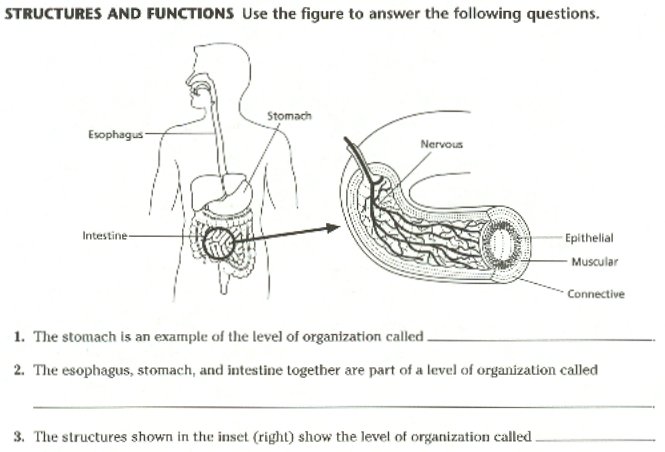
54. What is the correct order of structures in living things, from simplest to the most complex? ______________________, __________________________, ______________________________, ______________________________.

55. The is the organelle that transfers energy in ATP _______________________________.

56. What word means “Water Fearing”? ____________________________.

57.  What word means “Water Loving”? _____________________________.

58. What is cell specialization? Give an example.
59. Distinguish between the structure of rough ER and that of smooth ER.

60. Explain how ribosomes, endoplasmic reticulum, Golgi apparatus function together in protein synthesis.

61. Explain the difference between a tissue and an organ.

62.  Why is the cell membrane said to be selectively permeable?

63.  If a cell has a high energy requirement, would you expect it to have many or few mitochondria? Explain your answer.

64. Describe TWO differences between prokaryotic cells and eukaryotic cells.

65. How can you determine whether a unicellular organism is a prokaryote or a eukaryote?

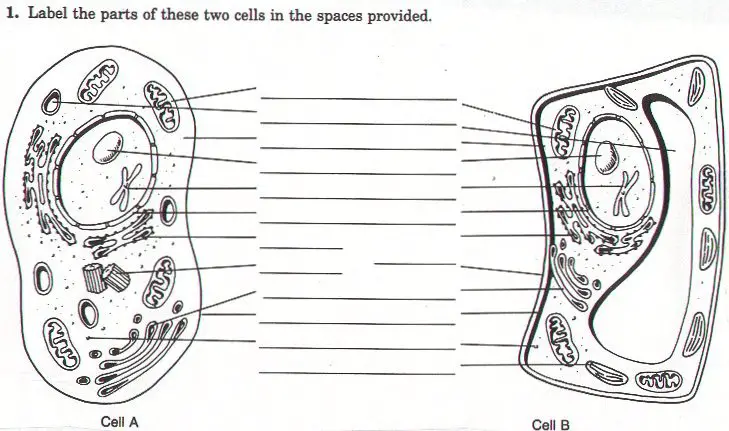
66. Plant cells have cell walls, but animal cells do not. Why do you think that is so?

67. What are the THREE Parts of the Cell Theory?

68. Describe three differences between plant and animal cells.

69. Name the TWO different kinds of animal cells, and describe how their shape is related to their function.

70. What is the difference between chromatin and chromosomes?

71. What are the major roles of the nucleus, and what parts of the nucleus carry out these roles?

72. What is a colonial organism, and what does it have in common with multicellular organisms?


Potato Osmosis Bi Lab


Potato Osmosis


Introduction:

A shipwrecked sailor is stranded on a small desert island with no fresh water to drink. She knows she could last without food for up to a month, but if she didn’t have water to drink she would be dead within a week. Hoping to postpone the inevitable, her thirst drove her to drink the salty seawater. She was dead in two days. Why do you think drinking seawater killed the sailor faster than not drinking any water at all? Today we explore the cause of the sailor’s death. We’ll prepare solutions of salt water to represent the sea, and we’ll cut up slices of potato to represent the sailor. Potatoes are made of cells, as is the sailor!

Objective:

The concentration of solute in a solution will affect the movement of water across potato cell membranes.

Materials:

potato, corer, 3 plastic cups, marker, salt, sugar, distilled water, paper, pencil, electronic balance, clock with second hand or timer, metric ruler, small ziplock plastic bag, foil or plastic wrap

Procedure:

Day 1

  1. Use a knife to square off the ends of your potato. Your potato’s cells will act like the sailor’s cells.
  2. Stand your potato on end & use your cork borers to bore 3 vertical holes.

  1. Remove the potato cylinders from the cork borer & measure their length in centimeters.
  2. Cut the 3 potato cylinders to the same length (about 4 -5 centimeters long).
  3. Record the length & turgidity of the potato cylinders in your data table (day 1).
  4. Place the 3 potato cylinders in a small ziplock bag to prevent them from dehydrating before they’re used.
  5. Take 3 plastic cups and label them with the solution that will be placed in each one — sugar, salt, distilled water.
  6. Prepare a saturated solution of salt by mixing as much salt as you can with water.
  7. Repeat this step by making a saturated sugar solution.
  8. Now fill each cup 2/3’s full of the correct solution —- sugar water, salt water, or distilled water.
  9. Mass each of the potato cylinders & record this mass in grams on your data table.
  10. Place one of your potato cylinders into each cup and cover the top of the cup with foil or plastic.
  11. Leave the potato cylinders in the solution for 24 hours.

Day 2

  1. Carefully remove the potato cylinder from the distilled water solution & pat it dry on a paper towel.
  2. Measure the length of the potato cylinder & record this length & the appearance of the cylinder on your data table. (day 2)
  3. Measure & record the mass of this cylinder.
  4. Repeat steps 13-15 for the potato cylinders in the salt solution & the sugar solution.
  5. Clean up your equipment & area and return materials to their proper place.

Data:


Results of Osmosis in Potato Cells
Solution Initial length
cm
(day1)
Final length
cm
(day2)
Change in length
cm
Initial Mass
g
(day1)
Final Mass
g
(day2)
Change in mass
g
Initial Turgidity
(flaccid or crisp)
Final Turgidity
(flaccid or crisp)
Tonicity of Solution
(iso-, hypo-, or hpertonic)
Distilled water
Salt Solution
Sugar Solution


Results & Conclusions:

1. Did any of the potato cylinders change in their turgidity (flexibility), and if so, which ones changed?


2. Explain why the flexibility of the potato slices changed.


3. Define isotonic, hypotonic, & hypertonic solutions.


4. If potato slices changed in length or turgidity, what process was responsible for this?


5. Make a sketch of your potato cylinder in the distilled water and use arrows to show the direction of water movement across the potato cell membranes.


6. What type of solutions were the salt & sugar solutions. Explain how you know this.


7. Which solution served as the control for this experiment & why?


8. In which solutions was their a greater solute concentration outside of the cells?


9. In which direction did water move through these cell membranes?


10. In what type of solution do plant cells do best & why?


11. Using the information you’ve discovered from this experiment, explain why the sailor died that drank saltwater.


BACK