Ecology Worksheet Bi


Ecology


Chapter 19 Ecology


1. What is ecology?

2.. What is the most significant environmental change that is taking place today?

3. What is the sixth mass extinction?

4. What is the ozone layer, what does it do for earth, & what is happening to this layer & why?

5. Explain the green house effect.

6. List in order the ecological levels of organization.

7. What is the biosphere, tell where it extends, & tell why it is so important?

8. Define ecosystems & give an example.

9. What is a community?

10. What is a population?

11. What is the simplest ecological level of organization?

12. Use figure 19-6 on page 364 & explain how Lyme disease affects organisms in an ecosystem.

13. What are biotic factors & list them?

14. What are abiotic factors & list them?

15. Are abiotic factors constant? Explain by giving an example.

16.Organisms are able to survive within a _____________ range of environmental conditions.

17. Graphing the range of conditions an organism can survive is called a __________________ Curve.

18.When organisms adjust their tolerance to abiotic factors, the process is called ___________.

19. Explain how dormancy & migration help organisms escape unsuitable environmental conditions.

20. Define niche

Chapter 20 Populations

21. What is meant by population size?

22. What is meant by population density?

23. Name the 4 processes that determine whether a population will grow, shrink, or remain the same size.

24. What are immigration & emigration & how do they affect population size?

25. What are limiting factors & give some examples?

26. What affect does inbreeding have on small populations?

Chapter 21 Community Ecology

27. Interactions among species are called ____________.

28. List the 5 types of symbioses.

29. Define predator & prey & give an example.

30. What is mimicry & give an example?

31. Define these terms — parasitism, parasite, host, ectoparasites, & endoparasites.

32. When niches overlap, _________________________ results so more than one species are using the limited resources.

33. What are mutualism & commensalism?

34. Define succession.

35. Name & describe the 2 types of succession.

36. What are pioneer species & why are they important?

37. What is a climax community?

Chapter 22 Ecosystems

38. What are producers & what is another name they may be called?

39. What is biomass, why is it important, how does it accumulate, & what is its rate of accumulation called?

40. What is gross primary productivity?

41. All heterotrophs would be ______________________.

42. Define & give an example of each of these consumers — herbivore, carnivore, omnivore, detritivores, & decomposer.

43. Whenever one organism eats another, ________________ is transferred.

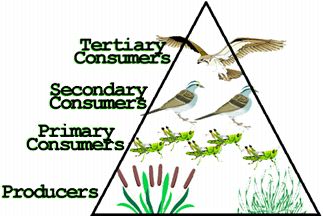
44. What are trophic levels?

45. All _______________ belong to the first trophic level, _______________ belong to the
Second trophic level, and the _______________ of herbivores belong to the third trophic level.

46. How many trophic levels do most ecosystems contain?

47. What is a food chain & what always begins the chain?

48. Write an example of a food chain.

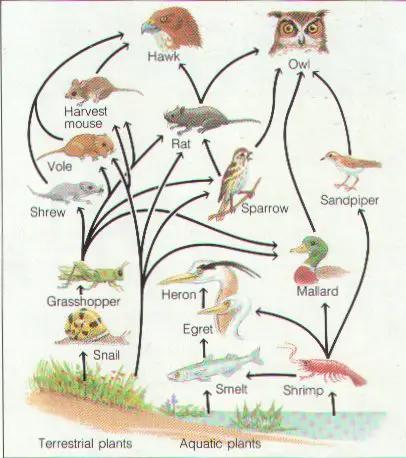
49. What is a food web?

50. Draw a diagram of a food web that has at least 4 food chains.

51. Approximately __________ percent of the total energy consumed at one trophic level is incorporated into the organisms in the next level.

52. In terms of energy passage, why will there be many more producers than herbivores and fewer large carnivores than small carnivores?

53. What are biogeochemical cycles, why are they important, & name three?

54. Draw & explain the water cycle. Be sure to color your diagram!

55. List & define the 3 important processes in the water cycle.

56. What is groundwater?

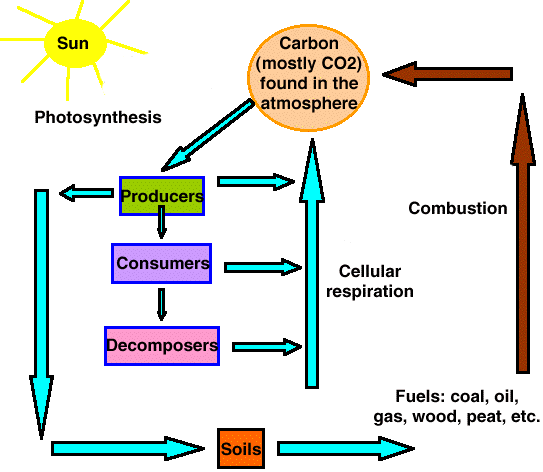
57. What 2 processes form the basis for the carbon cycle?

58. Draw & explain the carbon cycle. Be sure to color your diagram!

59. What purpose do decomposers have in the carbon cycle?

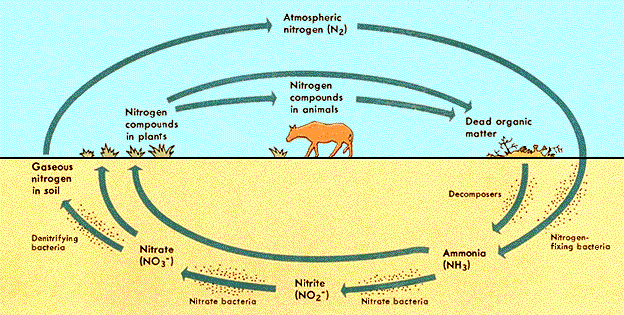
60. Why do organisms need nitrogen?

61. Draw & explain the nitrogen cycle. Be sure to color your diagram!

62. Organisms such as ________________ convert _________________ gas into compounds
Called __________________ during the process known as________________________.

63. Bodies of dead organisms contain mainly in _________________ & _________________.

64. Wastes such as __________________ & _______________ also contain nitrogen that must be recycled.

65. ________________ recycle nitrogen from dead organisms & wastes by changing it into
______________________. The process is called ________________________.

66. Explain nitrification & denitrification.

67. Plants can absorb ____________________ from the soil, but animals obtain nitrogen from
their ___________________.

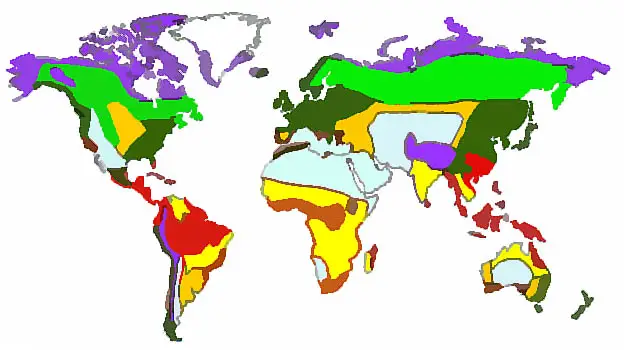
68. Define biome.

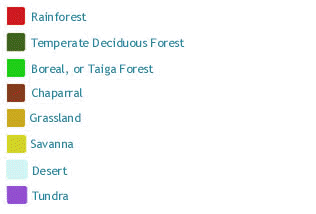
69. List the 7 major biomes.

70. Why don’t mountains belong to any one biome?

71. What is a tundra, where are they found, & tell organisms that would be found tree?

72. What is permafrost & how does it control plant life in the tundra?

73. What are taigas, where would they be found, & what type of vegetation dominates this area?

74. Plants & animals in the taiga must be adapted for long __________________, short
_________________, & ________________________ soil.

75. List some typical animals of the taiga.

76. What characterizes a temperate deciduous forest?

77. Deciduous forests have 4 pronounced ____________________ with _________________
summers, _______________________ winters, and__________________________ than the
taiga.

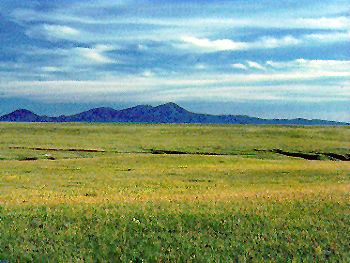
78. Grasses dominate what biome?

79. Why aren’t there more trees on grassland?

80. What are grasslands called in each of these areas —– North America, Asia, South America, & southern Africa?

81. Describe the soil of grasslands. Because of the soil condition, how is much of the grassland used?

82.What type of animals would be found on grassland?

83. What periodically occurs across grasslands & why doesn’t it kill the grasses?

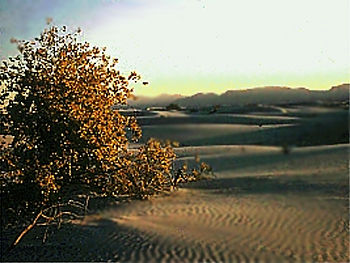
84. Approximately how much rainfall do deserts receive each year?

85. Are deserts always hot? Explain.

86. What adaptation must desert vegetation make to survive?

87. What types of adaptations must desert animals make to conserve water?

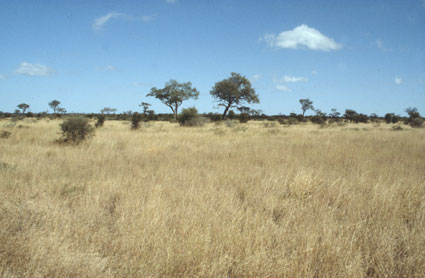
88. What are savannas & where are the best known savannas found?

89. Describe temperature & rainfall on savannas?

90. Name some herbivores & carnivores found on a savanna.

91. Describe the rainy season on a savanna & tell what special problem this poses for the animals & plants there?

92. What are tropical rain forests & where are they located?

93. Rain forests have stable, year-round ______________________ & abundant ____________.

94. Plants in the rainforest must constantly compete for what?

95. Explain the canopy & epiphytes in a rainforest.

96. Describe the plant & animal life in a rainforest.

97. Tropical rainforests are more commonly called _____________________.

98.Oceans cover what percent of the earth’s surface?

99. Draw, label, & color the zones found in the ocean (see figure 22-16). Define each term labeled on your drawing.

100. What are intertidal organisms exposed to & name some intertidal organisms.

101. Which zone in the ocean is the most productive & why?

102. What small organisms are found in the neritic zone & why are they important?

103. In tropical areas, what forms in the neritic zone & why are they important?

104. Which ocean zone has fewer species & why?

105. Where does most of the earth’s photosynthesis take place?

106. Animals in the aphotic zone feed on what?

107. Organisms living deep in the ocean must cope with what 2 problems? Give some examples of deep ocean animals & explain how they adapt to their environmental problems.

108. What are volcanic vents, when were they discovered, & describe the organisms found there?

109. What are estuaries & what special problem do estuary organisms face?

110. What characterizes freshwater zones & give several examples?

111. Name & describe the 2 categories into which ecologists divide lakes 7 ponds?

112. Define a river & describe organisms found there?

Chapter 23 Environmental Science

113. Where do upwellings occur & how are they helpful?

114. Describe the event known as El Nino & tell its effect.

115. Describe chlorofluorocarbons effect on the ozone layer & tell why we should be concerned?

116. Define biodiversity.

117. Define conservation biology & use migratory birds to explain an example of this new discipline?

118. Sometimes species are reintroduced into areas. Use the Gray wolf & describe its reintroduction in the United States.

119. Where are the Everglades located & what is being done to restore them?

BACK


Diffusion and Osmosis


  Diffusion and Osmosis

Introduction:
In this exercise you will measure diffusion of small molecules through dialysis tubing, an example of a semi permeable membrane. The movement of a solute through a semi permeable membrane is called dialysis. The size of the minute pores in the dialysis tubing determines which substance can pass through the membrane. A solution of glucose and starch will be placed inside a bag of dialysis tubing. Distilled water will be placed in a beaker, outside the dialysis bag. After 30 minutes have passed, the solution inside the dialysis tubing and the solution in the beaker will be tested for glucose and starch. The presence of reducing sugars like glucose, fructose, and sucrose will be tested with Benedict’s Solution. The presence of starch will be tested with Lugol’s solution (iodine-potassium-iodide).

Procedure:

  1. Obtain a 30 -cm piece of 2.5-cm dialysis tubing that has been soaking in water. Tie off one end of the tubing to form a bag. To open the other end of the bag, rub the end between your fingers until the edges separate.
  2. Place 15 mL of the 15% glucose/ 1% starch solution in the bag. Tie off the other end of the bag, leaving sufficient space for the expansion of the bag’s contents. Record the color of the solution in Table 1.1.
  3. Test the 15% glucose / 1% starch solution in the bag for the presence of glucose. Your teacher may have you do a Benedict’s test. Record the results in Table1.1.
  4. Fill a 250 mL beaker or cup 2/3 full with distilled water. Add approximately 4 mL of Lugol’s solution to the distilled water and record the color in Table 1.1. Test the solution for glucose and record the results in Table 1.1.
  5. Immerse the bag in the beaker of solution.
  6. Allow your set up to stand for approximately 30 minutes or you see a distinct color change in the bag or the beaker. Record the final color of the solution in the bag, and of the solution in the beaker, in Table 1.1.
  7. Test the liquid in the beaker and in the bag for the presence of glucose. Record the results in Table 1.1.


Table 1.1

Initial Contents Initial Solution Color Final Solution Color Initial Presence of Glucose Final Presence of Glucose
Bag 15% Glucose & 1% starch
Beaker H2O + IKI

Analysis of Results:
1. Which substance(s) are entering the bag and which are leaving the bag? What experimental evidence supports your answer?

_______________________________________________________________________

_______________________________________________________________________

_______________________________________________________________________

_______________________________________________________________________

2. Explain the results you obtained. Include the concentration differences and membrane pore size in your discussion.

________________________________________________________________________

________________________________________________________________________

________________________________________________________________________

________________________________________________________________________

3. Quantitative data uses numbers to measure observed changes. How could this experiment be modified so that quantitative data could be collected to show that water diffused into the dialysis bag?

________________________________________________________________________

________________________________________________________________________

________________________________________________________________________

________________________________________________________________________

________________________________________________________________________

4. Based on your observations, rank the following by relative size, beginning with the smallest : glucose molecules, water molecules, IKI molecules, membrane pores, starch molecules.

_______________________________________________________________________

_______________________________________________________________________

5. What results would you expect if the experiment started with glucose and IKI solution inside the bag and only starch and water outside? Why?

________________________________________________________________________

________________________________________________________________________

________________________________________________________________________

________________________________________________________________________

Osmosis:
In this experiment you will use dialysis tubing to investigate the relationship between solute concentration and the movement of water through a semi permeable membrane by the process of osmosis. When two solutions have the same concentration of solutes, they are said to be isotonic to each other. If the two solutions are separated by a semi permeable membrane, water will move between the two solutions, but there will be no net change in the amount of water in either solution. If two solutions differ in the concentration of solutes that each has, the one with more solute hypertonic to the one with the less solute. The solution that has less solute is hypotonic to the one with more solute. These words can only be used to compare solutions.

Procedure:
1. Obtain six 30-cm strips of presoaked dialysis tubing.

2. Tie a knot in one end of each piece of dialysis tubing to form six bags. Pour approximately 25 mL of each of the following solutions into separate bags:

  • Distilled water
  • 0.2 M sucrose
  • 0.4 M sucrose
  • 0.6 M sucrose
  • 0.8 M sucrose
  • 1.0 m sucrose

Remove most of the air from the bags by drawing the dialysis bag between two fingers. Tie off the other end of the bag. Leave sufficient space for the expansion of the contents in the bag.

3. Rinse each bag gently with distilled water to remove any sucrose spilled during filling.

4. Carefully blot the outside of each bag and record in Table 1.2 the initial mass of each bag.

5. Fill six 250 mL beakers 2/3 full with distilled water.

6. Immerse each bag in one of the beakers of distilled water and label the beaker to indicate the molarity of the solution in the dialysis bag. Be sure to completely submerge each bag.

7. Let them stand for 30 minutes.

8. At the end of 30 minutes remove the bags from the water. Carefully blot and determine the mass of each bag.

9. Record your group’s results in Table 1.2. Obtain data from the other lab groups in your class to complete Table 1.3: Class Data.

Table 1.2 Dialysis Bag Results: Individual Data

Contents in Dialysis Bag Initial Mass Final Mass Mass Difference % Change in Mass
a). Distilled Water  


b). 0.2 M  


c). 0.4 M  


d). 0.6 M  


e). 0.8 M  


f). 1.0 M  


To Calculate:

% change in mass = Final Mass-Initial Mass X 100
———————–

Initial Mass

Table 1.3 Dialysis Bag Results: Class Data

percent change in Mass of Dialysis Bags


Bag Contents Group 1 Group 2 Group 3 Group 4 Group 5 Group 6 Total Class Average
Distilled Water
0.2 M
0.4 M
0.6 m
0.8 M
1.0 M

10. Graph the results for both your individual data and class average on the following graph. For this graph you will need to determine the following:

a). the independent variable. __________________________________

b). the dependent variable. ___________________________________

Graph Title ______________________________________________

Analysis of Results:
1. Explain the relationship between the change in mass and the molarity of sucrose within the dialysis bag.

________________________________________________________________________

________________________________________________________________________

________________________________________________________________________

________________________________________________________________________

________________________________________________________________________

2. Predict what would happen to the mass of each bag in this experiment if all the bags were placed in a 0.4 M sucrose solution instead of distilled water. Explain your response.

________________________________________________________________________

________________________________________________________________________

________________________________________________________________________

________________________________________________________________________

________________________________________________________________________

3. Why did you calculate the per cent change in mass rather than using the change in mass?

________________________________________________________________________

________________________________________________________________________

________________________________________________________________________

________________________________________________________________________

________________________________________________________________________

4. A dialysis bag is filled with distilled water and then placed in a sucrose solution. The bag’s initial mass is 20 g. and its final mass is 18 g. Calculate the percent change of mass, showing your calculations in the space below.


5. The sucrose solution in the beaker would have been ___________________ to the distilled water in the bag.


Edible Cell Instructions


Edible Cells!


Construct a 3 dimensional, edible, eukaryotic cell that includes the following structures:
* cell membrane
*nucleus
*nucleolus
*chromatin
*rough ER
*smooth ER
*free ribosomes
*mitochondria
*lysosome
*Golgi bodies
*storage vacuole or vesicle

Make sure you use sanitary conditions when constructing your cell because we will eat them in class!

Include a key to your model and a short paper explaining the function of each cellular part.

BACK


DNA Code for Insulin


DNA’s Instructions for Insulin  


Introduction:

Below are two partial sequences of DNA bases (shown for only one strand of DNA)  Sequence 1 is from a human and sequence 2 is from a cow.  In both humans and cows, this sequence is part of a set of instructions for controlling the production of a protein.  In this case, the sequence contains the gene to make the protein insulin.  Insulin is necessary for the uptake of sugar from the blood.  Without insulin, a person cannot use digest sugars the same way others can, and they have a disease called diabetes.

Materials:

paper, pencil, codon table

Procedure:

  1. Using the DNA sequence given in table 1, make a complimentary RNA strand for  the human.  Write the RNA directly below the DNA strand (remember to substitute U’s for T’s in RNA).
  2. Repeat step 1 for the cow.  Write the RNA directly below the DNA strand in table 2.
  3. Use the codon table in your book to determine what amino acids are assembled to make the insulin protein in both the cow and the human.   Write your amino acid chain directly below the RNA sequence.

Table 1 


Sequence 1 ­ Human
DNA C C A T A G C A C G T T A C A A C G T G A A G G T A A
RNA
Amino Acids


Table 2

Sequence 1 ­ Cow
DNA C C G T A G C A T G T T A C A A C G C G A A G G C A C
RNA
Amino Acids

Analysis:

1. The DNA sequence is different for the cow and the human, but the amino acid chain produced by the sequence is almost the same.  How can this happen?


2. Diabetes is a disease characterized by the inability to break down sugars. Often a person with diabetes has a defective DNA sequence that codes for the making of the insulin protein. Suppose a person has a mutation in their DNA, and the first triplet for the gene coding for insulin is C C C  (instead of C C A).   Determine what amino acid the new DNA triplet codes for.    Will this person be diabetic?


3. What if the first triplet was C A A ?


4. How is it that a code consisting of only four letters, as in DNA ( A, T, G, C ) can specify all the different parts of an organism and account for all the diversity of organisms on this planet?


DNA sequences are often used to determine relationships between organisms.  DNA sequences that code for a particular gene can vary widely.  Organisms that are closely related will have sequences that are similar. Below is a list of sequences for a few organisms:


Human CCA   TAG   CAC   CTA
Pig CCA   TGG   AAA   CGA
Chimpanzee CCA   TAA   CAC   CTA
Cricket CCT   AAA   GGG   ACG


5. Based on the sequences, which two organisms are most  closely related?


6. An unknown organism is found in the forest, and the gene is sequenced, and found to be   C C A  T G G  A A T  C G A  ,  what kind of animal do you think this is?