Evolution PPT Questions


Evolution
ppt Questions

History of Evolutionary Thought

1. What were Aristotle’s early ideas about life on Earth?


2. How long did these ideas last?

3. What was Linnaeus first to do?


4. What language is used for scientific naming?

5. What are the two words called in a scientific name?

6. This naming system is known as ____________ ______________.

7. Name the contribution that each of these men made to Darwin’s ideas on evolution:

     a. Charles Lyell

     b. George Cuvier

     c. Thomas Malthus

     d. James Hutton

     e. Lamarck

     f. Wallace

8. Which was published first – the Origin 0f Species by Darwin or Gregor Mendel’s papers on inheritance?

9. What was the name of George Cuvier’s theory on evolution?

10. What did Cuvier study in Paris and what did he find?


11. What did Cuvier decide was responsible for the disappearance of some species?


12. James ___________ was a Scottish _________ who studied fossils of _____________ in the Paris Museum.

13. Hutton’s ideas were known as _____________.

14. Briefly state Hutton’s idea on geological change.


15. Lyell proposed the theory of _________________.

16. Describe uniformitarianism.


17. How old did Lyell propose that the Earth was? How old did most people at this time believe the Earth was?

18. How did reading Lyell’s book help darwin on his voyage on the Beagle?


19. Lamarck was one of the first scientists to understand that change occurs over ___________.

20. Lamarck believed that changes were adaptations to the ____________ that organisms _____________ in their lifetime and that he thought could be passed on to _______________.

21. Explain Lamarck’s idea of the Law of Use and Disuse.


22. Lamarck’s theory of acquiring or losing traits by using or not using them led to his theory of evolution called the _____________ of ______________ _____________.

23. According to this theory new ___________ could arise over time.

24. According to Lamarck, if a blacksmith built up his muscles then he would have what type of sons?


25. According to Lamarck, if a giraffe stretched its neck reaching for leaves, what would its offspring look like?


26. What did Lamarck NOT know that made his theory incorrect?


27. Are genes changed by life activities?

Darwin the Naturalist

28. In what year and at what age did Darwin become the naturalist for the ship the HMS Beagle?


29. How long was the Beagle voyage around the world?

30. As Darwin sailed around the coast of __________ __________, he collected many different types of plants and animals on the mainland and on the islands.

31. Where are the Galapagos Islands and how were they formed?


32. What did Darwin discover about the animals on each type of island


33. How did the island species of finches and tortoises compare with those on the islands?


34. How did the necks of the tortoises compare with each other?

35. The island finches resembled a finch on the ___________.

36. Was the available food and habitat the same on all the islands? Explain.


37. What was different about the finches and why?


Darwin’s Observations & Conclusions

38. List three observations Darwin made on his travels that led him to propose his revolutionary idea about the way life changes over time.

     a.

     b.

     c.

39. Give an example of the uneven distribution of species noted by darwin.


40. Darwin collected both ___________ organisms and ____________ of organisms.

41. Give 2 examples of fossils collected by Darwin in which the species were no longer in existence.


42. Give a definition for evolution.


43. Left unchecked, what did Darwin predict would happen to the number od individuals in a population?


44. In nature, what tends to happen to the size of populations over time?

45. Competition among members of a population occur due to a limited number of ____________ _______________.

46. Only a ___________ of the offspring produced survive to the next generation.

47. The struggle for environmental resources is commonly called _____________ of the ____________.

48. How do individuals in population compare with each other?

49. Variation in a population is ______________.

50. Which organisms in a population are most likely to live offspring to pass on their traits?

51. This process is known as _____________ ___________ and was proposed by Charles ___________.

52. State Darwin’s theory of natural selection.


53. New ____________ evolve according to natural selection.

Ideas that Shaped Darwin’s Thinking

54. _____________ was an economist in 1798 that influenced Darwin’s thinking.

55. Malthus observed what about the birth rate of babies?

56. Malthus knew population size was limited by what?

57. According to Malthus, a high birth rate and limited resources caused what to happen?


58. List several things that organisms struggle for in the environment.


59. What did Malthus say would happen if the population size continued to groww unchecked?


60. The __________ rate should increase to balance the __________ of a population and the limited _____________ in the environment.

61. Did Darwin see this occurring in nature?

62. Most organisms produce ____________ offspring than can survive causing many to ________.

Darwin’s Theory of Evolution
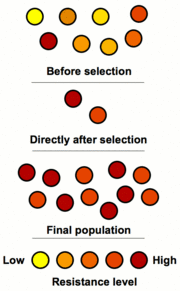
63. Darwin proposed that organisms descended from what?

64. Over time, according to Darwin organisms __________ their form causing evolution of new ____________.

65. ___________ __________ is the driving force for evolution.

66. During the struggle for survival, which organisms survive to pass on their traits?

Origin of Species

67.How long after he returned to England did Darwin publish his book about evolution?

68. Why did Darwin wait so long to publish his ideas?


69. Darwin’s theory of evolution challenged both the ____________ and _____________ ideas at that time.

70. What made Darwin publish his book?


71. _______________ independently developed the same theory as Darwin.

72. Both Darwin and Wallace believed that __________ changed over time due to a _____________ for existence.

73. Both Darwin’s and Wallace’s papers were presented to the ____________ ______________ in July of __________.

74. How long after this did it take Darwin to finish writing his book?

75. Before Darwin, it was thought that species were perfectly made and _______________.

76. What group of people had been observing and using variations in organisms for a long time?

77. How were farmers using variation?

78. This process is called _____________ ______________ instead of natural selection that occurs in nature.

79. Artificial selection involves ____________ desired traits in stock or crops and __________ them to pass on the trait.

Controversy

80. Define these terms:

     a. struggle for existence

     b. survival of the fittest

     c. descent with modification

     d. Fitness

     e. adaptation

81.What are the two types of adaptations?

82. Give some examples of physical adaptations.


83. Give some examples of behavioral adaptations.


84. What happens to organisms with LOW fitness?


85. How did changes in the Galapagos finches make them more FIT to survive?


86. Natural selection takes place over a _________ period of time.

87. Natural selection can be observed as changes in _______ structure, ecological _________, and ____________.

88. Do species today look them same as their ancestors?

89. Living species descended with changes from other __________ over periods of time.

90. What was a major problem in Darwin’s Theory?


91. The work of what scientists solved the problem of how variations were passed to offspring?

92. What is the complete title of Darwin’s book?


Theory of Evolution Today

93. List three main things used today to show how organisms are related.

     a.

     b.

     c.

94. Give two examples of evolution that has occurred today in a much shorter period of time.

     a. 

     b.

95. Define macroevolution.


96. Define microevolution.


97. Darwin argued that Earth was ____________ of years old instead of thousands of years old.

98. One of the main pieces of evidence to support this ancient age of the Earth came from ___________ collected by Darwin.

99. Fossils are found in what type of rock layers?

100. Animals on different continents living in similar habitats show similar _______________.

101.  All ____________ have similar bon structures known as ______________ structures.

102. Homologous structures have the same structure but different ______________.

103. Give 3 examples of homologous structures in vertebrates.


104. __________ structures seem to have no important function.

105. Give an example of a vestigial structure in humans.

106. What is an embryo?


107. How does the embryonic development of different vertebrates compare to each other?



Extra Notes


Extra Biology PowerPoints
 
Biology PowerPoints More Biology PowerPoints Zoology PowerPoints


Sources: 

http://chsweb.lr.k12.nj.us/mstanley/classes.htm

http://step.nn.k12.va.us/resources/sci_resources.htm


Extracting DNA


Extract DNA from Anything Living


Introduction:

Since DNA is the blueprint for life, everything living contains DNA. DNA isolation is one of the most basic and essential techniques in the study of DNA. The extraction of DNA from cells and its purification are of primary importance to the field of biotechnology and forensics. Extraction and purification of DNA are the first steps in the analysis and manipulation of DNA that allow scientists to detect genetic disorders, produce DNA fingerprints of individuals, and even create genetically engineered organisms that can produce beneficial products such as insulin, antibiotics, and hormones.

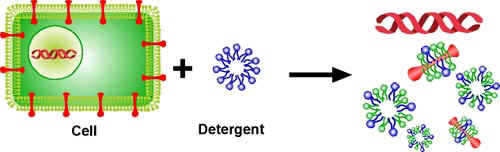
DNA can be extracted from many types of cells. The first step is to lyse or break open the cell. This can be done by grinding a piece of tissue in a blender. After the cells have broken open, a salt solution such as NaCl and a detergent solution containing the compound SDS (sodiumdodecyl sulfate) is added. These solutions break down and emulsify the fat & proteins that make up a cell membrane. Finally, ethanol is added because DNA is soluble in water. The alcohol causes DNA to precipitate, or settle out of the solution, leaving behind all the cellular components that aren’t soluble in alcohol. The DNA can be spooled (wound) on a stirring rod and pulled from the solution at this point.


Just follow these 3 easy steps:

Detergent, eNzymes (meat tenderizer), Alcohol


Objective:

To extract DNA from cells.

Materials:

Blender, split peas, salt, detergent, water, measuring cup and spoons, strainer, meat tenderizer, alcohol, test tube, glass stirring rod

Procedure:

  1. First, you need to find something that contains DNA such as split peas, fresh spinach, chicken liver, onion, or broccoli.

  1. Measure about 100 ml or 1/2 cup of split peas and place them in a blender.
  2. Add a large pinch of salt (less than 1 ml or about 1/8 teaspoon) to the blender.
  3. Add about twice as much cold water as the DNA source (about 200 ml or 1 cup) to the peas in the blender.
  4. Blend on high (lid on) for about 15 seconds.

  1. The blender separates the pea cells from each other, so you now have a really thin pea-cell soup.

And now, those 3 easy steps:

  1. Pour your thin pea-cell soup through a strainer into another container like a measuring cup or beaker.

  1. Estimate how much pea soup  you have and add about 1/6 of that amount of liquid detergent (about 30ml or 2 tablespoons). Swirl to mix.

  1. Let the mixture sit for 5-10 minutes.


The detergent captures the proteins & lipids of the cell membrane.

  1. Pour the mixture into test tubes or other small glass containers, each about 1/3 full.
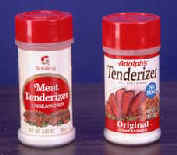
  2. Add a pinch of enzymes to each test tube and stir gently. Be careful! If you stir too hard, you’ll break up the DNA, making it harder to see. (Use meat tenderizer for enzymes. If you can’t find tenderizer, try using pineapple juice or contact lens cleaning solution.)


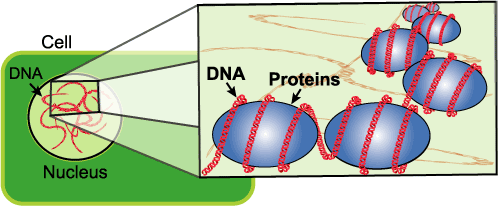
The DNA in the nucleus of the cell is molded, folded, and protected by proteins. The meat tenderizer cuts the proteins away from the DNA.

  1. Tilt your test tube and slowly pour rubbing alcohol (70-95% isopropyl or ethyl alcohol) into the tube down the side so that it forms a layer on top of the pea mixture. Pour until you have about the same amount of alcohol in the tube as pea mixture.

  1. Alcohol is less dense than water, so it floats on top forming two separate layers.
  2. All of the grease and the protein that we broke up in the first two steps move to the bottom, watery layer.
  3. DNA will rise into the alcohol layer from the pea layer. You can use a glass stirring rod or a wooden stick to draw the DNA into the alcohol.
  4. Slowly turning the stirring rod will spool (wrap) the DNA around the rod so it can be removed from the liquid.

Questions:

1. Does the DNA have any color?

2. Describe the appearance of the DNA.

3. Do only living things contain DNA? Explain.

Frequently Asked Questions: 1. I’m pretty sure I’m not seeing DNA. What did I do wrong?

First, check one more time for DNA. Look very closely at the alcohol layer for tiny bubbles. Often, clumps of DNA are loosely attached to the bubbles.

If you are sure you don’t see DNA, then the next step is to make sure that you started with enough DNA in the first place. Many food sources of DNA, such as grapes, also contain a lot of water. If the blended cell soup is too watery, there won’t be enough DNA to see. To fix this, go back to the first step and add less water. The cell soup should be opaque, meaning that you can’t see through it. Another possible reason for not seeing any DNA is not allowing enough time for each step to complete. Make sure to stir in the detergent for at least five minutes. If the cell and nuclear membranes are still intact, the DNA will be stuck in the bottom layer. Often, if you let the test tube of pea mixture and alcohol sit for 30-60 minutes, DNA will precipitate into the alcohol layer.

2. Why does the DNA clump together?

Single molecules of DNA are long and stringy. Each cell of your body contains six feet of DNA, but it’s only one-millionth of an inch wide. To fit all of this DNA into your cells, it needs to be packed efficiently. To solve this problem, DNA twists tightly and clumps together inside cells. Even when you extract DNA from cells, it still clumps together, though not as much as it would inside the cell.

Imagine this: the human body contains about 100 trillion cells, each of which contains six feet of DNA. If you do the math, you’ll find that our bodies contain more than a billion miles of DNA!

3. Can I use this DNA as a sample for gel electrophoresis?

Yes, but all you will see is a smear. The DNA you have extracted is genomic, meaning that you have the entire collection of DNA from each cell. Unless you cut the DNA with restriction enzymes, it is too long and stringy to move through the pores of the gel; instead, all you will end up seeing is a smear.

4. Isn’t the white, stringy stuff actually a mix of DNA and RNA?

That’s exactly right! The procedure for DNA extraction is really a procedure for nucleic acid extraction. However, much of the RNA is cut by ribonucleases (enzymes that cut RNA) that are released when the cells are broken open.


Fermentation Rootbeer


FERMENTATION – MAKING ROOT BEER
David Fankhauser’s Main Page


Introduction:

Fermentation has been used by mankind for thousands of years for raising bread, fermenting wine and brewing beer. The products of the fermentation of sugar by baker’s yeast Saccharomyces cerevisiae (a fungus) are ethyl alcohol and carbon dioxide. Carbon dioxide causes bread to rise and gives effervescent drinks their bubbles. This action of yeast on sugar is used to ‘carbonate’ beverages, as in the addition of bubbles to champagne).

We will set up a fermentation in a closed system and capture the generated carbon dioxide to carbonate root beer. You may of course adjust the quantities of sugar and/or extract  (Zatarain’s) to taste. 

EQUIPMENT
SUPPLIES
  • clean 2 liter plastic soft drink bottle with cap
  • funnel
  • 1 cup measuring cup
  • 1/4 tsp measuring spoon
  • 1 Tbl measuring spoon
  • Cane (table) sugar [sucrose] (1 cup)
  • Zatarain’s Root Beer Extract (1 tablespoon)
  • (When I could not find it locally, I ordered a case of 12 bottles for $18 from Zatarain’s, New Orleans, LA 70114
  • powdered baker’s yeast (1/4 teaspoon)  (Yeast for brewing would certainly work at least as well as baking yeast.)
  • cold fresh water


INSTRUCTIONS:

1) Assemble the necessary equipment and supplies
2) With a dry funnel, add in sequence:

1 level cup of table sugar (cane sugar) (You can adjust the amount to achieve the desired sweetness.)

3) Add: 1/4 teaspoon powdered baker’s yeast ( fresh and active)

(Fleischmann’s or other brand)

4) You can see the yeast granules on top of the sugar.
5) Shake to distribute the yeast grains into the sugar.
6) Swirl the sugar/yeast mixture in the bottom to make it concave (to catch the extract).
7) Add with funnel:

1 Tbl of root beer extract (I prefer Zatarain’s, but Hires, etc. will work.)

on top of the dry sugar

8) The extract sticks to the sugar which will help dissolve the extract in the next steps.
9) Half fill the bottle with fresh cool tap water (the less chlorine, the better).

Rinse in the extract which sticks to the tablespoon and funnel. Swirl to dissolve the ingredients.

10) Q.s. [fill up] to the neck of the bottle with fresh cool tap water, leaving about an inch of head space, securely screw cap down to seal. Invert repeatedly to thoroughly dissolve.

If you leave it in a warm temperature longer than two weeks, you risk an explosion…

11) Place at room temperature about three to four days until the bottle feels hard to a forceful squeeze. Move to a cool place (below 65 F). refrigerate overnight to thoroughly chill before serving. Crack the lid of the thoroughly chilled root beer just a little to release the pressure slowly.

NOTE: Do not leave the finished root beer in a warm place once the bottle feels hard. After a couple weeks or so at room temperature, especially in the summer when the temperature is high, enough pressure may build up to explode the bottle! There is no danger of this if the finished root beer is refrigerated.

12) Move to a refrigerator overnight before opening.


NOTE: There will be a sediment of yeast at the bottom of the bottle, so that the last bit of root beer will be turbid. Decant carefully if you wish to avoid this sediment.

A WORD ABOUT THE ALCOHOL IN HOME MADE ROOT BEER: The alcoholic content which results from the fermentation of this root beer and found it to be between 0.35 and 0.5 %. Comparing this to the 6% in many beers, it would require a person to drink about a gallon and a half of this root beer to be equivalent to one 12 ounce beer. I would call this amount of alcohol negligible, but for persons with metabolic problems who cannot metabolize alcohol properly, or religious prohibition against any alcohol,  consumption should be limited or avoided.


DNA Code for Insulin


DNA’s Instructions for Insulin  


Introduction:

Below are two partial sequences of DNA bases (shown for only one strand of DNA)  Sequence 1 is from a human and sequence 2 is from a cow.  In both humans and cows, this sequence is part of a set of instructions for controlling the production of a protein.  In this case, the sequence contains the gene to make the protein insulin.  Insulin is necessary for the uptake of sugar from the blood.  Without insulin, a person cannot use digest sugars the same way others can, and they have a disease called diabetes.

Materials:

paper, pencil, codon table

Procedure:

  1. Using the DNA sequence given in table 1, make a complimentary RNA strand for  the human.  Write the RNA directly below the DNA strand (remember to substitute U’s for T’s in RNA).
  2. Repeat step 1 for the cow.  Write the RNA directly below the DNA strand in table 2.
  3. Use the codon table in your book to determine what amino acids are assembled to make the insulin protein in both the cow and the human.   Write your amino acid chain directly below the RNA sequence.

Table 1 


Sequence 1 ­ Human
DNA C C A T A G C A C G T T A C A A C G T G A A G G T A A
RNA
Amino Acids


Table 2

Sequence 1 ­ Cow
DNA C C G T A G C A T G T T A C A A C G C G A A G G C A C
RNA
Amino Acids

Analysis:

1. The DNA sequence is different for the cow and the human, but the amino acid chain produced by the sequence is almost the same.  How can this happen?


2. Diabetes is a disease characterized by the inability to break down sugars. Often a person with diabetes has a defective DNA sequence that codes for the making of the insulin protein. Suppose a person has a mutation in their DNA, and the first triplet for the gene coding for insulin is C C C  (instead of C C A).   Determine what amino acid the new DNA triplet codes for.    Will this person be diabetic?


3. What if the first triplet was C A A ?


4. How is it that a code consisting of only four letters, as in DNA ( A, T, G, C ) can specify all the different parts of an organism and account for all the diversity of organisms on this planet?


DNA sequences are often used to determine relationships between organisms.  DNA sequences that code for a particular gene can vary widely.  Organisms that are closely related will have sequences that are similar. Below is a list of sequences for a few organisms:


Human CCA   TAG   CAC   CTA
Pig CCA   TGG   AAA   CGA
Chimpanzee CCA   TAA   CAC   CTA
Cricket CCT   AAA   GGG   ACG


5. Based on the sequences, which two organisms are most  closely related?


6. An unknown organism is found in the forest, and the gene is sequenced, and found to be   C C A  T G G  A A T  C G A  ,  what kind of animal do you think this is?