
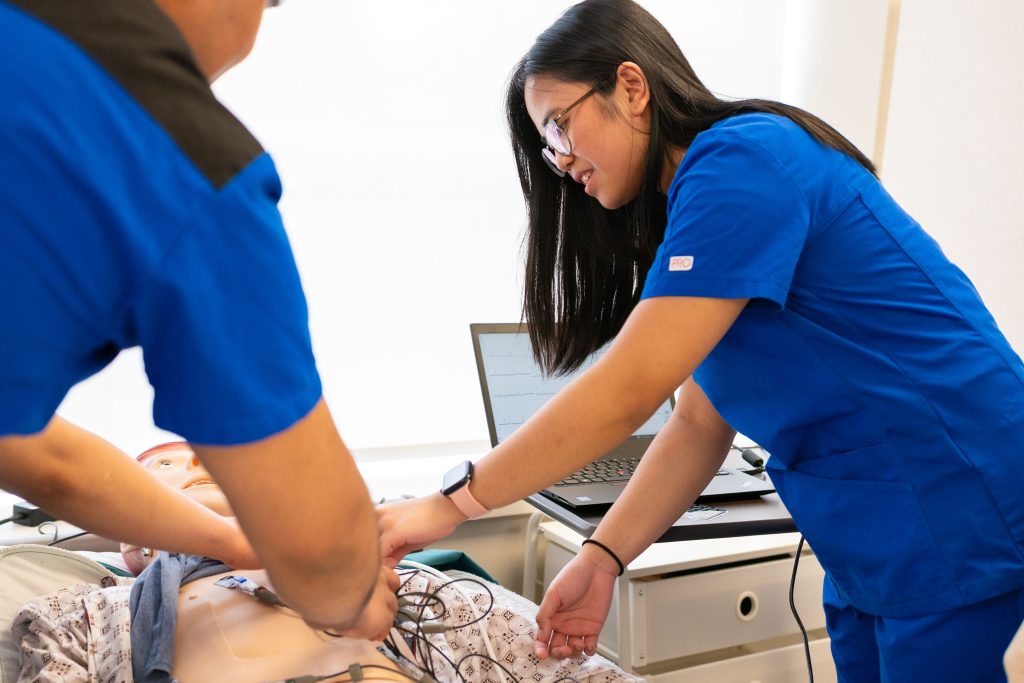
Studying biology can lead in many directions. Research, biotechnology, environmental science, public health, and healthcare are all natural possibilities, but nursing can be especially appealing for students who want to use science in a more immediate, people-centered way. The transition is not as unusual as it may first seem. Biology builds familiarity with the human body, disease processes, evidence, and laboratory thinking, while nursing takes much of that knowledge into direct patient care. The real question is not whether biology and nursing connect. It is which educational route makes sense for where you are now and what kind of work you want next.
Your Biology Background Already Gives You Useful Groundwork
Biology students spend years learning how living systems function and respond to change.
That foundation matters in nursing.
Knowledge of anatomy, physiology, microbiology, genetics, and cellular processes can make subjects such as pathophysiology and pharmacology feel more familiar. Instead of encountering every scientific concept for the first time, you may already understand many of the mechanisms behind illness and treatment.
The bigger change is learning to apply that knowledge to people.
Understanding fluid balance in a textbook is one thing. Recognizing why a patient’s symptoms, vital signs, and laboratory results may point toward dehydration or another health concern requires a different type of thinking.
Nursing takes science out of isolation and places it within communication, judgment, safety, and patient needs.
That applied side can be particularly satisfying for students who enjoy biology but want their scientific knowledge to have a more visible human impact.
Choose the Route That Matches Where You Are Now
The right nursing pathway depends heavily on your current education and licensure status.
If you are still completing a biology degree and know that nursing is your goal, changing programs earlier may sometimes reduce the amount of additional coursework required.
If you already hold a bachelor’s degree in biology but are not a nurse, a prelicensure nursing pathway—often an accelerated Bachelor of Science in Nursing option—may be more appropriate because you still need the nursing education and clinical preparation required for RN licensure.
An RN-to-BSN pathway is different.
It is designed for nurses who are already licensed RNs, often after completing an associate-degree or diploma nursing pathway. For someone with a biology background who has subsequently become an RN, an online RN to BSN without clinicals option may provide a flexible way to complete bachelor-level nursing education while continuing to work.
Keeping those pathways separate prevents an important planning mistake: choosing a program that assumes you already hold a license you have not yet earned.
Nursing Offers a More Defined Professional Route
One challenge with a biology degree is its breadth.
That flexibility can be valuable, but it can also leave graduates wondering which credential or experience should come next. Some biology-related careers require additional graduate study, while others depend heavily on laboratory experience, research skills, or a particular specialization.
Nursing follows a more structured professional pathway.
Registered nurses complete an approved nursing education route and must meet licensure requirements before practicing. The registered nursing career outlook also shows how RNs work across hospitals, outpatient services, residential care, government, education, and other healthcare environments.
That structure can appeal to students who want a career with recognizable entry requirements and several directions for growth once they are licensed.
It also means the transition has to be planned carefully. A biology degree provides valuable knowledge, but it does not by itself qualify someone to practice nursing.
Science Skills Transfer, but Nursing Adds New Ones
A biology background can make scientific coursework less intimidating, but nursing demands abilities that go beyond laboratory knowledge.
Communication becomes central.
Patients may be frightened, uncomfortable, confused, or receiving more information than they can process at once. Nurses need to explain care clearly while noticing what a patient may not be saying directly.
Prioritization also becomes important.
In an academic laboratory, following a procedure accurately is essential. In healthcare, you may need to decide which concern requires attention first while several things are happening simultaneously.
Biology students often bring valuable habits into that environment: attention to detail, comfort with technical information, evidence-based thinking, and experience following precise procedures.
Nursing adds clinical judgment, teamwork, patient advocacy, documentation, and the ability to remain useful when circumstances are less controlled than a laboratory experiment.
Clinical Training Is the Biggest Change
For many students moving from biology into nursing, clinical education represents the largest shift.
Science courses often teach you to understand systems objectively. Clinical experiences require you to use that knowledge while interacting with people whose needs are immediate and personal.
You may practice assessment, medication administration, communication, documentation, and other nursing responsibilities under supervision.
You also begin seeing how health conditions overlap.
A patient is rarely just an example of one disease process. Age, medications, mobility, nutrition, social circumstances, mental health, family support, and several diagnoses can all influence care at the same time.
That complexity is part of what makes nursing demanding.
It is also what makes a strong scientific background useful. Biology helps you understand what may be happening physiologically; nursing teaches you how to respond safely and practically.
Licensure Is Part of the Plan From the Beginning
Graduating from a nursing program and becoming an RN are connected but separate steps.
Prospective nurses should understand licensure requirements early rather than treating them as something to investigate after graduation.
The current NCLEX examination process requires candidates to apply for licensure or registration through the appropriate nursing regulatory body, meet its eligibility requirements, and register for the NCLEX before receiving authorization to test.
That makes program selection especially important.
Before enrolling, make sure the nursing pathway is designed to prepare graduates for the professional requirements associated with becoming an RN. Also look at prerequisites, transfer-credit policies, clinical expectations, and how previous biology coursework may apply.
Planning backward from licensure can make the education decision much clearer.
Think About the Work, Not Only the Job Market
Nursing can offer broad employment opportunities, but demand alone should not decide your career.
The daily work is highly interpersonal and can be physically and emotionally demanding. Depending on the setting, nurses may work nights, weekends, holidays, or long shifts. They regularly interact with people experiencing illness, pain, uncertainty, or major life changes.
That experience feels very different from studying biological systems in a classroom.
Before changing direction, ask whether you actually want regular patient interaction. Think about how you respond when people are stressed, whether you enjoy collaborative work, and how comfortable you are making decisions where accuracy matters immediately.
Talking with working nurses or gaining appropriate healthcare exposure can clarify that fit better than job statistics alone.
Your Biology Degree Does Not Become Wasted Education
Changing from biology to nursing does not mean abandoning everything you have already learned.
Your scientific background can become part of what makes you stronger in nursing school and later practice.
It may be especially useful if you eventually become interested in areas where disease mechanisms and complex treatments play a major role. Just as importantly, biology teaches habits of observation, analysis, and evidence that remain relevant throughout healthcare.
Nursing simply adds another dimension: the person experiencing the science.
That is ultimately what makes the transition attractive for many students. Biology helps explain how the body works. Nursing asks what you can do with that understanding when someone needs care.
For students who want science to become more immediate, collaborative, and human, that can make nursing feel less like leaving one career path behind and more like giving an existing foundation a new purpose.