
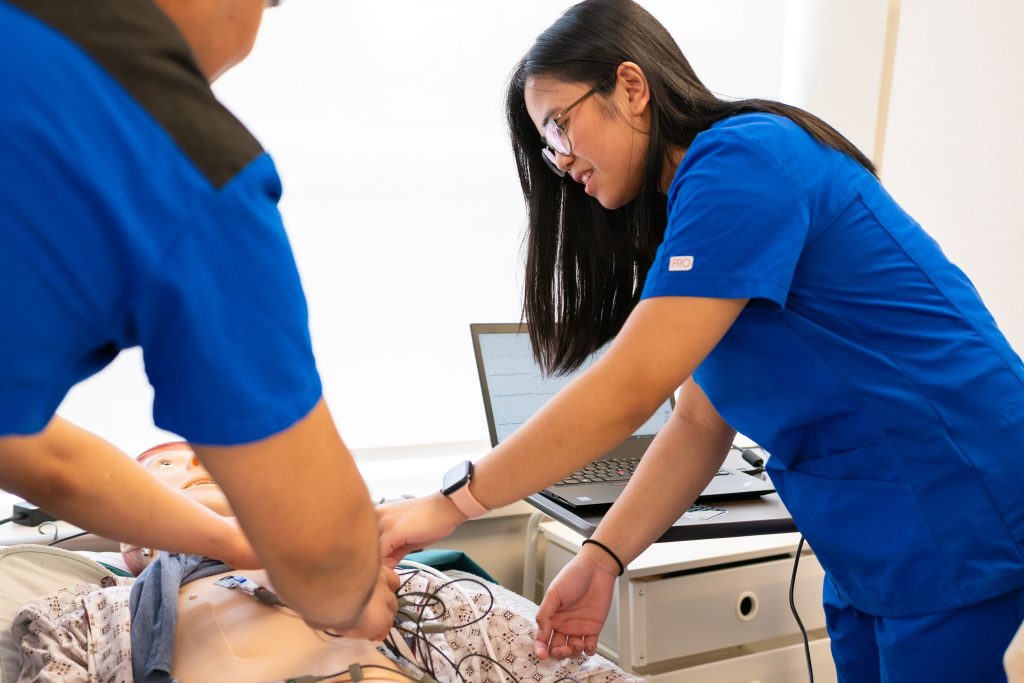
Choosing a nursing degree is more than selecting a college or deciding how quickly you want to graduate. Your route can influence tuition, clinical experience, licensure, work-life balance, and future options. Start with your career goal, understand each credential, and assess how a program fits your circumstances. Before comparing schools, consider the work you hope to do. Registered nurses provide direct care in hospitals, clinics, long-term care, and community settings. Others move into education, leadership, research, public health, or advanced practice, often with further education or certification.If you want to become an RN, focus on an approved prelicensure pathway that prepares you for the NCLEX-RN. If you already hold a bachelor’s degree in another subject, an accelerated or entry-level graduate route may help you transition without beginning an unrelated undergraduate degree again. Some direct entry MSN programs, for example, combine foundational nursing preparation with graduate-level study for eligible students who have not previously trained as nurses.A graduate degree does not automatically qualify someone for every advanced nursing position; the program title alone does not explain licensure outcomes. An Associate Degree in Nursing, or ADN, is a common route to initial RN preparation. It may offer a shorter, less expensive route. Graduates of eligible programs can apply for RN licensure, although some employers prefer a BSN.A Bachelor of Science in Nursing, or BSN, provides broader undergraduate preparation, often including leadership, community health, research, and evidence-based practice. An accelerated BSN is designed for people who already have a bachelor’s degree in another discipline. These programs compress coursework and clinical learning into an intensive schedule. Entry-level master’s programs offer another option for some career changers. They combine initial nursing education with graduate study, but structure and outcomes vary. RN-to-BSN and RN-to-MSN pathways, by contrast, are intended for licensed nurses continuing their education. The American Association of Colleges of Nursing outlines the structure and demands of accelerated nursing programs, including options for graduates from non-nursing disciplines. A nursing program must meet the requirements where you intend to seek a license. Before enrolling, confirm its approval with the relevant nursing regulator and review its accreditation. These are distinct checks; one does not replace the other.For a prelicensure student in the United States, ask whether graduates are eligible to apply for the NCLEX-RN and whether the program meets the educational requirements of the state where you plan to practice. This matters especially when considering an online or out-of-state program. State rules can affect enrollment eligibility and qualification for licensure after graduation.Request confirmation of the program’s approval, states where it can enroll students, and any restrictions affecting clinical placement or licensing. Clinical experience is central to nursing education. Classroom lessons and simulation build knowledge, while supervised practice lets students apply it when communicating with patients and working alongside healthcare teams.Programs differ in how they organize clinical placements. Some coordinate approved sites and schedules; others expect students to help identify locations or preceptors. Find out who arranges placements, how far you may need to travel, when rotations take place, and what happens if a placement is delayed.Ask how simulation fits into the curriculum. A well-equipped lab can help students practice assessment, communication, and decision-making in a structured environment. However, simulation is one part of the learning experience and should not be assumed to replace every required clinical hour. Beyond tuition, students may pay for books, uniforms, equipment, background checks, health screenings, immunizations, transportation, and examination fees. Clinical schedules may limit paid work.Compare total estimated costs rather than relying on the advertised price per credit. Ask whether prerequisites are included, whether transfer credits are accepted, and whether additional fees apply during clinical terms. If financial aid, scholarships, or employer assistance are available, check eligibility rules and deadlines.Time matters just as much. Accelerated programs can be appealing, but their pace may leave little room for employment or family responsibilities. A longer pathway may be more manageable if you need to maintain an income. Choose a schedule you can realistically sustain rather than the shortest option on paper. A strong program should help students progress academically and prepare for professional practice. Review NCLEX pass-rate information, graduation and retention data, and the support available to students who struggle with coursework. Ask whether advising, tutoring, skills labs, and faculty office hours are accessible. Also consider faculty access, academic advising, and whether the school offers support when coursework or clinical schedules become difficult.Consider how the curriculum develops clinical judgment, patient communication, medication safety, documentation, teamwork, and evidence-based decision-making. These abilities matter across nursing settings and cannot be measured by a degree title alone.Current students and recent graduates can reveal details admissions materials omit. Ask about workload, clinical organization, and preparation for professional practice. Your first nursing position does not have to define your entire career. Nurses may change specialties, pursue graduate education, teach, manage teams, or work in community and public health settings. A degree pathway should meet your immediate licensing and employment goals while providing a foundation for future development.Before deciding, compare each program’s entry requirements, curriculum, clinical support, approval status, total cost, schedule, and graduate outcomes. Weigh those facts against your education, responsibilities, finances, and preferred learning environment.The best nursing degree is not necessarily the fastest, most expensive, or most advanced option. It is the pathway that prepares you for the work you want to do and that you can complete with the resources available. A careful decision can make the transition into nursing more manageable and create a stronger foundation for a rewarding professional life.Start With the Role You Want to Pursue
Understand the Main Degree Pathways
Check Accreditation, Approval, and Licensure
Investigate Clinical Training Before You Apply
Calculate the Full Cost and Time Commitment
Evaluate Student Support and Career Preparation
Choose a Path That Leaves Room to Grow