Water Properties Prelab


Properties of Water

Pre-Lab Questions:

1. Explain why water is referred to as the universal solvent.


2. What is the overall charge on a molecule of water?

3. Water is a polar molecule (appears to have a charge). Explain why this is so.


4. Which end of a water molecule “acts negative”? Which “acts positive”?

5. Is water the only molecule that is polar?

6. Explain what occurs whenever several water molecules are near each other in a droplet. Include a sketch of this.


7. The property of water molecules being attracted to other water molecules is called ________________.

8. Explain what causes water to have surface tension.


9. Surface tension causes causes water to _____________ on surfaces such as glass.

10. In order to clean a surface, what must happen to surface tension? What type of chemicals can do this? Give an example


11. Besides reducing surface tension, what 4 other things can surfactants perform?


Water Properties Notes


Water Properties
States of Water
Adhesion and Cohesion
Surface Tension
Capillary Action

The States of Water

Water has three states. Below freezing water is a solid (ice or snowflakes), between freezing and boiling water is a liquid, and above its boiling point water is a gas. There are words scientists use to describe water changing from one state to another. Water changing from solid to liquid is said to be melting. When it changes from liquid to gas it is evaporating. Water changing from gas to liquid is called condensation (An example is the ‘dew’ that forms on the outside of a glass of cold soda). Frost formation is when water changes from gas directly to solid form. When water changes directly from solid to gas the process is called sublimation.

Gas
Liquid
Solid

Most liquids contract (get smaller) when they get colder. Water is different. Water contracts until it reaches 4 C then it expands until it is solid. Solid water is less dense that liquid water because of this. If water worked like other liquids, then there would be no such thing as an ice berg, the ice in your soft drink would sink to the bottom of the glass, and ponds would freeze from the bottom up!

Water is found on Earth in all three forms. This is because Earth is a very special planet with just the right range of temperatures and air pressures.

Adhesion and Cohesion

Water is attracted to other water. This is called cohesion. Water can also be attracted to other materials. This is called adhesion.

The oxygen end of water has a negative charge and the hydrogen end has a positive charge. The hydrogens of one water molecule are attracted to the oxygen from other water molecules. This attractive force is what gives water its cohesive and adhesive properties.

Surface Tension

Surface tension is the name we give to the cohesion of water molecules at the surface of a body of water. Try this at home: place a drop of water onto a piece of wax paper. Look closely at the drop. What shape is it? Why do you think it is this shape?

What is happening? Water is not attracted to wax paper (there is no adhesion between the drop and the wax paper). Each molecule in the water drop is attracted to the other water molecules in the drop. This causes the water to pull itself into a shape with the smallest amount of surface area, a bead (sphere). All the water molecules on the surface of the bead are ‘holding’ each other together or creating surface tension.

Surface tension allows water striders to ‘skate’ across the top of a pond. You can experiment with surface tension. Try floating a pin or a paperclip on the top if a glass of water. A metal pin or paper clip is heavier than water, but because of the surface tension the water is able to hold up the metal.

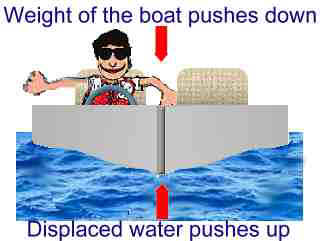
Surface tension is not the force that keeps boats floating.

Capillary Action

Surface tension is related to the cohesive properties of water. Capillary action however, is related to the adhesive properties of water. You can see capillary action ‘in action’ by placing a straw into a glass of water. The water ‘climbs’ up the straw. What is happening is that the water molecules are attracted to the straw molecules. When one water molecule moves closer to a the straw molecules the other water molecules (which are cohesively attracted to that water molecule) also move up into the straw. Capillary action is limited by gravity and the size of the straw. The thinner the straw or tube the higher up capillary action will pull the water (Can you make up an experiment to test this?).

Plants take advantage of capillary action to pull water from the into themselves. From the roots water is drawn through the plant by another force, transpiration.

Web Quest on Genetics

 
Web Quest on Genetics


 Introduction:

Have you ever wondered what your future children will look like? Have you ever wondered if they will be completely healthy? Have you ever thought about having yourself or your children cloned? This will more than likely be different things that you may have to deal with as an adult or parent.

This WebQuest, geared for high school biology students, attempts to explain different genetic disorders by dividing the class into different roles. With several cooperative groups presenting on different disorders, the whole class will be able to see the different types of genetic disorders, if they are treatable, and what we are doing as a human race to try to cure these disorders. 

Task:

As a class you have already done some basic studies on the concepts of genetics. Now we will be embarking on the content of genetic disorders – how people get them, karyotyping of the disorder, types of treatments, and any type of genetic testing that could have been taken advantage of prior to the birth of your child. Lastly, you will want to look at what your ‘child’ will look like.

The class will divide up into groups of 4 students. Within these cooperative groups each student will be given an area of study that they will need to attempt to draw conclusions from.

In the end your group will need to display the information that they find along the way as a class project. Your group will need to create a multimedia presentation that will be shared with the class and graded. You may want to include a suggested list of readings and/or Internet sources that may be of interest to the class.

The Process:

Your group should include 4 students total. One student will be a genetic counselor. One student will be a disorder specialist. Another person will be a perspective parent whose child will have the disorder. The last student will be the human genome specialist.

1. Genetic Counselor – Your role as the genetic counselor is to examine what types of treatment there are for the disorder and how you can advise these perspective parents on the disorder that their child has been exposed to.

2. Disorder Specialist – Your role as the disorder specialist is to karyotype the disorder, find out all of the signs and symptoms of the given disorder, and to find out what different prenatal tests could have been provided to the parent to have found out about this disorder prior to birth.

3. Parent – Your role as the parent is to find out what your child would look like using your own genetic features along with ‘your mate’s’ genetic features. Using Punnett’s squares you need to show what features will show up in your children and what the possibilities are that they will show up. You will also need to show a possible image of the child you and your mate could have.

4. Human Genome Expert – Your goal as the human genome expert is to find out all about the human genome project. What is it? What is their mission? How far along are they? How long has this project been in progress? Why is it important? And any other information that you feel is relevant that you would like to share.

Resources:

Some Internet resources that may be helpful to your groups will include the following:

1. Genetic Counseling: Ask NOAH. This site contains a lot of information about the different types of genetic disorders.

2. Yahoo – Genetic Disorders  This site lists several different disorders and contains several links to all of the different types of genetic disorders.

3. Genetic & Rare Conditions Site  This site lists several links to different types of disorders in alphabetical order.

4. What can our chromosomes tell us?  This is a site that talks about karyotyping and what we can understand due to karyotyping. Newsletter from the Genetics Science Learning Center.

5. A Genetics Glossary This is your basic genetic glossary however you really need to know what you are looking for so that it will be useful.

6. Genetics Education Center  This is a site dedicated to the education of genetics with several links to other sites.

7. The National Human Genome Research Institute . This site tells you all about the human genome project.

8. Department of Energy – Human Genome Project Information  This site also gives a lot of information about the human genome project. It also includes some fact sheets on cloning and gene testing.

9. A Gene Map of the Human Genome  Within this site you can see the mapping of several different chromosomes found within the body.

10. Learning about the Human Genome Project and Genetics through the World Wide Web http://www.kumc.edu/gec/hgpwww.html. This site includes a section on the ethics issues of genetic research that the genetic counselor may want to look at.

11. Understanding Gene Testing This site talks of how genes are linked to disease, how does a faulty gene trigger disease, and much more.

12. Ask Noah : on Birth Defects and Genetics  This site includes information about fetal testing, and different types of birth defects.

13. Basics of DNA Fingerprinting  This site will give you the basic understanding of DNA fingerprinting.

14. What is Genetic Testing?  This site shows the basics of genetic testing and also gets into some of the ethical issues of genetic testing.

15. Human Genetics : Human Karyotype  This site talks about karyotypes, chromosomal abnormalities, and allelic disorders.

Evaluation:


Beginning
5
Developing
10
Accomplished
15
Exemplary
20
Score
 

Quality of Information and ideas

Bare minimums are taken into account. Answered the few questions that were asked in the introduction.
Minimums plus slight extras added. Answered questions from the intro and at least one question posed to them in the process section.
All of the information found from the process section.
Issues addressed that went beyond what was asked in the process and introduction sections.


Amount of Information found


Only accessed 4 suggested web sites and verified in presentation.
At least 8 web sites accessed and verified in presentation.
At least 12 web sites accessed and verified in presentation.
All of the web sites accessed and verified in presentation.


Organization of presentation


Random information is presented by group.
Disorganized at times.
Organized
Organized effectively with easy understanding.


Use of class time


Majority of class time was wasted.
Half of class time was wasted.
Little class time was wasted.
No class time was wasted.

 
Overall PowerPoint Presentation
One slide for each person was made and presented to the class. Very plain text and no graphics.
Basic graphics used on all pages and presentation has some natural flow to it.
Easily understood by all. Includes graphics and data tables of information retrieved.
Information that is presented is aesthetically pleasing to the eye and includes all of the areas covered in this activity.


Conclusion:

Answer the following questions and turn in after your presentation:

  • What have you learned that you didn’t know before?
  • Was this an effective learning experience?
  • How did you like working in a group? Did working in a group add or detract from your learning?
  • How did you determine what information was helpful?
  • If you were to do this project again, what would you do differently and why?
  • Do you have suggestions for anyone else who might be doing this project? If so what are they?
  • Do you have any suggestions for me to change this project to make it more interesting / educational in the future? If so what are they?

Modified from web quest by Michelle Olsham

Vertebrate Notes


Vertebrate Notes

 I. Vertebrates = (Chordate Coelomate Deuterostomes)

A. Subphylum Vertebrata

1. About 45,000 extant species of vertebrates are in subphylum Vertebrata.
2. Vertebrates have all four chordate characteristics sometime during their lives.
3. Embryonic notochord is replaced by a vertebral column.
a. Vertebral column is individual vertebrae that surround a dorsal hollow nerve cord.
b. Vertebral column is part of a flexible, strong endoskeleton, is evidence of segmentation.
4. Vertebrate skeleton is living tissue (either cartilage or bone) that grows.
5. Endoskeleton and muscles together permit rapid and efficient movement.
6. Mutations could not have accumulated new genetic information needed to evolve kinds.
7. A skull is anterior component of main axis of vertebrate endoskeleton; it encases the brain.
8. High degree of cephalization in vertebrates is accompanied by complex sense organs.
a. Eyes designed as outgrowths of the brain.
b. Ears – for equilibrium, also sound-wave receivers.
9. They possess a complete digestive system and a large coelom.
10. Circulatory system is closed and respiratory pigments are contained within blood vessels.
11. Gills or lungs provide efficient gas exchange.
12. Kidneys efficiently excrete nitrogenous waste and regulate water.
13. Reproduction is usually sexual with separate sexes.
14. Design of the amnion allow reproduction on land.
15. Placental mammals allow development in the uterus.

B. Fishes

1. Fishes are aquatic, gill-breathing vertebrates that usually have fins and skin covered with scales.
2. Small, jawless, and fin-less ostracoderms are extinct vertebrate (fossils).
a. They were filter feeders also able to move water through their gills by muscular action.
b. Although living jawless fish lack protection, extinct jawless fish had large defensive head shields.

C. Jawless Fishes

1. Jawless fishes are agnathans; 63 species belong to superclass Agnatha.
2. Lampreys and hagfishes are modern jawless fishes; they lack a bony skeleton.
3. They have smooth non-scaly skin; have cylindrical bodies, and are up to a meter long.
4. Hagfishes are scavengers feeding on soft-bodied invertebrates and dead fishes.
5. Many lampreys are filter feeders; others are parasitic with a round muscular mouth equipped with
teeth to attach themselves to fish and suck nutrients from the host’s circulatory system.
6. Marine parasitic lampreys entered the Great Lakes and devastated the trout population in the 1950s.

D. Fishes with Jaws

1. Animals beyond this point are super class gnathostomates, animals with jaws and teeth
2. Placoderms are extinct jawed fishes.
a. They were armored with heavy plates and had strong jaws.
b. Like extant fishes, they had paired pectoral and pelvic fins.
c. Paired fins allow a fish to balance and maneuver well in water; this helps predation.

E. Cartilaginous Fishes

1. 850 species of sharks, rays, and skates are in class Chondrichthyes, the cartilaginous fishes.
2. They have a cartilaginous skeleton rather than bone.
3. Five to seven gill slits are on both sides of the pharynx; they lack gill covers of bony fish.
4. Body is covered by epidermal placoid (tooth-like) scales; teeth of sharks are enlarged scales.
5. Three senses detect: electric currents in water, pressure (a lateral line system), and smell.
6. Largest sharks are filter feeders, not predators; basking and whale sharks eat tons of crustaceans.
7. Most sharks are fast, open-sea predators; a great white shark eats dolphins, sea lions and seals.
8. Rays and skates live on ocean floor; pectoral fins are enlarged into wing-like fins; they swim slowly.
9. Stingrays have a venomous spine.
10. Electric rays feed on fish that have been stunned with electric shock of over 300 volts.
11. Sawfish rays have a large anterior “saw” that they use to slash through schools of fish.

F. Bony Fishes

1. 20,000 species of bony fishes are in class Osteichthyes.
2. Bony fishes have a bony skeleton; most are ray-finned with thin, bony rays supporting fins.
3. A few are lobe-finned fishes.
4. Ray-finned fishes include familiar fishes.
a. They are most successful and diverse of vertebrates.
b. They vary from filter feeders to predaceous carnivores.
c. Their skin is covered by scales formed of bone.
d. The gills do not open separately and instead are covered by an operculum.
e. Swim bladder is a gas-filled sac whose pressure alters to regulate buoyancy and depth.
f. Salmon, trout, and eels migrate between fresh and salt water but adjust kidney and gill function.
g. Sperm and eggs are usually shed into water.
h. For most, fertilization and embryonic development occur outside the female’s body.
5. Lobe-finned fishes include six species of lungfishes and one species of coelacanth.
a. Fleshy fins that are supported by central bones.
b. Lungfishes live in stagnant water or ponds that dry up; found in Africa, South America, & Australia.
c. Coelacanths live in deep oceans; once considered extinct, more than 200 have been captured since
1938 near the Comoros Islands, with recent finds near Malaysia.
G. Amphibians

1. Animals from this point on have four limbs and are Tetrapods.
2. Land animals use limbs to support the body since air is less buoyant than water.
4. About 3,900 species of amphibians belong to class Amphibia.
5. Diversity of Amphibians
a. Modern amphibians include frogs and toads, salamanders and newts, and caecilians.
b. Salamanders and newts have a long body and tail, and two pair of legs
c. S-shaped locomotion is similar to a fish.
d. Salamanders and newts are carnivorous, feeding on insects, snails, etc.
e. Practice internal fertilization; males produce a spermatophore that females receive with the cloaca.
f. Frogs and toads are tailless as adults; the hind limbs are specialized for jumping.
g. Frogs and toads have head and trunk fused; frogs live near fresh water, toads live in damp places
away from water.
h. Caecilians are legless; most burrow in soil and feed on worms, etc.
i. Reproduction involves use of water; “amphibian” refers to two life styles.
1) They shed eggs into the water for external fertilization.
2) Generally, eggs are protected by a coat of jelly but not by a shell.
3) Young hatch into aquatic larvae with gills (tadpoles).
4) The aquatic larvae usually undergo metamorphosis to develop into a terrestrial adult.
6. Anatomy and Physiology of Amphibians
a. A tongue is used for catching prey.
b. Eyelids keep eyes moist.
c. Ears are adapted for detecting sound waves and a larynx produces calls.
d. Their brain is larger than that of fishes; cerebral cortex is more developed.
e. Amphibians usually have small lungs supplemented by gas exchange across porous skin.
f. Single-loop circulatory path of fish is replaced by a closed double-loop circulatory system.
g. A three-chambered heart pumps mixed blood before and after it has gone to the lungs.
h. Skin is thin, smooth, and non-scaly, and contains numerous mucous glands; skin plays an active
role in osmotic balance and respiration.
i. Amphibians are ectothermic, depending upon external heat to regulate body temperature.
j. If winter temperature drops too low, ectotherms become inactive and enter torpor.

H. Reptiles

1. Reptiles practice internal fertilization through copulation and lay eggs with a leathery shell.
2. Amniote egg contains extra-embryonic membranes.
3. Extra-embryonic membranes are not part of embryo and are disposed of after development.
4. They protect the embryo, remove nitrogenous wastes, and provide oxygen, food, and water.
5. Amnion is one extra-embryonic membrane; it fills with fluid to provide a “pond” for embryo to develop.
6. About 6,000 species of reptiles are in class Reptilia.
7. Extinct reptiles (stem reptiles) gave rise to several lineages; each adapted to different ways of life.
a. Pelycosaurs (sail lizards).
b. Some were aquatic; ichthyosaurs were fish-like, plesiosaurs had a long neck.
8. Dinosaurs varied in size and behavior; some had a bipedal stance.
9. Dinosaurs were taken on the Ark (Hebrew = Box) and died out later due to lack of vegetation, cold, etc.
10. Diversity of Reptiles
a. Most live in tropics or subtropics; lizards and snakes live on soil; turtles and alligators live in water.
b. Tuataras are lizard-like and identical to fossils supposedly dated at 200 million years old.
c. Crocodiles and alligators are largely aquatic, feeding on fishes and other animals.
1) Powerful jaws have numerous teeth; a muscular tail is a paddle to swim and a weapon.
2) Male crocodiles bellow to attract mates; some species protect eggs and young.
d. Turtles have a heavy shell fused to the ribs and thoracic vertebrae.
1) Turtles lack teeth but use a sharp beak.
2) Sea turtles must return to lay eggs onshore.
e. Lizards have four clawed legs and are carnivorous.
1) Marine iguanas on the Galapagos are adapted to spend time in the sea.
2) Chameleons live in trees; have a long sticky tongue to catch insects, and change color.
3) Frilled lizards have a collar to scare predators.
f. Snakes.
1) Their jaws can readily dislocate to engulf large food.
2) A tongue collects airborne molecules to transfer them to Jacobson’s organ for tasting.
3) Some snakes that are poisonous have special fangs.
g. Reptiles have a thick, scaly skin that is keratinized and impermeable to water.
1) Keratin is protein found also in hair, fingernails, and feathers.
2) This protective skin prevents water loss but requires several molts a year.
h. Lungs are more developed than in amphibians; air rhythmically moves in and out of lungs due
to an expandable rib cage, except in turtles.
i. Most have a nearly four-chambered heart, except the crocodile is completely four-chambered;
oxygenated blood is more fully separated from deoxygenated.
j. Well-developed kidneys excrete uric acid; less water is lost in excretion.
k. Reptiles are ectothermic.
1) They require a fraction of the food per body weight of birds and mammals.
2) They are behaviorally adapted to warm their body temperature by sunbathing.

I. Birds

1. About 9,000 species of birds are in the class Aves.
2. Most lack teeth.
3. Birds also lay an egg, but it is hard-shelled rather than leathery.
4. Ancestry of birds is in dispute.  Evolutionists continually revise their theories and assumptions.
5. Bird classification is based on beak and foot types, and some habitats and behaviors.
a. Birds of prey have notched beaks and sharp talons.
b. Shorebirds have long slender bills and long legs.
c. Waterfowl have webbed toes and broad bills.
6. Birds are the only modern (extant) animals to have feathers.
a. Feathers are NOT modified reptilian scales.  Are composed of keratin, and occur as two types.
b. Contour feathers overlap to produce a broad, flat lifting surface.
c. Down feathers provide excellent insulation against loss of body heat.
7. Birds are homeothermic; they have ability to maintain a constant, relatively high body temperature.
a. Homeothermy enables an animal to be continuously active in cold weather.
b. Feathers serve for insulation and for flight.
8. Bird forelimbs are modified as wings for flying with hollow, light bones laced with air cavities.
9. Beak composed of keratin.
10. Keeled breastbone anchors muscles used in flight.
11. Respiratory air sacs are extensive, even extending into some larger bones.
a. Using a one-way flow of air, air sacs maximize gas exchange and oxygenation of blood.
b. Efficient supply of oxygen to muscles is vital for level of muscle activity needed for flight.
12. Birds possess a four-chambered heart; a double-loop circulatory system separates oxygenated blood.
13. Flight requires well-developed sense organs and nervous system.
a. Birds have very acute vision and excellent muscle reflexes.
b. Complex behavioral responses including hormonal regulation are required in bird behavior.
c. Bird flight allows migration and use of widespread food sources.

J. Mammals

1. About 4,500 species of mammals belong to class Mammalia.
2. Chief characteristics of mammals are hair and mammary glands.
3. Mammals are homeothermic; they produce heat and maintain a constant body temperature.
4. Many adaptations of mammals are related to temperature control.
5. Hair provides insulation against heat loss; allows mammals to be active in cold weather.
6. Gas exchange is efficiently accomplished by lungs.
7. Mammals possess a four-chambered heart and a double-loop circulatory system.
8. Mammary glands enable females to feed young without deserting them to obtain food.
9. Nursing creates bond between mother and offspring to ensure parental care while young are helpless.
10. In most mammals, young are born alive after a period of development in uterus.
Yet marsupials use pouches and a monotremes lay eggs.
11. Mammals That Lay Eggs
a. Monotremes are mammals that have a cloaca and lay hard-shelled amniote eggs.
b. They are represented by duckbill platypus and spiny anteater of Australia.
c. Female duckbill platypus lays her eggs in a burrow in the ground where she incubates them.
d. After hatching, young lick milk seeping from modified sweat glands on abdomen of males and females.
e. Spiny anteater has a pouch formed by swollen mammary glands and muscle; egg moves from cloaca
to pouch and hatches; young remain for 53 days and live in burrow where mother feeds them.
12. Mammals That Have Pouches
a. Marsupials begin development inside mother’s body but are then born in a very immature state.
b. Newborns crawl up into a pouch on their mother’s abdomen.
c. Inside a pouch they attach to nipples of mother’s mammary glands and continue to develop.
d. Today, most marsupials are found in Australia where they underwent adaptive radiation without                   competition from placental mammals introduced recently.
13. Mammals That Have Placentas
a. Placental mammals use a placenta, an organ of exchange between maternal and fetal blood.
b. Placenta supplies nutrients to and removes wastes from blood of developing offspring.
c. Placenta also allows mother to move about while offspring develop.
d. Placenta enables young to be born in a relatively advanced stage of development.
e. Placental mammals are very active animals; possess acute senses and a relatively large brain.
f. Brains of placental animals have cerebral hemispheres proportionately larger than other animals.
g. Young go through a long period of dependency on parents after birth.
h. Placental mammals populate all continents except Antarctica.
i. Most are terrestrial, but some are aquatic, and bats can fly.
14. Classification of mammals is based on mode of locomotion and method of obtaining food.
1. Order Perissodactyla includes 17 species of horses, zebras, tapirs, and rhinoceroses;
Order Artiodactyla includes 185 species of pigs, cattle, deer, buffaloes, giraffes, etc.
a. Both orders are hoofed animals.
b. They have elongated limbs adapted for running across open grassland.
c. They are herbivorous and have large grinding teeth.
2. 270 species are in order Carnivora.
a. Meat-eaters including the dogs, cats, bears, raccoons, and skunks.
b. All have limbs adapted for running.
c. They have a well-developed sense of smell.
d. Canine teeth of meat-eaters are large and conical.
e. Most are terrestrial; some are aquatic (e.g., seals, sea lions, walruses, and otters).
3. Order Primates contains 180 species of lemurs, monkeys, gibbons, chimpanzees, gorillas, and humans.
a. Typical primates are tree-dwelling fruit eaters; some are ground dwellers.
b. They have a freely movable head.
c. Their digits have nails, not claws; thumb in many (and sometimes the big toe) is opposable.
d. Primates, particularly humans, have well-developed brains.
4. Order Cetacea includes about 80 species of whales and dolphins.
a. They lack substantial hair or fur.
b. Blue whales are the largest animal ever to live on this planet.
c. Toothed whales feed on fish and squid; baleen whales strain plankton from the water.
5. Order Chiroptera contains 925 species of nocturnal bats.
a. Wings are layers of skin & connective tissue stretched between elongated bones of the fingers
b. Many species use echolocation to locate their usual insect prey.
c. Bats also eat birds, fish, frogs and plant tissues.
6. Order Rodentia contains rodents (e.g., mice, rats, squirrels, beavers, and porcupines).
a. This is largest order with 1,760 species.
b. Rodents have incisors that grow continuously.
c. Most eat seeds but some are omnivorous or eat insects.
7. Only two extant species are in order Proboscidea: the elephants.
a. Upper lip and nose are elongated and muscularized forming a prehensile trunk.
b. They are herbivores and are largest living land mammals.
8. Order Lagomorpha includes 65 species of rabbits, hares, and pikas.
a. They resemble rodents but have two pairs of continuously growing incisors.
b. Their hind legs are longer than their front legs and they are herbivores.

II. Phylum Chordata (notochord, nerve chord, pharyngeal pouches)

Subphylum Vertebrata (backbone/vertebrae)

Superclass Agnatha (jawless fishes – lampreys, etc.)

Superclass Gnathostomates (jawed fishes)

Class Chondrichthyes (cartilaginous fishes – sharks, rays, etc.)

Class Osteichthyes (bony fishes)

Class Amphibia (frogs, salamanders, newts, caecilians, etc.)

Class Reptilia (lizards, snakes, turtles, gators, dinosaurs, etc.)

Class Aves (birds)

Class Mammalia (rats, rabbits, cows, dogs, monkeys, apes, man)

Order Perissodactyla (horses, zebras, tapirs, and rhinoceroses)

Order Artiodactyla (pigs, cattle, deer, buffaloes, giraffes)

Order Carnivora (Meat eaters, tigers, wolves, etc.)

Order Primates (lemurs, monkeys, apes, man)

Order Cetacea (dolphins, whales)

Order Chiroptera (bats)

Order Rodentia (rats, mice, squirrels, beavers, porcupines)

Order Proboscidea (elephants, mammoths)

Order Lagomorpha (rabbits, hares, pikas)

BACK


Scientific Method & Hand Size Lab


Using the Scientific Method


Introduction:

Humans are classified as a separate species because of all the special characteristics that they possess. These characteristics are controlled by strands of DNA located deep inside their cells. This DNA contains the code for every protein that an organism has the ability to produce. These proteins combine with other chemicals, within the body, to produce the cells, tissues, organs, organ systems, and finally the organism itself. The appearance of these organs, such as the shape of ones nose, length of the fingers, or the color of the eyes is called the phenotype.

Even though humans contain hands with five fingers, two ears, or one nose, there are subtle differences that separate these organs from another. There are subtle differences in a person’s genes that allows for these different phenotypes. In this lab, we are going to observe some of these differences in phenotype. All human hands look pretty much alike, but there are genes on your chromosomes that code for the characteristics making up your hand. We are going to examine two of these characteristics (hand width and hand length) and try to determine why these phenotypic differences occurred.

Materials:

  • metric ruler (see end of lab)
  • pencil
  • calculator

Procedures:

Day 1

  1. Choose a partner and have them measure the length of your right hand in centimeters. (Measure from the tip of your middle finger to the beginning of your wrist as shown in figure 1.)  Record your measurements in Table 1.
  2. Now measure and record the length in centimeters of your partners hand.
  3. Have your partner measure the width of your right hand, straight across the palm, and record the data in Table 1. (see figure 1.)
  4. Now measure & record the width of your partner’s hand.

Figure 1.


Table 1


Group Data on Right Hand Width and Length
Student Name Length of Hand (cm) Width of Palm (cm)


  1. After the entire class has completed Table 1, record your group data on the Class Data Table at the front of the room
  2. Record the Class Data Table information on your lab sheet’s Table 2.

Table 2

Class Data on Right hand Width and Length (cm)

Class Period:

Student Gender
(M / F)
Hand Length (cm) Hand Width (cm)
1. M / F
2. M / F
3. M / F
4. M / F
5. M / F
6. M / F
7. M / F
8. M / F
9. M / F
10. M / F
11. M / F
12. M / F
13. M / F
14. M / F
15. M / F
16. M / F
17. M / F
18. M / F
19. M / F
20. M / F
21. M / F
22. M / F
23. M / F
24. M / F

Click for Class Data Table

Day 2

  1. In order to form a more accurate conclusion, the collection of additional data is necessary. Using the Class

. The teacher has the option to include the data from all the classes running this experiment. Below find tables that will allow the tabulation of several classes of data.


Table 3: All Classes Hand Length

Measurement of Hand length in cm. # of Males # of Females Total # ( Male + Female )
1.—————— ——————– ——————- ——————
2.—————— ——————- ——————- ——————-
3.—————— ——————- ——————- ——————-
4.—————— ——————- ——————- ——————-
5.—————— ——————- ——————- ——————-
6.—————— ——————- ——————- ——————-
7.—————— ——————- ——————- ——————-
8.—————— ——————- ——————- ——————-
9.—————— ——————- ——————- ——————-


Table 4: All Classes Hand Width

Measurement of Hand width in cm. # of Males # of Females Total # ( Male + Female )
1.—————— ——————– ——————- ——————
2.—————— ——————- ——————- ——————-
3,—————- ——————- ——————- ——————-
4.—————— ——————- ——————- ——————-
5.—————— ——————- ——————- ——————-
6.—————— ——————- ——————- ——————-
7.—————— ——————- ——————- ——————-
8.—————— ——————- ——————- ——————-
9.—————— ——————- ——————- ——————-


Line Graph the data from Tables 3 and 4. and then answer the questions that follow. Use the measurements of the width and length as your independent variable and the number of times that measurement appeared as your dependent variable.

Graph Tile: ___________________________________________________________


Analysis:

1. Examine the above graph. What is the shape of the line for hand length? _____________

________________________________________________________________________

2. What is the most abundant measurement for hand length? __________________.

3. What is (are) the least abundant measurement(s)? _________________________.

4. If we are to assign letters to represent the various lengths, what value(s) would we assign to the dominant genotype (HH)? ________________; the recessive genotype (hh)? ___________, and he heterozygous genotype (Hh)? _________________.

5. What would be the phenotypic name for the ( HH ) genotype? ___________________.

6. What would be the phenotypic name for the ( Hh ) genotype? ___________________.

7. What would be the phenotypic name for the ( hh ) genotype? ____________________.

8. Examine the above graph. What is the shape of the line for hand width ? ____________

________________________________________________________________________

9. What is the most abundant measurement for hand width? __________________.

10. What is (are) the least abundant measurement(s)? _________________________.

11. If we are to assign letters to represent the various lengths, what value(s) would we assign to the dominant genotype (WW)? ________________; the recessive genotype (ww)? ___________, and he heterozygous genotype (Ww)? _________________.

12. What would be the phenotypic name for the ( WW ) genotype? __________________.

13. What would be the phenotypic name for the ( Ww ) genotype? ___________________.

14. What would be the phenotypic name for the ( ww ) genotype? ___________________.

15. Are there any similarities in the graph of the above two characteristics? ____________.

16. If so, what are they? ____________________________________________________

17. Are there any differences in the graph of the above two characteristics? ____________.

18. If so, what are they? ____________________________________________________

19. Is there a difference in the length and width of the male and female hand? ___________.

20. Does the gender of a person have an effect on the phenotype of a trait? _____________.

Explain _________________________________________________________________

_______________________________________________________________________

________________________________________________________________________


Cut and use:

________________________________________________________________________