|
|
| Practice Quizzes |  |
Use the following online quizzes to review each topic covered in Biology. Some topics have two biology tests each, so try them both!
When you get all answers correct, email me your page along with your name and class period.
All Materials © Cmassengale


| What lizard is named for the spiny crest on its back? |
| What is the function of pits on the head of rattlesnakes? |
| What species of lizard is the only surviving member of its ancient group? |
| What is autotomy & what is its advantage? |
| Name the order for snakes. |
| Name several characteristics of all snakes. |
| Explain how retiles get air into their lungs. |
| Describe the skin of reptiles. |
| Give several ways that organisms reduce evaporation of water from their bodies. |
| What is the most widely accepted hypothesis for the extinction of dinosaurs? |
| Name some protective membranes found inside amniote eggs. |
| What retile adaptation allows them to live & reproduce on land? |
| What is the outermost membrane of the reptile egg? |
| Describe the heart chambers of all reptiles except alligators & crocodiles. |
| Name the 2 parts of a turtle’s shell and tell where each is located. |
| Are reptiles endotherms or ectotherms? Explain. |
| How do endotherms maintain their internal body temperature? |
| Describe the heart of endotherms. |
| Define oviparous. |
| Which group of reptiles care for their young after they hatch? |
| Which group of reptiles are the most ancient? |
| What characteristic found in other retiles is lacking in turtles & tortoises? |
| Describe the feeding habits of crocodiles. |
Enzyme Catalysis
 |
Introduction
Enzymes are proteins produced by living cells that act as catalysts, which affect the rate of a biochemical reaction. They allow these complex biochemical reactions to occur at a relatively low temperature and with less energy usage.
In enzyme-catalyzed reactions, a substrate, the substance to be acted upon, binds to the active site on an enzyme to form the desired product. Each active site on the enzyme is unique to the substrate it will bind with causing each to have an individual three-dimensional structure. This reaction is reversible and is shown as following:
E + S—-ES—- E + P
Enzymes are recyclable and unchanged during the reaction. The active site is the only part of the enzyme that reacts with the substrate. However, its unique protein structure under certain circumstances can easily be denatured. Some of the factors that affect enzyme reactions are salt concentration, pH, temperature, substrate and product concentration, and activators and inhibitors.
Enzymes require a very specific environment to be affective. Salt concentration must be in an intermediate concentration. If the salt concentration is too low, the enzyme side chains will attract each other and form an inactive precipitate. Likewise, if the salt concentration is too high, the enzyme reaction is blocked by the salt ions. The optimum pH for an enzyme-catalyzed reaction is neutral (7 on the pH scale). If the pH rises and becomes basic, the enzyme begins losing its H+ ions, and if it becomes too acidic, the enzyme gains H+ ions. Both of these conditions denature the enzyme and cause its active site to change shape.
Enzymes also have a temperature optimum, which is obtained when the enzyme is working at its fastest, and if raised any further, the enzyme would denature. For substrate and product concentrations, enzymes follow the law of mass action, which says that the direction of a reaction is directly dependent on the concentration. Activators make active sites better fit a substrate causing the reaction rate to increase. Inhibitors bind with the enzymes’ active site and block the substrate from bonding causing the reaction to subside.
The enzyme in this lab is catalase, which produced by living organisms to prevent the accumulation of toxic hydrogen peroxide. Hydrogen peroxide decomposes to form water and oxygen as in the following equation:
2H2O2 ® 2H2O + O2
This reaction occurs spontaneously without catalase, but the enzyme speeds the reaction considerably. This lab’s purpose is to prove that catalase does speed the decomposition of hydrogen peroxide and to determine the rate of this reaction.
Hypothesis
The enzyme catalase, under optimum conditions, effectively speeds the decomposition of hydrogen peroxide.
Materials
Exercise 2A: Test of Catalase Activity
In Part 1, the materials used were 10mL of 1.5% H2O2, 50-mL glass beaker, 1 mL catalase, and 2 10-mL pipettes and pipette pumps. In Part 2, the materials used were 5 mL of catalase, a boiling water bath, 1 test tube, a test tube rack, 10 mL of 1.5% H2O2, 50-mL beaker, and 2 10-mL pipettes and pipette pumps. In Part 3, the materials used were 10 mL of 1.5% H2O2, 50-mL beaker, liver, and a syringe.
Exercise 2B: The Baseline Assay
This part of the lab required 10 mL of 1.5% H2O2, 1 mL distilled H2O, 10 mL of H2SO4, 2 50-mL beakers, a sheet of white paper, 5 mL KMnO4, 2 5-mL syringes, and 2 10-mL pipettes and pumps.
Exercise 2C: The Uncatalyzed Rate of H2O2 Decomposition
The materials used for this section were 15 mL of 1.5% H2O2, 1 mL distilled H2O, 10 mL H2SO4, 2 50-mL beakers, a sheet of white paper, 5 mL KMnO4, 2 5-mL syringes, and 2 10-mL pipettes and pumps.
Exercise 2D: An Enzyme-Catalyzed Rate of H2O2 Decomposition
The materials required for Exercise 2D were 70 mL of 1.5% H2O2, 70 mL of H2SO4, 6 mL of catalase solution, 13 plastic, labeled cups, 3 100-mL beakers, 1 50-mL beaker, 1 10-mL syringe, 1 5-mL syringe, 1 60-mL syringe, a sheet of white paper, a timer, and 30 mL of KMnO4.
Method
Exercise 2A: Test of Catalase Activity
In Part 1, 10 mL of 1.5% H2O2 were transferred into a 50-mL beaker. Then, 1 mL of fresh catalase solution was added and the reaction was observed and recorded. In Part 2, 5 mL of catalase was placed in a test tube and put in a boiling water bath for five minutes. 10 mL of 1.5% H2O2 were transferred to a 50-mL beaker and 1 mL of the boiled catalase was added. The reaction was observed and recorded. In Part 3, 10mL of 1.5% H2O2 were transferred to a 50 mL beaker. 1 cm3 of liver was added to the beaker and the reaction was observed and recorded.
Exercise 2B: The Baseline Assay
10 mL of 1.5% H2O2 were transferred to a 50-mL beaker. 1 mL of H2O was added instead of catalase, and then, 10 mL of H2SO4 were added. After mixing well, a 5 mL sample was removed and placed over a white sheet of paper. A 5-mL syringe was used to add KMnO4, 1 drop at a time until a persistent brown or pink color was obtained. The solution was swirled after every drop, and the results were observed and recorded. The baseline assay was calculated.
Exercise 2C: The Uncatalyzed Rate of H2O2 Decomposition
A small quantity of H2O2 was placed in a beaker and stored uncovered for approximately 24 hours. To determine the amount of H2O2 remaining, 10 mL of 1.5% H2O2 were transferred to a 50-mL beaker. 1 mL of H2O was added instead of catalase, and then, 10 mL of H2SO4 were added. After mixing well, a 5 mL sample was removed and placed over a white sheet of paper. A 5-mL syringe was used to add KMnO4, 1 drop at a time until a persistent brown or pink color was obtained. The solution was swirled after every drop, and the results were observed and recorded. The percent of the spontaneously decomposed H2O2 was calculated.
Exercise 2D: An Enzyme-Catalyzed Rate of H2O2 Decomposition
The baseline assay was reestablished following the directions of Exercise 2B. Before starting the actual experiment a lot of preparation was required. Six labeled cups were set out according to their times and 10 mL of H2O2 were added to each cup. 6 mL of catalase were placed in a 10-mL syringe, and 60 mL of H2SO4 were placed in a 60-mL syringe. To start the actual lab, 1 mL of catalase was added to each of the cups, while simultaneously, the timer was started. Each of the cups were swirled. At 10 seconds, 10 mL of H2SO4 were added to stop the reaction. The same steps were repeated for the 30, 60, 120, 180, and 360 second cups, respectively.
Afterwards, a five 5 mL sample of each of the larger cups were moved to the corresponding labeled smaller cups. Each sample was assayed separately by placing each over a white sheet of paper. A 5-mL syringe was used to add KMnO4, 1 drop at a time until a persistent brown or pink color was obtained. The solution was swirled after every drop, and the results were observed and recorded.
Results
Table 1
Enzyme Activity
|
Activity |
Observations |
| Enzyme activity | The solution only bubbled slightly and slowly. |
| Effect of Extreme temperature
|
The catalase had no reaction with the H2O2; there were no bubbles |
| Presence of catalase | The solution foamed up immediately |
Table 2
Establishing a Baseline
|
Volume |
|
|
Initial reading
|
5.0 mL |
|
Final reading
|
0.8 mL |
|
Baseline ( final volume – initial volume)
|
4.2 mL |
Table 3
Rate of Hydrogen Peroxide Spontaneous Decomposition
|
Volume |
|
|
Initial KMnO4
|
5.0 mL |
|
Final KMnO4
|
1.2 mL |
|
Amount of KMnO4 used after 24 hours
|
3.8 mL |
|
Amount of H2O2 spontaneously decomposed |
0.4 mL |
|
Percent of H2O2 spontaneously decomposed |
9.52% |
Table 4
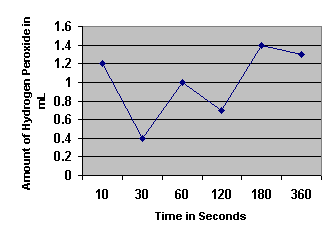
Rate of Hydrogen Peroxide Decomposition by Catalase
| Time ( Seconds) | ||||||
| 10 | 30 | 60 | 120 | 180 | 360 | |
|
Baseline KMnO4
|
4.0 mL |
4.0 mL |
4.0 mL |
4.0 mL |
4.0 mL |
4.0 mL |
|
Initial volume KMnO4
|
5.0 mL |
5.0 mL |
5.0 mL |
5.0 mL |
5.0 mL |
5.0 mL |
|
Final volume KMnO4
|
2.2 mL |
1.4 mL |
2.0 mL |
1.7 mL |
2.4 mL |
2.3 mL |
|
Amount KMnO4 used |
2.8 mL |
3.6 mL |
3.0 mL |
3.3 mL |
2.6 mL |
2.7 mL |
|
Amount H2O2 used |
1.2 mL |
0.4 mL |
1.0 mL |
0.7 mL |
1.4 mL |
1.3 mL |
Amount of Hydrogen Peroxide Decomposed by Catalase
Exercise 2A: Test of Catalase Activity
1. Observing the reaction of catalase on hydrogen peroxide:
a. What is the enzyme in this reaction? catalase
b. What is the substrate in this reaction? Hydrogen peroxide
c. What is the product in this reaction? Oxygen & water
d. How could you show that the gas evolved is O2? The gas could be shown to be O2 if the gas were collected in a tube, and a glowing splint was held in the tube. If the splint glowed, it would prove the gas was oxygen.
2. Demonstrating the effect of boiling on enzyme action:
a. How does the reaction compare to the one using the unboiled catalase? Explain the reason for this difference. While the unboiled catalase caused bubbles to form in the solution, the boiled catalase did not react at all because boiling an enzyme causes the protein to unfold and therefore denatures it.
3. Demonstrating the presence of catalase in living tissue:
a. What do you think would happen if the potato or liver was boiled before being added to the H2O2? The catalase in the liver would have been denatured by the boiling and would not have reacted with the H2O2.
Analysis of Results
1. Determine the initial rate of the reaction and the rates between each of the time points.
|
Time Intervals (Seconds) |
||||||
|
Initial 0 to 10 |
10 to 30 |
30 to 60 |
60 to 120 |
120 to 180 |
180 to 360 |
|
|
Rates |
0.12 mL/sec |
-0.04 mL/sec |
0.02 mL/sec |
-0.005 mL/sec |
0.01167 mL/sec |
-0.00083 mL/sec |
2. When is the rate the highest? Explain why.
The rate is the highest in the initial ten seconds because the concentration of catalase is at its highest. As more of the product is formed, it blocks the reaction between the catalase and the hydrogen peroxide.
3. When is the rate the lowest? For what reasons is the rate low?
The rate is lowest during the 180-360 seconds time period because of the law of mass action. This law says that when there is a high concentration of product as in this period, the enzymes will be blocked by the product (water) from reaching and reacting with the substrate (H2O2).
4. Explain the inhibiting effect of sulfuric acid on the function of catalase. Relate this to enzyme structure and chemistry
Sulfuric acid has an inhibiting effect on catalase function because it causes the pH level in the solution to lower considerably. Acidic solutions cause the protein structure of the enzyme to gain H+ ions causing it to denature.
5. Predict the effect lowering the temperature would have on the rate of enzyme activity. Explain your prediction.
Lowering the temperature of the catalase would slow the rate of reaction until it finally caused the enzyme to denature, and it would no longer react with the substrate. Most enzymes are only affective in a temperature range between 40° – 50° C.
6. Design a controlled experiment to test the effect of varying pH, temperature, or enzyme concentration.
Part 1: Enzyme Activity at Room Temperature
Add 10 mL of 1.5% H2O2 to a 50-mL beaker, and add 1 mL of room temperature catalase. Mix well and add 10 mL of H2SO4. Watch the reaction and record the results.
Part 2: The Effect of Excessive Heat on Enzyme Activity
Put 5 mL of catalase into a test tube and heat thoroughly over a Bunsen burner. Add 1 mL of the heated catalase to 10 mL of 1.5% H2O2 in a 50-mL beaker. Add 10 mL of H2SO4. Watch the reaction and record the results.
Part 3: The Effect of Excessive Cooling on Enzyme Activity
Put 5 mL of catalase in a freezer until completely frozen. Add 1 mL of the frozen catalase to 10 mL of 1.5% H2O2 in a 50-mL beaker. Add 10 mL of H2SO4. Watch the reaction and record the results.
Error Analysis
Any number of factors in this lab could have affected the results of this experiment. To get the desired results all of the measurements had to be precisely accurate and fully planned before hand. In Exercise D especially, the factor of planning became increasingly essential. The first attempt at 2D was unsuccessful due to several reasons. First of all, the measurements, which were taken, could have possibly been inaccurate and the 60-mL syringe containing H2SO4 also dripped into one of the cups early which did not allow the reaction to fully take place. There was also some confusion on the operation of the timer and precise planning in its use. The second attempt at 2D contained errors as well. The measurements were still not as accurate as they should have been, and the solution did not appear entirely uniform. In one cup, for example, the first drop of KMnO4 left a persistent pink color, and then after over a minute, it returned back to being clear. It then took several milliliters more to get it back to a pink color.
Discussion and Conclusion
This lab showed how catalase increased the rate of decomposition of hydrogen peroxide. In 2A, it was shown that catalase causes a visual reaction with H2O2, that when boiled catalase is no longer reactive, and that catalase is present in living tissue. Lab 2C shows that the natural decomposition of H2O2 is much slower than the enzymatic reaction. Lab 2D showed the decomposition of H2O2 over just a period of six minutes, and it had already decomposed more than the uncatalyzed H2O2 had done in 24 hours.
| Lab 1 Osmosis & Diffusion |

Introduction:
Cells have kinetic energy. This causes the molecules of the cell to move around and bump into each other. Diffusion is one result of this molecular movement. Diffusion is the random movement of molecules from an area of higher concentration to areas of lower concentration. Osmosis is a special kind of diffusion where water moves through a selectively permeable membrane (a membrane that only allows certain molecules to diffuse though). Diffusion or osmosis occurs until dynamic equilibrium has been reached. This is the point where the concentrations in both areas are equal and no net movement will occur from one area to another.
If two solutions have the same solute concentration, the solutions are said to be isotonic. If the solutions differ in concentration, the area with the higher solute concentration is hypertonic and the area with the lower solute concentration is hypotonic. Since a hypotonic solution contains a higher level of solute, it has a high solute potential and low water potential. This is because water potential and solute potential are inversely proportional. A hypotonic solution would have a high water potential and a low solute potential. An isotonic solution would have equal solute and water potentials. Water potential (y) is composed of two main things, a physical pressure component, pressure potential (yp), and the effects of solutes, solute potential (ys). A formula to show this relationship is y = yp + ys. Water will always move from areas of high water potential to areas of low water potential.
The force of water in a cell against its plasma membrane causes the cell to have turgor pressure, which helps maintain the shape of the cell. When water moves out of a cell, the cell will loose turgor pressure along with water potential. Turgor pressure of a plant cell is usually attained while in a hypotonic solution. The loss of water and turgor pressure while a cell is in a hypertonic solution is called plasmolysis.
Hypothesis:
During these experiments, it will be proven that diffusion and osmosis occur between solutions of different concentrations until dynamic equilibrium is reached, affecting the cell by causing plasmolysis or increased turgor pressure during the process.
Materials:
Lab 1A – To begin Lab 1A, first collect the desired equipment. The materials needed are dialysis tubing, Iodine Potassium Iodide (IKI) solution, 15% glucose/ 1% starch solution, glucose Testape or Lugol’s solution, distilled water, and a 250-mL beaker.
Lab 1B – For Lab 1B you will need to collect six presoaked dialysis tubing strips, distilled water; 0.2M, 0.4M, 0.6M, 0.8M, and a 1.0M sucrose solution; six 250-mL beakers or cups, and a scale.
Lab 1C – Lab 1C these items are needed: a potato, knife, potato core borers, six different solutions, and a scale.
Lab 1D – During Lab 1D, only paper, pencil, and a calculator will be needed to make the calculations.
Lab 1E – n Lab 1E these items are needed: a microscope slide, cover slip, onion cells, light microscope, and a 15% NaCl solution.
Procedures:
Lab 1A – After gathering the materials, pour glucose/starch solution into dialysis tubing and close the bag. Test the solution for presence of glucose. Test the beaker of distilled water and IKI for presence of glucose. Put the dialysis bag into the beaker and let stand for 30 minutes. When time is up test both the bag and the beaker for presence of glucose. Record all data in table.
Lab 1B – Obtain the six strips of dialysis tubing and fill each with a solution of a different molarity. Mass each bag. Put each bag into a beaker of distilled water and let stand for half and hour. After 30 minutes is up, remove each bag and determine its mass. Record all data in its appropriate table.
Lab 1C – sing the potato core borer, obtain 24 cylindrical slices of potato, four for each cup. Determine the mass of the four cylinders. Immerse four cylinders into each of the six beakers or cups. Let stand overnight. After time is up, remove the cores from the sucrose solutions and mass them. Record all data in its appropriate table.
Lab 1D – Using the paper, pencil, and calculator collected, determine solute potentials of the solutions and answer the questions asked to better understand this particular part of the lab.
Lab 1E – Using the materials gathers, prepare a wet mount slide of the epidermis of an onion. Draw what you see of the onion cell under the microscope. Add several drops of the NaCl solution to the slide. Now draw the appearance of the cell.
Data:
Lab 1A – Table 1.1
| Contents | Initial Color | Final Color | Initial Presence of Glucose | Final Presence of Glucose | |
| Bag | 15% Glucose/ 1% Starch Solution | clear | Dark blue | + | + |
| Beaker | H2O+IKI | Orange to brown | Orange to brown | _ | + |
Lab 1A Questions
1) Glucose is leaving the bag and Iodine-Potassium-Iodide is entering the bag. The change in color of the contents of the bag and the presence of glucose in the bag prove this.
2) In the results, the IKI moved from the beaker to the bag, this caused the change in the color of the bag. The IKI moved into the bag to make the concentrations outside the bag equal to inside the bag. The glucose solution moved out of the bag making glucose present in the beaker. The glucose moved to make the solute concentration inside and out of the bag equal.
3) If the initial and final percent concentration of glucose and IKI for in the bag and the beaker were given, they would show the differences and prove the movement of these substances to reach dynamic equilibrium.
4) Based on my observations, the smallest substance was the IKI molecule, then the glucose molecules, water molecules, membrane pore, and then the starch molecules being the largest.
5) If the experiment started with glucose and IKI inside the bag and starch in the beaker, the glucose and IKI would move out of the bag to make the concentrations equal, but the starch could not move into the bag because its molecules are too big to pass through the semipermeable membrane.
Lab 1B – Table 1.2 Dialysis Bag Results
| Contents in dialysis bag | Initial mass | Final mass | Mass difference | Percent change in mass |
| a) distilled water | 26.5g | 26.6g | 0.1g | 0.4%
|
| b)0.2M | 28.1g | 29.3g | 1.2g | 4.3% |
| c)0.4M | 27.3g | 30.1g | 2.8g | 10.3% |
| d)0.6M | 28.3g | 32.3g | 4.0g | 14.1% |
| e)0.8M | 25.9g | 30.7g | 4.8g | 18.5% |
| f)1.0M | 26.7g | 32.9g | 6.2g | 23.2% |
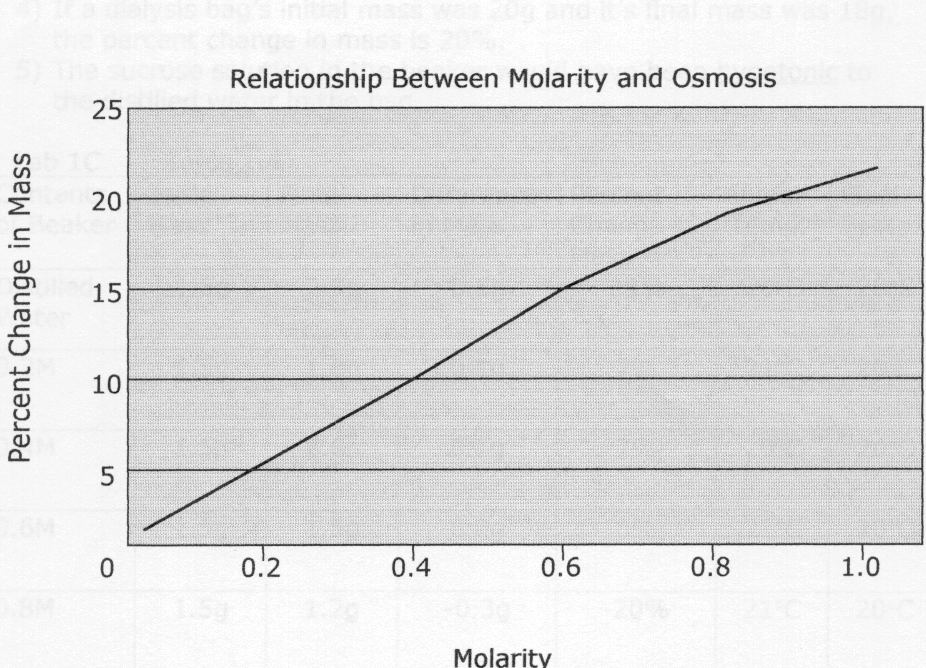
Table 1.3 Dialysis Bag Results: Class Data
| Group 1 |
Group 2 |
Group 3 |
Group 4 | Total | Class Average | |
| Distilled Water | 0.4% | 1.16% | 0.79% | 1.54% | 3.89% | 1.0% |
| 0.2M | 4.3% | 5.99% | 6.44% | 5.94% | 22.67% | 5.67% |
| 0.4M | 10.3% | 10.49% | 10.33% | 8.45% | 39.57% | 9.89% |
| 0.6M | 14.1% | 14.86% | 16.04% | 15.1% | 60.1% | 15.03% |
| 0.8M | 18.5% | 19.80% | 17.97% | 20.0% | 76.27% | 19.07% |
| 1.0M | 23.2% | 18.77% | 23.55% | 21.9% | 87.42% | 21.86% |
Lab 1B Questions:
1) The molarity of the sucrose in the bag determines the amount of water that either moves into or out of the bag, which changes the mass. For example, when the bag contained a 0.2M solution, water entered the bag to make the concentrations inside and outside of the bag more equal. As this happened, the mass rose 1.2g
2) If each of the bags were placed into a 0.4M solution instead of distilled water, the masses of the bags would have changed in different ways. The mass of the bags filled with distilled water and 0.2M sucrose would have gone down because water would have left the bag. The mass of the 0.4M bag would have stayed the same because the concentrations are now equal. The masses of the 0.6, 0.8, and 1.0M bags would have increased because water would have moved into the bag to equalize the concentrations.
3) In the data collected, the percent change in mass was calculated to show how greatly the mass increased or decreased. The difference in mass is not enough to go by because the initial masses of the dialysis bags were not all the same.
4) If a dialysis bag’s initial mass was 20g and it’s final mass was 18g, the percent change in mass is 20%.
5) The sucrose solution in the beaker would have been hypotonic to the distilled water in the bag.
Lab 1C Table 1.4
| Contents of Beaker | Initial Mass | Final Mass | Difference in Mass | % Change in Mass | Initial Temp. | Final Temp. |
| Distilled Water | 1.5g | 2.0g | 0.5g | 33% | 20°C | 20°C |
| 0.2M | 1.5g | 1.6g | 0.1g | 7% | 21°C | 20°C |
| 0.4M | 1.5g | 1.6g | 0.1g | 7% | 20°C | 20°C |
| 0.6M | 1.5g | 1.5g | 0.0g | 0% | 21°C | 20°C |
| 0.8M | 1.5g | 1.2g | -0.3g | -20% | 21°C | 20°C |
| 1.0M | 1.5g | 1.4g | -0.1g | -7% | 20°C | 20°C |
Lab 1C Table 1.5 Class Results
| Percent Change in Mass of Potato Cores | |||||||
| Group 1 | Group 2 | Group 3 | Group 4 | Total | Class Average | ||
| Distilled Water | 33% | 35.29% | 25% | 31.25% | 124.54% | 31.14% | |
| 0.2M | 7% | 29.41% | 25% | 13.33% | 74.74% | 18.69% | |
| 0.4M | 7% | 11.11% | -12.5% | -12.5% | -6.89% | -1.7% | |
| 0.6M | 0% | -15.79% | -18.75% | -20% | -54.54% | -13.64% | |
| 0.8M | -20% | -15.79% | -18.75% | -25% | -79.54% | -19.89% | |
| 1.0M | -7% | 0% | -18.75% | -20% | -45.75% | -11.44% | |
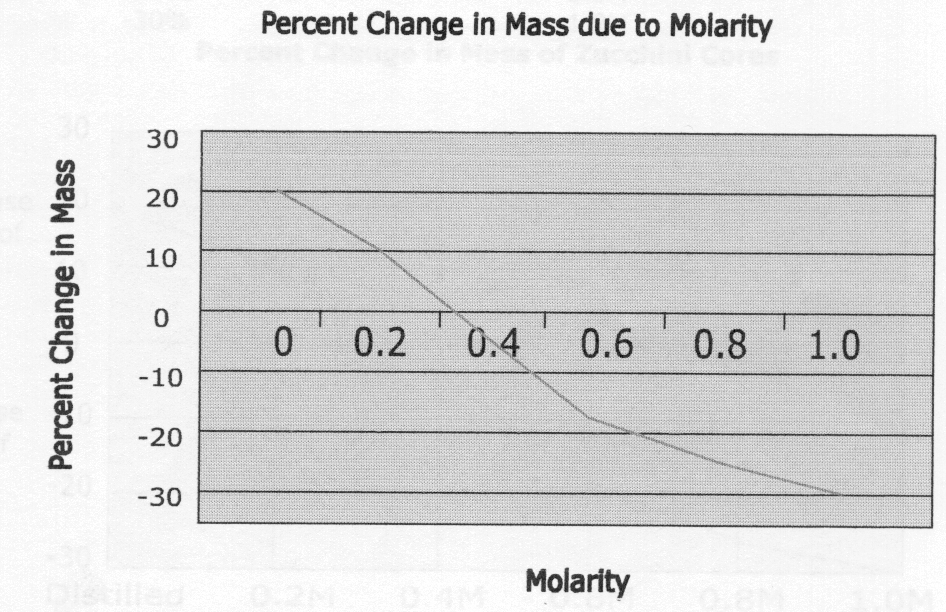
Lab 1 D Questions:
1) The water potential of the potato core after dehydrating will decrease because the water within the potato would evaporate and therefore lower the water potential.
2) The solute concentration of the plant cell is hypertonic because the solute concentration is higher than the water concentration. Because of this, water will diffuse into the cell to reach dynamic equilibrium.
3) The pressure potential of the system is equal to 0.
4) The water potential is greater in the dialysis bag.
5) Water will diffuse out of the bag since the water potential is higher in the bag and water moves from areas of higher water potential to areas of lower water potential.
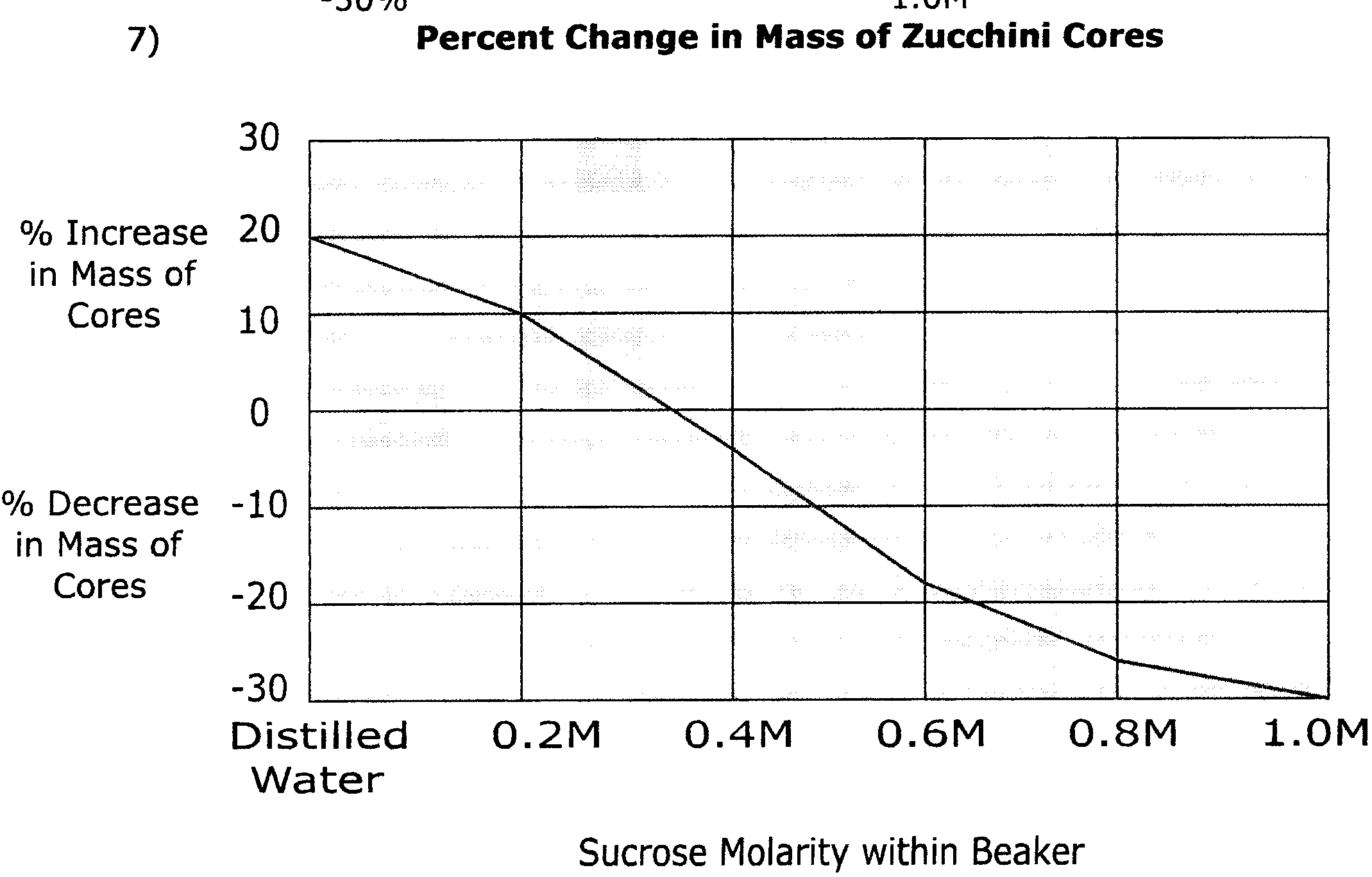
6) Zucchini cores placed in sucrose solutions at 27°C resulted in the following percent changes after 24 hours:
| Percent Change in Mass | Sucrose Molarity |
| 20% | Distilled Water |
| 10% | 0.2M |
| -3% | 0.4M |
| -17% | 0.6M |
| -25% | 0.8M |
| -30% | 1.0M |
8)ys=-iCRT
ys=-(1)(0.35)(0.0831)(295)
ys=-8.580075
y=0+ys
y=0+(-8.580075)
y=-8.580075
9) Adding solute to a solution increases solute potential because the solute concentration increases.
10) The distilled water would have a higher concentration of water molecules and would also have a higher water potential. The red blood cells would increase in size because water is moving from the area of higher water potential (the distilled water) to the area of lower water potential (the red blood cells) until dynamic equilibrium is reached.
Lab 1E Questions
1) After preparing a wet mount slide, I have observed the onion cells under magnification and they appear to be small, empty boxes pushed closely together.
2) By adding two or three drops of NaCl the cells should have shrunk, but no change took place.
3) The cells maintained the same shape.
4) Plasmolysis is the lose of water and turgor pressure in a cell.
5) The onion cells should have plasmolyzed because the area surrounding them had a lower water potential and water should have moved out of the cells.
6) Grasses that live on the sides of roads that have been salted in the winter end to dies because the water is drained from the cells as it moves out of the grass cells into the hypertonic NaCl area around it.
Lab 1D Plasmolysis of Cells – Drawings of onion cells
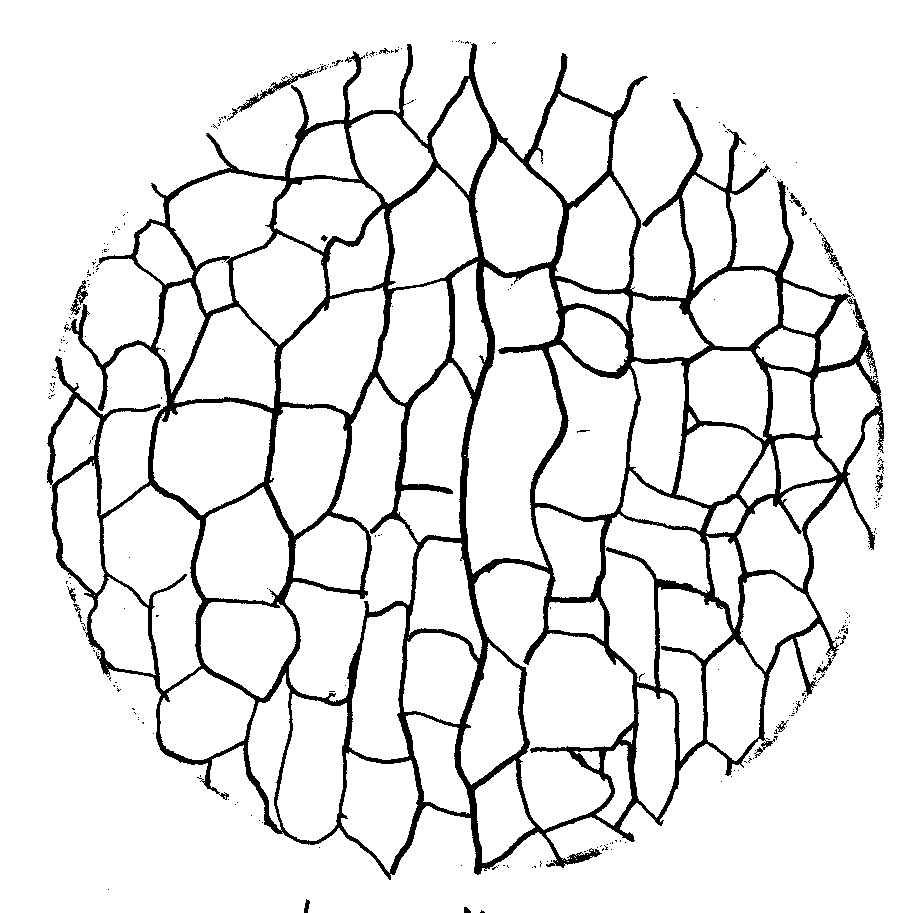
100X
Onion Cells in Distilled Water
*Picture Of onion cells in saline not available.
Error Analysis:
Lab 1A – The data collected in this lab experiment did not seem to contain any inconsistencies, so therefore no human error is detected.
Lab 1B – In this lab experiment, the data seems to be compliant with the data collected by the other lab groups, so no human error was thought to have happened.
Lab 1C – There was some discrepancy in this experiment in the 1.0M solution’s percent change in mass of potato cores. The data decreases consistently until the 1.0M solution, so human error is thought to be a factor in this. Some mistakes that could have taken place are miscalculations in initial and final masses or problems with the molarity of the solution itself.
Lab 1D – In this part of the lab, only calculations were made, so no human error probably occurred during this time.
Lab 1E – In part 1E, after adding the NaCl solution to the onion cells, the cells should have reduced in size, but no reaction took place. This may have occurred in part because the onion itself was already dried out and dehydrated, or while the onion was being looked at through the microscope, the heat from it may have caused the cells to loose water.
Conclusion:
During the experiment conducted in Lab 1A, the results and data collected make it possible to conclude that glucose and Iodine Potassium Iodide can pass through a selectively permeable membrane and will if the concentrations on either side are not equal. In Lab 1B, it can be concluded that sucrose cannot pass over a selectively permeable membrane, but instead water molecules will move across the membrane to the area of lower water potential to reach dynamic equilibrium. Lab 1C provided information that helps to conclude that potatoes do contain sucrose molecules. This can be stated because the cores took in water while they were emerged in the distilled water. This means they had a lower water potential and higher solute potential than the distilled water. The solute potential is equal to about a 0.6M solution of sucrose according to the data collected. During Lab 1D calculations were made and questions were answered to help give a better understanding of water and solute potential. If the onion cell experiment in part 1E of the lab would have produced correct results, conclusions could have been made. It is thought that the onion cells would have plasmolyzed due to the addition of NaCl to the cells. This shows how the onion cells had high water potential and moved to the area outside the cell with lower water potential. Then, after adding water back to the cells, water would have moved back into the cells increasing turgor pressure.
The water potential played an enormous role in each part of this lab. Since water moves areas of high water potential to areas of low water potential, reactions took place in each part resulting in different conclusions being derived from them. Water potential was a key element in each part of the experiment. In plant and animal cells, loss or gain of water can have different effects. In a plant cell, it is ideal to have an isotonic solution. If the solution is hypertonic, the cell will shrivel from lack of water intake. Inversely, if the solution is hypotonic the cell could take in too much water and the cell will lyse and break open. For a plant cell, the ideal solution is a hypotonic solution because the cell takes in water increasing turgor pressure which keeps the cells tightly packed and keep their shape. If the solution is hypertonic, the cell will plasmolyze and died from lack of water. In an isotonic solution, the plant cell does not have enough turgor pressure to keep is shape.