Introduction to Animal

Introduction to Animals

All Materials © Cmassengale

Characteristics

  • All multicellular (metazoans) & eukaryotic
  • Cells lack cell walls & come in a variety of shapes
  • Ingestive heterotrophs (take in food & internally digest it)
  • Store food reserves temporarily as glycogen in the liver
  • Have some type of skeletal support
  • Exoskeletons found in arthropods cover the outside of the body but limit size
  • Endoskeletons found in all vertebrates are found inside the body & are made of cartilage &/or bone
  • Worms have fluid-filled internal cavities giving them skeletal support
  • Sponges have the simplest skeleton 
  • May be sessile (attached & non-moving) or motile (able to move around)
  • Muscular tissue provides energy for movement
  • Reproduce sexually
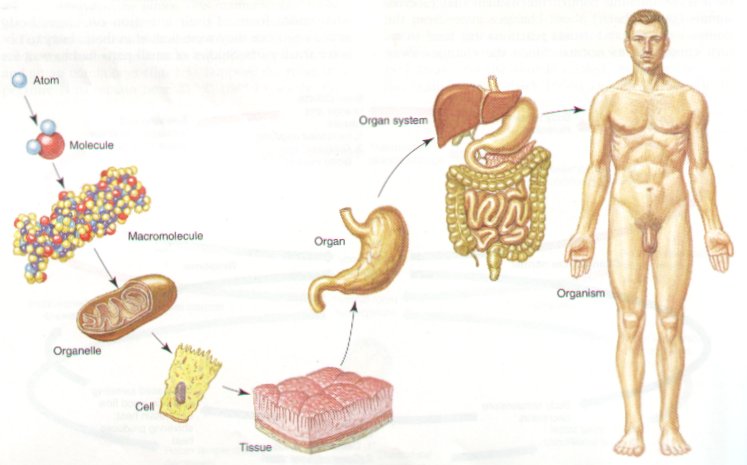
  • Show levels of organization including cell, tissue, organ, & system
  • Most show division of labor among cells
  • Cells are specialized for particular functions
  • Cell junctions hold individual cells in a tissue together
  • Most vertebrates have a backbone or spine made of repeating bones called vertebrae that protect the spinal cord
  • Some show cephalization (have a head with sensory organs concentrated there)

Invertebrate Groups

  • Simplest animals
  • Contains the greatest number of animal species
  • Most found in water
  • Do not have an backbone
  • Includes sponges, cnidarians, flatworms, roundworms, annelids (segmented worms), mollusks, arthropods, & echinoderms

Vertebrate Groups

  • More complex animals
  • Most have a backbone
  • Includes fish, amphibians, reptiles, birds, & mammals

Body Areas

  • Dorsal is the back or upper surface
  • Ventral is the belly or lower surface
  • Anterior head or front end
  • Posterior is the tail or hind end opposite the head
  • Oral surface in echinoderms is where the mouth is located (underside)
  • Aboral surface in echinoderms is the surface opposite the mouth (top side)

DORSAL

ANTERIOR POSTERIOR


VENTRAL

Body Symmetry

  • Symmetry is the arrangement of body parts around a central plane or axis
  • Asymmetry occurs when the body can’t be divided into similar sections (sponges)
  • Radial symmetry occurs when similar body parts are arranged around a central point like spokes on a wheel (echinoderms)
  • Most animals with radial symmetry are sessile (attached) or sedentary (move very little)
  • Bilateral symmetry occurs when animals can be divided into equal halves along a single plane (right & left sides that are mirror images)
  • Animals with bilateral symmetry are more complex, usually motile organisms, such as worms, arthropods, and all vertebrates
  • Animals with bilateral symmetry show cephalization & have anterior & posterior ends


RADIAL SYMMETRY BILATERAL SYMMETRY


Segmentation

  • Occurs whenever animal bodies are divided into repeating units or segments
  • Found in more complex animals
  • Earthworms show external segmentation, while humans show internal segmentation (vertebrae of the backbone)
  • Segments may be fused together such as cephalothorax covering chest & head of a crayfish

Tissue Development

  • All animals reproduce sexually, but some also reproduce asexually (sponges bud & flatworms fragment)
  • Zygote is the fertilized egg all animals form from
  • Zygote undergoes rapid cell divisions known as cleavage to become hollow ball of cells called blastula
  • Blastocoel is the central cavity of the blastula
  • Blastula invaginates (folds inward at one point) to form an opening & two cell or germ layers; process called gastrulation
  • New cup-shaped structure with 2 cell layers is called the gastrula
  • Archenteron is the deep cavity of the gastrula that forms the primitive gut
  • Inner germ layer called endoderm & outer germ layer called ectoderm
  • Opening may become the mouth or the anus
  • Protostomes (mollusks, arthropods, & annelids) develop mouth from blastopore, while deuterostomes (echinoderms & vertebrates) develop an anus from blastopore
  • Some animals form a third germ layer in the middle called mesoderm
  • Cells differentiation during development changing their shapes to fit their function ( neurons or nerve cells become long to conduct messages)

Cleavage

  • Protostomes have spiral cleavage in which embryonic cells divide in a spiral arrangement
  • Deuterostomes have radial cleavage or embryonic cell division parallel or perpendicular to the vertical axis of the embryo

  • Protostomes have determinate cleavage ( embryonic cells can’t form a new organism if separated)
  • Deuterostomes have indeterminate cleavage ( embryonic cells can form other organisms if separated such as identical twins)

Germ Layers

  • Form the tissues, organs, & systems of an animal
  • Found in the embryo of all animals except sponges (have specialized cells but no tissues)
  • Ectoderm (outer) forms skin, nerves, & sense organs
  • Endoderm (inner) forms the digestive & respiratory organs & systems
  • Mesoderm (middle) forms muscles, circulatory system, reproductive & excretory systems

germ layers

Larval Forms

  • Some animals have indirect development & go through an immature larval form that does not resemble the adult
  • Planula is the larva of cnidarians (jellyfish, corals, & sea anemones)
  • Trochophore is the larva of mollusks (squid & octopus)
  • Dipleurula is the larva of echinoderms (starfish & sea urchins)

Metamorphosis

  • May be complete or incomplete
  • Usually found in arthropods
  • Incomplete metamorphosis (egg –> nymph –> adult)
  • Complete metamorphosis ( egg –> larva –> pupa –> adult)


INCOMPLETE

COMPLETE


Body Cavities

  • Coelom is an internal body cavity lined with mesoderm

  • Animals with a coelom are called coelomate animals (annelids, mollusks, arthropods, & vertebrates)
  • Acoelomate animals do not have a body cavity but have solid bodies (sponges, flatworms, & cnidarians )
  • Pseudocoelomate animals have a body cavity only partially lined with mesoderm (roundworms)

  • Schizocoely occurs in protostomes where the coelom develops when mesoderm masses split
  • Enterocoely occurs in deuterostomes

Body Layers

  • Sponges have specialized cells but no tissues or organs
  • Cnidarians (jellyfish, coral, sea anemone) have 2 body layers (ectoderm & endoderm) with a jellylike layer called mesoglea between for support
  • Cnidarians have one body opening into a large cavity called gastrovascular cavity
  • All worms, mollusks, arthropods, echinoderms, & vertebrates have 3 cell layers (ectoderm, mesoderm, & endoderm)

Mouth & Anus Development

  • Blastopore is the opening in the gastrula formed when blastula folds inward
  • Protostomes are animals that the blastopore develops into the mouth ( earthworms, mollusks, arthropods)
  • Deuterostomes are animals that the blastopore develops into the anus (echinoderms & vertebrates)

Support Systems

  • Sponges are supported by spicules, while limestone cases support corals

  • Hydrostatic skeletons in worms consist of a fluid-filled body cavity surrounded by muscles
  • Arthropods have external exoskeletons that prevent water loss but must be molted for growth to occur
  • Echinoderms & vertebrates have internal endoskeletons that grow with the organism

Digestive Systems

  • All animals are heterotrophs
  • Sponges have specialized cells to capture & digest their food
  • Cnidarians have one opening into their gastrovascular cavity where food enters & wastes leave; called a two-way digestive system
  • Annelids, arthropods, & vertebrates have a one-way digestive system in which food enters the mouth, is digested,  & wastes leave through the anus

Circulatory System

  • Transports oxygen and nutrients to cells & carbon dioxide and wastes away from cells
  • Sponges, cnidarians, & flatworms don’t have a circulatory system
  • In closed systems, blood remains in blood vessels at all times until it reaches cells (earthworms & vertebrates)
  • In open systems, blood isn’t always contained in blood vessels (arthropods)

Respiratory System

  • Oxygen is needed & carbon dioxide must be eliminated
  • Sponges, cnidarians, flatworms, & roundworms exchange gases by diffusion
  • Mollusks & fish use gills to exchanges gases, while terrestrial vertebrates use lungs

Nervous System

  • Cephalization occurs in animals that have a distinct head at the anterior end where sensory organs are concentrated
  • Cephalization is found in more complex animals 
  • Sponges have specialized nerve cells, while cnidarians & flatworms have a nerve net
  • Ganglia are clusters of nerve cells found in more complex animals
  • Nerve cells may specialize to detect, light, sound, etc.
  •  Brain interprets nerve impulses & sends a response

Body Coverings

  • Integument is the outer covering of an animal
  • Terrestrial vertebrates have water-tight outer coverings
  • Integuments of amphibians allow gas exchange through the skin
  • Adaptations of integuments include scales, fur, hair, & feathers to protect and insulate the body

Excretory System

  • Rid animals of wastes, help conserve water, & filter wastes from the blood
  • Ammonia is a toxic waste that must be gotten rid of by an animal’s body
  • Kidneys filter blood in vertebrates

Reproductive System

  • All animals reproduce sexually, but some also use asexual reproduction
  • Budding is asexual reproduction in which an outgrowth on the parent organism breaks off to form a new individual (hydra)

hydra with bud 3.JPG (83198 bytes)

  • Sponges, flatworms, & cnidarians asexually reproduce by fragmentation (separating into pieces & each piece making a new organism)
  • Some insects develop from unfertilized eggs by parthenogenesis
  • Hermaphrodites are animals that produce both sperm & eggs (earthworms – cross fertilize & tapeworms self fertilize)
  • Echinoderms, arthropods, mollusks, & vertebrates have separate sexes & exchange sperm
  • Internal fertilization occurs inside the body of the female & larger numbers of sperm & eggs are produced
  • External fertilization occurs inside the body of the female & fewer eggs & sperm are produced
Back


Introduction Quiz

Name: 

Introduction Quiz  


True/False
Indicate whether the sentence or statement is true or false.
      introduction_quiz_files/i0020000.jpg      introduction_quiz_files/i0020001.jpg
1.
Refer to the illustration above. Reproduction ensures the ongoing success of both species.
2.
Refer to the illustration above. The sand dollar and paramecium both show organization.
3.
Scientists have not discovered any new species on Earth in more than 20 years.
4.
Publication of the results of scientific investigations enables other scientists to verify these results.
5.
Resolution is a microscope’s power to increase an object’s apparent size.
 

Multiple Choice
Identify the letter of the choice that best completes the statement or answers the question.
6.
Biology is the study of
a.
minerals.
c.
the weather.
b.
life.
d.
energy.
7.
Homeostasis means
a.
a change over long periods of time.
c.
rapid change.
b.
keeping things the same.
d.
the same thing as evolution.
8.
Which of the following is a means by which heterotrophs can obtain energy?
a.
using water, carbon dioxide, and energy from the sun to produce sugars
b.
using water and carbon dioxide to produce energy-rich compounds
c.
consuming autotrophs
d.
consuming simple chemicals from the environment and using them to assemble complex chemicals and structures needed by the organism
9.
Which of the following is not necessarily a distinct property of living things?
a.
homeostasis
c.
complexity
b.
metabolism
d.
reproduction
10.
All organisms are composed of
a.
diatoms.
c.
cells.
b.
cellulose.
d.
None of the above
11.
Which example of scientific methodology is incorrect?
a.
Observation—A number of people in Zaire dying of a disease outbreak
b.
Measurement—A record of the number of people with symptoms of the disease and the number of people who had died from the disease
c.
Analysis of data—Comparison of the effects of mixing monkey cells with virus-containing blood in test tubes and the effects of mixing of liquid from these test tubes with fresh monkey cells
d.
Inference making—Identification of the Ebola virus as the cause of the disease by taking electron micrographs of substances found in the blood of persons affected with the disease
12.
Scientific hypotheses are most often tested by the process of
a.
communicating.
c.
experimenting.
b.
inferring.
d.
analyzing data.
13.
A hypothesis is
a.
a definite answer to a given problem.
b.
a testable possible explanation of an observation.
c.
a proven statement.
d.
a concluding statement.
14.
A hypothesis that does not explain an observation
a.
is known as an inaccurate forecast.
c.
is rejected.
b.
often predicts a different observation.
d.
None of the above
15.
A scientific theory
a.
is absolutely certain.
b.
is unchangeable.
c.
may be revised as new evidence is presented.
d.
is a controlled experiment.
16.
observation : hypothesis ::
a.
theory : observation
c.
certainty : investigation
b.
guess : hypothesis
d.
theory : control
17.
Which of the following components of a scientific investigation would benefit from communication between scientists?
a.
observing
c.
analyzing data
b.
measuring
d.
All of the above
18.
Most typically, the order in which the steps of the scientific method are applied is
a.
observations, predictions, hypothesis, controlled testing, theory, verification.
b.
predictions, observations, hypothesis, theory, controlled testing, verification.
c.
observations, hypothesis, predictions, controlled testing, theory, verification.
d.
observations, hypothesis, predictions, controlled testing, verification, theory.
19.
A light microscope that has an objective lens of 10´ and an ocular lens of 20´ has a magnification of
a.
30´.
c.
300´.
b.
200´.
d.
2000´.
20.
Which of the following associations between an SI base unit abbreviation and its base quantity is incorrect?
a.
A—area
c.
s—second
b.
m—length
d.
mol—amount of a substance


Check Your Work     Reset

Intro to Human Body 46 Bi

CHAPTER 46, SECTION 1
THE HUMAN BODY PLAN
INTRODUCTION TO THE STUDY OF
ANATOMY and PHYSIOLOGY
REVIEW THE HUMAN BODY PLAN

SECTION 46-1,  THE HUMAN BODY PLAN

The human body begins to take shape during the earliest stages of embryonic development.  While the embryo is a tiny hallow ball of dividing cells, it begins forming the tissues and organs that compose the human body.  By the end of its third week, human embryo has bilateral symmetry (a body plan in which the left and right sides mirror each other) and is developing vertebrate characteristics that will support an upright body.

OBJECTIVES:  Define Anatomy and Physiology, and explain how they are related. List and describe the major characteristics of life. Define homeostasis, and explain its importance to survival. Describe a Homeostatic Mechanism.List and describe the four types of tissues that make up the human body.  Explain how tissues, organs, and organ systems are organized.  Summarize the functions of the primary organ systems in the human body. Name and locate four human body cavities, and describe the organs that each contain. Properly use terms that describe relative positions, body sections, and body regions.

1. The human body is a precisely structured container of Chemical Reactions.

2. Biology is the Study of Living Things including the Study of the Human Body.

3. The Study of BODY STRUCTURE, which includes Size, Shape, Composition, and perhaps even Coloration, is called ANATOMY.

4.  The Study of HOW the BODY FUNCTIONS is called PHYSIOLOGY.

5. The purpose of this course is to enable you to gain an understanding of Anatomy and Physiology with the emphasis on Normal Structure and Function.  You will examine the anatomy and physiology of the major body systems.

LEVELS OF STRUCTURAL ORGANIZATION

1. CHEMICAL LEVEL

A. The Chemicals that make up the body may be divided into TWO major categories:  INORGANIC AND ORGANIC.

B. INORGANIC CHEMICALS are usually simple molecules made of one or more elements other than CARBON.  Examples:  Water, Oxygen, Carbon Dioxide (an exception), and Minerals such as iron, calcium, and sodium.

C. ORGANIC CHEMICALS are often VERY Complex and ALWAYS CONTAIN THE ELEMENTS CARBON AND HYDROGEN.  Examples:  Carbohydrates, Fats, Proteins, and Nucleic Acids.

2. CELLULAR LEVEL

A. The SMALLEST LIVING UNITS OF STRUCTURE AND FUCTION ARE CELLS.

B. Cells are the smallest living subunits of a multicellular organism such as a human being.

C. There are many different types of cells; each is made of chemicals and carries out specific chemical reactions.

3. TISSUE LEVEL

A. A Tissue is a group of cells with similar structure and function.

B. There are FOUR Groups of Tissue.

C. EPITHELIAL TISSUE – Cover or line body surfaces; some are capable of producing secretions with specific functions.  The outer layer of the Skin and Sweat Glands are examples of Epithelial Tissue.

D. CONNECTIVE TISSUE – Connects and supports parts of the body; some transport or store materials.  Blood, Bone, and Adipose Tissue (Fat) are examples.

E. MUSCLE TISSUE – Specialized for CONTRACTION, which brings about movement.  Our Skeleton Muscles and the Heart are examples.

F. NERVE TISSUE – Specialized to generate and transmit Electrochemical Impulses that regulate body functions.  The Brain and Optic Nerves are examples.

4. ORGAN LEVEL

A. An Organ is a group of TWO or more different types of Tissues precisely arranged so as to accomplish Specific Functions and usually have recognizable shape.

B. Heart, Brain, Kidneys, Liver, Lungs are Examples.

5. ORGAN SYSTEMS (System Level)

A. An Organ System is a group of organs that all contribute to a Particular Function.

B. Examples are the Circulatory, Respiratory, and Digestive Systems.

C. Each organ system carries out its own specific function, but for the organism to survive the organ systems must work together- this is called INTEGRATION OF ORGAN SYSTEM.

6. ORGANISM LEVEL

A. The MOST Complex Level.

B. ALL the Organ Systems of the body functioning with one another constitute the TOTAL ORGANISM – ONE LIVING INDIVIDUAL.

LIFE PROCESSES or CHARACTERISTICS OF LIFE

1. All living organisms carry on certain processes that set them apart from nonliving things.

2. The Following are Several of the more important life processes of Humans:

A. METABOLISM is the sum of all the chemical reactions that occur in the body.  One phase of Metabolism called CATABOLISM provides the ENERGY needed to sustain life by BREAKING DOWN substances such as food molecules.  The other phase called ANABOLISM uses the energy from catabolism to MAKE various substances that form body structures and enable them to function.

B. ASSIMILATION is the changing of Absorbed substances into forms that are chemically different from those that entered body fluids.

C. REPONSIVNESS is the ability to Detect and Respond to changes Outside or Inside the Body. Seeking Water to quench thirst is a response to water loss from body tissue.

D. MOVEMENT includes motion of the whole body, individual organs, single cells, or even structures inside cells.

E. GROWTH refers to an Increase in Body Size.  It may be due to an increase in the size of existing cells, the number of cells, or the amount of substance surrounding cells. It occurs whenever an organism produces new body materials faster than old ones are worn out or replaced.

F. DIFFERENTIATION is the process whereby unspecialized cells become specialized cells.  Specialized Cells differ in Structure and Function from the cells from which they originated.

G. REPRODUCTION refers either to the formation of new cells for Growth, Repair, or Replacement or to the making of a New Individual.

H. Others Include:
Respiration – obtaining Oxygen.
Digestion – Chemically and Mechanically breaking down food substances.
Absorption – The passage of substances through certain membranes.
Circulation – the movement of substances within the body in Body Fluids.
Excretion – Removal of wastes that the body produces.

MAINTENANCE OF LIFE OR SURVIVAL NEEDS

1. The structures and functions of almost all body parts help maintain the Life of the Organism. The ONLY Exceptions are an Organisms Reproductive Structures, which ensure that its species will continue into the future.

2. Life requires certain Environmental Factors, including the Following:

A. WATER – this is the most abundant chemical in the body and it is required for many Metabolic Processes and provides the environment in which Most of them take place. Water also transports substances within the organism and is important in regulating body temperature.

B. FOOD – the Substances that provide the body with necessary Chemicals (Nutrients) in addition to Water. Food is used for Energy, supply the raw materials for building new living matter, and still others help regulate vital chemical reactions.

C. OXYGEN – It is required to release Energy from food substances. This energy, in turn, drives metabolic processes. Approximately 20% of the air be breathe is oxygen.

D. HEAT (BODY TEMPERATURE) –  a form of energy, it is a product of Metabolic Reactions. Normal Body Temperature is around 37 C or 98 F. both low or high body temperatures are dangerous to the organism.

E. PRESSURE (ATMOSPHERIC) – Necessary for our Breathing.

PRINCPAL ORGAN SYSTEMS OF THE HUMAN BODY (TABLE 46-1)

1. INTEGUMENTARY SYSTEM

A. The Skin and Structures derived from it, such as hair, nails, and sweat and oil glands.

B. Is a barrier to pathogens and chemicals (Protects the body), Helps regulate body temperature, Eliminates waste, Helps synthesize vitamin D, and receives certain stimuli such as Temperature, Pressure, and Pain.

2. SKELETAL SYSTEM

A. All the Bones of the body (206), their associated Cartilage, and the Joints of the Body.

B. Bones Support and Protect the body, assist in body movement, They also house cells that produce blood cells, and they store minerals.

3. MUSCULAR SYSTEM

A. Specifically refers to Skeletal Muscle Tissue and Tendons.

B. Participates in bringing about movement, maintaining posture, and produces heat.

4. CIRCULATORY A nd CARDIOVASCULAR SYSTEM

A. The Heart, Blood and Blood Vessels.

B. Transports oxygen and nutrients to tissues and removes waste.

5. LYMPHATIC SYSTEM- Sometimes included with the Immune System or Circulatory System becuase it works closely with Both Systems.

A. The Lymph, Lymphatic Vessels, and Structures or Organs (Spleen and Lymph Nodes) containing Lymph Tissue.

B. Cleans and Returns tissue fluid to the blood and destroys pathogens that enter the body.

6. NERVOUS SYSTEM

A. The Brain, Spinal Cord, Nerves, and Sense Organs, such as the eye and ear.

B. Interprets sensory information, Regulates body functions such as movement by means of Electrochemical Impulses.

7. ENDOCRINE SYSTEM

A. ALL Hormone producing Glands and Cells such as the Pituitary Gland, Thyroid Gland, and Pancreas.

B. Regulates body functions by means of Hormones.

8. RESPIRATORY SYSTEM

A. The Lungs and a series of associated passageways such as the Pharynx (Throat), Larynx (Voice Box), Trachea (Windpipe), and Bronchial Tubes leading into and out of them.

B. Exchange oxygen and carbon dioxide between the air and blood.

9. DIGESTIVE SYSTEM

A. A long tube called the Gastrointestinal (GI) Tract and associated organs such as the Salivary Glands, Liver, Gallbladder, and Pancreas.

B. Breaks down and absorbs food for use by cells and eliminates solid and other waste.

10. URINARY And EXCRETORY SYSTEMS

A. The Kidneys, Urinary Bladder, and Urethra that together produce, store, and eliminate Urine.

B. Removes waste products from the blood and regulates volume and pH of blood.

11. IMMUNE SYSTEM

A.  The Immune System Consists of Several Organs, as well as White Blood Cells in the Blood and Lymph.
Includes the Lymph Nodes, Spleen, Lymph Vessels,Blood Vessels, Bone Marrow, and White Blood Cells (Lymphocytes).

B. Provides protection against Infection and Disease.

12. REPRODUCTIVE SYSTEM

A. Organs that produce, store, and transport reproductive cells (Sperm and Eggs).

B. Produces eggs and sperm, in women, provides a site for the developing embryo-fetus.

HOMEOSTASIS

1.  All of the above systems function together to help the Human Body to Maintain HOMEOSTASIS.

2.   A person who is in good health is in a state of Homeostasis.

3.   Homeostasis reflects the ability of the body to maintain relative Stability and to Function Normally despite constant Changes.

4.   Changes may be External or Internal, and the body must Respond Appropriately.

5.   As we continue to study the Human Body, keep in mind that the Proper Functioning of each Organ and Organ System has a role to perform in maintaining HOMEOSTASIS.

6.  The Human Body uses Homeostasis Mechanisms to maintain its stable internal environment. Homeostasis Mechanisms work much like a Thermostat (NEGATIVE FEEDBACK) that is sensitive to temperature and maintains a relative constant room temperature whether the room gets to Hot or Cold.

BODY CAVITIES

1. Many  organs and organ systems in the human body are housed in compartments called BODY CAVITIES. (Figure 46-2)

2.  These cavities protect delicate internal organs from injuries and from the daily wear of walking, jumping, or running.

3.  The body cavities also permit organs such as the lungs, the urinary bladder, and the stomach to expand and contract while remaining securely supported.

4.  The human body has FOUR Main Body Cavities:

A.  CRANIAL CAVITY – encases the brain.

B.  SPINAL CAVITY – extending from the cranial cavity to the base of the spine, surrounds the Spinal Cord.

THE TWO MAIN CAVITIES IN THE TRUNK OF THE HUMAN BODY ARE SEPARATED BY A WALL OF MUSCLE CALLED THE DIAPHRAGM.

C. THORACIC CAVITY – The upper compartment, contains the heart, the esophagus, and the organs of the respiratory system – the lungs, trachea, and bronchi.

D.  ABDOMINAL CAVITY – The lower compartment, contains organs of the digestive, reproductive, and excretory systems.

ANATOMICAL TERMINOLOGY

To communicate effectively with one another, researchers and clinicians have develop a set of Terms to describe anatomy that have precise meaning.  Use of these terms assumes the body in the ANATOMICAL POSITION.  This means that the body is standing erect, face forward with upper limbs at the sides and with the palms forward.

RELATIVE POSITION

Terms of Relative position describe the location of one body part with respect to another.  The include the following:

1. SUPERIOR – means that a body part is above another part or is closer to the head.

2. INFERIOR – means that a body part is below another body part or toward the feet.

3. ANTERIOR – means toward the front.

4. VENTRAL – also means toward the front

5. POSTERIOR – is the opposite of anterior; it means toward the back.

6. DORSAL – also is the opposite of anterior; it means toward the back.

7. MEDIAL – relates to an imaginary midline dividing the body in equal right and left halves. Sample:  The nose is medial to the eyes.

8. LATERAL – means toward the side with respect to the imaginary midline.  Sample:  The ears are lateral to the eyes.

9. PROXIMAL – describes a body part that is closer to a point of attachment or closer to the trunk of the body than another part.  Sample:  The elbow is proximal to the wrist.

10. DISTAL – is the opposite of proximal.  It means that a particular body part is farther from the point of attachment or farther from the trunk of the body than another part.  Sample:  The fingers are distal to the wrist.

11. SUPERFICIAL – means situated near the surface.

12. PERIPHERAL – also means outward or near the surface.

13. DEEP – describes parts that are more internal.

14. CORTEX  –  the outer layer of an organ

15. MEDULLA –  the inner portion of an organ.

Instructions for Who Wants to be a Millionaire


Instructions for Who Wants to be a Millionaire
 
1.  You can play as an entire class or in two groups.  If you play as an entire class, it is suggested that you call on different students to answer questions.  If you play as two teams, you will need to play two games. You will need to appoint a spokesperson for each team.  I have also played with two teams, alternating questions between the two and keeping score.
2.  Once the game has loaded, and is in slide show view, click on the $100 question.  This game is very easy to use since many of the directions are on each slide.  If a student would like to use 50/50, phone a friend or ask the audience, click on the appropriate button. Then follow the slides.
3. Directions for viewing the previous slide are given on each slide.
4.  The game is over when a question is missed.

Instructions for playing Hollywood Squares


Instructions for playing Hollywood Squares
1.  Divide your class into two teams, team X and team O
2.  Once the game has loaded, you will need to click through the introduction of characters until you reach the slide with all characters and a place off to the right to keep points for team x and team O.
3.  Flip a coin to determine which team goes first.
4.  The team picks a square.
5.  Click on the character in that square to see the question.
6.  Click again to see the answer given by that character.
7.  The team must agree or disagree with the answer the character has given.
8.  If the team is correct, they will get the square.  If the team is wrong, their opponent will get the square.
9.  Click on the back or home button on the slide with the character answer.

10.  Click on the black box inside that square to type either X or O.

11.  Click on the black box under that teams “score” to add one.
12.  To win, the team either gets three in a row (across, vertical or diagonal) or has 5 squares.
13.  If Team X wins, click the box that says “x wins”.  If Team O wins, click the box that says “O wins”.
******************************************************************************
To get out of any slide, move the  mouse to the lower right corner and click on the arrow that will appear.  It will give you many options.