Food Testing


Chemical Tests for Nutrients in Food

INTRODUCTION:

Cells are made up of small molecules like water; ions such as sodium and magnesium, and large organic molecules. There are four important types of large organic molecule in living organisms — proteins, carbohydrates (sugars & starches), lipids (fats), and nucleic acids. Proteins, carbohydrates, and fats serve as nutrients in the food that we eat.

In this experiment you will evaluate the nutrient content of unidentified food samples. You will use chemical reagents to test the unknown for specific nutrients. By comparing the color change a reagent produces in the unknown with the change it produces in the known nutrient, you can estimate the amount of that nutrient. Use small samples.

MATERIALS:

400-ml beaker
Hot plate
8 test tubes
Test tube rack
4 medicine droppers
Glass stirring rod
Tongs
Several unknown food substances
Glucose
Cornstarch
Non-fat dry milk
Lard
Distilled water
Benedict’s solution
Iodine-potassium iodide solution
10% aqueous sodium hydroxide solution
0.5% Copper sulfate solution
Sudan III solution

PROCEDURE:

Monosaccharide (simple sugar) test

1. Fill a 400-ml beaker to about 300 ml with water and heat on the hot plate.

Be sure to label all test tubes.

2. Place pea-sized portions of glucose and the unknown substance you are testing in separate test tubes. Add about 2.5 ml of distilled water and 10 drops of Benedict’s solution to each test tube. Mix with a stirring rod, or holding the tube between the thumb and index finger of one hand, thump it with the middle finger of the other hand to mix.

REMEMBER: If you use a stirring rod, wash it after every use, so you won’t contaminate one solution with another.

3. When the water boils, use tongs to place the test tubes in the water bath. Leave the test tubes in the water bath for 10 minutes.

Do not let the water bath boil hard. Control the boiling by turning the hot plate on and off as needed.

4. Remove the test tubes with tongs and place the tubes in a test tube rack. Unplug the hot plate to cool. When the tubes cool, an orange or red precipitate will form if large amounts of glucose are present. Small amounts of glucose will form a yellow or green precipitate. Record your observations in the DATA TABLE.

Polysaccharide complex sugar) test

5. Place cornstarch in a clean test tube and some of the unknown substance in another. Use a clean dropper to add 10 drops of iodine-potassium iodide solution to each test tube. Observe the results and record in the DATA TABLE.

Protein test

6. Place non-fat dry milk in a clean test tube and some of the unknown in another. With a clean dropper slowly add an amount of sodium hydroxide solution about equal to the amount of the milk sample, and mix carefully. Then add 10 drops of copper sulfate solution one drop at a time. Mix gently between drops. Observe the results and record in the DATA TABLE.

7. Repeat step 6 with the unknown substance.

Lipid test

8. Place a small piece of lard in a clean test tube and some of the unknown in another. Use a clean dropper to add 10 drops of Sudan III solution to each test tube. Mix well, observe and record your results in the DATA TABLE.

DATA TABLE:

Mark your results in the appropriate boxes. Indicate relative amount by H for high, M for medium, L for low, or 0 for none.

Monosaccharide test Polysaccharide test
SUBSTANCE: RELATIVE
AMOUNT:
SUBSTANCE: RELATIVE
AMOUNT:
Unknown Unknown
Glucose Corn starch


Protein test Lipid test
SUBSTANCE: RELATIVE
AMOUNT:
SUBSTANCE: RELATIVE
AMOUNT:
Unknown Unknown
Non-fat dry milk Lard

CONCLUSIONS:

Question 1 . What is the main nutrient in the unknown?

Question 2. What are the controls in this investigation?
 

Food Chemistry


Food Chemistry

Introduction:

All living things are made up of one or more cells, and the cells in turn contain many kinds of molecules.  In this lab we will be looking at several different macromolecules (large molecules): proteins, carbohydrates, and lipids (specifically fats).  Various chemicals will be used in this laboratory to test for the presence of these molecules.  Most often, you will be looking for a particular color change.  If the change is observed, the test is said to be positive because it indicates that a particular molecule is present.  If the color change is not observed, the test is said to be negative because it indicates that a particular molecule is not present.

You will be using these tests to determine which of the macromolecules are present in various samples of food.

In all of the procedures, you will need to include a distilled water sample as a control.  Usually, a control goes through all the steps of the experiment but lacks one essential factor (the experimental variable).  This missing factor allows you to observe the difference between a positive result and a negative result.  If the control sample tests positive, you know your test is invalid.  Some tests may also contain other controls to make sure certain additives are not contaminated with the substance for which you are testing.

Proteins:

Protein molecules are long chains of amino acids joined by peptide bonds.

Biuret reagent, which is a blue color, contains a strong solution of sodium or potassium hydroxide (NaOH or KOH) and a very small amount of very dilute copper sulfate (CuSO4) solution.  The reagent changes color in the presence of proteins or peptides because the amino group (H2N-) of the protein or peptide chemically combines with the copper ions in biuret reagent.

Carbohydrates:

Carbohydrates include sugars and molecules that are chains of sugars.  Glucose is a simple sugar, also known as a monosaccharide.  Sucrose, or table sugar is a disaccharide, two sugar units bonded together.  Starch is a polysaccharide, a long chain of glucose units.

Benedict’s reagent reacts with many sugars (both mono- and disaccharides) after being heated in a boiling water bath.  Increasing concentrations of sugar give a continuum of colored products ranging from green through yellow and orange to orange red.

Iodine solution reacts with starch to produce colors ranging from a brownish to blue black.

Lipids:

Lipids are hydrophobic molecules which are insoluble in water and soluble in solvents such as alcohol and ether.  Lipids include fats, oils, and cholesterol.

Lipids do not evaporate from brown paper, instead leaving an oily spot.  Lipids also do not mix with water, forming a separate layer, usually on top of the water.  However, some molecules mix with both water and lipids, and can be used to mix the two.  These molecules are known as emulsifiers.  The liver produces bile salts which act as emulsifiers in the digestive tract.  Soaps and detergents also act as emulsifiers.

Summary of tests:


Biuret Reagent
Benedict’s Reagent
Iodine Solution
Brown Paper
Reacts with proteins or peptides, turns purple (protein) or pink (peptides) Reacts with sugars, turns green through yellow to orange (green, less sugar, orange, more sugar) Reacts with starch, turns dark brown to black Lipids leave oily spot

Procedure:

Take some time to plan with your lab partner what tests you will do, and in what order before beginning the procedures.

There are available in the lab a variety of different types of common food.  Choose at least 3 foods and test each for the presence of protein, carbohydrate (both starch and simple sugars), and fats.  Be sure to plan your experiments before starting.

Form a hypothesis for each sample you have chosen to test.

Samples will need to be suspended in water for most tests.  Using a mortar and pestle if necessary, break each sample to be tested into small pieces and suspend the pieces in a small amount of distilled water.

Also available are samples of each of the types of molecules for which you will be testing.  Use these samples to try out the tests so that you will know what a positive result looks like.

Be sure to include a blank control (distilled water) with each test so you know what a negative result looks like.  You may also include a positive control, a sample which you know contains the substance for which you are testing.

The procedures for testing for each type of molecule are given below.

Proteins and Peptides

Proteins:

  1. Use a separate test tube for each sample to be tested, as well as one for a control.
  2. Label each test tube.
  3. Place about 1 mL of each sample (and control) in its test tube.
  4. Add 5 drops of copper sulfate solution to each tube.
  5. Add 10 drops of potassium hydroxide solution to each tube and mix.
  6. Record the tube contents and final color in a data table.
  7. Conclusions: which tubes contained protein?

Carbohydrates: Sugars and starch

Starch

  1. Use a separate test tube for each sample to be tested, as well as one (or two) for a control.
  2. Label each test tube.
  3. Place about 1 mL of each sample (and control) in its test tube.
  4. Add 5 drops of iodine solution to each tube and mix.
  5. Record the tube contents and final color in a data table.
  6. Conclusions: which tubes contained starch?

Sugar

  1. Use a separate test tube for each sample to be tested, as well as one (or two) for a control.
  2. Label each test tube.
  3. Place about 1 mL of each sample (and control) in its test tube.
  4. Add about 2 mL of Benedict’s reagent to each tube and mix.
  5. Heat the tubes in a boiling water bath for 5-10 minutes.
  6. Record the tube contents and final color in a data table.
  7. Conclusions: which tubes contained sugar?

Lipids

  1. Place a small sample of the material to be tested on a square of brown paper.
  2. Place a small drop of water on the square of brown paper.
  3. Compare the drop of water to the sample.
  4. Wait at least 5 minutes.  Evaluate which substance impregnates the paper and which is subject to evaporation.  Record your results.
  5. Conclusions: which sample contained lipids?

Conclusion Questions:

  1. Why do experimental procedures include control samples?
  2. How would you test an unknown solution for each of the following:
    1. Sugars
    2. Fat
    3. Starch
    4. Protein
  3. Assume that you have tested an unknown sample with both biuret solution and Benedict’s solution and that both tests result in a blue color.  What have you learned?
  4. What purpose is served when a test is done using water instead of a sample substance?
  5. Compare your results.

Lab report:

Lab reports must include the following:

  1. A Title to the lab.  A Purpose: What was studied in this lab, and why did we study it?
  2. Procedure: a brief description of each type of test, what constitutes a positive test and what constitutes a negative test.
  3. All data tables.
  4. For each food sample, state your hypothesis and your conclusions.  Did your results confirm or refute your hypothesis?
  5. Answers to questions.
  6. A brief analysis of what worked in this lab and what didn’t work, and why.


Fish Study Guide BI


Fish Study Guide


What structure in fish filters wastes from their blood?
Lobe finned fish were ancestors to what other amphibian group?
What special problem do marine fish have?
What shape mouth do agnathans have?
How do agnathans get their food?
Why do land animals need stronger bones and muscles than fish?
Name three ways sharks can detect their prey.
What does the word “Agnatha” mean?
Which group of fish has a swim bladder?
What structure in fish gives them buoyancy?
What does “Chondrichthyes” mean?
Describe the scales in bony fish.
What covers the gills of bony fish?
What type of fertilization occurs in sharks?
What class of fish has bony skeletons?
Name the 2 classes of bony fish.
Do sharks have a swim bladder? bony fish?
What makes up the skeleton of sharks? bony fish?
What chordate characteristics do lampreys and hagfish keep as adults?
BACK


Fish

Fish

All Materials © Cmassengale
  

Kingdom – Animalia
Phylum – Chordata
Subphylum – Vertebrata

Vertebrates:

Include fish, amphibians, reptiles, birds, & mammals
Have a notochord (slim, flexible rod) present in early stages that may be replaced by backbone in adults
Contain a dorsal, hollow bundle of nerves called the nerve or spinal cord
Respire through pharyngeal or gill pouches during early development
Have post-anal tail in early stages
Endoskeleton made of bone &/or cartilage
Anterior head with well developed brain & sensory organs (Cephalization)
Closed circulatory system

Taxonomy of Vertebrates:

Agnatha include hagfish & lamprey with long, eel-like bodies without jaws or paired fins & cartilage skeletons

Chondrichthyes include sharks, rays, & skates with cartilage skeletons, paired fins, & jaws

Osteichthyes are bony fish with jaws, paired fins, & bone and cartilage in their skeletons
Amphibia include frogs, toads, & salamanders that go through an aquatic larval or tadpole stage
Reptilia include snakes, turtles, lizards, & alligators that live on land, are covered with scales, & lay a tough, protective amniote egg
Aves are birds covered with feathers, adapted for flying, & with hollow bones
Mammalia have hair or fur & females have mammary or milk-producing glands

Evolution:

Fossil record shows jawless fish without paired fins appeared first about 550 million years ago
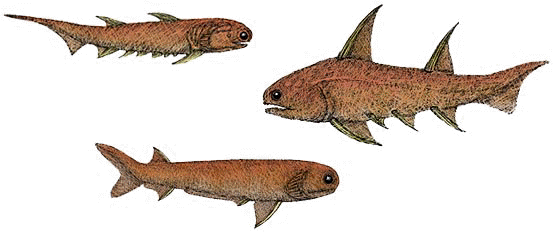
Ostracoderm was a jawless, bottom-feeding ancestor to the agnathans (modern jawless fish)

Development of jaws & paired fins allowed better movement & increased ability to capture prey
Extinct acanthodians or spiny fish were first jawed fish with paired fins

Jaws probably developed from gill arches (bone that supports the pharynx)

Characteristics of  Fish:  

Streamlined body & muscular tail for swimming
Most with paired fins for maneuvering
Body covered with protective scales & mucus layer to reduce friction when swimming
Have less dense body tissues & store less dense lipids to help them float
Respire through gills
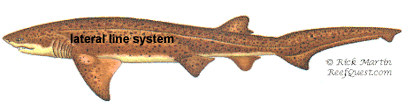
Most have a lateral line system or a row of sensory structures running down each side of the organism to detect changes in water temperature, pressure, current, etc.

Most with well-developed sense of sight & smell
Some can detect electrical currents
Ectotherms (adjust body temperature to environment)
Two chambered heart (upper atrium receives blood & lower ventricle pumps blood)

Agnatha (Jawless Fish):

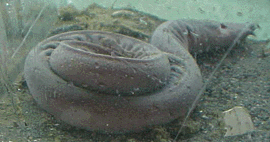
Hagfish (live in oceans) & lampreys (found in marine & freshwater)
Circular mouths
Sharp teeth & strong rasp-like tongue to tear hole in prey & suck out blood & body fluids

Known as cyclostomes
Eel-shaped body
Mucus covers body
Skeleton made of cartilage
No paired fins
Gills without bony cover (called operculum)
Retain their notochord throughout their life
Hagfish are bottom dwellers in cold marine waters that burrow in mud, scavenge on dead & dying fish, & have tentacles around their mouth
Lampreys are usually parasites with a keen sense of smell to locate prey, lay their eggs in freshwater streams, & are covered with a poisonous slime

Chondrichthyes

Includes sharks, rays, & skates
Endoskeleton of cartilage
Hinged jaws & paired fins
Placoid scales & tooth-like dermal spines on scales

Marine
Carnivorous
Sharks are torpedo shaped

Rays & skates have broad, flat bodies with wing-like fins and a tail

Shark Characteristics:

Fast swimmers
Large, oily liver (20% of body weight) makes them buoyant
Tough, leathery skin
Fierce predators
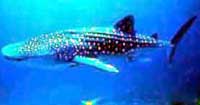
Whale shark is largest & filter feeds on plankton

Ventral mouth with 6-20 rows of sharp, replaceable teeth
Short, straight intestine with spiral valve to slow food movement
5-7 pairs of gills for gas exchange
Kidneys remove wastes & maintain water balance
Electroreceptors on head help find prey & navigate
Lateral line along side of body contains sensory cells to detect vibrations & pressure
Separate sexes with external fertilization

Ray & Skate Characteristics:

Usually harmless to humans
Broad, wing-like pectoral fins used to glide through water
Flattened bodies with ventral mouth
Both eyes on top of head
Have protective coloration (darker on top & lighter on bottom)
Feed on fish & invertebrates
Stingray with poison spine by tip of tail

Electric ray gives off strong, electric shock
Manta ray is largest

Traits of Bony Fish (Osteichthyes)

Skeleton made of bone
Hinged jaws
Paired fins
Gills for gas exchange
Lateral line
Body covered with scales & mucus coating
Includes lobe-finned, ray-finned, and lung fish

Lobe-finned Fish:

Muscular, paddle-like fins supported by bone
Gills
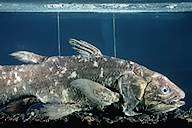
Known as coelacanths

Thought to be extinct until 1938 when species found in Africa
Live in deep oceans

Lungfish:

Use lungs & gills
Eel-shaped body

Live in shallow, tropical rivers of Africa, Australia, & South America
Come to surface & gulp air when oxygen level is low
Form mud cocoon & become dormant if stream dries up

Ray-finned Fish:

Fan-like fins supported by rays
Includes salmon, perch, catfish, tuna, etc.
Body covered with round, overlapping cycloid or ctenoid scales & mucus

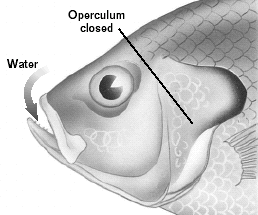
Four sets of gills covered by bony operculum

Have movable fins
Dorsal fin(s) located on top keep fish upright & used for defense
Caudal fin or tail moves side to side to help steer
Pectoral fins (paired) on each side behind the operculum
Pelvic fins (paired) on ventral surface near the head
Anal fin (single) behind anus

Swim bladder is thin-walled sac in abdomen that creates buoyancy from diffusion of dissolved gas from blood


Kidneys filter the blood & help maintain water balance
Ectothermic – body temperature regulated by the environment
Keen sense of smell (nostrils) & have chemical receptors over the body
Can detect the earth’s magnetic field as a guide to navigate oceans
Have separate sexes with external fertilization
Eggs hatch into fry

Salmon Life Cycle:

Migrate up to 3200 kilometers following magnetic cues in the ocean
Follow mucus trails when navigating rivers
Return to birthplace to spawn
Males change color & jaw lengthens & develops a hook

Female uses her tail to build gravel nest & lays up to 10,000 eggs 
Male deposits sperm over eggs
Adults usually die after spawning
Pacific salmon return to sea when 15 cm long; while Atlantic salmon may stay in river up to 7 years
Secrete mucus coating in river as return to sea
May stay in ocean 6 months to 5 years


First Semester Review


First Semester Review      


What is the study of life called?
What are the smallest units that can carry on life functions called?
Living things are composed of ______________.
Give an example of a scientific observation.
What is a hypothesis?
What 3 things compose an atom?
Matter is made of ________________.
When atoms gain energy, what happens to electrons?
Do  cells contain a few or thousands of different kinds of enzymes?
__________________ reactions are important in organisms because they allow the passage of energy from one molecule to another.
What is a polar molecule?
Water molecules break up other polar substances. Give an example of such a polar molecule.
What happens to ionic compounds in water?
Which is not a carbohydrate —– glycogen, steroids, cellulose, or sugars?
Amino acids are the monomers for making ________________.
Is ice an example of an organic molecule?
The type & order of the amino acids determines the ___________ of a protein.
Very active cells need more of which organelle?
What organelle is the packaging & distribution center of the cell?
What membrane surrounds the nucleus?
What is the function of mitochondria. Sketch their shape.
Where is chlorophyll found in plants?
Diffusion takes place from ________________ concentration to ___________.
If a cell has a high water content, will it lose or gain water?
Ink dispersing in a beaker is an example of ________________.
Very large molecules enter cells by a process called ________________.
Endocytosis and exocytosis occur in ______________ directions across a cell membrane.
What is photosynthesis?
Where do the dark reactions of photosynthesis take place?
When chlorophyll absorbs light energy ATP is made and what other energy carrying molecule?
When chlorophyll absorbs light energy, what happens to its electrons?
_______________ molecules are responsible for the photosystems.
Electrons that have absorbed energy & moved to a higher energy level enter what chain?
When cells break down food molecules, energy is temporarily stored in what molecule?
When muscles do not get enough oxygen, what acid forms during exercise?
If you are growing bacteria in a culture and lactic acids starts to form, the bacteria are not getting enough of what gas?
The 2 stages of cellular respiration are _____________ & oxidative respiration.
Citric acid forms in which cycle during cellular respiration?
ATP molecules are formed inside what cellular organelle?
The first filial generation is the result of  a __________________ cross.
If a genetic trait appears in every generation is it dominant or recessive?
When Mendel crossed pea plants & looked at 2 different traits (flower color & plant height), did the inheritance of one trait influence the other?
If a heterozygous individual is crossed with a homozygous recessive individual, how many phenotypes will result?
What is the expected genotypic ratio from a homozygous dominant X heterozygous monohybrid cross?
List several reasons for genetic counseling.
If a genetic disorder is found equally in males & females, is it autosomal dominant or recessive?
If both parents carry the gene for cystic fibrous, what is the chance that their child will develop the disease?
If a trait is sex-linked, will it occur more often in males or females?
If a gene is located on the X-chromosome, it is said to be ________________.
BACK