Significant Figures Worksheet(Sig Figs): Definition, Examples, and Practice

Meta: Whether you’re relatively new to significant figures or are just looking for a refresher, you’ve come to the right place. Read on to learn more!

Significant Figures (Sig Figs): Definition, Examples, and Practice

Significant figures are a vital concept when you’re working in any field that requires precision; chemistry, for example. And while it feels like a complex subject, it’s fairly simple and straightforward. In this article, we’re answering your questions about significant figures and prepping you for significant figures worksheets with lots of examples.

Reason for Significant Figures
numbers and symbols

We can all agree that there’s nothing worse than complicated mathematics concepts that don’t seem to have anything to do with real life. Fortunately, that’s not the case with significant figures! The primary purpose for this somewhat abstract concept is precision.

The numbers we use in everyday life, as it turns, are not that precise. When you’re working in specialized fields, however, the precision of the data is everything. Significant figures help you communicate how precisely you’ve measured and help to ensure mistakes are made with the data.

Let’s Build a Tower

tower

Here’s an example: let’s say you’re building a tower. As you might imagine, precision matters hugely. You don’t want to get to the top of the tower only to realize your tower is taller–or shorter!–than you thought. Let’s say, then, that the steel manufacturer has measured its vertical beams to the nearest centimeter and is sending you three beams that are each 20.5 meters tall.

This measurement is precise to the centimeter, but the number doesn’t tell you anything about millimeters. This is a problem because the glass you’re cutting to cover the building in is measured to the nearest millimeter; in fact, the glass company is sending the glass to you in 15.75-meter sheets.

You know that your steel beams will stand end to end and that your finished tower will be (20.5*3) meters tall, or 61.5 meters tall. Three glass sheets will be 47.25 meters tall; too short. Four glass sheets will be 63 meters tall; too tall. You’ll need to lay three sheets of glass and cut the fourth to size. Now you need to figure out how much you should cut down that fourth sheet of glass.

The Problem With Imprecision
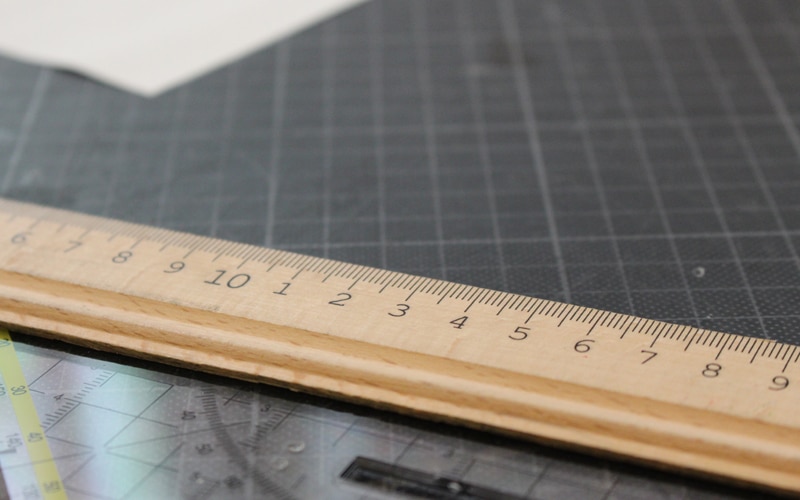
ruler

Here’s the problem: your steel is measured to the centimeter, but the glass cutter cuts to the millimeter. Each steel beam is 20.5 meters, which means it’s twenty meters and five centimeters; but how many millimeters is it?

We don’t know. It could be three millimeters (20.53 meters), or it could be seven millimeters (20.57 meters). Let’s say it’s the latter, and your three steel beams each have an extra seven millimeters that you don’t know about because they’ve only been measured to the nearest centimeter.

You think you’ve only got 61.5 meters of a tower (because 20.5*3 = 61.5) but you have 61.71 meters (because 20.57*3 = 61.71). That’s a difference of .21 meters, or a whopping two centimeters and one millimeter! If you cut your glass to 61.5 meters, you’ll get to the top of the tower to install it–only to realize you’re missing two centimeters and a millimeter of glass.

Oops!

This is an oversimplified example, but it helps to illustrate how important precision is–and now you know how significant figures work, even if you don’t know the concept by that name yet. That’s for the next section!

Rules for Significant Figures

The first thing you should remember is that significance doesn’t indicate whether a number is computed or not; it simply indicates the precision of measurement. We’ll explain; let’s start with the basic ground rules about significant figures, and then we’ll practice with some examples you might see on a significant figures worksheet:

  1. If it’s not a zero, the number is a significant figure (e.g., 1, 2, 3, 4, 5, 6, 7, 8, and 9 are all significant no matter where they are in the number)
  2. If a zero is between a non-zero digit, it is significant (e.g., the zeros in these numbers are significant: 507, 5007, 5000.07)
  3. Trailing zeros (the zeros at the end of a number) are only significant if the number has a decimal point (e.g., 5.0500 or 5.50); they are not significant if there are no decimal points (e.g., 500 or 50) (special note: in the latter case, significance can be indicated with a bar above or below the last measured figure)
  4. Leading zeros (zeros before non-zeros) are never significant (e.g., 005 or 0.005)

EXAMPLES

  • 51 has two significant figures (5 and 1; all numbers are non-zeros)
  • 1234.56 has six significant figures (1, 2, 3, 4, 5 and 6; all numbers are non-zeros)
  • 505.5505 has seven significant figures (5, 5, 0, 5, 5, 0, and 5; all non-zeros are significant, and all zeros between non-zeros are significant)
  • 0.0057 has two significant figures (5 and 7; the zeros are leading and are not significant)
  • 500 and 50 each have one significant figure (5 and 5; trailing zeros are not significant unless there is a decimal point)
  • 5.0500 has five significant figures (5, 0, 5, 0, and 0; the first zero is between two non-zeros and the trailing zeros are significant because the number contains a decimal)
  • 0.00050500 has five significant figures also (remember that leading zeros do not count)
  • 1300 has two significant figures (one and three) while 1300. has four significant figures (1, 3, 0, and 0) because the latter number has a decimal point

Multiplying, Dividing, Adding, and Subtracting with Significant Figures

Before we get into the mechanics of multiplying, dividing, adding, and subtracting with significant figures, you’ll first need to know how to round up significant figures. For example, if you have a number (let’s say 54.896) that has five significant figures, and you need to round it up to three significant figures, how do you do that?

Rounding Up

Here’s how:

  1. Identify the significant figures (in our example, there are five significant numbers: 5, 4, 8, 9, and 6)
  2. Identify the last of the desired significant figures (we know we need three significant figures, so eight, the third significant figure from the left, is the last significant figure)
  3. Look at the number to the right of the significant figure. If it is five or greater, add one to the last significant figure (in our example, eight is followed by nine; nine is greater than 5; therefore, eight is rounded up by 1 to 9 so that our new number is 54.9). If, however, the number is four or less, simply remove all the remaining numbers to the left (don’t replace them with zeros)

Here’s another example using 0.01234500:

If you want to round it to three significant figures, the answer would be 0.0123 (leading zeros are not significant; 4 is less than five, so 4 and all subsequent numbers are removed).

Special note: rounding significant figures is different than rounding decimals. For example, if you wanted to round our example number to three decimal places, the answer would be .012, which is a different number altogether from a precision standpoint.

Multiplying and Dividing

When you begin working seriously with multiplying and dividing, you’ll notice how quickly things can move from precise to imprecise. For example, let’s go back to our tower example and say we want to measure the area of our glass sheets. They are 15.75 meters tall and 2.5 meters wide.

A simple calculation (15.75*2.5=39.375) tells us the area is 39.375, but if you’re thinking, “wait! That measurement is more precise than what we measured!” you’d be right. To keep our quotients and products as precise as our initial measurements, we need to round up (or down).

The general rule is that the significant figures in the answer cannot be more than the smallest amount of significant figures used in the equation. In our glass sheets example, the two numbers we multiplied are 15.75 (which has four significant figures) and 2.5 (which has two significant figures). The smallest number of significant figures in either of these factors is two, so our answer can’t have more than two significant figures.


Our answer (39.375) has five significant figures, with 9 being the second significant figure. The number to the right of 9 is 3, which is less than 5, so we simply discard 3 and everything to its right. Our answer, then, is 40. (9 rolls to the 0 and the 3 becomes a 4; also note the use of the decimal!).

Adding and Subtracting

Adding and subtracting numbers with different amounts of significant digits is very similar to multiplying and dividing, except that the rounding up (or down) happens before the calculation.

Back to our tower example, let’s say you had one steel beam that was 20.5 meters and one that was 20.45 meters, you are dealing with two different levels of precision. The first beam has three significant figures and is less precise than the second beam, which has four significant figures.

If you add them together as is, it’s just messy. So, you need to round up the more precise number so that it matches the least precise number. That is, you would round up 20.45 to 20.5 and add both numbers (20.5 + 20.5 = 41.0; note that the answer is also precise to three significant figures).

Hopefully, significant figures are no longer mystifying, and you’re ready to tackle your significant figures worksheet; good luck!

Classification of Living Things: Definition, Examples, and Practice

For centuries, there were only two ways to classify living things; either as a plant or an animal. Today, thanks to the classification of living things, we can gain a better understanding of all living organisms. Learn more about the classification of living things and some tips for remembering the classification.

Classification of Living Things: Definition, Examples, and Practice

From an early age, we all learned the difference between plants and animals, and it probably wasn’t until a few years later when we learned that there are different types of animals and plants; even though they share some similarities, they are entirely different.

Centuries ago, living things were classified as either plants or animals. Today, the classification of living things helps us gain a better understanding of the world we live in, our relation to living things, and understanding Biology better overall. Let’s take a closer look at the classification, a little bit of its history, and some tips for learning how to use it when exploring a living organism.

What Is The Classification Of Living Things?

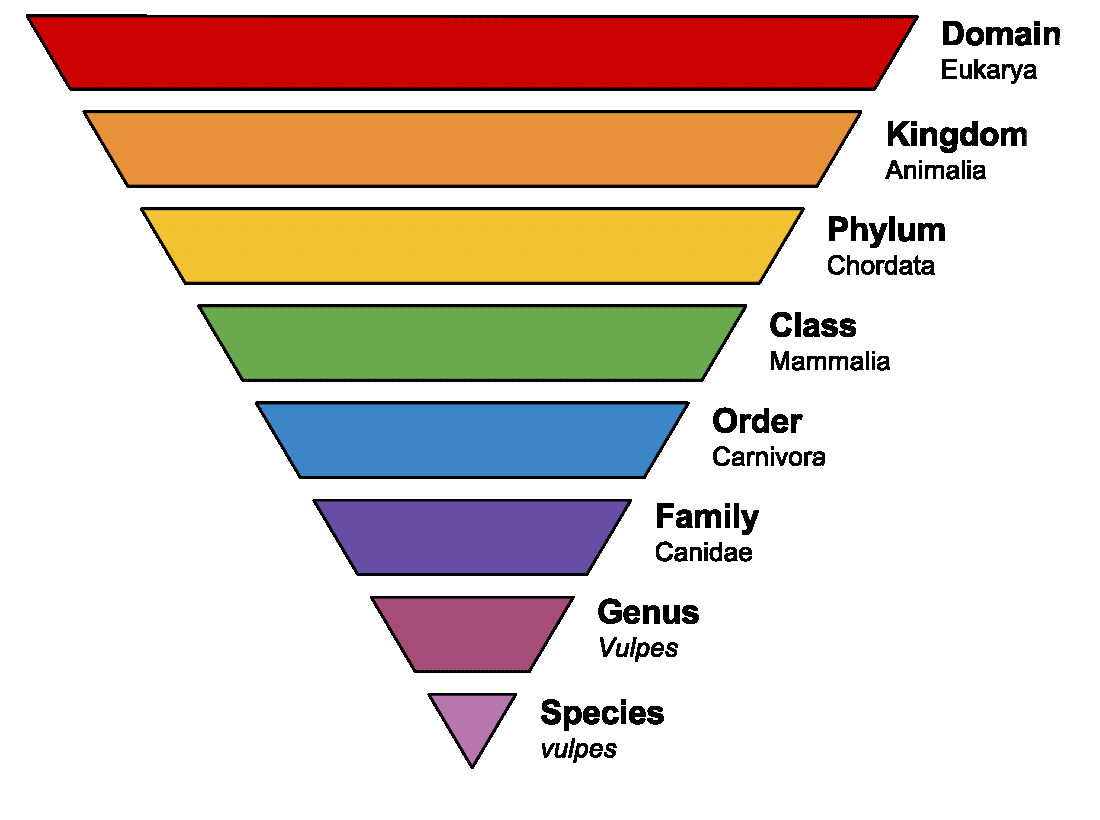
Taxonomic Ranks diagram

You might already know a little about the classification of living things, which is also referred to as taxonomy. Many students learn the basics of taxonomy in elementary school, but unless you spend a lot of time focused on Biology, the details may have become a bit fuzzy over the years.

Classification of all living things got its start with Swedish Botanist, Carl Linnaeus. Due to his interest in plants and animals, his first classification guide, Systema Naturae, was published in 1735.

Linnaeus, who is often considered to be the “Father of Taxonomy,” and his classification system is still in use today. While the classification system continues to grow, Linnaeus will always remain an integral part of how we name, rank, and classify plants and animals.

The classification system starts out by sorting living organisms into groups based on basic and shared characteristics (such as a plant or animal). Then each group is broken down further into more specific classifications; it might be helpful to think of a classification system like a family tree.

Next, we’ll take a closer look at the eight levels of the taxonomy, depending on your resource, you may see seven levels discussed.

Domain

The first or top level of the classification system is the domain. A domain has the most number of individuals in the group since it’s the broadest level. The domain level helps to distinguish between cell types. Currently, there are three types of domains, which include Bacteria, Archaea, and Eukarya.

Kingdom

elephants

Kingdoms are levels which are broken down from the domains. There are six kingdoms which include Eubacteria, Archaebacteria, Plantae, Animalia, Fungi, and Protista. While kingdoms are a little more specific, it should still be relatively easy to categorize a living organism based on the kingdom.

The Plantae Kingdom is broken down even further to include divisions. The following divisions include:

  • Bryophyta: mosses, liverworts, and hornworts
  • Psilotophyta: whisk ferns
  • Lycophyta: club mosses and quillworts
  • Sphenophyta: horsetails
  • Polypodiophyta: ferns
  • Coniferophyta: pines, spruces, redwoods
  • Ginkgophyta: ginkgoes
  • Cycadophyta: cycads
  • Gnetophyta: gnetophytes
  • Magnoliophyta: flowering plants

Learning the kingdoms can be a little tricky, and if you don’t get the kingdoms right from the beginning, you may have a difficult time classifying something correctly. Check out this checklist for figuring out which kingdom that an organism belongs to.

Phylum

jelly fish

The phylum is the next level in the classification system and is used to group living organisms together based on some common features. A good example to consider is when you sort your laundry by items of clothes. Your socks aren’t all the same, you most likely group them together and put them in the same dresser drawer.

Consider the animal kingdom, there is a phylum group called “chordates,” and it refers to all animals with a spinal column. As humans, we are also part of the chordate phylum. Like the Plantae Kingdom, phyla is broken down into divisions:

  • Porifera: sponges
  • Coelenterata: jellyfish, hydras, and corals
  • Platyhelminthes: flatworms
  • Nematoda: roundworms
  • Annelida: segmented worms
  • Arthropoda: arthropods like insects
  • Mollusca: mollusks like clams
  • Echinodermata: sea urchins
  • Chordata: chordates

Class

The class level is another way to group together organisms that are alike, but it becomes even more specific than phylum. There are more than 100 classes, but some of the more common ones that you’ll likely use on a regular basis in Biology class includes the vertebrates, invertebrates, dicots, or monocots.

Order

As you might guess, the order is just another way to break down the class of plants and animals. Think of it as “refining your search.” Some orders include carnivores, primates, rodents, fagales, and pinales.

Family

The next level in the classification of living organisms is categorized much like the group of people that we call family. We are all different, but we share enough similarities that we belong in the same family; the same applies to all living things.

Genus

The genus is the first part of a living thing’s scientific name, also known as binomial nomenclature. Let’s look at lions and tigers, for example, the scientific name for a lion is Panthera leo, and the tiger is Panthera tigris; Panthera is the genus.

Species

The species is the final and most specific level of the classification system. The best way to describe a species is a group of organisms that are best suited for breeding healthy offspring, which can also continue to reproduce.

Some Examples of Classification

Classifying living things takes a lot of practice, and while it may take you a long time to familiarize yourself with the scientific names in a domain or phylum, it’s best to learn and memorize the levels of classification as soon as you can. Forgetting about the phylum or order can make the classification process even more difficult.

Many people use a mnemonic device to remember the order of the levels of taxonomy. Some people use “Dear King Phillip Came Over For Good Soup,” but you can come up with whatever and works best for you.

Let’s take a look at a few in-depth examples. We’ll start out by classifying humans.

Classification of Humans

children taking bath

The Domain is Eukarya because we have a nucleus and organelles. The Kingdom is Animalia because we ingest food, are multicellular, and have no cell walls. The Phylum is Chordata because we have spinal cords (our subphylum is vertebrata because we have a segmented backbone).

The Class is Mammalia because we nurse our offspring and the Order is Primates due to our higher level of intelligence. The Family is Hominidae because we are bipedal (walk upright). The Genus is Homo for Human, and the Species is H. sapiens, which means modern human.

The result is Homo Sapiens, which as we all know translates to today’s human beings.

Classification of a Fruit Fly

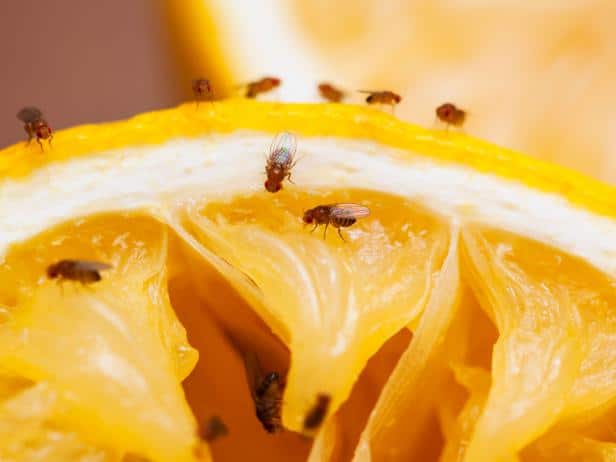
fruit flies

Everyone will agree that fruit flies can be a nuisance, but they can be a fascinating organism to study. Here’s how we can classify a fruit fly.

The Domain is Eukarya because it has a nucleus and organelles. The Kingdom is Animalia because it ingests food, is multicellular, and has no cell wall. The Phylum is Arthropoda due to the hard exoskeleton, paired legs, and a segmented body. The Class is Insecta because it is terrestrial, has six legs, and antennae. The Order is Diptera due to having two-wings.

The Family is Drosophilidae, the Genus is Drosophila, Species is D. melanogaster; also known as the common fruit fly. As you looked at the different levels of classification, can you see where we’re related to the annoying and small insect?

Classification of a Maple Tree

maple tree

We can get syrup from a maple tree, and it has stunning foliage in the fall, but you probably haven’t thought much beyond that. Here’s the classification of a red maple tree.

The Domain is Eukarya because it has a nucleus and organelles and the Kingdom is Plantae since it makes its own food and has a multicellular cell wall. Immediately, we can see that a maple is nothing like a human.

The Phylum is Tracheophyta due to the tissue-level organization, and the Class is Angiospermae because it flowers. The Order is Sapindales because it produces sap and the Family is Aceraceae. The Genus is Acer, the Species is A. rubrum, and we end up with a red maple.

Classification of a Dandelion

dandelion

People either love or hate dandelions but like other organisms, they are a living thing, and they have a complex level of classification. Let’s see if you can guess the Domain, Kingdom, and Phylum. Did you guess Eukarya, Plantae, and Angiosperms? Then, you’re right.

The Class is Magnoliopsida, the Order is Asterales, Family is Asteraceae, the Genus is Taraxacum, and the Species is T. officinale; your result is the dandelion.

The more time you spend classifying living things, the easier it becomes, and even in these quick examples, you probably started to see some similarities.

Works Cited Page Example for MLA, APA, Chicago, and More

Whether you’re writing a research paper for Biology class or putting together a presentation, it’s important to do your research and cite your sources. Never know which works cited style to use? Learn more about MLA, APA, Chicago, and other helpful hints.

Works Cited Page Example for MLA, APA, Chicago, and More

opening a book

Research projects are a lot of work, but it’s worth all the hard work when your instructor gives you rave reviews, and you’ve earned top marks. You’re able to be successful on your research paper or presentation because you spent time reading dozens of articles and journals written by scholars and scientist.

Since they spent years of research to provide you with essential information, it only seems fair to give them credit, right? Citing your sources properly might be a little confusing, but we’ll discuss some of the different citation styles, share a works cited page example for each style, and give you all the information you need to give proper credit where it’s due.

Why Citing Is Important

Few people will argue with the fact that citing your sources is important, but you might be curious if it’s truly necessary. The answer is yes, and there are a few reasons why it’s so crucial. Not only does it give researchers, scholars, and other writers appropriate credit, but citing is a “must” for the following reasons:

  • Avoiding confusion or “alternative facts”
  • You won’t be accused of plagiarism
  • It shows your professors, classmates, and readers that you know how to conduct research
  • You learn more as a researcher
  • You become a better writer
  • It shows that you’re respectful and responsible

What To Cite and What Not To Cite

Depending on the citation style you use, there may be come different rules but if you’re wondering what should be cited in your work and what’s not necessary, here are some general rules.

DO Cite

  • Books and journal articles
  • Newspaper, magazines, brochures, and pamphlets
  • Film, television, ads
  • Websites and other electronic resources
  • Letter, email, forums
  • Personal interviews
  • Diagrams, charts, photos, and other graphics

You Shouldn’t Need To Cite (But Double-Check)

  • Your own collected data in a field study
  • Your notes
  • Your own journaling
  • Your opinions
  • When you use “common knowledge”
  • Well-known facts

An In-Depth Look At Citation Styles

Now that we’ve briefly discussed the importance of citing sources and the do’s and don’t, let’s take an in-depth look at some of the most common citation styles you may use throughout your academic career.

While you already know what a citation is, you may not understand what a citation style is or how one works. Citation style is the rules for formatting, how the information you cite in an article or project is ordered, and how to punctuate; each style has specific rules for citing information.

If you’re unsure of what type of citation style you should use, always ask your professor. It’s best to double-check rather than assuming. Citing information incorrectly can take up a lot of your valuable time, and it can also negatively affect your grade.


APA

APA is also known as the American Psychological Association, and this style is frequently used in the social sciences. Some general highlights of this style include an essay with a title page, abstract, main body, and references.

It should also be typed and double-spaced on standard 8.5 x 11” paper (with 1” margins on all sides). The recommended font is 12 pt. Times New Roman and page headers are a must.

When you create your works cited page, you should have References centered at the top, double-space the list, and the first line of your citation should be indented one half-inch from the left margin. The list should also be alphabetized. For more information on APA style and a works cited page example, click here.


MLA

MLA, also known as Modern Language Association, is a citation style commonly used by the Humanities. There are many similarities between APA and MLA, but rather than References and the end of your essay; you should have the words “Works Cited.”

A works cited page example will show you that you should have an alphabetized list and the second line of the citation should be indented.


Chicago

The Chicago Manual of Style (CMS) is a citation style that is used in the social sciences and the humanities. Rather than a works cited page, a note and bibliography or author-date is needed at the end of the paper. Notes and bibliography are often requested for arts, literature, and history while author-date style is better suited for science and social sciences..

As you explore CMS, you may also come across the Turabian Style, which is a variation of CMS and may be used in social or natural sciences and in the humanities.

Now that we’ve given you some of the most commonly used citation styles, let’s take a look at some other styles that you might be asked to use at some point in your academic or professional career.

If you continue to study the sciences, you may be asked to use the following citation styles:

  • American Chemical Society (ACS) for Chemistry
  • American Institute of Physics (AIP) for Physics
  • American Medical Association (AMA) for Medical Sciences
  • American Mathematical Society (AMS) for Mathematics
  • Council of Science Editors (CSE) for Biology
  • National Library of Medicine (NLM) for Medicine

If you study the social sciences or law, you may be asked to use the following styles:

  • Association of Legal Writing Directors (ALWD) for Legal Studies
  • American Political Science Association (APSA) for Political Science and International Studies
  • American Sociological Association (ASA) for Sociology
  • Bluebook for Legal Studies
  • Maroonbook for Legal Studies

Other citation styles include Harvard Business School, Associated Press (AP), and Linguistic Society of America (LSA).

Finding Citation Style Resources

eyeglass on top of a book

It would take a long time to explain each citation style in detail; thankfully, there are several resources available (and a majority of them are online). Depending on your coursework, you may have instructors that require you to purchase a citation style manual.

Even if it’s not a course requirement, it’s great to have on hand, and you may be surprised how often you use the manual. Although many people shy away from hard copy resources and would instead use the convenience of the internet, owning an official citation style guide may be more accurate and easier to use than finding all the information you need online.

While there are plenty of online resources that are legitimate, convenient, and helpful, don’t be afraid to utilize a writing or academic center if one is available; the people who work in these centers are knowledgeable in all citation styles and can help you make sure that you know which style to use.

If you don’t have a center nearby, head to your public library; a librarian should be able to assist you.

A writing or academic center can also be a great resource if you need someone to proofread an essay before you submit it to your professor. If you have any doubts about how your project or paper is formatted, you should get the feedback you need.

What About Citation Software?

software used in inserting citation

Making sure you cite your sources correctly is definitely important and some people will go so far as to use citation software. Citation management software is also known as bibliographic software, and it helps you organize, store, and retrieve information from the sources you use (like books, articles, journals, online resources, and websites).

Depending on the software you use, you might be able to import records or PDFs from databases and add abstracts and keywords to your paper or project. Once you’re ready to cite your sources, the software helps you create a bibliography.

While citation software can be a helpful tool, it should not be your “go to” solution for the proper citing of sources. The software is not flawless, and you still need to know the basic guidelines of the citation style that you’re using (such as MLA or APA).

Another option to try, when you need a little extra help with citing your sources, is an online citation builder. These are often free and can help you do citations quickly. Builders do not work the same as software.

Some Final Words On Citation Styles

As you can see, there are many different citation styles to choose from, and while some are specific, you might have a few style options (depending on your paper or project). If you’re unsure of what style to use, always ask.

If you use a couple of different citation styles on a regular basis, it’s a wise investment to purchase a hard-copy of the style guide; these are relatively inexpensive and easy to find. If you’re buying a used copy of a style guide, make sure that it has all the up-to-date information and if not, be sure to gather the right info to make it a current guide.

Citations are important, and while it may feel like an overwhelming part of writing a paper, it can be easy as long as you know the basics of the citation style and how to create the appropriate works cited page.

Using a Heart Model to Study for AP Biology – Explore On a Deeper Level

Students in AP Biology have more opportunities for in-depth and hands-on experiences in the classroom. Learn how using a heart model to study can be beneficial when taking AP Biology.

Using A Heart Model To Study For AP Biology

heart model 500x500px

Since Biology is the study of living organisms, it’s essential to learn about and understand how the heart works. Although the basic functions of the heart are often taught at an early age and in elementary school, AP Biology provides the perfect opportunity to explore the unique organ at a deeper level.

While there are typically many lab sessions where students have the chance to examine and dissect a real heart, it’s not always the ideal model when studying the heart. We’ll discuss some of the ways that using a heart model can enhance and improve the overall learning experience in AP Biology.

Taking A Look At Heart Models

Walk into any AP Biology lab or even a doctor’s office, and there’s a good chance that you’ll see a model of a human heart on display. As an AP Biology student, exploring a human heart model may be the closest, you’ll get to human heart unless you decide to advance in the sciences or attend medical school.

Have a big exam coming up or just want to gain a better understanding of how all of the parts of the heart works? A model of a heart is an excellent resource for studying. If your AP Biology teacher has a heart model, you are probably encouraged to take a look at it in the classroom, but what can you use when you’re studying outside of the classroom?

what can you use when you’re studying outside of the classroom?

Quick Study Illustrations

heart illustration model

Your Biology book may have some stunning and highly-detailed graphics of a human heart, but it may not showcase every part in detail. You can find a variety of “quick study” pamphlets online that give you multiple views of the human heart, and in great detail.

This type of resource is nice for studying while “on the go,” or when you want something lightweight and compact, but it is still very similar to looking at a model of the heart in your textbook. If you are a visual learner, this method may be enough to help you study, but if you’re a “hands-on” learner, you may have a harder time learning about the heart.

3D Model Apps

If you spend a lot of time at your computer or on your device while you study, it may be worthwhile to check out a 3D model of the heart. Depending on the 3D model you choose, you might be able to do virtual dissection, manipulate the heart rate, or see what happens to the heart during a heart attack.

While a 3D model that you can touch and manipulate with your own hands, may help you understand the heart better than an app, the app may be beneficial due to some of its features (such as a beating heart or blood flow).

3D “Hand On” Models

Human heart model

As we mentioned earlier, there might be a 3D model of the human heart in your AP Biology classroom, and you have access to it while you’re in class. 3D heart models typically have pieces that come apart and allow you to see all the parts of the heart, which is essential when learning about the complex organ.

 When you want a more “hands-on” approach to studying the human heart, it can be difficult to have access to a 3D model, particularly if you’re in a large classroom with other students who are also wanting to see the model of the heart.

Purchasing a heart model for yourself might make studying more convenient and help information “sink in” a little better. If you’ve already started to search around online for 3D heart models, you might be a little disheartened by the price.

Many life-sized 3D heart models cost hundreds of dollars, and it might not be in your budget as an AP student. The good news is that there are many smaller 3D models available online for under $50.

If you decide to purchase a 3D model, it’s important to read the reviews before buying and keep in mind that the model will not be life-sized. Ideally, the 3D model should have parts that can be removed or at least moved out of the way, so that you can see all the parts of the heart.

Purchasing a 3D model of a heart can be a wise financial investment, particularly if you’re planning on pursuing Biology or other Life Sciences further. Your 3D model can also be a great asset to a study group or when using a variety of resources like the quick study pamphlet or 3D app.

Do You Have To Use A Heart Model When Studying?

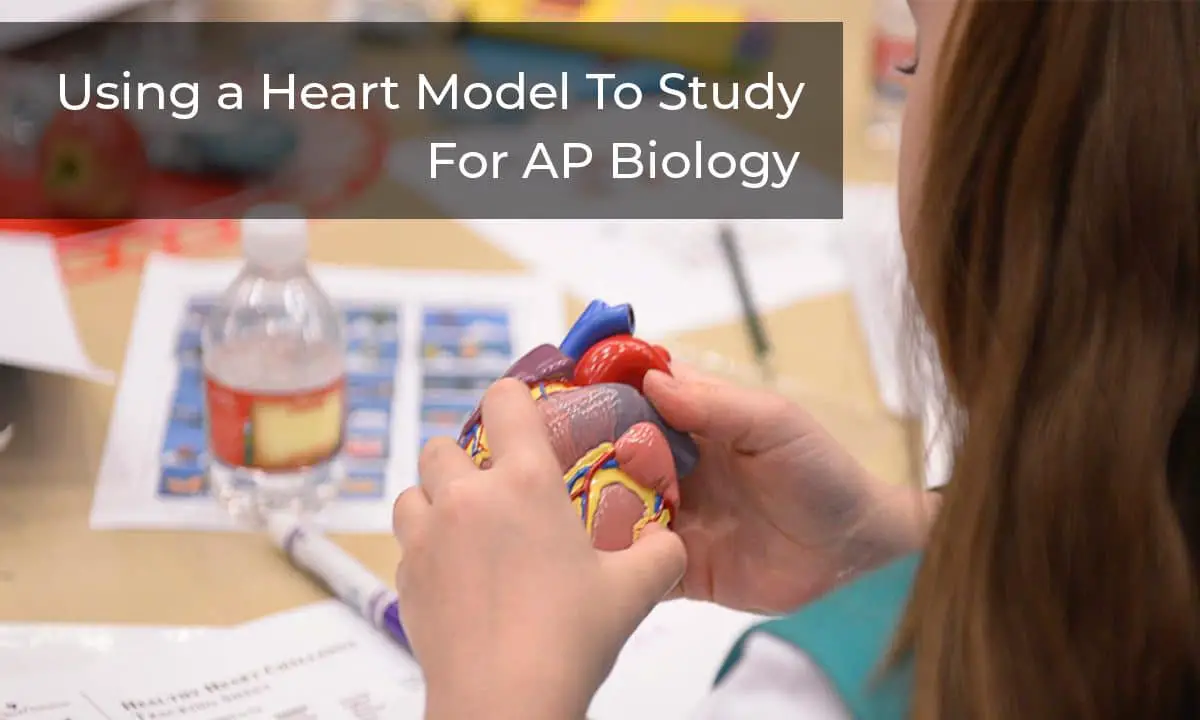
A girl holding a heart model

You might be wondering if you need to use a model of a heart when studying for AP Biology. Your teacher may strongly recommend using heart models as a study guide, but as we mentioned earlier, you might understand how the heart works without looking at a model.

Even though we mention quick study pamphlets and 3D model apps as good alternatives to studying the heart, research suggests that students are more likely to understand and retain information better when they are presented with 3D models rather than 2D.

In one study, a group of nursing students was tested after learning and studying with 2D models, and the other group was tested (with the same test) after learning and studying with 3D models. Overall, the group that had access to a 3D model performed better on the test.

The methods, which were compared included a dissection of a sheep heart and a PowerPoint presentation versus a 3D heart model; the 3D model resulted in higher test scores.

Isn’t Dissection The Best Option For Studying The Heart?

humna heart model sectioned

Many may argue that dissecting a heart is the best way to study the heart and gain a better understanding of how it works. In AP Biology, you may have the opportunity to dissect a sheep heart or another mammal heart, but you won’t be able to have an up close and personal interaction with a human heart.

While dissection is a fascinating and “must have” experience in every Biology course, it can also be challenging to understand and often it’s a hurried process with limited explanations. It can also be more challenging when more than one student is working on dissecting a heart at once (such as a group of two or three people).

Dissection takes practice and time, and even though many students would benefit from one-on-one help from their instructor, it’s not always feasible. Dissecting a heart can also be very difficult for some students and may make them feel nervous or uneasy, which can also affect the overall learning experience.

Another reason why dissection may not be the best option for studying is that you can’t carry the heart around with you. Depending on how many students are in the class or how many class sessions touch and examine a heart, it can become harder to work with or easily damaged.

Ideally, every student would have the opportunity to dissect a heart and learn enough from the experience to understand how the heart works and ace an exam on how the heart functions. Since a heart is such a unique and complex organ, it’s beneficial to explore a variety of resources to help better understand the heart.

Dissection is a great option, but it’s not the only option (nor should it be) when providing an in-depth look at the heart. Unless you have a photographic memory, most students benefit from seeing the parts of a heart multiple times, not just during the various steps of a dissection.

Using a 3D model allows you to take the heart apart and put it back together as many times as you want. If the model is made of high-quality materials and is handled carefully, it can withstand many study sessions and years of science courses.

Using Various Heart Models For Studying

The type of heart models you choose will most likely depend on your learning style and preferences. Since learning about the heart is not something that is easily done overnight, it’s best to utilize as many resources as you can when you study.

If a model of the human heart is not available to you on a regular basis or at home, consider the 3D model app and even some of the quick study guides.

Biome Map: Definition, Examples, And Why It Is Important

If you want to gain a better understanding of all living things, from plants to animals, it’s essential to learn about biomes and the role they play in Biology. Learn how to read a biome map and define each type of biome in the world.

Biome Map: Definition, Examples, And Practice

Biomes are an interesting and important part of Biology, and without understanding what a biome is and how it works, you don’t have a full understanding of Biology. Let’s take an in-depth look at biomes, so you can take a look at a biome map and understand it; learning about biomes can also better prepare you for if you’re ever tested on a map of biomes.

What Is A Biome?

While you might have learned a little about biomes when you were in elementary school, there’s a good chance that you don’t have a biome map memorized or know about all of the biomes. As we all know, the entire surface of the planet has some lifeform, but it varies depending on factors like vegetation, climate, water, and light. A biome is classified by the flora and fauna (dominant plants and animal life) that resides in that particular area; the plants and animals that live in a biome are also known as biota. While some biomes share some characteristics, each type is unique, and the smaller units in a biome are what we know best as a habitat.Biomes are often mistakenly referred to as ecosystems (and vice versa). An ecosystem is made up of living organisms and the relationship that they have in their nonliving environment. There are many examples of ecosystems but think about a dark cave in a secluded part of the world and all of the known (and unknown) living things that live in the cave.One of the reasons why ecosystems may be easily confused with biomes is that a biome may have many different ecosystems.

Exploring The Different Types Of Biomes

If you look at a biome map, you will notice that it is color-coded with a key that refers to different types of biomes. Depending on what map you look at and who is teaching you about biomes, you may only learn about five biomes, which include tundra, grassland, forest, desert, and aquatic; sometimes it’s six basic biomes be splitting the aquatic into marine and freshwater.As you might guess, these biomes are basic, have a broad definition, and may refer to many parts of the globe. In order to gain a better understanding of Biology as a whole, you may want to consider learning more about other biomes like the rainforest, temperate forest, chaparral, taiga, savanna, temperate grasslands, and freshwater or marine.Younger learners or individuals who just want some basic information on biomes may benefit from learning about the broad classifications, but taking the time to learn about other biomes (and their specialized classifications) can help understand the world as a whole.As you explore biomes, it’s not uncommon to see different biomes in the same area, and often there are no clear boundaries from one biome to the next. If you were to compare a map of biomes from thousands of years ago to today, you’d see a completely different map.Climate change plays a significant role in how biomes are defined and where they are located on a map. The major biomes typically correspond to the climatic zones, such as a tropical wet climate.

Tundra

Man and dogs in snowAs you might already imagine, the tundra biome is located in the northernmost regions on a map of biomes. A tundra is flat, cold, but still has plant life during the short growing season. A variety of birds call the tundra their home during the summer and migrate in the winter. Smaller mammals thrive in their habitats under the snow.

Grassland

grasslandThe grassland biome is often referred to as plains or prairie, due to the large areas of a variety of grasses. Grasslands typically receive minimal rain and are often at high risk for fires. Even though there is not a large variety of flora, the biome is home to large herding mammals. Grassland is found on every continent except for Antarctica.

Forests

forest with rocksThe forest biome makes up about one-third of the Earth’s land area, and as you might imagine, there are more classifications to the forest biome than “just trees.” The tropical rainforest has two seasons, 12-hour days, and has little variation in the climate. You’re most likely to find tropical rainforest countries near the equator like South America, Southeast Asia, and Southern Africa.forests with sunraysA temperate forest biome is most frequently found in eastern parts of North America, northeastern Asian, and western and central parts of Europe. Animals from small mammals (squirrels) to predators (black bears) call the biome their home. The boreal or taiga forest is similar to the temperate forest biome and is found in Siberia, Scandinavia, Alaska, and Canada. The taiga forest biome doesn’t have as long of growing seasons as the temperate forest, and the climate is cold and dry.

Deserts

desert with camelsIt’s not uncommon to see all types of desert biomes lumped into one broad desert biome and again, depending on the map you’re looking at or who is teaching information about biomes, the classifications may be different. Some people break down the desert biome even further to include hot and dry, semiarid, coastal and cold. If you live in the U.S., you may be most familiar with a hot and dry desert biome, as it includes four of the major deserts in North America. The seasons are very dry and warm year round.desertSemiarid desert biomes may be found in parts of the U.S., but are also found in Newfoundland, Greenland, Europe, and parts of Asia. There are more flora and fauna in semiarid biomes than the hot and dry.The coastal desert biome sees moderate rainfall and the cold desert biome experiences heavy snowfall; both have plants and animals that have adapted to the environment (much like every other biome on the map)

Aquatic

sea turtle underwaterWhen exploring a map of biomes, it’s important not to overlook the aquatic biome. While many people pay close attention to flora and fauna throughout the various biomes “on land,” there’s plenty to consider when we look at the bodies of water.The aquatic biome is typically divided into freshwater and saltwater (or marine) biomes. From there it might be broken down even more to ponds or lakes, rivers, oceans, and estuaries.sting ray underwaterIt’s essential to think about aquatic biomes because just like other biomes, climate change and other environmental factors affect these “off land” biomes, which over time will change the layout of a map of biomes.

Why Are Biome Maps Important?

world biomes mapImage Source: askabiologist.asu.eduNow that you have a better understanding of the different biomes and how one map could be different from another, you might be wondering why biome maps are so important. As we mentioned earlier, learning about biomes and understanding where they are in the world can help us understand all living organisms. Biome maps can help people learn about places they may never get to see; the map may open their eyes to a new species of animal or a unique variety of flora. Biome maps may be a basic resource for understanding Biology, but without the maps, we know very little about Biology, it’s past, and what might be in store for the future of our planet.Even though we may not see drastic changes to our environment in our lifetime, we can see small scales changes such as more prairie fires or decreasing populations of a specific bird.To some, these may not seem like that big of a deal when comparing it to the world at large, but it can give us some idea as to how biome maps will continue to evolve.

Making The Most Of A Biome Map

Not only are biome maps an important resource to use in a Biology course, but it can be used in a variety of fields such as Agriculture. The United States Department of Agriculture can utilize the map to learn more about soil distribution while conservation programs can strive to protect biomes that need it the most.

If your goal is to learn how to draw a map of biomes or memorize it for a class, you might want to consider the following tips.

  • Familiarize yourself with Geography; you can’t make a map without knowing where places are located.
  • Use the knowledge you already have. Think about living organisms and where they live. Can you guess what type of biome (or biomes) are in this area?
  • Get to know a climatic map. Remember climatic zones may correspond with specific biomes.
  • Practice, practice, practice. Make several copies of a blank world map.
  • Use a color-code and key that’s easy to read. Choose colors that stand out from one another.