Why Is Carbon So Important In Biology? Key Element Of Life On Earth

Why is carbon so important in biology? This was a question that we felt deserved an in-depth answer. Carbon, which so many of us take for granted, is actually one of the most important elements to life as we know it. Carbon’s molecular structure gives it the ability to form stable bonds with other elements, including itself, which makes it the central element of organic compounds. It makes up almost 20% of the weight of an organism, and it is essential for them to live, to grow, and to reproduce.

Because of its ability to form these bonds, carbon can create very large and complex molecules called macromolecules that make up living organisms. This is part of why this versatile element is considered the backbone, or basic structural component, of these molecules. Still wondering “Why is carbon so important in biology?” Let’s take a deeper look at what this element is, what it does, and what it is used for, because there is much more to learn about carbon.

What Is Carbon?

Carbon is the fourth most abundant element on earth, and it is a finite resource because it cycles through the earth in so many forms. Without carbon, life as we know it would cease to exist because it is the main element in organic compounds that make up living things. The presence or absence of carbon determines whether an organism is organic or inorganic.

1

The Element

The name for carbon comes from the Latin word ‘carbo’ which means coal. It has the atomic number 6 and uses the symbol C. The 6 represents six electrons and six protons and its placement is in the middle of the periodic table as a representation that it is central to life as we know it. Some refer to carbon as the ‘King of the Elements’ because it is an absolute necessary to life. It has the highest melting point of the pure elements at 3,500 degrees Celsius, and it’s one of the elements that ancient man knew in its pure form.

2

Stable Bonds

Carbon’s molecular structure allows it to form bonds with many elements, itself other carbon elements. Because of this, it can form long chain molecules, each having different properties. Carbon remains in balance with other chemical reactions in the atmosphere and water because of its stability.

3

Organic Compounds

Organic compounds make up the cells and other structures of living organisms and they carry out the processes of life. Carbon is the main element of organic compounds we need to live. We group these organic compounds into four types: Carbohydrates (sugars and starches), Lipids (fats and oils), Proteins (enzymes and antibodies), and Nucleic Acids (DNA, RNA). Still wondering why is carbon so important in biology? It’s role in creating living organisms is one of the core reasons we study it.

4

How Carbon Moves

Carbon, in its many forms, does not stay still. It moves all around the earth. It can move with respiration, photosynthesis, as a part of food chains, and by burning fuel, just to name a few.

What Is The Carbon Cycle?

Carbon is the fourth most abundant element on earth, and it is a finite resource because it cycles through the earth in so many forms. Without carbon, life as we know it would cease to exist because it is the main element in organic compounds that make up living things. The presence or absence of carbon determines whether an organism is organic or inorganic.

1

The Geological Carbon Cycle

The Geological Carbon Cycle is driven by the movements of the earth’s tectonic plates and geological processes such as chemical weathering. The Geological Carbon cycle is how carbon moves between rocks and minerals, seawater, and the atmosphere. It takes place over millions of years.

2

The Biological or Physical Carbon Cycle

The Biological or Physical Carbon Cycle is the way carbon cycles through vegetation, herbivores, carnivores, omnivores, soil, and in fossil fuel burning. It takes place from days to thousands of years.

Why Is Carbon So Important In Biology?
illustration of a dna gene

image source: pixabay.com

Carbon is important in biology because without it, life itself would not exist. Carbon is important in everyday life for all living beings in order for them to live, grow, and reproduce. Carbon compounds are also very versatile and they are in many objects we use every day. Remember, the presence of carbon determines whether something is organic or inorganic.

1

Carbon And The Human Body

Sugars, DNA, proteins, fats, pretty much everything except water contains carbon in the human body. If you have heard it said water makes up most of the human body, then it would also be correct to say carbon makes up most of the other parts. This is another great example of an answer to the question “Why is carbon so important in biology?”

2

Photosynthesis And Respiration

The human body inhales oxygen from the atmosphere and when it combines with carbon, it creates carbon dioxide. The body does not need carbon dioxide so we exhale it when we breathe. Plants are the exact opposite. They take in carbon dioxide from the atmosphere during photosynthesis and give off oxygen back into the atmosphere for us to breathe. All the carbon in your body once existed in the atmosphere as carbon dioxide.

3

Inorganic Compounds
ember from the heated wood

image source: pixabay.com

Many things we use are made of carbon. Rubber, plastics, gasoline, natural gas, are just a few examples. Also, coal and diamonds are made up of mostly carbon, and graphite, which gives pencil lead its black color, is pure carbon. Whenever a fire is burned, the black soot that results is a form of carbon.

4

Abundance In Nature

Carbon is found in different forms in all living beings on earth. Carbon is not only found in abundance on the earth, but the sun and the stars also contain carbon. Carbon also exists on many planets in the form of carbon dioxide.

5

Factors That Affect Carbon In The Atmosphere

There are many factors that affect the global concentration of carbon in the atmosphere, including seasons and human activities like carbon dioxide emissions. Environmental scientists and policy makers seek to understand these factors so they can try to pass regulations to offset negative impacts to the atmosphere.

How We Use Carbon

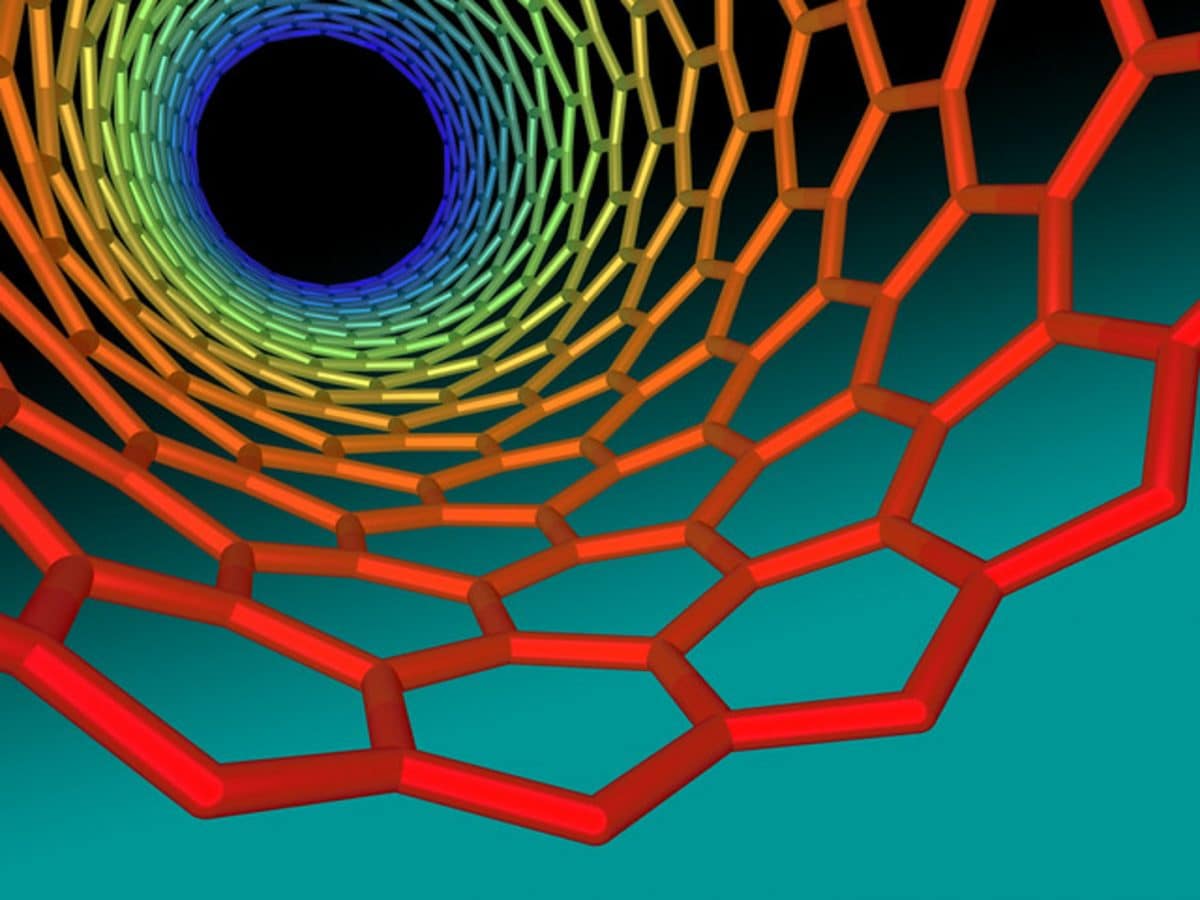
Allotropes are materials made from the same element, but their atoms fit together differently. Carbon exists on earth in three different allotropes: amorphous, graphite, and diamond. Almost every industry on the planet uses some form of carbon in their every day operations, and we highlight a few of those here.

1

Fuel

We use carbon for fuel in the form of coal, methane gas, petroleum, natural gas, and crude oil. There have also been some exciting breakthroughs by researchers as they have discovered how to take carbon dioxide from the air and turn it into fuel. This could mean a more environmentally friendly fuel for the world.

2

Graphite

Graphite is pure carbon, and we use it for pencil tips, and one mechanical pencil lead of 0.7mm, has about 2 million layers of Graphene. It is also used as a lubricant, for high temperature crucibles, and electrodes. One form of graphite, called Graphene, is the thinnest strongest material ever known.

3

Materials
ink printers

image source: pixabay.com

Carbon can form alloys with iron which makes carbon steel. We also find it in rubber, plastic, wood, and black pigment in ink used for printers or painting.

4

Diamonds

Diamonds are used to make jewelry, but because they are so hard that we also use them for cutting, drilling, grinding, and polishing. You can purchase many items such as cutting wheels that feature small diamonds on the edge for better cutting capabilities.

Conclusion
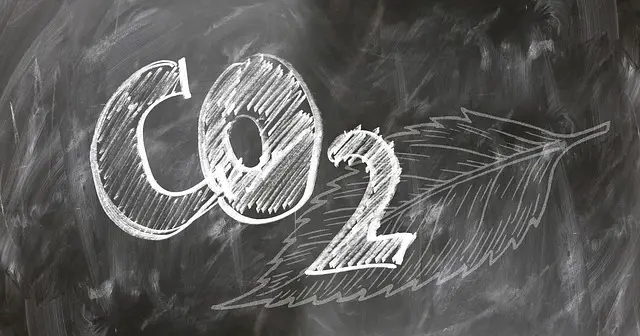
co2 written on a blackboard

image source: pixabay.com

Here we have answered the question “why is carbon so important in biology?” and in doing so, we have discovered many interesting facts about this element. The first and most important is that we could not live if carbon did not exist. Every organic compound is built around this essential element and we need it for life as we know it. The presence or absence of this element determines whether something is organic or inorganic.

Another answer for the question “why is carbon so important in biology?” is that this element exists everywhere on earth. As the fourth most abundant element, not just on earth, but in the universe, it will forever be a part of our existence. It is interesting to note that more compounds exist that contain carbon than those that don’t, and this is something for which we should be grateful.

Why is carbon so important in biology? It’s not just one, but many reasons why it’s so important, many of which we have listed here in our article. Carbon allows us to exist and it is in many of the things we use every day to build, create, and produce energy. Essential for life and useful, no wonder we call it the building block of life.

10 Questions To Study For A Mitosis Quiz In AP Biology

If you need to prep for a mitosis quiz in AP Biology, you are going to need to understand the difference between mitosis and meiosis thoroughly.

Many students fail to be able to identify the difference between the two biological processes accurately. So, you don’t want to get disappointing results on your mitosis quiz; there are a few key points you are going to want to study.

Remember to acquaint yourself with the following before you think you are prepared enough for a mitosis quiz.

  • There are six different stages of mitosis.
  • You want to be able to visualize and analyze diagrams displaying the stages of mitosis confidently.
  • It is good to be aware of any irregularities during mitosis and resulting genetic consequences

Give yourself ample time to take comprehensive notes when studying your AP Biology material. Don’t try to memorize everything, but seek to understand and make connections between the information. It may also be helpful to draw out the processes of mitosis, labeling each stage with a description that you can understand easily.

Ask yourself questions about what step comes next, and predict if something were to go wrong in the process what would be the result?

Taking steps to interact with your material will help you make more sense of things. You don’t want to only memorize and regurgitate the material without having a clear visual understanding of the what and why of the process.

What Is Mitosis?

Mitosis is the name given for the process of a cell’s duplication. When there is one cell with a single set of chromosomes, it goes through a step-by-step process where you end up with two cells that have identical sets of chromosomes.

When there are breakdowns or problems with the mitosis process, genetic diseases or anomalies are created.

Check Out These 10 QuestionTo Study For A Mitosis Quiz

Image by Adina Voicu from Pixabay​​​​

Out of all the information covering mitosis and meiosis, you may want to consider the following questions to help prepare you for an upcoming mitosis quiz. Choose to break down the information as you see fit and in a language, you can understand. Again, drawing images to help you better conceptualize the process is helpful, as well as using correct terminology.

Which Structure Is Responsible For Moving Chromosomes During Mitosis?

The centromere is a region of DNA that holds together the two chromatids of a duplicated chromosome. Centromeres are responsible for attaching microtubules and direct the movement of chromosomes in both the process of mitosis and meiosis.

First, the chromosomes move toward the center of a cell during metaphase, and then they proceed to opposite directions during anaphase.

 Why Do Chromosomes Fail To Separate Within Mitosis?

Image by Colin Behrens from Pixabay

Nondisjunction is when a pair of homologous chromosomes fail to separate. There are three forms of nondisjunction, and two happen during the process of meiosis I and meiosis II.

When the sister chromatids fail to separate during the process of mitosis, the number of chromosomes is abnormal, resulting in aneuploidy.

If a single chromosome is lost from a diploid genome, it is called monosomy. If a chromosome is gained, it is called a trisomy.

When chromosomes fail to separate correctly, it can lead to a genetic disorder such as Downs Syndrome or Turner Syndrome. In the most extreme cases, aneuploidy can be lethal. The risk of nondisjunction taking place increases exponentially with the rising age of parent cells.

Typically disjunction is found during the process of meiosis.

At Which Phase Do Chromosomes Become Visible And Of What Do Chromosomes Consist?

Before chromosomes become visible during the prophase stage, the chromosomes are long strands called chromatin. The chromatin is tightly wound up into chromosomes.

Chromosomes are made up of DNA which is coiled tightly around histones. Histones are proteins which support the structure of the thread-like structures. Chromosomes are not visible under a microscope if the cell is not dividing, and it is not visible in the nucleus of the cell.

The short arm of a chromosome is the ‘p arm,’ and the long arm is known as the ‘q arm.’

What Is Cytokinesis?

Cytokinesis is the process when cells physically divide. The cytoplasm of a parent cell splits into two daughter cells. This process starts during anaphase and doesn’t stop until the telophase. Cytokinesis takes places during both mitosis and meiosis.

When and Why Will Cells Divide, How Many Chromosomes Will They Have, And What Triggers This Process?

Cellular division during mitosis may be triggered because of the need to replace or repair dead or lost cells or to grow in size. As part of the cell cycle, a cell will prepare to divide at interphase and begins its division process during mitosis.

A single cell will divide and reproduce copies of its DNA into two identical cells. The number of chromosomes will be the same as in the parent cell.

What Is The Difference Between A Diploid And A Haploid?

Diploid cells have a set of chromosomes from two different parents, with two homologous copies of each chromosome of their parents. Diploid cells reproduce by mitosis, and somatic cells are examples of diploid cells.

Haploid cells are created because of the meiosis process. Gametes or sex cells are a common type of haploid cells. Haploid cells only have one complete set of chromosomes.

Define Polyploidy And Aneuploidy?

When there is a variation in the number of chromosomes, it is described as being either aneuploidy, monoploidy, or euploidy. Depending on whether one part of a chromosome is lost, an entire set of chromosomes is lost, or one or more than one complete set of chromosomes is gained the term changes.

With chromosomes, conditions can either be double monosomic or double tetrasomic.

What Is An Allele And The Law Of Independent Assortment?

A gene is a single unit of information that is hereditary. Except in the case of some viruses, genes are made up of DNA which transmits traits. An allele is a genetic sequence which is a variant of a gene. When there are differences among copies of a gene, they are called alleles. At the locus of a gene, there are only two alleles present.

Gregor Mendel has been credited with our enlightened understanding about genetics, heredity, and what happens when there are variants in genetic transmission. According to Mendel’s Law of Independent Assortment, a pair of alleles will separate independently when gametes are forming. Traits are transmitted to offspring independently.

The Law of Independent Assortment was formed on principles uncovered when Gregor Mendel conducted experiments creating dihybrid crosses between plants which had two different traits. As a result of Mendel’s experiments, a ratio developed to reinforce this concept.

What Type Of DNA Damage Occurs When Cytokinesis And Mitosis Fail?

If a cell fails to separate during cytokinesis, it may have multiple nuclei.

During the prometaphase and metaphase stage, if a cell fails, it enters the G1 phase of a cell cycle, or it results in cell death. The checkpoints within the cell cycle help to regulate the process of cell division and will signal to different pathways if there is a failure.

Steps are automatically taken to prevent any damaged DNA from being reproduced or transmitted to a new generation of cells, to protect integrity.

When mitosis fails to carry out is process an abnormal number of chromosomes is created. To prevent continuous cell division, abnormal cells may be removed. A failure in mitosis typically activates cell death and consequent DNA damage.

What Are The Cell Checkpoints And What Are Their Functions?

Depending on if certain conditions are met cellular division may be inhibited, such as in the instance that growth hormones are released. When there is cellular growth, cells have to divide to prevent cell crowding.

If there is a release of specific hormones or a lack thereof, cell checkpoints may not allow the progression of a cell to the next stage in the cell cycle until there are viable conditions.

At the G1 checkpoint, any damage to DNA and relevant external stimuli are evaluated before a cell can move forward to interphase.

The G2 checkpoint is needed to make sure that all chromosomes have been replicated without any damaged DNA. Until this is assured, a cell will not be able to enter mitosis.

The M checkpoint is responsible for making sure every chromosome is attached to the spindle, and will not allow the separation of duplicated chromosomes if there is a problem.

Cell checkpoints are part of the eukaryotic cell cycle.

Additional Helpful Pointers

www.pexels.com

Before your quiz make sure that you can break down any pertinent information in easy to understand terms. However, be aware of the correct terminology and the sharp differences between mitosis and meiosis to reduce any unwanted confusion. Make sure to get enough sleep, eat well, and give yourself enough time to study the material before attempting to complete a quiz.

Don’t underestimate or disregard the power of drawing out your own diagrams to fully grasp the concept of each stage of mitosis. Visuals can have a stronger influence than reading words alone about the process.

7 Cell Raps To Help Memorize The Functions Of Cells

If you’re studying for a science test, one of the best ways to help remember the material is by setting to music! That’s right; cell raps can help you remember the names of the organelles located in each cell, as well as their functions.

We’ve rounded up our top seven picks for cell raps that we think you’re going to love.


via GIPHY

Best Cell Rap for Sixth-Graders: Cells Cells by Crappy Teacher

As YouTuber CrappyTeacher (Emily Crapnell) explains in her cell rap video, she created this video to help her sixth-grade science students learn the different parts of a cell. At over 5.7 million views, it seems that this cell rap has caught on with more than just Crapnell’s students! We can’t blame people for watching it; it’s catching and makes science–dare we say it?–fun!

“Today’s the day,” the rap begins; “let’s talk about the building blocks of life–cells that make us.”

The cell rap chorus covers some of the most vital parts of cellular biology. It explains that cells are made of organelles, and mentions cytoplasm, the nucleus (“controllin’ everything”), the membrane, the vacuole (“we can float around for hours”), and chloroplasts by name.

The next chorus explains that there are two different types of cells–animal and plant cells, while the final three stanzas are devoted to explaining in more details with each part of the cell does. “The cell membrane is the border patrol,” raps CrappyTeacher, and then later, “The mitochondria’s something every cell needs, breaking down the food and releasin’ energy.”

Over second thousand people have taken the time to comment on this cell rap. Many mention how they heard it years ago and still remember it, speaking to the catchy lyrics and the arresting beat. While designed for sixth-graders, the content is sophisticated enough that even college students report finding it helpful!

We also feel like it’s one of the best mixes of catchy lyrics and useful information, managing to find a good balance between repetition and new information. Plus, it provides a great video with very helpful images which will further solidify the information in your mind.

The rap can be viewed here or may be purchased.

Best Karaoke Option: The Cell Song by Glenn Wolkenfeld

The Cell Song, created and sung by Glenn Wolkenfeld, isn’t a cell rap–but it is a fantastic way to use the power of song to help commit the parts of a cell to memory! And with over two million views, we’re not the only people who think so.

The song is a folksy, bluesy tune where the singer asks what happens when he goes into a cell. “Who drives this bus,” sings Wolkenfeld, and then he “found myself talking to the boss, the nucleus.”

Unlike some of the other cell raps available, The Cell Song explains that chromosomes stores genetic information, the ribosomes make proteins, and the lysosome use enzymes to dissolve, and centrioles organize chromosomes into spindles.

Wolkenfeld also uses The Cell Song to explain how rigid cell walls allow plants to grow extremely tall, and the purpose of green in the plant cell. “I went into a plant cell, ‘why’s it so green?’” sings the artist. “‘Cause I make food from sunlight,’” answers a green chloroplast.

The video is filled with helpful drawings and diagrams to further illustrate each concept. Wolkenfeld, as we mentioned already, also offers a karaoke version, which is the same version, but instead of Wolkenfeld singing, the lyrics are on the screen.

The Cell Song, like Cells Cells by CrappyTeacher, has the ability to combine great video content with helpful, relevant information about cells.

You can find The Cell Song here, and the karaoke version here.

Best Song With Video: The Parts of a Cell Song by Jam Campus

The Parts of a Cell Song is a cell rap created by an organization called Jam Campus. It’s one of many Jam Campus creations; in fact, the YouTube channel creates educational videos on everything history to science to mathematics.

With over 54,000 views, The Parts of a Cell Song is catchy and well-loved. What we especially love, in addition to the self-made music, is the high quality illustrated video! Any time you can marry great visual images with catchy lyrics, you increase the likelihood of you remembering the information.

The Parts of a Cell Song gets right down to business, stating in its first line, “here’s what each cell contains, outer layer is the cell membrane.” The lyrics point out where cells get their energy (mitochondria), and what ribosomes do (help with protein synthesis).

We also appreciate this lyric, which helps to sum up the parts of a cell, something most cell raps don’t do:

Cell membrane, mitochondria, lysosomes and the ribosomesCytoplasm, nucleus, E.R. and Golgi body, and the nucleolus

​We especially appreciate how accurate the presented information is here (many cell raps mistakenly identify ribosomes as making proteins; however, they simply help in the assembly of polypeptides, chains of amino acids, which are the building blocks of protein).

Best for Repetitive Learning: The Cell Rap with Mr. Simons’ Fifth Grade Class

Mr. Simons and his fifth grade have teamed up to create another great cell rap, available on YouTube. This cell rap has approximately 468,000 views, and we understand why–out of all the cell raps we’re sharing today, this one is probably the most likely to get stuck in your head!

​Every song has to decide how to balance repetition with new information; as you’ll see later, some of the cell rap songs we’ve rounded up choose to focus on including as much data as possible. This rap, however, from Jake Simons, focuses on repetition.

In fact, we feel it focuses a little too much on repetition, but it’s still a great rap that will help cement many of the things you’re learning about cell biology into your memory.

​This five-minute rap features the cytoplasm, the nucleus, the membrane, the vacuoles, and the mitochondria of the cell. Here’s an example of a lyric:

“Just like us, the cell has energy. The mitochondria takes the food and puts it where it needs to be.”

Here’s another line from the cell rap, this one memorably explaining how the cell membrane works:

“There’s a thing called a membrane that holds it all in place so none of us will ever complain.”

​Is this the cell rap to turn to if you need to memorize complicated material? Probably not; but it is a great option for younger students or people who need just the basic parts of a cell!

​Best Use of Additional Resources: The Cell Song by Keith Smolinski

​The Cell Song was written and recorded by Dr. Keith Smolinski as part of a doctoral study to research how music can help students learn complex science concepts. In addition to The Cell Song, which features the parts of a cell, there are another nine songs sold in an album called Biorhythms: The Music of Life Science.

Songs in Biorhythms cover everything from cellular division, to the digestive tract, to the ecosystem. The song we’re featuring, The Cell Song, isn’t a cell rap, but it is well-performed, catchy, and interesting to listen to!

While the accompanying video doesn’t include images, it does utilize the lyrics on screen. In just two minutes and nineteen seconds, Dr. Smolinski manages to cover everything from the nucleus to the cell membranes.

In The Cell Song, listeners learn that the nucleus contains the genetic code, the mitochondria are the power plants of the cell, and the vacuoles store food and water. We also learn that the ribosomes make proteins, the Golgi bodies pack and ship the proteins, and the endoplasmic reticulum carries them.

Plus, the song teaches that lysosomes are janitors, cytoplasm is gel-like, and cell membranes help regulate what comes in and out of the cell.

​In the notes section of this video, Dr. Smolinski also explains that additional teacher’s resources are available on his website, including a Teacher’s Guide for The Cell Song. All of Dr. Smolinski’s resources are based on the National and State of Connecticut Science Standards, so you can be sure you’re getting accurate and helpful information.

Best Rap Alternative: Organelles Song by ParrMr

​ParrMr, a YouTube creator, has garnered over one hundred thousand subscribers thanks to her (or his!) ability to put science lyrics to popular songs. If you cringe over cells raps or want music you’re already familiar with, you can find videos on everything from Pangaea to the atmosphere to the planets.

ParrMr’s songs are set to hits like Forget You by Cee Lo Green, Toothbrush by D’NCE, and Jealous by Nick Jonas. The one we’re featuring here is Organelles Song, set to Counting Stars by OneRepublic.

The music is easy to remember if you’re already familiar with the song–our one complaint, however, is that the lyrics have very little repetition. This has the upside of packing a ton of information into the four-plus minute song, but if you’re trying to make sure the material sticks, this might be a downside.

​“Look inside a cell,” sings ParrMr, who created this song for his or her sixth-grade students, “and you will see…organelles have jobs, yeah, organelles have…jobs.”

​The next lines focus on how plant cell walls and cell membranes protect the line like a fence, letting the right things in and out. ParrMr covers vacuoles, lysosomes, the nucleus, chromatin, DNA, and ribosomes.

The final stanza explains proteins and their relationships to the endoplasmic reticulum, Golgi bodies, and cytoplasm. Mitochondria and chloroplasts are also mentioned.

​Organelles Song by ParrMr has racked up over 700,000 views, and for a good reason.

Runner-up Rap Alternative: Cells Song by ParrMr

Another much-loved option (four hundred thousand views!) by ParrMr, also for a sixth-grade classroom, this is another song about cells set to hit music. This one, called Cells Song, is set to Sail by AWOLNATION.

In it, ParrMr sings about cell membranes, cytoplasm, organelles, mitochondria, endoplasmic reticulum, ribosomes, and Golgi bodies.

“Cells cells cells cells cells,” he sings, before starting another chorus about vacuoles, the nucleus, and lysosomes.

​Here is the final stanza:

Capturing Sun’s energyChloroplasts in plants and treesAnd cell walls giving box-like shape, rigid

If you’re a fan of pop or dance music or are simply looking for a non-rap alternative to cell raps, this is a great option. It’s short on useful information, but what is included is presented appealingly, and will be likely to stick!

Thanks to these seven awesome cell raps, we have a feeling you’re going to ace your next quiz or test. We’d say good luck, but we don’t think you’ll need it!

Featured Image Source: Pixabay.com

How To Study For Biology: 5 Easy Tips

Some of us thrive in certain types of classes, while others may need to work a little harder. Biology is something you may or may not have a passion for, but if you want to do well in school, you’ll need to do well in the class! As you may soon discover (if you haven’t already,) Biology class may feature different concepts from anything else you’ve heard before. That’s why you must understand how to study for it. There’s no magic trick to doing well in biology. You need to just follow these five easy tips to help you ace your next exam.

How To Study For Biology In 5 Easy Ways:

1. Come To Class Prepared And Take Notes

Sometimes taking notes can seem a bit over the top. After all, most of what you’ll be taking notes on will be in the book right? And if it’s not in the book, then you’ll surely be able to find it online. While all of that is true, coming to class to take notes will help you discover how to study for biology. Taking notes will:

person holding books

Image Source: unsplash.com

Keep You Engaged

Let’s face it, there are times when class is boring and your mind may wander. Every once in a while, you’ll have a lecture that completely puts you to sleep. You’d rather put your head down, look on your computer, text with a friend or do anything else than be attentive in class. Don’t worry, you’re not alone!

However, if you want to up your grade on your next biology exam, then you’ll want to take notes primarily because the activity itself forces you to keep your mind engaged with the material. You’ll be more likely to remain focused on the task at hand, and that is key to encoding the test material into your long-term memory.

More Likely to Retain Information

No matter how good you are, you simply will not retain everything you hear. In fact, studies show that we actually retain little of what we hear. If your professor provides visual aids with what they talk about it helps, but still there is a limit to what you’ll remember. When you combine taking notes with what you hear in a lecture (and see in visual aids), it’s proven that you’ll remember more of the material. That is because you’re forcing yourself to be physically engaged with the material. If you want to know how to study for biology, then you must be active in your studying — and that starts with taking notes!

​It’s on the Test!

​Above all else, the information your professor takes the time to talk about will be on the test. By taking notes in class, you’ll have your very own blueprint for which highlights to study because they will be on the test. So, head into class ready to take notes. You want to know how to study for biology? This is absolutely one of the best ways to prepare yourself.

2. Learn The Important Terminology And Drawings

​In every class you take, there will be certain lingo you will encounter — probably words you’ve never heard before. These words are specific to biology and key in your studies. You’ll want to learn them. The same can be said of any drawings that are presented by the teacher in class. You’ll get a better handle on how your professor gives tests after the first one.

lady holding a pen

Image Source: ​pixabay.com

But if you haven’t taken your first test yet, then it’s important to study all terms and drawings. Then, after you see what was chosen for the exam, you’ll be able to fine tune how to study for biology ahead of future exams.

​Flash Cards

​One of the best ways to learn new and sometimes technical terminology is with the aid of flash cards. Write the new word on the blank side of the card, then flip the card to its ruled side and write the term’s definition, including any examples that make it clearer.

And, here’s the kicker: each time you add new words to the deck, take a couple minutes to go over the previous cards you’ve written. This way, you won’t feel like you’re cramming 100 words at once, but you’ll just be adding a few new definitions to your vernacular at a time.

Although most textbook softwares allow us to make electronic flash cards now, it is more effective for most students if they write the cards themselves. The process of doing so takes time, we realize, but doing so helps encode the information into our brains. It’s been proven that, the way our brains and memory work, anatomically, it is easier to build our learning and understanding of new words a few at a time during multiple visits to those words and their meanings.

3. Go From General To The Specifics

​When it comes to the best way of how to study for biology, one thing you want to avoid is trying to get too specific at the start. You need to understand the basic concepts before zeroing in on something specific. It would be like trying to do calculus without understanding addition and subtraction. So, start with the basic, early stuff, and then ease your way in. Want to know how to study for biology in this way?

​Look Back at Previous Information

If you’re trying to study something specific and it’s not making any sense, then it means you probably don’t remember the general concepts behind it. That’s okay. Everyone goes through it. It just means you need to go back and brush up on some information so you have some context for the new material. It’s better to cover some information again rather than to force yourself to memorize specifics of which you have no real understanding.

​In learning how to study for biology, you’re not trying to just do well on your exams. Your overall objective should be to learn and retain the material for use in your career later on. Attempting to remember something specific without knowing the general concepts is a bad idea, because you’ll confuse yourself and be much more likely to scramble it up on exams and, worse, in real life. So never feel bad or ashamed that you need to go back and brush up.

4. Take Advantage Of Lab Time

​Undoubtedly, there will be open “lab” times throughout the semester. These are times beyond the class period that are great for those who know how to study for biology. Chances are, the lab time is not even required, but we highly recommend you take advantage of it. Open labs are the best way to process information you’ve learned, retain that information (encode it into your long-term memory) and to understand the concept fully.

woman inside the laboratory

Image Source: ​pixabay.com

​Go with Someone

​One of the best ways to take advantage of lab time and to improve how to study for biology is to go with someone else who is interested in doing well in the class, too. By going to lab with a classmate, you will feel accountable to someone else and more than likely you will go if you feel it is an obligation to someone other than yourself. There’s the added benefit of you both being able to keep each other on track.

5. Strategize Using Past Exam Questions

​Every professor is a little different in how they put together their exams. It will take a test or two before you can catch on to how an individual professor prefers to test, how he/she phrases their questions and how specific they will get in quiz material. To do your best on your exam, you’ll want to look at past exams and the questions on those. These exams will offer your insights into how to perform well and is one of the best ways we know how to study for biology.

person holding ipad

Image Source: ​pixabay.com

Keep Your Old Tests Handy

Look over your previous tests. You’ll begin to see your professor’s patterns. If you have been taking better notes, then you’ll also discover how they focused on certain topics in class and then used this information on tests. Armed with the combination of your old tests to study and your current notes, we bet you’ll be able to perform exceptionally well on your next exam. This is particularly true and important if your final exam is cumulative.

​​​No Exams? Study Everything

Now, if you haven’t taken an exam yet, then you won’t be able to gauge your professor’s testing techniques and likely material. If you know someone who has taken the class from the same professor before you, it doesn’t hurt to ask them about the tests and what they focused on. You can even ask them if they have an old test. While the test questions will probably change (so it’s no use trying to study the order of answers or anything like that,) you can at least see how a professor asks questions, what they focus on and might be critical to study.

BONUS TIP: Buddy Up!

With the five tips we’ve given you, we are certain you know how to study for biology better. But we will give you one more piece of advice: buddy up!

five people in a group study

Image Source: ​pixabay.com

If you make a friend in class with someone who is interested as much as you are in making a good grade, you’ll undoubtedly do better. You’ll have a backup for note taking if you have to miss class due to illness, you’ll have someone who can quiz you with flash cards, you’ll have someone who can refresh your memory (and vice versa) over general concepts so you can better understand specifics, you’ll have a buddy that encourages you to attend labs and you will have someone to help you analyze previous tests.

​Go Get That A!

​If you’re looking to improve your performance on your next bio exam, you’ll need to study. If you put forth the effort in studying the correct way, then you’ll do just fine. And, the best part is, these tools we’ve given you will help you do well in all your other classes, too!

Your Guide To Your First Earthworm Dissection

META: follow our handy guide to dissecting your first earthworm and learn some interesting things about them too.

Earthworms play essential roles in many ecosystems. They help introduce oxygen to the soil and mix it up. As they tunnel through the ground, they enrich the soil and push it toward the surface where it’s easier for plants to get to the nutrients. You can see the organs that help these worms do their jobs by dissecting an earthworm.

Safety First

Safety is critical in all aspects of our lives. It may seem trivial in a controlled environment like a school biology lab, but it’s not, and all safety rules should be followed. They are in place to protect you and your classmates, so don’t skip any regulations just because you think it will be ok or those rules don’t seem to apply to your circumstances. The basic common-sense rules are:

  • Wear safety gear when necessary like goggles, gloves, and aprons.
  • Most preserved specimens contain formaldehyde, so wash them first.
  • Do not play with lab equipment or instruments such as scalpels and scissors.
  • Do not eat any parts of your specimen. Yes, there is an apparent reason for this rule.

laboratory safety measure

image via Pixabay

Your lab should have the rules and safety measures available plus your instructor will go over them with you. Don’t assume the only rules are the ones we list here. The type of lab and type of specimen determine the rules. Ask for a copy of the rules if you don’t see one posted in the lab. Your teacher should be close by most of the time to help you guide you as well.

Always wear safety goggles and gloves. If you have to carry a sharp instrument, hold it with the pointed end pointing down and away from your body. Don’t rush or run while holding a scalpel or scissors. Never carry a knife or scissors by any part other than the handle. Scalpels are razor sharp, and it only takes a split second for them to cut you open.

Keep your station clean and tend to any spills immediately unless they pose a breathing hazard. Dispose of any blades, gloves, aprons, and specimens according to the established rules in your lab. Your teacher will probably explain all the rules to you, but don’t wait to ask if you aren’t sure what to do. Teachers are there to help educate you and keep you safe.

Earthworm Dissection Guide

Earthworms are great for helping you understand simple organisms and basic anatomy. They’ll help you get a grasp on lab safety before you progress to larger specimens like pigs or frogs. As a bonus, they’re small and soft, so handling them is much more comfortable as well.

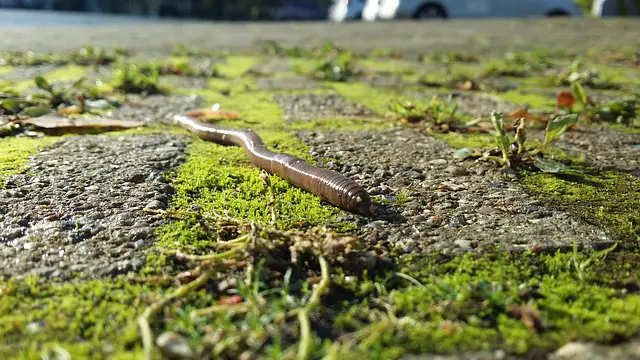
The first step is to examine the exterior of the earthworm. Earthworms are segmented works, so they look like a long stack of small rings. They don’t have a head or any limbs, but they do have a fascinating exterior anatomy to study. The anterior end of the earthworm is a little fatter than the posterior. When you locate the anterior end of the work, pin it to the dissecting pan or tray.

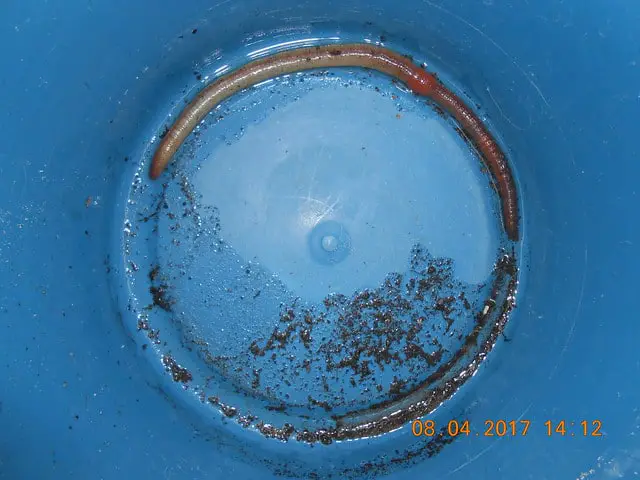
earthworm in laboratory

image via Flickr

Earthworms are annelids which means their bodies are composed of multiple ring-like sections or segments. This part may not be on your teacher’s list, but it’s always interesting to count the segments while you study the exterior anatomy of the earthworm. While you count, notice the small setae on the ventral surface. These little bristles help the worms move through the dirt with ease.

Each segment along the worm’s exterior has small pores. These pores excrete the sticky film you find when you run your finger along a live worm. You may need a magnifying glass or small microscope to see them. It depends on the size of your earthworm specimen and your eyesight as well.

From the anterior end of the worm, count your way down to segment fourteen. Typically, this is where the oviducts are located. The oviducts release the eggs when the worm reproduces. The exciting part is the next segment after the oviducts; it contains the sperm ducts. Earthworms have both male and female reproductive organs.

Further down the worm at segment 31 is the clitellum. It secretes a sticky mucus that binds two earthworms together while the mate. It develops a cocoon to hold the eggs and sperm after mating is finished. Earthworms are simple worms, but fantastic at the same time. Their exterior anatomy is fascinating to study.

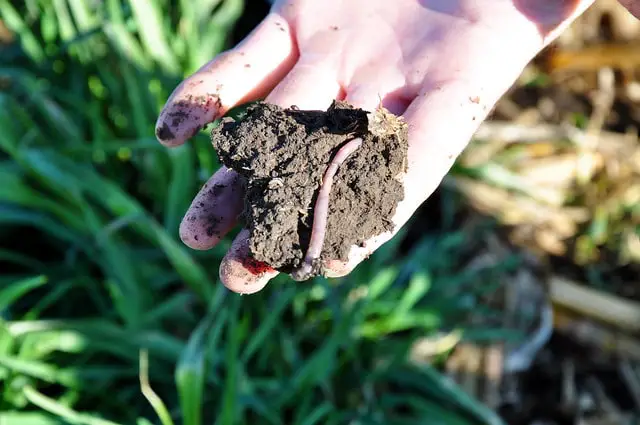
person holding earthwork in hand with soil

image via Flickr

Earthworms are hermaphroditic which means they have both female and male reproductive organs. Eggs come from the ovaries inside segment fourteen, sometimes thirteen. It can be hard to count the segments on small worms. Worms have testes which can form in segments near the oviducts. Study these segments and see if you can find the reproductive organs on your specimen.

When worms mate, they get stuck together briefly to help keep the reproductive organs aligned. Sperm from both worms travels into the other worms seminal receptacle. The clitellum creates the cocoon which moves along the outside of the worm to collect the semen and the eggs. The eggs are fertilized outside the worm in the cocoon.

By now, you should have a good understanding of the exterior anatomy of your earthworm specimen. Remove the pin from the anterior end of the earthworm and place it on its ventral side, then put the pin back in the anterior end of the worm. The ventral side of the worm is a little flatter than the dorsal side, and it may be a lighter color.

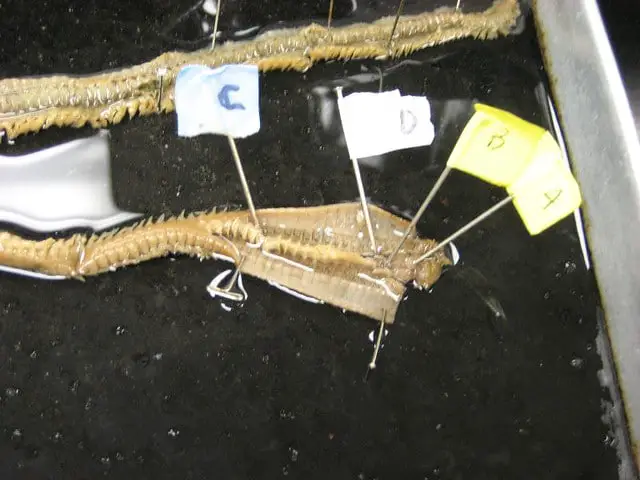
Carefully and slowly make a shallow incision using your scalpel from the anterior end of the work to the clitellum. Never cut toward your body or fingers. Be extra careful and keep the incision shallow, so you don’t cut into the worm’s digestive system and internal organs. Use your forceps to spread the worm open and pin the sides of its body to your dissection pan or tray.

close up photo of earthworm dissection

image via Flickr

The inside of the worm should be exposed now. You may want to lightly sprinkle water over the worm to keep it from drying out while you study the inside of it. The interior part of the walls is called the septa. See if you can tell the difference. If possible, ask your teacher to point them out and help you see the different layers.

Now, the internal digestive organs should be exposed and available for study. Starting with the mount on the anterior end of the worm, locate the organs. The first organ you see is the pharynx. The worm’s esophagus protrudes from the pharynx. About halfway down your incision are the crop and gizzard. Skip the other organs for now and find those two.

The crop is essentially a stomach. It stores food until the food is moved to the gizzard which grinds it up. The food leaves the gizzard and goes into the intestine, much like it does in humans, and travels to the anus. Along the way, the worm’s intestines absorb nutrients from the food the gizzard crushed and ground up. Earthworms don’t eat dirt. The consume organic materials found in the soil.

Make your way back up to the crop. If you look above the crop on the anterior side, you’ll find five pairs of aortic arches. This is the worm’s version of a heart. The hearts are located around the esophagus, and they connect to the dorsal blood vessel. That’s the worm’s version of an artery. Most earthworms can take direct damage to half their aortic arches and live.

Move your attention back to the pharynx at the anterior end of the worm. Locate the cerebral ganglia beneath the pharynx on the dorsal side. You may need to use your forceps to move some organs around to get a good look at it. The ventral nerve starts at the cerebral ganglia and runs the length of the worm. It may be hard to see if it is too small.

They are simple creatures speaking purely on their anatomy, but how their bodies and mating works are truly amazing. If you have time, go back over this tutorial again and study the worm longer. When you finish exploring, make sure you clean your workstation and dispose of your specimen correctly. Dispose of your lab gear according to the lab rules. Wash your hand thoroughly with soap and water.

Some Final Notes

Earthworms are vital to the health of our soil. The improve drainage, help stabilize the land, and add nutrients to the ground. Worms feed on organic materials they find in the dirt. Their bodies use the nutrients they need and deposit what’s left back into the soil as waste. Fortunately for plants, that waste is usually nitrogen-rich along with other nutrients plants need to grow.

Their worm tunnels help loosen the soil which aids plants in root development. We could go on and on about the benefits of earthworms. If you follow our guide to dissecting earthworms and read our interesting facts along the way, we’re sure you’ll be able to dissect an earthworm specimen safely. You may even appreciate these simple creatures a little more when you are done.