Chapter 18 – AP Objectives


Chapter 18    Genetics of Viruses & Bacteria
Objectives
The Genetics of Viruses
1. Recount the history leading up to the discovery of viruses. Include the contributions of Adolf Mayer, Dimitri Ivanowsky, Martinus Beijerinck, and Wendell Stanley.
2. List and describe the structural components of viruses.
3. Explain why viruses are obligate intracellular parasites.
4. Explain how a virus identifies its host cell.
5. Describe bacterial defenses against phages.
6. Distinguish between the lytic and lysogenic reproductive cycles, using phage lambda as an example.
7. Describe the reproductive cycle of an enveloped virus. Explain the reproductive cycle of the herpesvirus.
8. Describe the reproductive cycle of retroviruses.
9. List some characteristics that viruses share with living organisms and explain why viruses do not fit our usual definition of life.
10. Describe the evidence that viruses probably evolved from fragments of cellular nucleic acids.
11. Define and describe mobile genetic elements.
12. Explain how viral infections in animals cause disease.
13. Describe the best current medical defenses against viruses. Explain how AZT helps to fight HIV infections.
14. Describe the mechanisms by which new viral diseases emerge.
15. Distinguish between the horizontal and vertical routes of viral transmission in plants.
16. Describe viroids and prions.
17. Explain how a non-replicating protein can act as a transmissible pathogen.
The Genetics of Bacteria
18. Describe the structure of a bacterial chromosome.
19. Compare the sources of genetic variation in bacteria and humans.
20. Compare the processes of transformation, transduction, and conjugation.
21. Distinguish between generalized and specialized transduction.
22. Define an episome. Explain why a plasmid can be an episome.
23. Explain how the F plasmid controls conjugation in bacteria.
24. Describe the significance of R plasmids. Explain how the widespread use of antibiotics contributes to R plasmid-related disease.
25. Explain how transposable elements may cause recombination of bacterial DNA.
26. Distinguish between an insertion sequence and a transposon.
27. Describe the role of transposase in the process of transposition.
28. Briefly describe two main strategies that cells use to control metabolism.
29. Explain the adaptive advantage of genes grouped into an operon.
30. Using the trp operon as an example, explain the concept of an operon and the function of the operator, repressor, and corepressor.
31. Distinguish between structural and regulatory genes.
32. Describe how the lac operon functions and explain the role of the inducer, allolactose.
33. Explain how repressible and inducible enzymes differ and how those differences reflect differences in the pathways they control.
34. Distinguish between positive and negative control and give examples of each from the lac operon.
35. Explain how cyclic AMP and catabolite activator protein are affected by glucose concentration.
BACK

Chapter 19 AP Objectives


Chapter 19    Eukaryotic Genomes
Objectives
The Structure of Eukaryotic Chromatin

1.  Compare the structure and organization of prokaryotic and eukaryotic genomes.

2.  Describe the current model for progressive levels of DNA packing in eukaryotes.

3.  Explain how histones influence folding in eukaryotic DNA.

4.  Distinguish between heterochromatin and euchromatin.

The Control of Gene Expression

5.  Explain the relationship between differentiation and differential gene expression.

6.  Describe at what level gene expression is generally controlled.

7.  Explain how DNA methylation and histone acetylation affect chromatin structure and the regulation of transcription.

8.  Define epigenetic inheritance.

9.  Describe the processing of pre-mRNA in eukaryotes.

10. Define control elements and explain how they influence transcription.

11. Distinguish between general and specific transcription factors.

12. Explain the role that promoters, enhancers, activators, and repressors may play in transcriptional control.

13. Explain how eukaryotic genes can be coordinately expressed and give some examples of coordinate gene expression in eukaryotes.

14. Describe the process and significance of alternative RNA splicing.

15. Describe factors that influence the life span of mRNA in the cytoplasm. Compare the longevity of mRNA in prokaryotes and in eukaryotes.

16. Explain how gene expression may be controlled at the translational and post-translational level.

The Molecular Biology of Cancer

17. Distinguish between proto-oncogenes and oncogenes. Describe three genetic changes that can convert proto-oncogenes into oncogenes.

18. Explain how mutations in tumor-suppressor genes can contribute to cancer.

19. Explain how excessive cell division can result from mutations in the ras proto-oncogenes.

20. Explain why a mutation knocking out the p53 gene can lead to excessive cell growth and cancer. Describe three ways that p53 prevents a cell from passing on mutations caused by DNA damage.

21. Describe the set of genetic factors typically associated with the development of cancer.

22. Explain how viruses can cause cancer. Describe several examples.

23. Explain how inherited cancer alleles can lead to a predisposition to certain cancers.

Genome Organization at the DNA Level

24. Describe the structure and functions of the portions of eukaryotic DNA that do not encode protein or RNA.

25. Distinguish between transposons and retrotransposons.

26. Describe the structure and location of Alu elements in primate genomes.

27. Describe the structure and possible function of simple sequence DNA.

28. Using the genes for rRNA as an example, explain how multigene families of identical genes can be advantageous for a cell.

29. Using a-globin and b-globin genes as examples, describe how multigene families of nonidentical genes may have evolved.

30. Define pseudogenes. Explain how such genes may have evolved.

31. Describe the hypothesis for the evolution of a-lactalbumin from an ancestral lysozyme gene.

32. Explain how exon shuffling could lead to the formation of new proteins with novel functions.

33. Describe how transposition of an Alu element may allow the formation of new genetic combinations while retaining gene function.


BACK

Caught Red-Handed


Caught Red-Handed  


Introduction:

Bacteria are everywhere. They have evolved the ability to inhabit almost every surface on the planet; however, they are invisible to the naked eye due to their small size. Bacteria have been found living in the deepest part of the ocean, in volcanic vents, in boiling hot springs, and even deep in polar ice caps. Many species of bacteria live inside of other organisms in a harmless commensalistic way such as the intestinal bacteria, Escherichia coli. Bacteria can reproduce at very rapid rates whenever conditions are favorable, as often as every 20 minutes doubling in number. The bacterial population is kept in check by the natural defenses of the host, such as the immune system and proper washing habits. When these natural defenses fail, bacteria can quickly become a problem. Some bacteria produce poisons or toxins that can be life-threatening if the bacterial population isn’t controlled by our natural defenses.

The United States Centers for Disease Control (CDC) states that the best way to prevent bacterial spread and infection is through the use of proper sanitary techniques. Perhaps the most critical step in this prevention is the use of proper hand washing. When improperly washed, your hands are one of the most easily colonized areas of your body and many of our behaviors involve the use of our hands.  Proper hand washing requires the use of water as hot as you can stand, soap, and lots of rubbing. The soap and water serve to destroy bacteria, and the rubbing helps slough off dead skin cells along with lots of bacteria.

Objective:

Students will examine:

  1. The spread of bacteria through surface contact
  2. Surface washing techniques to reduce the spread of bacteria

Materials (Part A):

Black light, Glo-Germ powder, lotion or Glo-Germ oil, hand soap, water, paper towels, pencil, lab sheet

Procedure (Part A):

  1. Choose one student in the lab group and have them spread a SMALL AMOUNT of Glo-Germ powder or lotion evenly over the entire surface of their hands. Be sure to include hard to clean areas such as around & under the fingernail.
  2. Have another student use the Black light to check your hands for the fluorescent “germs”.
  3. Estimate the percentage of your hand that you have covered with Glo-Germ powder and record this percentage in your data table 1 under time “0”.
  4. Wash your hands for 10 seconds and then recheck your hands with Black light and record the percentage of “germs” remaining.
  5. Repeat step 5 for washing times of 30 seconds, 60 seconds, and 120 seconds.
  6. Return Glo-Germ powder, lotion, or oil to lab cart. 

Data Table 1


Time of Wash in Seconds Percent of Hand Covered with “germs”
0 (initial observation)
10
30
60
120


Materials (Part B):

Tennis ball, “play” money, stuffed toy, pencil, lab sheet

Procedure (Part B):

  1. Choose a different member of your lab group and use the Black light to check their hands for the presence of germs.  IF they are “infected”, have them thoroughly wash their hands to remove the “germs”.
  2. Record the percentage of their hand that is covered with “germs”.
  3. Pick up the basket from the lab cart with your materials for part B.
  4. Handle the tennis ball for at least 20 to 30 seconds.
  5. After handling the tennis ball, have your hands rechecked with the Black light for “germs”.
  6. Record this percentage in data table 2.
  7. Return to your lab table and handle each of the other items ONE AT A TIME, checking for “germs after EACH item and recording this percentage in table 2.
  8. Return the black light and basket with handled items to the lab cart.

Data Table 2


Name of Item Percent Coverage
Initial Hand Coverage
Tennis Ball
“Play” money
Toy


Questions:

  1. If almost every surface we touch is inhabited by bacteria, why don’t bacterial infections occur more often?
  2. Name 3 ways you  might prevent the spread of bacteria each day.
  3. Name several bacterial diseases.
  4. Name and describe the 3 shapes of bacteria.
  5. Are all bacteria harmful? Explain your answer.
  6. What effect, if any, did increased washing time have on the percentage of “germ” coverage on your hands?
  7. Name 3 areas of your home that are most susceptible to bacterial contamination. Explain steps you could take in each of these areas to prevent the spread of bacteria to other places in your home.

Optional:

Create a graph based on the data from table 1.

Title _____________________________


Bacteria

KINGDOMS ARCHAEBACTERIA & EUBACTERIA


All Materials © Cmassengale

Bacterial Evolution & Classification 
  • Most numerous organisms on earth
  • Earliest life forms (fossils date 2.5 billion years old)
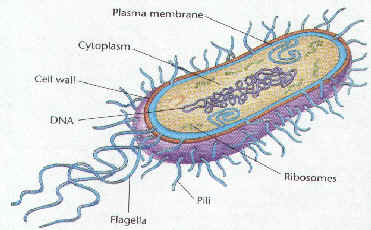
  • Microscopic prokaryotes (no nucleus nor membrane-bound organelles)
  • Contain ribosomes
  • Infoldings of the cell membrane carry on photosynthesis & respiration
  • Surrounded by protective cell wall containing peptidoglycan (protein-carbohydrate)
  • Many are surrounded by a sticky, protective coating of sugars called the capsule or glycocalyx (can attach to other bacteria or host)
  • Have only one circular chromosome
  • Have small rings of DNA called plasmids
  • May have short, hairlike projections called pili on cell wall to attach to host or another bacteria when transferring genetic material
  • Most are unicellular

  • Found in most habitats
  • Most bacteria grow best at a pH of 6.5 to 7.0
  • Main decomposers of dead organisms so recycle nutrients
  • Some bacteria breakdown chemical & oil spills
  • Some cause disease 
  • Move by flagella, gliding over slime they secrete ( e.g. Myxobacteria)
  • Some can form protective endospores around the DNA when conditions become unfavorable; may stay inactive several years & then re-activate when conditions favorable
  • Classified by their structure, motility (ability to move), molecular composition, & reaction to stains (Gram stain)
  • Grouped into 2 kingdoms — Eubacteria (true bacteria) & Archaebacteria (ancient bacteria)
  • Once grouped together in the kingdom Monera


STRUCTURE FUNCTION
Cell Wall protects the cell and gives shape
Outer Membrane protects the cell against some antibiotics (only present in Gram negative cells)
Cell Membrane regulates movement of materials into and out of the cell; contains enzymes important to cellular respiration
Cytoplasm contains DNA, ribosomes, and organic compounds required to carry out life processes
Chromosome carries genetic information inherited from past generations
Plasmid contains some genes obtain through genetic recombination
Capsule, and slime layer protects the cell and assist in attaching the cell to other surfaces
Endospore protects the cell against harsh environmental conditions, such as heat or drought
Pilus (Pili) assist the cell in attaching to other surfaces, which is important for genetic recombination
Flagellum moves the cell


Kingdom Archaebacteria

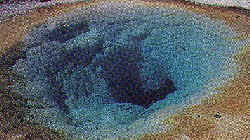
  •   Found in harsh environments (undersea volcanic vents, acidic hot springs, salty water)
  • Cell walls without peptidoglycan
  • Subdivided into 3 groups based on their habitat — methanogens, thermoacidophiles, & extreme halophiles

Methanogens

  • Live in anaerobic environments (no oxygen)
  • Obtain energy by changing H2 and CO2 gas into methane gas
  • Found in swamps, marshes, sewage treatment plants, digestive tracts of animals
  • Break down cellulose for herbivores (cows)
  • Produce marsh gas or intestinal gas (methane)

Extreme Halophiles

  •   Live in very salty water
  •   Found in the Dead Sea, Great Salt Lake, etc.
  • Use salt to help generate ATP (energy)

Thermoacidophiles (Thermophiles)

  • Live in extremely hot  (1100C) and acidic (pH 2) water
  • Found in hot springs in Yellowstone National Park, in volcanic vents on land, & in cracks on the ocean floor that leak scalding acidic water

Kingdom Eubacteria (true bacteria)

  • Most bacteria in this kingdom
  • Come in 3 basic shapes — cocci (spheres), bacilli (rod shaped), spirilla (corkscrew shape)

  • Bacteria can occur in pairs ( diplo– bacilli or cocci)
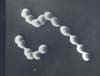
  •   Bacteria occurring in chains are called strepto- bacilli or cocci
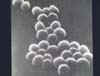
  • Bacteria in grapelike clusters are called staphylococci
  • Most are heterotrophic (can’t make their own food)
  • Can be aerobic (require oxygen) or anaerobic (don’t need oxygen)
  • Subdivided into 4 phyla — Cyanobacteria (blue-green bacteria), Spirochetes, Gram-positive, & Proteobacteria
  • Can be identified by Gram staining (gram positive or gram negative)  

Gram Staining

  • Developed in 1884 by Danish microbiologist, Hans Gram
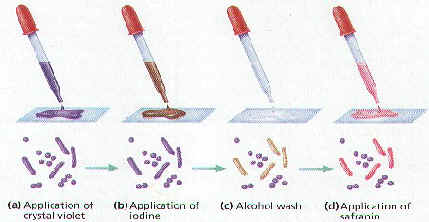
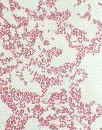
  •   Bacteria are stained purple with Crystal Violet & iodine; rinsed with alcohol to decolorize; then restained with Safranin (red dye)

  • Bacterial cell walls either stain purple or reddish-pink

Gram-positive bacteria (Gram +)

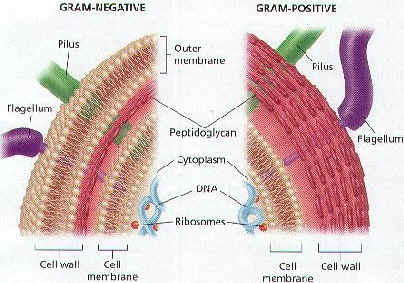
  • Thick layer of peptidoglycan (protein-sugar) complex in cell walls & single layer of lipids
  • Stain purple

  • Lactobacilli are used to make yogurt, buttermilk ….
  • Actinomycetes make antibiotics like tetracycline & streptomycin
  • Disease-causing gram + bacteria produce poisons called toxins
  • Clostridium causes tetanus or lockjaw
  • Streptococcus cause infections such as “strep” throat

  • Staphylococci cause “staph” infections

  • Also cause toxic shock, bacterial pneumonia, botulism (food poisoning), & scarlet fever
  • Can be treated with penicillin (antibiotics) & sulfa drugs

Gram-negative bacteria (Gram -)

  • Cell walls have a thin layer of peptidoglycan & an extra layer of lipids on the outside
  • Stain pink or reddish 

  • Lipid layer prevents the purple stain & antibiotics from entering (antibiotic resistant)
  • Some are photosynthetic but make sulfur, not oxygen
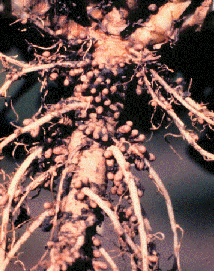
  • Rhizobacteria grow in root nodules of legumes (soybeans, peanuts…) & fix nitrogen form the air for plants
  • Rickettsiae are parasitic bacteria carried by ticks that cause Rocky Mountain spotted fever
  • Spirochetes can cause syphilis & Lyme disease

Phylum Cyanobacteria

  • Gram negative
  •   Carry on photosynthesis & make oxygen
  • Called blue-green bacteria
  • Contain pigments called phycocyanin (red & blue) & chlorophyll a (green)
  •    May be red, yellow, green, brown, black, or blue-green
  • Some grow in chains (e.g. Oscillatoria)  & have specialized cells called heterocysts that fix nitrogen


OSCILLATORIA

  •  First bacteria to re-enter devastated areas
  • Anabaena that live on nitrates & phosphates in water can overpopulate & cause “population blooms” or eutrophication
  •   After eutrophication, the cyanobacteria die, decompose, & use up all the oxygen for fish

Phylum Spirochetes

  •   Gram positive
  • Have flagella at each end so move in a corkscrew motion
  •   Some are aerobic (require oxygen); others are anaerobic
  • May be free-living, parasitic, or live symbiotically with another organism  

Phylum Gram Positive bacteria

  • Most are Gram +, but some are Gram –
  • Lactobacilli grow in milk & make lactic acid (forms yogurt, cottage cheese, buttermilk) & also found on teeth & cause tooth decay
  • Actinomycetes grow in the soil & make antibiotics
  • Gram + members are found in the oral & intestinal cavities & slow the growth of disease-causing bacteria

Phylum Proteobacteria

  • Largest & most diverse bacterial group
  • Subdivided into Enteric bacteria, Chemoautotrophic bacteria, & Nitrogen-fixing bacteria  

Enteric bacteria

  • Gram negative heterotrophs
  • Can live in aerobic & anaerobic environments
  • Includes E. coli that lives in the intestinal tract making vitamin K & helping break down food
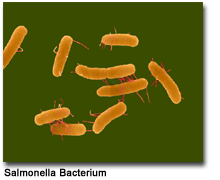
  • Salmonella causes food poisoning

Chemoautotrophs

  • Gram negative bacteria that obtain energy from minerals  
  • Iron-oxidizing bacteria found in freshwater ponds use iron salts for energy

Nitrogen-Fixing bacteria

  • Rhizobium are Gram negative & live in legume root nodules

  • 80% of atmosphere is N2, but plants can’t use nitrogen gas
  • Nitrogen-fixing bacteria change N2 into usable ammonia (NH3)
  • Important part of the Earth’s nitrogen cycle

Methods of Nutrition

  •  Saprobes feed on dead organic matter
  •  Parasites feed on a host cell
  •  Photoautotrophs use sunlight for energy, but get carbon from organic compounds (not CO2) to make their own food  
  • Chemoautotrophs obtain food by oxidizing inorganic substances like sulfur, instead of using sunlight

Methods of Respiration

  •   Obligate aerobic bacteria can’t live without oxygen; (tuberculosis bacteria)
  •  Obligate anaerobes die if oxygen is present; (tetanus bacteria that causes lockjaw)
  • Facultative anaerobes do not need oxygen, but don’t die if oxygen is present; (E. coli)
  • Anaerobes carry on fermentation, while aerobes carry on cellular respiration 

Bacterial Reproduction & Genetic Recombination

  • Most bacteria reproduce asexually by binary fission (chromosome replicates & then the cell divides)  
  •   Bacteria replicate (double in number) every 20 minutes under ideal conditions  
  • Bacteria contain much less DNA than eukaryotes
  • Bacterial plasmids are used in genetic engineering to carry new genes into other organisms  
  • Bacteria recombine genetic material in 3 ways — transformation, conjugation, & transduction

Conjugation

  • Sexual reproductive method
  • Two bacteria form a conjugation bridge or tube between them

  •   Pili hold the bacteria together
  •   DNA is transferred from one bacteria to the other       

Transformation

  • Bacteria pick up pieces of DNA from other dead bacterial cells
  • New bacterium is genetically different from original

Transduction

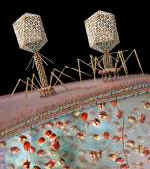
  • A bacteriophages (virus) carries a piece of DNA from one bacteria to another

  • Human insulin is produced in the lab by this method

Pathogenic bacteria

  •   Known as germs or pathogens
  • Cause disease
  • Can produce poisonous toxins
  • Endotoxins are made of lipids & carbohydrates by Gram – bacteria & released after the bacteria die (cause high fever, circulatory vessel damage…)
  • E. coli  produce endotoxins
  • Exotoxins are made of protein by Gram + bacteria 
  • Clostridium tetani produce exotoxins
  • Antibiotics interfere with cellular functions (Penicillin interferes with synthesis of the cell wall; tetracycline interferes with protein synthesis)
  • Some antibiotics are made by bacteria or fungi
  • Broad-spectrum antibiotics affect a wide variety of organisms
  • Bacteria can mutate and become antibiotic resistant (often results from overuse of antibiotics)
BACK


Bacteria PPT Questions

Bacteria
ppt Q’s

Prokaryote & Eukaryote Evolution

1. What does our current evidence tell us about the evolution of prokaryotes and eukaryotes?


2. About how long ago did eukaryotes evolve from prokaryotes?

3. Name the 2 theories of cellular evolution.


4. Explain the infolding theory.


5. What does endosymbiosis mean?


6. Explain the endosymbiotic theory of cell organelle formation.


7. Name 2 organelles thought to have arisen in this way.


Prokaryotic & Eukaryotic Cells

8. Label the parts of this prokaryotic cell.

9. Name several structures that are found in eukaryotic, but NOT prokaryotic cells.


10. What type of cells are the most numerous on Earth?

11. What are the most common type of prokaryotic cells?

12. How old are the earliest prokaryotic fossils?

Classification of Life

13. Name the 3 domains and the organisms found in each.

     a.

     b.

     c.

14. ______________ are found in harsh environments.

15. Give 3 examples of harsh environments in which Archaebacteria can be found.


16. What group is referred to as the true bacteria?

17. What photosynthetic member is in this group?

Characteristics of Bacteria 

18. What must be used to view prokaryotic cells?

19.What cell structures are lacking in prokaryotes?

20. Do bacteria have ribosomes like other types of cells?

21. Describe the genetic material of the bacteria.  be sure to tell where it is found.


22. What surrounds the cytoplasm of bacterial cells?

23.What surrounds the outside of all bacterial cells?

24. Cell walls of true bacteria contain ____________________.

25. Some bacteria have a sticky ____________ around the cell wall to attach to __________ or other bacteria.

26. Besides the circular chromosome, where else can DNA be found inside a bacterial cell?

27. What is the size of most bacterial cells?

28. Compare the size of bacteria to the tip of a pin.


29. ____________ of the bacterial cell membrane are called _______________.

30. What two cellular processes can take place in mesosomes?


31. At what pH do bacteria do best?

32. Most bacteria act as ________________. Why is this so important?


33. How can some bacterial be harmful?  Give an example.


34. name two other important uses for bacteria.


35. What does motile mean?

36. Motile bacteria may have one or more ______________ for movement.

37. Flagella attach to the bacteria by the ___________ ___________.

38. The basal body attaches to the cell through both the cell _________and the cell ___________.

39. What protein makes up bacterial flagella?

40. Tell how these types of bacteria differ from each other:

     a. Monotrichous

     b. Lophotrichous

     c. Amphitrichous

     d. Peritrichous

41. What type of bacteria is this?

42. What are bacterial pili?


43. How do pili compare to flagella in size?

44. Give three functions of pili.

     a.

     b.

     c.


Bacterial Shapes

45. Name and describe 5 shapes used to classify bacteria. 

     a.

     b.

     c.

     d.

     e.

46. What does each of these prefixes tell you about the bacteria’s shape:

     a. Diplo-

     b. Strepto-

     c. Staphylo-

47. Sketch the shape of these bacteria:

     a. Coccus

     b. Bacillus

     c. Spirillium

     d. Diplococcus

     e. Streptococcus

     f. Staphylococcus

     g. Diplobacillus

48. E. coli is classified as what shape bacteria?

Bacterial Kingdoms

49. How do the cell walls of Archaebacteria differ from the true bacteria?

50. How do the cell membranes differ?

51. Are the ribosomes the same?

52. Are the gene sequences the same?

53. Do Archaebacteria require oxygen?

54. How is there environment different from true bacteria?


55. What are they commonly called?

56. How many groups make up the ancient bacteria and name them?


57. Methanogens live in _____________ environments. What is lacking in this environment?

58. How do methanogens get their energy?


59. Name 3 environments in which methanogens are found.


60. How do methanogens help cows?


61. How did the methanogens get their name?


62. The __________ ___________ live in very salty environments.

63. How do they get their energy?


64. Name two bodies of water in which halophiles are found.


65. ______________ live in extremely hot environments.

66. Thermophiles that also live in acidic conditions are called _____________________.

67. Name 3 habitats in which thermophiles are found.


Kingdom Eubacteria

68.  Most true bacteria are ____________ and come in ________ basic shapes. Name the shapes.


69. Do eubacteria require oxygen?

70. How are they identified?

71. When was gram staining developed?

72. Describe Gram staining.


73. What colors do bacterial cell walls stain?

74. Describe the cell wall of Gram positive bacteria.


75. What color do they stain?

76. Can Gram positive bacteria be treated with antibiotics?

77.Name 5 Gram positive bacteria and tell how they’re used or what they may cause.

     a.

     b.

     c.

     d.

     e.

78. Describe the cell walls of Gram negative bacteria.


79. Are antibiotics effective against Gram negative bacteria?

80. Some photosynthetic Gram negative bacteria make ___________ instead of oxygen.

81. How do some Gram negative bacteria help plants?

82. Where can Rhizobacteria be found and what is their job?


83. _____________ are parasitic bacteria carried by ticks that may cause ___________ disease or _____________ _______________ _____________ fever.

84. Cyanobacteria are Gram ____________ and carry on ______________ to make food.

85. What is the common name for cyanobacteria?

86. What two main pigments do cyanobacteria contain?

87. What colors are cyanobacteria?


88. _______________ is a cyanobacterium that grows in chains.

89. Name the specialized structures on cyanobacteria that help fix nitrogen.

90. How do cyanobacteria cause eutrophication?


91. Spirochetes are Gram __________ bacteria that move by ___________.

92. Describe the motion of spirochetes.

93. Do all spirochetes need oxygen?

94. Spirochetes may be _______________, _______________, or symbiotic.

95. What are enteric bacteria? Give an example.


96. _______________ is an enteric bacterium that causes food poisoning.

97. How do chemoautotrophic bacteria get their energy?


Nutrition, Respiration, and Reproduction

98. Name and describe 4 modes of nutrition in bacteria.

     a.

     b.

     c.

     d.

99. Explain each of the following methods of respiration in bacteria.

     a. Obligate Aerobes-


     b. Obligate Anaerobes-


     c. Facultative Anaerobes-


100. Anaerobes carry on ______________ to release energy from food, while aerobes carry on ____________ _______________.

101. Bacteria reproduce asexually by what method?

102. Before the cell can divide, what must happen?

103. Is binary fission a slow or fast process?

104. How do the new cells compare with each other after binary fission? What are they called?


105. Bacteria can reproduce sexually by ________________.

106. Describe how conjugation occurs.


107. What is the function of pili in conjugation?

108. How do the new cells compare to each other after conjugation?

109. When can bacteria produce spores and why?


110. What are the spores called?

111. How long can an endospore survive?

112. Why are endospores such a problem in health care facilities and in the canning industry?


113. Bacteria can genetically change by _________________ and ____________________.

114. Disease-causing bacteria may become ______________ _____________ when they genetically change.

115. How do bacteria transform?


116. Describe transduction in bacteria and give an example of a product made by bacteria using this method.


Pathenogenic Bacteria

117. What are pathogens?


118. Pathogens may cause ____________.

119. What are toxins?


120. What is the difference between endotoxins and exotoxins?


121. Name a bacterium that produces each type of toxin.

     a. Endotoxin?

     b. Exotoxin?