Pig Heart Dissection


Heart Dissection

Introduction
Mammals have four-chambered hearts and double circulation. The heart of a bird or mammal has two atria and two completely separated ventricles. The double-loop circulation is similar to amphibians and reptiles, but the oxygen-rich blood is completely separated from oxygen-poor blood. The left side of the heart handles only oxygenated blood, and the right side receives and pumps only deoxygenated blood. With no mixing of the two kinds of blood, and with a double circulation that restores pressure after blood has passed through the lung capillaries, delivery of oxygen to all parts of the body for cellular respiration is enhanced. As endotherms, which use heat released from metabolism to warm the body, mammals require more oxygen per gram of body weight than other vertebrates of equal size. Birds and mammals descended from different reptilian ancestors, and their four-chambered hearts evolved independently – an example of convergent evolution.

Objective
Using a pig heart, students will observe the major chambers, valves, and vessels of the heart and be able to describe the circulation of blood through the heart to the lungs and back and out to the rest of the body. (The pig heart is used because it is very similar to the human heart in structure, size, & function.)

Materials
Dissecting pan, dissecting kit, safety glasses, lab apron, pig heart, & gloves

Procedure – External Structure

  1. Place a heart in a dissecting pan & rinse off the excess preservative with tap water. Pat the heart dry.
  2. Examine the heart and locate the thin membrane or pericardium that still covers the heart. The pericardium or pericardial sac, is a double-layered closed sac that surrounds the heart and anchors it.  The pericardium consists of two tissues layers – the visceral pericardium that covers the surface of the heart & the parietal pericardium covering the inner surface of the parietal sac. These two tissue layers are continuous with each other where the vessels enter or leave the heart. The slender gap between the parietal & visceral surfaces is the pericardial cavity & is filled with fluid to reduce friction between the layers as the heart pumps.
  3. After examining the pericardium, carefully remove this tissue. Located below the pericardium is the muscle of your heart called the myocardium. Most of the myocardium is located in the lower two chambers of the heart called ventricles.
  4. Locate the tip of the heart or the apex. Only the left ventricle extends all the way to the apex.
  5. Place the heart in the dissecting pan so that the front or ventral side is towards you ( the major blood vessels are on the top and the apex is down). The front of the heart is recognized by a groove that extends from the right side of the broad end of the heart diagonally to a point above & to your left of the apex.


Front or Ventral Side of the Heart

  1. The heart is now in the pan in the position it would be in a body as you face the body. Locate the following chambers of the heart from this surface:
    • Left atria – upper chamber to your right
    • Left ventricle – lower chamber to your right
    • Right atria – upper chamber to your left
    • Right ventricle – lower chamber to your left

pig heart dissection

  1. While the heart is still in this position in the dissecting pan, locate these blood vessels at the broad end of the heart:
  • Coronary artery – this blood vessel lies in the groove on the front of the heart & it branches over the front & the back side of the heart to supply fresh blood with oxygen & nutrients to the heart muscle itself.
  • Pulmonary artery – this blood vessel branches & carries blood to the lungs to receive oxygen & can be found curving out of the right ventricle (upper chamber to your left)
  • Aorta – major vessel located near the right atria & just behind the pulmonary arteries to the lungs. Locate the curved part of this vessel known as the aortic arch. Branching from the aortic arch is a large artery that supplies blood to the upper body.
  • Pulmonary veins – these vessels return oxygenated blood from the right & left lungs to the left atrium (upper chamber on your right)
  • Inferior & Superior Vena Cava – these two blood vessels are located on your left of the heart and connect to the right atrium (upper chamber on your left).  Deoxygenated blood enters the body through these vessels into the right receiving chamber.  Use your probe to feel down into the right atrium. These vessels do not contain valves to control blood flow.


Procedure – Internal Anatomy:

  1. Use scissors to cut through the side of the pulmonary artery and continue cutting down into the wall of the right ventricle. Be careful to just cut deep enough to go through the wall of the heart chamber. (Your cutting line should be above & parallel to the groove of the coronary artery.)
  2. With your fingers, push open the heart at the cut to examine the internal structure. If there is dried blood inside the chambers, rinse out the heart.
  3. Locate the right atrium. Notice the thinner muscular wall of this receiving chamber.
  4.  Find where the inferior & superior vena cava enter this chamber & notice the lack of valves.
  5. Locate the valve that between the right atrium and right ventricle. This is called the tricuspid valve. The valve consists of three leaflets & has long fibers of connective tissue called chordae tendinae that attach it to papillary muscles of the heart. This valve allows blood flow from the right atrium into the right ventricle during diastole (period when the heart is relaxed). When the heart begins to contract (systole phase), ventricular pressure increases until it is greater than the pressure in the atrium causing the tricuspid to snap closed.


Tricuspid Valve

  1. Use your fingers to feel the thickness of the right ventricle and its smooth lining. Also note the network of irregular muscular cords on the inner wall of this chamber.
  2. Find the septum on the right side of the right ventricle. This thick muscular wall separates the right & left pumping ventricles from each other.
  3. Inside the right ventricle, locate the pulmonary artery that carries blood away from this chamber. Find the one-way valve called the pulmonary valve that controls blood flow away from the right ventricle at the entrance to this blood vessel.
  4. Using your scissors, continue to cut open the heart.  Start a cut on the outside of the left atrium downward into the left ventricle cutting toward the apex to the septum at the center groove. Push open the heart at this cut with your fingers & rinse out any dried blood with water.
  5. Examine the left atrium. Find the openings of the pulmonary veins form the lungs. Observe the one-way, semi-lunar valves at the entrance to these veins.
  6. Inside this chamber, look for the valve that controls blood flow between the upper left atrium and lower left ventricle. This valve is called the bicuspid or mitral valve. This valve consists of two leaflets & blood flows from the left atrium into the left ventricle during diastole.


The mitral valve
Bicuspid or Mitral Valve

  1. Examine the left ventricle. Notice the thickness of the ventricular wall. This heart chamber is responsible for pumping blood throughout the body.
  2. Using your scissors, cut across the left ventricle toward the aorta & continue cutting to expose the valve.
  3. Count the three flaps or leaflets on this valve leading from the left ventricle into the aorta and note their half-moon shape. This is called the aortic valve.
  4. Using scissors, cut through the aorta and examine the inside. Find the hole or coronary sinus in the wall of this major artery. This leads into the coronary artery which carries blood to and nourishes the heart muscle itself.
  5. Answer the questions on your lab report.

Click here for questions

When you have finished dissecting the heart, dispose of the heart as your teacher advises and clean, dry, and return all dissecting equipment to the lab cart. Wash your hands thoroughly with soap.

BACK

Fimbriae Article

Fimbriae, Fibrils, Sex and Fuzzy Coats


The Limitation of Light

One of the frustrating aspects of working with bacteria is that they are so small that it is almost impossible to see anything other than their shape when looking down even the very best of optical microscopes. Even then, their refractive index is so similar to that of water that they have to be stuck to a glass slide, killed and stained before even their shape is revealed. Microscopes which can make use of polarized light (Phase contrast microscopy) can be used to see living bacteria but apart from the added ability of seeing some species happily swimming around they add little to what we can see using conventional staining techniques.

The fact that some species could move quite rapidly intrigued many early microbiologists and eventually some special staining procedures lead to the discovery of thin whip-like appendages which they called flagellae and conferred motility.  This is not to say that light microscopy is not useful. It remains an essential tool in any bacteriology laboratory but it should be recognized that the information obtained, although extremely helpful in routine work, is limited.

Electron Microscopy Reveals More

The invention of the electron microscope revealed much more detail of bacteria. Compared to the fascinating structures uncovered in eukaryotic cells, bacteria, both inside and out, were pretty uninteresting.  It wasn’t until the early 1960s that some interesting surface features of some bacterial species were noticed. This delay was partly due to the electron microscopy techniques in use at that time. The convention at the time was to use ultra-thin sections of tissue, far thinner than sections used for light microscopy. It seemed normal then to prepare bacteria in the same way. Using these techniques, the outer surfaces of bacteria seemed fairly barren but the technique did reveal some of the double membrane-like composition of Gram-negative bacteria.

Shadow-Casting Reveals Still More

Although thin sections of bacteria did not allow flagella to be seen in their entirety it did reveal interesting cross-sections which showed their internal structure. It also enabled detail of flagella attachment to be demonstrated.  It was not until electron microscopes were used to look at whole cells rather than ultra-thin sections that more progress was made. This change required the development of new staining techniques known as shadow-casting where bacterial surfaces were sprayed with electron-dense material such as gold or carbon at an angle. This highlighted the fine surface structures in a way exactly analogous to light falling on a stone surface at an angle reveals more detail than light falling on it at right angles.

Shadows, Flagellae and Fimbriae

Once shadow-casting techniques had been developed the whip-like flagellae were the first to be examined in detail but one researcher in particular noticed the presence of previously undreamed of structures on the surface of some species.  The person who first described these structures which he found on strains of Escherichia coli and Salmonella was Professor James Duguid. He called them fimbriae.

What are Fimbriae?

Fimbriae are thin, hair-like, projections made of protein sub-units. A number of different types have been described (about 7 at the last count, labeled Types I-VII) which can be distinguished by their size (length and diameter) and the type of antigens they carry.  They are characteristic of some Gram-negative bacteria such as Escherichia coli and Salmonella spp and were first described back in the 1960s by JP Duguid who was the Professor of Microbiology at the University of Dundee . Later, it was discovered that these fimbriae would re-grow after they had been broken off e.g. by vigorous shaking and that this re-growth was from pre-formed protein sub-units which were stored inside the cells. Fimbriae originate in the cytoplasm of the cell and project through the cell membrane and the cell wall.


A Controversy
A short while after Duguid published his findings an American called Robert Brinton published much the same stuff and called them pili. What followed was a pretty acrimonious exchange of letters in the scientific press about what they should be called.

It was all pretty good fun but to this day our American cousins, and anybody who doesn’t know any better, call them pili whereas all right-thinking, clear-minded and fair microbiologists refer to them as fimbriae.


So What do Fimbriae Actually do?

Over the years we have learned quite a lot about fimbriae and right from the very early days it was thought that they were involved in helping the bacteria adhere to surfaces. There is now a substantial body of evidence in support of this much of it in relation to pathogenic strains of E coli.

Type I Fimbriae are Pathogenicity Factors

It’s clear these days that Type I fimbriae are involved in bacterial adhesion and the very best example are those carried by pathogenic strains of E.coli. These come in a variety of forms including plain old EnteroPathogenic E.coli (EPEC), EnteroToxigenic E.coli (ETEC), EnteroInvasive E.coli (EIEC) and VeroToxogenic E.coli (VTEC). These E.coli strains use Type I fimbriae to adhere to gut mucosal cells which is the first step in the pathogenic process. Without the fimbriae their capacity to cause disease is greatly diminished or abolished completely.

Type IV fimbriae are particularly interesting. These have also been referred to as “bundle forming pili” because of their ability to aggregate into bundles. These fimbriae are thought to be connected with the ability of EPEC strains to form microcolonies on tissue monolayers and mutants lacking this ability show reduced virulence. Type IV fimbriae have also been shown to be involved in the remarkable phenomenon of bacterial twitching motility which allows bacterial cells to crawl over a surface.

Type VII Fimbriae, Viruses and the Sex Bit

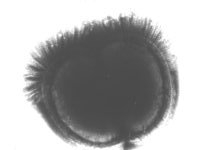
Type VII fimbriae are the conduit for DNA transfer between bacterial mating strains. As it happens they also provide a binding site for certain bacteriophages. The significance of this is a mystery but it does enable Type VII to be seen clearly because when some of the bacteriophage is added to a suspension of cells, the ‘phage coat the Type VII fimbriae.  In the electron microscope picture above right you can clearly see little particles stuck on two of the fimbriae which are much longer than the rest because size does matter, at least to E.coli. In a generous attempt to resolve the fimbriae/pili argument it was proposed that Type VII fimbriae were named the “sex pilus”.


 Sex Pili
The photograph above was taken using a transmission electron microscope. The Type I fimbriae are the thin projections sticking out from the surface of the cell. Some of the fimbriae have broken off indicating that they are quite brittle.


Surfaces of Streptococci

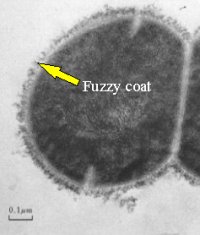
Back in the days before we knew much about fimbriae researchers looking at ultra-thin sections of the serious pathogen Streptococcus pyogenes noticed that the very outside of the cells had a fuzzy appearance. In a fit of imagination it was called “fuzzy coat”.  Later, when they learned about shadow-casting whole cells they applied this technique but it did not help to resolve any particular structures like fimbriae.


S. pyogenes Fuzzy Coat
Even today we have not resolved any definite structure to the S. pyogenes “fuzzy-coat”. We do know, however, that it consists partly of a substance called “M-protein” which is a major pathogenicity factor of this species.


Negative Staining Reveals Surface Fibrils on Some Streptococci

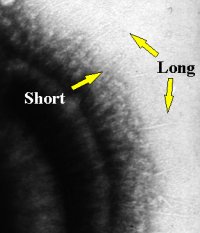
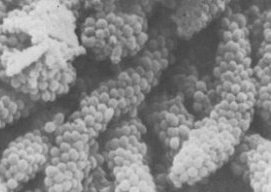
Towards the late 1970s a rather different technique which made use of a special type of stain called a “negative stain” revealed very thin, delicate, hair-like structures on some oral streptococci such as Streptococcus sanguis and Streptococcus salivarius. Take a look at the photograph on the right. This is an electron micrograph of the surface of a Streptococcus salivarius cell and although it may not be terribly clear on this reproduction, the original shots showed two types of these thin hair-like structures, long ones and short ones.  This negative-staining technique could not, by the way, reveal anything hair-like on the surface of Streptococcus pyogenes which had the fuzzy coat.

Fibrils are not Fimbriae

More research using lots of different strains of different species of oral streptococci showed these “hairs” came in all sorts of lengths and some cells carried more than one type. They were very thin and flexible. Although some fimbriae on E.coli can be very thin, “flexible” is not a term normally associated with fimbriae.  To begin with these hairs were called “fibrils” and there is a fair amount of evidence to suggest they are made of protein and some evidence which suggests that some are even made of glycoprotein although glycoproteins are generally considered pretty rare beasts in bacteria. As far as fibril synthesis goes, we don’t know much. Generally speaking they are difficult to remove, probably because they are so flexible, so it’s not possible to say whether they can re-grow like fimbriae.  The analogy was taken a stage further when a role in adhesion was postulated and, in fact, there is fairly good evidence to back this up, at least for the S.salivarius fibrils.

Unfortunately at this point the waters got a bit muddy when some people started referring to the long fibrils as “fimbriae” and the short ones as “fibrils”. Since they are kind of like fimbriae this wasn’t so surprising but what was surprising was that they were never referred to as pili!


Streptococcal Fibrils
Some Oral Streptococci Have Tufts of Fibrils
Some strains of oral streptococci were found to carry tufts of fibrils and looked rather like punk-rockers with Mohican hairstyles. Later these were grouped together into a new species and given the rather elegant name Streptococcus cristae.


Fibril Tufts and Co-aggregation

There is evidence that these may also be involved in adhesion, this time to rod-shaped bacteria to make the structures commonly found in mature dental plaque called “corn-cob-configuration”.  When bacteria of the same species stick to each other it’s known as “aggregation”. In this case the bacteria are from different species and it’s known as “CO-aggregation”.


“Corn Cobs” in Dental Plaque 


And finally

You may have guessed by now that I’m a bit skeptical about using the term “fimbriae” to describe the surface structures of these oral streptococci. I prefer to describe them all as fibrils but I’ll probably end up in the minority.  Sooner or later this is all going to be resolved but for the time being it’s probably best to keep the term “fimbriae” reserved for those brittle hair-like, proteinaceous surface projections of Gram-negative rods like Escherichia and Salmonella and call everything else “fibrils”.

Just remember pili are fimbriae and fibrils are different and you won’t go far wrong.


SUMMARY
1. Fimbriae are appendages which have been seen on the surfaces of a range of Gram-negative rods such as E.coli and various species of Salmonella
2. Fimbriae come in 7 different types (I-VII) distinguished by their length and width
3. Fimbriae are thought to be important in adhesion and have been shown to be pathogenicity factors in pathogenic strains of E.coli.
4. Type VII fimbriae allow DNA transfer between mating strains of certain species such as E.coli
5. Fibrils are found on streptococci
6. Fibrils are different from fimbriae, they are thinner and appear to be more flexible
7. Some fibrils have been shown to function in adhesion e.g. in corn-cob-formations found in dental plaque


http://www.ncl.ac.uk/dental/oralbiol/oralenv/tutorials/fimbriae.htm


Fish

Fish

All Materials © Cmassengale
  

Kingdom – Animalia
Phylum – Chordata
Subphylum – Vertebrata

Vertebrates:

Include fish, amphibians, reptiles, birds, & mammals
Have a notochord (slim, flexible rod) present in early stages that may be replaced by backbone in adults
Contain a dorsal, hollow bundle of nerves called the nerve or spinal cord
Respire through pharyngeal or gill pouches during early development
Have post-anal tail in early stages
Endoskeleton made of bone &/or cartilage
Anterior head with well developed brain & sensory organs (Cephalization)
Closed circulatory system

Taxonomy of Vertebrates:

Agnatha include hagfish & lamprey with long, eel-like bodies without jaws or paired fins & cartilage skeletons

Chondrichthyes include sharks, rays, & skates with cartilage skeletons, paired fins, & jaws

Osteichthyes are bony fish with jaws, paired fins, & bone and cartilage in their skeletons
Amphibia include frogs, toads, & salamanders that go through an aquatic larval or tadpole stage
Reptilia include snakes, turtles, lizards, & alligators that live on land, are covered with scales, & lay a tough, protective amniote egg
Aves are birds covered with feathers, adapted for flying, & with hollow bones
Mammalia have hair or fur & females have mammary or milk-producing glands

Evolution:

Fossil record shows jawless fish without paired fins appeared first about 550 million years ago
Ostracoderm was a jawless, bottom-feeding ancestor to the agnathans (modern jawless fish)

Development of jaws & paired fins allowed better movement & increased ability to capture prey
Extinct acanthodians or spiny fish were first jawed fish with paired fins

Jaws probably developed from gill arches (bone that supports the pharynx)

Characteristics of  Fish:  

Streamlined body & muscular tail for swimming
Most with paired fins for maneuvering
Body covered with protective scales & mucus layer to reduce friction when swimming
Have less dense body tissues & store less dense lipids to help them float
Respire through gills
Most have a lateral line system or a row of sensory structures running down each side of the organism to detect changes in water temperature, pressure, current, etc.

Most with well-developed sense of sight & smell
Some can detect electrical currents
Ectotherms (adjust body temperature to environment)
Two chambered heart (upper atrium receives blood & lower ventricle pumps blood)

Agnatha (Jawless Fish):

Hagfish (live in oceans) & lampreys (found in marine & freshwater)
Circular mouths
Sharp teeth & strong rasp-like tongue to tear hole in prey & suck out blood & body fluids

Known as cyclostomes
Eel-shaped body
Mucus covers body
Skeleton made of cartilage
No paired fins
Gills without bony cover (called operculum)
Retain their notochord throughout their life
Hagfish are bottom dwellers in cold marine waters that burrow in mud, scavenge on dead & dying fish, & have tentacles around their mouth
Lampreys are usually parasites with a keen sense of smell to locate prey, lay their eggs in freshwater streams, & are covered with a poisonous slime

Chondrichthyes

Includes sharks, rays, & skates
Endoskeleton of cartilage
Hinged jaws & paired fins
Placoid scales & tooth-like dermal spines on scales

Marine
Carnivorous
Sharks are torpedo shaped

Rays & skates have broad, flat bodies with wing-like fins and a tail

Shark Characteristics:

Fast swimmers
Large, oily liver (20% of body weight) makes them buoyant
Tough, leathery skin
Fierce predators
Whale shark is largest & filter feeds on plankton

Ventral mouth with 6-20 rows of sharp, replaceable teeth
Short, straight intestine with spiral valve to slow food movement
5-7 pairs of gills for gas exchange
Kidneys remove wastes & maintain water balance
Electroreceptors on head help find prey & navigate
Lateral line along side of body contains sensory cells to detect vibrations & pressure
Separate sexes with external fertilization

Ray & Skate Characteristics:

Usually harmless to humans
Broad, wing-like pectoral fins used to glide through water
Flattened bodies with ventral mouth
Both eyes on top of head
Have protective coloration (darker on top & lighter on bottom)
Feed on fish & invertebrates
Stingray with poison spine by tip of tail

Electric ray gives off strong, electric shock
Manta ray is largest

Traits of Bony Fish (Osteichthyes)

Skeleton made of bone
Hinged jaws
Paired fins
Gills for gas exchange
Lateral line
Body covered with scales & mucus coating
Includes lobe-finned, ray-finned, and lung fish

Lobe-finned Fish:

Muscular, paddle-like fins supported by bone
Gills
Known as coelacanths

Thought to be extinct until 1938 when species found in Africa
Live in deep oceans

Lungfish:

Use lungs & gills
Eel-shaped body

Live in shallow, tropical rivers of Africa, Australia, & South America
Come to surface & gulp air when oxygen level is low
Form mud cocoon & become dormant if stream dries up

Ray-finned Fish:

Fan-like fins supported by rays
Includes salmon, perch, catfish, tuna, etc.
Body covered with round, overlapping cycloid or ctenoid scales & mucus

Four sets of gills covered by bony operculum

Have movable fins
Dorsal fin(s) located on top keep fish upright & used for defense
Caudal fin or tail moves side to side to help steer
Pectoral fins (paired) on each side behind the operculum
Pelvic fins (paired) on ventral surface near the head
Anal fin (single) behind anus

Swim bladder is thin-walled sac in abdomen that creates buoyancy from diffusion of dissolved gas from blood


Kidneys filter the blood & help maintain water balance
Ectothermic – body temperature regulated by the environment
Keen sense of smell (nostrils) & have chemical receptors over the body
Can detect the earth’s magnetic field as a guide to navigate oceans
Have separate sexes with external fertilization
Eggs hatch into fry

Salmon Life Cycle:

Migrate up to 3200 kilometers following magnetic cues in the ocean
Follow mucus trails when navigating rivers
Return to birthplace to spawn
Males change color & jaw lengthens & develops a hook

Female uses her tail to build gravel nest & lays up to 10,000 eggs 
Male deposits sperm over eggs
Adults usually die after spawning
Pacific salmon return to sea when 15 cm long; while Atlantic salmon may stay in river up to 7 years
Secrete mucus coating in river as return to sea
May stay in ocean 6 months to 5 years


Eye Model Labeled

External Right Eye Model


1. Frontal Bone 9. Superior Rectus
2. Nasal Bone 10. Trochlea of Superior Oblique
3. Maxillary Bone 11. Lacrimal Gland
4. Lacrimal Bone 12. Sclera
5. Zygomatic Bone 13. Iris
6. Inferior Rectus 14. Pupil
7. Inferior Oblique 15. Nasolacrimal Duct
8. Lateral Rectus 16. Lacrimal Punctum


BACK

Frog Dissection

Frog Dissection
Pictures:  Modern Biology, Holt

Background:
As members of the class Amphibia, frogs may live some of their adult lives on land, but they must return to water to reproduce. Eggs are laid and fertilized in water. On the outside of the frog’s head are two external nares, or nostrils; two tympani, or eardrums; and two eyes, each of which has three lids. The third lid, called the nictitating membrane, is transparent. Inside the mouth are two internal nares, or openings into the nostrils; two vomerine teeth in the middle of the roof of the mouth; and two maxillary teeth at the sides of the mouth. Also inside the mouth behind the tongue is the pharynx, or throat.

In the pharynx, there are several openings: one into the esophagus, the tube into which food is swallowed; one into the glottis, through which air enters the larynx, or voice box; and two into the Eustachian tubes, which connect the pharynx to the ear. The digestive system consists of the organs of the digestive tract, or food tube, and the digestive glands. From the esophagus, swallowed food moves into the stomach and then into the small intestine. Bile is a digestive juice made by the liver and stored in the gallbladder. Bile flows into a tube called the common bile duct, into which pancreatic juice, a digestive juice from the pancreas, also flows. The contents of the common bile duct flow into the small intestine, where most of the digestion and absorption of food into the bloodstream takes place.

Indigestible materials pass through the large intestine and then into the cloaca, the common exit chamber of the digestive, excretory, and reproductive systems. The respiratory system consists of the nostrils and the larynx, which opens into two lungs, hollow sacs with thin walls. The walls of the lungs are filled with capillaries, which are microscopic blood vessels through which materials pass into and out of the blood. The circulatory system consists of the heart, blood vessels, and blood. The heart has two receiving chambers, or atria, and one sending chamber, or ventricle. Blood is carried to the heart in vessels called veins. Veins from different parts of the body enter the right and left atria. Blood from both atria goes into the ventricle and then is pumped into the arteries, which are blood vessels that carry blood away from the heart.

The urinary system consists of the frog’s kidneys, ureters, bladder, and cloaca. The kidneys are organs that excrete urine. Connected to each kidney is a ureter, a tube through which urine passes into the urinary bladder, a sac that stores urine until it passes out of the body through the cloaca. The organs of the male reproductive system are the testes, sperm ducts, and cloaca. Those of the female system are the ovaries, oviducts, uteri, and cloaca. The testes produce sperm, or male sex cells, which move through sperm ducts, tubes that carry sperm into the cloaca, from which the sperm move outside the body. The ovaries produce eggs, or female sex cells, which move through oviducts into the uteri, then through the cloaca outside the body.

The central nervous system of the frog consists of  the brain, which is enclosed in the skull, and the spinal cord, which is enclosed in the backbone. Nerves branch out from the spinal cord. The frog’s skeletal and muscular systems consist of its framework of bones and joints, to which nearly all the voluntary muscles of the body  are attached. Voluntary muscles, which are those over which the frog has control, occur in pairs of flexors and extensors. When a flexor of a leg or other body part contracts, that  part is bent. When the extensor of that body part contracts, the part straightens.

Objectives:
Describe the appearance of various organs found in the frog.
Name the organs that make up various systems of the frog.

Purpose:
In this lab, you will dissect a frog in order to observe the external and internal structures of frog anatomy.

Materials:
• safety goggles, gloves, and a lab apron
forceps
preserved frog
dissecting pins (6–10)
dissecting tray and paper towels
plastic storage bag and twist tie
scissors
marking pen
dissecting needle

Procedure:

  1. Put on safety goggles, gloves, and a lab apron.
  2. Place a frog on a dissection tray. To determine the frog’s sex, look at the hand digits, or fingers, on its forelegs. A male frog usually has thick pads on its “thumbs,” which is one external difference between the sexes, as shown in the diagram below. Male frogs are also usually smaller than female frogs. Observe several frogs to see the difference between males and females.
  1.  Use the diagram below to locate and identify the external features of the head. Find the mouth, external nares, tympani, eyes, and nictitating membranes.

  1. Turn the frog on its back and pin down the legs. Cut the hinges of the mouth and open it wide. Use the diagram below to locate and identify the structures inside the mouth. Use a probe to help find each part: the vomerine teeth, the maxillary teeth, the internal nares, the tongue, the openings to the Eustachian tubes, the esophagus, the pharynx, and the slit-like glottis.

  1. Look for the opening to the frog’s cloaca, located between the hind legs. Use forceps to lift the skin and use scissors to cut along the center of the body from the cloaca to the lip. Turn back the skin, cut toward the side at each leg, and pin the skin flat. The diagram above shows how to make these cuts
  2. Lift and cut through the muscles and breast bone to open up the body cavity. If your frog is a female, the abdominal cavity may be filled with dark-colored eggs. If so, remove the eggs on one side so you can see the organs underlying them.
  3. Use the diagram below to locate and identify the organs of the digestive system: esophagus, stomach, small intestine, large intestine, cloaca, liver, gallbladder, and pancreas.

  1. Again refer to the diagram below to identify the parts of the circulatory and respiratory systems that are in the chest cavity. Find the left atrium, right atrium, and ventricle of the heart. Find an artery attached to the heart and another artery near the backbone. Find a vein near one of the shoulders. Find the two lungs.

  1. Use a probe and scissors to lift and remove the intestines and liver. Use the diagram on the next page to identify the parts of the urinary and reproductive systems. Remove the peritoneal membrane, which is connective tissue that lies on top of the red kidneys. Observe the yellow fat bodies that are attached to the kidneys. Find the ureters; the urinary bladder; the testes and sperm ducts in the male; and the ovaries, oviducts, and uteri in the female.

  1. Remove the kidneys and look for threadlike spinal nerves that extend from the spinal cord. Dissect a thigh, and trace one nerve into a leg muscle. Note the size and texture of the leg muscles.
  2. Dispose of your materials according to the directions from your teacher.
  3. Clean up your work area and wash your hands before leaving the lab.
Click here for worksheet

BACK