Elephants Can’t Jump


It is a known fact that, unlike other animals, elephants can not jump! The bones in an elephant’s feet are too tightly packed and they’re too heavy.

On this page, you will find interesting questions  about other living things. Use the Google search engine on this page to help find the answers & then e-mail me your correct answer for test coupons.

The scientific name for the giraffe is Giraffa camelopardalis. What does this Latin name mean?

HOME


Earthworm Facts

earthworm facts

How long do  worms live?
How many young are produced per year?   
Do earthworms have eyes?

How do earthworms breathe?
Can earthworms smell?
Do worms have eyes?
What do earthworms eat and how much can they eat in one day?
Can earthworms freeze?
What is the “bump” in the middle of the earthworm?
How can you determine if an earthworm is sexually mature?
Can earthworms lose their clitellum?
How do earthworms mate? 
How are cocoons produced?
How long does it take worms to hatch?
How many young worms are produced per year?
How long does it take earthworms to mature?
Can different species of worms mate creating a hybrid worm?
How long do earthworms live?
How do earthworms move?
What characteristics are used to identify earthworms?
What enemies do earthworms have?
Can earthworms regenerate themselves?
How can you distinguish the head of an earthworm from the tail?
How do earthworms obtain their food?
How big do earthworms get?

Read Our Q&A About Earthworm Facts

Q. How long do dew worms live?

A. Dew worms can live for approximately six and a half years.

Q. How many young are produced per year?

A. It is estimated that sexually mature dew worms (about one year old) produce about two cocoons per year with 1-2 young each (more research under field and laboratory conditions required).

Q. Do earthworms have eyes?

A. They do not have eyes but they do possess light- and touch-sensitive organs (receptor cells) to distinguish differences in light intensity and to feel vibrations in the ground.

Q. How do earthworms breathe?

A. Earthworms respire through their skin, and therefore require humid conditions to prevent drying out. They coat themselves in mucus to enable the passage of dissolved oxygen into their bloodstream.

Q. Can earthworms smell?

A. Worms have specialized chemoreceptors or sense organs (“taste receptors”) which react to chemical stimuli. These sense organs are located on the anterior part of the worm.

Q. What do earthworms eat and how much can they eat in one day?

A. Earthworms derive their nutrition from many forms of organic matter in soil, things like decaying roots and leaves, and living organisms such as nematodes, protozoans, rotifers, bacteria, fungi. They will also feed on the decomposing remains of other animals. They can consume, in just one day, up to one third of their own body weight.


Q. Can earthworms freeze?

A. Like all invertebrates their body processes or metabolism slow down with falling temperatures. They will hibernate at near freezing temperature. If frozen they will die. They react to advancing colder winter weather by burrowing deep (up to two meters) in the soil to avoid the extreme cold.

Q. What is the “bump” in the middle of the earthworm?

A. The bump is the clitellum, the saddle shaped swollen area 1/3 of the way back containing the gland cells which secrete a slimy material (mucus) to form the cocoon which will hold the worm embryos.

Q. How can you determine if an earthworm is sexually mature?

A. If the worm has a clitellum, it is sexually mature.

Q. Can earthworms lose their clitellum?

A. The answer is yes! During periods of drought, when soils dry up, some species of earthworms do in fact temporarily lose all secondary sexual characters such as the clitellum. When conditions become favorable, it comes back. The clitellum can also disappear at the onset of old age or senescence.

Q. How do earthworms mate?


A. Earthworms are hermaphroditic meaning each worm has organs of both sexes. The male gonopores are usually within the first 12-15 segments, and the female gonopores are further back, close to the clitellum (the swollen area in adult worms). One worm has to find another worm and they mate juxtaposing opposite gonadal openings exchanging packets of sperm, called spermatophores. Some species also appear to be either parthenogenetic (females producing all females, “virgin birth”) or may be able to self-fertilize.


Q. How are cocoons produced?

A. The clitellum produces a mucous sheath and nutritive material, and as the sheath slides forward, it picks up ova from the earthworm’s ovaries then packets of sperm that had been transferred to the worm from another worm during mating. As the sheath slides off the worm’s head, the ends are sealed to form the cocoon. Initially, the cocoon is quite soft but soon after it is deposited in the soil it becomes slightly amber in color, leather-like and very resistant to drying and damage. Earthworm eggs
Dendrobaena rubidus cocoons (relative to a pin head).

The ova within each cocoon are fertilized, and the resulting embryos grow inside the sealed unit, much like a chick developing inside an egg. When the embryos have consumed all the nutritive material, they completely fill the lemon shaped cocoon and are ready to hatch out one end.

Q. How long does it take worms to hatch?

A. Young worms hatch from their cocoons in three weeks to five months as the gestation period varies for different species of worms. Conditions like temperature and soil moisture factor in here…if conditions are not great then hatching is delayed.

Q. How many young worms are produced per year?

A. Earthworms can produce between 3 and 80 cocoons per year depending on the species. The deeper-dwelling species don’t have to produce as many cocoons because they are protected much better from predation than surface dwelling species which tend to produce many more cocoons. The number of fertilized ova or eggs within each cocoon ranges from one to twenty. This depends on the species and also factors such as nutrition of the adults laying them and environmental conditions with soil moisture being most important. Usually, though, only few to several young worms will ever successfully emerge from each cocoon.

Q. How long does it take earthworms to mature?

A. Worms mature in 10 – 55 weeks depending on the species.

Q. Can different species of worms mate creating a hybrid worm?

A. No, this does not usually occur; hybrids can usually only occur between very closely related species and their offspring would likely be infertile.

Q. How long do earthworms live?

A. Earthworm longevity is species dependent. Various specialists report that certain species have the potential to live 4-8 years. In protected culture conditions (no predators, ideal conditions) individuals of Allolobophora longa have been kept up to 10 1/4 years, Eisenia foetida for 4½ years and Lumbricus terrestris for 6 years.

Worms continue to grow once they reach sexual maturity but once at this stage there is a much slower increase in weight until the disappearance of the clitellum indicates the onset of old age or senescence. During this period there is a slow decline in weight until the death of the worm.

Q. How do earthworms move?

A. Earthworms have bristles or setae in groups around or under their body. The bristles, paired in groups on each segment, can be moved in and out to grip the ground or the walls of a burrow. Worms travel through underground tunnels or move about on the soil surface by using their bristles as anchors pushing themselves forward or backward using strong stretching and contracting muscles.

Q. What characteristics are used to identify earthworms?

A. The external body characters used in identifying different species of earthworms are: the segmental position of the clitellum on the body, body length, body shape (cylindrical or flattened), number of body segments, type and position of body bristles or setae, the description of the tongue-like lobe, the prostomium, projecting forward above the mouth, type of peristomium or first body segment, external position and morphology of genital apertures or opening and type of glandular swellings on the clitellum. The shape and the relationship of various internal organs are also used to identify some species of worms.

Q. What enemies do earthworms have?

A. Snakes, birds, moles, toads and even foxes are known to eat earthworms. Beetles, centipedes, leeches, slugs and flatworms also feed on earthworms. Some types of mites parasitize earthworm cocoons and the cluster fly (Pollenia rudis) parasitizes worms of the species Eisenia rosea.

Q. Can earthworms regenerate themselves?

A. Yes, but only the front or head end of the earthworm will survive and the amputated tail portion will die. This remaining front portion must also be long enough to contain the clitellum and at least 10 segments behind the clitellum. This makes up about half the length of the worm. The new posterior segments grown will be slightly smaller in diameter than the original segments and sometimes a bit lighter in color.

Q. How can you distinguish the head of an earthworm from the tail?

A. The head of the worm is always located on the end of the worm closest to the clitellum and has some differentiated structures if you can view with magnification. Even though worms can move both frontward and backward they tend to travel forward more. Place a worm on a rough piece of paper and observe which direction it travels. They usually extend their “head” first when crawling.

Q. How do earthworms obtain their food?

A. Earthworms possess very strong mouth muscles – they do not have teeth. Dew worms or nightcrawlers often surface at night to pull fallen leaves down into their burrow. When the leaf decomposes or softens a little they pull small bits off at a time to munch on. They also “swallow” soil as they burrow and extract nutrients from it.

Q. How big do earthworms get?

A. Size depends on the species of worm, it’s age, diet and environmental conditions like moisture, temperature and soil conditions. Lumbricus terrestris (Nightcrawler, Dew worm) is one of North America’s largest and ranges in size from 9-30 cm with a diameter of 6-10 mm. The largest L. terrestris we’ve collected was close to 30 cm long (stretched out), weighed 11.2 g and was collected in a no-till, soybean field in Ontario up near Georgian Bay, Ontario.

The largest tropical species (Glossoscolex and Megascolides) are up to 120 cm long and the largest in the world are some Australian forms which may reach 300 cm in length. Bimastos parvus (American bark worm) is quite small at less than 2 cm long.


BACK

Earthworm Worksheet

Name(s)_______________________________ Group_______ Date__________ Period_______

Earthworm Worksheet 


1. What is the name of the pumping organs of an earthworm?


2. Trace the parts of the digestive tract through which food passes.


3. Which parts of the earthworm serve as its brain?  How are these parts connected to the rest of the body?


4. Which of the parts of the worm’s body that you saw are included in the excretory system?


5. How can you find out whether an earthworm eats soil?


6. Among the earthworm’s structural adaptations are its setae. How do you think the earthworm’s setae make it well adapted to its habitat?


7. How is the earthworm’s digestive system adapted for extracting relatively small amounts of food from large amounts of ingested soil?


8. Your dissection of the earthworm did not go beyond segment 32. What will you observe if you dissect the remainder of the worm to its posterior end?


9. On a separate piece of paper, draw and label the parts of the earthworm you observed, and color code the systems. Use green for the reproductive system, yellow for the digestive system, blue for the excretory system, and red for the nervous system.


10. During mating, two earthworms exchange sperm. Fertilization is external, and cocoons are produced from which the young eventually emerge. Refer again to steps 5 and 11, where you located the earthworm’s reproductive organs. Use a reference to identify the role of each organ in the reproductive process of the earthworm. On a separate paper, summarize your findings.

BACK

Dichotomous Keying


Dichotomous Keying

Introduction to Dichotomous Key Maker:

The identification of biological organisms can be greatly simplified using tools such as dichotomous keys.  A dichotomous key maker is an organized set of couplets of mutually exclusive characteristics of biological organisms.  You simply compare the characteristics of an unknown organism against an appropriate dichotomous key.  These keys will begin with general characteristics and lead to couplets indicating progressively specific characteristics. If the organism falls into one category, you go to the next indicated couplet.  By following the key and making the correct choices, you should be able to identify your specimen to the indicated taxonomic level.

Couplets can be organized in several forms.  The couplets can be presented using numbers (numeric) or using letters (alphabetical).  The couplets can be presented together or grouped by relationships.  There is no apparent uniformity in presentation for dichotomous keys.

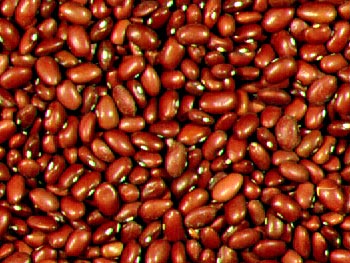
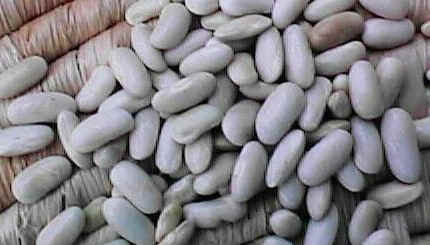
Sample keys to some common beans used in the kitchen:

Numeric key with couplets presented together.  The major advantage of this method of presentation is that both characteristics in a couple can be evaluated and compared very easily.


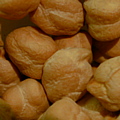
1a. Bean round Garbanzo bean
1b. Bean elliptical or oblong Go to 2
2a. Bean white White northern
2b. Bean has dark pigments Go to 3
3a. Bean evenly pigmented Go to 4
3b. Bean pigmentation mottled Pinto bean
4a. Bean black Black bean
4b. Bean reddish-brown Kidney bean


Alphabetical key with couplets grouped by relationship.  This key uses the same couplet choices as the key above.  The choices within the first and succeeding couplets are separated to preserve the relationships between the characteristics.


A. Bean elliptical or oblong Go to B
   B.  Bean has dark pigments Go to C
            C.  Bean color is solid Go to D
            C.  Bean color is mottled Pinto bean
                     D.  Bean is black Black bean
                     D.  Bean is reddish-brown Kidney bean
   B.  Bean is white White northern
A. Bean is round Garbanzo bean


Rules for Using Dichotomous Keys: 

When you follow a dichotomous key, your task becomes simpler if you adhere to a few simple rules of thumb:

  1. Read both choices in a couplet carefully.  Although the first description may seem to fit your sample, the second may apply even better.
  2. Keep notes telling what sequence of identification steps you took.  This will allow you to double-check your work later and indicate sources of mistakes, if they have been made.
  3. If you are unsure of which choice to make in a couplet, follow both forks (one at a time).  After working through a couple of more couplets, it may become apparent that one fork does not fit your sample at all.
  4. Work with more than one sample if at all possible.  This will allow you to tell whether the one you are looking at is typical or atypical.  This is especially true when working with plants – examine more than one leaf, branch, cone, seed, flower,…etc.
  5. When you have keyed out an organism, do not take your effort as the final result.  Double check your identification scheme, using your notes.  Find a type specimen (if available) and compare your unknown to the type specimen.  If a type specimen is unavailable, find a good description of the indicated taxonomic group and see if your unknown reflects this description.
  6. When reading a couplet, make sure you understand all of the terms used.  The best keys will have a glossary of technical terms used in the key.  If a glossary is unavailable, find a good reference work for the field (textbook, biological dictionary,…etc.) to help you understand the term.
  7. When a measurement is indicated, make sure that you take the measurement using a calibrated scale.  Do not “eyeball” it or take a guess.

Exercise 1:

Using a container of beans, use one of the dichotomous keys above to identify the beans.  Glue the beans to the card provided and label them with their common name. Indicate what steps you followed to arrive at your answer.  Turn the card in to your instructor.  Compare your answers to the instructor’s descriptions and type specimen.

Exercise 2:

Obtain samples of the snack chips provided.  Develop a dichotomous key to identify the snacks.  In your notebook, keep track of the characteristics you used to differentiate between the different snack families.  What are the values of the characteristic for each snack food?

Exercise 3:

Use the dichotomous key to conifers provided below to identify conifers.

A Key to Selected North American Native and Introduced Conifers


01a Leaves needle-like Go to 02
01b Leaves flattened and scale-like Go to 27
02a Leaves are in clusters Go to 03
02b Leaves are borne singly Go to 15
03a Two to five leaves in a cluster Go to 04  Genus Pinus
03b More than five leaves in a cluster Go to 14
04a Leaves mostly 5 in a cluster White Pine (Pinus strobus)
04b Leaves 2 or 3 in a cluster Go to 05
05a Leaves mostly 3 in a cluster Go to 06
05b Leaves mostly 2 in a cluster Go to 08
06a Leaves twisted, less than 5 inches long Pitch Pine (Pinus rigida)
06b Leaves straight, more than 5 inches long Go to 07
07a Leaves 5-10 inches long, cones very thorny Loblolly pine (Pinus taeda)
07b Leaves mostly over 10 inches long, cones unthorned Longleaf pine (Pinus palustris)
08a Leaves mostly longer than 3 inches Go to 09
08b Leaves mostly shorter than 3 inches Go to 11
09a Leaves rigid, bark grayish Black pine (Pinus nigra)
09b Leaves narrower than 1.6mm; bark reddish brown or brown Go to 10
10a Cones thornless, twigs brown Norway pine (Pinus resinosa)
10b Cones thorny, twigs whitish Shortleaf pine (Pinus echinata)
11a Leaves mostly wider than 1.5 mm Go to 12
11b Leaves mostly narrower than 1.5 mm Go to 13
12a Leaves mostly longer than 35 mm Mugho pine (Pinus mugo)
12b Leaves mostly shorter than 35 mm Jack pine (Pinus banksiana)
13a

Twigs whitened

Virginia pine (Pinus virginiana)
13b Twigs not whitened Scotch pine (Pinus sylvestris)
14a Leaves deciduous, clusters of 20-40 Larch (Larix sp.)
14b Leaves persistent, stiff, and four sided True cedar (Cedrus sp.)
15a Needles short and sharp Giant Sequioa  (Sequioadendron giganteum)
15b Needles longer than 12 mm Go to 16
16a Tiny pegs on twigs Go to 17
16b No pegs on twigs Go to 22
17a Pegs square, needles sharp Go to 18 Genus Picea
17b Pegs round, needles flat and blunt Hemlock (Tsuga sp.)
18a Leaves dark green or yellow green Go to 19
18b Leaves blue-green Go to 20
19a Branchlets droop Norway spruce (Picea abies)
19b Branchlets do not droop Red spruce (Picea rubens)
20a Leaves at right angles to stems Blue spruce (Picea pungens)
20b

Leaves point forward

Go to 21
21a Leaves about 12 mm long, seed cones 15-32 mm in length, crown narrow and pointed Black spruce (Picea mariana)
21b Leaves about 19 mm long, seed cones 50 mm in length, spire-like crown

White spruce (Picea glauca)

22a Buds large and pointed Douglas fir (Pseudotsuga sp.)
22b Buds small and rounded Go to 23
23a Terminal buds round and clustered True fir (Abies sp.)
23b Terminal buds not clustered Go to 24
24a Needles white underneath Go to 25
24b Needles green underneath Go to 26  Genus Taxus
25a Needles pointed

Redwood (Sequoia sempervirens)

25b Needles blunt Hemlock (Tsuga sp.)
26a Leaves 18 mm long or less with inconspicuous midrib American Yew (Taxus canadensis)
26b Leaves 25 mm long or more with conspicuous midrib Japanese Yew (Taxus cuspidata)
27a All leaves short and sharp Giant Sequioa  (Sequioadendron giganteum)
27b Some leaves not sharp Go to 28
28a Cones round Go to 29
28b Cones not round Go to 31
29a Cones soft and leathery Juniper (Juniperus sp.)
29b Cones woody Go to 30
30a Cones under 12 mm in diameter False cypress  (Chamaecyparis)
30b Cones over 12 mm in diameter Cypress (Cuppressus)
31a Cones resemble rosebuds White cedar or arbor vitae (Thuja)
31b Cones resemble duck bills Incense cedar (Calocedrus)


Conifers to Identify:

1. Name: 2. Name:

3. Name: 4. Name:

5. Name: 6. Name:


7. Name: 8. Name:


9. Name: 10. Name:


11. Name: 12. Name:


13. Name: 14. Name:


15. Name: 16. Name:

Photos Copyright Nearctica.com

Click here for correct answers to conifer key

 

Cow Eye Dissection Worksheet


Cow Eye Dissection
Worksheet


1. Tell three observations you made when you examined the surface of the eye:

  1. ______________________________
  2. ______________________________
  3. ______________________________

2. Identify the following structures:
  1. cornea
  2. tear gland-
  3. optic nerve
  4. iris-
  5. pupil-
  6. retina

3. Name the three layers you sliced through when you cut across the top of the eye:

  1. ______________________________
  2. ______________________________
  3. ______________________________

4. Match the following parts of the eye to their function: (ciliary body, sclera, iris, retina, lens, & tapetum lucidum)

____________________ Contains the photoreceptors for vision.
____________________ The colored portion of the eye.
____________________ This structure changes shape to focus light on the retina.
____________________ The opening in the iris through which light passes.
____________________ The iridescent portion of the choroid layer in nocturnal animals.
____________________Consists of muscles, which control and shape the lens.
____________________ The white of the eye.

4. Use the pictures below to name the parts of the eye:

  1. ________________________________________
  2. ________________________________________
  3. ________________________________________
  4. ________________________________________
  5. ________________________________________
  6. ________________________________________
  7. ________________________________________
  8. ________________________________________
  9. ________________________________________
  10. ________________________________________
  11. ________________________________________
  12. ________________________________________
BACK