Introduction to Animals Study Guide


Introduction to Animals Study Guide

How are most animals classified?
What are the main characteristics of chordates?
How are vertebrates classified?
What are heterotrophs & give some examples.
In what ways do animals differ from plants?
What are tissues?
What determines an animal’s body plan?
In what habitat do you find most species of animals?
What is bilateral symmetry?
What does bipedal mean?
Where are the dorsal & ventral surfaces on a bipedal organism?
What is radial symmetry?
Name invertebrates that are asymmetrical, radial symmetry, & bilateral symmetry.
What does cephalization mean?
What invertebrate group was first to show cephalization?
Describe the “surfaces” of animals with radial symmetry.
Why is cephalization an advantage for animals?
What is a postanal tail & give examples of adult chordates with this characteristic?
Describe the “skeletal” support found in roundworms.
What is segmentation, & what animals exhibit this characteristic?
What is the function of kidneys, and what organisms have these organs?
How do closed & open circulatory systems differ?
How are terrestrial animals protected against water loss?
What structures show segmentation in vertebrates?
What is the advantage of having a long intestinal tract?
How are nutrients moved through a cnidarian’s body?
Describe how spiral cleavage occurs.
describe the embryo at the start of gastrulation.
What forms from endoderm in cnidarians.


Evaluation Webquest Classification

Evaluation

Students will be evaluated as a group in the areas listed in the rubric.

Beginning

1

Developing

2

Accomplished

3

Exemplary

4

Score
Classify plants and animals according to internal and external features using a developed classification systems, organized using a flow chart. Classification of a total of 6 out of 10 living organisms (that includes the created living things) correctly with 6 flow charts. Classification of a total of 7 out of 10 living organisms (that includes the created living organisms) correctly with 6 legible and easy to follow flow charts. Classification of a total of 8 out of 10 living organisms (that includes the created living organisms) correctly with 6 legible and easy to follow flow charts and 1 flow chart that combines all 6 flow charts. Classification of a total of 9 or 10 living organisms correctly with 6 flow charts that are easy to follow  and 1 flowchart that combines all 6 flow charts and is easy to follow.
Poster of new living thing that communicates what the new living thing looks like.
Poster that includes:  

1)a picture of an original living thing
2)a description of five characteristics listed

A poster that includes:  

1) a picture of an original living thing

2)a  description of six  characteristics listed in an organized fashion

3)few spelling errors

A poster that includes

1)a picture of an original living thing

2) a  description of six or more characteristics listed in an organized fashion

3) no spelling errors.

4)easy to read
A poster that includes:

1) a picture of an original living thing2) a description of six or more characteristics listed in an organized fashion

3) no spelling errors.

4) good artistic design.

Presentation of classification findings and new living thing

 1)Information presented relevant and in a logical order

2)One media used for presentation effectively

1)Information presented relevant and in a logical order

2)Two media forms used for presentation excluding video effectively.

1)Information presented relevant and in a logical order

2)Video used for presentation media effectively.


1)Information presented relevant and in a logical order

2)Two media forms used for presentation including video effectively.
Work
co-operatively
in a group


1)Work
co-operatively using information technology skillsOR

2)Demonstrate ability to collaborate to develop a group display.

1)Work co-operatively using information technology skills

AND

2)Demonstrate ability to collaborate to develop a group display with satisfactory results

1)Work co-operatively using information technology skills

AND

2)Demonstrate ability to collaborate to develop a group display
with average results

1)Work co-operatively using information technology skills

AND

2)Demonstrate ability to collaborate to develop a group display with  above average results

Group
self-evaluation


Worked together though some problems
(had disagreements)
Worked together with a few problems
(only minor disagreements)
Worked together and every one had input into decisions though a few problems Worked well together, no problems and everyone had input into decisions.

BACK


Floating Leaf Disk Assay


The Floating Leaf Disk Assay for Investigating Photosynthesis

Brad Williamson


Introduction:


Trying to find a good, quantitative procedure that students can use for exploring photosynthesis is a challenge. The standard procedures such as counting oxygen bubbles generated by an elodea stem tend to not be “student” proof or reliable. This is a particular problem if your laboratory instruction emphasizes student-generated questions. Over the years, I’ve found that the floating leaf disk assay technique to be reliable and understandable to students. Once the students are familiar with the technique they can readily design experiments to answer their own questions about photosynthesis. I plan to add to this page as I have time to elaborate on the technique and provide suggestions for modifications.


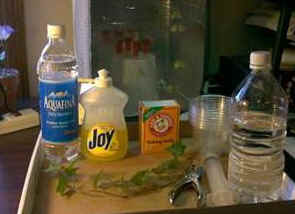
Materials:


1.                Sodium bicarbonate (Baking soda)

2.               Liquid Soap

3.               Plastic syringe (10 cc or larger)—remove any needle!

4.               Leaf material

5.               Hole punch

6.               Plastic cups

7.               Timer

8.               Light source


Optional:


Buffer Solutions

Colored Cellophane or filters

Leaf material of different ages

Variegated leaf material

Clear Nail polish


Procedure:


  1. Prepare 300 ml of bicarbonate solution for each trial.
    1. The bicarbonate serves as an alternate dissolved source of carbon dioxide for photosynthesis. Prepare a 0.2% solution. (This is not very much—it’s about 1/8 of a teaspoon of baking soda in 300 ml of water.) Too much bicarbonate will cause small bubbles (CO2)to form on the surface of the leaf which will make it difficult to sink the leaf disk.
    2. Add 1 drop of dilute liquid soap to this solution. The soap wets the hydrophobic surface of the leaf allowing the solution to be drawn into the leaf. It’s difficult to quantify this since liquid soaps vary in concentration. Avoid suds. If your solution generates suds then dilute it with more bicarbonate solution.


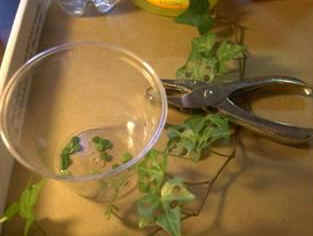
  1. Cut 10 or more uniform leaf disks for each trial

    1. Single hole punches work well for this but stout plastic straws will work as well
    2. Choice of the leaf material is perhaps the most critical aspect of this procedure. The leaf surface should be smooth and not too thick. Avoid plants with hairy leaves. Ivy, fresh spinach, Wisconsin Fast Plant cotyledons—all work well. Ivy seems to provide very consistent results. Any number of plants work. My classes have found that in the spring, Pokeweed may be the best choice.
    3. Avoid major veins.


  1. Infiltrate the leaf disks with sodium bicarbonate solution.
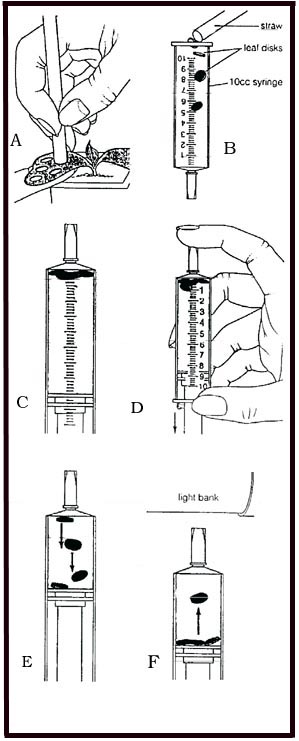
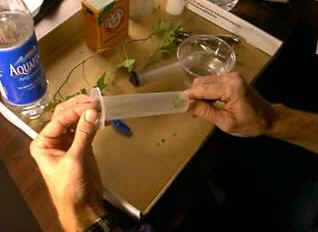
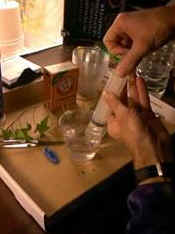
    1. Remove the piston or plunger and place the leaf disks into the syringe barrel. Replace the plunger being careful not to crush the leaf disks. Push on the plunger until only a small volume of air and leaf disk remain in the barrel (< 10%).

    1. Pull a small volume of sodium bicarbonate solution into the syringe. Tap the syringe to suspend the leaf disks in the solution.


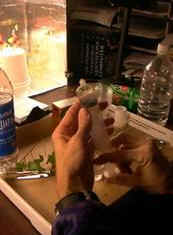
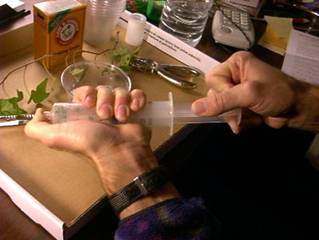
    1. Holding a finger over the syringe-opening, draw back on the plunger to create a vacuum. Hold this vacuum for about 10 seconds. While holding the vacuum, swirl the leaf disks to suspend them in the solution. Let off the vacuum. The bicarbonate solution will infiltrate the air spaces in the leaf causing the disks to sink. You will probably have to repeat this procedure several times in order to get the disks to sink. You may have difficulty getting the disks to sink even after applying a vacuum three or four times. Generally, this is usually an indication that you need more soap in the bicarbonate solution. Some leaf surfaces are more water repellent than others are. Adding a bit more soap usually solves the problem.


  1. Pour the disks and solution into a clear plastic cup. Add bicarbonate solution to a depth of about 3 centimeters. Use the same depth for each trial. Shallower depths work just as well.

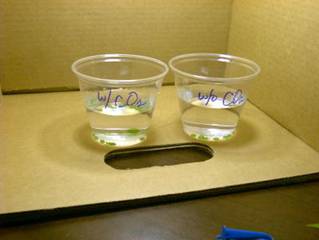
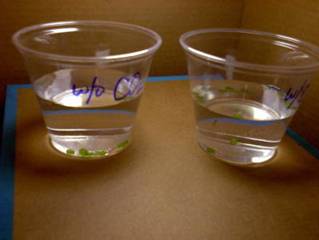
    1. This experimental setup includes a control. The leaf disks in the cup on the right were infiltrated with a water solution with a drop of soap—no bicarbonate.


  1. Place under the light source and start the timer. At the end of each minute, record the number of floating disks. Then swirl the disks to dislodge any that are stuck against the sides of the cups. Continue until all of the disks are floating.

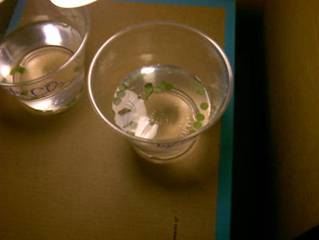
    1. The control is on the left in each image. In the experimental treatment, on the right, leaf disks are rising and floating on the surface.


  1. Sample results:


Time (minutes) Disk Floating
1 0
2 0
3 0
4 0
5 0
6 0
7 1
8 1
9 1
10 1
11 4
12 7
13 8
14 10


  1. The point at which 50% of the leaf disks are floating is the point of reference for this procedure. By interpolating from the graph, the 50% floating point is about 11.5 minutes. Using the 50% point provides a greater degree of reliability and repeatability for this procedure.


Sponge Coloring Diagram and Questions

Found at the Biology Corner                Name __________________ Period ______
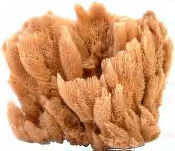
SciSponge.bmp (79782 bytes)Sponges – A Coloring Worksheet

Since sponges look like plants, it is understandable why early biologists thought they were plants. Today, we know that sponges are simple, multicellular animals in the Kingdom Animalia, Phylum Porifera. This phylum is thought to represent the transition from unicellular animals to multicellular animals. Most (but not all) sponges are asymmetrical and have no definite shape. Sponges, like all animals, are eukaryotic – meaning their cells have a nucleus. Porifera in Latin means “pore-bearer” and refers to the many pores or openings in these animals. Because of these pores, a sponge can soak up and release water. At one time, real sponges were used for cleaning and bathing. Today, most are artificially made.

All adult sponges are sessile, meaning they are attached to some surface. Since they cannot move, sponges cannot pursue their food. Instead, they are filter feeders, meaning they obtain their food by straining the water for small bits of food like bacteria, algae or protozoans.

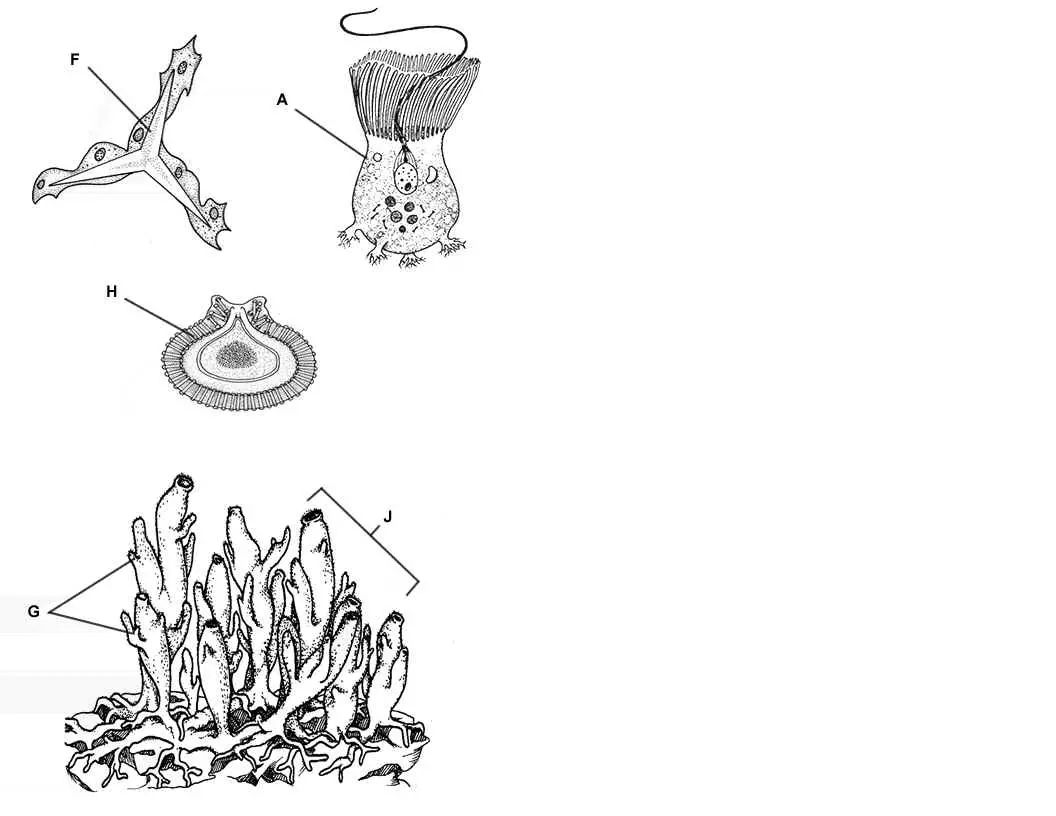
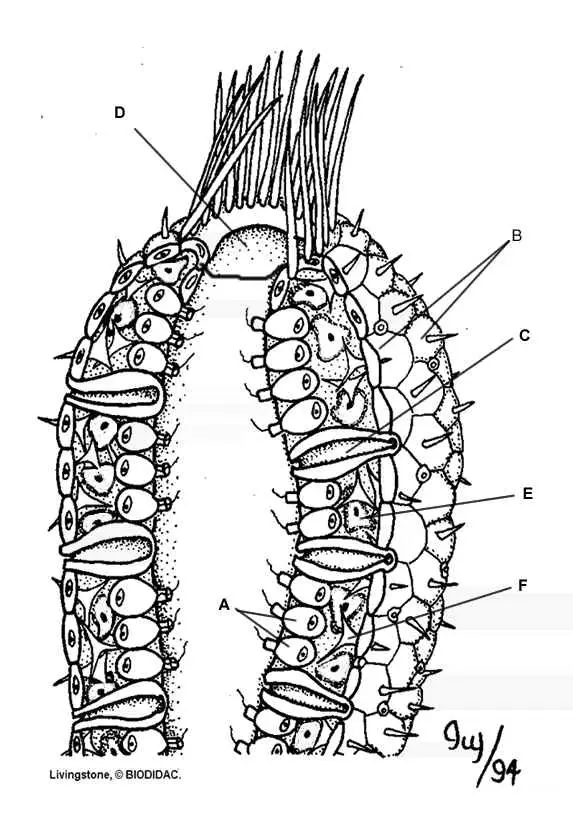
Sponges exhibit less specialization (adaptation of a cell for a particular function) of cells than most invertebrates. The primitive structure of a sponge consists of only two layers of cells separated by a non-living jelly like substance. The outer layer of the sponge is the epidermis which is made of flat cells called epithelial cells. Color all the epithelial cells (B) of the epidermis peach or pink.

The inner layer consists of collar cells (A) whose function is to circulate water through the sponge. They do this by swishing their flagella which pulls water through the incurrent pore – water then travels out the osculum at the top of the sponge. As water passes through the sponge in this way, cells absorb food and oxygen and waste is excreted. Color the osculum (D) dark blue, the incurrent pores (C) light blue. Color the inside of the sponge where water circulates the same light blue as you colored the incurrent pores. Color all the collar cells (A) red.

In the jelly-like substance between the epidermis and the collar cells are cells called amebocytes – because they look like amebas. The job of the amebocytes is to travel around distributing food and oxygen to the cells of the epidermis. Because of the amebocytes, scientists believe that sponges evolved from protists. Color all of the amebocytes (E) green – look for them carefully.

The body of the sponge would collapse if it did not have some type of supporting structure. Some sponges have a soft network of protein fibers called spongin. Others have tiny, hard particles called spicules. Many of these spicules also stick out of the epidermis and provide the sponge with protection. Most sponges have a combination of spicules and spongin, the ratio often determines how soft or hard the sponge is. Search for and color all the pointy spicules (F) brown.


Reproduction for sponges can be accomplished both sexually and asexually. There are three ways for a sponge to reproduce asexually: budding, gemmules, and regeneration. Sponges can simply reproduce by budding, where a new sponge grows from older ones and eventually break off. Color the adult sponge (J) pink and all the buds (G) you can find red. Sponges can also reproduce by regeneration, where missing body parts are regrown. People who harvest sponges often take advantage of this by breaking off pieces of their catch and throwing them back in the water, to be harvested later. Finally, sponges can reproduce by creating gemmules – which is a group of amebocytes covered by a hard outer covering. Color the gemmule (H) yellow.

Sexual reproduction occurs when one sponge releases sperm into the water. This sperm travels to another sponge and fertilizes its eggs. The larva form will then swim to another location using its flagella where it will grow into an adult sponge. Most sponge species are hermaphrodites, they can produce both eggs and sperm.

Questions:

1. What did early biologists think sponges were? ______________________

2. Sponges belong to the Kingdom _________________ and the Phylum _______________

3. Sponges are [ unicellular or multicelluar ] and [ prokaryotic or eukaryotic ]

4. What type of symmetry do sponges have? ___________________________________

5. What does it mean to be sessile? ____________________________________

6. How do sponges get their food? ___________________________________

7. Water enters the sponge through the _____________________ and leaves through the
_____________________.

8. What is the job of the amebocyte? ________________________________________

9. What two substances give the sponge support? _________________________________

10. Tiny sponges growing from the main body of the sponge are called _________________

11. What is a gemmule? ___________________________________________________

12. What is a hermaphrodite? ______________________________________________


Label the letters on the diagrams
SciSpongesColoringWSP3.bmp (1403574 bytes)


Label the letters on the diagrams
SciSpongesColoringWSP4.bmp (2585142 bytes)

Found at www.biologycorner.com