Scientific Equipment


Scientific Equipment

All Materials © Cmassengale

Click HERE for Notebook Copy

Compound Light Microscope (LM)-used to enlarge an image Graduated Cylinder – used to measure the volume of liquids
Microscope Slide – supports an item being examined under the microscope Image result for cover slip Cover slip – covers specimen on a slide
Beaker, Glass, Cup, Chemistry, Flask, Laboratory Beaker – holds liquids while they are being stirred or heated Test Tube Brush – used to clean test tubes
Image result for evaporating dish Evaporating Dish – used for heating solids Image result for pinch clamps Pinch Clamps – used to control the flow of liquids through tubing
Image result for funnel Funnel – assists in transferring liquids to containers with smaller openings Striker – used to ignite a burner
Test Tubes – holds liquids for observation or testing Safety goggles – protects the eyes from damaging substances
Pipet pump – dispenses known volumes of liquids Eyedropper – used to transfer small amounts of liquids
Image result for forceps Forceps – used to hold or lift specimens Magnifying glass – enlarges the image of an object
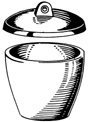
Related image Crucible – containers used for “strong” heating Test Tube Rack – holds test tubes during observation or testing
Wash Bottle – used for rinsing solids out of a container Pipet – used for exact measurements of liquids
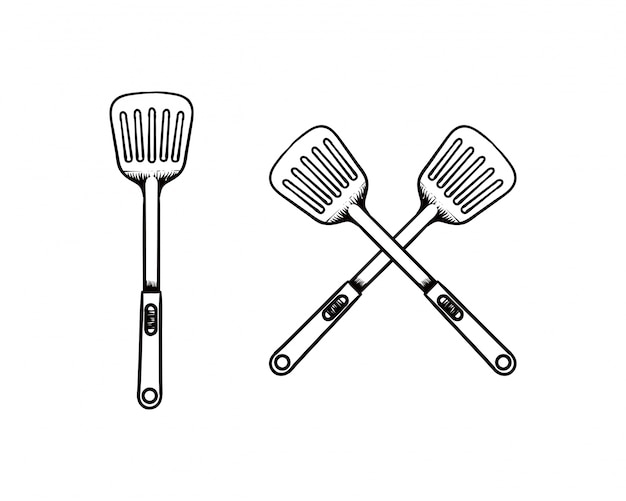
Image result for spatula drawing Spatula – chemical spoons used to transfer solids from their original container to a scale for weighing Image result for wire gauze Wire Gauze – adds additional support for containers held on tripods or O-rings
Crucible Tongs – used for picking up crucibles & crucible covers only Mortar & Pestle – used to grind solids into powders
Florence Flask – used to store liquids Erlenmeyer Flask -used to store solutions
Dissecting Pan – holds specimen being dissected test tube holder Test Tube Holder – holds test tubes while heating
an electronic balance Electronic Balance – used for weighing substances a proper lab burner flame Bunsen Burner – heat source
Thermometer – used to measure temperature Stopper – used to cap flasks containing liquids
Scalpel – used for cutting specimens being dissected Tubing – hose used for connecting glassware
Image result for petri dish Petri Dish – plate used to culture microorganisms a triple-beam balance Triple Beam Balance – used for weighing substances
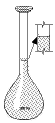
O-Ring – used with ring stands to support heated vessels Volumetric Flask – used to mix precise volumes of liquids
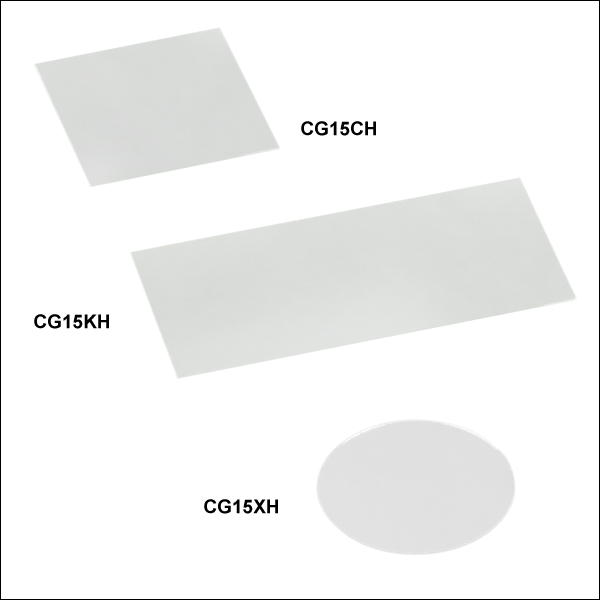
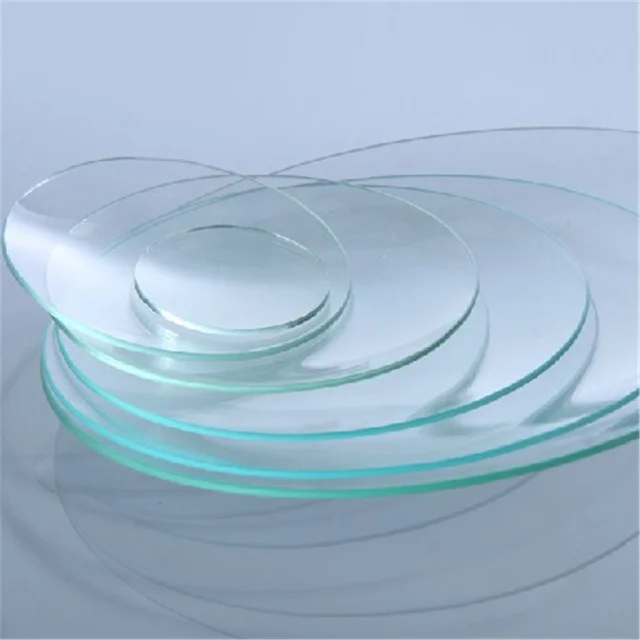
Related image Watch Glass – used on top of beakers when heating Desiccators – used to remove moisture from substances
PRINT EQUIPMENT SHEET FOR NOTEBOOK      BACK

Scientific Method Notes


Scientific Method
All Materials © Cmassengale
How can we determine if something is a fact or an opinion? How can we determine an answer to a problem? The answer is use the scientific method.What is the Scientific Method? It is a series of steps used to help solve a problem.

  • Step 1. Make an Observation. After making an observation of the natural world, define the problem and make sure only one problem is being studied. ALL scientific experimentation starts with observation.
  • Step 2. Research the problem (question). Use all available resources to collect data on the subject being covered. Libraries, Internet, books, magazines, personal interviews, etc.
  • Step 3. Develop a hypothesis (educated guess). Make it a short definitive statement. It may be an “if” then” statement. The “if” part will become the hypothesis and the then part should be the results received at the end of the controlled experiment. Remember your hypothesis can be changed if the results do not support it.
  • Step 4. Develop a controlled experiment. A controlled experiment is an experiment that contains only one experimental variable. An experimental or independent variable is the thing being tested (what the scientist changes). Everything else in the experiment or all other variables must be the same. These variables are also called the controlled variables. Keeping these variables the same allows the experimenter to show that it was the experimental variable that caused the results. The dependent variable is what changes when the independent variable changes – the dependent variable depends on the outcome of the independent variable.  Data should be organized into charts, tables, or graphs.
  • Step 5. Analyze the data and come up with a conclusion. Data may be quantitative (numbers) or qualitative (appearance, properties, etc.).  The conclusion may or may not support the hypothesis. Additional experimentation must then take place to build documentation concerning the problem. If the hypothesis is proven wrong, change the hypothesis, not the data. Scientists must be unbiased.
  • WHAT FOLLOWS: Scientific research must be published, but first it must be reviewed by peers (other scientists) and verified for accuracy.  Research may result in a scientific theory or law.

Example:

Observation: Toaster stops working.
Question/Research: What is wrong with the toaster? (Read toaster Manual.)
Hypotheses: (1) It is unplugged. (2) The unit is burned out.
Experiments:  (1) Check the plug. (2) Take the toaster apart and look at the heating wires.
Results & Conclusion: If it was unplugged the first hypothesis is supported, if the wires inside are broken, then the second hypothesis is supported.


BACK

Quiz Evolution

Name: 

Evolution


True/False
Indicate whether the sentence or statement is true or false.
1.
The theory of evolution states that species change over time.
2.
The inheritance of acquired characteristics was one mechanism of evolution supported by Darwin.
3.
Darwin observed that the plants and animals of the Galapagos Islands were the same as those on islands off the coast of Africa with similar environments.
4.
The book Principles of Geology by Charles Lyell described how changes in land formations can cause species to evolve.
5.
In his “Essay on the Principle of Population,” Malthus said humans were the only population that could continue to grow in size indefinitely.
6.
The two major ideas that Darwin presented in The Origin of Species were that evolution occurred and that natural selection was its mechanism.
7.
The environment dictates only the direction and extent of evolution.
8.
The environment selects which organisms will survive and reproduce by presenting challenges that only individuals with particular traits can meet.
9.
The way an embryo develops is not important in determining the evolutionary history of a species.
10.
Within populations, divergence leads to new species.
 

Completion
Complete each sentence or statement.
11.
When an organism becomes ____________________, the tissues are replaced by harder minerals.

12.
A species that has disappeared permanently is said to be ____________________.

13.
A change in species over time is called ____________________.

14.
The process by which organisms with traits well suited to an environment survive and reproduce at a greater rate than organisms less suited for that environment is called ____________________.

15.
According to Darwin, the ____________________ determines the rate at which organisms survive and reproduce.

16.
A(n) ____________________ consists of all the individuals of a particular species in a particular place.

17.
Homologous structures are similar because they originated in a shared ____________________.

18.
____________________ structures are similar because they originated in a shared ancestor.

19.
Closely related species show more ____________________ in nucleotide sequences than distantly related species.

20.
____________________ occurs as two or more species change in response to each other.


Check Your Work     Reset

Pzsol Nucleic Acid

Nucleic Acid Puzzle Solution

+ + + D + + + + + E A + + + + + + R E E + P + N + T + + + + S D + + + + E N + S + R + A + + R + + + + A E + + P I E + A + O + + + + + A + + + + C N L D + G D R C O M P L E M E N T A R Y I I + + O E E + F + + + + K + D S + L C M L N + R O M + R + + + C + + + I C A I + + E E D X Y G E + + I + + + + + T R + C + + H Y Y L U A + R + + + + + I Y O I + A + + H R O A D C + + + + + O P P + E P + R + + I P N O I T A L S N A R T H N L T + U + B + I D E N T I C A L + + U O + C I + + O + N E S O B I R + + + C + + S C U O + S E E + + + + + + + + L + + + Y P + N N E N + + + + + + + + E R + + T + + H + + O I + + + + + + + U N + + O + + + + A I + R + + + + + + S A B A S E + + + + T T + U + + + + + + + + + I + + + + + A + + E P + + + + + + + + N + + + + F T + + + + + + + + + + + + E + + + + + U O + + + + + + + + + + + + + + + + + M + + R + + + + N I L K N A R F + + + + + + + + K + + + + + + + + + N I T R O G E N + + + + + + + + + + + + + + + + + + + + + + + + + + + + + + + + + + + + + + + + + + + + + + (Over,Down,Direction) ADENINE(11,1,SE) BASE(9,17,E) COMPLEMENTARY(1,5,E) CRICK(3,10,NE) CYTOSINE(15,13,SW) DEOXYRIBOSE(19,4,S) DNA(4,1,S) FORK(14,19,SE) FRANKLIN(8,22,W) GUANINE(1,8,S) HELICASE(17,8,NW) HYDROGEN(18,9,N) IDENTICAL(1,12,E) MUTATION(13,21,NE) NITROGEN(7,23,E) NUCLEOTIDE(17,14,NW) NUCLEUS(13,11,SW) PHOSPHATE(11,10,SE) POLYMERASE(20,10,N) PROOFREAD(2,2,S) PURINE(20,18,N) PYRIMIDINE(10,10,NE) REPLICATION(18,1,SW) RIBOSE(7,13,W) RNA(10,15,SW) TRANSCRIPTION(6,2,SE) TRANSLATION(11,11,W) URACIL(17,11,NW)

Pzz Intro to Biology


Introduction to Biology
Unscramble the following words & then tell their meaning: 


1) mosagrin __________________________
2) lobygio __________________________
3) nelllaiuurc __________________________
4) limrlulcautle __________________________
5) fdrionteitfanie __________________________
6) ahimetsosso __________________________
7) drooutienrpc __________________________
8) dryixiloouecnecb cdia __________________________
9) leuaasx __________________________
10) lniovoetu __________________________
11) yecolog __________________________
12) tmeysecsos __________________________
13) runatla scelnoiet __________________________
14) hhisotsnyepots __________________________
15) outtropah __________________________
16) rrooehhtpet __________________________
17) eedltovepnm __________________________
18) gnee __________________________
19) mtbeolisma __________________________


Solution