Graph Examples

Examples of Graphs

LINE GRAPHS

Line Graph title

A line graph is most useful in displaying data or information that changes continuously over time. The example below shows the changes in the temperature over a week in January. Notice that the title of the graph is “Average Daily Temperature for January 1-7 in degrees Fahrenheit”.

To the left is a table that shows the date in one column and the corresponding temperature in the second column. The line graph on the right shows the degrees of temperature going up the vertical axis (up and down numbers on the left of the graph) and the days of the week on the horizontal axis (going sideways from left to right). The points for the temperature for each day are connected by a line – thus the graph is a line graph.

Average Daily Temperature for January 1-7 in Degrees Fahrenheit

Date
Temperature
1 10
2 25
3 30
4 42
5 23
6 25
7 40
Line Graoh of Average Temperatures


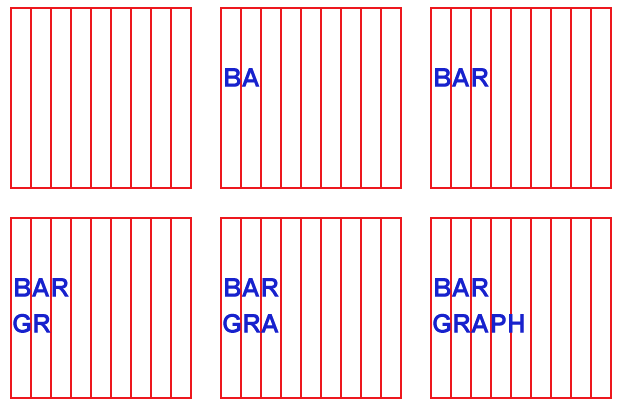
Bar Graph Animated title

BAR GRAPHS

Bar graphs are an excellent way to show results that are one time, that aren’t continuous – especially samplings such as surveys, inventories, etc. Below is a typical survey asking students about their favorite after school activity. Notice that in this graph each column is labeled – it is also possible to label the category to the left of the bar. In this case, the numbers for each category are across the bottom of the chart.

A bar chart is marked off with a series of lines called grid lines. These lines typically mark off a numerical point in the series of numbers on the axis or line. In this case, each grid line going up and down marks a multiple of 20 as the graph is divided.  More gridlines can make it easier to be exact with the amounts being shown on the bar graph, but too many can make it confusing.  Notice that for data that does not fall evenly on a multiple of 20, the bar is in between two grid lines.  Bar graphs are useful to get an overall idea of trends in responses – which categories get many versus few responses.

Favorite Student After School Activity

Activity Number
Visit W/Friends 175
Talk on Phone 168
Play Sports 120
Earn Money 120
Use Computers 65
Bar Graph

Circle Pie Graph Title

CIRCLE/PIE GRAPHS

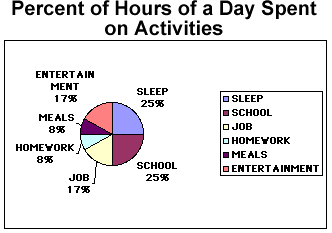
Circle or pie graphs are particularly good illustrations when considering how many parts of a whole are inception. In the table below both the number of hours in a whole day devoted to certain activities is listed as well as the percent of time for each of these activities. The pie chart is then divided very much as a baker’s pie would be into slices that represent the proportional amounts of time spent on each activity.

To the right of the pie chart is a legend that tells which color stands for which category. In addition, the percents are also near the pie slice that stands for that particular amount of time spent.

Percent of Hours of a Day Spent on Activities

ACTIVITY HOURS PERCENT OF DAY
Sleep 6 25
School 6 25
Job 4 17
Entertainment 4 17
Meals 2 8
Homework 2 8


Pie Graph of Day's Activities


Genetic Traits Activity


Finding Your Genetic Match

Introduction:

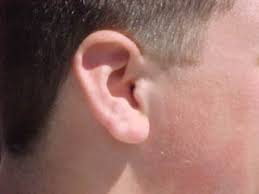
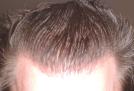
Have you ever noticed that brothers or sisters often look alike?  Their inherited traits are what make their physical appearance so similar. An inherited trait is a particular genetically determined characteristic that distinguishes a person. The traits of children are determined by the traits that  are passed on from their parents. Some traits are obvious in a family — a child’s nose is shaped like their mother’s nose, but some traits are less obvious. You may have similar traits to many of your classmates even though you are not related to them. Some examples of often un-noticed human traits are the ability or not to roll your tongue, attached or unattached earlobes, dimples or freckles, naturally curly or straight hair, hitchhiker’s or straight thumb, straight or widow’s peak hairline, smooth or cleft chin, or colorblindness or normal vision.

There are numerous traits in humans, but some traits occur more frequently than others.  Between 70-90% of the human population have free-hanging earlobes, can roll their tongue,  are right-handed, and can taste a chemical called PTC.  These traits are called high frequency traits.

Objective:

Students will determine the presence of certain high frequency traits in themselves & their classmates.

Materials:

Genetic Inventory sheet with pictures, paper, pencil, PTC taste strips.

Procedure:

  1. Identify which of the following 10 human traits you have by placing a check mark beside that trait.
  2. Compare the traits you have with other students in the classroom and find the student you most closely match.


Human Trait Inventory
Student:
Tongue Roller
Non-Tongue Roller
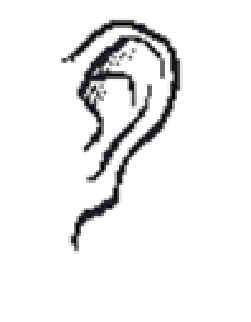
Attached Earlobes
Unattached earlobes
Dimples
No Dimples
Right-handed
Left-Handed
Widow’s Peak
Straight Hairline
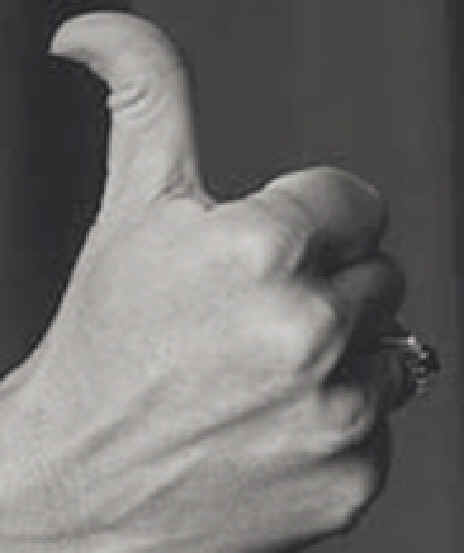
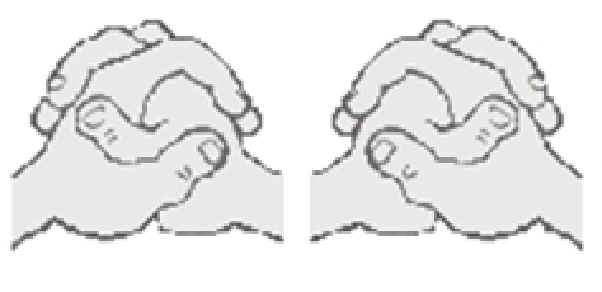
Left Thumb on top when Hands Crossed
Right Thumb on top when Hands Crossed
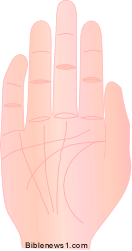
Hair on mid-digit of hand
No hair on mid-digit of hand
Bent little finger
Straight little finger
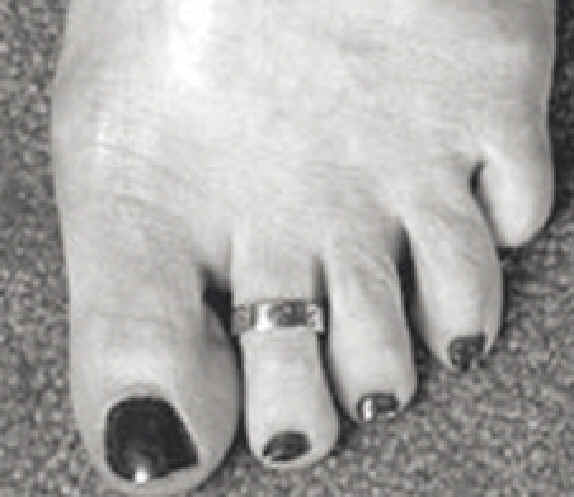
Second toe longer than big toe
Second toe not longer than big toe
Can Taste PTC
Can Not Taste PTC
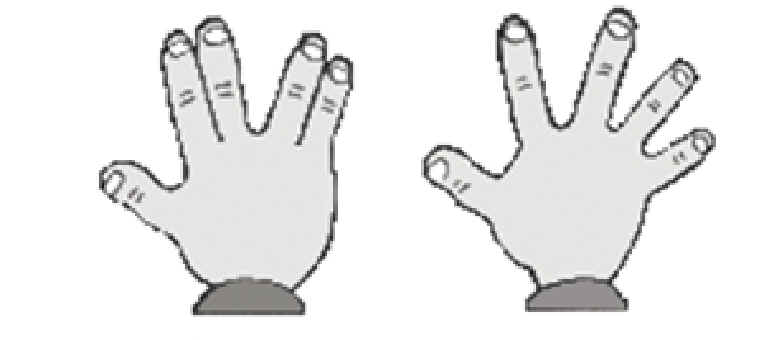
Vulcan (Fingers spread 2 by 2)
None Vulcan
Class Match:


Tongue Roller Non Roller Dimples No Dimples
Attached Earlobes Unattached Earlobes Widow’s Peak Straight Hairline
Longer Second Toe Short Second Toe Bent Little finger Hitchhiker’s Thumb
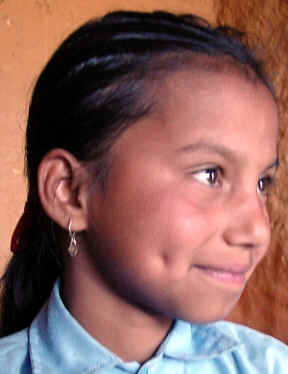
Attached Ear lobes (left)
Unattached ear Lobes (right)
“VULCAN” or No “VULCAN” Dimples Right/Left Thumb on top


Food Testing


Chemical Tests for Nutrients in Food

INTRODUCTION:

Cells are made up of small molecules like water; ions such as sodium and magnesium, and large organic molecules. There are four important types of large organic molecule in living organisms — proteins, carbohydrates (sugars & starches), lipids (fats), and nucleic acids. Proteins, carbohydrates, and fats serve as nutrients in the food that we eat.

In this experiment you will evaluate the nutrient content of unidentified food samples. You will use chemical reagents to test the unknown for specific nutrients. By comparing the color change a reagent produces in the unknown with the change it produces in the known nutrient, you can estimate the amount of that nutrient. Use small samples.

MATERIALS:

400-ml beaker
Hot plate
8 test tubes
Test tube rack
4 medicine droppers
Glass stirring rod
Tongs
Several unknown food substances
Glucose
Cornstarch
Non-fat dry milk
Lard
Distilled water
Benedict’s solution
Iodine-potassium iodide solution
10% aqueous sodium hydroxide solution
0.5% Copper sulfate solution
Sudan III solution

PROCEDURE:

Monosaccharide (simple sugar) test

1. Fill a 400-ml beaker to about 300 ml with water and heat on the hot plate.

Be sure to label all test tubes.

2. Place pea-sized portions of glucose and the unknown substance you are testing in separate test tubes. Add about 2.5 ml of distilled water and 10 drops of Benedict’s solution to each test tube. Mix with a stirring rod, or holding the tube between the thumb and index finger of one hand, thump it with the middle finger of the other hand to mix.

REMEMBER: If you use a stirring rod, wash it after every use, so you won’t contaminate one solution with another.

3. When the water boils, use tongs to place the test tubes in the water bath. Leave the test tubes in the water bath for 10 minutes.

Do not let the water bath boil hard. Control the boiling by turning the hot plate on and off as needed.

4. Remove the test tubes with tongs and place the tubes in a test tube rack. Unplug the hot plate to cool. When the tubes cool, an orange or red precipitate will form if large amounts of glucose are present. Small amounts of glucose will form a yellow or green precipitate. Record your observations in the DATA TABLE.

Polysaccharide complex sugar) test

5. Place cornstarch in a clean test tube and some of the unknown substance in another. Use a clean dropper to add 10 drops of iodine-potassium iodide solution to each test tube. Observe the results and record in the DATA TABLE.

Protein test

6. Place non-fat dry milk in a clean test tube and some of the unknown in another. With a clean dropper slowly add an amount of sodium hydroxide solution about equal to the amount of the milk sample, and mix carefully. Then add 10 drops of copper sulfate solution one drop at a time. Mix gently between drops. Observe the results and record in the DATA TABLE.

7. Repeat step 6 with the unknown substance.

Lipid test

8. Place a small piece of lard in a clean test tube and some of the unknown in another. Use a clean dropper to add 10 drops of Sudan III solution to each test tube. Mix well, observe and record your results in the DATA TABLE.

DATA TABLE:

Mark your results in the appropriate boxes. Indicate relative amount by H for high, M for medium, L for low, or 0 for none.

Monosaccharide test Polysaccharide test
SUBSTANCE: RELATIVE
AMOUNT:
SUBSTANCE: RELATIVE
AMOUNT:
Unknown Unknown
Glucose Corn starch


Protein test Lipid test
SUBSTANCE: RELATIVE
AMOUNT:
SUBSTANCE: RELATIVE
AMOUNT:
Unknown Unknown
Non-fat dry milk Lard

CONCLUSIONS:

Question 1 . What is the main nutrient in the unknown?

Question 2. What are the controls in this investigation?


Evolution & Phylogeny AP Study Guide


Unit 6  Evolution & Phylogeny Study Guide
  • Be able to give an example of an idea that Charles Darwin borrowed from Thomas Malthus
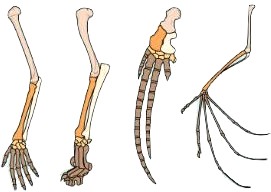
  • Know some anatomical structures that would be homologous to the wing of a bat
  • Know what important information was unavailable to Darwin in the mid-nineteenth century when he formulated his theory of evolution
  • Know the name of Darwin’s 1859 publication
  • Be able to explain all parts of the Darwin-Wallace theory of natural selection
  • Be able to explain how phylogenetic relationships are determined for closely related species
  • Be able to differentiate between analogous & homolgous structures
  • Know the requirements for the maintenance of  Hardy-Weinberg equilibrium
  • Be able to use the Hardy-Weinberg equation to determine allele frequencies and genotypic frequencies
  • Be able to describe and give an example of a cline
  • Be able to explain the bottleneck effect
  • Know what process creates new alleles and serves to balance natural selection
  • Be able to explain & give an example of genetic drift
  • Know what is meant by the “gene pool”
  • Know the major divisions of geologic time
  • Be able to give several examples of fossil types
  • Be able to explain binomial nomenclature
  • Be able to list in order the major taxonomic categories
  • Know what individuals in a population would most often carry copies of harmful recessive alleles
  • Be able to explain & give an example of hybrid sterility
  • Be able to explain & give an example of ecological isolation of species
  • Know what polyploidy is & how it can cause rapid speciation
  • Know the effect of mitosis & meiosis on allelic frequencies in nature
  • Be able to explain the effect on alleles when new members move into a population
  • Know the difference in prezygotic & postzygotic barriers
  • Be able to name & and give examples of prezygotic and postzygotic barriers
  • Be able to explain & give examples of mechanical and behavioral isolation
  • Know the difference between sympatric isolation and allopatric isolation
  • Be able to explain why such a great diversity of life exists on the Hawaiian & Galapagos Islands
  • Be able to tell the difference between anagenesis & cladogenesis
  • Know what taxonomic level can exist as a discrete unit in nature
  • Know what taxonomic unit would show the most genetic variation
  • Be able to explain & give an example of adaptive radiation
  • Be able to determine the age of a fossil using the half-life of carbon-14
  • Know what major evolutionary episode occurred closely with the formation of Pangaea
  • Be able to explain phylogeny
  • Know the significance of the asteroid hypothesis
  • Be able to explain & give examples of divergent & convergent evolution


Evolution Answers


Evolution Answers
    1. In biological terms, what is a species? a group of organisms that are similar in form and structure
      a group of organisms that can interbreed
      a group of organisms that share common features
      a group of organisms that have live in the same habitat
    2. What is the Scala Naturae? an idea proposed by Darwin that suggests that all organisms share a common ancestor
      an idea proposed by Plato that suggests organisms are all evolving toward an ideal form
      an idea proposed by Aristotle that suggests that all organisms fit into an orderly scheme
      an idea proposed by Wallace that suggests that organisms change over time
    3. Creationism is not accepted as a valid scientific theory because: it violates the scientific principle of natural causality
      it doesn’t offer a model to explain the diversity of life on earth
      it cannot be disproven
      all of these

birds

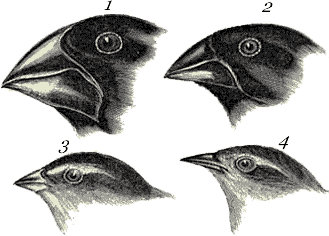
    1. The picture of the finches is used to illustrate: phylogeny of finches
      change over time
      specialization of beaks for different diets
      natural selection
    2. Which of the following was not an observation made by Darwin on his voyages: penguins use wings to paddle instead of fly
      snakes have rudimentary hind limbs
      the earth is very old
      islands had species that did not exist on the mainland

bones

    1. The image illustrates: vestigial structures
      homologous structures
      the fossil record
      natural selection
    2. Which of the following is an example of artificial selection: a panda’s thumb
      the breeding of dogs
      the galapagos finches
      a giraffe’s neck
    3. According to the theory of evolution by natural selection, which of the following is true: random mating is necessary for evolution to occur
      variation does not exist between members of the same species
      populations will change to better fit their environment
      individuals will adapt to their environment
    4. Which of the following are assumptions made with regards to the Theory of Evolution by Natural selection organisms compete with each other to survive
      variations exist among organisms
      not all organisms that are born survive to reproduce
      all of these

whale

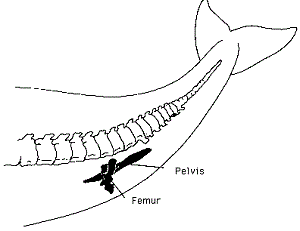
    1. The image illustrates which of the following: artificial selection
      acquired characteristics
      homologous structures
      vestigial structures
    2. A panda’s thumb is considered an evolutionary contrivance because: it is assembled from wrist bones, and imperfect
      it is perfectly structured to grab leaves
      it is an structure that has no use
      none of these
    3. Which of the following outcomes would you predict for a population of bacteria exposed to a new antibiotic. over many generations, the bacteria would become resistant to the antibiotic
      over a few generations, the bacteria would evolve into Archaebacteria
      over a few generations, the bacteria would become extinct
      over many generations, the bacteria would become more susceptible to the antibiotic
    4. Which of the following is an example of convergent evolution: whales and sharks have similar body designs
      bees and hummingbirds have similar body designs
      bats and birds have similar body designs
      all of these
    5. Why is evolution called the “unifying theory of biology” because it explains the diversity of life on the planet
      because it serves as a model to predict how organisms will change
      it serves as a model to interpret relationships between organisms on the planet
      all of these

moths

  1. The image illustrates how peppered moths are related to other moths
    how peppered moths adapted to a changing environment
    how peppered moths became extinct
    how peppered moths became two species