
One possibility is that a translocation has occurred where a segment of chromosome containing only one of the 2 genes has moved to a different chromosome.

One possibility is that a translocation has occurred where a segment of chromosome containing only one of the 2 genes has moved to a different chromosome.
| Cell Cycle & Division All Materials © Cmassengale |
 |
Cell Division:
Reasons for Cell Division:
Copying DNA:
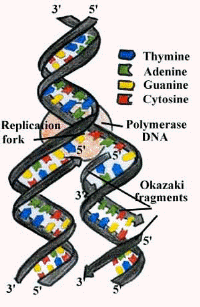
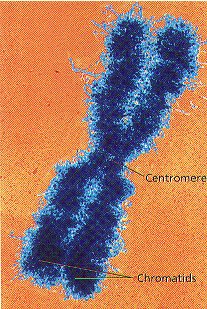
Chromosomes & Their Structure:
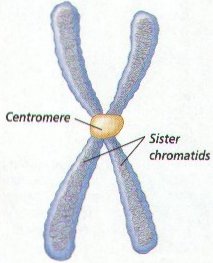
Chromosome Numbers:
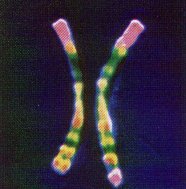
Homologs
| Organism | Chromosome Number (2n) |
| Human | 46 |
| Fruit fly | 8 |
| Lettuce | 14 |
| Goldfish | 94 |

Human Male Karyotype
Genes:
Cell Cycle:

Interphase:
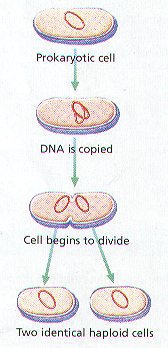
Cell division in Prokaryotes:
Cell Division in Eukaryotes:
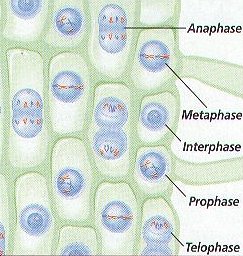
Stages of Mitosis:
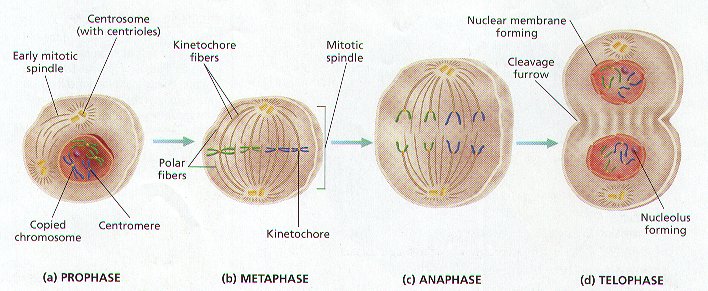
Cytokinesis:
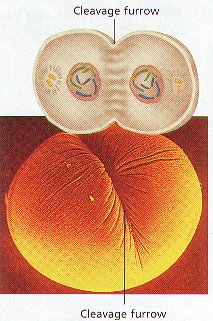
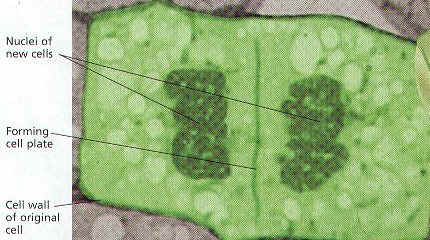
Summary of Mitosis:
 |
 |
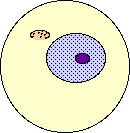
| Interphase
|
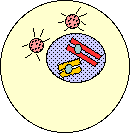
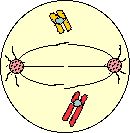
Early Prophase
|
 |
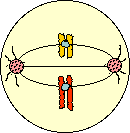 |
Late Prophase
|
Metaphase
|
 |
 |
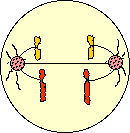
Anaphase
|
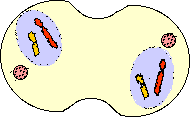
Telophase/Cytokinesis
|
Cancer is Uncontrolled Mitosis:
Meiosis & Sexual Reproduction
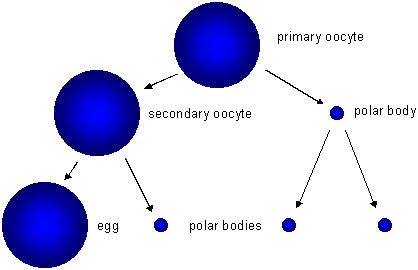
Oogenesis
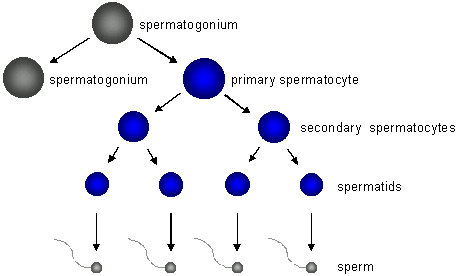
Spermatogenesis
Meiosis I:


Asexual & Sexual reproduction:

Nobel Prize in Medicine 2002
Genetic Regulation of Organ Development and Programmed Cell Death
 |
 |
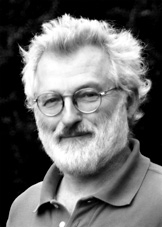 |
| Sydney Brenner | H. Robert Horvitz | John E. Sulston |
Introduction
Sydney Brenner, Robert Horvitz and John Sulston’s discoveries concerning the genetic regulation of organ development and programmed cell death have truly opened new avenues for biological and medical research. We have all begun our lives in a seemingly modest way – as the fertilized egg cell, a tenth of a millimeter in size. From this small cell, the adult human being develops, with its hundred thousand billion cells, through cell division, cell differentiation and by formation of the various organs. To only make new cells is however not sufficient, certain cells must also die at specific time points as a natural part of the growth process. Think for example about how we for a short period during fetal life have web between our fingers and toes, and how this is removed by cell death.
The importance of cell differentiation and organ development was understood by many, but progress was slow. This was largely an effect of our complexity, with the large number of cells and many cell types – the forest could not be seen because of all the trees. Could the task to find the genetic principles be made simpler? Were there a species simpler than humans, but still sufficiently complex to allow for general principles to be deduced?
Sydney Brenner in Cambridge, UK, took on the challenge, and his choice was the nematode Caenorhabditis elegans. This may at first seem odd, a spool-shaped approximately 1 millimeter long worm with 959 cells that eats bacteria, but Brenner realized in the early 1960s that it was, what we today would call, “loaded with features”. It was genetically amenable and it was transparent, so that every cell division and differentiation could be directly followed in the worm under the microscope. Brenner demonstrated in 1974 that mutations could be introduced into many genes and visualized as distinct changes in organ formation. Through his visionary work, Brenner created an important research tool. The nematode had made into the inner circle of research.
John Sulston came to Brenner’s laboratory in 1969. He took advantage of that cell divisions could be followed under the microscope and assembled the cell lineage in the worm, showing which cells are siblings, first and second cousins. He found that cell divisions occurred with a very high degree of precision, the cell lineage was identical between different individuals. He also realized that certain cells in the lineage always died at a certain time point. This meant that programmed cell death was not a stochastic process, but rather occurred with a very high degree of precision. During the course of this work Sulston identified the first gene important for the cell death process: nuc-1.
Robert Horvitz came to work with Brenner and Sulston in 1974. Horvitz started a systematic search for genes controlling programmed cell death. He identified the key genes for the cell death process proper. The discovery of these central death genes, ced-3, ced-4 and ced-9, changed the view on programmed cell death from something rather obscure to a process with a strict genetic program. Horvitz also showed that there are human homologues to the death genes in the worm and that those have corresponding functions – the cell death machinery had deep evolutionary roots.
This year’s Nobel Prize celebrates the Joy of Worms. Brenner’s almost prophetic visions from the early 1960s of the advantages of this model organism have been fulfilled. It has given us new insights into the development of organs and tissues and why specific cells are destined to die. This knowledge has proven valuable, for instance, in understanding how certain viruses and bacteria attack our cells, and how cells die in heart attack and stroke.
All cells in our body are descendents from the fertilized egg cell. Their relationship can be referred to as a cellular pedigree or cell lineage. Cells differentiate and specialize to form various tissues and organs, for example muscle, blood, heart and the nervous system. The human body consists of several hundreds of cell types, and the cooperation between specialized cells makes the body function as an integrated unit. To maintain the appropriate number of cells in the tissues, a fine-tuned balance between cell division and cell death is required. Cells have to differentiate in a correct manner and at the right time during development in order to generate the correct cell type.
It is of considerable biological and medical importance to understand how these complicated processes are controlled. In unicellular model organisms, e.g. bacteria and yeast, organ development and the interplay between different cells cannot be studied. Mammals, on the other hand, are too complex for these basic studies, as they are composed of an enormous number of cells. The nematode C. elegans, being multi-cellular, yet relatively simple, was therefore chosen as the most appropriate model system, which has then led to characterization of these processes also in humans.
Normal life requires cell division to generate new cells but also the presence of cell death, so that a balance is maintained in our organs. In an adult human being, more than a thousand billion cells are created every day. At the same time, an equal number of cells die through a controlled “suicide process”, referred to as programmed cell death.
Developmental biologists first described programmed cell death. They noted that cell death was necessary for embryonic development, for example when tadpoles undergo metamorphosis to become adult frogs. In the human foetus, the interdigital mesoderm initially formed between fingers and toes is removed by programmed cell death. The vast excess of neuronal cells present during the early stages of brain development is also eliminated by the same mechanism.
The seminal breakthrough in our understanding of programmed cell death was made by this year’s Nobel Laureates. They discovered that specific genes control the cellular death program in the nematode C. elegans. Detailed studies in this simple model organism demonstrated that 131 of totally 1090 cells die reproducibly during development, and that this natural cell death is controlled by a unique set of genes.
Sydney Brenner realized, in the early 1960s, that fundamental questions regarding cell differentiation and organ development were hard to tackle in higher animals. Therefore, a genetically amenable and multicellular model organism simpler than mammals, was required. The ideal solution proved to be the nematode Caenorhabditis elegans. This worm, approximately 1 mm long, has a short generation time and is transparent, which made it possible to follow cell division directly under the microscope.
Brenner provided the basis in a publication from 1974, in which he broke new ground by demonstrating that specific gene mutations could be induced in the genome of C. elegans by the chemical compound EMS (ethyl methane sulphonate). Different mutations could be linked to specific genes and to specific effects on organ development. This combination of genetic analysis and visualization of cell divisions observed under the microscope initiated the discoveries that are awarded by this year’s Nobel Prize.
John Sulston extended Brenner’s work with C. elegans and developed techniques to study all cell divisions in the nematode, from the fertilized egg to the 959 cells in the adult organism. In a publication from 1976, Sulston described the cell lineage for a part of the developing nervous system. He showed that the cell lineage is invariant, i.e. every nematode underwent exactly the same program of cell division and differentiation.
As a result of these findings Sulston made the seminal discovery that specific cells in the cell lineage always die through programmed cell death and that this could be monitored in the living organism. He described the visible steps in the cellular death process and demonstrated the first mutations of genes participating in programmed cell death, including the nuc-1 gene. Sulston also showed that the protein encoded by the nuc-1 gene is required for degradation of the DNA of the dead cell.
Robert Horvitz continued Brenner’s and Sulston’s work on the genetics and cell lineage of C. elegans. In a series of elegant experiments that started during the 1970s, Horvitz used C. elegans to investigate whether there was a genetic program controlling cell death. In a pioneering publication from 1986, he identified the first two bona fide “death genes”, ced-3 and ced-4. He showed that functional ced-3 and ced-4 genes were a prerequisite for cell death to be executed.
Later, Horvitz showed that another gene, ced-9, protects against cell death by interacting with ced-4 and ced-3. He also identified a number of genes that direct how the dead cell is eliminated. Horvitz showed that the human genome contains a ced-3-like gene. We now know that most genes that are involved in controlling cell death in C. elegans, have counterparts in humans.
The development of C. elegans as a novel experimental model system, the characterization of its invariant cell lineage, and the possibility to link this to genetic analysis have proven valuable for many research disciplines. For example, this is true for developmental biology and for analysis of the functions of various signaling pathways in a multicellular organism. The characterization of genes controlling programmed cell death in C. elegans soon made it possible to identify related genes with similar functions in humans. It is now clear that one of the signaling pathways in humans leading to cell death is evolutionarily well conserved. In this pathway ced-3-, ced-4- and ced-9-like molecules participate. Understanding perturbations in this and other signaling pathways controlling cell death are of prime importance for medicine.
Knowledge of programmed cell death has helped us to understand the mechanisms by which some viruses and bacteria invade our cells. We also know that in AIDS, neurodegenerative diseases, stroke and myocardial infarction, cells are lost as a result of excessive cell death. Other diseases, like autoimmune conditions and cancer, are characterized by a reduction in cell death, leading to the survival of cells normally destined to die.
Research on programmed cell death is intense, including in the field of cancer. Many treatment strategies are based on stimulation of the cellular “suicide program”. This is, for the future, a most interesting and challenging task to further explore in order to reach a more refined manner to induce cell death in cancer cells.
  |
| Using the nematode C. elegans this year’s Nobel Laureates have demonstrated how organ development and programmed cell death are genetically regulated. They have identified key genes regulating programmed cell death and demonstrated that corresponding genes exist also in higher animals, including man. The figure schematically illustrates the cell lineage (top left) and the programmed cell death (below) in C. elegans. The fertilized egg cell undergoes a series of cell divisions leading to cell differentiation and cell specialization, eventually producing the adult organism (top right). In C. elegans, all cell divisions and differentiations are invariant, i.e. identical from individual to individual, which made it possible to construct a cell lineage for all cell divisions. During development, 1090 cells are generated, but precisely 131 of these cells are eliminated by programmed cell death. This results in an adult nematode (the hermaphrodite), composed of 959 somatic cells. |
Source: http://nobelprize.org/nobel_prizes/medicine/laureates/2002/press.html
To help see the process write out the genotypes. The genes can be symbolized as follows:
b+ = gray body b = black body pr+= red eyes pr = purple eyes
Genotype of the heterozygous wild type (gray body and red eyes) using Morgan’s method:
The genotype of the homozygous recessive individual (used in a testcross) would be:
Determine the recombination frequency:
| 721 wild-type (gray-red) | 721/1566 = 46% | expected |
| 751 black-purple | 751/1566 = 48% | expected |
| 49 gray-purple | 49/1566 = 3% | recombinant |
| 45 black-red | 45/1566 = 3% | recombinant |
Total flies = 1566
(a) The percent recombination is therefore 6%
(b) Example: cross a wild type fly heterozygous for body color and wing shape with a fly homozygous recessive for the same traits (black body/curly wings)
| What molecule contains the information needed to direct all the activities of a cell? |
| Where in a cell are prokaryotic chromosomes found? eukaryotic chromosomes? |
| A human somatic cell contains how many homologous chromosomes? |
| How many chromosomes are in an human egg cell? sperm cell? |
| What is a karyotype? |
| Are gametes diploid or haploid? |
| Zygotes will have what chromosome number? |
| Does cell division in bacteria take place in the same way as it does in eukaryotes? Explain. |
| In what stage do cells spend most of their life cycle? |
| Is mitosis asexual or sexual reproduction? |
| A new nuclear envelope develops during cell division in what stage? |
| In what stage do chromatids separate from each other? |
| How does the number of chromosomes in newly divided cells compare with the number of chromosomes in the original cell? |
| During what type of cell division do haploid cells develop from diploid cells? |
| In order for DNA to fit into a cell, what must be done to compact it? |
| What is a centromere? |
| How many chromosomes are in a human skin cell? a human ovum? |
| Bacteria reproduce by a method known as _____________ ______________. |
| What is the shape of a bacterial chromosome? |
| Chromosomes are arranged along the equator of a cell during which stage of cell division? |
| Spindle fibers are made of ________________. |
| Be able to recognize sketches of the stages of mitosis. |
| What happens during cytokinesis in a plant cell? |
| Homologs separate during ________________. |