Nucleotide Model preap


Model of a Nucleotide


Introduction

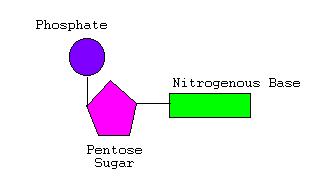
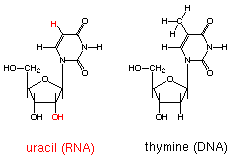
Nucleotides consist of three parts — a pentose sugar, a nitrogen-containing base, and a phosphate group. A pentose sugar is a five-sided sugar. There are 2 kinds of pentose sugars — deoxyribose and ribose. Deoxyribose has a hydrogen atom attached to its #2 carbon atom (designated 2′), and ribose has a hydroxyl group atom there. Deoxyribose-containing nucleotides are the monomers of DNA, while Ribose-containing nucleotides are the monomers of RNA.

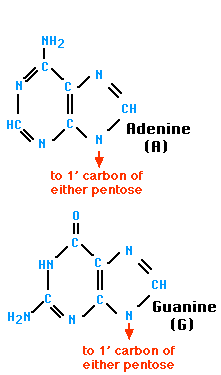
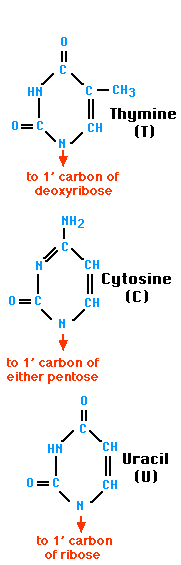
A nitrogen-containing ring structure is called a base. The base is attached to the 1′ carbon atom of the pentose. In DNA, four different bases are found — two purines, called adenine (A) and guanine (G) and two pyrimidines, called thymine (T) and cytosine (C). RNA contains The same purines, adenine (A) and guanine (G).  RNA also uses the pyrimidine cytosine (C), but instead of thymine, it uses the pyrimidine uracil (U).


The Purines The Pyrimidines

The combination of a base and a pentose is called a nucleoside.  A phosphate group is attached to the 5′ carbon of the pentose sugar.

Objective

Students will construct a 3-dimensional model of a single nucleotide, the monomer of which nucleic acids are composed.

Materials

Various materials may be used for the atoms that make up a nucleotide such as styrofoam balls, plastic coke bottle caps, beads, etc. Bonds between atoms may be made from toothpicks, plastic stirring sticks, popsicle sticks, etc. Single & double bonds must be represented by the correct number of “sticks”. The atoms and bonds may NOT be made of any food item. Your model should be glued together to make the model rigid for hanging. Attach string and a label with the nucleotide’s name to your model. Models must be sturdy, light weight, and small enough to hang from the ceiling.

Color Code for atoms:

CARBON – BLACK
HYDROGEN – YELLOW
OXYGEN – RED
NITROGEN – BLUE

Structural Formulas of Nucleotides:

Uracil Nucleotide (Ribose ) & Thymine Nucleotide (Deoxyribose)


Adenine Nucleotide (Deoxyribose)
Cytosine Nucleotide (Deoxyribose)
Guanine Nucleotide (Deoxyribose)


Olfaction


The Nobel Prize in Physiology or Medicine for 2004 awarded

jointly to

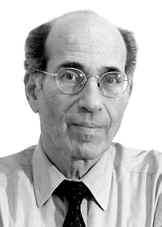
Richard Axel and Linda B. Buck

Richard AxelLinda B. Buck

for their discoveries of

“odorant receptors and the organization of the olfactory system”


Introduction

The sense of smell long remained the most enigmatic of our senses. The basic principles for recognizing and remembering about 10,000 different odors were not understood. This year’s Nobel Laureates in Physiology or Medicine have solved this problem and in a series of pioneering studies clarified how our olfactory system works. They discovered a large gene family, comprised of some 1,000 different genes (three per cent of our genes) that give rise to an equivalent number of olfactory receptor types. These receptors are located on the olfactory receptor cells, which occupy a small area in the upper part of the nasal epithelium and detect the inhaled odorant molecules.

Each olfactory receptor cell possesses only one type of odorant receptor, and each receptor can detect a limited number of odorant substances. Our olfactory receptor cells are therefore highly specialized for a few odors. The cells send thin nerve processes directly to distinct micro domains, glomeruli, in the olfactory bulb, the primary olfactory area of the brain. Receptor cells carrying the same type of receptor send their nerve processes to the same glomerulus. From these micro domains in the olfactory bulb the information is relayed further to other parts of the brain, where the information from several olfactory receptors is combined, forming a pattern. Therefore, we can consciously experience the smell of a lilac flower in the spring and recall this olfactory memory at other times.

Richard Axel, New York, USA, and Linda Buck, Seattle, USA, published the fundamental paper jointly in 1991, in which they described the very large family of about one thousand genes for odorant receptors. Axel and Buck have since worked independent of each other, and they have in several elegant, often parallel, studies clarified the olfactory system, from the molecular level to the organization of the cells.

The olfactory system is important for life quality

When something tastes really good it is primarily activation of the olfactory system which helps us detect the qualities we regard as positive. A good wine or a sun ripe wild strawberry activates a whole array of odorant receptors, helping us to perceive the different odorant molecules.

A unique odor can trigger distinct memories from our childhood or from emotional moments – positive or negative – later in life. A single clam that is not fresh and will cause malaise can leave a memory that stays with us for years, and prevent us from ingesting any dish, however delicious, with clams in it. To lose the sense of smell is a serious handicap – we no longer perceive the different qualities of food and we cannot detect warning signals, for example smoke from a fire.

Olfaction is of central importance for most species

All living organisms can detect and identify chemical substances in their environment. It is obviously of great survival value to be able to identify suitable food and to avoid putrid or unfit foodstuff. Whereas fish has a relatively small number of odorant receptors, about one hundred, mice – the species Axel and Buck studied – have about one thousand. Humans have a somewhat smaller number than mice; some of the genes have been lost during evolution.

Smell is absolutely essential for a newborn mammalian pup to find the teats of its mother and obtain milk – without olfaction the pup does not survive unaided. Olfaction is also of paramount importance for many adult animals, since they observe and interpret their environment largely by sensing smell. For example, the area of the olfactory epithelium in dogs is some forty times larger than in humans.

 A large family of odorant receptors

The olfactory system is the first of our sensory systems that has been deciphered primarily using molecular techniques. Axel and Buck showed that three per cent of our genes are used to code for the different odorant receptors on the membrane of the olfactory receptor cells. When an odorant receptor is activated by an odorous substance, an electric signal is triggered in the olfactory receptor cell and sent to the brain via nerve processes. Each odorant receptor first activates a G protein, to which it is coupled. The G protein in turn stimulates the formation of cAMP (cyclic AMP). This messenger molecule activates ion channels, which are opened and the cell is activated. Axel and Buck showed that the large family of odorant receptors belongs to the G protein-coupled receptors (GPCR).

All the odorant receptors are related proteins but differ in certain details, explaining why they are triggered by different odorous molecules. Each receptor consists of a chain of amino acids that is anchored into the cell membrane and traverses it seven times. The chain creates a binding pocket where the odorant can attach. When that happens, the shape of the receptor protein is altered, leading to G protein activation.

One type of odorant receptor in each olfactory receptor cell

Independently, Axel and Buck showed that every single olfactory receptor cell expresses one and only one of the odorant receptor genes. Thus, there are as many types of olfactory receptor cells as there are odorant receptors. It was possible to show, by registering the electrical signals coming from single olfactory receptor cells, that each cell does not react only to one odorous substance, but to several related molecules – albeit with varying intensity.

Buck’s research group examined the sensitivity of individual olfactory receptor cells to specific odorants. By means of a pipette, they emptied the contents of each cell and showed exactly which odorant receptor gene was expressed in that cell. In this way, they could correlate the response to a specific odorant with the particular type of receptor carried by that cell.

Most odors are composed of multiple odorant molecules, and each odorant molecule activates several odorant receptors. This leads to a combinatorial code forming an “odorant pattern” – somewhat like the colors in a patchwork quilt or in a mosaic. This is the basis for our ability to recognize and form memories of approximately 10,000 different odors.

Olfactory receptor cells activate micro regions in the olfactory bulb

The finding that each olfactory receptor cell only expresses one single odorant receptor gene was highly unexpected. Axel and Buck continued by determining the organization of the first relay station in the brain. The olfactory receptor cell sends its nerve processes to the olfactory bulb, where there are some 2,000 well-defined microregions, glomeruli. There are thus about twice as many glomeruli as the types of olfactory receptor cells.

Axel and Buck independently showed that receptor cells carrying the same type of receptor converge their processes into the same glomerulus, and Axel’s research group used sophisticated genetic technology to demonstrate in mice the role of the receptor in this process. The convergence of information from cells with the same receptor into the same glomerulus demonstrated that also glomeruli exhibit remarkable specificity (see figure).

In the glomeruli we find not only the nerve processes from the olfactory receptor cells but also their contacts with the next level of nerve cells, the mitral cells. Each mitral cell is activated only by one glomerulus, and the specificity in the information flow is thereby maintained. Via long nerve processes, the mitral cells send the information to several parts of the brain. Buck showed that these nerve signals in turn reach defined micro regions in the brain cortex. Here the information from several types of odorant receptors is combined into a pattern characteristic for each odor. This is interpreted and leads to the conscious experience of a recognizable odor.

Pheromones and taste

The general principles that Axel and Buck discovered for the olfactory system appears to apply also to other sensory systems. Pheromones are molecules that can influence different social behaviors, especially in animals. Axel and Buck, independent of each other, discovered that pheromones are detected by two other families of GPCR, localized to a different part of the nasal epithelium. The taste buds of the tongue have yet another family of GPCR, which is associated with the sense of taste.

Reference: Buck, L. and Axel, R. (1991) Cell, vol. 65, 175-187.

 Odorant Receptors and the Organization of the Olfactory System

Source: http://nobelprize.org/nobel_prizes/medicine/laureates/2004/press.html


Orbitals

What is an Atomic Orbital?

Orbitals and Orbits 

When the a planet moves around the sun, you can plot a definite path for it which is called an orbit. A simple view of the atom looks similar and you may have pictured the electrons as orbiting around the nucleus. The truth is different, and electrons in fact inhabit regions of space known as orbitals. If an electron is in a particular orbital it will have a particular definable energy.

Each orbital has a name.

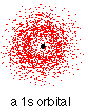
The orbital occupied by the hydrogen electron is called a 1s orbital. The “1” represents the fact that the orbital is in the energy level closest to the nucleus. The “s” tells you about the shape of the orbital. s orbitals are spherically symmetric around the nucleus – in each case, like a hollow ball made of rather chunky material with the nucleus at its centre.

Hydrogen’s electron – the 1s orbital   


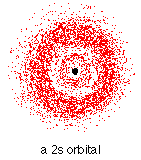
The orbital on the left is a 2s orbital. This is similar to a 1s orbital except that the region where there is the greatest chance of finding the electron is further from the nucleus – this is an orbital at the second energy level.


2s (and 3s, 4s, etc) electrons spend some of their time closer to the nucleus than you might expect. The effect of this is to slightly reduce the energy of electrons in s orbitals. The nearer the nucleus the electrons get, the lower their energy.

3s, 4s (etc) orbitals get progressively further from the nucleus.

p orbitals

Not all electrons inhabit s orbitals (in fact, very few electrons live in s orbitals). At the first energy level, the only orbital available to electrons is the 1s orbital, but at the second level, as well as a 2s orbital, there are also orbitals called 2p orbitals.

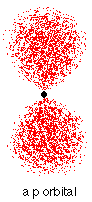
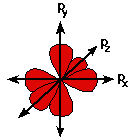
A p orbital is rather like 2 identical balloons tied together at the nucleus. The diagram on the right is a cross-section through that 3-dimensional region of space. Once again, the orbital shows where there is a 95% chance of finding a particular electron.

Unlike an s orbital, a p orbital points in a particular direction – the one drawn points up and down the page. At any one energy level it is possible to have three absolutely equivalent p orbitals pointing mutually at right angles to each other. These are arbitrarily given the symbols px, py and pz. The p orbitals at the second energy level are called 2px, 2py and 2pz. All levels except for the first level have p orbitals.

d and f orbitals

In addition to s and p orbitals, there are two other sets of orbitals which become available for electrons to inhabit at higher energy levels. At the third level, there is a set of five d orbitals (with complicated shapes and names) as well as the 3s and 3p orbitals (3px, 3py, 3pz). At the third level there are a total of nine orbitals altogether.

Fitting electrons into orbitals

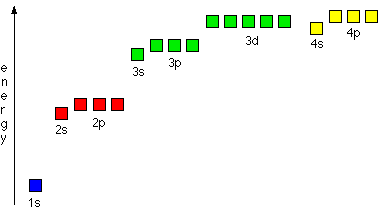
You can think of an atom as a very bizarre house (like an inverted pyramid!) – with the nucleus living on the ground floor, and then various rooms (orbitals) on the higher floors occupied by the electrons. On the first floor there is only 1 room (the 1s orbital); on the second floor there are 4 rooms (the 2s, 2px, 2py and 2pz orbitals); on the third floor there are 9 rooms (one 3s orbital, three 3p orbitals and five 3d orbitals); and so on. But the rooms aren’t very big . . . Each orbital can only hold 2 electrons.

A convenient way of showing the orbitals that the electrons live in is to draw “electrons-in-boxes”.

“Electrons-in-boxes”

Orbitals can be represented as boxes with the electrons in them shown as arrows. Often an up-arrow and a down-arrow are used to show that the electrons are in some way different. The diagram (not to scale) summarizes the energies of the orbitals up to the 4p level. Notice that the s orbital always has a slightly lower energy than the p orbitals at the same energy level, so the s orbital always fills with electrons before the corresponding p orbitals.


The order of filling orbitals

Electrons fill low energy orbitals (closer to the nucleus) before they fill higher energy ones. Where there is a choice between orbitals of equal energy, they fill the orbitals singly as far as possible.


Origin of life PPT Qs

Origin Of Life
ppt Questions

Early Thoughts on Life

1. What was Aristotle’s idea about how life arose called?

2. What is another name for spontaneous generation?

3. Explain spontaneous generation of life.


4. How long did the idea of abiogenesis or spontaneous generation last?

5. The idea of abiogenesis lasted so long because, instead of testing their ideas, people based their beliefs on what?


6. Were their observations tested?

7. Did they use the scientific method for their observations?

Examples of Spontaneous Generation

8. What observation about new life did Egyptians make when the Nile River flooded each year?


9. What observation about new life did Medieval farmers make when they stored their grain each year?


10. The English people centuries ago, threw their garbage and sewage out on the streets. What observation about new life did these people make?


11. This practice led to a plague that killed many Europeans. What was this plague called and what carried the disease organism?


12.Before refrigerators, large slabs of meat were hung after being purchased. What observation about new life was made from this practice?


13. People believed so strongly in abiogenesis that they had recipes for making living things. Name two organisms that had accepted recipes.


Disproving Spontaneous Generation

14. Francesco ____________ was an early scientists who conducted experiments to try and disprove spontaneous generation.

15. What was Redi’s hypothesis?


16. Explain how Redi tried to prove this.


17. What were the results Redi found in the closed jars & why?


18. What were the results in the open jars?


19. How did maggots appear in the open jars?


20. Complete this table summarizing Redi’s experiment:


Evidence Against Spontaneous Generation
Unsealed Jar
Sealed Jar
Gauze Covered jar


21. Redi’s experiment disproved spontaneous generation for _____________ organisms.

Use of the Scientific Method

22. Did Francesco Redi use the scientific method in his experiment?

23. What served as the control in Redi’s experiment?


24. What jars served as the experimental groups?

25. What was Redi’s conclusion?


Disproving Spontaneous Generation of Microbes

26. Anton Van _______________ made one of the first simple microscopes.

27. Leeuwenhoek called the living things he saw in pond water ______________.

28. By the end of the 19th century, these organisms were known as ______________.

29. John _____________ did experiments with microorganisms growing in broths.

30. Needham believed there was a __________ __________ present in nonliving substances like air.

31. Why were bacteria able to grow in Needham’s soups?


32. What could have been done to the broths to kill the bacteria already present?

33. What scientists repeated this experiment but with boiled broth?

34. After boiling, what did Spallanzani do to the tops of the bottles? how did this help?


35. Critics of Spallanzani’s experiment said there was not enough _______ for the bacteria to survive and that boiling had destroyed the _________ __________.

The Theory Changes

36. What did the Paris Academy of Science do in 1860 to solve the problem?


37.Who won the prize? 

38. What was Pasteur’s experimental hypothesis?


39. What was the shape of Pasteur’s flasks? Include a sketch.


40. What was the special S-shaped neck intended to do?


41. Did Pasteur boil the broth in his flasks? Why?


42. The flasks were left at ___________ locations.

43. Did the broth change cloudy because microbes were growing in it?


44. What was visible in the neck of the flask after collecting there?

45. Once the S-shaped stem was broken off the top of the flasks, what happened to the broth and why?


46. Pasteur’s S-shaped flasks kept ___________ out but let ______ inside.

47. Pasteur’s experiment proved that living things only come from other _________ ___________.

48. What is the name of Pasteur’s theory?

Review

49. Where did the maggots come from in Redi’s experiment?

50. What was the purpose of the sealed jars?

51. Redi was trying to disprove – spontaneous generation or biogenesis?

52. Where did the microbes come from in Needham’s broth?

53. Needham & Spallanzani were trying to disprove – spontaneous generation or biogenesis?

54.Who proved biogenesis?