Bacteria Study Guide Bi


Bacteria Study Guide


1. What are rod-shaped bacteria are called?

2. Bacteria are the only organisms characterized as____________________.

3. The earliest known group of living organisms on Earth was__________________.

4. Bacteria can be classified according to what three things?
A.
B.
C.

5. What does the  prefix “archea” mean?

6. Archaebacteria can be divided into 3 Groups.  Name and describe each group.
A.

B.

C.


7. The most numerous organisms on Earth are ________________.

8. Name the type of bacteria that does not have peptidoglycan  in its cell walls.

9. Name the type of bacteria that obtain energy from inorganic substances.

10. Name the type of bacteria that obtain nutrients from dead organisms.

11. Organisms that lack a cell nucleus and membrane-bound organelles are called ______________.

12. Most prokaryotes are ________________organisms.

13. Escherichia coli is an example of a bacterium that has short, thin, hairlike projections called __________. What is their function?


14. Bacteria lack true nucleus and membrane-bound organelles so they are classified as __________.

15. What is the procedure called that is used to distinguish between two types of bacterial cell wall structures ?

16. _______________ are protective structures that some bacteria may form under harsh conditions.

17. Spiral- shaped bacteria are known as what?

18. Almost all prokaryotes are ____________________ than the smallest Eukaryotes.

19. Prokaryotes have ___________________ that are different from those of Eukaryotes.

20. What are the 2 kingdoms of bacteria and briefly describe each?


21. ________________ is the process by which bacteria cells pick up and incorporate DNA from dead bacteria cells.

22. _____________ is the process of using a virus to transfer DNA from one bacterial cell to another.

23. When living conditions become ______________, some bacteria from special
dehydrated cells called__________________.

24. Bacteria that form ___________________ have an advantage for ____________________.

25. Bacteria the feed on and that break down dead organic material are called ___________.

26. _______________ is a type of bacteria that produces many antibiotics.

27. ________________ is a type of bacteria that produces endotoxins.

28. The ____________________ are a group of bacteria that live in harsh environments.

29. Bacteria that take on the purple color when stained are called what?

30. Gram-positive Bacteria used to make antibiotics are called _________________.

31. Gram-positive bacteria cause many diseases in humans by producing ____________ which are poisons to our bodies.

32. Bacteria that appear pink after staining are called  what?

33. Gram-negative bacteria have an extra layer of ________________ on the outside
of the ____________  ____________ and appear ___________ after the gram staining.

44. The lipid layer _______________ the purple stain from entering the cell wall.

35. The Archaebacteria that produce methane are called ____________________.

36. Archaebacteria that thrive in very salty conditions, such as the Dead Sea, are called what?

37. The prefix “eu” means __________________.

38. What is the important tool used for classifying Eubacteria  called?


39. During Gram staining, depending on structure of their __________  ____________, the
bacteria’s cell walls absorbs either the _______________ or ________________dye.

40. Gram-negative bacteria are distinguished by an extra layer of _________________.

41.  ______________ are Gram-negative bacteria that perform plant-like ___________________ and release oxygen as a by-product.

42.  ________________ are much __________ than many other prokaryotes.

43. Organisms that obtain energy from oxidizing inorganic compound instead of sunlight are called what?

44. Whiplike structures used by bacteria for movements are called __________________.

45. Photoautotrophs are bacteria that use ______________________ as an energy source.

46. Bacteria can be one of three different shapes:
A. _____________________________________________(Rod)
B. _____________________________________________(Sphere)
C. _____________________________________________(Spiral)

47. Gram-negative bacteria do absorb the ____________ stain during the Gram-staining process.

48. The extra layer of lipids also stops many _________________ from entering the bacteria.

49. Scientist think that gram-negative bacteria may have evolved from a_____________  ________________.

50.  ______________________ grow in the root nodules of such plants as soybean, clover, and alfalfa.

51. Rhizobacteria fix ______________________ from the atmosphere into a form that plants
and animals can use (this greatly helps both plants and animals).  They convert gaseous
nitrogen into compounds such as __________________________  (NH3).

52. Organisms that use oxygen during cellular respiration are called ________________. Organisms
that do not use oxygen are called __________________________.  Typically they get their energy through ________________________.

53. Bacteria called ______________  __________________ cannot live without oxygen.

54. Most bacteria reproduce by a process called ____________   _______________.

55. Binary fission is a process in which the __________________________ replicate,
after which the ________________ divides.

56. Binary fission is a type of ____________________ reproduction.

57. Some bacteria contain smaller pieces of circular DNA called  _________________.

58. Bacteria can exchange genes by one of three special means. Name these means.

A.

B.

C.

59. The process of exchanging genetic material through cell to cell contact is called
_______________.

60. Where are pili found? Do all bacteria have them?


61. Bacteria usually gain part of their ____________________ from their shape.

62. Two major differences between groups of bacteria are their source of ________________
and whether or not they use ________________ for cellular respiration.

63. Most bacteria act as  _______________________ getting their energy by consuming (eating) organic molecules.

64. Some are __________________ that make their own food from ________________.

65. ___________________ obtain their food from inorganic compound instead of sunlight.

66.  _________________________ use sunlight for energy.

67. Bacteria that can only survive in the absence of oxygen are called what?

68. Gram-negative bacteria appear ________________ when they undergo the Gram-stain procedure.

69. A type of  bacteria that performs nitrogen fixation is _________________________.

70. Bacteria called ____________  _______________ cannot live in the presence of oxygen.

71. Type of bacteria that peptidoglycan is present in cell walls __________________.

72. What bacteria are thought to be responsible for establishing the Earth’s oxygen-rich atmosphere?

73. Bacteria cells typically lack _________________________.

74. Bacterial disease of the intestines are usually transmitted by contaminated ____________  or ______________.

75. What are the 3 mechanism of action of an antibiotic?


76. The cell walls of Gram-negative Eubacteria are composed of a combination of polysaccharide and polypeptide called what?

77. Bacteria that obtain their energy by removing electrons from inorganic molecules, rather than obtaining energy from the sun, are called _____________________ bacteria.

78. In general, organisms that obtain their energy from sunlight are called _________________.

79. Bacteria that are heterotrophic and feed on dead organic matter are called _____________.

80. A(n) _________________ is a substance that can be obtained from bacteria or fungi and  can be used as a drug to fight pathogenic bacteria.

81. Many bacteria are ________________ and play an important role in recycling carbon, nitrogen, and other elements,  while other bacteria are ___________________ and assemble organic compounds from carbon dioxide, nitrogen, and other elements.

82. A pathogen is an agent that is ________________________.

83. Bacteria cells such as E. coli transfer pieces of genetic material in a process called ____________________.

84. Archaebacteria that can live in extremely hot or acidic water are called _____________.

85. Spherical bacteria are called ________________.

86. Bacteria called ________________  __________________ can use oxygen when it is available,
but do not depend on it.

87. Nitrogen-fixing bacteria convert atmospheric _________________ into _________________.

88. Structurally, bacteria have one of two types of _______________  _______________.

89. Certain cyanobacteria, such as Anabaena, can fix nitrogen by using enzymes contained in specialized structures called what?

90. The oxidation of ammonia to nitrates that can be used by plants is called what?

TRUE OR FALSE

_____91. Bacterial cells have membrane-bound organelles and chromosomes.

_____92. Certain antibiotics have become ineffective against certain strains of bacteria. These bacteria have developed a resistance, which may be passed on from one generation of bacteria to the next.

_____93. Bacteria that can survive only in the absence of oxygen are called obligated aerobes.

_____94. The photoautotrophic bacteria are the only bacteria that are indirectly beneficial to humans.

_____95. Bacterial cells are usually much larger than eukaryotic cells.

_____96. Gram-negative bacteria have a thick layer of peptidoglycan that stains purple.

_____97. Ancient bacteria known as Archaebacteria are now extinct.

_____98. Although there are some bacteria that are heterotrophic, the vast majority are autotrophic.

_____99. Bacteria lack nuclei and therefore also lack genetic material.

_____100. Photosynthetic bacteria are present in leguminous plants and convert atmospheric nitrogen into a form that is usable by the plant.

_____101. Gram-negative bacteria appear purple when they undergo the Gram-stain procedure.

_____102. Bacteria are incapable of movement themselves; they an only get to new locations by growing toward them or by forming endospores and being carried in air or water.

_____103. The bacterial cell wall prevents the passage of antibiotics and is only means by which bacteria can resists antibiotics.

_____104. Some bacteria cannot survive in the presence of oxygen.

_____105. The terms Eubacteria and Archaebacteria refer to members of a single kingdom.

_____106. When bacteria undergo nonreproductive genetic recombination, their bacterial chromosome is altered.

DIRECTIONS: Answer the questions below as completely and as thoroughly as possible. Answer the question in essay form (not outline form), using complete sentences. You may use diagrams or pictures to supplement your answers, but a diagram or picture alone without appropriate discussion is inadequate.

107. Describe the capsule of a bacterium and its function.


108. Identify the most common shapes of Eubacteria and describe each.


109. Compare and contrast Archaebacteria with Eubacteria.


110. Identify 3 ways that bacteria are used to produce substances for human use.


111. Describe the significance of cyanobacteria in the formation of the Earth’s atmosphere.


112. List the various structures of the bacterial cell, and describe their function.


113. Explain the laboratory technique Gram stain and explain why it is used.


114. Define the term genetic recombination as it applies to bacteria, and describe 3 ways that genetic recombination occurs in bacteria.


115. Explain how chemoautotrophs differ from photosynthetic autotrophs.


116. Explain how the terms bacteria, Eubacteria, and Archaebacteria, relate to one another.


117. Describe 3 types of movement among bacteria.


118. List the characteristics that are used to classify bacteria.


119.  Explain how chemoautotrophs harvest energy from the environment.


120.  Describe 2 ways bacteria cause disease.


121.  Explain why antibiotic resistance among bacteria is increasing.


122. List one distinguishing characteristic of each of the three main groups of Archaebacteria.


Bar Graph Problems

Sample Problems on Bar Graphs

Problem 1:

The following table illustrates the average employee salary at Smith, Inc. for each of the last fifteen years. Mrs. Smith, the general manager of Smith, Inc., has been asked to submit to the local newspaper a bar graph illustrating the average employee salary in her company for each of the last 15 years.


Year Salary
1983 32,500
1984 33,250
1985 33,350
1986 37,400
1987 32,000
1988 35,800
1989 37,800
1990 34,480
1991 40,000
1992 39,500
1993 36,100
1994 35,400
1995 37,500
1996 38,000
1997 36,900


Problem 2:

Your basketball team, the Ricebirds, has been asked to create a bar graph illustrating your team’s scores for each of its last ten games. The following table illustrates these scores.


Game Score
1 67
2 72
3 71
4 68
5 70
6 65
7 75
8 78
9 77
10 80


Problem 3:

Quality Motor Company is claiming that their cars have increased in quality more significantly than the cars of their competitors. They want to use bar graphs showing the average longevity of cars from each company, as well as their own, for each of the last 12 years. Given the following data for the company, create this bar graph.


Year Avg. # Years Until
Repairs are Needed
1986 2.6
1987 2.3
1988 2.5
1989 2.5
1990 2.8
1991 1.9
1992 3.0
1993 3.1
1994 2.8
1995 3.2
1996 3.6
1997 3.5


Problem 4:

You are the manager of the local mall, and you want to express to the public the safety of your mall. Use the following data that has been collected during the past year to make a bar graph.


Month # Crimes
Reported
Jan. 2
Feb. 1
Mar. 1
Apr. 3
May 4
June 5
July 5
Aug. 4
Sept. 1
Oct. 2
Nov. 1
Dec. 3


Bi Sample Metric Measure


Metric Measurement Lab   

Introduction:

            Every scientific experiment in some way involves measurement.  Scientists worldwide use the metric system to display the results of measurements.  This system simplifies calculations based on a decimal system (powers of ten), opposed to the confusing English system of measurement.  Less confusion and better communication between scientists around the world makes the metric system more efficient than the English system for use in experiments.  The useful prefixes of the metric system are also known as the International System of Units (SI).

            Two measurements explored in this lab are mass and volume.  Mass is represented by grams, while volume is represented by milliliters (liquid) and cubic centimeters (solids with ruler measurement).  The purpose of this investigation is to get acquainted with and be accurate with the metric system.

Hypothesis:

By using a graduated cylinder, mass balance, and metric ruler, mass and volume can be found.  

Materials:

The materials used in this experiment include a graduated cylinder, an eyedropper, and a beaker of water for Part A; 20 ml of water, a graduated cylinder, and three marbles for Part B; a metric ruler, mass balance, three marbles, and a graduated cylinder for Part C; a metric ruler for Part D; and a graduated cylinder, eyedropper, six labeled test tubes, and three 25ml beakers of colored water (one with red, one with blue, and one with yellow) for Part E.  

Methods:

Part A:  Count you drops!

Fill a small graduated cylinder with 10 ml of water.  Count and record the number of drops it takes to raise the water to 11ml.  Leave the water in the graduated cylinder and count and record the number of drops it takes to raise the water to 12ml.  Leave the water in the graduated cylinder and count and record the number of drops it takes to raise the water to 13ml.  Calculate the average number of drops and round to the nearest tenth.

Part B:  Water Displacement

Add 20ml of water to a 100ml graduated cylinder.  Record this amount in the chart.  Add three marbles to the cylinder and measure and record the volume.  Find the difference between the two measurements and record it in the chart.  The difference between the two measurements will be the volume of the three marbles.

Part C:  Mass Mania

Check to see that the Pinter on the balance is pointing to zero.  If it is not, check to see that all the Riders (weights) are all the way to the left at the Zero mark.  Adjust the balance by turning the Adjustment Screw slowly until it points at zero.  Place the metric ruler on the pan and read and record the ruler’s mass.  After resetting the balance to zero, measure and record the mass of the empty 50ml graduated cylinder and then the three marbles.  Reset the balance to zero when all items have been massed. 

Part D:  Volume by Formula

Use the formula Volume=length x width x height to find the volume of the box.  Measure to the nearest centimeter before calculating the answer.  If necessary, round the answer to two decimal places.

Part E:  Color Challenge

Obtain the following items from the teacher:  3 beakers with colored water-25ml of each color (red, blue, and yellow), 1 graduated cylinder (25ml to 50ml), 1 eyedropper, and 6 test tubes labeled A, B, C, D, E, and F.  Perform each of the following steps using accurate measurements.  Measure 17ml of red water from the beaker and po9ur it into test tube A.  Measure 21ml of yellow water from the beaker and pour it into test tube C.  Measure 22ml of blue water from the beaker and pour it into test tube E.  Measure 5ml of water from test tube A and pour it into test tube B.  Measure 6ml of water from test tube C and pour it into test tube D.  Measure 8ml of water from test tube E and pour it into test tube F.  Measure 5ml of water from test tube C and pour it into test tube B.  Measure 2ml of water from test tube A and pour it into test tube F.  Measure 4ml of water from test tube E and pour it into test tube D.  Record the results in the chart.

Results:

Part A:  Count your drops!

# of drops to 11ml # of drops to 12ml # of drops to 13ml Average
24 26 25 25
  1. Take a guess—how many drops of water will it take to equal 1 milliliter?  18 drops.
  2. Based on your average, how close were you to your guess?  7 drops off of average.
  3. Based on your average, how many drops would it take to make 1 liter?  25,000 drops.

Part B:  Water Displacement


Volume of Water Before Adding Marbles (ml) Volume of Water After Adding Marbles (ml) Difference in Volume (ml) Volume of 3 marbles (ml)
20ml 25ml 5ml 5ml


Part C:  Mass Mania


Mass of Metric Ruler (g) Mass of Empty 50ml graduated cylinder (g) Mass of 3 Marbles (g)
3.0g 31.5g 11.0g


Part D:  Volume by Formula

Volume= length x width x height

7.0 cm x 1.0 cm x 3.0 cm = 21.0 cubic centimeters

Part E:  Color Challenge


Test Tube Color Final Volume (ml)
A Red 10ml
B Orange 10ml
C Yellow 10ml
D Green 10ml
E Blue 10ml
F Purple 10ml


Discussion and Conclusion:

By using a graduated cylinder, mass balance, and metric ruler, mass and volume can be found.  The purpose of Part A was to be accurate with reading graduated cylinders and how many drops of water make one milliliter.  This was accomplished by using an eyedropper to count the drops and reading the bottom of the meniscus to see when to stop dropping.  The average was found by adding the number of drops it took to reach the next milliliter (three times repeated) together and dividing by how many times the experiment was repeated which was three times.  (24+26+25)/3=25 average drops.  The purpose of Part B was to use water displacement to find volume.  In this particular experiment, water displacement was used to find the volume of three marbles.  To do this, the volume of the water before adding the marbles (20ml) was subtracted from the volume of the water after adding the marbles (25ml), to get the difference in the two volumes (5ml) which ultimately was the volume of the three marbles (5ml).  25ml-20ml=5ml.  The purpose of part C was to learn to use the balance accurately to determine the mass of an object(s).  To use a balance, the pointer and weights must be set at zero.  The mass of the three marbles, empty graduated cylinder, and metric ruler were found by placing them on the pan of the balance and moving the weights until the pointer was at zero again.  Mass is measured in grams.  The purpose of Part D was to use a metric ruler properly and apply your measurements to a formula to find volume.  To fill in the volume formula, length, width, and height of the box was found in the nearest centimeter with the metric ruler.  After those measurements were found, they had to be multiplied together to find the volume in cubic centimeters.  7cm x 1cm x 3cm=21 cubic cm.  Volume is expressed with cubic centimeter for solids and milliliters for liquids.  The purpose of Part e was to be accurate in liquid measurements to find the color and volume of the six test tubes.  This was accomplished by taking certain amounts of colored water from some beakers of test tubes and adding them to other test tubes.  If something was not measured right, the water in the test tube would not be the correct color.  It is important to always use accurate methods and measurements because details matter in science and experiments.


AR Wildflowers

Arkansas Wildflowers


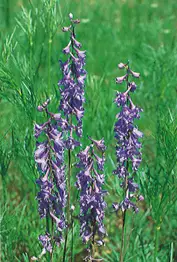
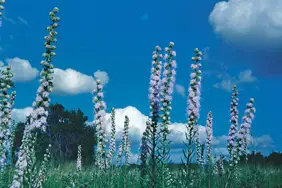
Carolina Larkspur (Delphinum carolinium) – 4′ tall.
Blooms May – July.  These spurred flowers may be deep blue, reddish – blue, or white.  Native perennial.  OZ, OU, CP.
 

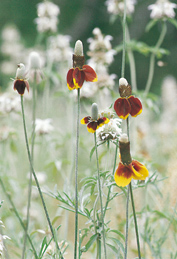
Mexican Hat  (Ratibida columnifera) ― 2 – 3′ tall.
Blooms June – October.  A widely planted form of a native perennial.  Statewide.
 

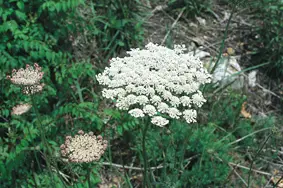
Queen Ann’s Lace (Daucus carota)  ― 1 – 4′ tall

Blooms May – frost.  This is the ancestor of the cultivated carrot.  Introduced biennial. Statewide.


Black-eyed Susan  (Rudbeckia hirta) ― 2 – 3′ tall with one 2″ flower head on each hairy stem.

Blooms May – October.  Native Biennial or short-lived perennial.  Statewide.


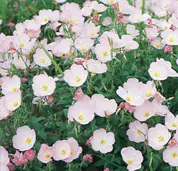
Showy Evening Primrose  (Oenothera speciosa) ― 1 – 2′ tall.

Blooms April – July.  White or pink flowers.  Native perennial.  Statewide.


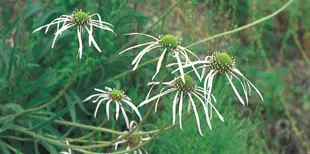
Pale Purple Coneflower (Echinacea pallida) – 3′ tall.

Blooms May – July.  Native perennial.  OZ, OU, CP.


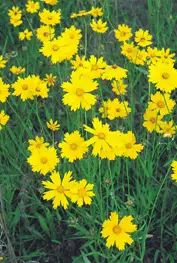
Lance-leaved Coreopsis (Coreopsis lanceolata) – 3′ tall.

Blooms April – June.  Native perennial.  Statewide.


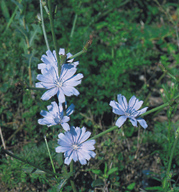
Chicory  (Coreopsis intybus) – 4′ tall.

Blooms May – October.

This European native’s roots are sometimes used as a coffee substitute or additive.  Perennial.  OZ, OU.


Rough Blazing Star  (Liatrus aspera)  ― 3 – 4′ tall.
Blooms July – October.  The unopened flower buds resemble small cabbages.  Native perennial.  Statewide.
 

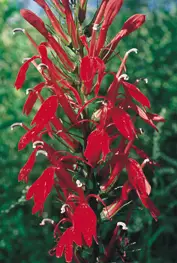
Cardinal Flower (Lobelia cardinalis) – 3′ tall.
Blooms August – October. This flower attracts hummingbirds.  Native perennial. Statewide.
 

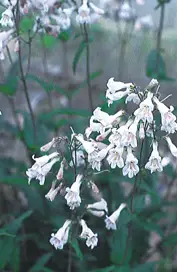
Arkansas Beard Tongue (Penstemon arkansanus) – Less than 2′ tall.
Blooms April – June.  The 3/4″ whitish flowers have lavender streaking.  Native perennial. OZ, OU.
 

Purple Coneflower  (Echinacea purpurea) – Up to 4′ tall.
Blooms from June – October.
The ray flowers are more purple than those of pale purple coneflower. Native perennial. OZ, OU.
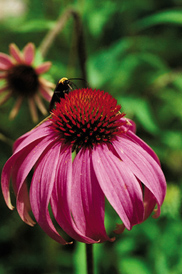
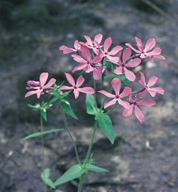
Downy Phlox (Phlox pilosa) – 2′ tall.

Blooms April – July.

Flowers can be pink, pale pink, or sometimes white with purple centers.  Native perennial.  OZ, OU, CP.


Spider Lily (Hymenocallis caroliniana) – 3′ tall.

Blooms May – August.  These large white flowers have a distinctive spider-like shape. Native perennial. OU, GP, AP.


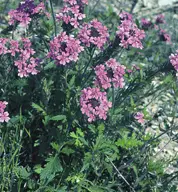
Rose Vervain (Glandularia canadensis) – Plants less than 2′ tall.

Blooms March – September.  The source of many garden hybrids.  Native perennial.  OZ, OU, CP, AP.


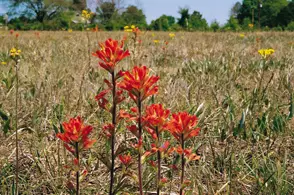
Indian Paintbrush (Castilleja coccinea) ― 1 – 2′ tall.  The bracts that surround the small flowers displays brilliant colors.

Blooms April – June.  Native annual.  Found on prairies in the OZ, CP, AP.


Wild (Monarda fistulosa) ― 2 – 4′ tall.
Blooms June – September.  Also called Bee Balm.  Flowers pinkish, lavender, or lilac.  Statewide.
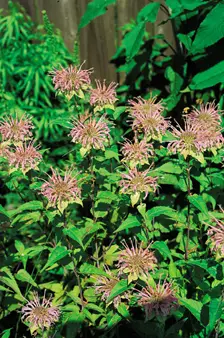
 

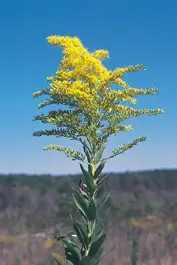
Goldenrod (Solidago canadensis) ― 4 – 6′ tall.

Blooms July – September.  Native perennial.  Statewide.


Ohio Spiderwort (Tradescantia ohiensis) – Stems 3′ tall.
Blooms May – July.
So named because the internal jellylike substance resembles a spider’s web.  Native perennial.  OZ, OU, CP.
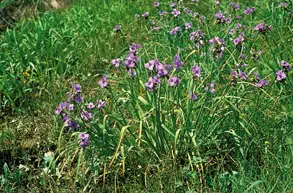
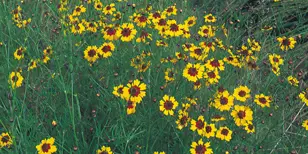
Plains Coreopsis (Coreopsis tinctoria) – 3′ tall.

Blooms June – September.  Native annual.  Statewide.

Bird’s Foot Violet (Viola pedata) – 6″ tall.

Blooms April – May.  This violet occurs in several different colors:  light violet, dark violet, or dark violet with 2 dark purple petals. Native perennial.  OZ, OU, CP.


Butterfly Weed (Asclepias tuberosa) ― 1 – 2′ tall.

Blooms May – September.  Flower’s nectar attractive to butterflies.  Native perennial.  Statewide.


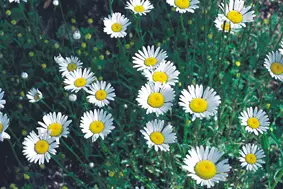
Ox-eyed Daisy (Chrysanthemum leucanthemum) – 2″ flower heads.

Blooms May – July.  Introduced perennial.  OZ, OU, CP.


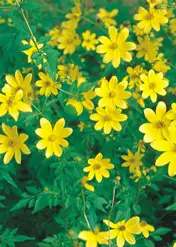
Tickseed (Bidens aristosa) ― 1 – 6′ tall.

Blooms August – November.  This late bloomer is often found in large stands.  Native perennial.  Statewide.