Quiz Viruses

Name: 

Viruses


True/False
Indicate whether the sentence or statement is true or false.
1.
Although viruses do not consist of cells, biologists consider them to be living because they are capable of reproduction.
2.
Wendell Stanley made the important discovery that viruses are not cellular.
3.
Viruses consist of RNA or DNA surrounded by a coat of protein.
4.
Prions are the smallest known particles that are able to replicate.
5.
A virus can only reproduce by controlling a cell.
6.
People can contract the influenza virus more than once because the virus tends to mutate rapidly, avoiding the actions of the immune system.
7.
Smallpox is caused by bacteria.
8.
Chickenpox and shingles are caused by the same virus.
9.
The viruses that have been linked to human cancers are usually transmitted through the air.
 

Completion
Complete each sentence or statement.
10.
The protein coat of a virus is called a(n) ____________________.

11.
Most viruses occur in the shape of a(n) ____________________ or a(n) ____________________.

12.
A virus that transcribes DNA from an RNA template is called a(n) ____________________.

13.
An enzyme called ____________________ manufactures DNA that is complementary to a virus’s RNA.

14.
____________________ are bacterial viruses with a polyhedral head and a helical tail.

15.
All viruses reproduce by taking over the reproductive machinery of a ____________________.

16.
Viruses that infect a host cell and have their nucleic acid replicated but do not harm the host cell are in a ____________________ cycle.

17.
A viral DNA molecule formed from an RNA virus is called a(n) ____________________.

18.
The virus that causes AIDS is called ____________________.

19.
Some viruses are thought to induce ____________________, a disease characterized by uncontrolled cell division.

20.
An example of an emerging virus is the  ____________________ virus.


Check Your Work     Reset

Annelids Puzzle


Annelids
Fill in the blanks with the correct words.

The phylum __________ contains feather duster worms, common __________, and __________. Annelids have both internal and external __________. This makes the annelid’s body look like a series of __________. Annelids have __________ symmetry and a true __________ or body cavity. Their coelom is filled with __________ which their __________ push against. Many annelids have external bristles or __________ and some have flashy protrusions called __________ that appear paddle like. There three classes of annelids including __________, __________, and __________. All classes have well developed __________ systems.

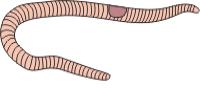
Earthworms live in the __________, move by __________, and are in the class __________. Earthworms have many longitudinal and circular __________ to aid in movement. The __________ is a swollen band on the earthworm involved in reproduction. The digestive tract of an earthworm includes the mouth, __________, esophagus, __________, gizzard, __________, and anus. The __________ helps suck food into the mouth while the __________ temporarily stores food and the __________ grinds the food. Absorption of food takes place in the __________. Wastes leave the earthworm’s body through the __________. Five pairs of hearts or __________ pump blood through the earthworm’s body. __________ are tubules that filter & get rid of wastes from the earthworm’s blood. __________, a tough carbohydrate, surrounds and protects the earthworm. Earthworms reproduce sexually by exchanging __________; however, they are hermaphrodites. Exchanged sperm is stored in _______________ until fertilization. Fertilized eggs are placed in a cocoon made by the __________ until they hatch.

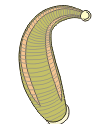
Hirudenia contains __________. Many leeches are external __________ that feed on blood. Leeches lack __________ or parapodia. Leeches secrete a chemical into the body of their hosts so the blood does not __________. Some leeches feed on small __________. Leeches have __________ for movement and attachment at both ends of their bodies. Most leeches live in __________water.

Polychaetes move by __________ and may also use them for respiration or __________ exchange. Polychaetes have sensory __________ on their head with strong __________. Polychaetes live in __________ environments.


Solution


Puzzle – Photosynthesis


Photosynthesis
   

Fill in the blanks with the correct words from the bank at the bottom of the page.


All organisms use __________ to carry out their life functions. Some organisms obtain this energy from __________. The process by which this energy transfer takes place is called _______________. Photosynthesis involves a  _________ pathway in which the __________ of one reaction is(are) consumed in the __________ reaction.  __________ are organisms that carry on photosynthesis and includes  __________ and other organisms containing the __________ pigment __________. Autotrophs use ______________ and water to make __________ and the simple sugar __________. The pigment chlorophyll absorbs __________ energy from the sun during the light __________.  __________ pigments also in the __________ absorb other __________ of light that chlorophyll does not absorb. These accessory __________ are responsible for other colors we see in plants such as _______, orange, and __________. Chloroplasts are surrounded by a __________ membrane. Inside chloroplasts is a system of membranes arranged as stacks of __________ sacs called __________. Each sac in the stack is called a __________. The thylakoids are surrounded by a solution called the _________. The _______ reactions of photosynthesis take place in the stroma. Most chloroplasts are found in the _________ of plants. The __________ of a leaf contains openings called __________ where __________ such as oxygen and carbon dioxide enter and leave. These openings or stomata are __________ during the hottest times of the day by cells called __________ cells.


      Word Bank:

sunlight   autotrophs carbon dioxide
biochemical chlorophyll light
photosynthesis next wavelengths
energy plants glucose
yellow accessory stroma
plastids pigments reactions
leaves oxygen dark
stomata underside gases
closed red thylakoids
flattened guard double
product granum green


SOLUTION


Arthropods Puzzle


Arthropods
Unscramble and then define the following words:


1) aeapdngpe __________________________________
2) djtenio __________________________________
3) stkleoeoenx __________________________________
4) paorrhtado __________________________________
5) dpcnmoou  seey __________________________________
6) ecindoissat __________________________________
7) hiitnc __________________________________
8) npoe  crocauinlti __________________________________
9) igtmlno __________________________________
10) mattgaa __________________________________
11) teaarcsuc __________________________________
12) echilcaatr __________________________________
13) raaumini __________________________________
14) ndlbsaiem __________________________________
15) iacceehelr __________________________________
16) pslniuau __________________________________
17) onkptnal __________________________________
18) ecopdsop __________________________________
19) iapdna __________________________________
20) rcrii __________________________________
21) iodosps __________________________________
22) clanaerb __________________________________
23) ecaodpd __________________________________
24) shriayfc __________________________________
25) xolehhaatporc __________________________________
26) accrapea __________________________________
27) lotens __________________________________
28) aennatn __________________________________
29) seenntnlau __________________________________
30) lipeehdsc __________________________________
31) reneg ngdla __________________________________
32) sglil __________________________________
33) smeistwrme __________________________________
34) apdesppli __________________________________
35) asinradhc __________________________________
36) sarpmodyi __________________________________
37) ntepnisser __________________________________
38) sungl  kobo __________________________________
39) spreiacls __________________________________
40) pimlaghnian esuublt __________________________________
41) pocirosn __________________________________
42) ctki __________________________________
43) deniteepc __________________________________
44) ipledemli __________________________________
45) ipoopdadl __________________________________
46) ohioclpad __________________________________
47) ivnaeorrc __________________________________
48) itatolritb __________________________________


Solution


Puzzle – Protists


Protists

Across
1. unicellular, aquatic algae
2. multicellular algae
6. golden algae
7. animal like protist
10. gel-like material from red algae
11. red algae
14. brown pigment
16. color of tides in the Gulf of Mexico due to population explosions of dinoflagellates
17. cell division resulting in identical cells
18. life cycle consisting of a haploid & diploid stage
19. autotrophic protists
20. body portion of an algae
22. protein layer surrounding the cell membrane in paramecia
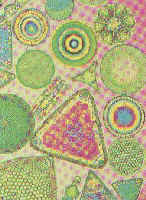
23. aquatic algae with a two-part shell or valve
24. serious disease caused by plasmodium in the water
25. shell covering foraminiferans
26. colonial algae
27. groove on paramecium where the mouth is found
Down
1. brown algae
3. red pigment
4. green algae
5. sexual reproduction in protists
8. protozoans, algae, and water molds
9. organelles in algae that make & store starch
10. example of a sarcodine
12. cytoplasm extensions used by some protists to move
13. protists
15. vacuole that helps protists remove excess water
21. tiny hairs that a paramecium uses for movement