Introduction to Plants
ppt Questions
Early Ancestors
1. The first habitat for plants on earth was _____________.
2. Which algal group is most related to early land plants?
3. What is this group of algae called?
4. List 5 similarities between algae and terrestrial plants.
a.
b.
c.
d.
e.
5. List 5 helpful adaptations aquatic plants have by being surrounded by water.
a.
b.
c.
d.
e.
6.Complete the following table explaining how terrestrial plants solved the move onto land.
| Plant Adaptations to land | |
| Problems: | Solutions: |
| Need Minerals | |
| Gravity | |
| Increase in Height to get Light | |
| Adaptations for drier environment | |
| Reproduction | |
How Are Plants All Alike
7. All plants are ____________________.
8. Plants can make their own food by a process called ____________________.
9. Since plants make their own food they are called _________________.
10. Plants contain what type of chlorophyll?
11. Where is chlorophyll found in plants?
12. What surrounds the outside of all plant cells and what is it composed of?
13. How do plants store their reserve food?
14. The life cycle of plants is known as __________________ of _________________.
15. The dominant stage of the plant is the diploid (2n) ________________ stage.
16. The eggs and sperm are produced during the haploid (1n) ________________ stage.
17. The gametophyte stage produces a multicellular plant ______________ that is protected inside an ____________ ___________.
18. The sporophyte stage produces _____________ by _____________.
19. Haploid spores undergo ______________ to produce the _______________ stage.
20. The gametophyte stage makes _____________ called the _________ and ___________.
21. Label the diagram of alternation of generation. Include the sporophyte and gametophyte generations, the chromosome number (2n or 1n), and where mitosis and meiosis occur.
Plant Divisions
22. Plants are divided into __________ groups based on the presence or absence of an ___________ _____________ ___________ for carrying water and dissolved _____________.
23. What is the transport system for water and minerals called?
24. ______________ plants lack vascular tissue and are called _______________.
25. In what type of environment must nonvascular plants live?
26. Give an example of a bryophyte.
27. Nonvascular plants can’t grow as tall as vascular plants. Explain why.
28. The cells of nonvascular plants must be in _________ contact with water because water moves by _______________ from cell to cell.
29. How does the sperm get to the egg in nonvascular plants?
30. Name 3 divisions of nonvascular plants and give and organism found in each division.
a.
b.
c.
31.Vascular plants are also called _______________.
32. What are the 2 subdivisions of vascular plants?
33. Name 4 divisions of seedless vascular plants and give an example of a plant in each group.
a.
b.
c.
d.
34. Name the 2 groups of seed-bearing vascular plants.
35. Gymnosperms have ____________ seeds found inside cones.
36. Angiosperms have ___________ to attract ____________ so seeds can be produced.
37. Name the division known as conifers and tell several plants in this group/
38. Name 2 other divisions of gymnosperms and tell a plant in each group.
a.
b.
39. Name the oldest living plant.
40. Name the tallest living plant.
41. What group are these 2 plants in?
42. Angiosperms are called ____________ plants.
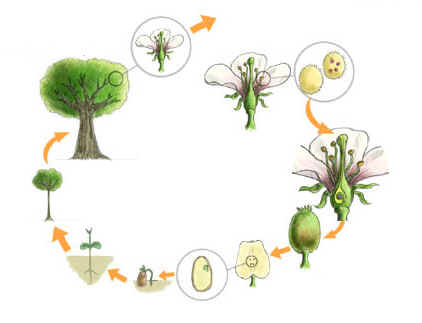
43. How are seeds formed in angiosperms?
44. Where is the ovary found?
45. Name the male and female parts of a flower.
46. How are fruits formed?
47. Angiosperms are the division ______________.
48. What are the 2 subgroups of Anthophyta.
49. Describe the characteristics of monocots.
50. Describe the characteristics of dicots.

 Smithers thinks that a special juice will increase the productivity of workers. He creates two groups of 50 workers each and assigns each group the same task (in this case, they’re supposed to staple a set of papers). Group A is given the special juice to drink while they work. Group B is not given the special juice. After an hour, Smithers counts how many stacks of papers each group has made. Group A made 1,587 stacks, Group B made 2,113 stacks.
 Homer notices that his shower is covered in a strange green slime. His friend Barney tells him that coconut juice will get rid of the green slime. Homer decides to check this out by spraying half of the shower with coconut juice. He sprays the other half of the shower with water. After 3 days of “treatment” there is no change in the appearance of the green slime on either side of the shower.
 he’s been reading too much Radioactive Man). He decides to perform this experiment by placing 10 mice in a microwave for 10 seconds. He compared these 10 mice to another 10 mice that had not been exposed. His test consisted of a heavy block of wood that blocked the mouse food. he found that 8 out of 10 of the micro waved mice were able to push the block away. 7 out of 10 of the non-micro waved mice were able to do the same.
 Krusty was told that a certain itching powder was the newest best thing on the market, it even claims to cause 50% longer lasting itches. Interested in this product, he buys the itching powder and compares it to his usual product. One test subject (A) is sprinkled with the original itching powder, and another test subject (B) was sprinkled with the Experimental itching powder. Subject A reported having itches for 30 minutes. Subject B reported to have itches for 45 minutes.