Scientific Method & Blood Flow


Scientific Method & Blood


INTRODUCTION:

In this lab you will learn to form a hypothesis, conduct experiments around that hypothesis, and collect and analyze data. One of the most important characteristics of modern science is its quantitative approach to solving problems. One of the first scientists to use quantitative methods was William Harvey, who discovered that blood circulated through the body. At the time Harvey began his work, anatomists believed that the liver produced blood from the food that the body consumed. The blood was then carried by veins to the heart, purified in the lungs, and then pumped to the various organs of the body, where it was consumed. Harvey measured that the left ventricle of the heart held roughly 100 ml of blood. He also measured that the heart beats an average of 64 times per minute.

QUESTION 1:

From the information above, and assuming that 1 ml of blood weighs 1 g, how much blood would the body need to produce per hour in ( g/hr.) to replace the blood consumed by the organs? _______g/hr.

Harvey hypothesized that the same blood must circulate continuously throughout the body.

MATERIALS:

Watch with second hand, or clock

PROCEDURE:

  1. While sitting quietly at your desk, find the pulse in your wrist and count the beats for one minute. You and your lab partner can do this on yourselves, or each other. Record the names of both subjects and their beats per minute heart rate on DATA TABLE 1 as sample 1.
  2. Repeat step 1 two more times for each subject. Record the data in the appropriate place on DATA TABLE 1.
  3. Calculate the average pulse rate for each subject and record the results on DATA TABLE 1.

How do you think standing or holding your breath will affect your pulse rate? ______________________________________________________

QUESTION 2:

Choose one of these activities and formulate a hypothesis about its effect on pulse rate. What is the independent variable? What is the dependent variable?

Hypothesis _______________________________________________

Independent Variable _______________________________________

Dependent Variable ________________________________________

  1. Repeat steps 1, 2, and 3 for each subject, this time with the subjects standing or holding their breath. Record your data and calculations in the appropriate DATA TABLE


DATA TABLE 1: Resting heart rate
NUMBER OF BEATS PER MINUTE AVERAGE NUMBER OF
BEATS PER MINUTE
SUBJECT sample 1 sample 2 sample 3


DATA TABLE 2: Heart rate standing
NUMBER OF BEATS PER MINUTE AVERAGE NUMBER OF
BEATS PER MINUTE
SUBJECT sample 1 sample 2 sample 3


DATA TABLE 3: Heart rate holding breath
NUMBER OF BEATS PER MINUTE AVERAGE NUMBER OF
BEATS PER MINUTE
SUBJECT sample 1 sample 2 sample 3


Conclusion:  Compare your data from step 4 with your data from step 3.

1. How do your results in step 4 compare with the hypothesis you made?


2. What measurement did you use as a control in this investigation?


3. What are some possible sources of error in this experiment?

Scientific Method puzzle

Scientific Method

Find each term and then define it on the back of the paper.


Y N B E L F U N I J M H T N M
H O E N B G W N C G W N Q S Y
A I R X H Y P O T H E S I S C
C T E A P L K J V D V L Y R O
H A A L U E Q G N I O F E C N
A V X D B P R E X R S P G F C
R R C E B A P I T O E H S F L
T E G T R E I N M A H T I K U
I S E S D R O R T E A Y S A S
E B K N V C O A A B N Q Y V I
I O I Q T V B R L V K T L P O
S X Q R F L L E S H J S A P N
B I T N E D N E P E D X N V B
Q O N I Y K Z H E L Q Z A J P
T E S T I N G H P A R G N R O


ANALYSIS CHART CONCLUSION
CONTROL DATA DEPENDENT
ERRORS EXPERIMENT GRAPH
HYPOTHESIS INDEPENDENT OBSERVATION
REPEATABLE TABLE TESTING
VARIABLE


Solution


Scientific Method activity

Scientific Method I’m All Thumbs”
Introduction:
What makes a “Class Champion” thumb wrestler? Does thumb diameter, length, or wrist diameter have an effect on the overall chances of winning a thumb wrestling match? In this investigation we will develop a hypothesis based on physical data collected from our classmates. We will then test this hypothesis by conducting a thumb wrestling tournament to determine an overall “Class Champion”.

Materials:
Metric ruler, metric tape measure (see bottom of lab), scissors, string, calculator

Objectives:

  • Students will take and record accurate measurements of their wrist, and their thumb’s circumference and length.
  • Students will analyze the data collected and determine if their hypothesis is correct.
  • Correctly line graph the collected data.
  • Learn the rules of thumb wrestling.
  • Conduct a thumb wrestling tournament.

Procedures:

  • Choose a partner and perform the following measurements using the metric tape measure found at the bottom of this lab. Then have your partner perform them on you.
  • Measure the circumference of the thumb, in centimeters, at its widest point. Record this data on the following line ___________cm. and on the table on the chalk board.
  • Measure the length of the thumb, using the metric ruler in centimeters, from its tip to the end of its second joint. Record this data on the following line ___________cm. and on the table on the chalk board.
  • Measure the circumference of the wrist over the ulnar knob, in centimeters, and record this data on the following line ____________ and on the table on the chalk board.
  • Copy the data, on the board, on to the table in the results section of the lab.
  • The class will form and record a hypothesis based on the collected data.
  • The Hypothesis:
    ______________________________________________________________

        ______________________________________________________________

  • Rules of thumb wrestling: Two players grasp hands shown in the illustration; they touch thumbs to the opposite sides of the other person’s hand three times, then come out wrestling. The object, of course, is to hold the other person’s thumb down, for a count of three, using only your thumb.


  • Boys will wrestle boys and girls will wrestle girls.
  • A tournament schedule will be set up to match opponents.
  • After the completion, a champion will be declared in both categories, (male and female).

Results:
Complete the following data table:


Student Name
Gender (M / F)
Thumb Circumference in cm
Thumb Length in cm
Wrist circumference in cm
Record
( won/ lost)
Optional
1.aaaaaaaaaaaaaaaaa
M / F
2.aaaaaaaaaaaaaaaa
M / F
3.aaaaaaaaaaaaaaaa
M / F
4.aaaaaaaaaaaaaaaa
M / F
5.aaaaaaaaaaaaaaaa
M / F
6.aaaaaaaaaaaaaaaa
M / F
7.aaaaaaaaaaaaaaaa
M / F
8.aaaaaaaaaaaaaaaa
M / F
9.aaaaaaaaaaaaaaaa
M / F
10.aaaaaaaaaaaaaaaa
M / F
11.aaaaaaaaaaaaaaaa
M / F
12.aaaaaaaaaaaaaaaa
M / F
13.aaaaaaaaaaaaaaaa
M / F
14.aaaaaaaaaaaaaaaa
M / F
15.aaaaaaaaaaaaaaaa
M / F
16.aaaaaaaaaaaaaaaa
M / F
17.aaaaaaaaaaaaaaaa
M / F
18.aaaaaaaaaaaaaaaa
M / F
19.aaaaaaaaaaaaaaaa
M / F
20.aaaaaaaaaaaaaaaa
M / F
21.aaaaaaaaaaaaaaaa
M / F
22.aaaaaaaaaaaaaaaa
M / F
23.aaaaaaaaaaaaaaaa
M / F
24.aaaaaaaaaaaaaaaa
M / F


Graph Title: ____________________________________________________________


Analysis and Conclusion :

1. Restate your hypothesis: __________________________________________________

2. Which students won? (male) __________________________ and (female)_____________________

3. What were their measurements:

male: thumb circumference: ____________, thumb length ______________, and wrist circumference ______________;

female: thumb circumference:__________, thumb length _________, and wrist circumference ______________.

4. What was the mean thumb circumference of the class? _____________cm

5. What was the mean wrist circumference of the class? ______________cm

6. Did all those with larger measurements win their matches? ____________.

7. Was you hypothesis correct? ______________.

8. If not, explain what was different. 

_____________________________________________________

_____________________________________________________

_____________________________________________________

9. What is the independent variable? _____________________________________

10. What is the dependent variable? ______________________________________

11. List the controlled variables in this experiment. 

         __________________________________________________

__________________________________________________       

11. Would this be considered a controlled experiment? ____________.
12. Explain your answer.

_____________________________________________________

_____________________________________________________

_____________________________________________________

Here is a sample tournament grid : Cut and turn sideways.

_______________________________________________________________________

_______________________________________________________________________


Cut and use.

________________________________________________________________________

BACK

Seed Plants Bi

For the Angiosperms the two variation of this basic design are seen in the two Classes (Monocots versus Dicots) (see fig. 23-2).


MONOCOTS
DICOTS
Flower structure arranged in group of three arranged in groups of four or five
Leaves narrow with parallel veins wider with branching netlike veins
Vascular tissue scattered vascular bundles Ring of vascular bundles
Roots Many smaller roots One main taproot
Seed One cotyledon Two cotyledons

Scientific Equipment


Scientific Equipment

All Materials © Cmassengale

Click HERE for Notebook Copy

Compound Light Microscope (LM)-used to enlarge an image Graduated Cylinder – used to measure the volume of liquids
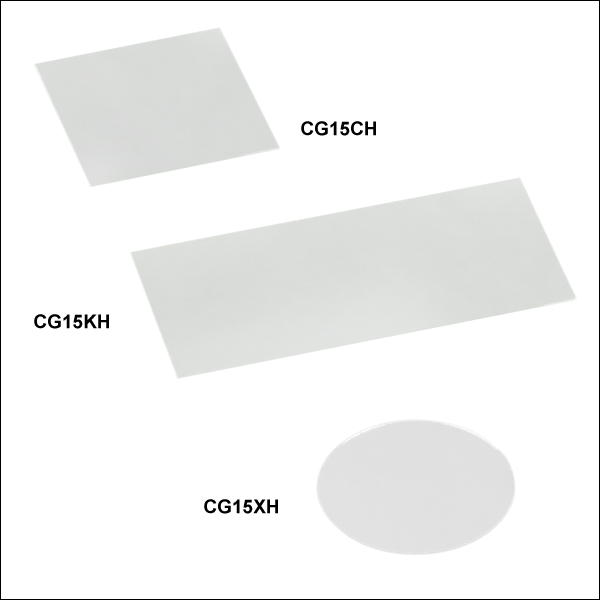
Microscope Slide – supports an item being examined under the microscope Image result for cover slip Cover slip – covers specimen on a slide
Beaker, Glass, Cup, Chemistry, Flask, Laboratory Beaker – holds liquids while they are being stirred or heated Test Tube Brush – used to clean test tubes
Image result for evaporating dish Evaporating Dish – used for heating solids Image result for pinch clamps Pinch Clamps – used to control the flow of liquids through tubing
Image result for funnel Funnel – assists in transferring liquids to containers with smaller openings Striker – used to ignite a burner
Test Tubes – holds liquids for observation or testing Safety goggles – protects the eyes from damaging substances
Pipet pump – dispenses known volumes of liquids Eyedropper – used to transfer small amounts of liquids
Image result for forceps Forceps – used to hold or lift specimens Magnifying glass – enlarges the image of an object
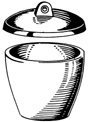
Related image Crucible – containers used for “strong” heating Test Tube Rack – holds test tubes during observation or testing
Wash Bottle – used for rinsing solids out of a container Pipet – used for exact measurements of liquids
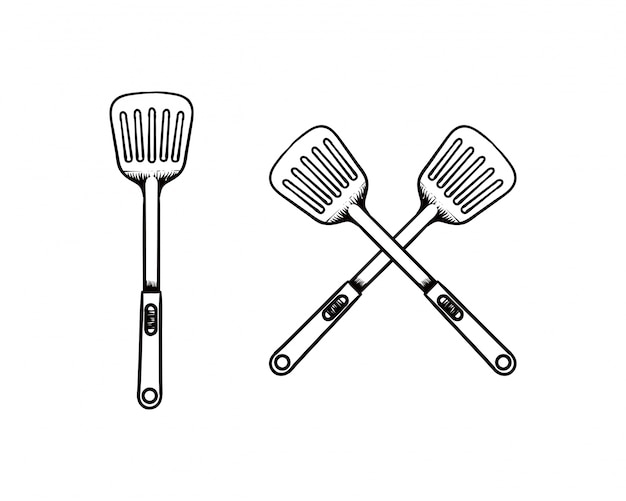
Image result for spatula drawing Spatula – chemical spoons used to transfer solids from their original container to a scale for weighing Image result for wire gauze Wire Gauze – adds additional support for containers held on tripods or O-rings
Crucible Tongs – used for picking up crucibles & crucible covers only Mortar & Pestle – used to grind solids into powders
Florence Flask – used to store liquids Erlenmeyer Flask -used to store solutions
Dissecting Pan – holds specimen being dissected test tube holder Test Tube Holder – holds test tubes while heating
an electronic balance Electronic Balance – used for weighing substances a proper lab burner flame Bunsen Burner – heat source
Thermometer – used to measure temperature Stopper – used to cap flasks containing liquids
Scalpel – used for cutting specimens being dissected Tubing – hose used for connecting glassware
Image result for petri dish Petri Dish – plate used to culture microorganisms a triple-beam balance Triple Beam Balance – used for weighing substances
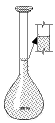
O-Ring – used with ring stands to support heated vessels Volumetric Flask – used to mix precise volumes of liquids
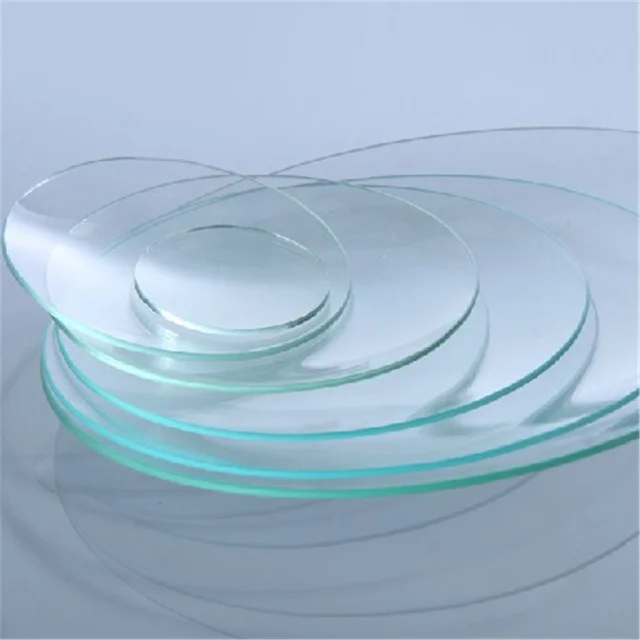
Related image Watch Glass – used on top of beakers when heating Desiccators – used to remove moisture from substances
PRINT EQUIPMENT SHEET FOR NOTEBOOK      BACK