Scientific Laws


Scientific Laws, Hypotheses, and Theories


Scientific Theory versus “Just a theory” Layman’s term:

In layman’s terms, if something is said to be “just a theory,” it usually means that it is a mere guess, or is unproved. It might even lack credibility. But in scientific terms, a theory implies that something has been proven and is generally accepted as being true.

Scientific Meanings:

SCIENTIFIC LAW: This is a statement of fact meant to describe, in concise terms, an action or set of actions. It is generally accepted to be true and universal, and can sometimes be expressed in terms of a single mathematical equation. Scientific laws are similar to mathematical postulates. They don’t really need any complex external proofs; they are accepted at face value based upon the fact that they have always been observed to be true. Specifically, scientific laws must be simple, true, universal, and absolute. They represent the cornerstone of scientific discovery, because if a law ever did not apply, then all science based upon that law would collapse.  Some scientific laws, or laws of nature, include the law of gravity, Newton’s laws of motion, the laws of thermodynamics, Boyle’s law of gases, the law of conservation of mass and energy, and Hook’s law of elasticity.

HYPOTHESIS: This is an educated guess based upon observation. It is a rational explanation of a single event or phenomenon based upon what is observed, but which has not been proved. Most hypotheses can be supported or refuted by experimentation.

THEORY: A theory is more like a scientific law than a hypothesis. A theory is an explanation of a set of related observations or events based upon proven hypotheses and verified multiple times by detached groups of researchers. One scientist cannot create a theory; he can only create a hypothesis. Theories may be expanded or modified with further scientific evidence.

Development of a Simple Theory by the Scientific Method:

  • Start with an observation that evokes a question: Broth spoils when I leave it out for a couple of days. Why?
  • Using logic and previous knowledge, state a possible answer, called a Hypothesis: Tiny organisms floating in the air must fall into the broth and start reproducing.
  • Perform an experiment or Test: After boiling some broth, I divide it into two containers, one covered and one not covered. I place them on the table for two days and see if one spoils. Only the uncovered broth spoiled.
  • Then publish your findings in a peer-reviewed journal. Publication: “Only broth that is exposed to the air after two days tended to spoil. The covered specimen did not.”
  • Other scientists read about your experiment and try to duplicate it. Verification: Every scientist who tries your experiment comes up with the same results. So they try other methods to make sure your experiment was measuring what it was supposed to. Again, they get the same results every time.
  • In time, and if experiments continue to support your hypothesis, it becomes a Theory: Microorganisms from the air cause broth to spoil.

BACK


Scientific Equipment


Scientific Equipment

All Materials © Cmassengale

Click HERE for Notebook Copy

Compound Light Microscope (LM)-used to enlarge an image Graduated Cylinder – used to measure the volume of liquids
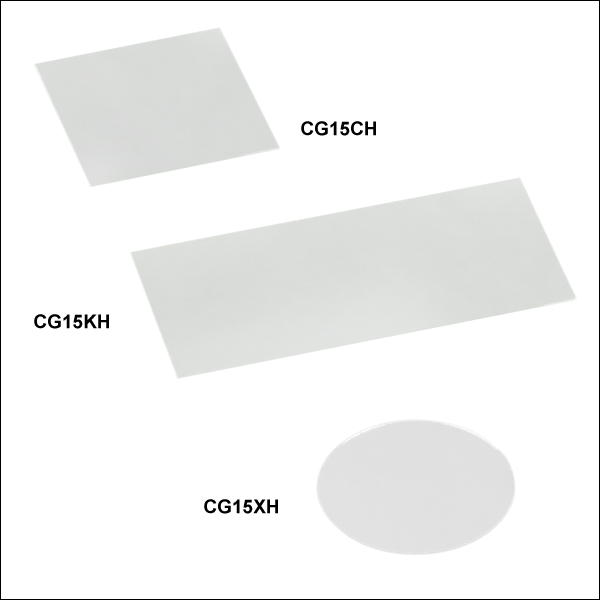
Microscope Slide – supports an item being examined under the microscope Image result for cover slip Cover slip – covers specimen on a slide
Beaker, Glass, Cup, Chemistry, Flask, Laboratory Beaker – holds liquids while they are being stirred or heated Test Tube Brush – used to clean test tubes
Image result for evaporating dish Evaporating Dish – used for heating solids Image result for pinch clamps Pinch Clamps – used to control the flow of liquids through tubing
Image result for funnel Funnel – assists in transferring liquids to containers with smaller openings Striker – used to ignite a burner
Test Tubes – holds liquids for observation or testing Safety goggles – protects the eyes from damaging substances
Pipet pump – dispenses known volumes of liquids Eyedropper – used to transfer small amounts of liquids
Image result for forceps Forceps – used to hold or lift specimens Magnifying glass – enlarges the image of an object
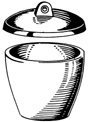
Related image Crucible – containers used for “strong” heating Test Tube Rack – holds test tubes during observation or testing
Wash Bottle – used for rinsing solids out of a container Pipet – used for exact measurements of liquids
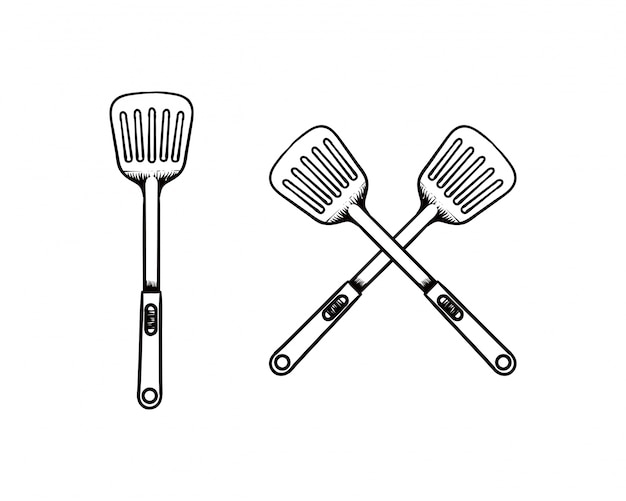
Image result for spatula drawing Spatula – chemical spoons used to transfer solids from their original container to a scale for weighing Image result for wire gauze Wire Gauze – adds additional support for containers held on tripods or O-rings
Crucible Tongs – used for picking up crucibles & crucible covers only Mortar & Pestle – used to grind solids into powders
Florence Flask – used to store liquids Erlenmeyer Flask -used to store solutions
Dissecting Pan – holds specimen being dissected test tube holder Test Tube Holder – holds test tubes while heating
an electronic balance Electronic Balance – used for weighing substances a proper lab burner flame Bunsen Burner – heat source
Thermometer – used to measure temperature Stopper – used to cap flasks containing liquids
Scalpel – used for cutting specimens being dissected Tubing – hose used for connecting glassware
Image result for petri dish Petri Dish – plate used to culture microorganisms a triple-beam balance Triple Beam Balance – used for weighing substances
O-Ring – used with ring stands to support heated vessels Volumetric Flask – used to mix precise volumes of liquids
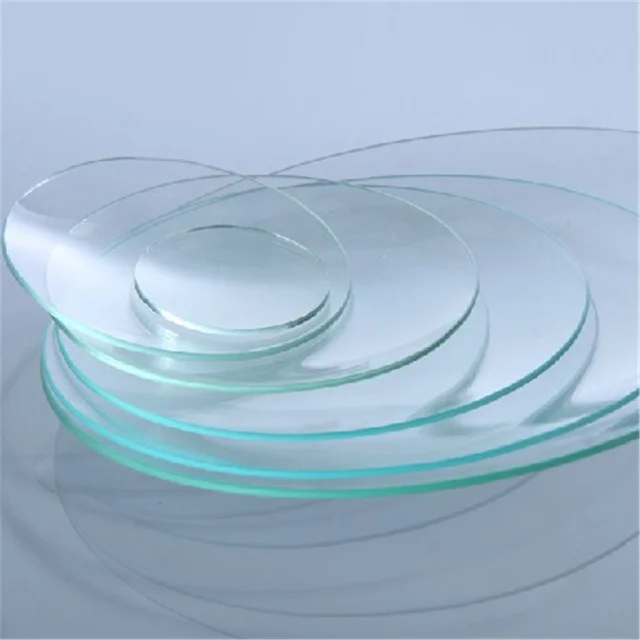
Related image Watch Glass – used on top of beakers when heating Desiccators – used to remove moisture from substances
PRINT EQUIPMENT SHEET FOR NOTEBOOK      BACK

Scientific Method & Genetics


Using the Scientific Method With Genetics


Introduction:

Humans are classified as a separate species because of all the special characteristics that they possess. These characteristics are controlled by strands of DNA located deep inside their cells. This DNA contains the code for every protein that an organism has the ability to produce. These proteins combine with other chemicals, within the body, to produce the cells, tissues, organs, organ systems, and finally the organism itself. The appearance of these organs, such as the shape of ones nose, length of the fingers, or the color of the eyes is called the phenotype.

Even though humans contain hands with five fingers, two ears, or one nose, there are subtle differences that separate these organs from another. There are subtle differences in a person’s genes that allows for these different phenotypes. In this lab, we are going to observe some of these differences in phenotype. All human hands look pretty much alike, but there are genes on your chromosomes that code for the characteristics making up your hand. We are going to examine two of these characteristics (hand width and hand length) and try to determine why these phenotypic differences occurred.

Materials:

  • metric ruler (see end of lab)
  • pencil
  • calculator

Procedures:

Day 1

  1. Choose a partner and have them measure the length of your right hand in centimeters. (Measure from the tip of your middle finger to the beginning of your wrist as shown in figure 1.)  Record your measurements in Table 1.
  2. Now measure and record the length in centimeters of your partners hand.
  3. Have your partner measure the width of your right hand, straight across the palm, and record the data in Table 1. (see figure 1.)
  4. Now measure & record the width of your partner’s hand.

Figure 1.


Table 1


Group Data on Right Hand Width and Length
Student Name Length of Hand (cm) Width of Palm (cm)


  1. After the entire class has completed Table 1, record your group data on the Class Data Table at the front of the room
  2. Record the Class Data Table information on your lab sheet’s Table 2.

Table 2

Class Data on Right hand Width and Length (cm)

Class Period:

Student Gender
(M / F)
Hand Length (cm) Hand Width (cm)
1. M / F
2. M / F
3. M / F
4. M / F
5. M / F
6. M / F
7. M / F
8. M / F
9. M / F
10. M / F
11. M / F
12. M / F
13. M / F
14. M / F
15. M / F
16. M / F
17. M / F
18. M / F
19. M / F
20. M / F
21. M / F
22. M / F
23. M / F
24. M / F

Click for Class Data Table

Day 2

  1. In order to form a more accurate conclusion, the collection of additional data from several classes is necessary. Using the Class Data Tables for each period at the front of the room, record the # of males and # of females having the same length hand in Table 3.
  2. Only record a hand length (e.g. 18.1 cm) once on table 3.

Table 3:

Hand Length (cm) of All Class Periods

Measurement of Hand length (cm) # of Males # of Females Total #
(Male + Female)
  1. Using the Class Data Tables for each period at the front of the room, record the # of males and # of females having the palm width in Table 4.
  2. Only record a palm width (e.g. 15.3 cm) once on table 4.

Table 4:

 Hand Width (cm) of All Class Periods

Measurement of palm width (cm) # of Males # of Females Total #
(Male + Female)
  1. Line graph data from table 3 using hand length as your independent variable and the number of times (total males & females) that measurement appeared as the dependent variable.
  2. Make a second line graph using data from table 4 using palm length as your independent variable and the number of times (total males & females) that measurement appeared as the dependent variable.
  3. Be sure to include a title for each graph and label the x and y axis and include their unit of measurement.

Graph Title: ___________________________________________________________


Graph Title: ___________________________________________________________


Analysis:

1. Examine the above graphs. What is the shape of the line for hand length?  for the palm width?


2. What is the most abundant measurement (mode) for hand length?


3. What was the average hand length (mean) for males?   for females?   for total students?


4.  What is (are) the least abundant measurement(s) for hand length?


5. What is the most abundant measurement (mode) for palm width?


6.  What is the least abundant measurement  for palm width?


7. What was the average palm width (mean) for males?   for females?   for total students?


8. Are there any similarities in the graph of the above two characteristics and if so, what are they?


9. Are there any differences in the graph of the above two characteristics and if so, what are they?


10. Is there a difference in the length of the male and female hand?

11. Is there a difference in the width of the male and female hand?

12. Does gender have an effect on the phenotype of a trait? Explain.


Cut and use:


Seed Plants Bi

For the Angiosperms the two variation of this basic design are seen in the two Classes (Monocots versus Dicots) (see fig. 23-2).


MONOCOTS
DICOTS
Flower structure arranged in group of three arranged in groups of four or five
Leaves narrow with parallel veins wider with branching netlike veins
Vascular tissue scattered vascular bundles Ring of vascular bundles
Roots Many smaller roots One main taproot
Seed One cotyledon Two cotyledons

Pzsol Moss Fern

Moss & Fern Puzzle Solution

Plants that lack tubes to carry food and water are called nonvascular plants. These plants are also known as bryophytes. Most bryophytes are terrestrial and live in moist environments. Water is required so that the sperm can swim to the egg during fertilization. Bryophytes do not produce seeds, but instead produce spores to reproduce. These plants exhibit alternation of generations in their life cycle. Because these plants lack vascular tissue, they are small in  height.

Moss is one example of a bryophyte that grows like a lush, green carpet. The dominant stage in the moss life cycle is the gametophyte. Root like rhizoids attach each gametophyte to the soil but do not absorb water. Both male and female gametophytes exist. The sporophyte generation is attached to the top of the gametophyte. Mosses are called pioneer plants because they often are the first plants to re-enter a barren area. Mosses also help prevent soil erosion. Sphagnum, or peat moss, is harvested and burned as fuel in some countries.

Liverworts and hornworts are nonvascular plants that also grow in moist, shady places. Liverworts have leaflike structures along a stem and lay close to the ground. Hornworts, like algae, have a single large chloroplast in each cell.

Ferns are simple, vascular plants that also lack seeds and reproduce by spores. Tree ferns are the largest ferns. Most ferns have an underground stem called a rhizomes. New leaves of ferns are tightly coiled and are called fiddleheads. Mature fern leaves are called fronds. Spores are produced on the underside of fern fronds.