Preap Cell Division Study Guide


Cell Cycle & Cell Division Review  

1. Chromosomes are Rod Shaped structures made of _________ and ___________.

2. State the cell theory.

3. The phases in the life of a cell are called the ______________  _____________.

4. The cell cycle consists of ________, __________, __________, & division.

5. ________________ is a series of ______________ in cell division during which the _____________________ of a cell divides into __________  __________ with ____________   _____________ material.

6. _________________ only occurs  in _________________________  cells.

7. The period of cell growth prior to division is _________________________.

8.   Interphase consist of what three phases and describe each:
a.

b.

c.

9. The period during which DNA is copied ______________________.

10. DNA replication in a cell results in _________________  ____________________.

11. Replication is the process of copying _______________  ____________________.

12. Cell division is the process by which one _________ produces __________ new identical _________  ___________.

13.  Cell division involves 2 Steps called __________________  _____________  ________________________.

The steps are:
a.

b.

14. Step 1 of cell division is called ___________, and step 2 is called ______________.

15. During __________the cytoplasm of the cell divides into _______ new cells called ___________  ___________.

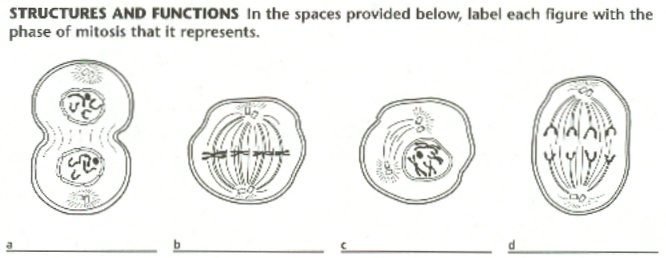
16. The steps or phases of Mitosis are ___________,  ____________,  ____________, and ________________.

17.   _________ is the process by which a nucleus gives rise to ___________ _________  _____________.

18. In anaphase, the sister Chromatids __________________________________.

19. The cell is pinched into two and cytokinesis begins during ____________________.

20. The assembling of microtubules that make up the spindle fibers occurs during _____________.

21. During prophase the _________ and  ________  ____________ disappear.

22. The center of the cell is called the ___________  _______________.

23.   ________________ condenses into chromosomes of two _________________  ____________________, joined together by the _____________________ during __________________________.

24.  The production of offspring from one parent is called ________________________  ________________________.

25.  During mitosis, centrioles are present only in _________________________ cells.

26.  Most organisms are capable of combining ______________________ from two parents to produce ______________________.

27. The phase of mitosis during which chromosomes move to opposite poles is called ____________________________________.

28. When chromosomes of two parents combined to produce offspring, the process is known as _____________________  _____________________.

29. The chromosomes that combine during sexual reproduction are contained in special reproductive cells called _________________________.

30. In most organisms,  ________________ can be either _____________  or _________________.

31. Eggs are _______________ than sperm, but are ______________________.

32. Sperm have ______________________ that help them swim to the ___________.

33. Gametes are formed by _______________________, a type of nuclear division in which _____________________ number is ______________________ and is followed by ________________  ______________________.

34. In humans, specialized reproductive cells with _________  chromosomes, called ____________________ cells, undergo ________________ and ___________ ________________ to give rise to egg or sperm that have only _______ chromosomes,  ___________________ cells.

35. Any cell that contains two complete sets of chromosomes is called a _____________________  ______________.

36. A cell with only one complete set of chromosomes is called a ____________________ ______________.

37. When an egg and sperm join to produce a new individual, the process is called _________________________________.

38. The single cell that results from fertilization is called a ____________________.

39. Matching pairs of chromosomes in a diploid cell are called ___________________ _________________.

40. During ______________________, the cytoplasm of a cell and its organelles separate into two New ______________________  _____________.

41. Cytokinesis proceeds differently in animal and plant cells.  In animal cells, the cytoplasm divides when a _______________ called the ________________ _________________ forms through the middle of the parent cell.  In a plant cell, the material form a  ______________  ____________ and __________________ gather and fuse along the equator or middle of the cell.

42. The term cleavage furrow refers to _______________________________________
________________________________________________.

43. The exchange of genes between pairs of homologous chromosomes is called _____________________ – ___________________________ and Only occurs during __________________________________ of meiosis.

44. What equally divides chromatids between offspring cells _________________  ____________________.

45. The time between cell division is called ________________________________.

46. The division of a prokaryotic cell into two offspring cells is called _______________________  ____________________________.

47. What equally divides an animal cell into two offspring cells (daughter cells) ________________________  _______________________.

48. Each protein in an organisms DNA is coded for an individual __________________.

49. If an organism has 12 chromosomes in each body cell, how many chromosomes would you expect to find in the organism’s gametes? _________________

50. During which phase of meiosis do tetrads form? ___________________________

51. The division of the cytoplasm of a eukaryotic cell is called _________________________________.

52. What event occurs during synapsis? ______________________  __________  ___________________________  _______________________.

53. During mitosis and meiosis, kinetochore fibers are thought to move __________________________________.

54. Histones are proteins that _______________ in the _______________ of __________________ in eukaryotic cells.

55. Spermatogenesis results in _______________  _______________ cells.

56. Each offspring cell produced by binary fission contains an ____________________  __________________ of the original cell’s  __________________________.

57. Crossing-over results in genetic recombination by permitting the ________________________ of genetic material between ____________________ and _______________________ chromosomes.

58. Two of the 46 human chromosomes are called _______________  _________________________, all others (44) are called _________________________.

59. The production of eggs is called ____________________________.

60. What structure not found in animal cells forms along the midline of a dividing plant cell? _________________________  ____________________________.

Answer the Following questions in paragraph form:

1. What is Cytokinesis?  How is it different in plant and animal cells?

2. Explain the difference between Mitosis and Meiosis?

3. What is the Difference (Contrast) between Sex Chromosomes and Autosomes?

4. List 2 ways that meiosis differs from mitosis.

5. Compare the structure of a prokaryotic chromosome with that of eukaryotic chromosomes.

6. What are homologous chromosomes?

7. Explain the difference between a haploid cell and a diploid cell?

8. What is your diploid and haploid Number?

9. What is DNA? What are histones?

10. What is independent assortment, and how does it affect the genetic makeup of offspring cells?

11. What are chromatids and what holds two chromatids together?

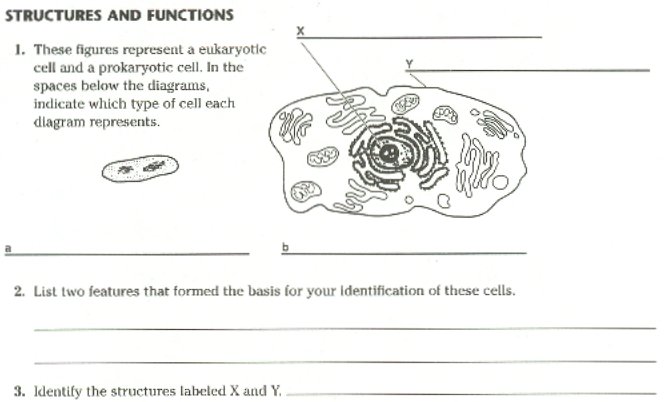
12. Describe how you could determine if a dividing cell is a prokaryote or an eukaryote. What structures would you look for?

13. Compare the products of mitosis with those of meiosis II.

14.  Describe the events of binary fission and what kind of organisms would use this.

15. What is the cell cycle?

16. How do the products of spermatogenesis and oogenesis differ?

17.  What is interphase?  What makes up and occurs during each part of interphase?

18.  What is mitosis and in order, What are the four phases of mitosis?

19.  What are kinetochore fibers and polar fibers? What are their functions?

20. Explain crossing-over, What is it? When does it occur? Why is it Important?

21. In what type of cell, Eukaryote, Prokaryote, or Both, does mitosis occur?
__________________________________________.  EXPLAIN WHY?

22. Explain the difference between Mitosis and Cytokinesis.

23. What is the difference between asexual and sexual reproduction?  Which has evolutionary value?  Why?

Preap Cell Study Guide


Cell Structure & Function  Review   


1. The first Person to describe microscopic organisms and living cells was
________________________________.

2. The maximum size to which a cell may grow is limited mainly by the cell’s ___________________________  ____________________________.

3. Short, hair-like organelles that can move and may cover a unicellular organism or line the respiratory tract are called ______________________________________.

4. Some Ribosomes are free in the cytoplasm, while others line the membrane of the
_________________  __________________  __________________________.

5. Everything between the cell membrane and the nucleus, is the cell’s
____________________________________.

6. All cells, from all organisms, are surrounded by a _______________   _____________________.

7. Membranes are _______________________ and have the consistency of vegetable oil.

8. The organelle that stores DNA and synthesizes RNA _________________________.

9. The organelle that processes and packages substances produced by the cell ______________________  _________________________.

10. The ____________________________ is the control center of the cell.

11. The DNA in the form of a long strand is called ______________________________.

12. Cytoplasm consists of two main components:  ____________________________ and
______________________________.

13. The cell membrane functions like a ______________________, controlling what
__________________ and _______________________ the cell.

14. A lipid is a simple form of ________________________________.

15. There are many kinds of ______________________ in cell membranes; they help to move material into and out of the cell.

16. Scientist call the modern view of the cell membrane structure the
______________________________ ____________________ _________________.

17. The nucleus is surrounded by a double layer membrane called the
__________________________  _________________________________.

18. During cell division, _________________________ strands coil and condense into thick structures called _____________________________________.

19. The nucleoli make ___________________________. Which in turn build proteins.

20. Membranes are made mostly of ___________________  and  ______________________.

21. The _________________ is the smallest unit that can carry out all of the processes of life.  The basic unit of life.

22. The maximum size to which a cell may grow is limited mainly by the cell’s ___________________  ____________________.

23. The discovery of cells is linked most directly the development of the __________________________.

24. Organisms whose cells never contain a membrane bound nucleus are called _____________________________________.

24. Suspended in the cell’s cytosol are tiny ___________________________________.

25. Cell membranes consist of two phospholipid layers called a ___________________.

26. The chromosomes in the nucleus contain coded _____________________ that control all cellular activity.

27. When a cell prepares to reproduce the _______________________ disappears.

28. Cytosol is a jelylike mixture that consists mostly of _____________________.

29. The nucleus is one ______________________________.

30. In Eukaryotic cells, most organelles are surrounded by a _____________________.

31. Organisms whose cells always or usually contain a nucleus or nuclei are called
____________________________________.

32.  ________________________ are structures that carry out specific functions in the cell.

33. Most cells have a single ______________________; some cells have more than one.

34. Unicellular organisms such as bacteria and their relatives are ___________________________.

35. The Fluid Mosaic Model presents the modern view of a
__________________  ___________________________.

36. The “Blueprints” in a Cell that controls all its activity are the ___________________.

37. Where are poisons and waste detoxified in a cell? _________________________ _________________________________.

38. A cell synthesizes protein by using organelles called _______________________________.

39. The Mitochondria of a cell contain an inner membrane called _____________________________.

40. What are the membrane-bound sacs that package and secrete cell products?
___________________________ ___________________________.

41. Unlike animal cells, plant cells have ______________  ________________.

42. A Chloroplast can convert _________________, __________________________, and ____________________________ into ________________________.

43. What are Flagella? ___________________________________________________.

44. In animal cells, the Cytoskeleton maintains three-dimensional structure and helps the cell ___________________________.

45. The organelle that digest molecules, old organelles, and foreign substances in the cell   _______________________________________.

46. A pigment that absorbs energy in sunlight ________________________________.

47. The organelle that prepares proteins for export and synthesizes steroids is  ________________________  ________________________.

48. Ribosomes differ from most organelles because they have no ___________________________.

49. What type of cells would you expect to find large numbers of mitochondria?  _______________________  _________________.

50. The “Powerhouse” of the cell _______________________________.

51. Short, hairlike organelles that can move and may cover a unicellular organism or line the respiratory tract are called _______________________________.

52. The first cells on Earth were likely _______________________ that did __________ make their own _________________.

53. Microfilaments and microtubules function in cell _______________________ and ____________________________.

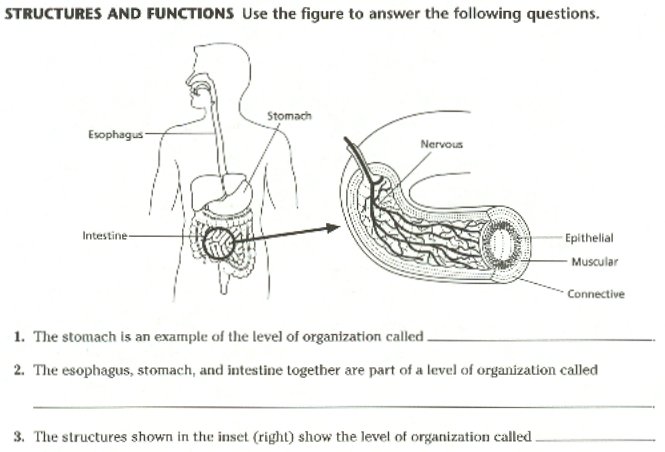
54. What is the correct order of structures in living things, from simplest to the most complex? ______________________, __________________________, ______________________________, ______________________________.

55. The is the organelle that transfers energy in ATP _______________________________.

56. What word means “Water Fearing”? ____________________________.

57.  What word means “Water Loving”? _____________________________.

58. What is cell specialization? Give an example.
59. Distinguish between the structure of rough ER and that of smooth ER.

60. Explain how ribosomes, endoplasmic reticulum, Golgi apparatus function together in protein synthesis.

61. Explain the difference between a tissue and an organ.

62.  Why is the cell membrane said to be selectively permeable?

63.  If a cell has a high energy requirement, would you expect it to have many or few mitochondria? Explain your answer.

64. Describe TWO differences between prokaryotic cells and eukaryotic cells.

65. How can you determine whether a unicellular organism is a prokaryote or a eukaryote?

66. Plant cells have cell walls, but animal cells do not. Why do you think that is so?

67. What are the THREE Parts of the Cell Theory?

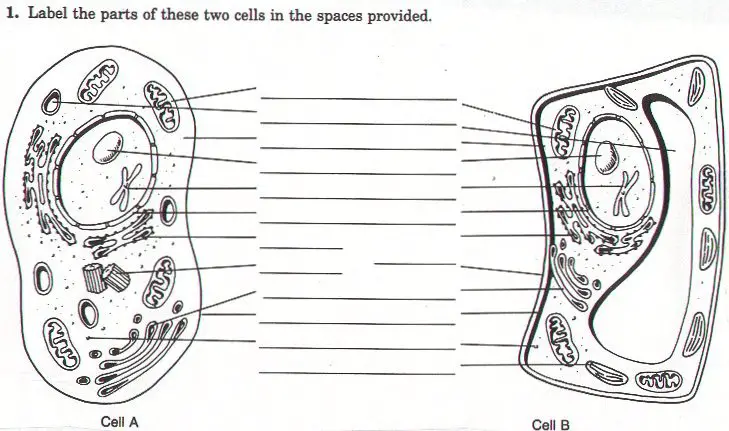
68. Describe three differences between plant and animal cells.

69. Name the TWO different kinds of animal cells, and describe how their shape is related to their function.

70. What is the difference between chromatin and chromosomes?

71. What are the major roles of the nucleus, and what parts of the nucleus carry out these roles?

72. What is a colonial organism, and what does it have in common with multicellular organisms?


Preap Chemistry Study Guide


Chemistry Review   


1. Everything in the universe is made of __________________________________.

2. The measurement of the amount of matter in an object is called ___________________.

3. What are the Three States of matter?
A.____________________________________
B.____________________________________
C.____________________________________

4. Charged particles that move around an atom’s nucleus are called ________________________.

5. Chemical bonds are broken, atoms are rearranged, and new bonds are formed during _______________________________  ______________________________.

6. Atoms with filled outermost energy levels tend _____________ to participate in chemical reactions.

7. A pure substance that cannot be broken down is called an _____________________.

8. The simplest part of an element is an ____________________.

9. The central core of an atom is called the _____________________________.

10. In an ionic bond, __________ atoms of ________________ charge are held together by _________________________ attraction.

11. The part of an atom that has a neutral charge is a _______________________.

12. Most of the mass of an atom is found in the _____________________.

13. A pure substance made up of atoms of one or more elements is called a ____________________________.

14. Most atoms tend to undergo ____________________  _________________, combining in ways that cause their atoms to become more ____________________.

15.When two atoms share one or more electrons, it is called ____________________________  ______________________.

16. A bond formed by electrical attraction between two opposite charged ions is called ______________________  ____________________.

17. The ability to do work or cause change is _____________________.

18. A redox reaction involves the _____________________ of ___________________ between atoms.

19. The amount of energy needed to start a chemical reaction is the reaction’s _________________________  ___________________.

20. A substance that neutralizes small amounts of acids or bases added to a solution is a _______________________.

21. A chemical reaction that can proceed forward or backward is a ______________________  ______________________.

22. Sodium chloride (table salt) is an example of a compound formed by ______________ _________________.

23.The positive charge part of an atom is called a ___________________________.

24. A particle composed of one or more atoms is a ________________________.

25. Chemical reactions that release free energy are called ____________________________ ____________________________.

26. Chemical reactions that absorb free energy are called ____________________________ _______________________________.

27. The loss of one or more electrons is called ______________________.

28. The gaining of one or more electrons is called _______________________.

29. The breaking apart of water molecules into two ions of opposite charge is called ___________________________________.

30. An atom has six electrons, what is it atomic number? ____________  Name?___________  It is a stable or unstable atom? _________________.

DIRECTIONS: Read Chapter 2, Chemistry, and Answer the questions below as completely and as thoroughly as possible. Answer the question in essay form (not outline form), using complete sentences. You may use diagrams or pictures to supplement your answers, but a diagram or picture alone without appropriate discussion is inadequate.

1. Describe the dissociation of water.

2. Define acid and base. What is a buffer?

3. List TWO characteristics of Acids and TWO Characteristics of Bases.

4. Describe the relationship between the solute, the solvent, and the concentration of a solution.

5. How does an ionic bond differ from a covalent bond?

6. Why is it necessary for oxidation and reduction reactions to occur in pairs?

7. Define the Three States of Matter?

8. State the difference between endergonic and exergonic reactions.

9. What is the role of enzymes in chemical reactions occurring in living things? Explain how a catalyst affects a reaction.
10.  What is the pH Scale, and what does its range of values mean?
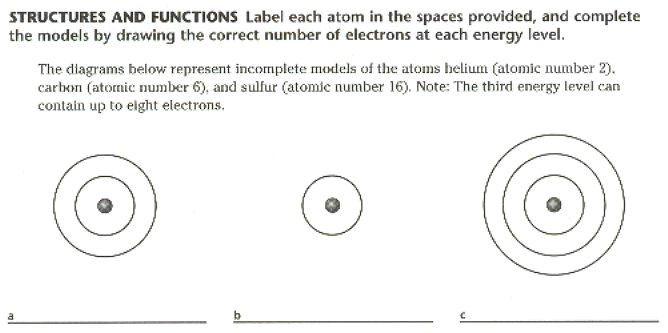
11.  Draw and Label a model of a Chlorine (Cl) atom. Is this atom stable? Why or Why not?
12. Describe the difference between an oxidation and reduction reaction.

13. An oxygen atom has six electrons in its outermost energy level. Explain why two oxygen atoms must share four electrons when they form a covalent bond.


Preap Fungi Study Guide


Fungi Review   
1. Fungi Differ from plants in important ways:  Fungi Lack _______________________ and are Not _______________________________.  Fungi Never Reproduce by _____________________.  The cell walls of fungi are made of ___________________, not __________________________, as are the cell walls of Plants.

2. _____________________, a tough, flexible material, also makes up the hard outer skeleton of insets.

3. Fungi have FOUR Characteristics in common:

A.___________________________________________________________________
B.___________________________________________________________________
C.___________________________________________________________________
D.___________________________________________________________________

4. All fungi are ______________________________, obtaining their nutrition from other organisms.

5. Most fungi are ______________________________ and obtain their nutrients by digesting and absorbing nutrients from _______________________ organisms.

6. Some fungi are _______________________ and obtain their nutrients from living host.  A few fungi are actually _____________________, able to trap and kill prey.

7. Fungi include _____________________ and __________________ organisms.  Yeast is a typical ___________________________ fungi.

8. Most fungi are ____________________________ organisms.  The body of a fungus consists of tiny filaments called ______________________________.

9.   _________________________ are tiny tubes filed with __________________  and _____________________ that form the body of a fungus.  Hyphae are the __________________, _________________ parts of _______________________ fungi.

10. Hyphae are divided into segments by walls called _____________________.  The _________________ have ________________ which cytoplasm and organelles can move from segment to segment.

11. The mass of tangled, interwoven hyphae that form the body of a fungus is called a _________________________.

12. An organism that digest dead organisms and absorbs their nutrients is called a _____________________________________________.

13. Tiny tubes filled with cytoplasm and nuclei that form the body of a fungus are called _________________________________.

14. Septa are the cross-walls that divide __________________________________.

15. Hyphae tangle and interweave to form a mass know as a _____________________.

16. Asexual reproduction, which produces offspring that are __________________  ___________________ to the parent, is most common when ____________________ and _____________________ are ____________________.

17. Sexual reproduction occurs in fungi mostly when _______________________ or ________________________ become __________________.

18.   __________________ are the means by which fungi are dispersed.  Each spore contains a ______________________ and dehydrated __________________ surrounded by a _____________________  ____________________.

19. The reproductive structures of fungi that produce spores are ___________________ ___________________.

20. A fruiting body consists of a _____________________ and a _______________ in which spores are produced.  In a Mushroom, the ________________ contains thousands of ____________________  ____________________.

21. All the spores released by fungi are ___________________________ (1n).

22. Spores cannot move themselves, but can be dispersed by _______________, ___________________, ________________, or ____________________.

23. There are NO ________________ or ________________ Fungi.  Instead, the TWO mating types are called the ___________________ and the ______________________.

24. Fungi are grouped in one of Three Phyla:  _____________________, common molds; _______________________, club fungi; _________________________, sac fungi; and a group called _______________________ or imperfect fungi.

25. Common molds have No ____________ in their hyphae.

26. The part of hyphae that anchor a fungus to its source of nutrients are called ________________________.  _____________________ resemble the _____________ of plants but lack the specialized tissues of true roots.

27.   ___________________ are the hyphae that connect groups of rhizoids.  ________________ transport the nutrients absorbed by ________________ throughout the ____________________.

28. The study of fungi is called _______________________________.

29. Hyphae whose cells are divided by septa are called ________________________  ________________________.

30.  ___________________________ is a special Asexual process.  __________________ is the formation of a small, bud-like cell from a larger cell.

31. The one characteristic shared by all imperfect fungi is an absence of  ________________________________  ________________________________.

32. A ____________________ is a symbiotic association between a _______________________ and a ___________________________ organism.

33. ____________________________ are mutualistic associations between a __________________ and the _________________ of a plant.

34. The process in which a smaller cell breaks away from a larger cell in some yeasts is called __________________________.

35. Fungi help return nutrients to the ecosystem by acting as _________________________.

36.   Mycorrhizae are mutualistic associations between a fungus and what? _______________________________________________

37. A lichen is a symbiotic association between a fungus and what type of organism? ____________________________________________.

38.  Hyphae that do not have septa are called _________________________________.

39. The ability to change from Multicellular to Unicellular is called ___________________________________.

40. Cells containing two nuclei are called __________________________.

41. Cells containing one nucleus are called _________________________________.

42. A plant can benefit from a fungus because the fungus _____________________________
_________________________________________________________________________.

43. The species of Mushrooms that is poisonous is ________________________________.

44. The Edible species is known as __________________________________.

47. A Mycelium is an interwoven mat of ____________________________________.

48.  All asexual reproductive spores in fungi are composed of only _______________  ___________________.

49.  Fungi cause disease in humans through _______________________________, _____________________________ and _______________________________.

50. Unlike animals, fungi ____________________ their food before ________________________________ it.

51. Visible, cup-like sexual reproductive structures are called ______________________________________.

52. The association between a fungus and plant roots is called ______________________________________.

53.  Fused gametangia is called __________________________________.

54. A tangled mass of hyphae describes what type of fungus? _______________________________________.

55.  An association between a fungus and a green algae is called _________________________________________.

56. The cells walls of fungi are composed of ___________________________.

57. All fungi reproduce ___________________________ some only reproduce ________________________________.

58.  Fungi imperfect reproduce only _____________________________________.

59.  A unicellular fungi that resembles bacteria is a ____________________________.

60. Fungi evolve from __________________________ through ___________________________________.

61.  Mycorrhizae and lichens are both ________________________  _____________________________ associations.


DIRECTIONS: Answer the questions below as completely and as thoroughly as possible. Answer the question in essay form (not outline form), using complete sentences. You may use diagrams to supplement your answers, but a diagram alone without appropriate discussion is inadequate.

1.  Describe Three different kinds of Asexual Reproduction found in fungi.

2.  Explain why lichens are important to the environment.

3.  How does gametangium differ from a Zygosporangia?

4.  Explain how fungi obtain their nutrients?

5. What are mycorrhizae, AND what is their ecological role?

6.  Identify ONE Way in which fungi differ from organisms in Each of the Other KINGDOMS of Eukaryotic Organisms.

7. What Characteristic makes fungi an important resource recycler?

8. Explain why being able to reproduce Both Sexually and Asexually is an adaptive advantage.

9. Explain how fungi cause disease in humans and Which fungi causes athlete’s foot and vaginal yeast infection?

10. Compare an Ascocarp with a Basidiocarp.

11. Describe the reproduction of Ascomycetes.

12. Describe the reproduction of Zygomycetes.

13. Describe the reproduction of Basidomycetes.

14. Explain the benefits  plants and fungi derive from a mycorrhizal relationship.


Preap Homeostasis Study Guide


Homeostasis & Transport Review  


1. A type of transport in which water moves across and down its concentration gradient is called ______________________________________.

2. Net movement of water across a cell membrane occurs from a ___________________ solution to a ________________________ solution.

3. A _____________________  ___________________ only allows certain molecules to pass thorough.

4. A __________________________  _____________________ is the concentration difference across space.

5. A structure that can move excess water out of a unicellular organism is a __________________________  ______________________.

6. The movement of some substances, without any input of energy by the cell, is called ________________________   ________________________.

7.  The process of diffusion requires________________________________________________
___________________________________________________________________________.

8. If the molecular concentration of a substance is the same throughout space, the substance is in ____________________________________.

9. All forms of passive transport depend on the ___________________  ________________ of molecules.

10.  The movement of molecules from an area of higher concentration to an area of lower concentration is called ______________________________.

11.  Sodium-potassium pumps move ___________________ ions _______________ of the cell and ___________________________ ions ___________________ the cell.  This causes the inside of the cell to have what type of charge? __________________________.

12.  Most of the time, the environment that plant cells live in is ________________________.

13.  Plasmolysis of a human red blood cell would occur if the cell were in a(n) ____________________________  ____________________________.

14.  The bursting of cells is called _____________________________.

15.  The pressure that water molecules exert against a cell wall is called ___________________  _________________________________.

16.  A membrane bound organelle used in endocytosis is called a _______________________.

17.  A relatively high solute concentration is called _____________________________.

18.  The uptake of large particles is called ________________________________.

19. The shrinking of cells is called _____________________________________.

20.  A relatively low solute concentration is called ___________________________.

21.  The uptake of solutes or fluids is called ________________________________.

22.  Molecules always diffuse ___________________ their concentration gradient.

23.  The diffusion of water across a membrane is called __________________________.

24.  In an ________________________  _____________________ the concentration of solutes outside and inside the cell are equal.

25. Transport that requires the cell to expend energy is called _____________________  ________________________________.

26. Which type of molecule forms a bilayer within a cell membrane? __________________________________

27.  Most food and wastes materials that move into and out of a cell go through ____________________________  ________________________________.

28. Glucose molecules cross the cell membrane by means of ______________________________ _______________________________.

29. Ridding the cell of material by discharging it from sacs (vesicles) at the cell surface is called ____________________________________________________.

30. Molecules that are too large to be moved across a cell membrane can be removed from the cell by ________________________________________________.

31. A substance that dissolves in another substance is called a (n) _________________________________________.

32. The diffusion of ___________________________ through the cell membranes is called osmosis.

33. When water enters the cell, it creates pressure. This pressure is called _____________________________  _______________________________________________.

34. A cell does not expend __________________________ when diffusion takes place.

35. __________________________ is the most common solvent in cells.

36. A cell membrane is said to be _______________________________________ permeable because it allows  the passage of some solutes and not others.

37. Facilitated diffusion and active transport are two types of ________________________________ transport.

38. __________________________ _______________________________ allows a cell to stockpile substances in far greater concentrations that they occur outside the cell.

39. Active transport systems are a form of cell transport that requires energy from molecules of __________________________________________________.

40. The process in which an amoeba engulfs its prey and takes it in is known as _______________________________________________________________.

For each of the following, Identify the transport type:

a) A cell membrane encloses and takes in a droplet of fluid.______________________________
b) Carrier proteins use energy and act as a pump to move nutrients into a root cell. ____________________________________________
c) Carrier proteins take sugar (glucose) into a cell without requiring energy input. ____________________________________________
d) Water diffuses across a cell membrane from a region of high concentration to a region of low concentration. _______________________________________
e) Mucus and waste products packaged by Golgi apparatus are secreted by a cell. ________________________________________
f) A cell membrane encloses and takes in food particles. ________________________________

DIRECTIONS: Read Chapter 5, Homeostasis and Transport, and Answer the questions below as completely and as thoroughly as possible. Answer the question in essay form (not outline form), using complete sentences. You may use diagrams to supplement your answers, but a diagram alone without appropriate discussion is inadequate.

1. Name and Describe Three types of passive transport AND Three types of active transport.

2. How do ions cross the lipid bilayer of the cell membrane?

3. Toward what condition does diffusion eventually lead, in the absence of other influences?

4. Explain the difference between pinocytosis and phagocytosis.

5. What is the fundamental difference between carrier proteins that participate in facilitated diffusion and carrier proteins that function as pumps.

6. Explain the difference between passive transport and active transport.

7. Describe what would happen to the molecules in a drop of ink dropped into a beaker of water.  What is this process called?

8.  What would happen to a freshwater unicellular organism if its contractile vacuole stopped functioning? Explain your answer.

9. How is osmosis related to diffusion?

10.  Contrast endocytosis with exocytosis.

11. Define a hypotonic, hypertonic and isotonic solution.

12. Describe the action of the sodium-potassium pump.

13.  Three red blood cells are placed in hypertonic, hypotonic, and isotonic solutions.  Compare the behavior of the three cells. Explain your answer on the basis of concentration gradients, diffusion, and give the name of the effects.