5 Golden Rules of Successful Biology Research

Successful Biology Research

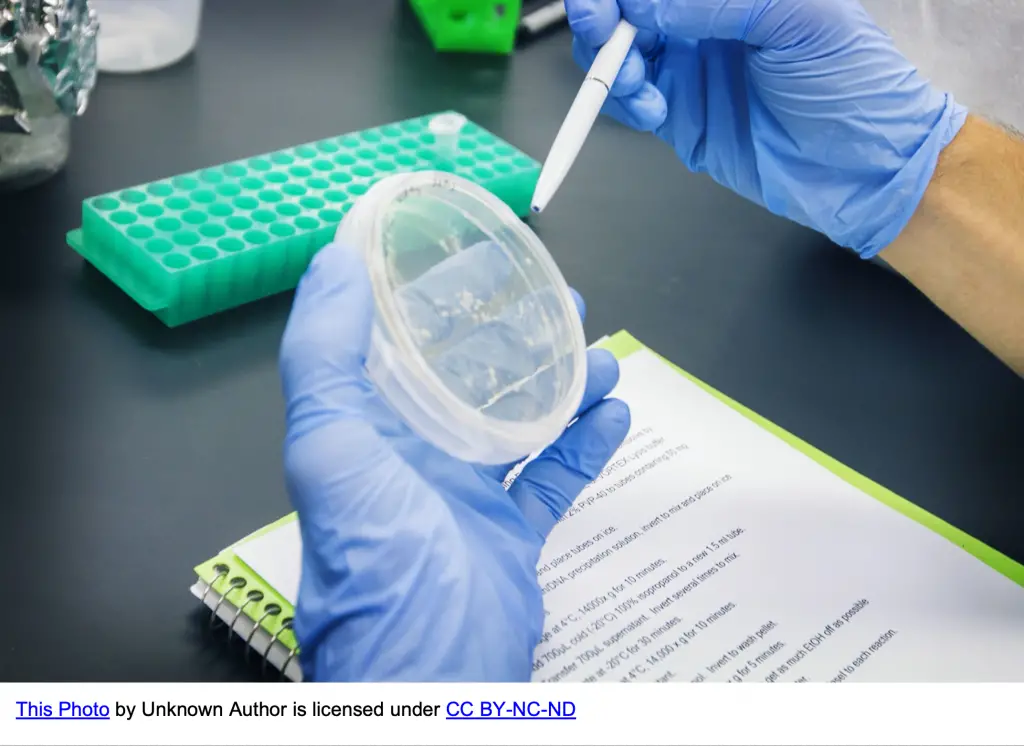
Doing successful biology research is not as easy as it seems. There are 5 golden rules that you should always follow if you want to get the most out of your project. In this blog post, we will discuss these rules and provide some tips on how to implement them in your own work. So, whether you are just starting out in biology research or you have been doing it for years, be sure to read on!

Rule 1: Know Your Audience

When you’re doing research for a biology project, it’s important to keep your audience in mind. You’ll likely be presenting your findings to a teacher or classmates, so you’ll need to choose a topic that’s appropriate for their level of understanding. 

For example, if you’re researching for a high school biology class, you wouldn’t want to write about something too complex or controversial. However, if you’re doing research for a college biology class, you can feel free to explore more complicated topics. In general, it’s always a great idea to check with your teacher before starting your research to make sure you’re on the right track. By taking the time to understand your audience, you’ll be able to create a more successful biology research project.

Rule 2: Don’t Be Afraid to Ask for Help

Asking for help is a natural part of the research process. No one knows everything, and even the most experienced biologists need assistance from time to time. If you’re thinking, should I pay someone to write my research paper? The answer is, it depends. Research paper writing can be very challenging. Without the right tools, you might end up disappointed with your result. If you’re afraid that might happen, then the best thing to do is buy a research paper online. You could search for ‘write my research paper’ on your favorite engine and set up an appointment with a writing specialist.

You could also consult with a professor or other expert in the field. If you don’t know anyone who specializes in biology, you can try reaching out to a librarian or searching for online resources. Another great way to get help is to ask fellow students who might be working on similar projects. No matter how you choose to get help, don’t be afraid to ask for it when you need it. Doing so will allow you to make the most of your research and produce the best possible results.

Learn the 5 Golden Rules for Successful Biology Research

Rule 3: Pick a Topic That You Are Passionate About

When it comes to research, picking a topic that you’re passionate about can make all the difference. Not only will you be more likely to enjoy the process of research, but you’ll also be more likely to stick with it even when the going gets tough. And trust me, there will be tough times. There will be days when you feel like you’re getting nowhere when all your hard work seems to be for nothing. 

But if you care about your topic, if you’re invested in finding out the answer to your question, then you’ll keep going. You’ll find a way to push through the difficult times and come out on the other side with new knowledge and a sense of accomplishment. So if you’re thinking about starting a research project, ask yourself: what is a topic that I’m passionate about? Once you have your answer, you’ll be one step closer to success.

Rule 4: Do Your Research

When you’re doing biology research, it’s important to do your research. That may sound like a no-brainer, but you’d be surprised how many people skimp on this step. They’ll read a few books or articles, maybe talk to a few experts, and then start writing. The problem is that they haven’t really taken the time to understand the topic inside and out. As a result, their work is often inaccurate or incompetent. 

So if you’re serious about doing great, successful biology research, take the time to immerse yourself in the literature. Read everything you can get your hands on. Talk to as many experts as possible. And only when you have a thorough understanding of the topic should you start writing.

Rule 5: Stay Organized and Keep Track of Your Progress

As a biology researcher, it’s also important to stay organized and keep track of your progress. That way, you can avoid duplication of effort and make sure that you’re making the best use of your time. There are a few different ways to do this. First, make sure to keep records of your experiments. Note down what you did, the results you receive, and any observations you made. 

Second, create a project plan that outlines the steps you need to take to complete your research. This will help you stay on track and identify any potential problems early on. Finally, don’t be afraid to ask for help online, from your supervisor or colleagues. They can offer valuable insights and feedback that can help improve the quality of your work!

10 Biology Jokes That’ll Make You Laugh Your Genes Off

Biology, while super informative and exciting to science junkies, can be a little dry. It can also be pretty intimidating. However, we’re going to look at the light side: biology jokes!

We definitely need to insert humor into biology. However, not literally into our biology. That could be painful. Or gassy.

We’ve scoured the web for the best biology jokes to add some fun to your life science. These biology jokes also will help you better learn and remember biological terms and concepts.

Marine Life Sea GIF by Underdone Comics - Find & Share on GIPHY

Jokes 101

Biology is the study of life. And comedy is the art of laughing at the ups and downs of life. Comedy is a way of inserting humor into the serious. Jokes are often a way to relieve tension and stress.

Learning biology is easy and exciting for some. It’s tough and intimidating for others. Humor unites us all. Some truly funny biology jokes will not just get you laughing but help you learn to enjoy the concepts of life science.

Now, while knowing a couple of biology jokes isn’t going to make you a stand-up comedian, they just might help you remember important key terms and help you ace your next exam.

The Science of Funny

What makes things funny? Writing good biology jokes is not just about inserting biology terms or talking about farts. Good jokes are about playing with expectations.

You capitalize on the fact that words have double meanings. You play with expectations and add that little something extra.

In comedy, you play with the way people read or think about things. You make light of the different levels of meaning words or ideas have to give everyone’s brain a little tickle. Comedy is about relieving tension and sometimes you play with where people’s minds may go in order to get them to let out a deep belly laugh. So, onto the list!

The 10 Best Biology Jokes

  • What did the Femur say to the Patella?
  • Which Biochemicals Wash up on Beaches?
  • What is Blood’s Message to the World?
  • What do You Call a Member of the Financial Staff of the Faculty of Biology?
  • Why are men sexier than women?
  • What do You Call a Microbiologist who has Visited 30 Different Countries and Speaks 6 Languages?
  • Is there a Big Difference Between Male and Female Anatomy?
  • What did One Cell Say to His Sister Cell When She Stepped on His Toe?
  • How does Juliet Maintain a Constant Body Temperature?
  • Why didn’t the Dendrochronologist Ever Get Married?

What did the Femur say to the Patella?

I kneed you.

I Love You GIF by Psyklon - Find & Share on GIPHY

Joke Dissection

This joke is humorous because the femur is the thigh bone and the patella is the knee cap. The femur literally needs the patella to walk. It connects the femur to the rest of the leg. Kneed is a play on the word need. The double context makes it a quick chuckle. Now, one might also say this joke was humerus. But the humerus is an arm bone.

Joke Source

http://www.jokes4us.com/miscellaneousjokes/schooljokes/biologyjokes.html

Which Biochemicals Wash Up on Beaches?

Nucleotides

Scientific Illustration Cell Biology Animation Medical Dna Rna Polymerase Transcription GIF - Find & Share on GIPHY

Joke Dissection

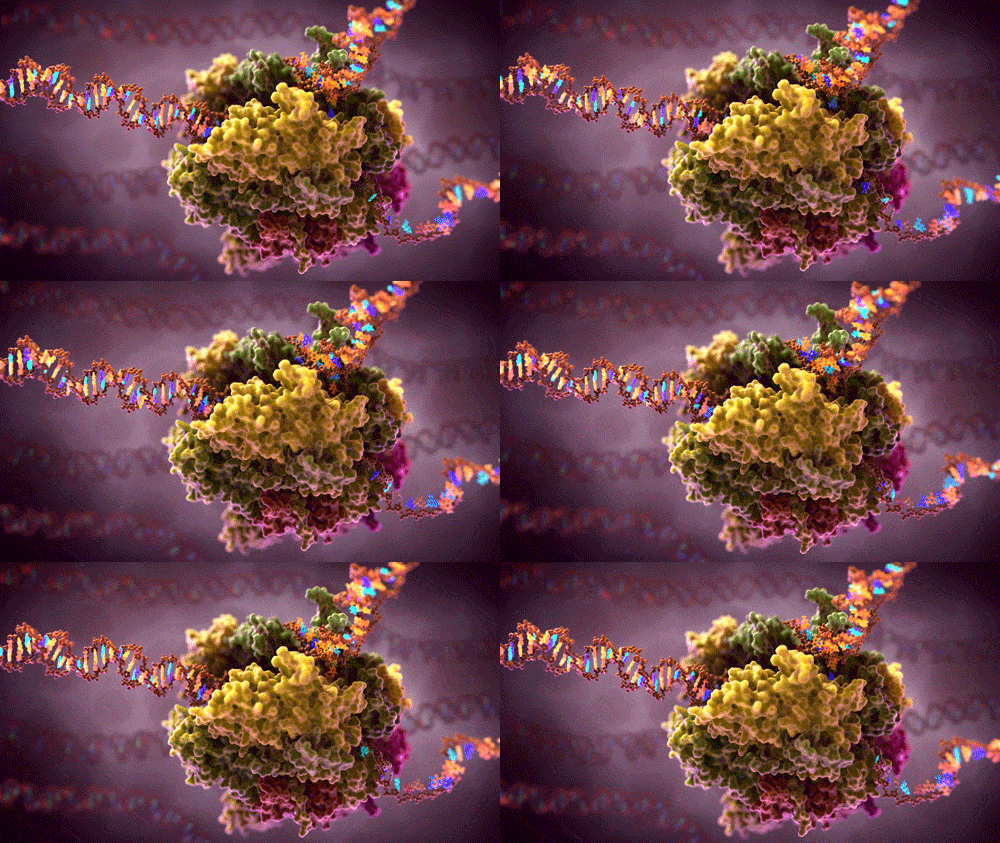
This joke is funny because of the play on words between tides on a beach and the suffix -tides of the biochemical molecule called nucleotides. Nucleotides are the organic molecules that make up DNA. There’s also the added humor that they wouldn’t wash up on beaches.

But, technically, if we put on our lab coats and act like sticklers of science, nucleotides do wash up on beaches in the form of organic life. There are millions of microorganisms that live in the ocean, and there are also nucleotides in the various parts of living things that wash up on the shore.

Joke Source

https://www.buzzfeed.com/kellyoakes/biology-jokes

What Is Blood’s Message to the World?

B Positive.

Evolution Thumbs Up GIF - Find & Share on GIPHY

Joke Dissection

This joke makes our list of funniest biology jokes because it has multiple levels. There’s the fact that B positive is a blood type. and it is a play on the phrase, “Be Positive.”

It’s also funny to imagine your blood being super optimistic and sweet considering how little we see of it. Giving it that personality gives it that extra level of humor.

Also if you’re a fan of dark humor, B positive blood is super rare. The argument could be made that optimists are even rarer.

Joke Source

http://www.jokes4us.com/miscellaneousjokes/schooljokes/biologyjokes.html

What do You Call a Member of the Financial Staff of the Faculty of Biology?

A buy-ologist.

Shopping GIF - Find & Share on GIPHY

Joke Dissection

This joke is funny because it’s a play on the word biologist. Not just any biologist but the person who manages the money for biology, which would make them a buyer. Are dad biology jokes a thing?

Joke Source

http://laffgaff.com/biology-jokes-puns-and-one-liners/

Why are Men Sexier than Women?

You can’t spell sexy without a ‘xy’

Sexy Homer Simpson GIF - Find & Share on GIPHY

Joke Dissection

This joke is funny on multiple levels. Now this joke has a nice build up that gets you thinking it’s talking about sexual reproduction. But it’s talking about sex as in the biological sex of someone.

Cis-gendered men are born male because of their XY chromosomes. Cis-gendered women have XX chromosomes.

This joke also sounds like a cheesy pickup line you would hear from a sketchy character, but instead, it’s biologically informative.

Joke Source

https://www.quickfunnyjokes.com/biology.html

What Do You Call a Microbiologist Who Has Visited 30 Different Countries and Speaks 6 Languages?

A man of many cultures

Petri Dish GIF - Find & Share on GIPHY

Joke Dissection

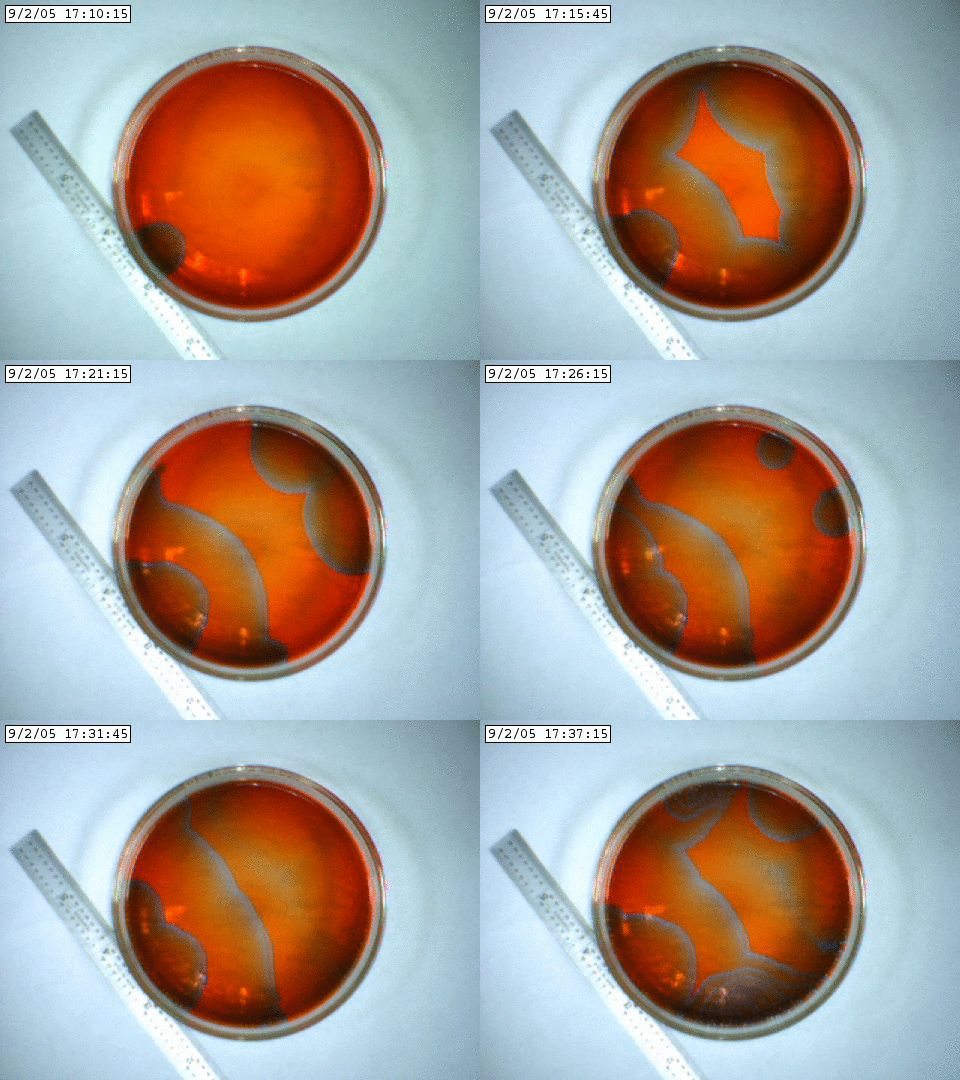
This is one of our favorite biology jokes because it’s a play on the world of microbiologists. Microbiologists need to get cultures in order to study the colonies of bacteria, protozoans, or other microorganisms.

Joke Source

https://www.quickfunnyjokes.com/biology.html

Is There a Big Difference Between Male and Female Anatomy?

Yes, a vas deferens.

Good One Lol GIF by Chicks on the Right - Find & Share on GIPHY

Joke Dissection

This is one of our favorite biology jokes! It’s so hilarious because of the solid wordplay. Vas deferens is a play on vast difference. But literally, one of the biggest differences between male and female anatomy is the vas deferens. The vas deferens are the ducts that lead sperm cells from the epididymis to the ejaculatory ducts.

Joke Source

https://www.buzzfeed.com/kellyoakes/biology-jokes

What Did One Cell Say to His Sister Cell When She Stepped on His Toe?

Mitosis.

Redux GIF - Find & Share on GIPHY

Joke Dissection

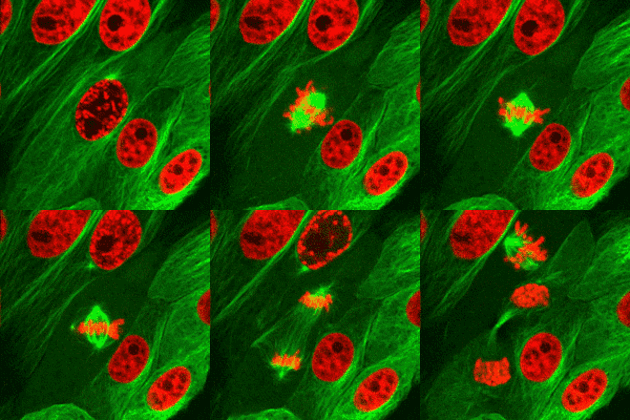
This is a great biology joke because it covers the basics. Mitosis is how cells replicate. One cell forms two sister cells. But it also brings in the element of two sisters fighting.

So if one sister steps on another sister’s toes she might say “My toesies.” Which sounds like mitosis. It’s also funny to picture two cells bickering like sisters.

Joke Source

http://laffgaff.com/biology-jokes-puns-and-one-liners/

How Does Juliet Maintain a Constant Body Temperature?

Romeostasis.

No Way Lol GIF by Rosanna Pansino - Find & Share on GIPHY

Joke Dissection

This isn’t just one of the funniest biology jokes, but it brings in some Shakespeare and literature. Literary references can be funny, too. Homeostasis is how animals maintain their internal temperature and the equilibrium of their body. “Romeo & Juliet” is one of the most popular love stories of all time.

Joke Source

http://laffgaff.com/biology-jokes-puns-and-one-liners/

Why Didn’t the Dendrochronologist Ever Get Married?

Because he only dated trees

Tree Hugger GIF - Find & Share on GIPHY

Joke Dissection

A dendrochronologist is a person who studies the lifespan of trees. They literally date trees. But it would be sad to imagine a single, lonely scientist only dating trees. This joke is not just a super deep reference, it also is a play on words.

You also imagine the sad picture of a lonely dendrologist studying their trees but, surprise, it’s about what they literally do.

Joke Source

https://www.buzzfeed.com/kellyoakes/biology-jokes

Now it may be a while before you are touring with Kevin Hart. But you will definitely make your professor laugh with these great biology jokes. Not only can they help you ace your exam, but you’ll also put breathing more life into life science.

What Is Osmosis in Biology? Understanding How Solvents Break the Barrier

Are you getting ready for your first biology class? Or are you trying to shake off the cobwebs and remember your biology from years ago? Either way, you may be asking, what is osmosis in biology?

We want to answer this question in a way that is thorough and understandable at the same time. Dust off your old textbook and put on your reading glasses as you find answers to the question, “What is osmosis in biology?”

What Is Osmosis In Biology?

Osmosis is a type of diffusion. In biology, it is related to cells. Osmosis happens when a solvent flows through a cell membrane, to balance the concentration of a solute — such as salt. If water is a solvent, it will be affected by the amount of salt (solute) that it contains.

Understanding Diffusion

Diffusion happens when molecules move from a highly concentrated area to a less concentrated region. Solids, liquids, and gasses can all diffuse.

When a liquid such as water diffuses in cellular biology, it crosses a semipermeable membrane to balance the concentrations of substances within the cells. As water flows in or out of a cell, the concentration of solutes affects its travel.

Semipermeable Membranes

To answer the question, what is osmosis in biology, we have to understand semipermeable membranes.

Semipermeable membranes are membranes that allow specific molecules or solvents to pass through by diffusion. Every cell in the human body has a cellular membrane, and they are semipermeable.

That word breaks down: “semi” in this biology word means “partly”, and “permeable” means “able to be passed through, or permeated.” So, semipermeable membrane means a membrane partially able to be crossed.

Some things can pass through, and others cannot.

Osmosis happens as solvents pass into and out of the cell, crossing that semipermeable membrane.

Osmosis in Plants and Animals

Plant cells need more water than animal cells. Plants have thicker cell walls that can contain more solution before bursting. For that reason, plants can thrive with the diffusion of hypotonic solutions.

Hypotonic solutions have a much higher ratio of solvent to solute. Hypotonic solutions can make animal cells burst; animal cells have thinner cell walls than plant cells.

Isotonic solutions are much better for diffusion in animal cells. Isotonic solutions contain equal amounts of solvent and solute. Conversely, isotonic solutions will leave plants drooping and unhealthy.

Did you ever hear of someone pouring salt on a slug when they were a child? Hopefully not; but if you did you know the slug shriveled up and essentially disappeared. That is because the water left the slug’s cells in an attempt to balance the concentration of salt outside the cells.

That is osmosis in action.

Examples of Osmosis

Try it at home! If you are looking for an example of osmosis you can easily try at home, and you have some lettuce in your fridge (or any leafy green like kale or spinach) that has become wilted try this experiment:

Types of Solutions

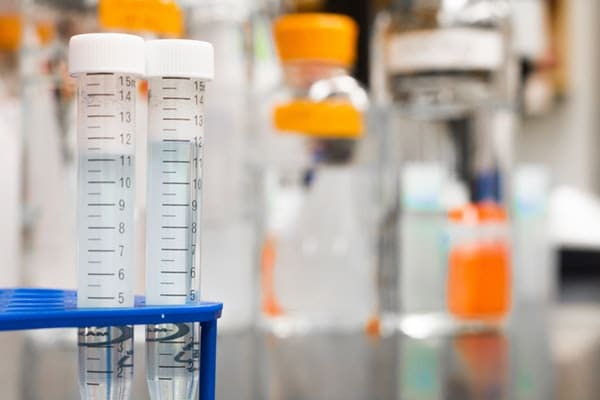
test tube

image source: pixabay.com

Every solution has a solvent and a solute. When you buy contact lens solution, you are essentially buying saltwater; water is the solvent and salt is the solution. The same is basically true of your tears.

Solutions

To answer the question, what is osmosis in biology, we have to understand the types of solutions in biology. Solutions include isotonic, hypotonic, and hypertonic.

Iso means “equal.”

Isotonic solutions have equal amounts of solutes inside and outside the cell. Therefore, isotonic solutions have no net movement because the concentration is already equal.

“Hypo” means “below” or “lower.”

Hypotonic solutions have lower concentrations of solutes outside of the cell than inside. This causes osmosis as solvents enter the cell to even the concentration.

Hyper means “high” or “above.”

Hypertonic solutions have higher concentrations of solutes outside the cell causing osmosis as solvents exit the cell to balance the concentration.

Osmosis Applications and Uses

We asked, what is osmosis in biology, and a logical follow-up question is, what are the applications of osmosis?

Another easy osmosis experiment to try at home:

You need two glass or ceramic cereal-sized bowls, one large carrot or two “baby” carrots, salt, and water.

  1. Pour water into both bowls, sufficient to cover the carrot(s).
  2. Stir salt into one of the bowls until it stops dissolving (hot water will dissolve the salt faster, but let it cool to room temp before adding the carrot).
  3. Place a baby carrot, or half of your large carrot, in both bowls.
  4. Wait: set a timer for one hour, and check your carrots at intervals throughout the day.

We can see something interesting when we drop a carrot into a bowl of saltwater. Within hours the carrot will have become a limp, orange piece of ribbon.

Why? Because the water left the carrot to balance the high concentration of salt surrounding the carrot.

Have you ever watched a suspense movie where the stranded travelers on a desert island are longing for something to drink and one wise traveler warns the others, “Do not drink the ocean water!” A diet of ocean water would leave your cells void of water as it traveled to counteract the salt.

Medicine

Noting the effect of osmosis on our cells, consider the role of osmosis in medicine. Our red blood cells are the giver of life to many who have undergone blood transfusions. In the meantime, red blood cells are stored in an isotonic solution. Remember the solution types?

An isotonic solution is measured to balance the concentration of solutes inside and outside the cells. If the blood cells were stored in a hypotonic or hypertonic solution, the cells would either lose their water or be overtaken by water. Either way, lives could be lost.

A similar phenomenon happens when medicine is received intravenously. If the medicine within the IV solution took on too much solution or lost too much solution, it would not achieve its intended purpose.

Fruits

Have you ever eaten a dehydrated peach chip? Or strawberry chip? Fruits are dehydrated and preserved through osmosis.

Fruits are made primarily of water, so as osmosis causes the water to leave the fruit, it becomes much less likely to spoil

Meat

The opposite is true of meats. Think of the days before refrigerators and ice boxes. How did people preserve their meat? They covered it with salt.

Why did they do that? Unlike fruits that are dehydrated, meats are preserved through drawing solvent into the meat. As the solvent enters, it brings the solute (salt) with it to prevent easy access for bacteria. Salt creates a hypertonic environment that is lethal to bacteria cells.

The Other Side of the Coin

Remember the folks on the desert island? While osmosis could lead to their death through the consumption of saltwater, osmosis could also be their best friend. Since osmosis is a two-way street, it flows into and out of cells depending on concentration levels, it can actually be used to turn saltwater into something salt-free and drinkable.

While the stranded folks wouldn’t have the proper tools to reverse osmosis on the desert island, it is not impossible for someone with an understanding of science and osmosis.

Basically, the pressure is created to push water from highly concentrated areas into an area away from the salt. Today, small units can actually be purchased to reverse osmosis and create safe drinking water.

Here’s an example of a large unit, used in Australia, to clean saltwater for drinking:

Conclusion

water
image source: pexels.com

What is osmosis in biology? Hopefully, you can now answer that question with some thoroughness.

Osmosis is a type of diffusion that happens when a solvent moves through a semipermeable membrane. In biology, water moves through our cells based on the concentration or ratio of solvent (water) to solute (salt).

Semipermeable membranes allow some solutions to pass through, meaning cells can take on too much water or lose too much water. If a cell is in a solution more concentrated than itself (hypertonic), water will enter the cell to balance the high concentration of salt without the cell.

Osmosis also plays a key role in carrying nutrients across the cell membrane. Likewise, waste is escorted out of the cell. Osmosis allows the roots of trees and plants to get the water and nutrients they need to grow strong and healthy.

In return, the plants feed us, either directly or by sustaining the herd animals we eventually eat. Plants rely on osmosis to live, and people rely on plants to live.

Aside from plants, osmosis also is crucial to man’s survival because it expels toxins and waste from our systems.

Hopefully, you have an understanding of osmosis as you move ahead in your biology class or as you reflect on your biology class from many years ago. Osmosis in biology is more than a scientific principle in an old textbook; it is a lifeline for both plants and animals.

You can look around you each day and see it at work, from tall trees in your backyard to patients recovering in the hospital with an IV feeding their veins. Practical examples of osmosis range from accident victims receiving emergency blood transfusions to little kids pouring salt on slugs.

Take note of the osmosis that happens in front of you each day and be amazed by the science all around you.

Featured image: pixabay.com

4 Branches Of Biology To Help You Narrow Down Your Focus

If you’re a biology major, then you know it’s a scientific field that is vast and full of opportunities. So much so, that it can also be overwhelming if you don’t have a pre-determined focus.Biology (from the Greek words “bios” for life and “logos” for study) is the study of all living organisms, ranging from the smallest, single-celled organisms to super-complex human beings. It’s an overarching science, but within it are individual branches of biology — each with its own unique focus.

The Branches Of Biology

Biological science is classified into the following four main branches of biology:

  • Subdivisions based on their approaches of study
  • Medical sciences
  • Agricultural sciences
  • Biological science based on organisms

Each discipline has its own experts, its own courses of study and its own professional opportunities. Knowing which one of these branches of biology you want to specialize in will give you a leg up as you enter college, because you’ll be able to take specialized classes designed to maximize your potential and future opportunities.Here, at Biology Junction, we’ve put together a list of scientific specialties available for study within those four main branches of biology. Read the individual listings under each of the branches of biology to discover which might be a perfect fit for your interests.

Subdivisions Based On Approach Of Study

Branches of biology that focus on specific biological processes, such as the interaction either between different organisms or within a single organism’s biological functions, include:

Anatomy

Anatomy is the study of the inner workings of organisms, specifically focusing on the physical structures and organs of plants and animals. It further subdivides into even more specific branches of biology, including morphology (the study of form and structure), histology (the study of the fine details of biological cells observed via microscopes), cytology (the study of function of plant and animal cells) and physiology (the study of the functions and activities of living organisms).

Biochemistry

Biochemistry is the study of natural chemical reactions and processes that take place inside biological organisms and how to affect them. Biochemistry is a field valuable for work in the pharmaceutical industry, because it is helpful in the development of new drugs.

Biogeography

This is the study of the way various species and ecosystems are distributed in different regions of the world through time and structural evolution.

Biogeology

This is the study of the relationship between Earth’s biosphere (the surface area occupied by living organisms) and its lithosphere (the outer surface of the earth including the crust and outer mantle).

Ecology

Ecology focuses on the interactions between Earth’s organisms and their natural environment.

Embryology

Embryology examines the development of the embryo/fetus from the earliest stages through the birth process.

Eugenics

This is the study of how to improve the natural strengths of humanity through genetic selection. Although its primary aim today is to remove genetic disorders from the population, the field is controversial and mostly defunct due to its close association with racism. The remaining elements have been folded in with the study of genetics.

Evolution

Evolution is the study of the gradual changes in plants, animals and other life forms over the life cycle of Earth. It focuses primarily on the process of natural selection.

Genetics

This is the branch of biology focused on heredity and natural biological variations between generations. It focuses on the changes in the genetic code based on the combination of genes.

Immunology

This is a discipline that keys in on immune systems and how to improve those natural defenses against infection within humans, animals and other organisms.

Paleontology

Paleontology is the study of plant and animal fossils to observe the similarities and differences with modern life. It focuses heavily on extinct life forms such as dinosaurs and megafauna.

Parasitology

Among the branches of biology is parasitology, which focuses on parasitic life forms, or organisms that live on or inside other life forms taking their nourishment from their hosts.

Pathology

Pathology focuses on diseases caused by bacteria, viruses or fungi and their effect on the host plant or animal. This overlaps some with parasitology, due to the parasitic nature of many disease-causing organisms. It is a field that leads to careers in the medical profession with its focus on treating rare diseases.

Taxonomy

Taxonomy is the study of classifications, determining the names, groups and subcategories of plants, animals and other organisms. It centers on finding both the similarities and differences between species. This discipline is also known as “systematics.”

Medical Sciences

This is the field of biology devoted to human biological processes and how to improve health. It focuses on curing diseases, repairing injuries and solving rare conditions. Most fields focus on humans exclusively, but some expand to the health and treatment of animals,

Cardiology

Cardiology is a medical science that focuses on diseases and disorders of the heart. This includes both congenital birth defects and acquired heart diseases caused by heart congestion. Many cardiology specialists become cardio-thoracic surgeons who specialize in open-heart surgery and transplants.

Dentistry

This branch of medical science focuses people’s mouths. Dentists diagnose and treat diseases and disorders of the teeth and gums, as well as develop preventative methods to help people avoid the ill effects of tooth decay and gum disease before they happen.

Dermatology

Dermatology is the medical science that focuses on diagnosing and treating conditions of the skin. These common disorders also affect the hair and nails, which are also treated by dermatologists.

Gynecology and Obstetrics

Gynecology and obstetrics are medical sciences that deal with the female reproductive system, with gynecology focusing on caring for the reproductive health of women before they become pregnant and obstetrics focusing on caring for pregnant women and their unborn children.

Nephrology

This branch of medical science deals with diseases and disorders of the kidney. Nephrologists often treat patients who have issues with their kidneys and they also conduct kidney transplants and post-transplant care.

Oncology

This is the branch of medical science that researches, diagnoses and treats various forms of cancers. There are many subdivisions focusing on specific types of cancer such as neuro-oncology, which studies and treats tricky cancers of the brain.

Ophthalmology

Ophthalmology is a medical science dealing with the anatomy and physiology of the eyeball and orbit. It specializes in treating vision disorders related to genetics, injury, age or disease. The most common area of ophthalmology involves diagnosing minor eye disorders and prescribing corrective eyewear.

Orthopedics

This medical science is devoted to the musculoskeletal system, which includes bones, joints, muscles, ligaments, tendons and nerves. It primarily focuses on the diagnoses and treatment of injuries and disorders, with specialized divisions focusing on prevention and rehabilitation.

Pediatrics

Pediatrics is a medical science that focuses on the general medical care of infants, children and adolescents. Many subdivisions have pediatric specialists, such as dentistry and oncology, as the medical needs of the young can differ.

Physiotheraphy

This branch of medicine focuses on the science of movement and helps people to rehabilitate after injuries or to maintain physical strength or balance while suffering chronic conditions. The goal of physiotherapy is to help people restore their physical strength and range of motion by addressing underlying issues and overall physical and emotional well-being. There are several subdivisions of physiotherapy that focus on rehabilitation from specific conditions, including traumatic brain injuries, spinal cord injuries and amputations.

Urology

Urology is a medical science that focuses on treating conditions of the male and female urinary tract. It also focuses on diagnosing and treating disorders of the male reproductive system and often crosses over with fertility.

Agricultural Sciences

These are the branches of biology devoted to human interaction with their environment, particularly where it relates to harvesting plants or raising livestock for consumption.

Agriculture

This is the agricultural science branch focusing on raising crops and livestock. Also known as farm science or ag science, it opens the doors to careers in food science and production.

Animal Husbandry

This branch of agriculture focuses on the breeding and raising of domestic animals like cows, pigs, goats, and sheep, as well as their use for meat, fabric, dairy and eggs. It is the most common agricultural science used by farmers.

Biomedical Engineering

Biomedical engineers work with doctors and therapists to develop the tools they do for their job. The biomedical engineer uses their knowledge of the biological process to design the instruments in a way that will not interfere with human health or cause side effects.

Biometrics

Biomedical engineers work with doctors and therapists to develop the tools they do for their job. The biomedical engineer uses their knowledge of the biological process to design the instruments in a way that will not interfere with human health or cause side effects.

Biotechnology

This field focuses on the interaction between the human body and function and artificial products designed to improve human quality of life. A subdivision, bioengineering, focuses on the development of prosthetics, joint replacements, pacemakers, and artificial organs.

Cloning

This field of research involves using DNA from an organism to create genetic duplicates. Research currently focuses on animals and is highly controversial, with research into human cloning outlawed in most locations.

Forensic Science

Similar to biometrics, this division uses genetic markers such as DNA and fingerprints in the service of criminal justice. It focuses on the identification and evaluation of physical evidence and suspects.

Horticulture

This is the field of agricultural science specializing in the science of producing and developing plants for human use. This includes fruits, vegetables, flowers, and decorative plants. The field involves the study of the biological processes of plants and the art of evolving them for speedy development and shelf-stability.

Marine Biology

This field of science specializes in marine organisms and their interactions with humans, other marine animals, and their environment. Those interested in aquaculture or ocean preservation often go into this field.

Molecular Biology

Among the branches of biology, this one focuses on biological activity in individual molecules. Molecular biologists regularly have training in genetics and biochemistry.

Nuclear Biology

This is the field of science that focuses on the interaction of radioactivity with human cells and how to counter the diseases and deterioration that radiation exposure causes.

Pisciculture

This is the study of the domestic rearing of fish as a food source, also known as aquaculture. Specialists in pisciculture focus on the behavior and survival rates of fish in artificial habitats for farming, and provide much of the fish for domestic consumption as the supply of fresh-caught fish diminishes.

Sericulture

This is the study of and raising of silkworms for their raw silk production.

Space Biology

A newer branch of biology, it focuses on the impact of zero gravity and space travel on living organisms. These scientists work with NASA and have tested on both plant and animal life-forms.

Tissue Culture

This biological research field takes fragments of tissue from plant or animal organisms to study in artificial environments for research and experimentation.

Veterinary Science

This branch is a hybrid of agricultural and medical science, focusing on the diagnosis and treatment of injuries and illnesses in domestic animals. There are veterinary specialists for both domestic animals/pets and livestock.

Science Based On Organisms

This division focuses on the study of individual branches of life. There are four primary categories: botany, human biology, microbiology and zoology.

Botany

This is the study of plants and all subcategories including algae, fungi and flowering plants.

Human Biology

This is the branch of biology studying human physiology, evolution, genetics and culture.

Microbiology

This is the study of all living organisms that cannot be seen with the naked eye. This includes bacteria, viruses, fungi, prions and archaea.

Zoology

This is the study of all non-human members of the animal kingdom, including mammals, reptiles, fish, amphibians, birds and invertebrates.Within these four categories there are many subdivisions. They include:

Bacteriology

The study of bacteria and their interaction with other life forms.

Virology

The study of viruses and their interaction with other life forms.

Mycology

The study of fungi, their life cycle and interaction with the environment and other life forms.

Entomology

The study of insects and their interaction with the environment and other species of animals and plants.

Ichthyology

The study of fish and their interaction with their ocean and freshwater habitats.

Herpetology

The study of reptiles and amphibians.

Ornithology

The study of birds, their interaction with the environment and their unique bone structure that makes them capable of flight.

Conclusion

When you narrow down your focus from a biology major to the specific branches of biology you plan to major in, you will find that many opportunities will open for you. Not only are you able to tailor your classes to those relevant to your future career, but you’re also able to seek opportunities for hands-on study.An ichthyology major can talk to veteran ichthyologists at a major aquarium while a biotechnology major will find experts at a physical therapy clinic. Whatever your field of study, the more specific you are about your choice among the branches of biology the better equipped you will be to pursue your dream job.

Featured Image: Image by Gerd Altmann from Pixabay

Proper Lab Report Format You Need to Know to Pass with Flying Colors

Learning how to construct a proper lab report will not only secure you with a stellar grade in your science class, but it also will teach you how to report coherently your scientific findings to the world once you are in the field. Lab reports are an essential part of the scientific process and are constructed always after a scientific experiment or study. Therefore, learning the proper lab report format is integral to your overall success.

Below, we have detailed all the components of your lab report and have explained the elements that must be included in your rough draft. If you adhere to our guidelines, you will have all the pertinent information you need to get yourself that A on your lab report.

How to Draft Your Lab Report

This goes without saying, but you need to have a thorough grasp of the material that you are studying before you can write your report. If there are elements you are unsure about and that need clarification, make certain you get that missing information before you write your report.

Your lab report needs to show that you have a complete understanding of the experiment or study you are covering, but it can sometimes be difficult to keep track of all the information you have covered in your experiment. To keep yourself organized, make a rough draft of your report with the following points in mind.

assorted doctor tools

Image via Pexels

Questions You Need to Answer before Starting Your Report

To make things easier for yourself, you need a clear outline that provides answers to specific questions the report will be answering. Jot down the answers to the following questions before writing your lab report to help you cohesively tie together all the information in your experiment:

  • What do you hope to learn from the experiment?
  • What is the hypothesis you are testing?
  • What will be done in the experiment?
  • Why is this method the best way to test your hypothesis?
  • Why would the scientific community (or classroom) benefit from the knowledge presented in the experiment?

Answering these questions will put you in an excellent position to draft an impressive lab report and give you a thorough understanding of the material at hand.

Double Check Your Data with Your Lab Partners

Human error is likely to happen from time to time, and nothing is more important in your lab report than the accuracy of your data. To ensure you and your lab partners are on the same page and that you all have the correct data, get together after you have completed your experiment to double check your findings. It is much better for you to catch this mistake now than for your professor to catch it while grading your report and deduct points for the error.

Know How to Use APA Format

Before you begin your lab report, it is important that you know the basics. APA format is the most widely used format for lab reports and has specific guidelines that you need to follow. Make sure that your paper is formatted properly so that you get the highest grade possible. Nothing is worse than writing an amazing report only to have your professor deduct points for improper formatting.

The following should be consistent throughout your entire report to reflect proper APA formatting:

  • Paper is double-spaced
  • Margins are one inch all around
  • Font is 12 point Times New Roman
  • Manuscript page header with page number appears in the upper right-hand corner of every page

Write with Your Audience in Mind

Finally, before you write your lab report, make sure you know the audience to whom you are addressing. Write the report as if you are explaining it to a clueless student to ensure that you are thorough and accurate in your reporting. Addressing your report solely to your professor may cause you to gloss over simpler concepts or ideas, and this may result in a lower grade.

Proper Lab Report Format

Now that you are ready to write your report, it is important to know the proper lab report format you will be required to follow. All lab reports follow the same basic formula and comprise five sections: the title page, introduction, methods and procedure, results and discussion. These elements need to be included in your final lab report to explain thoroughly the results and findings of your scientific experiment or study.

Not only will this lab report format help to get you a good grade in class, but it also will get you accustomed to the professional standard that will be expected of you once you are in the field. Below, you will find detailed descriptions of each section, as well as the main points you need to cover in each section.

lab vials

Image via Pexels

Section One: Title Page

First things first. Proper lab report format calls for a title page that describes in 10 words or less what your scientific experiment is proving. Titles should start with an action word and vividly describe the premise of the experiment. A successful title will describe succinctly the main idea behind your experiment or study and entice the reader to learn more about your research. The title page also should include your name and your lab partner’s name, your instructor’s name, and the date on which the report was submitted.

Section Two: Introduction

Proper lab report format always will include a thorough introduction of about 150-200 words that includes four basic elements: the purpose of the experiment, the tested hypothesis, a reasonable justification of your hypothesis and a stated connection between the experiment and relevant background research/information.

An easy way to structure your introduction would be to start by first stating your purpose. From there, it is easy to segway seamlessly from your purpose to the relevant background information (often taken from class learnings or lectures) supporting your purpose. This will lead you to the conclusion of your introduction. Here, you will state your hypothesis and reasonable justification of that hypothesis in the final sentences.

This wording method for your introduction is common, but unnecessary. Feel free to experiment with different sentence structures that better suit your particular subject matter, if applicable.

person holding laboratory flask

Image via Pexels

Section Three: Methods and Procedure

The goal of this particular section is to describe in succinct detail how you tested your hypothesis as well as to provide a reasonable justification and rationale for your chosen procedure. Remember that the goal of scientific research is for it to be reproducible; therefore, other researchers should be able to follow your procedure so they can verify your findings through the same or similar collections of data. For this reason, aclearly defined method and procedure are of the utmost importance to creating a successful lab report.

To begin this section, it is best to list all the materials you used in your method and procedure, as well as to define explicitly the control variable in the experiment. The best way to structure this section is to keep it simple and just follow the chronological narrative that occurred as you were conducting your experiment. Be detailed and always explain the rationale behind what you are doing to show an expert understanding of the material.

Make sure that you are being specific and detailed about how you got your results. Explain thoroughly what you are doing and why you are doing it. Also, be sure to explain what you plan to do with your findings. Quantify all measurements such as time, temperature, volume, mass, etcetera to maintain accuracy throughout this section. You may briefly mention how you quantified and recorded your results and data, but be careful not to jump too far ahead and describe the results in too much detail.

You may want to considering separating the material into subheadings corresponding to each individual component in this section if you had a particularly long or involved experiment to ensure clarity for the reader. However, this is not a standard lab report format and it should only be used if you have a long list of materials to document or if your procedure was convoluted.

It also is important to remember to use proper grammar in this section to avoid any confusion. A common mistake is to use the present tense for describing your experimental procedures because you are writing it in the present tense. However, you must use past tense to described the experiment that occurred in the past to avoid any uncertainty.

person writing document

Image via Pixabay

Section Four: Results

The results section is the backbone of your lab report; all other sections of the report depend entirely upon the existence of this section. This is perhaps the most self-explanatory section included in your lab report and may even be your shortest. The goal of this section is to document and highlight all the data that is significant to your hypothesis. You do not need to list every piece of data you have collected because not all the data will be relevant.

All you need to focus on here is to report the data that either proves or disproves your hypothesis in the form of three distinct parts: text, tables and figures. All results sections will start with a brief text description that clearly states the facts of the data. However, be sure not to add so much text that it becomes analytical; you can save that for the next section. In your brief text descriptions, you will want to point out what your data shows in your tables and figures. You may also want to acknowledge and state trends that arise in your data.

Next, you will want to include your tables that show the trends in your data. As a general rule, you will only want to use tables if you have any variation in your data. If you have relatively unchanging variables, a table will not be the effective medium to display your data. You also will want to be sure to give your table a relevant name and have the reader see the data vertically rather than horizontally.

Finally, you will conclude your results section by showing your readers a figure that demonstrates what happened to your independent and dependent variables as you carried out your experiment. Depending upon the subject matter, you can include pie charts, bar graphs, flow charts, maps or photographs in this section. Do note, however, that proper lab report format for undergraduates and industry professionals will be a line graph.

people discussing

Image via Pexels

Section Five: Discussion

Finally, to conclude your lab report you will need to detail your findings and determine whether your hypothesis was supported by your experiment. There are five goals that need to be accomplished with this section, which include:

  • Explaining whether the data proved your hypothesis
  • Mentioning and interpreting any data that deviated from what you expected
  • Detailing reasonable conclusions about the subject matter that you studied
  • If applicable, relating your research to earlier work in the same field
  • Discussing the practical and theoretical implications of your findings

Most discussion sections will begin with explaining how your data either supported or denied your hypothesis. From there, you will need to make explicit statements that explain how your experiment either supported or denied your hypothesis. Your lab report should be able to support a reasonable and justifiable claim based upon the results of your experiments, so be sure that you are very clear and concise in your wording here.

It is important to note that this section will have the most variability from a standard lab report format. It should be tailored to your specific subject matter and subsequent results as long as it meets the above requirements and goals.

Putting It All Together

doctor typing at computer

Image via Pixabay

Writing out a lab report can be the most difficult part of any experiment, but now that you know the proper steps and format you will be able to earn that A+ you deserve. Due remember to always follow the proper lab report format that we outlined above and you will be passing all of your science classes with flying colors.

Featured Image: Pexels