
| Unit 8B – Plants | ![]() |
Know the following:
|
|
| Unit 8B – Plants | ![]() |
Know the following:
|
|
AP Biology: CHAPTER 18
MICROBIAL MODELS
1. What makes microbes good models to study molecular mechanisms?
__________________________________________________________________________
__________________________________________________________________________
2. List several characteristics of viruses.
__________________________________________________________________________
__________________________________________________________________________
3. What are the two basic components of viruses? ___________________________________
__________________________________________________________________________
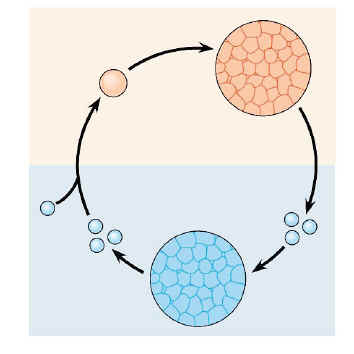
4. Use the diagram to help explain typical viral reproduction.

5. Identify the cycle used by the virulent phage.
__________________________________________________________________________
__________________________________________________________________________
6. Compare the lytic and lysogenic cycles.

7. What is the role of the viral envelope?
__________________________________________________________________________
__________________________________________________________________________
8. Outline the steps in the life cycle of the envelope viruses.

9. Review the life cycle of the HIV virus.

10. What is reverse transcriptase and why is it important in biotechnology?
__________________________________________________________________________
__________________________________________________________________________
11. What is a vaccine?
__________________________________________________________________________
__________________________________________________________________________
12. Where do emerging viruses come from?
__________________________________________________________________________
__________________________________________________________________________
13. What is a viroid? Give some examples.
__________________________________________________________________________
__________________________________________________________________________
14. What is a prion and what do they do to the cells?
__________________________________________________________________________
__________________________________________________________________________

15. List and describe the three basic shapes of bacteria used for classification.
__________________________________________________________________________
__________________________________________________________________________
16. Most bacteria are not pathogenic. Identify several important roles they play in the ecosystem
and human culture.
__________________________________________________________________________
__________________________________________________________________________
17. How do variations arise in bacteria considering they reproduce mostly by asexual means?
__________________________________________________________________________
__________________________________________________________________________
18. Define bacterial transformation.
__________________________________________________________________________
__________________________________________________________________________
19. How does transduction differ from transformation?
__________________________________________________________________________
__________________________________________________________________________
20. What is a plasmid and identify its role in bacterial conjugation?
__________________________________________________________________________
__________________________________________________________________________
21. What is the major method utilized by bacteria to pass along resistance to antibiotics?
__________________________________________________________________________
__________________________________________________________________________
22. What is a transposon?
__________________________________________________________________________
__________________________________________________________________________
__________________________________________________________________________
23. Describe potential problems caused by transposons.
__________________________________________________________________________
__________________________________________________________________________
__________________________________________________________________________
24. E. coli use a regulatory system called an operon. Identify the components with their functions of the operon.
__________________________________________________________________________
__________________________________________________________________________
__________________________________________________________________________
25. Use the diagram of the Tryp operon to outline how it regulated tryptophan levels.

__________________________________________________________________________
__________________________________________________________________________
26. Describe how the trp operon is a repressible operon.
__________________________________________________________________________
__________________________________________________________________________
27. Use the diagram of the lac operon to outline how it regulates glucose levels.

__________________________________________________________________________
__________________________________________________________________________
__________________________________________________________________________
28. Does the diagram above represent the condition for the absence or presence of lactose?
__________________________________________________________________________
__________________________________________________________________________
29. Describe what happens when lactose is absent.
__________________________________________________________________________
__________________________________________________________________________
30. How is the lac operon an inducible system?
__________________________________________________________________________
__________________________________________________________________________
31. Summarize how the presence and absence of glucose influences the lac operon.
__________________________________________________________________________
__________________________________________________________________________
| AP Biology: CHAPTER 26: ORIGIN OF LIFE
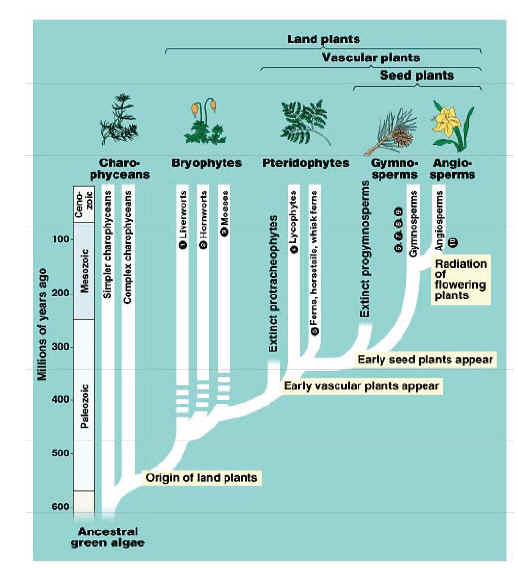
1. Start with the origin of the earth and identify the time frame, conditions, and evidence for each of the following steps leading to current life forms on earth. a. Origin of the earth ________________________________________________________ ___________________________________________________________________________ b. Prokaryotes _____________________________________________________________ ___________________________________________________________________________ c. Oxidizing atmosphere _____________________________________________________ ___________________________________________________________________________ d. Eukaryotic cells __________________________________________________________ ___________________________________________________________________________ e. Multicellular life __________________________________________________________ ___________________________________________________________________________ 2. What was significant about the discovery of the iron oxide bands in the sedimentary layers. ___________________________________________________________________________ ___________________________________________________________________________ ___________________________________________________________________________ 3. Describe the theory of endosymbiosis. ___________________________________________ ___________________________________________________________________________ ___________________________________________________________________________ 4. Why did evolution seem to slow 750 to 570 million years ago? ___________________________________________________________________________ ___________________________________________________________________________ 5. What was special about the Cambrium Explosion? ___________________________________________________________________________ ___________________________________________________________________________ 6. Describe a few adaptations essential for the invasion of plants onto land. ___________________________________________________________________________ ___________________________________________________________________________ 7. Scientific Hypothesis for the origin of life a. The first cells may have originated by chemical evolution on a young Earth b. Abiotic synthesis of organic monomers is a testable hypothesis c. Laboratory simulations of early-Earth conditions have produced organic polymers d. RNA may have been the first genetic material e. Protobionts can form by self-assembly f. Natural selection could refine protobionts containing hereditary information g. Debate about the origin of life abounds 8. Describe the hypothesized conditions on earth when life arose. _______________________ ___________________________________________________________________________ ___________________________________________________________________________ 9. What did Louis Pasteur demonstrate with his experiment? ___________________________ ___________________________________________________________________________ ___________________________________________________________________________ 10. List the four stages for the formation of life. a. _______________________________________________________________________ b. _______________________________________________________________________ c. _______________________________________________________________________ d. _______________________________________________________________________ 11. What metabolic processes would you expect to see in protobionts? ___________________________________________________________________________ ___________________________________________________________________________ 12. Why is RNA now thought to be the first genetic code? ___________________________________________________________________________ ___________________________________________________________________________ 13. What did Oparin, Haldane, Miller and Urey accomplish? ___________________________________________________________________________ ___________________________________________________________________________ 14. What are some of the possible locations for the first life forms? ___________________________________________________________________________ ___________________________________________________________________________ 15. What is the basis of the classification system developed by Linneaus? ___________________________________________________________________________ ___________________________________________________________________________ 16. Why is taxonomy considered a work in progress? ___________________________________________________________________________ ___________________________________________________________________________ 17. What are two problems with the five kingdom system of classification? a. ________________________________________________________________________ ___________________________________________________________________________ b. ________________________________________________________________________ ___________________________________________________________________________ 18. How has the Domain System altered our view of taxonomy? ___________________________________________________________________________ ___________________________________________________________________________ 19. Which prokaryote is closer to the eukaryotes? List several reasons for your answer. ___________________________________________________________________________ ___________________________________________________________________________ ___________________________________________________________________________ 20. Place the following metabolic processes in an order that fits this hypothesis for the origin of life: Photosynthesis, Aerobic Respiration, Fermentation, Nucleic Acid replication (RNA or DNA), Membrane transport ___________________________________________________________________________ ___________________________________________________________________________ ___________________________________________________________________________ 21. Label the diagram to explain the Miller and Urey experiment to test the Abiotic Synthesis hypothesis.
22. Label the diagram to indicate the major events, the time frame, and the geologic eras the origin of life on Earth.
|
| Algal & Fungal-like Protists Kingdom Protista All Materials © Cmassengale |
![]() Copyright © by Holt, Rinehart and Winston |
Algal-Like Protists
Characteristics of Algae:
Structure of Algal Cells:

Chlamydomonas
Copyright © by Holt, Rinehart and Winston

Volvox
Copyright © by Holt, Rinehart and Winston

Spirogyra
Copyright © by Holt, Rinehart and Winston

Macrocystis
Copyright © by Holt, Rinehart and Winston
Reproduction in Unicellular Algae:
Asexual Phase
Sexual Phase

Life Cycle of Chlamydomonas
Copyright © by Holt, Rinehart and Winston
Reproduction in Multicellular Algae:

Oedogonium Life Cycle
Copyright © by Holt, Rinehart and Winston


Conjugation Tube between Spirogyra

Ulva Life cycle
Copyright © by Holt, Rinehart and Winston
Classification:
SEVEN PHYLA OF ALGAE |
||||
| Phylum | Structure of Thallus | Pigments | Food Storage | Cell Wall composition |
| Chlorophyta (Green Algae) |
Unicellular Colonial Filamentous Multicellular |
Chlorophyll a & b Carotenoids | Starch | Mainly Cellulose |
| Phaeophyta (Brown Algae) ![]() |
Multicellular | Chlorophyll a & c Carotenoids Fucoxanthin Peridinin |
Laminarin | Cellulose Algin |
| Rhodophyta (Red Algae) ![]() |
Multicellular | Chlorophyll a Phycobilins Carotenoid | Starch | Cellulose CaCO3 |
| Bacillariophyta (Diatoms) |
Unicellular Some Colonial | Chlorophyll a & c Carotenoids Xanthophyll | Starch |
Pectin SiO2 |
| Dinoflagellata (Dinoflagellates) |
Unicellular | Chlorophyll a & c Carotenoids | Starch | Cellulose |
| Chrysophyta (Golden Algae) |
Unicellular Some Colonial | Chlorophyll a & c Xanthophyll Carotenoids |
Laminarin | Cellulose |
| Euglenophyta (Euglenoids) |
Unicellular | Chlorophyll a & b Carotenoids Xanthophyll |
Paramylon |
No Cell Wall Pellicle |
Chlorophyta (green Algae):7000 species
Phaeophyta (brown algae):
1500 species
![]() |
![]() |
| Laminaria | Fucus |
Rhodophyta (red algae):
4000 species

Polysiphonia (red algae)
Bacillariophyta (diatoms):11,500 species

Diatoms
Copyright © by Holt, Rinehart and Winston
Dinoflagellata or Pyrrophyta (dinoflagellates):1100 species

Copyright © by Holt, Rinehart and Winston


Red Tide
Photograph by Robert Brons
Chrysophyta (golden algae)
850 Species:
Euglenophyta
1000 Species:

Copyright © by Holt, Rinehart and Winston
Fungal-Like Protists
Characteristics of Fungal Protists:
Slime molds: 

Feeding Stage of Slime Mold
Copyright © by Holt, Rinehart and Winston

Saprophytic Slime Mold

A is Lycogala epidendrum, B is Comatricha typhoides, C is Badhamia utricularia, D is Dictydium

Copyright © by Holt, Rinehart and Winston
Acrasiomycota (Cellular Slime Molds):

Myxomycota (Plasmodial Slime Molds):

Oomycota (Water Molds):

Branching Filaments of Water Mold
Chytridiomycota (Chytrids):

| Amphibians All Materials © Cmassengale |
Amphibian Evolution:
| Arose from lobe-fined ancestor called Crossopterygians | |
| Land plants & insects provided new food source | |
| Had primitive lungs & short, limb like fins for short periods on land | |
| Appeared during late Devonian | |
| Icthyostega early amphibian with 4 limbs, lungs, & a tail for swimming |
Adaptations:
| Four limbs with claws on digits (toes) | |
| Lungs instead of gills | |
| Both internal & external nares (nostrils) | |
| Three chambered heart (two atria & one ventricle) | |
| Double loop blood circulation to lungs & rest of body cells |

| Skin with keratin (protein) to prevent water loss | |
| Necks to more easily see & feed | |
| Most with smooth, moist skin to take in dissolved oxygen | |
| Some with oral glands to moisten food they eat | |
| Webbed toes without claws | |
| Ectothermic – body temperature changes with environment | |
| Show dormancy or torpor (state of inactivity during unfavorable environmental conditions) | |
| Hibernate in winter and aestivate in summer | |
| Aquatic larva called tadpole goes through metamorphosis to adult | |
| Metamorphosis controlled by hormone called thyroxine |

Tadpole
| External fertilization with amplexus (male clasps back of female as sperm & eggs deposited into water) | |
| Eggs coated with sticky, jelly like material so they attach to objects in water & do not float away | |
| Eggs hatch into tadpoles in about 12 days |
Classification:
Anuran Characteristics:
![]() Frog |
![]() Toad |
Urodela Characteristics:

Spotted Salamander

Red Spotted Newt
Apodan Characteristics:

Caecilian
Trachystoma Characteristics:

Mud Eel or Siren
External Frog Anatomy:

Internal Frog Anatomy:
Skeletal System
Digestive System
![]() |
Circulatory System
Respiratory System
Excretory System
Nervous System