Elephants Can

%CODE1%

Elephants Can’t Jump
& Other Freaky Scientific Facts

Welcome to a Fun Site about Science!

Did you know that elephants can’t jump even though they have the same number of bones in their feet as other mammals?
The bones in an elephant’s foot are more closely packed together than other mammals so they do not have the flexibility or spring mechanisms that would enable them to jump.
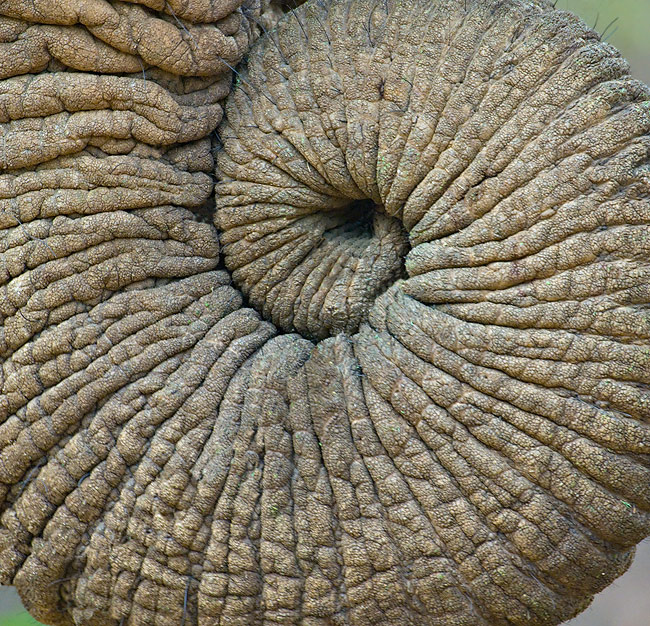
How many bones are in an elephant’s trunk? The elephant’s trunk has numerous muscles but NO BONE.


What is a baby oyster called? They are called spats!
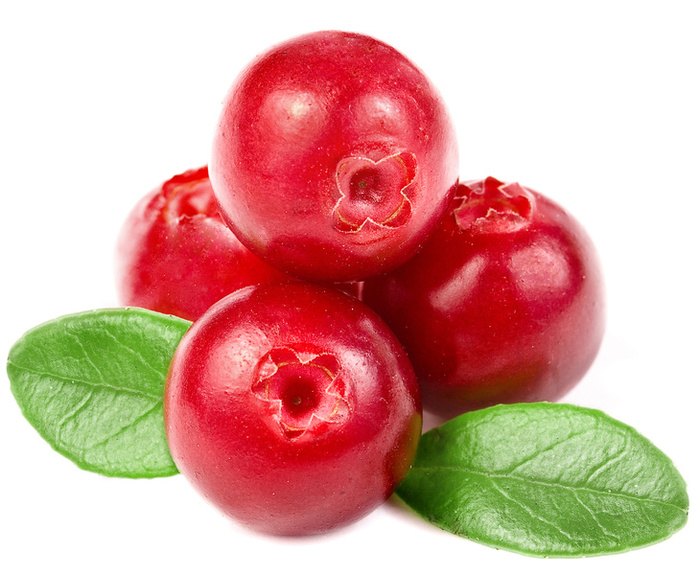
Three fruits are native to North America. Cranberries, Concord grapes, and blueberries!
What was the name of the captain and the ship on which Darwin made his famous voyage? Captain Fitzroy on the H.M.S. Beagle
A Swedish botanist, naturalist, physician and zoologist — Who am I? Carolus Linnaeus
Protozoan can move by cilia, flagella, or pseudopodia.
Give an example of a protist that moves by each of these means.

Include your NAME & PERIOD
cheryl.massengale@russellvilleschools.net


Google   


When were you born?

Another Taxonomy Quiz

%CODE1%

Javascript not enabled

Name: 

Another Taxonomy Quiz


Modified True/False
Indicate whether the statement is true or false.  If false, change the identified word or phrase to make the statement true.
 1.
Scientists use taxonomy to determine the evolutionary history of organisms. _________________________


 2.
Taxonomy provides consistent ways to name organisms. _________________________


 3.
Scientific names of organisms consist of two English terms. _________________________


 4.
Two different organisms cannot have the same scientific name. _________________________


 5.
Genus is the basic biological unit in the Linnaean system of classification. _________________________


 6.
A genus is a taxonomic category that contains several families. _________________________


 7.
Under the Linnaean system of classification, organisms are grouped on the basis of similarities in structure. _________________________


 8.
Linnaeus devised eight levels of classification categories for living things. _________________________


 9.
The least inclusive group to which an organism can be assigned is its kingdom. _________________________


 10.
Kingdoms are subgroups of phyla. _________________________


 11.
A species is a larger taxonomic group than a genus. _________________________


 12.
Bird wings and insect wings are examples of analogous structures. _________________________


 13.
Organisms that have similar traits but evolved independently are the result of convergent evolution. _________________________


 14.
Cladistics is used to determine the sequence in which different groups of organisms evolved. _________________________


 15.
In modern systematics, studies of the changes in the skeletons of vertebrates have helped researchers to estimate the time at which each species began to evolve. _________________________


 16.
Comparing the sequence of DNA bases in the genes of several organisms is used to determine the order in which the organisms evolved. _________________________


 17.
All organisms in the kingdom Animalia are multicellular heterotrophs whose cells lack cell walls. _________________________


 18.
Archaea are eukaryotes that are characterized by several unique biochemical characteristics. _________________________


 19.
Traditionally, bacteria have been classified on the basis of their shape, cell wall composition, and metabolism. _________________________


 20.
Most organisms in the kingdoms Plantae and Animalia are multicellular. _________________________


Multiple Choice
Identify the choice that best completes the statement or answers the question.
 21.
Taxonomy is
a.
the study of life.
b.
the science of naming and classifying organisms.
c.
the evolutionary history of a species.
d.
the sequence in which different groups evolved.
 22.
An advantage of our scientific naming system is that
a.
common names mean the same in all countries.
b.
Latin names are easy to pronounce.
c.
biologists can communicate regardless of their native languages.
d.
organisms all have the same scientific name.
 23.
All scientific names of organisms must be
a.
unique and have two Latin words.
b.
general and use the species name.
c.
different and repeat the phylum name.
d.
similar and include the common name.
 24.
Linnaeus’s two-word system for naming organisms is called
a.
taxonomic evolution.
c.
Greek polynomials.
b.
Genus species.
d.
binomial nomenclature.
 25.
In the Linnaean system of classification, the level that identifies one unique organism is the
a.
kingdom.
c.
genus.
b.
family.
d.
species.
 26.
Under the Linnaean system of classification, plants and animals are sorted into groups based on
a.
number and size.
c.
form and size.
b.
form and structure.
d.
number and structure.
 27.
The largest division that a group of organisms can belong to is a
a.
domain.
c.
genus.
b.
class.
d.
kingdom.
 28.
Placement in each level of classification is based on
a.
specific characteristics.
c.
shared characteristics.
b.
general characteristics.
d.
different characteristics.
 29.
Similar genera are grouped into a(n)
a.
phylum.
c.
family.
b.
class.
d.
order.
 30.
Analogous structures
a.
have a common size in organisms.
b.
perform the same function in organisms.
c.
have the same structure in organisms.
d.
evolve from a common ancestor.
 31.
Traditional systematics emphasizes the importance of
a.
derived characteristics.
c.
similar characteristics.
b.
unique characteristics.
d.
compared characteristics.
 32.
Similar features that evolve through convergent evolution are called
a.
analogous characters.
c.
environmental characters.
b.
homologous characters.
d.
genetic characters.
 33.
Convergent evolution produces analogous characters in different species as the result of
a.
similar environments.
c.
sharing a common ancestor.
b.
different environments.
d.
shared derived characters.
 34.
A phylogenetic tree differs from a cladogram in that a phylogenetic tree
a.
hypothesizes the time at which each group of organisms evolved.
b.
also indicates the new characteristics that evolved with each group of organisms
c.
only illustrates hypothesized relationships among groups of organisms.
d.
predicts the next group of organisms that is expected to evolve.
 35.
Studies of fossils of dinosaurs and birds show that
a.
feathers may not be an important difference between dinosaurs and birds.
b.
dinosaurs can be considered to be modern descendents of birds.
c.
the anatomies of the dinosaurs and birds are unrelated.
d.
dinosaurs and birds share many analogous characters.
 36.
A model used by biologists to represent evolutionary history among species is called a
a.
phylogram.
c.
histogram.
b.
cladogram.
d.
parallelogram.
 37.
Derived characters are traits
a.
that are shared by all species.
b.
that originated in a common ancestor.
c.
found in closely related species.
d.
found in distantly related species.
 38.
During Linnaeus’ time, scientists divided all living organisms into
a.
five phyla.
c.
three domains.
b.
four families.
d.
two kingdoms.
 39.
Which of the following terms is no longer used to describe a group of organisms in the modern classification system?
a.
Archaea
c.
Monera
b.
Eubacteria
d.
Protista
 40.
Sponges are animals that were once classified as
a.
bacteria.
c.
plants.
b.
fungi.
d.
protists.
 41.
Which of the following characteristics was used to reclassify sponges?
a.
body type
c.
cell walls
b.
cell type
d.
nutrition
 42.
The kingdoms Eubacteria and Archaebacteria were once grouped in a kingdom called
a.
Protista.
c.
Monera.
b.
Animalia.
d.
Plantae.
 43.
Four of the kingdoms include eukaryotes and the other two include
a.
plants.
c.
animals.
b.
fungi.
d.
prokaryotes.
 44.
Which of the following is not a characteristic used to differentiate kingdoms?
a.
cell type
c.
nutrition
b.
root system
d.
body type
 45.
Protista is an example of a
a.
kingdom.
c.
genus.
b.
class.
d.
species.
 46.
Which two kingdoms contain both unicellular and multicellular organisms?
a.
Archaea and Animalia
c.
Animalia and Fungi
b.
Protists and Bacteria
d.
Protista and Fungi
 47.
Bacteria : prokaryotes ::
a.
Fungi : prokaryotes
c.
Protista : eukaryotes
b.
Animalia : prokaryotes
d.
Archaea : eukaryotes
 48.
One difference between plants and animals is that plants are
a.
prokaryotic and animals are eukaryotic.
b.
eukaryotic and animals are prokaryotic.
c.
autotrophs and animals are heterotrophs.
d.
heterotrophs and animals are autotrophs.
 49.
The science of classifying living things is called
a.
identification.
c.
taxonomy.
b.
classification.
d.
speciation.
 50.
Taxonomy is defined as the science of
a.
classifying plants according to their uses in agricultural experiments.
b.
studying ribosomal RNA sequencing techniques.
c.
grouping organisms according to their characteristics and evolutionary history.
d.
studying reproductive mechanisms and gene flow.
 51.
As we move through the biological hierarchy from the kingdom to species level, organisms
a.
vary more and more.
b.
are less and less related to each other.
c.
become more similar in appearance.
d.
always are members of the same order.
 52.
A mushroom is difficult to classify in Linnaeus’s two-kingdom classification system because
a.
it has another common name, the toadstool.
b.
it doesn’t seem to fit into either kingdom.
c.
mushrooms had not yet evolved in Linnaeus’s time.
d.
All of the above
 53.
Which of the following was not a consideration for Carolus Linnaeus when he developed his system of nomenclature of organisms?
a.
It should include detailed descriptions of an organism in its name.
b.
It should assign each organism a unique name.
c.
It should assign names using a language that can be recognized worldwide.
d.
It should enable scientists to classify organisms according to their presumed evolutionary relationships to other organisms.
 54.
Which of the following scientists developed the system of classifying organisms by assigning them a genus and species name?
a.
Leakey
c.
Darwin
b.
Aristotle
d.
Linnaeus
 55.

mc055-1.jpg

Refer to the illustration above. A shark’s skeleton is made of cartilage while a dolphin’s skeleton is made of bone. This is one reason the two organisms are placed in different

a.
kingdoms.
c.
subspecies.
b.
domains.
d.
classes.
 56.
The organism Quercus phellos is a member of the genus
a.
Plantae.
c.
Quercus.
b.
phellos.
d.
Protista.
 57.
Poison ivy is also known as Rhus toxicodendron. Its species identifier is
a.
poison.
c.
ivy.
b.
Rhus.
d.
toxicodendron.
 58.
The red maple is also known as Acer rubrum. Its scientific name is
a.
red maple.
c.
rubrum.
b.
Acer.
d.
Acer rubrum.
 59.
The scientific name of an organism
a.
varies according to the native language of scientists.
b.
is the same for scientists all over the world.
c.
may refer to more than one species.
d.
may have more than one genus name.
 60.
Scientists don’t use the common names of organisms because
a.
an organism may have more than one common name.
b.
common names are too ambiguous.
c.
an organism rarely has the same name in different languages.
d.
All of the above
 61.
An organism can have
a.
one genus name and one species identifier.
b.
one genus name and two species identifiers.
c.
two scientific names if it is found on different continents.
d.
two genus names but only one species identifier.
 62.
In which language are scientific names written?
a.
English
c.
Arabic
b.
Greek
d.
Latin
 63.
Two organisms in the same class but different orders
a.
are in different kingdoms.
b.
have the same genus name.
c.
are in the same phylum.
d.
are members of the same species.
 64.
Organisms in different genera
a.
may share the second word of their scientific names.
b.
may be in the same family.
c.
may be in different orders.
d.
All of the above
 65.
Two organisms in the same order but different families may
a.
be more similar than two organisms in different classes.
b.
be in the same class.
c.
have the same species identifier.
d.
All of the above
 66.
Kingdoms are divided into phyla, and each phylum is divided into
a.
families.
c.
orders.
b.
classes.
d.
genera.
 67.
The correct order of the biological hierarchy from kingdom to species is
a.
kingdom, class, family, order, phylum, genus, species.
b.
kingdom, phylum, order, family, class, genus, species.
c.
kingdom, phylum, class, order, family, genus, species.
d.
kingdom, class, order, phylum, family, genus, species.
 68.
The lowest hierarchy level in biological classification is the
a.
genus.
c.
family.
b.
species.
d.
order.
 69.
Which of the following is the least inclusive classification group?
a.
class
c.
phylum
b.
genus
d.
species
 70.
Quercus rubra : Quercus phellos ::
a.
Anolis carolinensis : Parus carolinensis
b.
Erithacus rubicula : Turdus migratoria
c.
Aphis pomi : Aphis gossypii
d.
carp : goldfish
 71.
class : family ::
a.
order : phylum
c.
species : genus
b.
genus : class
d.
phylum : order
 72.
Today, biologists classify organisms by their
a.
physical similarities.
c.
behavioral similarities.
b.
chemical similarities.
d.
All of the above
 73.
Phylogenetic trees depict
a.
known evolutionary relationships between organisms.
b.
presumed evolutionary relationships based on physical features only.
c.
only living organisms.
d.
presumed evolutionary relationships based on a variety of types of evidence.
 74.
The DNA sequences of two species of sharks would
a.
be more similar than the DNA sequences of a shark and a dolphin.
b.
show no discernible differences.
c.
be very close to the DNA sequences of a dolphin.
d.
indicate how the sharks evolved.
 75.
Which of the following is (are) used in systematic taxonomy to classify organisms?
a.
patterns of embryological development
b.
homologous features
c.
amino acid sequences of proteins
d.
All of the above
 76.
analogous features : convergent evolution ::
a.
two members of the same genus : same species
b.
cladogram : evolutionary relationships
c.
common names : universal identification
d.
cladograms : exact, direct information
nar001-1.jpg
 77.
Refer to the illustration above. A branching diagram like the one shown is called a
a.
phenetic tree.
c.
family tree.
b.
cladogram.
d.
homology.
 78.
Refer to the illustration above. Each particular feature, such as dry skin, that is used to assign an organism to a group is called a(n)
a.
special character.
b.
analogous character.
c.
derived character.
d.
homologous character.
 79.
Nearly all single-celled eukaryotes that are either heterotrophic or photosynthetic belong to the kingdom
a.
Animalia.
c.
Plantae.
b.
Fungi.
d.
Protista.
 80.
Most multicellular, nucleated autotrophs that carry on photosynthesis belong to the kingdom
a.
Animalia.
c.
Fungi.
b.
Eubacteria.
d.
Plantae.
 81.
Multicellular, nucleated heterotrophs that always obtain food by absorbing nutrients from the environment belong to the kingdom
a.
Animalia.
c.
Fungi.
b.
Eubacteria.
d.
Plantae.
 82.
An organism that breaks down organic matter, which it then absorbs, is in the kingdom
a.
Fungi.
c.
Animalia.
b.
Plantae.
d.
Protista.
 83.
Simple, non-nucleated organisms that use hydrogen to produce methane are in the domain
a.
Archaea.
c.
Eukarya.
b.
Bacteria.
d.
None of the above
 84.
The kingdom defined as including any eukaryotes that are not plants, animals, or fungi is the kingdom
a.
Protista.
c.
Animalia.
b.
Plantae.
d.
Fungi.
 85.
Carl Woese proposed the three-domain system of classification based on the examination of
a.
embryos.
c.
ribosomal RNA.
b.
fossils.
d.
organisms’ physical features.
 86.
The three domain system of classification is based on similarities and differences in ____, while the six-kingdom system is based on similarities and differences in ____.
a.
DNA; DNA, fossils, embryological development, and physical features
b.
DNA; embryological development, fossils, physical features, and RNA
c.
ribosomal RNA; embryological development, fossils, physical features, and various molecular structures
d.
physical features; embryological development, fossils, physical features, and various molecular structures
 87.
Which of the following groups are placed together by cladistics but are placed in separate groups by classical taxonomy?
a.
birds and crocodiles
c.
turtles and birds
b.
birds and mammals
d.
snakes and mammals
 

Completion
Complete each statement.
 88.
The current system used for naming organisms was developed by ____________________.

 89.
The two-word system for naming organisms is called _________________________.

 90.
The scientific name of an organism gives biologists a common way of ____________________ regardless of their native languages.

 91.
All names assigned to organisms under the Linnaean system are in the ____________________ language.

 92.
The unique two-word name for a species is its ____________________ name.

 93.
All living things are grouped into one of three ____________________.

 94.
There are ____________________ levels of classification in the modern classification system.

 95.
A kingdom contains many ____________________.

 96.
Classes with similar characteristics are assigned to a(n) ____________________.

 97.
Each level of classification is based on ____________________ shared by all the organisms it contains.

 98.
Homo habilis, Homo erectus, and Homo sapiens all belong to the same ____________________.

 99.
Traditionally, scientists have used differences in appearance and ____________________ to classify organisms.

 100.
Unlike cladistics, traditional systematics places more ____________________ on some traits than on others.

 101.
Analogous structures are found in ____________________ taxa as a result of similar environmental conditions.

 102.
The type of evolution that results in similar characteristics found in different organisms as the result of selection within similar environments is called ____________________ evolution.

 103.
The evolutionary history of a species is called its ____________________.

 104.
Shared derived characters are found in organisms that once shared a(n) ____________________ ancestor.

 105.
A method of analysis that reconstructs phylogenies by inferring relationships based on shared characteristics is called ____________________.

 106.
A model developed by systematists that uses shared derived characters to show the evolutionary history of different organisms is called a(n) ____________________.

 107.
Cladistics is used to determine the ____________________ in which different groups of organisms evolved.

 108.
Animals that appear early on a cladogram do not share as many of the same ____________________ traits as the animals that appear later on the cladogram.

 109.
Modern systematic biologists use the ____________________ rate of DNA mutations like a “molecular clock.”

 110.
Two kingdoms include prokaryotes, while four kingdoms include ____________________.

 111.
Bacteria have strong exterior cell walls made of ____________________.

 112.
An organism made of many cells that are permanently associated and that coordinate their activities is called a(n) ____________________ organism.

 113.
Eukaryotes that are not fungi, plants, or animals are called ____________________.

 114.
Aristotle classified plants on the basis of differences in their ____________________.

 115.
The science of naming and classifying organisms is called ____________________.

 116.
____________________ devised the two-name system of naming organisms.

 117.
Biologists of Linnaeus’s time classified every living thing as either plant or ____________________.

 118.
A genus is subdivided into smaller groups called ____________________.

 119.
Each kind of organism on Earth is assigned a unique two-word ____________________.

 120.
All scientific names are made up of two words that are often derived from the ____________________ language.

 121.
The first word of a scientific name indicates the ____________________ to which the organism belongs.

 122.
A kingdom is divided into phyla when animals are being classified or into ____________________ when plants are being classified.

 123.
The evolutionary history of a species is called its ____________________.

 124.

co124-1.jpg

Refer to the illustration above. Organism 4 belongs to the kingdom ____________________.

 125.
Eukaryotic organisms that lack specialized tissue systems are members of the kingdom ____________________.

 126.
Corals, spiders, and rodents all belong to the kingdom ____________________.

 127.
The domains of the three-domain system of classification are Archaea, Bacteria, and ____________________.

 128.
The variety of organisms at all taxonomic levels is called ____________________.

 129.
Cladistics uses shared and ____________________ characters to group taxa.

 130.
The Greek philosopher ____________________ classified organisms as either plants or animals.


Problem
 131.

The following table presents data on some characteristics found in vertebrates. A “+” indicates that an organism has a particular characteristic and a “–” indicates that an organism does not have a particular characteristic.

Characteristics
Organism
Jaws
Limbs
Hair
Lungs
Tail
Lamprey
+
Turtle
+
+
+
+
Cat
+
+
+
+
+
Gorilla
+
+
+
+
+
Lungfish
+
+
+
Trout
+
+
Human
+
+
+
+

Using these data, construct a cladogram illustrating the evolutionary relationships among these organisms. Each branch point should indicate a common ancestor. Write the name of the shared character that is common to all organisms above each branching point. A shared character can be the absence of a structure common to organisms below that point on the tree. Write your answer in the space below.


Essay
 132.
Why might the use of common names to describe organisms sometimes cause confusion? Give several examples to support your answer. Write your answer in the space below.

 133.
While on a biological expedition to a tropical rain forest, you discover a previously unidentified animal. Explain the guidelines you would follow to choose a genus and species name for the animal. Write your answer in the space below.

 134.
The red fox (Vulpes vulpes), the coyote (Canis latrans), and the dog (Canis familiaris) are all members of the family Canidae. The mountain lion (Felis concolor) is a member of the family Felidae. Describe the relationships among these animals. Write your answer in the space below.

 135.
A species is defined as a group of organisms that are similar and can interbreed and produce fertile offspring in nature. Horses and donkeys can interbreed and produce mules, which cannot produce offspring. Is it possible that horses and donkeys belong to the same species? Explain. Write your answer in the space below.

 136.
What are the main criteria currently used to classify organisms? Write your answer in the space below.


Check Your Work     Start Over

Bacteria and Viruses

%CODE1%

Javascript not enabled

Name: 


bacteria and Viruses


Multiple Choice
Identify the choice that best completes the statement or answers the question.
 1.
Many microscopic organisms or entities have been identified as pathogens, including all of the following except:
a.
protozoa.
b.
viruses.
c.
fungi.
d.
bacteria.
e.
None of the above, all may be pathogenic.
 2.
Which of the following statements about bacteria is false?
a.
A small percentage of bacteria are pathogenic.
b.
Some bacteria can photosynthesize.
c.
Bacteria are important decomposers.
d.
Bacteria are not cellular and are sometimes not classified as life forms.
e.
Bacteria convert atmospheric nitrogen into ammonia and then nitrates that can be used by plants.
 3.
Viruses were first identified:
a.
because they caused an infection and formed colonies on nutrient agar plates.
b.
because they were seen in the light microscope.
c.
because they caused an infection and were small enough to pass through filters that trapped bacteria.
d.
because they were smaller than bacteria and had all the properties of living organisms.
e.
because they caused an infection and were seen in the electron microscope.
 4.
The protein coat of a virus is called the:
a.
capsule.
b.
capsid.
c.
exospore.
d.
phage.
e.
pilus.
 5.
Viruses that attack bacteria are called:
a.
phages.
b.
bacteriods
c.
prions.
d.
virons.
e.
viroids.
Figure 23-01
Use the figure below to answer the corresponding questions.nar001-1.jpg

 6.
The structure of the virus in Figure 23-01 that is common to all viruses is:
a.
2.
b.
3.
c.
4.
d.
5.
e.
All of the above.
 7.
In Figure 23-01, the function of the structure labeled 3 is:
a.
attachment to a host cell.
b.
locomotion.
c.
mate recognition.
d.
replication.
e.
to take over host cell mechanisms.
 8.
Viruses are classified by:
a.
the sequence of their DNA.
b.
structural similarities.
c.
the sequence of their rRNA genes.
d.
the traditional Linnaean binomial nomenclature system.
e.
an international committee.
 9.
Viruses:
a.
are very tiny cells on the order of 500 nm.
b.
contain both RNA and DNA.
c.
cannot independently perform metabolic activities.
d.
have a standard morphology that includes a capsid, tail, and tail fibers.
e.
All of the above.
 10.
Viruses:
a.
are usually species-specific.
b.
may have multiple origins.
c.
are probably related to mobile genetic elements.
d.
may have escaped from cells.
e.
All of the above.
 11.
Phages are being considered for:
a.
vectors in gene therapy experiments.
b.
antibiotics in bacterial infections.
c.
gene transfer vectors in animal cells.
d.
being equivalent to the first living organisms.
e.
All of the above.
 12.
Temperate viruses:
a.
always destroy their host immediately.
b.
are considered virulent.
c.
do not always destroy their host.
d.
do not undergo a lysogenic cycle.
e.
undergo a lytic cycle.
 13.
Virulent (lytic) phages:
a.
infect viruses.
b.
destroy bacteria.
c.
infect, but do not destroy bacteria.
d.
infect virions.
e.
infect prions.
 14.
The five stages of a lytic infection are attachment, penetration, _____________, assembly, and release.
a.
lysis
b.
prophage
c.
lysogenesis
d.
transduction
e.
replication
 15.
A prophage:
a.
is phage DNA that is integrated into viral DNA.
b.
is phage DNA that is integrated into bacterial DNA.
c.
replicates only when the eukaryotic cell it infects replicates.
d.
is an underdeveloped lytic virus.
e.
is a bacterial cell about to lyse.
 16.
The bacterium that causes botulism disease is harmless until it:
a.
is infected by lytic bacteria.
b.
is infected by certain retroviruses.
c.
contains a certain prophage DNA.
d.
is irradiated by UV radiation.
e.
is infected by prions.
 17.
____________ conversion occurs when a bacterium carrying viral genes takes on new, atypical characteristics.
a.
Transducing
b.
Lysogenic
c.
Prophage
d.
Lytic
e.
Reverse
 18.
The specificity of viruses to different types of cells is due to _____________ sites on the host cell.
a.
prophage
b.
receptor
c.
transduction
d.
penetration
e.
transcription
 19.
Retroviruses differ from other RNA viruses by:
a.
having reverse transcriptase instead of RNA-dependent RNA polymerase.
b.
the shape of their capsid.
c.
the way they infect their host cells.
d.
the sugar coating on their capsids.
e.
lytically destroying their hosts.
 20.
Which of the following diseases is not caused by a virus?
a.
rabies
b.
polio
c.
warts in humans
d.
chickenpox
e.
Lyme disease
 21.
Which of the following identifies a group of DNA viruses?
a.
retroviruses
b.
herpesviruses
c.
paramyxoviruses
d.
filovirus
e.
picornaviruses
 22.
Viral proteins can damage host cells by:
a.
increasing the rate of fermentation within the host.
b.
producing endotoxins.
c.
causing a decline in coordination and increased irritability.
d.
preventing transcription of viral nucleic acids.
e.
overwhelming the host cell with a large number of viruses.
 23.
Viral infections in humans spread via the circulatory system. Viral infections in plants spread from cell to cell via:
a.
endocytosis.
b.
plasmodesmata.
c.
infected seeds.
d.
pili.
e.
transformation.
 24.
Human viruses can enter human cells by fusion with the cell membrane or by:
a.
diffusion into the cell.
b.
passage through specific protein channels.
c.
coating themselves with lipids that cloak their entrance into the cell.
d.
endocytosis.
e.
hitchhiking onto protein signals entering the cell.
 25.
Viroids cause a variety of plant diseases and are composed only of:
a.
strands of RNA.
b.
strands of DNA.
c.
protein coats.
d.
peptidoglycan.
e.
a capsid.
 26.
Mad cow disease is an example of an infection caused by a:
a.
bacterium.
b.
bacteriophage.
c.
retrovirus.
d.
viroid.
e.
prion.
 27.
_____________ is credited with the discovery of prions as a new biological principle of infection.
a.
Stanley Prusiner
b.
Anton van Leeuwenhoek
c.
Dmitrii Ivanowsky
d.
Stanley Brenner
e.
Carl Woese
 28.
A symptom of a transmissible spongiform encephalopathy (TSE) is:
a.
degeneration of the digestive tract.
b.
progressive immune deficiency.
c.
degeneration of the brain and central nervous system.
d.
inflammation of the reproductive organs.
e.
influenza-like symptoms.
 29.
The volume of a typical bacterium is about ____________ the volume of a typical eukaryotic cell.
a.
equal to
b.
a half
c.
a tenth
d.
a hundredth
e.
a thousandth
 30.
A chain of round bacteria would be called:
a.
spirilla.
b.
diplococci.
c.
bacilli.
d.
streptococci.
e.
streptobacilli.
 31.
Rod-shaped bacteria are called:
a.
streptococci.
b.
bacilli.
c.
diplococci.
d.
vibrio.
e.
spirochete.
Figure 23-02
Use the figure below to answer the corresponding questions.nar002-1.jpg

 32.
The structure in Figure 23-02 labeled C is:
a.
a ribosome.
b.
the plasma membrane.
c.
the capsule.
d.
the cell wall.
e.
the flagellum.
 33.
What is the function of the structure labeled A in Figure 23-02?
a.
to adhere to surfaces or other bacteria
b.
to prevent phagocytosis
c.
support and protection in hypotonic conditions
d.
transmission of DNA between bacteria
e.
locomotion
 34.
Even though bacteria lack membrane-bound organelles, such as chloroplasts and mitochondria, they can still perform the functions of these organelles by localizing certain metabolic enzymes on:
a.
the nuclear membranes.
b.
the endoplasmic reticulum.
c.
the plasma membrane.
d.
ribosomes.
e.
the cell wall.
 35.
Most bacterial cells keep from bursting in a hypotonic environment by:
a.
an efficient water pump.
b.
a tough cell membrane.
c.
pumping large quantities of salts into the cell.
d.
a rigid cell wall.
e.
a stiff capsule.
 36.
Gram-positive bacteria would stain __________ in a gram stain because of a thick layer of __________ in their cell walls.
a.
green; peptidoglycan
b.
purple; peptidoglycan
c.
green; cellulose
d.
purple; polysaccharides
e.
red; polysaccharides
 37.
The walls of Eubacteria contain peptidoglycan, which is:
a.
lipids crosslinked with sugars.
b.
sugars crosslinked with proteins.
c.
a protein.
d.
a lipid.
e.
a polysaccharide.
 38.
Penicillin works most effectively against gram-positive bacteria because:
a.
penicillin affects cell membranes.
b.
they have a thick peptidoglycan cell wall and penicillin affects the synthesis of peptidoglycans.
c.
they have special protein channels that allow penicillin to enter the cell and halt the cell cycle.
d.
they are smaller than gram-negative bacteria and, thus, easily take up penicillin by diffusion.
e.
they contain prophages that negatively interact with penicillin.
 39.
Some bacteria avoid a host’s immune system by means of:
a.
efficient use of their flagella.
b.
ameboid motion.
c.
their capsule.
d.
changing their cell wall structure.
e.
eliminating the use of a membrane.
 40.
Bacteria:
a.
are incapable of locomotion.
b.
move by means of pili
c.
move by means of cilia.
d.
move by means of a rotating flagella.
e.
move by means of a whiplike flagella.
 41.
Small circles of DNA called ______________ exist in addition to the bacterial chromosome.
a.
capsids
b.
plasmids
c.
chromatids
d.
pili
e.
centromeres
 42.
Small hairlike structures on the surface of bacteria are called:
a.
capsids.
b.
pili.
c.
chromatids.
d.
plasmids.
e.
virons.
 43.
Plasmids of bacteria often have genes involved in:
a.
reproduction.
b.
motility.
c.
viral resistance.
d.
antibiotic resistance.
e.
photosynthesis.
 44.
Pili are involved in adhesion of bacterial cells to a substrate or host, or in transmission of __________ between bacteria.
a.
ribosomes
b.
cytoplasm
c.
vectors
d.
RNA
e.
DNA
 45.
Prokaryotes have their genetic information stored in:
a.
several small, circular pieces of DNA.
b.
a single, small, circular piece of DNA.
c.
a large, linear piece of DNA.
d.
several small, linear pieces of DNA.
e.
a large, circular piece of DNA.
 46.
_______________ is a form of genetic exchange in bacteria that involves contact between two cells.
a.
Transformation
b.
Transduction
c.
Conjugation
d.
Binary fission
e.
Budding
 47.
_____________ are dormant structures formed by bacteria in response to adverse environmental conditions.
a.
Capsids
b.
Endospores
c.
Exotoxins
d.
Endotoxins
e.
Heterocysts
 48.
Most bacteria are:
a.
photoheterotrophs.
b.
chemoheterotrophs.
c.
autotrophs.
d.
heterotrophs.
e.
chemoautotrophs.
 49.
A bacterium that gains nourishment from dead organisms is referred to as:
a.
an autotroph.
b.
a parasite.
c.
a saprotroph.
d.
a chemoautotroph.
e.
a pathogen.
 50.
A(an) ___________________ bacterium would not be able to survive in the presence of oxygen.
a.
facultative aerobic
b.
facultative anaerobic
c.
facultative autotrophic
d.
obligate aerobic
e.
obligate anaerobic
 51.
The most common mode of reproduction in bacteria is:
a.
binary fission.
b.
transformation.
c.
transduction.
d.
conjugation.
e.
mitosis.
 52.
The first indication that Archae were different from the Eubacteria came from differences noted in their:
a.
cell wall.
b.
preferred habitats.
c.
16 S rRNA sequence.
d.
protein synthesis machinery.
e.
resistance to antibiotics.
 53.
The Archaea differ from the Eubacteria and eukaryotes by having different ____________ in their cell membranes, but they are similar to eukaryotes in their ____________ process.
a.
sugars; replication
b.
sugars; transcription
c.
lipids; replication
d.
lipids; transcription
e.
proteins; transcription
Figure 23-03
Use the figure below to answer the corresponding questions.nar003-1.jpg

 54.
Which of the following groups from Figure 23-03 represents gram-negative bacteria?
a.
Spirochetes
b.
Protists
c.
Methanogens
d.
Halophiles
e.
None of the above.
 55.
Which of the following groups from Figure 23-03 is a member of the Eubacteria domain?
a.
Fungi
b.
Halophiles
c.
Chlamydias
d.
Protists
e.
More than one of the above.
 56.
About how many different species of bacteria have been classified?
a.
200
b.
2,000
c.
4,000
d.
20,000
e.
40,000
 57.
The most significant difference between the Archaea and the Eubacteria is:
a.
lack of a nuclear envelope in the Archaea.
b.
the absence of the 70S ribosomes in the Eubacteria.
c.
the presence of a single filament flagellum in the Eubacteria.
d.
the absence of peptidoglycans in the cell walls of the Archaea.
e.
All of the above.
 58.
One difference between the Archaea and the Eukarya is:
a.
the lack of a nuclear envelope in the Archaea.
b.
the absence of the 70S ribosomes in the Archaea.
c.
the presence of membrane-bound organelles in the Archaea.
d.
the presence of peptidoglycans in the cell walls of the Archaea.
e.
the presence of simple RNA polymerase in the Archaea.
 59.
One unique characteristic associated with some of the extreme halophilic Archaea is:
a.
that they are found at deep-sea vents on the sea floor.
b.
that they are a source of most known antibiotics.
c.
that they have photosynthetic ability involving a purple bacteriorhodopsin pigment.
d.
that they fix atmospheric nitrogen that is then used by plants.
e.
that most form symbiotic associations.
 60.
_____________ Archae are typically found in abnormally hot environments.
a.
Extreme halophile
b.
Extreme thermophile
c.
Pyrrhanogen
d.
Metanogen
e.
Any of the above.
 61.
Most prokaryotes belong to the:
a.
Fungi.
b.
Archaea.
c.
Protista.
d.
Eubacteria.
e.
Viroids.
 62.
Bacterial ____________ cause systemic symptoms such as fever, whereas bacterial ____________ cause more specific maladies.
a.
phages; prophages
b.
prophages; phages
c.
endotoxins; exotoxins
d.
exotoxins; endotoxins
e.
exotoxins; phages
 63.
The bacterial reproductive parasite Wolbachia is known to:
a.
eradicate males from a population.
b.
convert males into females.
c.
cause infected females to lay eggs that develop without fertilization.
d.
reduce the number of males in a population.
e.
All the above.
 64.
The symbiotic bacteria found in the root nodules of legumes:
a.
supply the plant with the nitrogen it needs in the form of nitrates.
b.
are motile, soil-dwelling bacteria.
c.
belong to the genus Rhizobium.
d.
are gram-negative Eubacteria.
e.
All of the above.
 65.
Koch’s postulates include all the following except:
a.
when a sample of a pure culture is injected into a healthy host causes the same disease.
b.
a sample of the microorganism from a diseased host can be grown in pure culture.
c.
the microorganism can be recovered from an experimentally infected host.
d.
the microorganism must be visible in the electron microscope.
e.
the pathogen must be present in every individual with the disease.
 66.
The first bacteria that was clearly identified as the cause of an infectious disease was:
a.
Legionella pneumophila, which causes Legionnaires’ disease.
b.
Chamydia sp., which causes pelvic inflammatory disease in women.
c.
Clostridium botulinum, which causes botulism.
d.
Vibrio cholerae, which causes cholera.
e.
Bacillus anthracis, which causes anthrax.
 

Short Answer
 67.
Compare and contrast a virus and a bacterium.

 68.
List the characteristics of the following groups and identify examples for each: Archaea, Eubacteria, and Eukarya.

 69.

Compare and contrast the metabolic diversity of bacteria in one of the two groups below.

A. Obligate anaerobes, facultative anaerobes, and aerobes
B. Autotrophic and heterotrophic bacteria

 70.
Identify and briefly discuss two ecological roles filled by bacteria.


Essay
 71.
Describe the theory that attempts to explain the species specificity of viruses to their hosts.

 72.
Discuss the distinction between gram-negative and gram-positive bacteria. In the laboratory, how is this determined? What are differences between these two groups of bacteria?

 73.
Describe endotoxins and exotoxins. What effects do they each have on infected persons?


Check Your Work     Start Over

Bacteria Study Guide

%CODE1%

Javascript not enabled

Name: 

Bacteria Study Guide


Multiple Choice
Identify the choice that best completes the statement or answers the question.
 1.
The earliest known group of living organisms on Earth was
a.
viruses.
c.
bacteria.
b.
fungi.
d.
protists.
 2.
Bacteria and archaea are the only organisms characterized as
a.
unicellular.
c.
eukaryotic.
b.
prokaryotic.
d.
photosynthetic.
 3.
Bacteria can be classified according to their
a.
type of cell walls.
b.
methods of obtaining energy.
c.
Gram-staining characteristics.
d.
All of the above
nar001-1.jpg
 4.
Refer to the illustration above. Which of the organisms shown has the shape called bacillus?
a.
organism 1
c.
organism 3
b.
organism 2
d.
None of the above
 5.
Refer to the illustration above. The shape represented by organism 3 is called
a.
coccus.
c.
bacillus.
b.
spirillum.
d.
filamentous.
 6.
When tested with a Gram stain, Gram-positive bacteria are stained
a.
green.
c.
pink.
b.
yellow.
d.
purple.
 7.
Bacteria lack a true nucleus and membrane-bound organelles; therefore, they are classified as
a.
prokaryotes.
c.
anaerobes.
b.
aerobes.
d.
eukaryotes.
 8.
The cytoplasm of bacteria
a.
contains numerous types of organelles.
b.
is divided into compartments.
c.
has varying numbers of chromosomes, depending on the species of bacteria.
d.
contains a single chromosome.
 9.

Which of the following comparisons is incorrect?

PROKARYOTES      EUKARYOTES
a.
smaller      larger
b.
circular chromosomes      linear chromosomes
c.
binary fission      mitosis
d.
chloroplasts      mitochondria
 10.
One difference between human body cells and bacterial cells is that bacterial cells have
a.
an outer cell wall made up of phosphates.
b.
a cell wall made up of peptidoglycan.
c.
no DNA.
d.
no ribosomes.
 11.
Structures found in a eukaryotic cell but not in a bacterial cell are
a.
cell nuclei.
b.
multiple chromosomes.
c.
membrane-bound organelles.
d.
All of the above
 12.
Which of the following might be found in the cytoplasm of a bacterial cell?
a.
chloroplasts
c.
mitochondria
b.
Golgi apparatus
d.
None of the above
 13.
Bacterial cells
a.
have a cell wall only.
b.
have a cell membrane only.
c.
have both a cell membrane and cell wall.
d.
have a cell wall inside their cell membrane.
 14.
One thing that E. coli and other bacteria have in common with eukaryotes is the presence of
a.
chloroplasts.
c.
nuclei.
b.
mitochondria.
d.
DNA.
 15.
Bacterial endospores
a.
occur where there is plenty of available food.
b.
allow certain species to survive harsh environmental conditions.
c.
are similar to human tumors.
d.
can cause growth abnormalities in plants.
 16.
Which of the following are used by at least some bacteria for movement?
a.
pili
b.
flagella
c.
cytoplasmic projections
d.
All of the above
 17.
phototrophic bacteria : sunlight ::
a.
chemotrophic bacteria : dead organisms
b.
chemoautotrophic bacteria : inorganic molecules
c.
photosynthesis : nitrification
d.
heterotrophic bacteria : inorganic molecules
 18.
Which of the following conditions would be unsuitable for any kind of bacteria to grow?
a.
temperature of 110ºC (230ºF)
b.
absence of oxygen
c.
pH of 5
d.
None of the above
 19.
Prokaryotes can transfer pieces of genetic material in a process called
a.
binary fission.
c.
conjugation.
b.
mitosis.
d.
sexual reproduction.
 20.
During the process of transduction
a.
a virus obtains DNA from a host bacterium.
b.
a bacterial cell takes in DNA from the external environment.
c.
one bacterium transfers DNA to another.
d.
two bacteria exchange DNA.
 21.
A pathogen is an agent that is
a.
beneficial to humans.
b.
harmful only to plants.
c.
harmful to living organisms.
d.
nearly extinct.
 22.
Which of the following foods is not a fermentation product of bacteria?
a.
sour cream
c.
milk
b.
a pickle
d.
yogurt
 23.
Antibiotics
a.
include penicillin and tetracycline.
b.
may prevent bacteria from making new cell walls.
c.
can be effective treatments for bacterial diseases.
d.
All of the above
 24.
All of the following are habitats of archaea except
a.
volcanic vents.
b.
intestinal tract of cows.
c.
salt lakes.
d.
human skin.
 25.
Which of the following is not a way of preventing a foodborne illness at home?
a.
washing kitchen utensils thoroughly in cold water
b.
keeping cooked and raw foods separate during storage
c.
washing fresh fruits and vegetables before eating them
d.
refrigerating leftovers promptly
 

Completion
Complete each statement.
 26.
A spiral bacterium is called a(n) ____________________.

 27.
Spherical bacteria are called ____________________.

 28.
Rod-shaped bacteria are called ____________________.

 29.
The procedure used to distinguish between two types of bacterial cell wall composition is called ____________________.

 30.
Protective structures that some bacteria may form under harsh conditions are ____________________.

 31.
The cell walls of bacteria are composed of a combination of polysaccharide and polypeptide called ____________________.

 32.
Bacteria that obtain their energy from inorganic molecules, rather than from the sun, are called ____________________ bacteria.

 33.
In general, organisms that obtain their energy from sunlight are called ____________________.

 34.
Bacteria that get carbon from other organisms are called ____________________.

 35.
A(n) ____________________ is a substance that can be obtained from bacteria or fungi and can be used as a drug to fight pathogenic bacteria.

 36.
Many bacteria are ____________________ and must have oxygen to live, whereas other bacteria are ____________________ and cannot live where oxygen is present.

 37.
Bacteria that can survive either with or without oxygen are called _________________________.

 38.
Archaea are more closely related to ____________________ than they are to ____________________.

 39.
____________________ are poisons that can cause disease when bacteria secrete them into their environment.

 40.
The evolution of populations of pathogenic bacteria that antibiotics cannot kill is called _________________________.


Check Your Work     Start Over

Introduction to Animals

%CODE1%

Javascript not enabled

Name: 


Introduction to Animals


Multiple Choice
Identify the choice that best completes the statement or answers the question.
 1.
Which of the following attributes is not used to characterize animals?
a.
locomotion at some time during the life cycle
b.
multicellular eukaryotes
c.
heterotrophic
d.
sexual reproduction involving motile sperm
e.
None of the above, all of the attributes are typical of animals.
 2.
The kingdom Animalia is divided into about:
a.
325 phyla.
b.
16 classes.
c.
32 classes.
d.
35 phyla.
e.
6 phyla.
 3.
The diverse body plans seen in Animalia apparently developed during the:
a.
Precambrian
b.
Cambrian.
c.
Mesozoic.
d.
Silurian.
e.
Devonian.
 4.
Traditional phylogenies of Animalia are being reconsidered and changed due to:
a.
newly discovered prokaryotes in soil.
b.
extensive fossil finds in China.
c.
new phyla of Protista.
d.
better pictures from scanning electron microscopes.
e.
recent molecular data.
 5.
Which of the following group of animals is sessile?
a.
sponge
b.
jellyfish
c.
ctenophore
d.
planarian
e.
fluke
 6.
Animals apparently evolved:
a.
in freshwater.
b.
in the ocean.
c.
during the Cambrian explosion.
d.
in swamps.
e.
during the Devonian.
 7.
Fewer animals live in freshwater than in the ocean, because:
a.
freshwater is hypotonic and animals must spend energy to remove water from their bodies.
b.
freshwater is a less constant temperature environment.
c.
freshwater contains less food.
d.
freshwater is a much more variable environment.
e.
All of the above.
 8.
All of the following are characteristic of life in marine environments except:
a.
many nutrients and gases are dissolved in the water and are readily available.
b.
buoyancy helps to support the organisms.
c.
currents may wash organisms away from suitable habitats.
d.
osmotic balance is very difficult for invertebrates to maintain.
e.
temperatures are relatively stable.
 9.
The first air-breathing land animals were:
a.
vertebrates.
b.
amphibians.
c.
snails.
d.
reptiles.
e.
arthropods.
 10.
The first land animals, arthropods, moved onto land about:
a.
650 million years ago.
b.
450 million years ago.
c.
250 million years ago.
d.
230 million years ago.
e.
65 million years ago.
 11.
Amphibians appeared on land about:
a.
543 million years ago.
b.
450 million years ago.
c.
420 million years ago.
d.
250 million years ago.
e.
65 million years ago.
 12.
To adapt to land the primary problem was:
a.
mating.
b.
locomotion.
c.
predation.
d.
desiccation.
e.
acquiring enough nitrogen.
 13.
Adaptations of animals to land include:
a.
internal fertilization.
b.
egg shell.
c.
embryo development within the female.
d.
internal respiratory surfaces.
e.
All of the above.
 14.
The only extant Parazoa are the:
a.
jellyfish.
b.
sponges.
c.
flatworms.
d.
roundworms.
e.
ribbon worms.
 15.
A true body cavity completely surrounded by __________ is called a coelom.
a.
ectoderm
b.
mesoderm
c.
endoderm
d.
exoderm
e.
mesoglea
 16.
Because sponges function in ways similar to colonial unicellular protozoans, they are classified among the ____________. All other animals are considered ____________, which are distinct from sponges.
a.
protozoa; metazoa
b.
parazoa; metazoa
c.
parazoa; eumetazoa
d.
metazoa; protozoa
e.
protozoa; parazoa
 17.
Bilateral symmetry:
a.
evolved along with a corresponding trend toward cephalization.
b.
is characteristic of Cnidarians.
c.
characterizes the surfaces of an animal as dorsal and ventral.
d.
results from schizocoelous development.
e.
describes ectoderm and endoderm, the first two germ layers that developed.
 18.
The major phylum of animals that has an asymmetrical body plan is:
a.
Cnidaria.
b.
Ctenophora.
c.
Echinodermata.
d.
Porifera.
e.
All of the above.
 19.
Ctenophores exhibit:
a.
bilateral symmetry.
b.
spherical symmetry.
c.
linear symmetry.
d.
radial symmetry.
e.
circular symmetry.
 20.
The head end of an animal is termed its:
a.
posterior end.
b.
ventral end.
c.
inferior end.
d.
lateral end.
e.
anterior end.
 21.
A ___________ plane divides the animal body into dorsal and ventral parts:
a.
median.
b.
frontal.
c.
sagittal.
d.
cross.
e.
transverse.
 22.
Cnidarians and flatworms:
a.
are coelomate.
b.
are pseudocoelomate.
c.
are acoelomate.
d.
have two germ layers.
e.
have three germ layers.
 23.
The __________ gives rise to muscles, bones, and the circulatory system.
a.
endoderm
b.
ectoderm
c.
mesoderm
d.
blastopore
e.
mesoglea
 24.
The lining of the digestive tube is formed from:
a.
endoderm.
b.
ectoderm.
c.
germ cells.
d.
mesoderm.
e.
pseudoderm.
 25.
Diploblastic animals, such as cnidarians and ____________, have only two germ layers, ectoderm and ____________.
a.
sponges; ectoderm
b.
sponges; mesoderm
c.
ctenophores; mesoderm
d.
ctenophores; endoderm
e.
ctenophores; metaderm
Figure 28-01
Use the figure below to answer the corresponding questions.nar001-1.jpg

 26.
In Figure 28-01, the tissue layer labeled 5 will give rise to the:
a.
skeletal system.
b.
muscles.
c.
circulatory system.
d.
lining of the digestive system.
e.
All of the above.
 27.
In Figure 28-01, the development pattern labeled Type A is characteristic of:
a.
Ctenophores.
b.
Chordates.
c.
Cnidarians.
d.
Annelids.
e.
Echinoderms.
 28.
The first opening which develops in deuterostomes develops into the:
a.
coelom.
b.
gut.
c.
anus.
d.
mouth.
e.
nostril.
 29.
Radial cleavage is found in the:
a.
arthropods.
b.
mollusks.
c.
echinoderms.
d.
annelids.
e.
cnidarians.
 30.
Pseudocoelomates have a body cavity that is not completely lined with ____________. These animals include ____________ and the roundworms.
a.
endoderm; nemerteans
b.
endoderm; flatworms
c.
mesoderm; rotifers
d.
mesoderm; flatworms
e.
mesoderm; nemerteans
 31.
In most deuterostomes, the mesoderm forms by:
a.
duplication of the ectoderm.
b.
schizocoely.
c.
migration.
d.
enterocoely.
e.
blastocoely.
 32.
Determinate cleavage takes place in ____________ and is characterized by a pattern of development where the ultimate fate of each cell is ____________.
a.
protostomes; not fixed until late in the developmental process
b.
protostomes; fixed early in the developmental process
c.
deuterostomes; not fixed until late in the developmental process
d.
deuterostomes; fixed early in the developmental process
e.
coelomates; fixed early in the developmental process
 33.
All of the following are protostomes except:
a.
Porifera.
b.
Mollusca.
c.
Annelida.
d.
Arthropoda.
e.
Echinodermata.
Figure 28-02
Use the figure below to answer the corresponding questions.nar002-1.jpg

 34.
Radial symmetry developed at the point on Figure 28-02 labeled _________.
a.
2
b.
3
c.
4
d.
5
e.
6
 35.
In Figure 28-02, three germ layers arose in a common ancestor at the point labeled:
a.
1.
b.
4.
c.
5.
d.
6.
e.
None of the above.
 36.
The placozoans are the simplest animals, and appear to have evolved:
a.
from poriferans.
b.
from more complex invertebrates.
c.
independently from the remainder of the kingdom Animalia.
d.
from fungi.
e.
None of the above.
 37.
Sponges are believed to have arisen from the choanoflagellates because they possess:
a.
amebocytes.
b.
spicules.
c.
spongin.
d.
collar cells.
e.
oscula.
 38.
Sponge larvae:
a.
are miniature sponges that float about in the plankton.
b.
crawl along the bottom like an amoeba.
c.
are flagellated and able to swim.
d.
bud off the adult sponge.
e.
float out of the adult, fall to the bottom, and attach to form a new sponge.
 39.
Most sponges are ______________, meaning that one individual can produce both male and female gametes.
a.
asexual
b.
hermaphroditic
c.
indeterminate
d.
heterozygous
e.
enterocoelous
 40.
Digestion in a sponge takes place in:
a.
the osculum.
b.
individual cells.
c.
the spongocoel.
d.
the spicule.
e.
the mesohyl.
 41.
Most representatives of the phylum Porifera gain nutrition as:
a.
parasites.
b.
predators.
c.
autotrophs.
d.
herbivores.
e.
None of the above.
 42.
Within the phylum Cnidaria, corals are most closely related to:
a.
Hydra.
b.
jellyfish.
c.
sea anemones.
d.
Portuguese man-of-war.
e.
hydrozoans.
 43.
From an evolutionary perspective, true nerve cells are first seen in the phylum:
a.
Porifera.
b.
Cnidaria.
c.
Ctenophora.
d.
Mollusca.
e.
Arthropoda.
 44.
In the class Anthozoa are found:
a.
Hydra.
b.
Obelia.
c.
Cyanea.
d.
corals.
e.
jellyfish.
 45.
Cnidarians are _______________, meaning they have two tissue layers.
a.
diploid
b.
protostomes
c.
diploblastic
d.
bilateral
e.
hermaphroditic
 46.
The Portuguese man-of-war belongs to the class:
a.
Cnidozoa.
b.
Scyphozoa.
c.
Hydrozoa.
d.
Anthozoa.
e.
Cubezoa.
 47.
In cnidarians, nematocysts are housed in specialized cells, the ___________, located primarily on the tentacles.
a.
choanocytes
b.
cnidocils
c.
pseudopodia
d.
nerve nets
e.
cnidocytes
 48.
Hundreds or thousands of individuals of certain _________ form colonies in which each polyp has a special function such as feeding, reproduction, or defense.
a.
sea anemones
b.
hydrozoans
c.
jellyfish
d.
ctenophores
e.
sponges
 49.
The larvae of some cnidarians are known as ____________ larvae.
a.
veliger
b.
trochophore
c.
planula
d.
nauplius
e.
zoea
 50.
Corals can capture prey, but also depend for nutrition on:
a.
symbiotic photosynthetic zooxanthellae.
b.
symbiotic lichens.
c.
dead animals they colonize on the bottom.
d.
photosynthesis in the shallow water since they are part animal and plant.
e.
suspended materials captured by filter feeding.
 51.
Among the scyphozoans, the ____________ stage is reduced or absent.
a.
polyp
b.
hydra
c.
medusa
d.
larval
e.
juvenile
 52.
Sea anemones, unlike scyphozoans, have a partitioned gastrovascular cavity. This serves as a means of:
a.
harboring enteric bacteria.
b.
digesting very large food items.
c.
harboring photosynthetic zooxanthellae.
d.
digesting different categories of organic molecules in different areas.
e.
decreasing the surface area of the gastrovascular cavity.
Figure 28-03
Use the figure below to answer the corresponding questions.nar003-1.jpg

 53.
The type of larva pictured at # 4 in Figure 28-03 is a:
a.
planula.
b.
miracidium.
c.
cercaria.
d.
polyp.
e.
medusa.
 54.
In Figure 28-03, asexual reproduction is occurring at point:
a.
1.
b.
2.
c.
4.
d.
7.
e.
9.
 55.
In Figure 28-03, which of the following structures was produced by meiosis?
a.
1
b.
3
c.
4
d.
5
e.
6
 56.
Members of the phylum _______________ are the simplest organisms that have a separate mouth and anus.
a.
Platyhelminthe
b.
Ctenophora
c.
Cnidaria
d.
Porifera
e.
Placozoa
 57.
Ctenophores capture food by:
a.
sticky mucus on their tentacles that capture small invertebrates.
b.
adhesive glue cells that trap prey.
c.
stinging hair cells that immobilize small invertebrates.
d.
digging through the bottom muds for small invertebrates.
e.
filter feeding.
 58.
Comb jellies move by:
a.
floating in the water, since they are so small.
b.
flagella.
c.
ameboid movements in the water.
d.
rows of cilia.
e.
jet propulsion of water from the gastrovascular cavity.
 59.
The body wall of cnidarians and ctenophores consist of:
a.
three tissue layers.
b.
a single epidermal layer.
c.
loosely organized cells.
d.
two epidermal layers with scattered mesophyll cells in between.
e.
inner and outer cell layers separated by a jelly-like mesoglea.
 60.
Deuterostomes are characterized by ____________ and ____________ cleavage.
a.
radial; determinate
b.
radial; indeterminate
c.
spiral; determinate
d.
spiral; indeterminate
e.
None of the above.
 61.
Deuterostomes evolved during the:
a.
Cambrian.
b.
Precambrian.
c.
Paleozoic.
d.
Cenozoic.
e.
Devonian.
 62.
Molecular data suggests that hemichordates are most closely related to:
a.
tunicates
b.
lancelets.
c.
echinoderms.
d.
vertebrates.
e.
annelids
 63.
Echinoderms are unusual invertebrates as they have:
a.
an endoskeleton.
b.
pentaradial symmetry.
c.
a water vascular system.
d.
pedicellariae present in some classes.
e.
All of the above.
 64.
All Echinodermata are found:
a.
in marine habitats.
b.
in freshwater.
c.
on land.
d.
on the bottom of the ocean or lakes.
e.
in shallow ocean waters.
 65.
Class ___________ includes mostly extinct species and a few extant species such as feather stars and sea lilies.
a.
Asteroidea
b.
Holothuroidea
c.
Ophiuroidea
d.
Echinoidea
e.
Crinoidea
 66.
Echinoderms are unique because:
a.
the larvae are radially symmetrical and the adult is bilaterally symmetrical.
b.
the adults and larva are both pentaradially symmetrical.
c.
the adult and larva are both radially symmetrical.
d.
the adult and larva are both biradially symmetrical.
e.
their larvae are bilaterally symmetrical while the adult is pentaradially symmetrical.
 67.
Which class within the echinoderms has the greatest species diversity?
a.
Asteroidea
b.
Holothuroidea
c.
Ophiuroidea
d.
Echinoidea
e.
Crinoidea
 68.
The most unique feature of the echinoderms is their:
a.
digestive system.
b.
nervous system.
c.
closed circulatory system.
d.
water vascular system.
e.
mantle.
 69.
Prominent spines are found on __________ of the phylum Echinodermata.
a.
Ophiuroidea
b.
Echinoidea
c.
Asteroidea
d.
Concentricycloidea
e.
Holothuroidea
 70.
One characteristic of the class Holothuroidea is:
a.
that most are predators that consume partially digested prey.
b.
that most of the species are extinct.
c.
that they have a reduced endoskeleton consisting of microscopic plates embedded in the body wall.
d.
that moveable spines are used to facilitate locomotion.
e.
that they have a distinct central disk with very long, slender arms.
 71.
Sea stars eat:
a.
large fish.
b.
mostly algae.
c.
sea weed.
d.
mostly bivalves.
e.
debris on the bottom.
 72.
Sea cucumbers will __________ when environmental conditions deteriorate.
a.
eject their digestive tract, respiratory structures, and gonads.
b.
crawl to an area with more favorable conditions.
c.
form a resistant spore.
d.
float to the surface and then later drop to a more favorable location.
e.
crawl deep into the ocean muds on the bottom.
 73.
Which of the following is not a characteristic shared by all chordates at some point in their life cycle?
a.
possession of a coelom
b.
three primary cell layers
c.
dorsal tubular nerve cord
d.
pharyngeal gill slits
e.
vertebrae
 74.
Urochordates are odd chordates, as typically only the ____________ shows the basic chordate characteristics.
a.
head end
b.
tail end
c.
adult
d.
larva
e.
egg
 75.
Adult tunicates resemble ______________ and are _________________.
a.
eels; carnivorous.
b.
corals; photosynthetic
c.
starfish; carnivorous
d.
sponges; filter feeders
e.
earthworms; detritivores
 76.
The neural crest cells of vertebrates influence the development of all of the following except the:
a.
lungs.
b.
nerves.
c.
cranium.
d.
jaws.
e.
head muscles.
 77.
The most closely related animal to vertebrates are the:
a.
Hemichordata.
b.
Urodela.
c.
Cephalochordata.
d.
Ophiuroidea.
e.
Urochordates.
Figure 30-01
Use the figure below to answer the corresponding questions.nar004-1.jpg

 78.
The organism in Figure 30-01 is a representative of:
a.
the phylum Hemichordata.
b.
the phylum Echinodermata.
c.
the phylum Chordata.
d.
the subphylum Urochordata.
e.
the subphylum Cephalochordata.
 79.
The structure in Figure 30-01 labeled ___________ is characteristic of the phylum to which this organism belongs.
a.
9
b.
6
c.
5
d.
4
e.
10
 80.
Lancelets are:
a.
carnivores.
b.
filter feeders.
c.
parasites.
d.
herbivores.
e.
algae feeders.
 81.
There are about _______________ identified species of vertebrates.
a.
2,000
b.
6,000
c.
32,000
d.
48,000
e.
124,000
 82.
The coelacanth is found in the class:
a.
Dipnoi.
b.
Actinistia.
c.
Placoderms.
d.
Cephalochordata.
e.
Urochordata.
 83.
The two groups representing the “jawless” fishes are:
a.
Cephalochordata and Placoderms.
b.
Chondrichthyes and Actinistia.
c.
Myxiniformes and Cephalaspidormorphi.
d.
Dipnoi and Actinistia.
e.
Placoderms and Petromyzontiformes.
 84.
Which of the following characteristics is used to characterize vertebrates?
a.
a bony endoskeleton
b.
blood containing hemoglobin
c.
a four-chambered heart
d.
lungs
e.
live birth
 85.
The superclass Tetrapods includes:
a.
fish, amphibians, reptiles, and mammals.
b.
lancelets, cartilage, and bony fish.
c.
amphibians and reptiles.
d.
amphibians, reptiles, birds, and mammals.
e.
echinoderms and chordates.
 86.
Hagfishes are differentiated from lampreys and all other fishes in that:
a.
hagfishes do not have gills.
b.
hagfishes lack a jaw.
c.
hagfishes are parasitic.
d.
hagfishes lack vertebrae.
e.
All of the above.
 87.
Extinct jawless fish include the:
a.
lungfish.
b.
lancelets.
c.
placoderms.
d.
acanthodians.
e.
ostracoderms.
 88.
A fish with a cartilaginous skeleton and paired fins would be:
a.
an Agnathan.
b.
a Crinoid.
c.
a Cephalochordate.
d.
a Urochordate.
e.
a Chondrichthyean.
 89.
Scales of enamel are found on:
a.
lungfish.
b.
sharks.
c.
ray-finned fish.
d.
lob-finned.
e.
snakes.
 90.
Sharks may detect their prey using all of the following except:
a.
olfaction.
b.
their lateral lines.
c.
electroreceptors.
d.
sight.
e.
None of the above, all are used by sharks to detect their prey.
 91.
Sharks detect motion in the water or waves by their:
a.
lateral lines.
b.
electroreceptors.
c.
keen olfaction.
d.
sight.
e.
dorsal fin.
 92.
Sharks that are __________________ incubate their eggs in the uterus.
a.
oviparous
b.
viviparous
c.
ovoviviparous
d.
placental
e.
eutherial
 93.
The chordate class with the most species is the:
a.
Osteichythyes.
b.
Reptilia.
c.
Amphibia.
d.
Mammalia.
e.
Chondrichthyes.
 94.
The first members of classes Osteichythyes and Chondrichthyes appeared in the ____________ period.
a.
Permian
b.
Paleozoic
c.
Devonian
d.
Jurassic
e.
Cretaceous
Figure 30-02
Use the figure below to answer the corresponding questions.nar005-1.jpg

 95.
The structure labeled 18 in Figure 30-02 is the:
a.
brain.
b.
gills.
c.
heart.
d.
stomach.
e.
swim bladder.
 96.
The function of the structure labeled ________ in Figure 30-02 is to aid buoyancy regulation of the fish.
a.
4
b.
16
c.
14
d.
5
e.
None of the above.
 97.
Based on Figure 30-02, which of the following structures places this fish in the class Actinopterygii?
a.
5
b.
19
c.
6
d.
13
e.
7
 98.
The amphibians are believed to have arisen from ancestral:
a.
chondrichthyean fish.
b.
actinopterygian fish.
c.
reptiles.
d.
dipnoi.
e.
actinistia.
 99.
The first amphibians were the ____________.
a.
squamata
b.
anurans
c.
lungfish
d.
labyrinthodonts
e.
coelacanths
 100.
Which taxon is not part of the class Amphibia?
a.
Squamata
b.
Anura
c.
Apoda
d.
Urodela
e.
None of the above, all belong to the class Amphibia.
 101.
Salamanders are members of the order:
a.
Apoda.
b.
Urodela.
c.
Anuran.
d.
Tetrapoda.
e.
Squamata.
 102.
Metamorphosis occurs in which of the following vertebrate classes?
a.
Chondrichthyes
b.
Reptilia
c.
Myxiniformes
d.
Amphibia
e.
All of the above.
 103.
At some point in their life cycle, amphibians may respire via all of the following except:
a.
gills.
b.
lungs.
c.
swim bladder.
d.
skin.
e.
book lungs.
 104.
The heart of amphibians has ________ chambers. The hearts of birds and mammals have _______ chambers.
a.
two; three
b.
three; four
c.
two; four
d.
three; five
e.
three; two
 105.
Which of the following is not an adaptation of reptiles for life in a terrestrial habitat?
a.
internal fertilization
b.
an amniotic egg
c.
excretion of uric acid
d.
dry, scaly skin
e.
None of the above, all are adaptations of reptiles for life in a terrestrial habitat.
 106.
Because most reptiles are terrestrial, fertilization is ____________ and they are ____________.
a.
external; ovoviviparous
b.
external; oviparous
c.
internal; ovoviviparous
d.
internal; oviparous
e.
external; viviparous
 107.
Which of these pairings is correct?
a.
diapsids: lizards
b.
diapsids: turtles
c.
synapsids: dinosaurs
d.
anapsids: mammals
e.
synapsids: crocodiles
 108.
Fish excrete nitrogenous wastes in the form of ____________; reptiles and birds excrete it as __________.
a.
uric acid; ammonia
b.
ammonia; uric acid
c.
urea; ammonia
d.
urea; uric acid
e.
ammonia; urea
 109.
Order ____________ includes the snakes.
a.
Apoda
b.
Chelonia
c.
Aves
d.
Squamata
e.
Reptilia
 110.
Order ____________ includes the turtles and tortoises.
a.
Crocodilia
b.
Squamata
c.
Chelonia
d.
Apoda
e.
Anapsida
 111.
Snakes are most closely related to:
a.
lizards.
b.
turtles.
c.
eels.
d.
caecilians.
e.
synapsids.
 112.
Birds are most closely related to:
a.
lizards.
b.
turtles.
c.
mammals.
d.
labyrinthodonts.
e.
terrapins.
 113.
Within the chordate classes, the unique characteristic of the class Aves is:
a.
flight.
b.
production of uric acid.
c.
feathers.
d.
endothermy.
e.
All of the above.
 114.
The only living descendant of the dinosaurs are the:
a.
marsupials
b.
monotremes.
c.
birds.
d.
mammals.
e.
amphibians.
 115.
Which of the following functions is not associated with the presence of feathers in birds?
a.
temperature regulation
b.
minimization of water loss
c.
respiration
d.
flight
e.
protection
 116.
Feathers probably first provided primarily _________ before they aided flight.
a.
protection from predators
b.
insulation
c.
camouflage
d.
bright colors
e.
protection from parasites
 117.
Which of the following adaptations is associated with the ability of birds to fly?
a.
high metabolic rate
b.
broad, keeled breast bone
c.
“one-way” air flow through the respiratory system
d.
hollow bones
e.
All of the above.
 118.
About ____________ species of birds have been described.
a.
1,000
b.
2,000
c.
4,500
d.
9,000
e.
20,000
 119.
A characteristic seen only in mammals is:
a.
hair.
b.
mammary glands.
c.
three middle ear bones.
d.
incisors, canines, premolars, and molars.
e.
All of the above.
 120.
Mammals descended from a group of reptiles known as:
a.
euthurians.
b.
lancelets.
c.
therapsids.
d.
holothurians.
e.
labyrnthodonts.
 121.
The earliest mammals resembled small:
a.
dogs.
b.
koalas.
c.
kangaroos.
d.
monkeys.
e.
shrews.
 122.
The wide adaptive radiation of mammals occurred during the early:
a.
Cenozoic.
b.
Paleozoic.
c.
Tertiary.
d.
Devonian.
e.
Jurassic.
 123.
Marsupials include the:
a.
cat.
b.
armadillo.
c.
opossum.
d.
crocodile.
e.
spiny anteater.
 124.
The monotremes are unusual as they:
a.
lack mammary glands.
b.
lack hair.
c.
lay eggs.
d.
have pouches.
e.
exhibit parthenogenesis.
 125.
Horses and cattle are in different mammalian orders based on differences in their:
a.
diet.
b.
foot structure.
c.
locomotion.
d.
teeth.
e.
reproductive mechanisms.
Figure 30-03
Use the figure below to answer the corresponding questions.nar006-1.jpg

 126.
The animals pictured in Figure 30-03 belong to the order:
a.
Xenarthra.
b.
Rodentia.
c.
Lagomorpha.
d.
Perissodactyla.
e.
Insectivora.
 127.
Which of the following characteristics does not apply to members of the order in Figure 30-03?
a.
nocturnal
b.
insectivores
c.
aquatic
d.
placental mammals
e.
some weigh less than 5 g
Figure 30-04
Use the figure below to answer the corresponding questions.nar007-1.jpg

 128.
The animal pictured in Figure 30-04 belongs to the order:
a.
Xenarthra.
b.
Rodentia.
c.
Lagomorpha.
d.
Perissodactyla.
e.
Insectivora.
 129.
Which of the following characteristics does not apply to members of the order in Figure 30-04?
a.
teeth reduced or absent
b.
insectivores
c.
some are arboreal
d.
complex social interactions
e.
All of the above, none of these characteristics apply to this order.
 130.
All of the following are linked to the development of the coelom except:
a.
a hydrostatic skeleton.
b.
protection of internal organs.
c.
transport of food and wastes.
d.
the pumping action of the heart.
e.
None of the above, all are linked to the development of the coelom.
 131.
The protostome coelomates are divided into 2 major groups, the:
a.
flatworms and roundworms.
b.
Lophotrochozoa and Ecdysozoa.
c.
Mollusca and Arthropoda.
d.
invertebrates and vertebrates
e.
Chelicerata and Mandibulata.
 132.
A coelom provides several benefits, including:
a.
a hydrostatic skeleton.
b.
transport of materials.
c.
independent movement of the digestive system and the body wall.
d.
a space for internal organs.
e.
All of the above.
 133.
A lophophore is:
a.
a ciliated ring of tentacles surrounding the mouth.
b.
Lophotrochozoa and Ecdysozoa.
c.
a muscular foot for locomotion.
d.
invertebrates and vertebrates.
e.
Chelicerata and Mandibulata.
 134.
The trend toward cephalization is first seen in the:
a.
scyphozoans.
b.
poriferans.
c.
platyhelminths.
d.
nematodes.
e.
nemerteans.
 135.
The type of excretory structures characteristic of platyhelminths are:
a.
protonemas.
b.
protonephridia.
c.
nephridia.
d.
Malpighian tubules.
e.
antennal organs.
 136.
Like the cnidarians, flatworms depend on ____________ for achieving circulation and gas exchange.
a.
blood
b.
hemolymph
c.
diffusion
d.
hearts
e.
lungs
 137.
The intermediate host for many flukes is a:
a.
human.
b.
cow.
c.
dog.
d.
cat.
e.
snail
Figure 29-01
Use the figure below to answer the corresponding questions.nar008-1.jpg

 138.
In Figure 29-01, which structure is responsible for circulation in this animal?
a.
1
b.
4
c.
5
d.
6
e.
None of the above.
 139.
In Figure 29-01, the structure labeled 5 is used for:
a.
food intake.
b.
digestion.
c.
locating food.
d.
coordination of movement.
e.
locomotion.
 140.
The anterior end of a tapeworm is known as the:
a.
proglottid.
b.
cnidocyte.
c.
auricle.
d.
protonephridia.
e.
scolex.
 141.
The nervous system of flatworms:
a.
consists of a single, large ganglia in the head region.
b.
is sometimes referred to as tube like.
c.
includes two dorsal nerve cords.
d.
is diffuse and net like.
e.
None of the above.
 142.
Free-living flatworms belong to the class:
a.
Monogena.
b.
Lophotrochozoa.
c.
Turbellaria.
d.
Cestoda.
e.
Chelicerata.
 143.
Planaria are:
a.
detritivores.
b.
omnivores.
c.
herbivores.
d.
carnivores.
e.
parasites.
 144.
Tapeworm(s):
a.
have a tube like digestive system.
b.
have a closed circulatory system.
c.
bodies consist of hundreds of reproductive segments.
d.
have a well developed sensory system to find vertebrate hosts.
e.
life cycles are simple and completed in their vertebrate hosts.
 145.
Which of the following characteristics is not associated with nemerteans?
a.
presence of a true coelomic space, the rhynchocoel
b.
blood vessels
c.
a heart
d.
a proboscis
e.
None of the above, all are characteristic of nemerteans.
 146.
Ribbons worms have a unique ___________ that is used to capture prey.
a.
proboscis
b.
tentacle
c.
set of jaws
d.
claw
e.
forked leg
 147.
Which of the following terms can be associated with many molluscan species?
a.
chelicerae
b.
pupa
c.
radula
d.
pen
e.
internal shell
 148.
Most molluscs are:
a.
found in freshwater.
b.
marine.
c.
terrestrial.
d.
arboreal.
e.
None of the above.
 149.
The veliger larval form is unique to:
a.
insects.
b.
annelids.
c.
molluscs.
d.
arthropods.
e.
crustaceans.
 150.
Closed circulatory systems are found in the:
a.
Cephalopoda.
b.
Mollusca.
c.
Bivalvia.
d.
Gastropoda.
e.
Polyplacophora.
 151.
An animal found in the rocky intertidal zone has eight overlapping plates and is tightly adhering to the rock with a muscular foot. This animal is most likely a member of the class:
a.
Polyplacophora.
b.
Polychaeta.
c.
Bivalvia.
d.
Gastropoda.
e.
Cephalopoda.
 152.
Members of the class Bivalvia:
a.
have gills that secrete the shell.
b.
have a mantle that may form pearls.
c.
are all sessile.
d.
all have a radula.
e.
have a broad foot used for locomotion.
 153.
Bivalves are:
a.
detritivores.
b.
herbivores
c.
omnivores.
d.
carnivores.
e.
filter feeders.
 154.
Torsion may be an adaptation in __________ that allows the ___________ to be withdrawn first into the shell.
a.
bivalves; foot
b.
bivalves; head
c.
gastropods; foot
d.
gastropods; head
e.
cephalopods; head
 155.
Which of the following are shell-less molluscs?
a.
nudibranchs
b.
scallops
c.
pulmonate gastropods
d.
chitons
e.
squids
 156.
Which of the following is an adaptation that enables cephalopods to escape from their predators?
a.
torsion
b.
poisonous salivary secretions
c.
a hard shell
d.
rapidly changing colors
e.
a modified radula
 157.
Which of the following terms is associated with polychaetes?
a.
radula
b.
metamorphosis
c.
parapodia
d.
mantle
e.
visceral mass
 158.
Annelids:
a.
have a visceral mass.
b.
have a segmented body.
c.
surround their body with a mantle.
d.
move with a muscular foot.
e.
have an open circulatory system.
 159.
In both mollusks and annelids, the first larval stage is known as:
a.
a veliger.
b.
a glochidium.
c.
a zoea.
d.
a protostome.
e.
a trochophore.
 160.
Critical to polychaete and oligochaete locomotion are:
a.
jointed appendages.
b.
parapodia.
c.
setae.
d.
fins.
e.
tentacles.
Figure 29-02
Use the figure below to answer the corresponding questions.nar009-1.jpg

 161.
The larva in Figure 29-02 is:
a.
a veliger.
b.
a glochidium.
c.
a trochophore.
d.
a nauplius.
e.
a pupa.
 162.
The larva in Figure 29-02 is representative of the phyla:
a.
Annelida and Arthropoda.
b.
Mollusca and Annelida.
c.
Nemertea and Rotifera.
d.
Nemertea and Nematoda.
e.
Rotifera and Arthropoda.
 163.
Members of the class ________________ include blood-sucking parasites.
a.
Oligochaeta
b.
Polychaeta
c.
Polyplacophora
d.
Hirudinea
e.
Cephalopoda
 164.
The class __________ includes Lumbricus terrestris, the common earthworm.
a.
Oligochaeta
b.
Polychaeta
c.
Polyplacophora
d.
Hirudinea
e.
Malacostraca
 165.
Some spawning marine polychaetes ensure fertilization by:
a.
synchronizing release of sperm and eggs.
b.
using internal fertilization.
c.
being hermaphroditic.
d.
living in close colonies.
e.
None of the above.
 166.
Hermaphroditic earthworms reproduce sexually by connecting their bodies by their ____________. This allows transfer of ____________ from one worm to the other.
a.
setae; zygotes
b.
setae; eggs
c.
setae; sperm
d.
clitellum; eggs
e.
clitellum; sperm
 167.
Segmentation is important in annelids as an aid in:
a.
respiration.
b.
reproduction.
c.
movement.
d.
sensation.
e.
eating.
Figure 29-03
Use the figure below to answer the corresponding questions.nar010-1.jpg

 168.
The dorsal blood vessel is the structure labeled ____ in Figure 29-03.
a.
1
b.
2
c.
3
d.
5
e.
6
 169.
The cross section in Figure 29-03 is representative of the architecture found in:
a.
phoronids.
b.
nemerteans.
c.
Diplopoda.
d.
Polyplacophora.
e.
oligochaetes.
 170.
_________________ is an anticoagulant used by leeches.
a.
Chitin
b.
Calcium carbonate
c.
Hirudin
d.
Pheromone
e.
Saxitoxin
 171.
________________ superficially resemble bivalves.
a.
Brachiopods
b.
Rotifera
c.
Mollusca
d.
Bryozoa
e.
Chelicerata
 172.
After embryonic development, members of the phylum Rotifera are incapable of:
a.
locomotion.
b.
cell division.
c.
ingestion.
d.
reproduction.
e.
None of the above, all are functions of post-embryonic rotifers.
 173.
Animals with a crown of cilia that look like a spinning wheel are the:
a.
bryozoans.
b.
phoronids.
c.
ctenophores.
d.
rotifers.
e.
platyhelminths.
 174.
You have a sample of cat emesis (vomit) and find worms in the sample. The cylindrical worms are long and slender, pointed at each end, with no other distinguishing characteristics. They are members of the phylum:
a.
Platyhelminthes.
b.
Nematoda.
c.
Cnidaria.
d.
Annelida.
e.
Nemertea.
 175.
The ____________ of roundworms allows them to resist desiccation in terrestrial environments.
a.
epidermis
b.
endodermis
c.
shell
d.
cuticle
e.
mesoglea
 176.
________________ are parasites that infect humans, and, as adults, reside in the small intestines of the host.
a.
Pinworms
b.
Ascarid worms
c.
Trichina worms
d.
Rotifers
e.
Caenorhabditis elegans
 177.
A Trichinella infection is most common in persons who:
a.
eat undercooked beef.
b.
eat undercooked pork.
c.
eat undercooked fish.
d.
walk barefoot in a cow pasture.
e.
walk barefoot in a rice field.
 178.
The phylum name Arthropoda refers to:
a.
a hard exoskeleton.
b.
the ability to fly.
c.
jointed appendages.
d.
respiratory capabilities.
e.
a segmented coelom.
 179.
Which of the following does not characterize arthropods?
a.
presence of a coelom
b.
segmentation
c.
an open circulatory system
d.
an exoskeleton
e.
an incomplete digestive tract
 180.
One of the disadvantages of exoskeletons in arthropods is that:
a.
they severely limit locomotion.
b.
they interfere with ingestion.
c.
they must be shed when the animal grows.
d.
they do not provide adequate protection from predators.
e.
they do not prevent desiccation.
 181.
Velvet worms belong to the phylum:
a.
Nematoda.
b.
Annelida.
c.
Mollusca.
d.
Onychophora.
e.
Arthropoda.
 182.
The ___________ are very common arthropod Paleozoic fossils, and are extinct today.
a.
moss animals
b.
trilobites
c.
lophophorate animals
d.
tardigrades
e.
phoronids
 183.
Members of the subphylum ________ lack antenna but possess unique mouthparts, which are not mandibles.
a.
Crustacea
b.
Uniramia
c.
Chelicerata
d.
Chilopoda
e.
Arachnida
 184.
Segmentation in arthropods differs from that of annelids because arthropod segments are:
a.
smaller.
b.
less specialized.
c.
only present in adults.
d.
more specialized.
e.
only present in larvae.
 185.
Biramous appendages in arthropods are only present in:
a.
crustaceans.
b.
horseshoe crabs.
c.
insects.
d.
arachnids.
e.
centipedes.
 186.
The dragline that is laid by many spiders serves as a means of:
a.
capturing prey.
b.
capturing a mate.
c.
detecting the pull of gravity.
d.
communicating with other spiders of the same species.
e.
holding the eggs of spiders.
 187.
An arthropod with chelicerae, pedipalps, and silk glands would be:
a.
a scorpion.
b.
a tick.
c.
a mite.
d.
a spider.
e.
a barnacle.
 188.
Scorpion pincers are enlarged:
a.
chelicerae.
b.
maxillae.
c.
mandibles.
d.
pedipalps.
e.
legs.
 189.
_________________ are the most economically important chelicerate pests.
a.
Spiders
b.
Scorpions
c.
Mites and ticks
d.
Horseshoe crabs
e.
Trilobites and eurypterids
 190.
Arthropods with mandibles, gills, antennal glands, and statocysts are the:
a.
insects.
b.
spiders.
c.
scorpions.
d.
crustaceans.
e.
mites.
 191.
Arthropods with mandibles, a single pair of antennae, and two legs on most body segments are:
a.
ribbon worms.
b.
centipedes.
c.
millipedes.
d.
trilobites.
e.
mites.
 192.
As adults, ______________ are sessile crustaceans.
a.
ticks
b.
the decapods
c.
shrimp
d.
the uniramids
e.
barnacles
 193.
A nauplius larva is characteristic of:
a.
echinoderms.
b.
gastropods.
c.
molluscs.
d.
crustaceans.
e.
ctenophores.
 194.
__________________ are used by crustaceans for detecting the pull of gravity.
a.
Antennal glands
b.
Maxillae
c.
Draglines
d.
Statocysts
e.
Swimmerets
 195.
Insects are most closely related to:
a.
mites.
b.
ticks.
c.
millipedes.
d.
lobsters.
e.
crustaceans.
 196.
Gas exchange in terrestrial insects is accomplished through:
a.
the use of gills.
b.
the use of book lungs.
c.
the use of tracheae.
d.
diffusion across the epidermal layer.
e.
a closed circulatory system.
 197.
The largest class of animals in terms of the number of different species is the class:
a.
Arachnida.
b.
Insecta.
c.
Gastropoda.
d.
Bivalvia.
e.
Arthropoda.
 198.
Horseshoe crabs belong to:
a.
the subphylum Uniramia.
b.
the subphylum Crustacea.
c.
the class Chilopoda.
d.
the class Merostomata.
e.
the class Malacostraca.
 199.
One adaptation of insects that is specific to this group among all arthropods is:
a.
cephalization.
b.
hard exoskeletons.
c.
segmentation.
d.
specialized mouthparts.
e.
wings.
 200.
An elongate uniramid with many legs as well as poison claws is called:
a.
a mite.
b.
a tick.
c.
an insect.
d.
a centipede.
e.
a millipede.
 201.
Which of the following arthropod groups is almost exclusively aquatic in habitat?
a.
Arachnida
b.
Crustacea
c.
Insecta
d.
Chilopoda
e.
Diplopoda
 202.
Which of the following animals has an open circulatory system?
a.
clams
b.
crabs
c.
insects
d.
snails
e.
All of the above.
Figure 29-04
Use the figure below to answer the corresponding questions.nar011-1.jpg

 203.
Which of the insects in Figure 29-04 represents orders that have incomplete metamorphosis?
a.
2 and 3
b.
1 and 4
c.
3 and 5
d.
1 and 6
e.
5 and 6
 204.
Which insect in Figure 29-04 represents a group that parasitizes plants?

a.
1
b.
2
c.
3
d.
4
e.
5