Lab & Ap Sample 2 Mitosis & Meiosis

Mitosis & Meiosis -AP lab 3
Introduction
Cells come from preexisting cells. New cells are formed during cell division which involves both replication of the cell’s nucleus, karyokinesis, and division of the cytoplasm, cytokinesis. The two kinds of cellular division are mitosis and meiosis. Mitosis usually makes body cells, somatic cells. Making an adult organism from an egg, asexual reproduction, regeneration, and the maintenance and repair of body parts are performed during mitotic cell division. This process called meiosis makes gametes, in animals, and spores, in plants. Gamete or spore cells have half the chromosomes that the parent cell has.

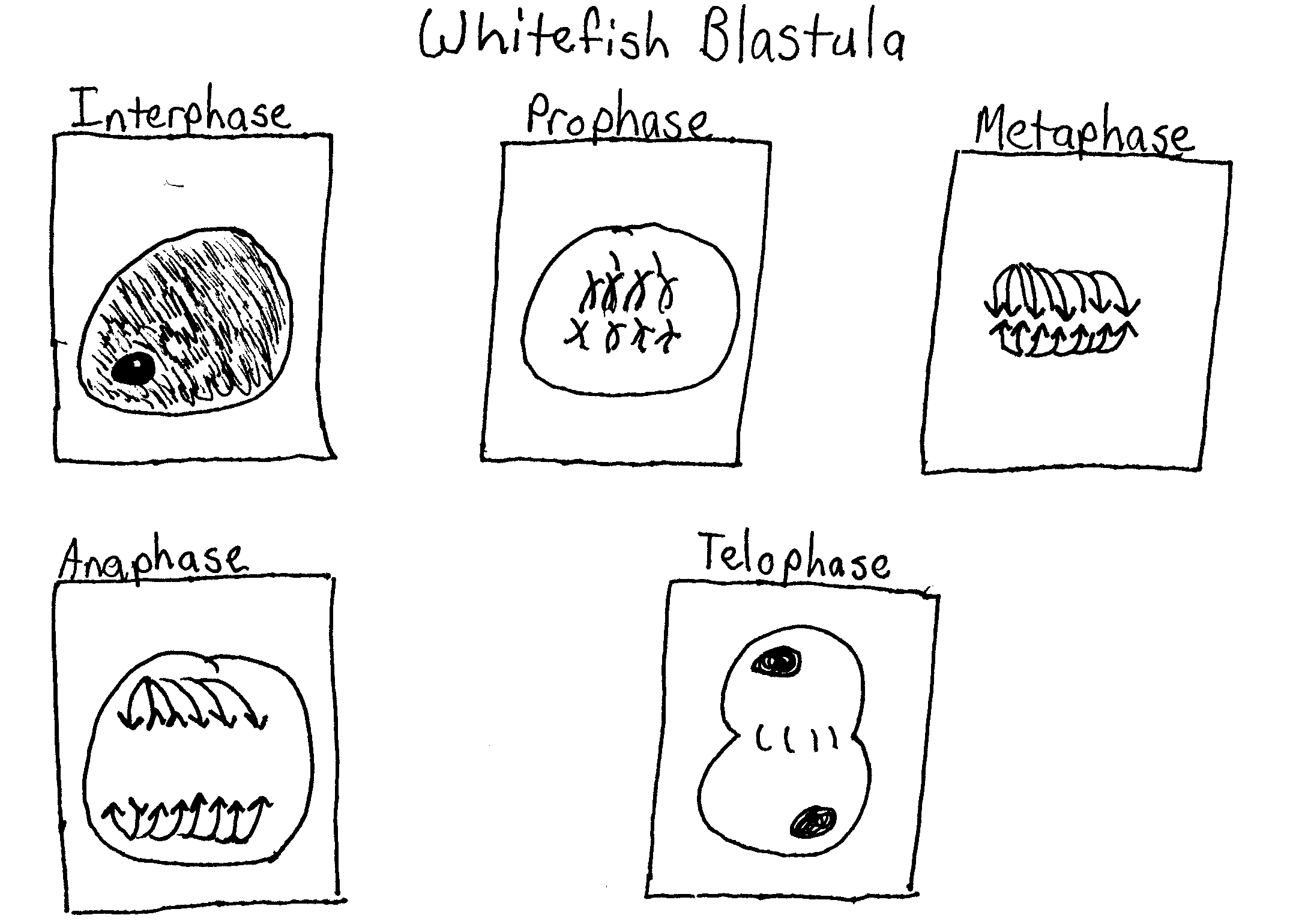
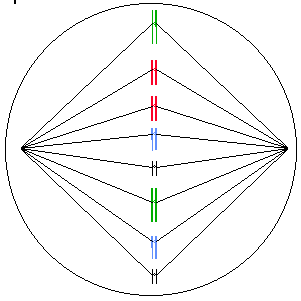
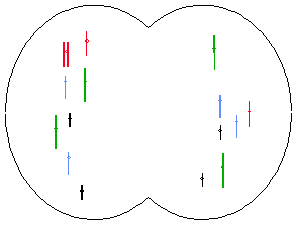
In plants mitosis takes place in the meristems which are normally found at the tips of stems or roots. However, in animal cells cell division takes place every where as new cells are formed and old ones are replaced. Studying mitosis can be accomplished by looking at tissues where there are many cells in a process of meiosis. Two examples are an onion root tip, or developing embryos, in animals such as whitefish blastula. A blastula is formed after an egg is fertilized and the egg begins to divide. There are several phases of the mitotic cell cycle. A precursor to mitosis is interphase. The actual steps of the mitotic cell cycle are prophase, metaphase, anaphase, and telophase. Interphase is a stage in the cell cycle in which the cell is not dividing. The nucleus contains a nucleolus and also contains chromatin. During interphase DNA replication occurs. The first phase of mitotic cell division is prophase. During prophase the chromatin begins to thicken until noticeable chromosomes are formed. Each chromosome has two chromatids that are joined at the centromere. During the later part of prophase, the nuclear envelope and nucleolus disappear. Mitotic spindle fibers, composed of microtubules, also become apparent. Following prophase is metaphase. By the time the cell has reached metaphase the chromosomes have moved to the center of the mitotic spindle. The centromere of the chromosome attaches to the spindle. The centromeres of each chromosome line up on an area called the metaphase plate. Metaphase is followed by anaphase. In the beginning of anaphase, the centromeres of each pair of chromatids separate and moved by the spindle fibers to the opposite ends of the cell. When the daughter chromosomes reach the ends of the cell the form a clump at each spindle pole. The final phase of mitosis is telophase. Telophase is identified by a recognizable condensation of the chromosomes, which is followed by the formation of a new nuclear envelope. The chromosomes slowly uncoil into chromatin once again and the nucleoli and nuclear envelope reform. It is then possible for cytokinesis, the division of the cytoplasm into two cells, to occur. In an animal cells a cleavage furrow forms and the cell pinches off into two new daughter cells.

The process of meiosis involves two nuclear divisions that result in the formation of four haploid cells. Meiosis I, a reduction division, is the first division to reduce the chromosome number from diploid to haploid and separates the homologous pairs. Meiosis II separates the sister chromatids resulting in four haploid gametes. Unlike mitosis meiosis increases genetic variation. In meiosis I each pair of homologous chromosomes come together which is known as a synapse. Chromatids of homologous chromosomes may exchange parts which is called crossing over. The distance between two genes on a chromosome may be estimated by calculating the percentage of crossing over that takes place between them. Meiosis I is preceded by interphase. During interphase DNA synthesis occurs and each chromosome is made of two chromatids joined at the centromeres. The first step of meiosis I is prophase I. During prophase I homologous chromosomes come together and synapse. A tetrad consisting of four chromatids is also formed. Prophase I is followed by metaphase I. In metaphase I the crossed over tetrads line up in the center of the cell. In anaphase I the homologous chromosomes separate and are moved to opposite ends of the cell. The final phase of meiosis I is telophase I. During telophase I centriole duplication is completed. Most of the time cytokinesis and formation of the nuclear envelope occur in order two make to cells. Meiosis II a second mitotic cell division then takes place in order to separate the chromatids in the two daughter cells made in meiosis I. This reduces the amount of DNA to one strand per chromosome. This is the only difference between meiosis I and II. Before meiosis II there is period called interphase or interkenesis. DNA replication does not take place in interphase II. Interphase II is followed by prophase II, No DNA replication occurs in prophase II and replicated centrioles separate and move to opposite sides of the chromosome groups. During metaphase II the chromosomes are centered in the middle of each daughter cell. During anaphase II the centromere regions of the chromatids are separate. The last stage of meiosis II is telophase II. In telophase II the chromosomes are at opposite ends of the cell and a nuclear envelope forms, and sometimes the cytoplasm divides.

Sordaria fimicola is fungus that may be used to show the results of crossing over during meiosis. Sordaria throughout most of its life is haploid, but becomes diploid after the fusion of two different types of nuclei, which forms a diploid nucleus. In Sordaria meiosis results in the making of eight haploid ascospores found in a sac called an ascus. Most asci are found in a perithecium. The life cycle of Sordaria fimicola is as follows: a spore is discharged through an ascus. The ascospore then undergoes mitosis, which forms a filament. The filament then undergoes mitosis, which forms a mycelium. Mycelial fusion and fertilization then takes place. This forms a diploid zygote. The zygote undergoes mitosis to form four haploid nuclei. The nuclei also undergo mitosis and form eight haploid nuclei, which then form eight ascospores. When mycelia of a mutant strain of Sordaria and a wild type of Sordaria undergo meiosis four black and four tan ascospores form. The arrangement of the ascospores reflects whether crossing over has occurred or not. Gametes, egg and sperm, are made during meiosis. Each egg and sperm cell contains half the total chromosomes a normal cell of that species would have. When the egg and sperm unite during fertilization the total chromosome number is restored.

Exercise 3A.1 –  Hypothesis
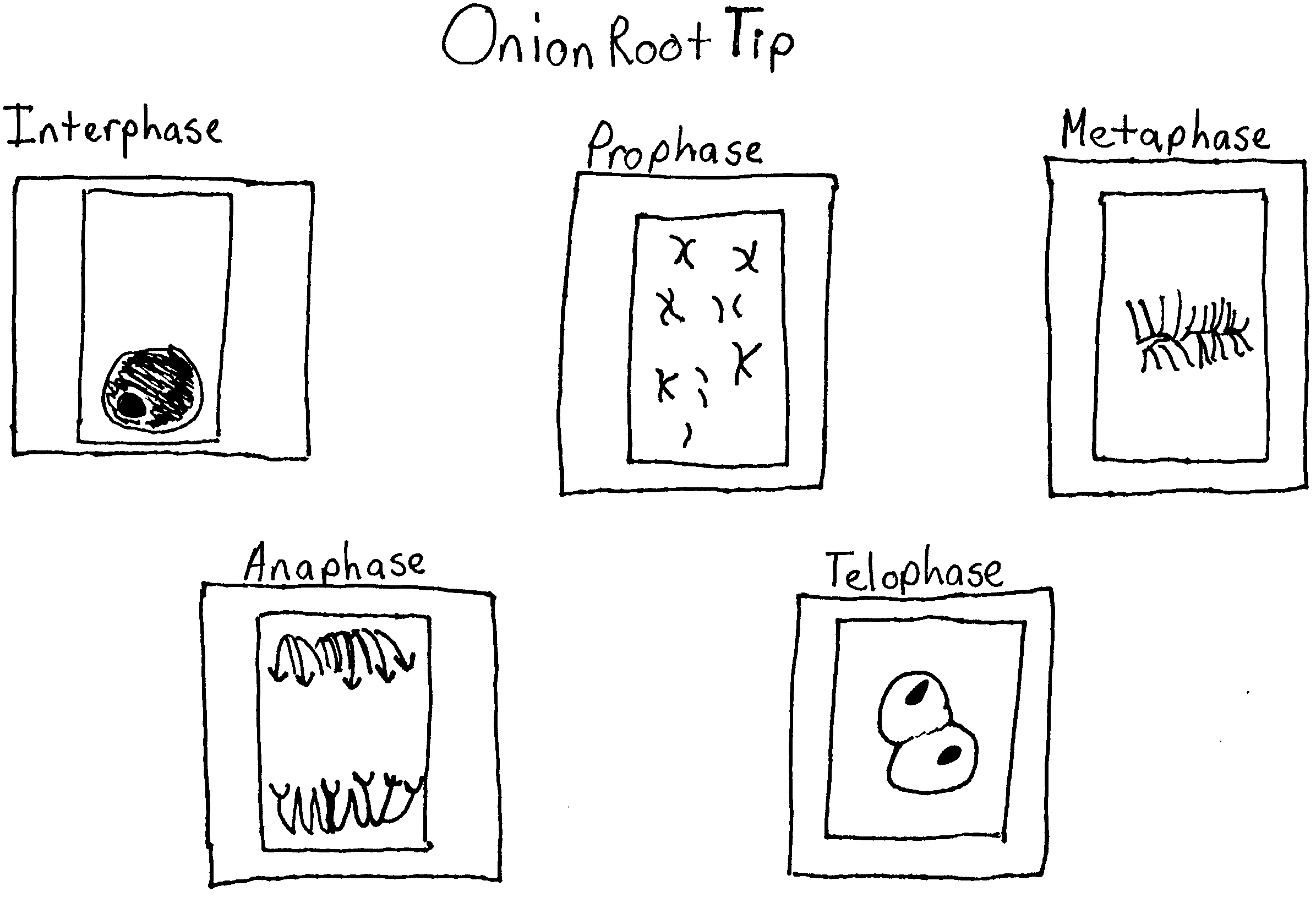
While looking at prepared slides of onion root tip cells and whitefish blastula cells under a microscope I will be able to identify and draw the stages of mitosis in these cells.

Materials
The materials used in this experiment were a light microscope and prepared slides of onion root tip cells and whitefish blastula cells.

Methods
Using the microscope examine the slides of onion root tip cells and whitefish blastula cells. Begin by locating the merismatic region of the onion or the blastula using the 10 X objective. Then use the 40 X objective to study individual cells. Identify one cell that clearly represents each phase. Sketch and label the cell on a separate piece of paper.

Exercise 3A.2  –  Hypothesis
When undergoing mitosis most of the cells in an onion root tip will be in interphase. More cells will be in the stage of prophase than metaphase. More cells will be in metaphase than anaphase and more cells will be in anaphase than telophase.

Materials
The materials used in this experiment were a prepared slide of an onion root tip and a light microscope.

Methods
Obtain a prepared slide of an onion root tip and observe every cell in one high power field of view and determine which phase of the cell cycle it is in. Make sure to do this in pairs so one person can observe the cells and the other person can record which phase the cell is in. Make sure to count three full fields of view and at least 200 cells. Then, record your data in table 3.1. Next, calculate the percentage of cells in each phase by using the equation; percentage of cells in stage X 1,440 minutes =_________ minutes of cell cycle spent in stage.

Exercise 3B.1  –  Hypothesis
Using beads it will be possible to show the stages of meiosis I and meiosis II.

Materials
The materials used in this exercise were chromosome simulation kits containing four strands of beads. Two strands will be one color and the other two strands should be another color.

Methods
To show the process of interphase place one strand of each color near the center of your work area. Next, simulate DNA replication by bringing the magnetic centromere region of one strand in contact with the centromere region of the other of the same color. Do the same with its homolog. Next, to show crossing over in prophase I pop the beads apart on one chromatid at the fifth bead. Do the same with the other chromatid. Then reconnect the beads to those of the other color. Proceed through prophase I of meiosis and note how crossing over results in recombination of genetic information. Then to show metaphase I place the chromosomes near the middle of the cell. During anaphase I, the homologous chromosomes separate and are “pulled” to opposite ends of the cell. Next, to show telophase I place each chromosome at opposite sides of the cell.

In prophase II of meiosis II replicated centrioles separate and move to opposite sides of the chromosome groups. Next, to show metaphase II arrange the chromosomes so they are centered in the middle of each daughter cell. Then, separate the chromatids of the chromosomes and pull the daughter chromosomes toward the opposite sides of the daughter cell in order to show anaphase II. Finally in order to show telophase II, place the chromosomes at opposite sides of the dividing cell.

Exercise 3B.2  –  Hypothesis
There will be more asci that maintain a 4:4 relationship of not crossing over than asci that do cross over.

Materials
The materials used in this exercise were a prepared slide of Sordaria fimicola and a light microscope.

Methods
Begin by obtaining a prepared slide that contain asci of Sordaria fimicola. Then, using the 10 X objective, view the slide and locate a group of hybrid asci. Make sure to count at least 50 hybrid asci and enter your data in table 3.3.

Results
Exercise 3A.1


Exercise 3A.2

Table 3.1


Number of Cells

Field 1 Field 2 Field 3 Total
Interphase 42 36 47 125 61.27 14 hours 42 min
Prophase 10 14 18 32 20.10 4 hours 49 min
Metaphase 6 5 4 15 7.35 1 hour 45 min
Anaphase 2 3 2 7 3.43 49 min
Telophase 7 5 4 16 7.84 1 hour 52 min


Exercise 3B.2

Table 3.3


Number of 4:4 Number of Asci showing crossover Total Asci % Asci showing crossover divided by 2 Gene to centromere distance (map units)
60 45 105 21.4 % 21.4 map units


Questions:
Exercise 3A.1

1.Why is it more accurate to call mitosis “nuclear replication” than “cellular division”?

In mitosis two new nuclei are being formed. Also cytokinesis is actually a part of mitosis.

2. Explain why the whitefish blastula and onion root tip are selected for a study of mitosis?

A blastula is a hollow ball of cells that forms when an egg divides quickly; a large amount of mitosis is taking place here. The onion root tip is the place where growth occurs in the onion so a large amount of mitosis is taking place here.

Exercise 3A.1

1. If your observations had not been restricted to the area of the root tip that is actively dividing, how would your results have been different?

The tips are located in the meristem. Cells that are not in the meristem do not divide as quickly but they are elongating and differentiating. None of the phases would have been visible.

2. Based on the data in table 3.1 what can you infer about the relative length of time an onion root-tip cell spends in each stage of cell division?

Prophase is the longest stage and telophase is the shortest.

Exercise 3B.1

1. List three major differences between the events of mitosis and meiosis?

Mitosis has one nuclear division and meiosis has two nuclear divisions. Mitosis makes two identical daughter cells. Meiosis makes four daughter cells that half the number of chromosomes that their parent cells had. Crossing over and the exchange of genes occurs in meiosis but not in mitosis.

2.Compare mitosis and meiosis with respect to the following:


Mitosis Meiosis
Chromosome number of parent cells 2n 2n
Number of DNA replications 1 1
Number of divisions 1 2
Number of daughter cells produced 2 4
Chromosome number of daughter cells 2n n
Purpose Growth and repair Gamete and spore production


3. How are meiosis I and meiosis II different?

Meiosis I starts with a tetrad and separates the homologs. In meiosis the strands separate into 4.

4. How do oogenesis and spermatogenesis differ?

In oogenesis an egg is formed and three cells called polar bodies die. In spermatogenesis sperm are formed.

5. Why is meiosis important for sexual reproduction?

In meiosis the chromosome number is reduced by half. When fertlization occurs chromosome number is restored. Gene exchange causes variation.

6.Using your data in table 3.3 determine the distance between the gene for spore color and the centromere. Record your results in table 3.3.

Table 3.3


Number of 4:4 Number of Asci showing crossover Total Asci % Asci showing crossover divided by 2 Gene to centromere distance (map units)
60 45 105 21.4 % 21.4 map units


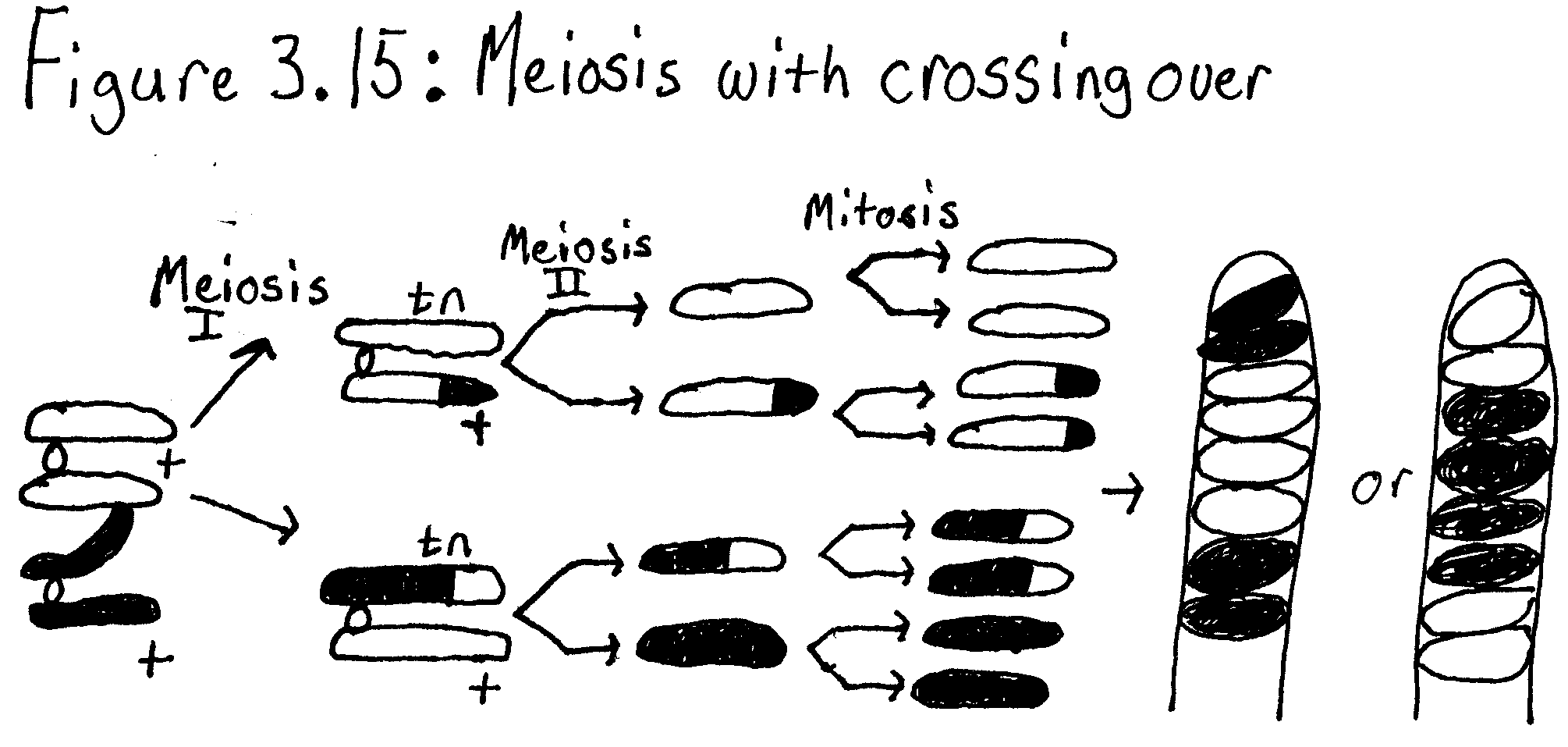
7. Draw a pair of chromosomes in MI and MII and show how you would get a 2:4:2 arrangement of ascospres by crossing over.
Error Analysis
In exercise 3A.2 inaccurate results were received. There should have been fewer cells in telophase than any of the other phases and cells should have spent less time in telophase than in any of the other phases. The results received are inaccurate because the number of cells that were in telophase were improperly counted. We received results that more cells were in telophase and spent more time in telophase than anaphase. In exercise 3B.2 improperly identifying some of the asci as crossover or non-crossover might have caused the results that were received to be inaccurate.

Conclusions:

From these experiments one can conclude that it is possible to look at mitotic stages of onion root tip cells and whitefish blastula through a microscope and draw them. Also, from these experiments one can conclude that most of the cell cycle in an onion root tip is spent in interphase. Prophase is after interphase in time spent in each cycle. Metaphase is after prophase. Anaphase is after metaphase. The least amount of time is spent in telophase. Also, a person can simulate the chromosomes in meiosis I and meiosis II using a chromosome simulation kit. Finally, one can conclude form the results of the experiments that more asci do not cross over in Sordaria fimicola than the number of asci that do cross over.

BACK


Human Genetics Notes BI


Home      General Biology 1      General Biology 2      Human Biology      Anatomy and Physiology
Chapter 16 – Genetics, Part 3: Human Genetics Introduction

This chapter is a review of patterns of inheritance in humans including a review of genetic diseases.

The genetic diseases are divided into two categories: chromosomal abnormalities and gene abnormalities.  Chromosomal abnormalities are caused by cells that have extra or missing chromosomes or parts of chromosomes.  Gene abnormalities (gene mutations) occur when the genetic instructions stored in the DNA are altered so that the protein product coded for by the gene is less functional or nonfunctional.

Prenatal Diagnosis

The techniques listed below enable physicians to diagnose many kinds of genetic abnormalities by examining some of the cells from the developing fetus.


Amniocentesis


The fetus is surrounded by a layer of liquid called amniotic fluid. Amniocentesis is a technique in which a sample of amniotic fluid is removed and cells that it contains are grown on a culture dish. Because these cells are of fetal origin, any chromosomal abnormalities present in the fetus will also be present in the cells.

In addition to chromosomal analysis, a number of biochemical tests can be done on the fluid to determine if any problems exist.

Amniocentesis cannot be done until the 14th to 16th week of pregnancy. Cells must then be cultured on a laboratory culture dish for 2 weeks to obtain sufficient numbers of cells.

The risk of inducing a spontaneous abortion by this procedure is 0.5 to 1% above the background rate of spontaneous abortion.


Chorionic Villi Sampling


Chorionic villi sampling is a procedure in which a small amount of the placenta is removed.

It is normally done during the 10th to 12th week but it can be done as early as the 5th week of pregnancy. Karyotype analysis can be performed on these cells immediately after sampling.

Although Chorionic villi sampling can be performed earlier in the pregnancy than amniocentesis, the risk of inducing a spontaneous abortion is 1 to 2% higher than the background rate.

Karyotypes

Karyotypes are prepared using cells from amniocentesis, chorionic villi sampling, or white blood cells.

Cells are photographed while dividing. cells are normally stained so that banding patterns appear on the chromosomes. The bands make it easier to identify the chromosomes. Banding patterns are not visible in the photograph below due to the staining technique.

Pictures of the chromosomes are cut out and arranged in pairs according to size and banding patterns.

Karyotypes can be used to determine if there is an abnormality in chromosome number or structure.

Nondisjunction

Nondisjunction occurs when chromosomes fail to “disjoin” during meiosis or mitosis.

Meiosis

Metaphase I

img017.gif (3781 bytes)

Anaphase I

img018.gif (3680 bytes)

Telophase I

img019.gif (3168 bytes)

Prophase II

img020.gif (4544 bytes)

Meiosis II and Mitosis

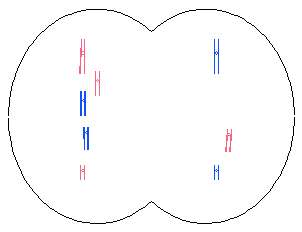
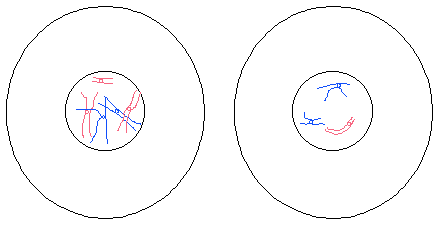
The diagrams below show nondisjunction during mitosis in a hypothetical species with 2N=8 chromosomes.

Metaphase

img013.gif (5064 bytes)

Anaphase

img014.gif (5337 bytes)

Telophase

img015.gif (3798 bytes)

G1 Interphase

img016.gif (4787 bytes)

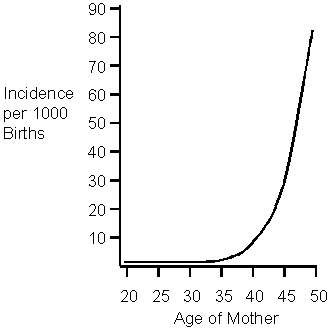
The probability of nondisjunction increases with age. It increases rapidly after age 35 years in women and after 55 years in men.

Aneuploidy

Cells that have extra chromosomes or chromosomes missing are aneuploid. Two types of aneuploidy are discussed below.

Monosomy refers to a condition in which there is one chromosome is missing. It is abbreviated 2N – 1. For example, monosomy X is a condition in which cells have only one X chromosome.

A trisomy has one extra chromosome and is abbreviated 2N + 1. Trisomy 21 is an example of a trisomy in which cells have an extra chromosome 21.

Monosomies and trisomies usually result from nondisjunction during meiosis but can also occur in mitosis. They are more common in meiosis 1 than meiosis 2.

They are generally lethal except monosomy X (female with one X chromosome) and trisomy 21 (Down’s Syndrome).

Affected indivisuals have a distinctive set of physical and mental characteristics called a syndrome. For example, trisomy 21 is Down syndrome.

Incidence of Genetic Abnormalities

Maternal Age

At 25 years, 17% of secondary oocytes may have chromosomal abnormalities. At 40 years, up to 74% may contain abnormalities.

Spontaneous Abortion (Miscarriage)

Two-thirds of all pregnancies are lost. These miscarriages are called spontaneous abortions.

Genetic mutation causes an estimated 60% of these spontaneous abortions.

Autosomal Abnormalities

Nine percent of spontaneous abortions are trisomy 13, 18, or 21; but 0.1% of newborns have these trisomies.


Down Syndrome


Down syndrome is trisomy 21. It is characterized by mental retardation, an abnormal pattern of palm creases, a flat face, sparse, straight hair, and short stature. People with Down syndrome have a high risk of having cardiac anomalies, leukemia, cataracts, and digestive blockages.

Life expectancy of Down syndrome individuals is in the middle teens but some live much longer.

The gene responsible for Alzheimer’s is on chromosome 21. Down’s are at increased risk for developing Alzheimer’s.

Down Syndrome is associated with maternal age. Older women, particularly those older than 40, are more likely to have a Down Syndrome child.


Translocation Down Syndrome


A translocation is the movement of a chromosomal segment from one chromosome to another nonhomologous chromosome.

Five percent of Down Syndrome cases involve a translocation.

The translocation often involves chromosome 14.

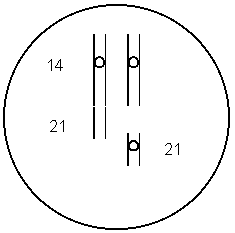
In the translocation diagrammed below, chromosome #21 has become fused with chromosome #14.

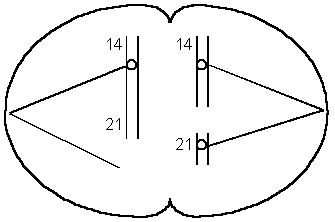
During meiosis, the two chromosomes might align so that each daughter cell receives one chromosome 21 as shown below. This will produce a normal egg.

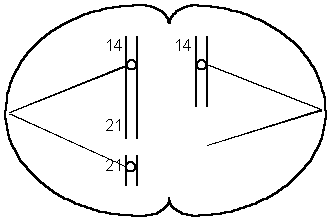
If the chromosomes align as illustrated below, one daughter cell will receive two chromosome 21s and the other will not receive any.  When a gamete with two 21s fuses with a normal gamete, the result is a zygote with three chromosome 21s.

This form runs in families and is not age-related.


Mosaic Down Syndrome


Some of the cells of mosaic Down’s sydrome are trisomy 21 but others are normal.

This is due to nondisjunction that occurs during mitosis (after fertilization).

Mosaic Down Syndrome is likely to be less severe because some of the cells are normal.


Trisomy 18 (Edward Syndrome)


Trisomy 18 is associated with mental and physical retardation, skull and facial abnormalities, defects in all organ systems, and poor muscle tone.

Mean survival is 2 to 4 months.


Trisomy 13 (Patau Syndrome)


Trisomy 13 produces mental and physical retardation, skull and facial abnormalities, and defects in all organ systems. It is also associated with a left lip, a large, triangular nose, and extra digits.

One half die in first month; the mean survival time is 6 months.

Polyploidy

Polyploidy is a condition in which there is more than 2 sets of chromosomes.

Triploids (3N), tetraploids (4N), pentaploids (5N) etc. are polyploids.


Polyploidy in Plants


Polyploidy is a major evolutionary mechanism in plants. Approximately 47% of all flowering plants are polyploid.

Some examples of polyploid plant species are corn, wheat, cotton, sugarcane, apples, bananas, watermelons, and many flowers.

Polyploid plants are often more vigorous than the diploid parent species.

Polyploid plants are fertile.


Polyploidy in Humans


Polyploids have defects in nearly all organs.

Most die as embryos or fetuses. Occasionally an infant survives for a few days.

Abnormalities of the Sex Chromosomes

Turner Syndrome – XO

Characteristics of Turner syndrome include the following:

Sexually underdeveloped

Short stature

Folds of skin on the back of the neck

Wide-spaced nipples

Narrow aorta

Pigmented moles

97% die before birth

Malformed elbows

Infertile

Normal Intelligence

The incidence of Turner syndrome is 1 in 2000 female births.

Turner syndrome individuals that are treated with hormones lead fairly normal lives.

XXX – Triple-X Syndrome (also XXXX and XXXXX)

Triple-X individuals are tall and thin and have menstrual irregularities. Their IQ is in the normal range but it is slightly reduced.

The incidence of Triple-X Syndrome is 1 in 1,500 female births.

Additional X chromosomes are associated with an increased mental handicap.


XXY – Klinefelter Syndrome (also XXXY)


Males with two or more X chromosomes have Klinefelter Syndrome.

The incidence of Klinefelter Syndrome is 1 in 1000 male births.

Symptoms include reduced sexual maturity and secondary sexual characteristics, breast swelling, and no sperm. Klinefelter males are slow to learn and individuals with additional X’s (XXXY) may be mentally retarded.


XYY – Jacob Syndrome


XYY males are tall, have acne, speech, and reading problems.

Although there are a disproportionate number in penal institutions, 96% of Jacob’s Syndrome men are normal.

In the early 1970’s screening began in hospitals in England, Canada, Denmark and US. Families with XYY boys were offered “anticipatory guidance”. These types of programs were stopped because they were self-fulfilling prophesies.

Other Chromosomal Abnormalities

Deletions


Deletions are fragments of chromosomes that are missing. They are usually lethal when homozygous and cause abnormalities when heterozygous.

Radiation, viruses, chemicals, and unequal crossing-over may cause them.


Cri du Chat Syndrome


Cri du chat syndrome is due to a deletion of a portion of chromosome 5.

Cri du chat individuals are mentally retarded.

“Cri du chat” is French for “cry of the cat”. The infants cry sounds like a cat.


Duplication


A chromosome segment that is repeated is called a duplication.

It can be due to unequal crossing over which produces a deletion on one chromosome and a duplication on the other.

Often, multiple copies of genes from duplication can mutate without harming the individual because they still have one good copy of the gene. This type of mutation may be a source of variation for species. For example, the gene for human globin has given rise to several different genes that produce similar types of proteins. The different globins produced by these genes have very similar amino acid sequences.

An example of a family of genes that have been produced by duplication is the beta globin family. This family contains five functioning genes and a pseudogene.

Epsilon globin

G-gamma globin

A-gamma globin

delta globin

beta globin

a pseudogene

All of these genes have similar amino acid sequences due to their evolution from the same ancestral gene.

Some families of genes contain hundreds of genes.


Repeated Sequences


Repeated sequences are short segments of DNA that are repeated hundreds or thousands of times. For example: In the segment of DNA illustrated below, CCG is repeated several times.


The cause is unknown.

Fragile X Syndrome

This is the second most common cause of mental retardation (Down Syndrome is first).

The characteristic long, narrow face becomes more pronounced with age.

The symptoms of fragile-X syndrome appear to be caused by an abnormal number of repeats (CCG) on the X chromosome. Normal DNA has 6 – 50 copies of “CCG” at the locus in question. Carrier males have 50 – 230 copies. This is referred to as a premutation (pre-fragile-X). The full mutation involves more than 230 repeats of CCG.

The chance of being affected increases in successive generations because extra copies of CCG are added during the gamete-formation process.

Females are more likely to add repeats than males. At most, males pass on 230 repeats to their children but females pass on more than 230 repeats.

Mental problems are more common if the fragile X is inherited from the mother. This is an example of genomic imprinting discussed in the previous chapter. Fragile-X is more common in males because males inherit their X chromosome from their mother.

The repeats cause the X to have a thread-like portion. It is called a fragile site because it breaks if cultured under certain conditions in the laboratory.


Translocation


Chromosomes that break usually rejoin at the same place but sometimes the broken ends rejoin in different places.

Translocation is the movement of a chromosome or part of a chromosome to another (nonhomologous) chromosome.


Inversion


A segment of a chromosome may become turned around forming an inversion.

This can cause altered gene activity, a loss of crossing-over, or a duplication/deletion if crossing-over does occur.

Pedigrees

It is often easy to visualize relationships within an extended family by using symbols to represent people and relationships. A family tree which uses these symbols is called a pedigree. A sample pedigree is below.

In a pedigree, squares represent males and circles represent females. Horizontal lines connecting a male and female represent mating. Vertical lines extending downward from a couple represent their children. Subsequent generations are therefore written underneath the parental generations and the oldest individuals are found at the top of the pedigree.

If the purpose of a pedigree is to analyze the pattern of inheritance of a particular trait, it is customary to shade in the symbol of all individuals that possess this trait.

In the pedigree above, the grandparents had two children, a son and a daughter. The son had the trait in question. One of his four children also had the trait.

Autosomal Recessive

Characteristics of autosomal recessive inheritance


It often skips generations; children that have the trait can have parents that do not.

Heterozygotes (carriers) do not have the trait. People with the trait have two copies of the genes.

If both parents are have the trait, all offspring will.

Males and females are affected equally.

Inbreeding results in a greater-than-expected number of rare autosomal recessive phenotypes.


Cystic Fibrosis


Thick mucous forms in the digestive tract and lungs of people with CF. As a result, they have difficult breathing and are susceptible to lung infections.

People with cystic fibrosis have a life expectancy of approximately 30 years.

The gene that causes the disease is on chromosome 7. One particular mutation of this allele causes 70-75% of the cases.

It is somewhat difficult to detect prenatally.

Gene therapy may be a possibility in the future. The normal gene was inserted into cells in laboratory cultures.

Viruses have been engineered to deliver the gene. An aerosol spray is used to deliver the virus to the lungs.

There has been some success reported in treating human patients in 1994.

Cystic fibrosis is the most common lethal genetic disease among Caucasians in the US.

One in 25 is a carrier; one in 2500 is affected.


Tay Sachs


A fatty substance builds up in the neurons (nerve cells) of people with Tay Sachs. This causes a gradual paralysis and loss of nervous function that leads to death by age 4 or 5.

It is due to a single defective enzyme which normally digests the fatty material.

Heterozygotes (Aa) are not affected and are resistant to tuberculosis.

Prenatal diagnosis is available.

It is a common genetic disease among the Jewish population in the US (central and eastern European descent). Up to 11% are carriers. It is also common in people of French-Canadian or Cajun descent.


PKU – Phenylketonuria


PKU is a recessive genetic disease in which the person does not have the ability to break down the amino acid phenylalanine. The level of phenylalanine in the persons blood builds up and interferes with the development of the nervous system.

Children that are raised on a phenylalanine-restricted diet may develop normally but children that are not raised on a special diet will become severely mentally retarded. The diet should be followed for life because high phenylalanine levels affect cognitive functioning.

Genetic screening is the routine testing of individuals for specific genotypes. Newborns in U.S. hospitals are screened for PKU.

PKU women must resume the diet several months before conception

The incidence of PKU in the United States is 1 in 13,500 to 1 in 19,000.


Sickle-Cell Anemia


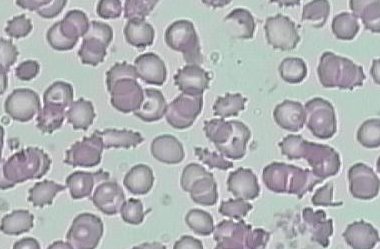
Sickle-cell anemia is an abnormality of hemoglobin, the molecule that carries oxygen in our blood. Hemoglobin is contained within red blood cells. When the oxygen concentration in the hemoglobin molecules becomes low, the molecules stick together forming long rods that distort the cell (picture below). The cells break down or clog blood vessels causing pain, poor circulation, jaundice, anemia, internal hemorrhaging, low resistance, and damage to internal organs. Death usually occurs before age 50.

Heterozygotes (carriers) are not affected with anemia and are resistant to malaria.

Eight to ten percent of African Americans carry the allele (have sickle-cell trait).

Hemochromatosis

Hemochromatosis is a disease that causes the body to absorb more iron from food than normal. High iron levels can lead to organ damage if it is left untreated for many years.

Symptoms include joint pain, fatigue, and abdominal pain.

There are two different mutations of the gene that causes hemochromatosis (the HFE gene) and the severity of symptoms depends on the mutations that are inherited.

One in 200 people in the United States carry the gene and it is the most common genetic disease in people of northern European descent.

There is also a form of this disease that is not due to genetic factors, it is acquired.

Autosomal Dominant

Severe dominant diseases are rare because carriers die before they get a chance to reproduce and pass on the disease to their offspring.

Heterozygotes (Aa) have the trait.

Children with the trait have at least one parent that has the trait.

Two parents with the trait can produce a child that does not have the trait.

Both males and females are affected equally.


Neurofibromatosis (NF)


Neurofibromatosis is sometimes called elephant man disease.

People with this gene have 6 or more large tan spots on the skin which may increase in size, number and darkness. The nerve cells form benign tumors which may vary in size. There may be learning disabilities and hyperactivity.

The disease is usually mild but may be severe causing deformities and even death.

The incidence is 1 in 3000 newborns.

The gene is on chromosome 17.


Huntington’s Disease


The brain cells of Huntington’s victims slowly degenerate, producing jerking muscles, slurred speech, swallowing difficulty, loss of balance, mood swings, reasoning and memory loss, incapacitation, and eventually death (usually from pneumonia or heart failure).

The onset of Huntington’s disease is typically 35 to 45 years.

It is caused by a repeated DNA sequence (AGC).  The normal allele has 11-34 copies; affected people have 42 – 120 copies.

The severity and time of onset depends on the number of repeats.

People who are most at risk inherit the gene from their father.  This is an example of genomic imprinting.

The gene is on chromosome 4.  A diagnostic test is available.

X-Linked Recessive

More males than females have x-linked recessive traits.

A son with the trait can have parents that do not have the trait.

There is no father to son transmission of the gene.

The trait can skip generations; grandfather to grandson transmission can occur.

If a female has the trait, her father has it, her mother is a carrier (or has it), and all her sons will have it.


Color Blindness


3 different kinds

2 X-linked forms: 1 for green insensitivity (6% of all males), one for red insensitivity (2% of all males); 1 in 12 males have some form of colorblindness.


Hemophilia


People with hemophilia lack a clotting factor in their blood and as a result, their blood does not form clots normally. This results in excessive bleeding from even minor cuts. Internal hemorrhaging from bruises is common and leads to painful complications.

The incidence is in 1,500 newborn males. Most (75%) have hemophilia A, a lack of clotting factor VIII. Hemophilia B- “Christmas Disease” is a defect in clotting factor IX.

Transfusions of fresh whole blood or plasma or factor concentrates control bleeding but have previously caused AIDS infections.

The human gene has been isolated and cloned using recombinant DNA techniques. This is leading to improved treatment.


Royal Families of Europe


Victoria (granddaughter of George III) was a carrier and spread the gene to the royal families of Europe. Her granddaughter Alix- married Czar Nicholas II of Russia. The Czar’s son Alexis, heir to the throne, had hemophilia.

The Czar’s preoccupation with Alexis’ health contributed to the revolution that overthrew the throne and eventually led to the communist government.


Duchenne Muscular Dystrophy


There are four different kinds of X-linked muscular dystrophy. They are multiple alleles at a single locus.

Duchenne’s is the most common and most severe form of muscular dystrophy.

1 in 5,000 live male births (Duchenne’s)

One in 4000 newborn males have some form of muscular dystrophy. One third of these are new mutations.

Muscular deterioration begins between ages 3 to 5. Affected individuals are confined to a wheelchair by age12 and rarely survive past age 20. Death is usually due to breathing or heart problems.

It is transmitted primarily by female carriers (males rarely reproduce)

Sex-Influenced Inheritance

Sex-influenced traits are those that are dominant in one sex but recessive in the other

This difference is due to the different hormonal environments between the sexes.

Sex-influenced genes are not necessarily located on the X chromosomes. Don’t confuse this with X-linked inheritance.


Examples

Pattern baldness is male dominant.

A gene that causes the index finger to be longer than the third finger is female dominant.


Home      General Biology 1      General Biology 2      Human Biology      Anatomy and Physiology

Human Hand Adaptations


Human Hand Adaptation

Introduction:        Living things have bodies that are adapted for the places they live and the things they do. Fish have gills so that they can remove oxygen that is dissolved in water. Most plants have green leaves which contain chlorophyll so that they can make food. Jellyfish have stinging cells to capture prey. Birds have hollow spongy bones so that they will be light enough to fly. Arctic animals have layers of fat and thick coats of fur to keep warm in the frigid Arctic climate. There are hundreds of examples of ways that organisms are adapted for a successful lifestyle.       Humans, too, are adapted for the things they do. One of our adaptations is our hand. Humans, as well as monkeys, gorillas, and other primates, have a hand that can grasp objects. We are able to grasp objects because of our opposable thumb. When students first hear or read about the opposable thumb during discussions of human evolution, they may perceive it as an anatomical fact with little seeming importance. In this activity, students will discover which of their simplest daily activities are possible only because of their opposable thumbs, which activities take longer without the use of an opposable thumb, and what sort of human activities would not be likely in the absence of an opposable thumb.   In this lab exercise, you will perform several common actions. Then you will change your hand so that it resembles that of a non-primate animal. You will determine whether or not you can successfully perform the same actions. This will demonstrate how the human hand is adapted for the actions it performs. You will work with a partner to do this exercise.   Materials: (per group)

  • masking tape
  • scissors
  • paper clips
  • zip-lock storage bag
  • plastic fork and knife
  • small amounts of food items to be cut
  • pencil
  • jar with screw-on lid
  • paper
  • roll of tape
  • balloons
  • comb
  • book
  • lace-up shoe
  • clock with a second hand
  • Piece of yarn or string
  • balloon
  • clothes with zippers & buttons

Procedure: Using masking tape, have your partner tightly tape each of your thumbs to the palm of the hand. Then, try to complete the tasks that are listed below. Be careful not to use your thumbs. Have your partner record on your data table how long it takes to do each task with your thumb taped and then with your thumb free. If an activity takes longer than 2 minutes, record the event as unsuccessful . After completing each item, write out the answers to the following questions:

  • Is the task more difficult with or without an opposable thumb?
  • How did you have to change your usual technique in order to complete this task?
  • Do you think organisms without opposable thumbs would carry out this task on a regular basis? Why or why not?

Tasks:

  1. Pick up a single piece of paper. Put it down on your desk.
  2. Pick up a pen or pencil from the table top. Use it to write your name on the piece of paper.
  3. Open a book. Turn single pages in the book.
  4. Unscrew a bottle cap or jar cover.
  5. Use a fork and knife to cut a food item into small pieces.
  6. Tear off a small piece of tape.
  7. Turn on the water faucet. (Complete activity #8!) Turn it off.
  8. Moisten a paper towel and wash and dry the desktop.
  9. Sharpen a pencil.
  10. Cut a circle out of a piece of paper using scissors.
  11. Pick up all the scraps from activity #10 and throw them into the recycling box.
  12. Comb your hair.
  13. Open a door.
  14. Pick up one paper clip. Clip a pile of papers together.
  15. Tie your shoelaces.
  16. Button several buttons.
  17. Zip up your jacket.
  18. Blow up a balloon and tie it.
  19. Tie a knot in a piece of string.
  20. Close a zip-lock bag.

Data:

Table 1 – Time It Took To Perform Various Tasks


Task Time Taken for Event: Task Difficulty With Taped Thumb
(More/Less)
Modification Made to complete Task
Thumb Free Thumb Taped
Pick up paper
Write name
Turn book pages
Open jar
Use knife & fork
Tear off tape
Turn faucet on & off
Clean desk top
Sharpen a pencil
Cut out a circle
Pick up the scraps of paper
Comb hair
Open door
Clip papers together
Tie shoelaces
Button & unbutton garment
Use zipper
Blow up & tie balloon
Knot string
Close zip-lock bag

Conclusion:   1. Explain why dog and cat paws are not adapted for doing the six actions you tested.     2. What are cat and dog paws adapted for?     3. Describe how your hand is adapted for doing the actions you tested.       4. You have an opposable thumb. Explain what this means.     5. Why do you feel that human hand adaptations have helped to make humans such a successful species on earth?


Ink Chromatography

Chromatography of Inks

Introduction:

One of the main jobs of biochemists is to unravel the complexities of chemical compounds and reduce them to their individual components.  The term chromatography comes from two Greek words, “chromat” meaning color and the word “graphon” meaning to write.  Separation of the components of chemical compounds can be done by using several methods. Liquids can be separate by High Performance liquid Chromatography (HPLC), while the components of gases are separated by Gas Chromatography.  Chromatography is a method for analyzing complex mixtures (such as ink) by separating them into the chemicals from which they are made. Chromatography is used to separate and identify all sorts of substances in police work. Drugs from narcotics to aspirin can be identified in urine and blood samples, often with the aid of chromatography.

Chromatography was first used to separate pigments (colors) in leaves, berries, and natural dyes. Paper chromatography is a technique used to separate, isolate, and identify chemical components of a compound. In paper chromatography, the solid surface is the cellulose fibers in the chromatography paper.  A solvent or developer (water, alcohol, or acetone) is placed in the bottom of the chromatography chamber. The paper acts as a wick to pull the solvent up the paper. The solvent front will “wick” up the chromatography paper by capillary action.  A minute drop of the ink or chemical mixture to be separated is placed near the bottom of the strip of chromatography paper, but slightly above the level of the solvent in the chamber.  As the solvent passes over the drop of ink, the components of the ink dissolve in the solvent. Because the components of the ink do not all dissolve at the same rate, as the components of the mixture move upward, they show up as colored streaks.  The separated substances on the chromatography paper form a color pattern called a chromatogram.

To determine the rate of migration for each pigment or component of the ink, the Rf value for each pigment must be calculated. The Rf value represents the ratio of the distance a pigment moved on the chromatogram relative to the  distance the solvent front moved. Each pigment or compound will have a unique Rf value that scientists can use to identify the substance. The Rf value is calculated using the following formula:

Rf = distance traveled by the compound / distance traveled by the solvent

Objective:

Use the process of paper chromatography to separate the pigments in various markers and then determine the Rf value for each color on your chromatogram.

Materials:

Plastic vials, paper clips, markers in assorted colors, chromatography paper, scissors, pencil

Procedure:

  1. Obtain chromatography vials and chromatography strips, and different color markers so that each person in the group will have two chromatograms.
  2. Cut one end of the chromatography strip to a point. The bottom of the point will mark the starting point for movement of the solvent (H2O).
  3. About 2.0 centimeters from the bottom of the strip, draw a faint horizontal line with pencil. This will mark the starting point for measuring the migration distance of each color.
  4. Using a different color marker for each strip, drop a dot of ink on the center of the horizontal pencil line.  Let this dry a moment & then add more ink to the dot.
  5. Add a small amount of water to the bottom of the chromatography chamber. (The ink dot should be ABOVE the surface of the water.)
  6. Straighten a paper clip and poke a hole through the top of your chromatography strip
  7. Use the paper clip to hang the strip in your chamber. (The straighten paper clip will lay across the top of the chamber.)
  8. MAKE SURE THE TIP OF THE STRIP BUT NOT THE INK IS IMMERSED IN THE WATER!
  9. Notice the separation of the ink as both the solvent and ink travel up the chromatography strip.
  10. Once the solvent front has neared the top of the strip, remove the strip from the chamber and lay it on a piece of paper towel.
  11. Immediately mark the solvent front with a faint pencil line.
  12. Immediately mark the leading edge of each color with an “x”.
  13. Measure, in millimeters, the distance the solvent migrated from the tip of the strip to your solvent front pencil line.
  14. Measure, in millimeters, the distance each color migrated from the point of origin (pencil line where the ink dot was placed) to the leading edge of the color (marked with an “x”.
  15. Record all data in Data table 1.
  16. Calculate and record the Rf value for each color using the formula below.

Rf = distance traveled by the compound / distance traveled by the solvent

Data Table 1


Color pen/marker used:

Separated colors
(list top of strip to bottom)
Distance each color traveled

(mm)

Distance solvent (H2O)
(mm)
Rf Value for each color

(Distance color traveled / Distance solvent traveled)


Color pen/marker used:

Separated colors
(list top of strip to bottom)
Distance each color traveled

(mm)

Distance solvent (H2O)
(mm)
Rf Value for each color

(Distance color traveled / Distance solvent traveled)


Questions:

1. Which color of marker did you use?

2. which color separated out first from your ink dot?

3. Why did the inks separate?


4. What was your solvent?

5. If you had used markers that weren’t water-soluble, how would you have had to change this lab?


6. Why did some inks move a greater distance than others?


7. How do scientists use paper chromatography in their investigations?


Genetic Traits Activity


Finding Your Genetic Match

Introduction:

Have you ever noticed that brothers or sisters often look alike?  Their inherited traits are what make their physical appearance so similar. An inherited trait is a particular genetically determined characteristic that distinguishes a person. The traits of children are determined by the traits that  are passed on from their parents. Some traits are obvious in a family — a child’s nose is shaped like their mother’s nose, but some traits are less obvious. You may have similar traits to many of your classmates even though you are not related to them. Some examples of often un-noticed human traits are the ability or not to roll your tongue, attached or unattached earlobes, dimples or freckles, naturally curly or straight hair, hitchhiker’s or straight thumb, straight or widow’s peak hairline, smooth or cleft chin, or colorblindness or normal vision.

There are numerous traits in humans, but some traits occur more frequently than others.  Between 70-90% of the human population have free-hanging earlobes, can roll their tongue,  are right-handed, and can taste a chemical called PTC.  These traits are called high frequency traits.

Objective:

Students will determine the presence of certain high frequency traits in themselves & their classmates.

Materials:

Genetic Inventory sheet with pictures, paper, pencil, PTC taste strips.

Procedure:

  1. Identify which of the following 10 human traits you have by placing a check mark beside that trait.
  2. Compare the traits you have with other students in the classroom and find the student you most closely match.


Human Trait Inventory
Student:
Tongue Roller
Non-Tongue Roller
Attached Earlobes
Unattached earlobes
Dimples
No Dimples
Right-handed
Left-Handed
Widow’s Peak
Straight Hairline
Left Thumb on top when Hands Crossed
Right Thumb on top when Hands Crossed
Hair on mid-digit of hand
No hair on mid-digit of hand
Bent little finger
Straight little finger
Second toe longer than big toe
Second toe not longer than big toe
Can Taste PTC
Can Not Taste PTC
Vulcan (Fingers spread 2 by 2)
None Vulcan
Class Match:


Tongue Roller Non Roller Dimples No Dimples
Attached Earlobes Unattached Earlobes Widow’s Peak Straight Hairline
Longer Second Toe Short Second Toe Bent Little finger Hitchhiker’s Thumb
Attached Ear lobes (left)
Unattached ear Lobes (right)
“VULCAN” or No “VULCAN” Dimples Right/Left Thumb on top