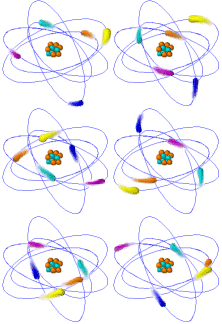
Quiz – Biochemistry %CODE1% Biochemistry Quiz 1. All of the following are carbohydrates EXCEPT: starch glycogen chitin cholesterol2. The structure contains which functional group aldehyde ketone amino carboxyl 3. Fatty acids that are unsaturated have: an amino group a double bond an excess of protons a carboxyl group 4. The structure below is a: monosaccharide disaccharide lipid polymer 5. Which of the following can have a quaternary structure? fatty acid protein polysaccharide DNA 6. An organic compound is one that: contains carbon is slightly acidic forms long chains is soluble in water 7. Which of the following elements is the LEAST abundant in living organisms? oxygen nitrogen phosphorous sodium 8. Which of the following is used in PET scans? uranium ions isotopes steroids 9. Carbon can form ___ separate bonds with other elements? 1 2 3 4 10. The cohesion of water is caused by: ionic bonds hydrophobic compounds hydrogen bonds covalent bonds Score = Correct answers:
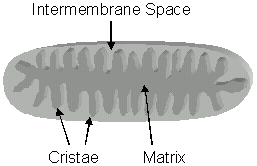
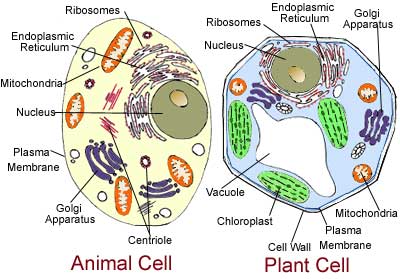
Cell Quiz %CODE1% Cells 1. What part of the cell is responsible for breaking down and digesting things? ribosomes lysosomes endoplasmic reticulum vacuole 2. Identify the organelle pictured. chloroplast endoplasmic reticulum golgi apparatus mitochondria 3. What part of the cell serves as the intracellular highway? endoplasmic reticulum golgi apparatus cell membrane mitochondria 4. Which of the following would you NOT find in a bacterial cell? DNA cell membrane golgi apparatus ribosomes 5. Which of the following is found in plant cells, but not animal cells? cell wall vacuole mitochondria endoplasmic reticulum 6. The jellylike interior of the cell is called the: vacuole cytoplasm cytoskeleton nucleus 7. Identify the organelle. golgi apparatus endoplasmic reticulum mitochondria lysosome 8. What part of the cell makes proteins? ribosomes mitochondria lysosomes vacuole 9. Where are ribosomes usually located in animal and plant cells? inside the nucleus near the cell membrane on the endoplasmic reticulum inside the vacuole 10. What part of the cell serves to process, package and export proteins? mitochondria endoplasmic reticulum nucleolus golgi apparatus Score = Correct answers:
Cell Respiration Quiz %CODE1% Cellular Respiration Quiz 1. Which of the following occurs in both photosynthesis and respiration? chemiosmosis glycolysis calvin cycle krebs cycle2. Which of the following statements is FALSE? glycolysis can occur with or without oxygen glycolysis occurs in the mitochondria glycolysis is the first step in both aerobic and anaerobic respiration glycolysis produces 2 ATP, 2 NADH, and 2 pyruvate 3. This process uses NADH and FADH2 to produce ATP oxidative phosphorylation fermentation glycolysis krebs cycle 4. This process begins with the production of Acetyl-CoA: chemiosmosis glycolysis fermentation krebs cycle 5. Cramps during exercise are caused by: alcohol fermentation glycolysis inhibition lactic acid fermentation chemiosmosis 6. Oxidative phosphorylation is also known as: chemiosmosis glycolysis fermentation electron transport chain 7. The final electron acceptor during oxidative phosphorylation is: oxygen water carbon dioxide ATP 8. Which of the following processes produces the most ATP? glycolysis oxidative phosphorylation fermentation krebs cycle 9. Which of the following is necessary for oxidative phosporylation to occur? ATP oxygen carbon dioxide lactic acid 10. Which of the following is the products of the Krebs cycle? ATP NADH FADH all of these Score = Correct answers: BACK
Cell Quiz %CODE1% Cells! 1. The door to your house is like the ___ of a cell membrane? phospholipid bilayer gated channel receptor protein recognition protein 2. The phospholipid bilayer of the cell membrane is like a(n): screen door plate glass window hot water heater oven 3. Facilitated diffusion ____ require energy and uses the help of ______ does, transport proteins does, cytoplasm does not, transport proteins does not, sodium pumps 4. A semi permeable membrane is stretched across a chamber filled with water. The membrane is only permeable to water. 60 mg of salt is added to the left side of the chamber. Which of the following will happen? water will move toward the right side salt will move toward the right side water will move toward the left side salt will move toward the left side 5. The lipid bilayer keeps the inside of the cell membrane: bipolar protein saturated dry wet 6. Which of the following could be found in BOTH the nucleus and the cytoplasm nucleolus ribosomes RNA both RNA & ribosomes 7. Amino acid chains built by the ribosomes then move to the: golgi apparatus lysosome endoplasmic reticulum mitochondria 8. Which of the following structures has a 9 + 2 arrangement? flagella ribosome mitochondria golgi apparatus 9. The centriole is most like the: lysosome flagella mitochondria chromatin 10. Which of the following is composed of a large and a small subunit? golgi apparatus endoplasmic reticulum mitochondria ribosome 11. A cell that is missing lysosomes would have difficulty doing what? digesting food storing energy packaging proteins moving cytoplasm 12. Which of the following cell parts is described as a “fluid mosaic”? chloroplast vacuole cell membrane endoplasmic reticulum 13. Some cells take in large molecules through the process of: protein synthesis endocytosis cytoplasmic streaming ATP 14. Which of the following organelles would NOT be found in a plant cell? chloroplast DNA food vacuole cell membrane Score = Correct answers: BACK
Mitosis Quiz %CODE1% Mitosis What phase is this cell in? prophase metaphase anaphase telopase 2. During which phase do chromosomes become visible? telophase anaphase prophase interphase 3. Which phase is this cell in? prophase telophase metaphase interphase 4. A cell with 10 chromosomes undergoes mitosis and cell division. How many daughter cells are produced and what number of chromosomes do they have? 2 daughter cells, 5 chromosomes each 1 daughter cell, 10 chromosomes each 4 daughter cells, 20 chromosomes each 2 daughter cells, 10 chromosomes each 5. During which phase does the spindle form? prophase interphase metaphase anaphase 6. Which phase is the cell in? prophase telophase interphase metaphase 7. The process where the cytoplasm divides and forms two new cells is called: mitosis cytokinesis karyotype spindle formation 8. What phase is the cell in? anaphase interphase telophase prophase 9. Cytokinesis begins in: interphase metaphase telophase prophase 10. What is depicted in the illustration? mitosis of an animal cell cytokinesis of an animal cell mitosis of a plant cell cytokinesis of a plant cell