Chapter 5 The Structure and Function of Macromolecules Lecture Outline
Overview: The Molecules of Life
· Within cells, small organic molecules are joined together to form larger molecules.
· These large macromolecules may consist of thousands of covalently bonded atoms and weigh more than 100,000 daltons.
· The four major classes of macromolecules are carbohydrates, lipids, proteins, and nucleic acids.
Concept 5.1 Most macromolecules are polymers, built from monomers
· Three of the four classes of macromolecules—carbohydrates, proteins, and nucleic acids—form chainlike molecules called polymers.
° A polymer is a long molecule consisting of many similar or identical building blocks linked by covalent bonds.
° The repeated units are small molecules called monomers.
° Some of the molecules that serve as monomers have other functions of their own.
· The chemical mechanisms that cells use to make and break polymers are similar for all classes of macromolecules.
· Monomers are connected by covalent bonds that form through the loss of a water molecule. This reaction is called a condensation reaction or dehydration reaction.
° When a bond forms between two monomers, each monomer contributes part of the water molecule that is lost. One monomer provides a hydroxyl group (—OH), while the other provides a hydrogen (—H).
° Cells invest energy to carry out dehydration reactions.
° The process is aided by enzymes.
· The covalent bonds connecting monomers in a polymer are disassembled by hydrolysis, a reaction that is effectively the reverse of dehydration.
° In hydrolysis, bonds are broken by the addition of water molecules. A hydrogen atom attaches to one monomer, and a hydroxyl group attaches to the adjacent monomer.
° Our food is taken in as organic polymers that are too large for our cells to absorb. Within the digestive tract, various enzymes direct hydrolysis of specific polymers. The resulting monomers are absorbed by the cells lining the gut and transported to the bloodstream for distribution to body cells.
° The body cells then use dehydration reaction to assemble the monomers into new polymers that carry out functions specific to the particular cell type.
An immense variety of polymers can be built from a small set of monomers.
· Each cell has thousands of different kinds of macromolecules.
° These molecules vary among cells of the same individual. They vary more among unrelated individuals of a species, and even more between species.
· This diversity comes from various combinations of the 40–50 common monomers and some others that occur rarely.
° These monomers can be connected in a great many combinations, just as the 26 letters in the alphabet can be used to create a great diversity of words.
Concept 5.2 Carbohydrates serve as fuel and building material
· Carbohydrates include sugars and their polymers.
· The simplest carbohydrates are monosaccharides, or simple sugars.
· Disaccharides, or double sugars, consist of two monosaccharides joined by a condensation reaction.
· Polysaccharides are polymers of many monosaccharides.
Sugars, the smallest carbohydrates, serve as fuel and a source of carbon.
· Monosaccharides generally have molecular formulas that are some multiple of the unit CH2O.
° For example, glucose has the formula C6H12O6.
· Monosaccharides have a carbonyl group (>C=O) and multiple hydroxyl groups (—OH).
° Depending on the location of the carbonyl group, the sugar is an aldose or a ketose.
° Most names for sugars end in -ose.
° Glucose, an aldose, and fructose, a ketose, are structural isomers.
· Monosaccharides are also classified by the number of carbons in the carbon skeleton.
° Glucose and other six-carbon sugars are hexoses.
° Five-carbon backbones are pentoses; three-carbon sugars are trioses.
· Monosaccharides may also exist as enantiomers.
° For example, glucose and galactose, both six-carbon aldoses, differ in the spatial arrangement of their parts around asymmetrical carbons.
· Monosaccharides, particularly glucose, are a major fuel for cellular work.
· They also function as the raw material for the synthesis of other monomers, such as amino acids and fatty acids.
· While often drawn as a linear skeleton, monosaccharides in aqueous solutions form rings.
· Two monosaccharides can join with a glycosidic linkage to form a disaccharide via dehydration.
° Maltose, malt sugar, is formed by joining two glucose molecules.
° Sucrose, table sugar, is formed by joining glucose and fructose. Sucrose is the major transport form of sugars in plants.
° Lactose, milk sugar, is formed by joining glucose and galactose.
Polysaccharides, the polymers of sugars, have storage and structural roles.
· Polysaccharides are polymers of hundreds to thousands of monosaccharides joined by glycosidic linkages.
· Some polysaccharides serve for storage and are hydrolyzed as sugars are needed.
· Other polysaccharides serve as building materials for the cell or the whole organism.
· Starch is a storage polysaccharide composed entirely of glucose monomers.
° Most of these monomers are joined by 1–4 linkages (number 1 carbon to number 4 carbon) between the glucose molecules.
° The simplest form of starch, amylose, is unbranched and forms a helix.
° Branched forms such as amylopectin are more complex.
· Plants store surplus glucose as starch granules within plastids, including chloroplasts, and withdraw it as needed for energy or carbon.
° Animals that feed on plants, especially parts rich in starch, have digestive enzymes that can hydrolyze starch to glucose.
· Animals store glucose in a polysaccharide called glycogen.
° Glycogen is highly branched like amylopectin.
° Humans and other vertebrates store a day’s supply of glycogen in the liver and muscles.
· Cellulose is a major component of the tough wall of plant cells.
° Plants produce almost one hundred billion tons of cellulose per year. It is the most abundant organic compound on Earth.
· Like starch, cellulose is a polymer of glucose. However, the glycosidic linkages in these two polymers differ.
° The difference is based on the fact that there are actually two slightly different ring structures for glucose.
° These two ring forms differ in whether the hydroxyl group attached to the number 1 carbon is fixed above (beta glucose) or below (alpha glucose) the plane of the ring.
· Starch is a polysaccharide of alpha glucose monomers.
· Cellulose is a polysaccharide of beta glucose monomers, making every other glucose monomer upside down with respect to its neighbors.
· The differing glycosidic links in starch and cellulose give the two molecules distinct three-dimensional shapes.
° While polymers built with alpha glucose form helical structures, polymers built with beta glucose form straight structures.
° The straight structures built with beta glucose allow H atoms on one strand to form hydrogen bonds with OH groups on other strands.
° In plant cell walls, parallel cellulose molecules held together in this way are grouped into units called microfibrils, which form strong building materials for plants (and for humans, as lumber).
· The enzymes that digest starch by hydrolyzing its alpha linkages cannot hydrolyze the beta linkages in cellulose.
° Cellulose in human food passes through the digestive tract and is eliminated in feces as “insoluble fiber.”
° As it travels through the digestive tract, cellulose abrades the intestinal walls and stimulates the secretion of mucus, aiding in the passage of food.
· Some microbes can digest cellulose to its glucose monomers through the use of cellulase enzymes.
· Many eukaryotic herbivores, from cows to termites, have symbiotic relationships with cellulolytic microbes, providing the microbe and the host animal access to a rich source of energy.
° Some fungi can also digest cellulose.
· Another important structural polysaccharide is chitin, used in the exoskeletons of arthropods (including insects, spiders, and crustaceans).
° Chitin is similar to cellulose, except that it contains a nitrogen-containing appendage on each glucose monomer.
° Pure chitin is leathery but can be hardened by the addition of calcium carbonate.
· Chitin also provides structural support for the cell walls of many fungi.
Concept 5.3 Lipids are a diverse group of hydrophobic molecules
· Unlike other macromolecules, lipids do not form polymers.
· The unifying feature of lipids is that they all have little or no affinity for water.
· This is because they consist mostly of hydrocarbons, which form nonpolar covalent bonds.
· Lipids are highly diverse in form and function.
Fats store large amounts of energy.
· Although fats are not strictly polymers, they are large molecules assembled from smaller molecules by dehydration reactions.
· A fat is constructed from two kinds of smaller molecules: glycerol and fatty acids.
° Glycerol is a three-carbon alcohol with a hydroxyl group attached to each carbon.
° A fatty acid consists of a carboxyl group attached to a long carbon skeleton, often 16 to 18 carbons long.
° The many nonpolar C—H bonds in the long hydrocarbon skeleton make fats hydrophobic.
° Fats separate from water because the water molecules hydrogen bond to one another and exclude the fats.
· In a fat, three fatty acids are joined to glycerol by an ester linkage, creating a triacylglycerol, or triglyceride.
· The three fatty acids in a fat can be the same or different.
· Fatty acids may vary in length (number of carbons) and in the number and locations of double bonds.
° If the fatty acid has no carbon-carbon double bonds, then the molecule is a saturated fatty acid, saturated with hydrogens at every possible position.
° If the fatty acid has one or more carbon-carbon double bonds formed by the removal of hydrogen atoms from the carbon skeleton, then the molecule is an unsaturated fatty acid.
· A saturated fatty acid is a straight chain, but an unsaturated fatty acid has a kink wherever there is a double bond.
· Fats made from saturated fatty acids are saturated fats.
° Most animal fats are saturated.
° Saturated fats are solid at room temperature.
· Fats made from unsaturated fatty acids are unsaturated fats.
° Plant and fish fats are liquid at room temperature and are known as oils.
° The kinks caused by the double bonds prevent the molecules from packing tightly enough to solidify at room temperature.
° The phrase “hydrogenated vegetable oils” on food labels means that unsaturated fats have been synthetically converted to saturated fats by the addition of hydrogen.
§ Peanut butter and margarine are hydrogenated to prevent lipids from separating out as oil.
° A diet rich in saturated fats may contribute to cardiovascular disease (atherosclerosis) through plaque deposits.
° The process of hydrogenating vegetable oils produces saturated fats and also unsaturated fats with trans double bonds. These trans fat molecules contribute more than saturated fats to atherosclerosis.
· The major function of fats is energy storage.
° A gram of fat stores more than twice as much energy as a gram of a polysaccharide such as starch.
° Because plants are immobile, they can function with bulky energy storage in the form of starch. Plants use oils when dispersal and compact storage is important, as in seeds.
° Animals must carry their energy stores with them and benefit from having a more compact fuel reservoir of fat.
° Humans and other mammals store fats as long-term energy reserves in adipose cells that swell and shrink as fat is deposited or withdrawn from storage.
· Adipose tissue also functions to cushion vital organs, such as the kidneys.
· A layer of fat can also function as insulation.
° This subcutaneous layer is especially thick in whales, seals, and most other marine mammals.
Phospholipids are major components of cell membranes.
· Phospholipids have two fatty acids attached to glycerol and a phosphate group at the third position.
° The phosphate group carries a negative charge.
° Additional smaller groups may be attached to the phosphate group to form a variety of phospholipids.
· The interaction of phospholipids with water is complex.
° The fatty acid tails are hydrophobic, but the phosphate group and its attachments form a hydrophilic head.
· When phospholipids are added to water, they self-assemble into assemblages with the hydrophobic tails pointing toward the interior.
° This type of structure is called a micelle.
· Phospholipids are arranged as a bilayer at the surface of a cell.
° Again, the hydrophilic heads are on the outside of the bilayer, in contact with the aqueous solution, and the hydrophobic tails point toward the interior of the bilayer.
§ The phospholipid bilayer forms a barrier between the cell and the external environment.
° Phospholipids are the major component of all cell membranes.
Steroids include cholesterol and certain hormones.
· Steroids are lipids with a carbon skeleton consisting of four fused rings.
· Different steroids are created by varying functional groups attached to the rings.
· Cholesterol, an important steroid, is a component in animal cell membranes.
· Cholesterol is also the precursor from which all other steroids are synthesized.
° Many of these other steroids are hormones, including the vertebrate sex hormones.
· While cholesterol is an essential molecule in animals, high levels of cholesterol in the blood may contribute to cardiovascular disease.
· Both saturated fats and trans fats exert their negative impact on health by affecting cholesterol levels.
Concept 5.4 Proteins have many structures, resulting in a wide range of functions
· Proteins account for more than 50% of the dry mass of most cells. They are instrumental in almost everything that an organism does.
° Protein functions include structural support, storage, transport, cellular signaling, movement, and defense against foreign substances.
° Most important, protein enzymes function as catalysts in cells, regulating metabolism by selectively accelerating chemical reactions without being consumed.
· Humans have tens of thousands of different proteins, each with a specific structure and function.
· Proteins are the most structurally complex molecules known.
° Each type of protein has a complex three-dimensional shape or conformation.
· All protein polymers are constructed from the same set of 20 amino acid monomers.
· Polymers of proteins are called polypeptides.
· A protein consists of one or more polypeptides folded and coiled into a specific conformation.
Amino acids are the monomers from which proteins are constructed.
· Amino acids are organic molecules with both carboxyl and amino groups.
· At the center of an amino acid is an asymmetric carbon atom called the alpha carbon.
· Four components are attached to the alpha carbon: a hydrogen atom, a carboxyl group, an amino group, and a variable R group (or side chain).
° Different R groups characterize the 20 different amino acids.
· R groups may be as simple as a hydrogen atom (as in the amino acid glycine), or it may be a carbon skeleton with various functional groups attached (as in glutamine).
· The physical and chemical properties of the R group determine the unique characteristics of a particular amino acid.
° One group of amino acids has hydrophobic R groups.
° Another group of amino acids has polar R groups that are hydrophilic.
° A third group of amino acids includes those with functional groups that are charged (ionized) at cellular pH.
§ Some acidic R groups are negative in charge due to the presence of a carboxyl group.
§ Basic R groups have amino groups that are positive in charge.
§ Note that all amino acids have carboxyl and amino groups. The terms acidic and basic in this context refer only to these groups in the R groups.
· Amino acids are joined together when a dehydration reaction removes a hydroxyl group from the carboxyl end of one amino acid and a hydrogen from the amino group of another.
° The resulting covalent bond is called a peptide bond.
· Repeating the process over and over creates a polypeptide chain.
° At one end is an amino acid with a free amino group (the N-terminus) and at the other is an amino acid with a free carboxyl group (the C-terminus).
· Polypeptides range in size from a few monomers to thousands.
· Each polypeptide has a unique linear sequence of amino acids.
The amino acid sequence of a polypeptide can be determined.
· Frederick Sanger and his colleagues at Cambridge University determined the amino acid sequence of insulin in the 1950s.
° Sanger used protein-digesting enzymes and other catalysts to hydrolyze the insulin at specific places.
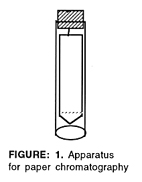
° The fragments were then separated by a technique called chromatography.
° Hydrolysis by another agent broke the polypeptide at different sites, yielding a second group of fragments.
° Sanger used chemical methods to determine the sequence of amino acids in the small fragments.
° He then searched for overlapping regions among the pieces obtained by hydrolyzing with the different agents.
° After years of effort, Sanger was able to reconstruct the complete primary structure of insulin.
° Most of the steps in sequencing a polypeptide have since been automated.
Protein conformation determines protein function.
· A functional protein consists of one or more polypeptides that have been twisted, folded, and coiled into a unique shape.
· It is the order of amino acids that determines what the three-dimensional conformation of the protein will be.
· A protein’s specific conformation determines its function.
· When a cell synthesizes a polypeptide, the chain generally folds spontaneously to assume the functional conformation for that protein.
· The folding is reinforced by a variety of bonds between parts of the chain, which in turn depend on the sequence of amino acids.
° Many proteins are globular, while others are fibrous in shape.
· In almost every case, the function of a protein depends on its ability to recognize and bind to some other molecule.
° For example, an antibody binds to a particular foreign substance.
° An enzyme recognizes and binds to a specific substrate, facilitating a chemical reaction.
° Natural signal molecules called endorphins bind to specific receptor proteins on the surface of brain cells in humans, producing euphoria and relieving pain.
§ Morphine, heroin, and other opiate drugs mimic endorphins because they are similar in shape and can bind to the brain’s endorphin receptors.
· The function of a protein is an emergent property resulting from its specific molecular order.
· Three levels of structure—primary, secondary, and tertiary structures—organize the folding within a single polypeptide.
· Quaternary structure arises when two or more polypeptides join to form a protein.
· The primary structure of a protein is its unique sequence of amino acids.
° Lysozyme, an enzyme that attacks bacteria, consists of 129 amino acids.
° The precise primary structure of a protein is determined by inherited genetic information.
· Even a slight change in primary structure can affect a protein’s conformation and ability to function.
° The substitution of one amino acid (valine) for the normal one (glutamic acid) at a particular position in the primary structure of hemoglobin, the protein that carries oxygen in red blood cells, can cause sickle-cell disease, an inherited blood disorder.
° The abnormal hemoglobins crystallize, deforming the red blood cells into a sickle shape and clogging capillaries.
· Most proteins have segments of their polypeptide chains repeatedly coiled or folded.
· These coils and folds are referred to as secondary structure and result from hydrogen bonds between the repeating constituents of the polypeptide backbone.
° The weakly positive hydrogen atom attached to the nitrogen atom has an affinity for the oxygen atom of a nearby peptide bond.
° Each hydrogen bond is weak, but the sum of many hydrogen bonds stabilizes the structure of part of the protein.
· Typical secondary structures are coils (an alpha helix) or folds (beta pleated sheets).
· The structural properties of silk are due to beta pleated sheets.
° The presence of so many hydrogen bonds makes each silk fiber stronger than a steel strand of the same weight.
· Tertiary structure is determined by interactions among various R groups.
° These interactions include hydrogen bonds between polar and/or charged areas, ionic bonds between charged R groups, and hydrophobic interactions and van der Waals interactions among hydrophobic R groups.
° While these three interactions are relatively weak, strong covalent bonds called disulfide bridges that form between the sulfhydryl groups (SH) of two cysteine monomers act to rivet parts of the protein together.
· Quaternary structure results from the aggregation of two or more polypeptide subunits.
° Collagen is a fibrous protein of three polypeptides that are supercoiled like a rope.
§ This provides structural strength for collagen’s role in connective tissue.
° Hemoglobin is a globular protein with quaternary structure.
§ It consists of four polypeptide subunits: two alpha and two beta chains.
§ Both types of subunits consist primarily of alpha-helical secondary structure.
° Each subunit has a nonpeptide heme component with an iron atom that binds oxygen.
· What are the key factors determining protein conformation?
· A polypeptide chain of a given amino acid sequence can spontaneously arrange itself into a 3D shape determined and maintained by the interactions responsible for secondary and tertiary structure.
° The folding occurs as the protein is being synthesized within the cell.
· However, protein conformation also depends on the physical and chemical conditions of the protein’s environment.
° Alterations in pH, salt concentration, temperature, or other factors can unravel or denature a protein.
° These forces disrupt the hydrogen bonds, ionic bonds, and disulfide bridges that maintain the protein’s shape.
· Most proteins become denatured if the are transferred to an organic solvent. The polypeptide chain refolds so that its hydrophobic regions face outward, toward the solvent.
· Denaturation can also be caused by heat, which disrupts the weak interactions that stabilize conformation.
° This explains why extremely high fevers can be fatal. Proteins in the blood become denatured by the high body temperatures.
· Some proteins can return to their functional shape after denaturation, but others cannot, especially in the crowded environment of the cell.
· Biochemists now know the amino acid sequences of more than 875,000 proteins and the 3D shapes of about 7,000.
° Nevertheless, it is still difficult to predict the conformation of a protein from its primary structure alone.
· Most proteins appear to undergo several intermediate stages before reaching their “mature” configuration.
· The folding of many proteins is assisted by chaperonins or chaperone proteins.
° Chaperonins do not specify the final structure of a polypeptide but rather work to segregate and protect the polypeptide while it folds spontaneously.
· At present, scientists use X-ray crystallography to determine protein conformation.
· This technique requires the formation of a crystal of the protein being studied.
· The pattern of diffraction of an X-ray by the atoms of the crystal can be used to determine the location of the atoms and to build a computer model of its structure.
· Nuclear magnetic resonance (NMR) spectroscopy has recently been applied to this problem.
° This method does not require protein crystallization.
Concept 5.5 Nucleic acids store and transmit hereditary information
· The amino acid sequence of a polypeptide is programmed by a unit of inheritance known as a gene.
· A gene consists of DNA, a polymer known as a nucleic acid.
There are two types of nucleic acids: RNA and DNA.
· There are two types of nucleic acids: ribonucleic acid (RNA) and deoxyribonucleic acid (DNA).
° These are the molecules that allow living organisms to reproduce their complex components from generation to generation.
· DNA provides directions for its own replication.
· DNA also directs RNA synthesis and, through RNA, controls protein synthesis.
· Organisms inherit DNA from their parents.
° Each DNA molecule is very long, consisting of hundreds to thousands of genes.
° Before a cell reproduces itself by dividing, its DNA is copied. The copies are then passed to the next generation of cells.
· While DNA encodes the information that programs all the cell’s activities, it is not directly involved in the day-to-day operations of the cell.
° Proteins are responsible for implementing the instructions contained in DNA.
· Each gene along a DNA molecule directs the synthesis of a specific type of messenger RNA molecule (mRNA).
· The mRNA molecule interacts with the cell’s protein-synthesizing machinery to direct the ordering of amino acids in a polypeptide.
· The flow of genetic information is from DNA -> RNA -> protein.
· Protein synthesis occurs on cellular structures called ribosomes.
· In eukaryotes, DNA is located in the nucleus, but most ribosomes are in the cytoplasm. mRNA functions as an intermediary, moving information and directions from the nucleus to the cytoplasm.
· Prokaryotes lack nuclei but still use RNA as an intermediary to carry a message from DNA to the ribosomes.
A nucleic acid strand is a polymer of nucleotides.
· Nucleic acids are polymers made of nucleotide monomers.
· Each nucleotide consists of three parts: a nitrogenous base, a pentose sugar, and a phosphate group.
· The nitrogen bases are rings of carbon and nitrogen that come in two types: purines and pyrimidines.
° Pyrimidines have a single six-membered ring.
§ There are three different pyrimidines: cytosine (C), thymine (T), and uracil (U).
° Purines have a six-membered ring joined to a five-membered ring.
§ The two purines are adenine (A) and guanine (G).
· The pentose joined to the nitrogen base is ribose in nucleotides of RNA and deoxyribose in DNA.
° The only difference between the sugars is the lack of an oxygen atom on carbon two in deoxyribose.
° Because the atoms in both the nitrogenous base and the sugar are numbered, the sugar atoms have a prime after the number to distinguish them.
° Thus, the second carbon in the sugar ring is the 2’ (2 prime) carbon and the carbon that sticks up from the ring is the 5’ carbon.
° The combination of a pentose and a nitrogenous base is a nucleoside.
· The addition of a phosphate group creates a nucleoside monophosphate or nucleotide.
· Polynucleotides are synthesized when adjacent nucleotides are joined by covalent bonds called phosphodiester linkages that form between the —OH group on the 3’ of one nucleotide and the phosphate on the 5’ carbon of the next.
° This creates a repeating backbone of sugar-phosphate units, with appendages consisting of the nitrogenous bases.
· The two free ends of the polymer are distinct.
° One end has a phosphate attached to a 5’ carbon; this is the 5’ end.
° The other end has a hydroxyl group on a 3’ carbon; this is the 3’ end.
· The sequence of bases along a DNA or mRNA polymer is unique for each gene.
° Because genes are normally hundreds to thousands of nucleotides long, the number of possible base combinations is virtually limitless.
· The linear order of bases in a gene specifies the order of amino acids—the primary structure—of a protein, which in turn determines three-dimensional conformation and function.
Inheritance is based on replication of the DNA double helix.
· An RNA molecule is a single polynucleotide chain.
· DNA molecules have two polynucleotide strands that spiral around an imaginary axis to form a double helix.
° The double helix was first proposed as the structure of DNA in 1953 by James Watson and Francis Crick.
· The sugar-phosphate backbones of the two polynucleotides are on the outside of the helix.
° The two backbones run in opposite 5’ -> 3’ directions from each other, an arrangement referred to as antiparallel.
· Pairs of nitrogenous bases, one from each strand, connect the polynucleotide chains with hydrogen bonds.
· Most DNA molecules have thousands to millions of base pairs.
· Because of their shapes, only some bases are compatible with each other.
° Adenine (A) always pairs with thymine (T) and guanine (G) with cytosine (C).
· With these base-pairing rules, if we know the sequence of bases on one strand, we know the sequence on the opposite strand.
° The two strands are complementary.
· Prior to cell division, each of the strands serves as a template to order nucleotides into a new complementary strand.
° This results in two identical copies of the original double-stranded DNA molecule, which are then distributed to the daughter cells.
· This mechanism ensures that a full set of genetic information is transmitted whenever a cell reproduces.
We can use DNA and proteins as tape measures of evolution.
· Genes (DNA) and their products (proteins) document the hereditary background of an organism.
· Because DNA molecules are passed from parents to offspring, siblings have greater similarity in their DNA and protein than do unrelated individuals of the same species.
· This argument can be extended to develop a “molecular genealogy” to relationships between species.
· Two species that appear to be closely related based on fossil and molecular evidence should also be more similar in DNA and protein sequences than are more distantly related species.
° In fact, that is so.
§ For example, if we compare the sequence of 146 amino acids in a hemoglobin polypeptide, we find that humans and gorillas differ in just 1 amino acid.
à Humans and gibbons differ in 2 amino acids.
à Humans and rhesus monkeys differ in 8 amino acids.
§ More distantly related species have more differences.
à Humans and mice differ in 27 amino acids.
à Humans and frogs differ in 67 amino acids.
§ Molecular biology can be used to assess evolutionary kinship.