Bacteria Culturing Activity


Where are Bacteria Found?  


Introduction:

They’re everywhere. Bacteria are the huddled masses of the microbial world, performing tasks that include everything from causing disease to fixing nitrogen in the soil. The estimated number of bacteria on Earth is five million trillion trillion — that’s a five with 30 zeroes after it.  When people think of bacteria, they likely first consider the nasty ones that cause disease, but the bacteria inside all animals combined — including humans — makes up less than one percent of the total amount. By far the greatest numbers are in the subsurface, soil and oceans.


Objectives:

  1. To take bacterial swabs from various places in the school
  2. To inoculate a petri dish with a bacterial culture
  3. To count bacterial colonies
  4. To determine what kind of environmental conditions influence bacterial growth

Materials: 

Petri dish,  pencil,  incubator, hot water bath, nutrient agar, thermometer

Procedure (Part A): Petri Dish Preparation

  1. Set up a hot water bath at 95oC.
  2. Loosen the caps and place nutrient agar bottle in hot water bath until agar liquefies. (Agar melts above 95oC and remains liquid until cooled to about 45oC.)
  3. Remove agar bottles and allow the agar to cool to about 50-55oC.
  4. Partially lift the cover of the petri dish and pour about 15-20ml of liquid to cover 2/3 of the plate surface.
  5. Lower the lid of the dish and gently swirl the plate to spread the media over all the bottom surface.

  1. Repeat step 5 to fill other petri dishes.
  2. DO NOT MOVE the covered plates until the nutrient agar has solidified.
  3. Once the plates are solidified, turn the plates upside down (presents condensation from getting on the agar surface).
  4. From this moment on, keep the plates upside down (condensation will disappear) in a dark, dust-free place in the room until ready to add bacteria. If plates will not be used for several days, refrigerate them.
  5. Check plates for contamination before proceeding to Part B. Discard contaminated plates.

Materials: 

Petri dish with nutrient agar, sterile cotton swabs, permanent marker, index card with sample location, pencil,  incubator


Procedure (Part B): Collecting Bacteria

  1. Choose an index card to determine your sample location
  2. Turn the petri dish upside down, and using your marker, place your initials, date and sample location along the bottom perimeter of the dish, NOT in the middle
  3. Get your sterile Q-tip, being very careful not to touch the side that will collect your sample. Go to your assigned area and quickly swab and return with your sample! (Sample locations included door handles, water faucets, desk tops, etc.)
  4. Carefully open your dish just enough to lightly rub your Q-tip in a zigzag pattern across the agar.

  1. Draw what your dish looks like in Figure 1 and record the number of bacterial colonies, if any, present on the agar surface in table 1
  2. Place your petri dish upside down in the incubator to be examined again in a few days.
  3. Recheck the plates after 1 day, 2 days, and 5 days. Count and record the number of bacterial colonies on each plate. If the plate is  completely covered with bacteria, record “lawn” in the data table.
  4.  Ignore “fuzzy” appearing colonies that are actually fungi!

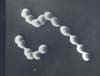
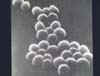
Example of Bacterial Colonies on Plate

Data:

Reminder — Fuzzy Colonies = Fungus not Bacteria

Figure 1 

Day 1                Day 2                Day 5


Table 1:   Number of Colonies on petri dish 

    Location:
Day Number of Colonies


Analysis:  

  1. Compare the number of colonies on your plate on day 5 with the plates collected from other locations. Did any of the areas show a greater number of bacteria? How many clusters of bacteria appear to be growing in each petri dish?
  2. Which petri dish had the most growth? The Least?
  3. Why was the agar sterilized before this investigation?
  4. What kind of environmental conditions seem to influence where bacteria are found?
  5. How can you control the amount of bacteria that you will encounter?
  6. Check the plate that the teacher has had open, exposed to the air for several days. What did you observe and why?

Dispose of the petri dishes carefully!  Place them in a biohazard bag to be autoclaved.

BACK


Bacteria PPT Questions

Bacteria
ppt Q’s

Prokaryote & Eukaryote Evolution

1. What does our current evidence tell us about the evolution of prokaryotes and eukaryotes?


2. About how long ago did eukaryotes evolve from prokaryotes?

3. Name the 2 theories of cellular evolution.


4. Explain the infolding theory.


5. What does endosymbiosis mean?


6. Explain the endosymbiotic theory of cell organelle formation.


7. Name 2 organelles thought to have arisen in this way.


Prokaryotic & Eukaryotic Cells

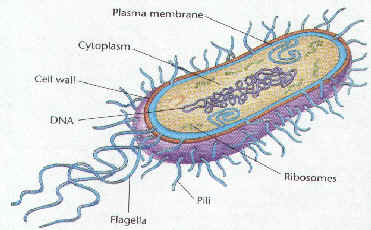
8. Label the parts of this prokaryotic cell.

9. Name several structures that are found in eukaryotic, but NOT prokaryotic cells.


10. What type of cells are the most numerous on Earth?

11. What are the most common type of prokaryotic cells?

12. How old are the earliest prokaryotic fossils?

Classification of Life

13. Name the 3 domains and the organisms found in each.

     a.

     b.

     c.

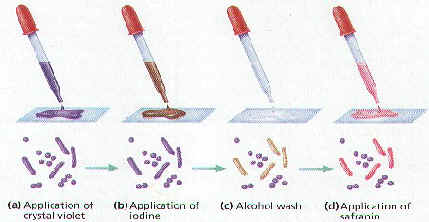
14. ______________ are found in harsh environments.

15. Give 3 examples of harsh environments in which Archaebacteria can be found.


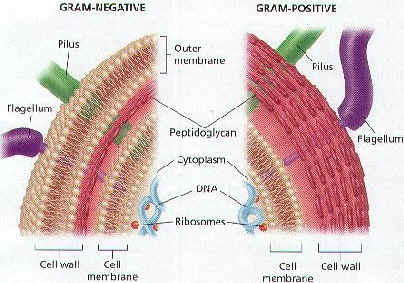
16. What group is referred to as the true bacteria?

17. What photosynthetic member is in this group?

Characteristics of Bacteria 

18. What must be used to view prokaryotic cells?

19.What cell structures are lacking in prokaryotes?

20. Do bacteria have ribosomes like other types of cells?

21. Describe the genetic material of the bacteria.  be sure to tell where it is found.


22. What surrounds the cytoplasm of bacterial cells?

23.What surrounds the outside of all bacterial cells?

24. Cell walls of true bacteria contain ____________________.

25. Some bacteria have a sticky ____________ around the cell wall to attach to __________ or other bacteria.

26. Besides the circular chromosome, where else can DNA be found inside a bacterial cell?

27. What is the size of most bacterial cells?

28. Compare the size of bacteria to the tip of a pin.


29. ____________ of the bacterial cell membrane are called _______________.

30. What two cellular processes can take place in mesosomes?


31. At what pH do bacteria do best?

32. Most bacteria act as ________________. Why is this so important?


33. How can some bacterial be harmful?  Give an example.


34. name two other important uses for bacteria.


35. What does motile mean?

36. Motile bacteria may have one or more ______________ for movement.

37. Flagella attach to the bacteria by the ___________ ___________.

38. The basal body attaches to the cell through both the cell _________and the cell ___________.

39. What protein makes up bacterial flagella?

40. Tell how these types of bacteria differ from each other:

     a. Monotrichous

     b. Lophotrichous

     c. Amphitrichous

     d. Peritrichous

41. What type of bacteria is this?

42. What are bacterial pili?


43. How do pili compare to flagella in size?

44. Give three functions of pili.

     a.

     b.

     c.


Bacterial Shapes

45. Name and describe 5 shapes used to classify bacteria. 

     a.

     b.

     c.

     d.

     e.

46. What does each of these prefixes tell you about the bacteria’s shape:

     a. Diplo-

     b. Strepto-

     c. Staphylo-

47. Sketch the shape of these bacteria:

     a. Coccus

     b. Bacillus

     c. Spirillium

     d. Diplococcus

     e. Streptococcus

     f. Staphylococcus

     g. Diplobacillus

48. E. coli is classified as what shape bacteria?

Bacterial Kingdoms

49. How do the cell walls of Archaebacteria differ from the true bacteria?

50. How do the cell membranes differ?

51. Are the ribosomes the same?

52. Are the gene sequences the same?

53. Do Archaebacteria require oxygen?

54. How is there environment different from true bacteria?


55. What are they commonly called?

56. How many groups make up the ancient bacteria and name them?


57. Methanogens live in _____________ environments. What is lacking in this environment?

58. How do methanogens get their energy?


59. Name 3 environments in which methanogens are found.


60. How do methanogens help cows?


61. How did the methanogens get their name?


62. The __________ ___________ live in very salty environments.

63. How do they get their energy?


64. Name two bodies of water in which halophiles are found.


65. ______________ live in extremely hot environments.

66. Thermophiles that also live in acidic conditions are called _____________________.

67. Name 3 habitats in which thermophiles are found.


Kingdom Eubacteria

68.  Most true bacteria are ____________ and come in ________ basic shapes. Name the shapes.


69. Do eubacteria require oxygen?

70. How are they identified?

71. When was gram staining developed?

72. Describe Gram staining.


73. What colors do bacterial cell walls stain?

74. Describe the cell wall of Gram positive bacteria.


75. What color do they stain?

76. Can Gram positive bacteria be treated with antibiotics?

77.Name 5 Gram positive bacteria and tell how they’re used or what they may cause.

     a.

     b.

     c.

     d.

     e.

78. Describe the cell walls of Gram negative bacteria.


79. Are antibiotics effective against Gram negative bacteria?

80. Some photosynthetic Gram negative bacteria make ___________ instead of oxygen.

81. How do some Gram negative bacteria help plants?

82. Where can Rhizobacteria be found and what is their job?


83. _____________ are parasitic bacteria carried by ticks that may cause ___________ disease or _____________ _______________ _____________ fever.

84. Cyanobacteria are Gram ____________ and carry on ______________ to make food.

85. What is the common name for cyanobacteria?

86. What two main pigments do cyanobacteria contain?

87. What colors are cyanobacteria?


88. _______________ is a cyanobacterium that grows in chains.

89. Name the specialized structures on cyanobacteria that help fix nitrogen.

90. How do cyanobacteria cause eutrophication?


91. Spirochetes are Gram __________ bacteria that move by ___________.

92. Describe the motion of spirochetes.

93. Do all spirochetes need oxygen?

94. Spirochetes may be _______________, _______________, or symbiotic.

95. What are enteric bacteria? Give an example.


96. _______________ is an enteric bacterium that causes food poisoning.

97. How do chemoautotrophic bacteria get their energy?


Nutrition, Respiration, and Reproduction

98. Name and describe 4 modes of nutrition in bacteria.

     a.

     b.

     c.

     d.

99. Explain each of the following methods of respiration in bacteria.

     a. Obligate Aerobes-


     b. Obligate Anaerobes-


     c. Facultative Anaerobes-


100. Anaerobes carry on ______________ to release energy from food, while aerobes carry on ____________ _______________.

101. Bacteria reproduce asexually by what method?

102. Before the cell can divide, what must happen?

103. Is binary fission a slow or fast process?

104. How do the new cells compare with each other after binary fission? What are they called?


105. Bacteria can reproduce sexually by ________________.

106. Describe how conjugation occurs.


107. What is the function of pili in conjugation?

108. How do the new cells compare to each other after conjugation?

109. When can bacteria produce spores and why?


110. What are the spores called?

111. How long can an endospore survive?

112. Why are endospores such a problem in health care facilities and in the canning industry?


113. Bacteria can genetically change by _________________ and ____________________.

114. Disease-causing bacteria may become ______________ _____________ when they genetically change.

115. How do bacteria transform?


116. Describe transduction in bacteria and give an example of a product made by bacteria using this method.


Pathenogenic Bacteria

117. What are pathogens?


118. Pathogens may cause ____________.

119. What are toxins?


120. What is the difference between endotoxins and exotoxins?


121. Name a bacterium that produces each type of toxin.

     a. Endotoxin?

     b. Exotoxin?


Bacteria Study Guide Bi


Bacteria Study Guide


1. What are rod-shaped bacteria are called?

2. Bacteria are the only organisms characterized as____________________.

3. The earliest known group of living organisms on Earth was__________________.

4. Bacteria can be classified according to what three things?
A.
B.
C.

5. What does the  prefix “archea” mean?

6. Archaebacteria can be divided into 3 Groups.  Name and describe each group.
A.

B.

C.


7. The most numerous organisms on Earth are ________________.

8. Name the type of bacteria that does not have peptidoglycan  in its cell walls.

9. Name the type of bacteria that obtain energy from inorganic substances.

10. Name the type of bacteria that obtain nutrients from dead organisms.

11. Organisms that lack a cell nucleus and membrane-bound organelles are called ______________.

12. Most prokaryotes are ________________organisms.

13. Escherichia coli is an example of a bacterium that has short, thin, hairlike projections called __________. What is their function?


14. Bacteria lack true nucleus and membrane-bound organelles so they are classified as __________.

15. What is the procedure called that is used to distinguish between two types of bacterial cell wall structures ?

16. _______________ are protective structures that some bacteria may form under harsh conditions.

17. Spiral- shaped bacteria are known as what?

18. Almost all prokaryotes are ____________________ than the smallest Eukaryotes.

19. Prokaryotes have ___________________ that are different from those of Eukaryotes.

20. What are the 2 kingdoms of bacteria and briefly describe each?


21. ________________ is the process by which bacteria cells pick up and incorporate DNA from dead bacteria cells.

22. _____________ is the process of using a virus to transfer DNA from one bacterial cell to another.

23. When living conditions become ______________, some bacteria from special
dehydrated cells called__________________.

24. Bacteria that form ___________________ have an advantage for ____________________.

25. Bacteria the feed on and that break down dead organic material are called ___________.

26. _______________ is a type of bacteria that produces many antibiotics.

27. ________________ is a type of bacteria that produces endotoxins.

28. The ____________________ are a group of bacteria that live in harsh environments.

29. Bacteria that take on the purple color when stained are called what?

30. Gram-positive Bacteria used to make antibiotics are called _________________.

31. Gram-positive bacteria cause many diseases in humans by producing ____________ which are poisons to our bodies.

32. Bacteria that appear pink after staining are called  what?

33. Gram-negative bacteria have an extra layer of ________________ on the outside
of the ____________  ____________ and appear ___________ after the gram staining.

44. The lipid layer _______________ the purple stain from entering the cell wall.

35. The Archaebacteria that produce methane are called ____________________.

36. Archaebacteria that thrive in very salty conditions, such as the Dead Sea, are called what?

37. The prefix “eu” means __________________.

38. What is the important tool used for classifying Eubacteria  called?


39. During Gram staining, depending on structure of their __________  ____________, the
bacteria’s cell walls absorbs either the _______________ or ________________dye.

40. Gram-negative bacteria are distinguished by an extra layer of _________________.

41.  ______________ are Gram-negative bacteria that perform plant-like ___________________ and release oxygen as a by-product.

42.  ________________ are much __________ than many other prokaryotes.

43. Organisms that obtain energy from oxidizing inorganic compound instead of sunlight are called what?

44. Whiplike structures used by bacteria for movements are called __________________.

45. Photoautotrophs are bacteria that use ______________________ as an energy source.

46. Bacteria can be one of three different shapes:
A. _____________________________________________(Rod)
B. _____________________________________________(Sphere)
C. _____________________________________________(Spiral)

47. Gram-negative bacteria do absorb the ____________ stain during the Gram-staining process.

48. The extra layer of lipids also stops many _________________ from entering the bacteria.

49. Scientist think that gram-negative bacteria may have evolved from a_____________  ________________.

50.  ______________________ grow in the root nodules of such plants as soybean, clover, and alfalfa.

51. Rhizobacteria fix ______________________ from the atmosphere into a form that plants
and animals can use (this greatly helps both plants and animals).  They convert gaseous
nitrogen into compounds such as __________________________  (NH3).

52. Organisms that use oxygen during cellular respiration are called ________________. Organisms
that do not use oxygen are called __________________________.  Typically they get their energy through ________________________.

53. Bacteria called ______________  __________________ cannot live without oxygen.

54. Most bacteria reproduce by a process called ____________   _______________.

55. Binary fission is a process in which the __________________________ replicate,
after which the ________________ divides.

56. Binary fission is a type of ____________________ reproduction.

57. Some bacteria contain smaller pieces of circular DNA called  _________________.

58. Bacteria can exchange genes by one of three special means. Name these means.

A.

B.

C.

59. The process of exchanging genetic material through cell to cell contact is called
_______________.

60. Where are pili found? Do all bacteria have them?


61. Bacteria usually gain part of their ____________________ from their shape.

62. Two major differences between groups of bacteria are their source of ________________
and whether or not they use ________________ for cellular respiration.

63. Most bacteria act as  _______________________ getting their energy by consuming (eating) organic molecules.

64. Some are __________________ that make their own food from ________________.

65. ___________________ obtain their food from inorganic compound instead of sunlight.

66.  _________________________ use sunlight for energy.

67. Bacteria that can only survive in the absence of oxygen are called what?

68. Gram-negative bacteria appear ________________ when they undergo the Gram-stain procedure.

69. A type of  bacteria that performs nitrogen fixation is _________________________.

70. Bacteria called ____________  _______________ cannot live in the presence of oxygen.

71. Type of bacteria that peptidoglycan is present in cell walls __________________.

72. What bacteria are thought to be responsible for establishing the Earth’s oxygen-rich atmosphere?

73. Bacteria cells typically lack _________________________.

74. Bacterial disease of the intestines are usually transmitted by contaminated ____________  or ______________.

75. What are the 3 mechanism of action of an antibiotic?


76. The cell walls of Gram-negative Eubacteria are composed of a combination of polysaccharide and polypeptide called what?

77. Bacteria that obtain their energy by removing electrons from inorganic molecules, rather than obtaining energy from the sun, are called _____________________ bacteria.

78. In general, organisms that obtain their energy from sunlight are called _________________.

79. Bacteria that are heterotrophic and feed on dead organic matter are called _____________.

80. A(n) _________________ is a substance that can be obtained from bacteria or fungi and  can be used as a drug to fight pathogenic bacteria.

81. Many bacteria are ________________ and play an important role in recycling carbon, nitrogen, and other elements,  while other bacteria are ___________________ and assemble organic compounds from carbon dioxide, nitrogen, and other elements.

82. A pathogen is an agent that is ________________________.

83. Bacteria cells such as E. coli transfer pieces of genetic material in a process called ____________________.

84. Archaebacteria that can live in extremely hot or acidic water are called _____________.

85. Spherical bacteria are called ________________.

86. Bacteria called ________________  __________________ can use oxygen when it is available,
but do not depend on it.

87. Nitrogen-fixing bacteria convert atmospheric _________________ into _________________.

88. Structurally, bacteria have one of two types of _______________  _______________.

89. Certain cyanobacteria, such as Anabaena, can fix nitrogen by using enzymes contained in specialized structures called what?

90. The oxidation of ammonia to nitrates that can be used by plants is called what?

TRUE OR FALSE

_____91. Bacterial cells have membrane-bound organelles and chromosomes.

_____92. Certain antibiotics have become ineffective against certain strains of bacteria. These bacteria have developed a resistance, which may be passed on from one generation of bacteria to the next.

_____93. Bacteria that can survive only in the absence of oxygen are called obligated aerobes.

_____94. The photoautotrophic bacteria are the only bacteria that are indirectly beneficial to humans.

_____95. Bacterial cells are usually much larger than eukaryotic cells.

_____96. Gram-negative bacteria have a thick layer of peptidoglycan that stains purple.

_____97. Ancient bacteria known as Archaebacteria are now extinct.

_____98. Although there are some bacteria that are heterotrophic, the vast majority are autotrophic.

_____99. Bacteria lack nuclei and therefore also lack genetic material.

_____100. Photosynthetic bacteria are present in leguminous plants and convert atmospheric nitrogen into a form that is usable by the plant.

_____101. Gram-negative bacteria appear purple when they undergo the Gram-stain procedure.

_____102. Bacteria are incapable of movement themselves; they an only get to new locations by growing toward them or by forming endospores and being carried in air or water.

_____103. The bacterial cell wall prevents the passage of antibiotics and is only means by which bacteria can resists antibiotics.

_____104. Some bacteria cannot survive in the presence of oxygen.

_____105. The terms Eubacteria and Archaebacteria refer to members of a single kingdom.

_____106. When bacteria undergo nonreproductive genetic recombination, their bacterial chromosome is altered.

DIRECTIONS: Answer the questions below as completely and as thoroughly as possible. Answer the question in essay form (not outline form), using complete sentences. You may use diagrams or pictures to supplement your answers, but a diagram or picture alone without appropriate discussion is inadequate.

107. Describe the capsule of a bacterium and its function.


108. Identify the most common shapes of Eubacteria and describe each.


109. Compare and contrast Archaebacteria with Eubacteria.


110. Identify 3 ways that bacteria are used to produce substances for human use.


111. Describe the significance of cyanobacteria in the formation of the Earth’s atmosphere.


112. List the various structures of the bacterial cell, and describe their function.


113. Explain the laboratory technique Gram stain and explain why it is used.


114. Define the term genetic recombination as it applies to bacteria, and describe 3 ways that genetic recombination occurs in bacteria.


115. Explain how chemoautotrophs differ from photosynthetic autotrophs.


116. Explain how the terms bacteria, Eubacteria, and Archaebacteria, relate to one another.


117. Describe 3 types of movement among bacteria.


118. List the characteristics that are used to classify bacteria.


119.  Explain how chemoautotrophs harvest energy from the environment.


120.  Describe 2 ways bacteria cause disease.


121.  Explain why antibiotic resistance among bacteria is increasing.


122. List one distinguishing characteristic of each of the three main groups of Archaebacteria.


AR Wildflowers

Arkansas Wildflowers


Carolina Larkspur (Delphinum carolinium) – 4′ tall.
Blooms May – July.  These spurred flowers may be deep blue, reddish – blue, or white.  Native perennial.  OZ, OU, CP.


Mexican Hat  (Ratibida columnifera) ― 2 – 3′ tall.
Blooms June – October.  A widely planted form of a native perennial.  Statewide.


Queen Ann’s Lace (Daucus carota)  ― 1 – 4′ tall

Blooms May – frost.  This is the ancestor of the cultivated carrot.  Introduced biennial. Statewide.


Black-eyed Susan  (Rudbeckia hirta) ― 2 – 3′ tall with one 2″ flower head on each hairy stem.

Blooms May – October.  Native Biennial or short-lived perennial.  Statewide.


Showy Evening Primrose  (Oenothera speciosa) ― 1 – 2′ tall.

Blooms April – July.  White or pink flowers.  Native perennial.  Statewide.


Pale Purple Coneflower (Echinacea pallida) – 3′ tall.

Blooms May – July.  Native perennial.  OZ, OU, CP.


Lance-leaved Coreopsis (Coreopsis lanceolata) – 3′ tall.

Blooms April – June.  Native perennial.  Statewide.


Chicory  (Coreopsis intybus) – 4′ tall.

Blooms May – October.

This European native’s roots are sometimes used as a coffee substitute or additive.  Perennial.  OZ, OU.


Rough Blazing Star  (Liatrus aspera)  ― 3 – 4′ tall.
Blooms July – October.  The unopened flower buds resemble small cabbages.  Native perennial.  Statewide.


Cardinal Flower (Lobelia cardinalis) – 3′ tall.
Blooms August – October. This flower attracts hummingbirds.  Native perennial. Statewide.


Arkansas Beard Tongue (Penstemon arkansanus) – Less than 2′ tall.
Blooms April – June.  The 3/4″ whitish flowers have lavender streaking.  Native perennial. OZ, OU.


Purple Coneflower  (Echinacea purpurea) – Up to 4′ tall.
Blooms from June – October.
The ray flowers are more purple than those of pale purple coneflower. Native perennial. OZ, OU.
Downy Phlox (Phlox pilosa) – 2′ tall.

Blooms April – July.

Flowers can be pink, pale pink, or sometimes white with purple centers.  Native perennial.  OZ, OU, CP.


Spider Lily (Hymenocallis caroliniana) – 3′ tall.

Blooms May – August.  These large white flowers have a distinctive spider-like shape. Native perennial. OU, GP, AP.


Rose Vervain (Glandularia canadensis) – Plants less than 2′ tall.

Blooms March – September.  The source of many garden hybrids.  Native perennial.  OZ, OU, CP, AP.


Indian Paintbrush (Castilleja coccinea) ― 1 – 2′ tall.  The bracts that surround the small flowers displays brilliant colors.

Blooms April – June.  Native annual.  Found on prairies in the OZ, CP, AP.


Wild (Monarda fistulosa) ― 2 – 4′ tall.
Blooms June – September.  Also called Bee Balm.  Flowers pinkish, lavender, or lilac.  Statewide.


Goldenrod (Solidago canadensis) ― 4 – 6′ tall.

Blooms July – September.  Native perennial.  Statewide.


Ohio Spiderwort (Tradescantia ohiensis) – Stems 3′ tall.
Blooms May – July.
So named because the internal jellylike substance resembles a spider’s web.  Native perennial.  OZ, OU, CP.
Plains Coreopsis (Coreopsis tinctoria) – 3′ tall.

Blooms June – September.  Native annual.  Statewide.

Bird’s Foot Violet (Viola pedata) – 6″ tall.

Blooms April – May.  This violet occurs in several different colors:  light violet, dark violet, or dark violet with 2 dark purple petals. Native perennial.  OZ, OU, CP.


Butterfly Weed (Asclepias tuberosa) ― 1 – 2′ tall.

Blooms May – September.  Flower’s nectar attractive to butterflies.  Native perennial.  Statewide.


Ox-eyed Daisy (Chrysanthemum leucanthemum) – 2″ flower heads.

Blooms May – July.  Introduced perennial.  OZ, OU, CP.


Tickseed (Bidens aristosa) ― 1 – 6′ tall.

Blooms August – November.  This late bloomer is often found in large stands.  Native perennial.  Statewide.


Ap Lab 1 Sample 5


Osmosis & Diffusion – Lab 1 

Introduction:

All molecules have kinetic energy and are constantly in motion.  This motion causes the molecules to bump into each other and move in different directions.  The result is diffusion.  Diffusion is the random movement of molecules from an area of high concentration to an area of low concentration. This will continue until dynamic equilibrium is reached; no net movement will occur.  Osmosis is a special kind of diffusion.  It is the diffusion of water through a selectively permeable membrane. A selectively permeable membrane means that the membrane will only allow certain molecules through such as water, small solutes, oxygen, carbon dioxide, and glucose, because no additional ATP is required. The membrane will not let ions, nonpolar molecules, or large molecules through because extra ATP is needed for them to travel across the membrane.  Active transport is how molecules (such as ions) move against the concentration gradient.  Additional ATP is required to perform this process.

Water will travel from an area of high water potential to an area of low water potential.  Water potential is the measure of free energy of water in a certain solution.  It is measured by using the Greek letter psi (ψ).  The formula for figuring water potential is:

ψ          =             ψp             +           ψs

Water Potential   =   Pressure Potential   +  Solute Potential

Water potential is affected by 2 different factors.  They are the addition of a solute and the pressure potential.  If a solute is added to the water, then the water potential is lowered.  If more pressure is placed on the water, then the potential is raised. The addition of a solute and water potential are inversely proportional.  Pressure being placed onto the water and the potential of the water are directly proportional.

Solutions can have three relationships with each other; isotonic, hypertonic, or hypotonic.  When the solutions have the same concentration of solutes, they are isotonic.  There is no net change in the amount of water on each side of the membrane.  If the solutions differ in their solute concentrations, the solution that has the most solute is hypertonic to the other solution.  The solution with the smaller amount of solute is hypotonic to the other solution. The net movement of water will be from the hypertonic solution to the hypotonic solution. Net movement will occur until dynamic equilibrium is reached, then there will be no net movement of water.

Hypothesis:

In this lab, osmosis and diffusion will occur between the solutions of different concentration until dynamic equilibrium is reached and there is no net movement of water.

Materials:

Exercise 1A:

The materials used include a 30cm piece of 2.5cm dialysis tubing, string, scissors, 15mL of 15% glucose/1% starch solution, 250mL beaker, distilled water, and 4mL of Lugol’s solution (Iodine Potassium-Iodine or IKI).

Exercise 1B:

This exercise required six 30cm strips of presoaked dialysis tuning, six 250mL cups or beakers, string, scissors, a balance, and 25mL of  these solutions: distilled water, 0.2M sucrose, 0.4M sucrose, 0.6M sucrose, 0.8M sucrose, and 1.0M sucrose.

Exercise 1C:

The materials that were required include 100mL of these solutions: distilled water, 0.2M sucrose, 0.4M sucrose, 0.6M sucrose, 0.8M sucrose, and 1.0M sucrose, six 250mL beakers or cups, a potato, a cork borer, a balance, paper towel, and plastic wrap.

Exercise 1D:

The materials used include a calculator, and a pencil.

Procedure:

Exercise 1A:

Soak the dialysis tubing in water.  Tie off one end of the tubing to form a bag.  Open the bag and place the glucose/starch solution in it.  Tie off the other end of the bag, leaving enough room for expansion of the contents in the bag.  Record the color of the solution in Table 1.1.  Next, test the glucose/starch solution for the presence of glucose.  Record the results in Table 1.1.  Fill a 250mL beaker or cup with 2/3 full with distilled water.  Add 4mL of Lugol’s solution to the distilled water and record the color of the solution in Table 1.1.  Test the solution for glucose and record the results in Table 1.1.  Immerse the bag in the beaker of solution.  Allow the beaker and bag to stand for approximately 30 minutes or until you see a distinct color change in the bag and the beaker.  Record the final color of the solution in the bag, and the solution in the beaker, in Table 1.1.  Test the liquid in the beaker and in the bag for the presence of glucose.  Record the results in Table 1.1.

Exercise 1B:

Obtain the six strips of presoaked dialysis tubing and create a bag out of each one by tying off one end.  Pour 25mL of the 6 solutions into separate bags. Tie off the other end of the 6 bags.  Rinse each bag gently with distilled water and blot dry.  Determine the mass of each bag and record it in Table 1.2.  Immerse each bag in one beaker filled will distilled water and label the beaker to indicate the molarity of the solution in the bag.  Let the setups stand for 30 minutes.  Remove the bags from the water.  Carefully blot them dry and determine their masses.  Record them in Table 1.2.  Obtain the other lab groups data to complete Table 1.3.

Exercise 1C:

Pour 100mL of the solutions into a labeled 250mL beaker.  Use a cork borer to cut potato cylinders.  You need 4 cylinders for each cup.  Determine the mass of the 4 cylinders together and record the amount in Table 1.4.  Place the cylinders into the beaker of sucrose solution.  Cover the beaker with plastic wrap to prevent evaporation.  Let it stand overnight.  Remove the cores from the beaker and blot them gently on a paper towel and determine their total mass.  Record the results in Table 1.4.  Calculate the percentage change.  Do this for the individual and class data.  Graph the class average percentage change in mass.

Exercise 1D:

Determine the solute, pressure, and water potential of the sucrose solution.  Then, graph the information that is given about the zucchini cores.

Results:

Exercise 1A:

 Table 1.1


Initial Contents Initial Color Final Color Initial Presence of Glucose Final Presence of Glucose
Bag 15% glucose & 1% starch Cloudy White Purple Yes Yes
Beaker Water & IKI Brown Orange No Yes


  1. Which substances are entering the bag and which are leaving the bag? What evidence supports the answer?  Distilled water and IKI are  leaving and entering.  Glucose is able to leave the bag.
  2. Explain the results that were obtained.  Include the concentration differences and membrane pore size in the discussion.  Glucose and small molecules were able to move through the pores.  Water and IKI moved from high to low concentration.
  3. How could this experiment be modified so that quantitative data could be collected to show that water diffused into the dialysis bag?  You could mass the bag before and after it was placed into the solution.
  4. Based on your observations, rank the following by relative size, beginning with the smallest: glucose molecules, water molecules, IKI molecules, membrane pores, and starch molecules.  Water molecules, IKI molecules, Glucose molecules, Membrane pores, and Starch molecules
  5. What results would you expect if the experiment started with a glucose and IKI solution inside the bag and only starch and water outside?  The glucose and IKI would move out of the bag and turn the starch and water solution purple/blue.  The starch couldn’t move inside the bag because its molecules are too big to pass through the membrane of the tubing.

Exercise 1B:


Table 1.2: Dialysis Bag Results: Individual Data


Contents in dialysis bag Initial mass (g) Final mass (g) Mass difference (g) % Change in mass
Distilled Water 24.7 23.7 1 4.1
0.2M 26.7 27.4 .7 2.62
0.4M 27.4 29 1.6 5.84
0.6M 25.9 29 3.1 12
0.8M 29 32.6 3.6 12.41
1.0M 28 33.7 5.7 20.4


Table 1.3: Dialysis Bag Results: Class Data


Group 1

Group 2

Group 3

Total Class Average
Distilled Water 4.1% .7% 1.6% 6.4% 2.13%
0.2M 2.62% 6.4% 4.1% 13.12% 4.37%
0.4M 5.84% 9.9% 9.5% 25.24% 8.41%
0.6M 12% 13.4% 9.3% 34.37% 11.57%
0.8M 12.41% 14.6% 15.2% 42.21% 14.07%
1.0M 20.4% 19.7% 15.9% 56% 18.67%


  1. Explain the relationship between the change in mass and the molarity of sucrose within the dialysis bags.  The solute is hypertonic and water will move into the bag.  As the molarity increases the water moves into the bag.
  2. Predict what would happen to the mass of each bag in this experiment if all the bags were placed in a 0.4M sucrose solution instead of distilled water.  Explain.  With the 0.2M bag, the water would move out.  With the 0.4M bag, there will be no net movement of water because the solutions reach dynamic equilibrium.  With the 0.6M-1M bags, the water would move into the bag.
  3. Why did you calculate the percent change in mass rather than simply using the change in mass?  This was calculated because each group began with different initial masses and we would have different data.  All the groups needed consistent data.
  4. A dialysis bag is filled with distilled water and then places in a sucrose solution.  The bag’s initial mass is 20g and its final mass is 18g.  Calculate the percent change of mass, showing your calculations.  ((18-20)/20) x 100 = 10%
  5. The sucrose solution in the beaker would have been hypotonic to the distilled water in the bag.

Exercise 1C


Table 1.4: Potato Core: Individual Data


Contents of Beaker Initial Mass (g) Final Mass (g) Difference in Mass % Change in Mass
Distilled Water 2.8 3.7 .9 32.14
0.2M 2.9 3.1 .2 7
0.4M 2.5 2.2 .3 12
0.6M 2.3 1.9 .4 17.39
0.8M 2.5 1.9 .6 24
1.0M 2.3 1.8 .5 21.74


Table 1.5: Potato Core: Class Data


Group 1 Group 2 Total Class Average
Distilled Water 32.14% 21.1% 53.24% 26.62%
0.2M 7% 6.7% 13.7% 6.85%
0.4M -12% -6.5% -18.5% -9.25%
0.6M -17.39% -15.2% -32.59% -16.30%
0.8M -24% -20% -44% -22%
1.0M -21.74% -19% -40.74% -20.37%


Determine the molar concentration of the potato core.  0.3M

Exercise 1D


What is the molar concentration of the zucchini cores? .35M


  1. If a potato core is allowed to dehydrate by sitting in the open air, would the water potential of the potato cells decrease or increase? Why?  It would decrease because the water would leave the cells and cause the water potential to go down.
  2. If a plant cell has a lower water potential than its surrounding environment and if pressure is equal to zero, is the cell hypertonic or hypotonic to its environment? Will the cell gain water or lose water?  It is hypotonic and it will gain water.
  3. The beaker is open to the atmosphere.  What is the pressure potential of the system?  The pressure potential is zero.
  4. Where is the greatest water potential?  In the dialysis bag.
  5. Water will diffuse out of the bag. Why? It is because the water moves from and area of high water potential to an area of lower water potential.
  6. What effect does adding solute have on the solute potential component of that solution? Why?  It makes is more negative.
  7. Consider what would happen to a red blood cell placed in distilled water: a) Which would have the higher concentration of water molecules?  Distilled Water  b) Which would have the higher water potential?  Distilled Water  c)  What would happen to the red blood cell? Why?  It would lyce, because it would take on too much water.

Error Analysis:

Possible errors that could have affected the results of the lab include incorrectly mixing the solutions, ineffectively tying the dialysis tubing, inaccurately measuring , and inaccurately calculating.

Conclusion:

            During Exercise 1A the data that was collected help determine which molecules can and can not move across a cell membrane. Obviously, because of the color change in the bag, the IKI was able to move across the membrane.  It is small enough to fit through the pores in the selectively permeable membrane, along with water.  Starch was too large to move across the membrane. Glucose, as the Benedict’s test proves, was able to move freely along with the water and IKI solution.

In Exercise 1B, it was proven that water moves faster across the cell membrane than sucrose.  The water moved to help reach dynamic equilibrium between the 2 solutions.  The sucrose molecules are too big to move across the membrane as fast as water can.

The data in Exercise 1C showed that the potatoes contained sucrose.  The sucrose in the potato raised the solute potential, which lowered the water potential.  The beaker of distilled water had a high water potential.  Water moves down the concentration gradient, causing the potato cores to take on water.

Exercise 1D helped better understand the lab with simple algebra equations.  It proved that the data that was collected was correct through mathematics.