
AP Lecture Guide 05A – Macromolecules


AP Biology: CHAPTER 5A

MACROMOLECULES


1. Define the following:

a. monomer _______________________________________________________________

___________________________________________________________________________
b. polymer _________________________________________________________________

___________________________________________________________________________

c. condensation reaction _____________________________________________________

___________________________________________________________________________

d. hydrolysis _______________________________________________________________

___________________________________________________________________________

2. Which foods do you think will enter the blood the quickest? Why?

___________________________________________________________________________

___________________________________________________________________________

3. What are the general roles of carbohydrates? ______________________________________

___________________________________________________________________________

___________________________________________________________________________

4. List some monosaccharides with their molecular formulas.

___________________________________________________________________________

___________________________________________________________________________

5. Double sugars are called ______________________________________________________

6. List the monosaccharides that form each:

a. maltose _________________________________________________________________

b. sucrose _________________________________________________________________

c. lactose __________________________________________________________________

6. Polymers of sugars form _______________________________________________________

7. Which forms of polysaccharide is best for each function:

a. Strength of structure _______________________________________________________

b. Storage and sugar release __________________________________________________

c. What theme is this addressing? ______________________________________________

8. How does the alpha differ from the beta form of glucose and why is it significant to animals?

___________________________________________________________________________

___________________________________________________________________________

9. How do the role and structure of the following polysaccharides compare?

a. starch___________________________________________________________________

b. glycogen ________________________________________________________________

c. cellulose_________________________________________________________________

10. Ninety percent of Asians, 75% of African-Americans, and a much smaller percent of

northern Europeans are lactose intolerant. Why do you suppose we see this pattern?

___________________________________________________________________________

___________________________________________________________________________

___________________________________________________________________________


AP Lecture Guide 13 – Meiosis and Sexual Life Cycles

AP Biology: CHAPTER 13

MEIOSIS AND SEXUAL LIFE CYCLES

1. The key features of the two versions of reproduction.

a. Asexual Reproduction ____________________________________________________

__________________________________________________________________________

__________________________________________________________________________

b. Sexual Reproduction _____________________________________________________

__________________________________________________________________________

__________________________________________________________________________

2. What is the role of meiosis in sexual reproduction?

__________________________________________________________________________

__________________________________________________________________________

__________________________________________________________________________

3. What is a karyotype?

__________________________________________________________________________

__________________________________________________________________________

__________________________________________________________________________

4. Identify several things the can be seen with a karyotype?

__________________________________________________________________________

__________________________________________________________________________

__________________________________________________________________________

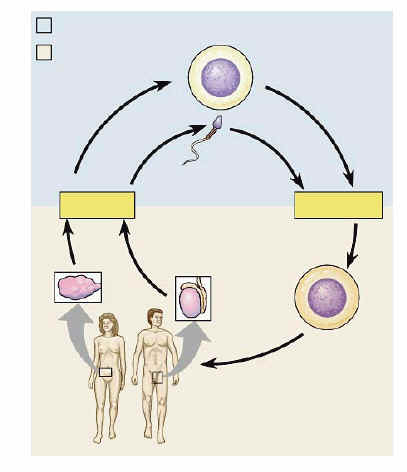
5. Label the diagram of the human lifecycle. Include the chromosome numbers.

6. Compare the products of mitosis with meiosis.

a. Mitosis ________________________________________________________________

__________________________________________________________________________

b. Meiosis ________________________________________________________________

__________________________________________________________________________

7. Meiosis is said to be a double division. Explain.

__________________________________________________________________________

__________________________________________________________________________

8. Meiosis is an important source of variation. Define and describe how each of the following

contributes to variation within a species.

a. Independent Assortment __________________________________________________

__________________________________________________________________________

b. Random fertilization ______________________________________________________

__________________________________________________________________________

c. Crossing Over __________________________________________________________

__________________________________________________________________________

9. Draw a pair of homologous chromosomes and indicate a crossing over event and the products.


10. List the significant differences between mitosis and meiosis.

__________________________________________________________________________

__________________________________________________________________________

__________________________________________________________________________

__________________________________________________________________________

11. What is the significance of genetic variation and natural selection?

__________________________________________________________________________

__________________________________________________________________________

AP Lecture Guide 22 – Descent with Modification


AP Biology: CHAPTER 22- DESCENT WITH MODIFICATION


1. Identify the three significant historical themes that set the stage for Darwinian evolutionary

theory.

__________________________________________________________________________

__________________________________________________________________________

2. What were the two major points made in The Origin of Species?

__________________________________________________________________________

__________________________________________________________________________

3. What were the conventional paradigms in the 1800’s when Darwin developed his theories?

__________________________________________________________________________

__________________________________________________________________________

4. What was the contribution of Carolus Linnaeus to the evolutionary theories?

__________________________________________________________________________

__________________________________________________________________________

5. How did the study of fossils help Darwin shape his theories?

__________________________________________________________________________

__________________________________________________________________________

6. How did geological gradualism and uniformitarianism influence Darwin?

__________________________________________________________________________

__________________________________________________________________________

7. Identify the two principles of Lamarck’s theory of evolution.

__________________________________________________________________________

__________________________________________________________________________

8. How did the observations during his voyage on the Beagle influence Darwin’s theories?

__________________________________________________________________________

__________________________________________________________________________

9. Why were the Galápagos Islands so important to Darwin’s observations?

__________________________________________________________________________

__________________________________________________________________________

10. What are the elements for the formation of new species?

__________________________________________________________________________

__________________________________________________________________________

11. What is the driving force behind the evolution of the 14 species of finches on the

Galapagos?

__________________________________________________________________________

__________________________________________________________________________

12. What was Wallace’s role in the Theory of Natural Selection?

__________________________________________________________________________

__________________________________________________________________________

13. What were the main points of The Origin of Species?

__________________________________________________________________________

__________________________________________________________________________

14. Define Descent with Modification.

__________________________________________________________________________

__________________________________________________________________________

15. How does the “tree analogy” represent the evolutionary relationships of creatures?

__________________________________________________________________________

__________________________________________________________________________

16. Summarize the observations and inferences recognized as the backbone of evolution by

natural selection.

__________________________________________________________________________

__________________________________________________________________________

__________________________________________________________________________

17. Observations:

a. ______________________________________________________________________

b. ______________________________________________________________________

c. ______________________________________________________________________

d. ______________________________________________________________________

e. ______________________________________________________________________

18. Inferences:

a. ______________________________________________________________________

b. ______________________________________________________________________

c. ______________________________________________________________________

19. How did Darwin’s experience with artificial selection influence his theories of evolution?

__________________________________________________________________________

__________________________________________________________________________

20. For each of the following, indicate how it is used as evidence of evolution by natural

selection.

a. Paleontology ____________________________________________________________

__________________________________________________________________________

b. Biogeography ___________________________________________________________

__________________________________________________________________________

c. Resistance to insecticides _________________________________________________

__________________________________________________________________________

d. Drug Resistance _________________________________________________________

__________________________________________________________________________

e. Homology ______________________________________________________________

__________________________________________________________________________

f. Homologous structures ___________________________________________________

__________________________________________________________________________

g. Vestigial organs _________________________________________________________

__________________________________________________________________________

h. Embryology ____________________________________________________________

__________________________________________________________________________

i. Biochemical similarity _____________________________________________________

__________________________________________________________________________


AP Lecture Guide 05B – Macromolecules


AP Biology: CHAPTER 5B

MACROMOLECULES


1. What is the characteristic common to lipids? _______________________________________

___________________________________________________________________________

2. Lipids are synthesized by the chemical reaction ____________________________________

and broken down by the reaction ________________________________________________

3. What makes fats hydrophobic? _________________________________________________

___________________________________________________________________________

___________________________________________________________________________

4. State at least two differences between saturated and unsaturated fats.

a. _________________________________________________________________________

___________________________________________________________________________

b. _________________________________________________________________________

___________________________________________________________________________

5. How do phospholipids interact in an aqueous solution?

___________________________________________________________________________

___________________________________________________________________________

6. Make a diagram of phospholipid interactions that form membranes.


7. Sketch the common building block of steroids.


8. List several functions of proteins.

___________________________________________________________________________

___________________________________________________________________________

___________________________________________________________________________

9. What are the three properties used to classify amino acids?

___________________________________________________________________________

___________________________________________________________________________

___________________________________________________________________________

10. Sketch two amino acids side-by-side, on one of them label the functional groups, then show how the two can be joined together.


11. What determines the primary structure of a protein? _________________________________

___________________________________________________________________________

12. Describe the four levels of protein structure:

a. Primary _________________________________________________________________

___________________________________________________________________________

b. Secondary ______________________________________________________________

___________________________________________________________________________

c. Tertiary _________________________________________________________________

___________________________________________________________________________

d. Quaternary ______________________________________________________________

___________________________________________________________________________

13. What happens to a protein during denaturation? ____________________________________

___________________________________________________________________________

14. What are the building blocks of nucleic acids? ______________________________________

15. Briefly describe two functions of DNA in the cell.

a. ________________________________________________________________________

___________________________________________________________________________

b. ________________________________________________________________________

___________________________________________________________________________


AP Lecture Guide 15 – The Chromosomal Basis of Inheritance

AP Biology: CHAPTER 15

THE CHROMOSOMAL BASIS OF INHERITANCE


1. Describe some of the pieces of information that scientists discovered that contributed to the

“Chromosome Theory of Inheritance”?

__________________________________________________________________________

__________________________________________________________________________

2. Summarize the Chromosomal Theory of Inheritance.

__________________________________________________________________________

__________________________________________________________________________

3. Why was Thomas Hunt Morgan’s choice of the fruit fly a good model organism?

__________________________________________________________________________

__________________________________________________________________________

4. Describe Morgan’s first mutant. Why was it so significant from the wild type?

__________________________________________________________________________

__________________________________________________________________________

5. Show the cross P, F1, F2 for the white-eyed male mutant.

6. What happens when we trace the inheritance of traits found on the same chromosome?

__________________________________________________________________________

__________________________________________________________________________

7. Use the diagram to trace the body color and wing shape in this linked two trait cross.


8. What is recombination and when does it occur? ___________________________________

__________________________________________________________________________

__________________________________________________________________________

9. How is recombination frequency calculated? _____________________________________

__________________________________________________________________________

__________________________________________________________________________

10. What determines sex in humans? ______________________________________________

__________________________________________________________________________

11. In what ways are sex-linked traits distinct from autosomal traits? _____________________

__________________________________________________________________________

__________________________________________________________________________

__________________________________________________________________________

12. Why are sex-linked recessive traits more common in human males than females?

__________________________________________________________________________

__________________________________________________________________________

13. How many X chromosomes are typically expressed in humans and cats?

__________________________________________________________________________

__________________________________________________________________________

14. What happens to X chromosomes that are inactivated? _____________________________

__________________________________________________________________________

__________________________________________________________________________

15. How many Barr bodies would be found in a person with: XXY_____ XO_____ XXX_____.

16. Define each term & and indicate when each occurs.

a. aneuploidy _____________________________________________________________

_______________________________________________________________________

_______________________________________________________________________

b. polyploidy ______________________________________________________________

__________________________________________________________________________

__________________________________________________________________________

17. Identify the each of the alterations of chromosome structure.

18. List and describe a few specific examples of non-disjunctions that occur in humans.

__________________________________________________________________________

__________________________________________________________________________

__________________________________________________________________________

19. Describe genomic imprinting and give an example.

__________________________________________________________________________

__________________________________________________________________________

__________________________________________________________________________