AP Lab 5 Sample 7


Cellular Respiration

Blake Lockwood

Introduction:


The human body has to have energy in order to perform the functions that allow life. This energy comes from the process of cellular respiration. Cellular respiration releases energy that the body can use in the form of ATP from carbohydrates by using oxygen. Cellular respiration is not just one singular reaction, it is a metabolic pathway made up of several reactions that are enzyme mediated. This process begins with glycolysis in the cytosol of the cell. In glycolysis, glucose is split into two three-carbon compounds called pyruvate, producing a small amount of ATP The final two steps of cellular respiration occur in the mitochondria. These final two steps are the electron transport system and the Krebs Cycle. The overall equation for cellular respiration is

C6H12O6 + 6O2 -> 6CO2 + 6H2O + 686 kilocalories of energy per mole of glucose oxidized.

There are three ways to measure the rate of cellular respiration. These three ways are by measuring the consumption of oxygen gas, by measuring the production of carbon dioxide, or by measuring the release of energy during cellular respiration. In order to measure the gases, the general gas law must be understood. The general gas law state: PV=nRT where P is the pressure of the gas, V is the volume of the gas, n is the number of molecules of gas, R is the gas constant, and T is the temperature of the gas (in K). The gas law also shows concepts about gases. If temperature and pressure are kept constant, then the volume of the gas is directly proportional to the number of molecules of the gas. If the temperature and volume remain constant, then the pressure of the gas changes in direct proportion to the number of molecules of gas present. If the number of gas molecules and the temperature remain constant, then the pressure is inversely proportional to the volume. If the temperature changes and the number of gas molecules is kept constant, then either pressure of volume will change in direct proportion to the temperature.

In this experiment, the rate of cellular respiration will be measured by measuring the oxygen gas consumption by using a respirometer in water. This experiment measures the consumption of oxygen by germinating and non-germinating at room temperature and at ice water temperature. The carbon dioxide produced in cellular respiration will be removed by potassium hydroxide (KOH). As a result of the carbon dioxide being removed, the change in the volume of gas in the respirometer will be directly related to the amount of oxygen consumed. The respirometer with glass beads alone will show any changes in volume due to atmospheric pressure changes or temperature changes.


Hypothesis:


The germinating peas will have a higher rate of respiration, than the beads and non-germinating peas.


Materials:


This lab requires two thermometers, two water baths, beads, germinating and non-germinating peas, beads, six vials, twelve pipettes, 100 mL graduated cylinder, scotch tape, tap water, ice, KOH, absorbent and non-absorbent cotton, six washers, six rubber stoppers, scotch tape, and a one mL dropper.


Methods:


Start the experiment by setting up two water baths, one at room temperature and the other at 10 degrees Celsius. Then, find the volume of twenty-five germinating peas. Next, put 50 mL of water in a graduated cylinder and put twenty-five non-germinating peas in it. Then, add beads until the volume is the same as twenty-five germinating peas. Next, pour our the peas and beads, refill the graduated cylinder with 50 mL of water, and add only beads until the volume is the same as the twenty-five germinating peas. Repeat these steps for another set of peas and beads. Also, put together the six respirometers by gluing a pipette to a stopper and taping another pipette to the pipette for all six respirometers. Then, put two absorbent cotton balls, several drops of KOH, and half of a piece of non-absorbent cotton into all six vials. Next, add the peas and beads to the appropriate respirometers. Place one set of respirometers into the room temperature water bath and the other set in the ice water bath. Elevate the respirometers by setting the pipettes onto masking tape and allow them to equilibrate for five minutes. Next, lower the respirometers into the water baths and take reading at 0, 5, 10, 15, and 20 minutes. Record the results in the table.


Results:


Table:


Beads Alone Germinating Peas

Dry Peas and Beads

Reading at time X Diff. Reading at time X Diff. Corrected Diff.


Reading at time X Diff. Corrected Diff.
Initial 13.2 12.7 12.9
0 to 5 11.0 2.2 10.5 2.2 0.0 11.1 1.8 -0.4
5 to 10 10 3.2 9.0 3.7 0.5 10.0 2.8 -0.3
10 to 15 9.2 4.0 8.0 4.7 0.7 9.4 3.5 -0.5
15 to 20 9.1 4.0 7.5 5.1 1.2 9.3 3.6 -0.4
Initial 14.0 13.5 14.0
0 to 5 13.3 0.7 12.1 1.4 0.7 13.6 0.4 -0.3
5 to 10 12.9 1.1 11.0 2.5 1.4 13.2 0.8 -0.3
10 to 15 12.6 1.4 10.0 3.5 2.1 12.9 1.1 -0.3
15 to 20 12.2 01.8 9.0 4.5 2.7 12.5 1.5 -0.3


Questions

1. In this activity, you are investigating both the effect of germination versus non-germination and warm temperature versus cold temperature on respiration rate. Identify the hypothesis being tested in this activity. Increasing the temperature could increase the oxygen consumption. Germinating peas have a higher respiration rate than non-germinating.


2. This activity uses a number of controls. Identify at least three of the controls, and describe the purpose of each control. One control was the respirometer with only beads in it because it didn’t use respiration. Another control was that the water temperatures were constant. The final control was that there was the same amount of KOH in each vial.


3. Graph the results from the corrected difference column for the germinating peas and dry peas at both room temperature and at 10 degrees Celsius. On graph paper.


4. Describe and explain the relationship between the amount of oxygen gas consumed and time. The oxygen gas consumed increased fairly constantly in respect to time.


5. From the slope of the four lines on the graph, determine the rate of oxygen gas consumption of germinating and dry peas during the experiments at room temperature and at 10 degrees Celsius. Recall that rate = _y over _x.


Condition Show Calculations Here Rate in mL oxygen gas/minute
Germinating Peas/10°C (1.2-0.7)/5 0.1
Germinating Peas/ Room Temperature (2.7-2.1)/5 0.12
Dry Peas/10°C (-.4-0)/5 -0.08
Dry Peas/Room Temperature (-.3-(-.3))/5 0


6. Why is it necessary to correct the readings from the peas with the readings from the beads? The gas changes in the beads were only due to pressure and temperature, and not gas consumption, so the beads act as a control.


7. Explain the effect of germination (versus non-germination) on pea seed respiration. Germinating peas consumed more oxygen than non-germinating.


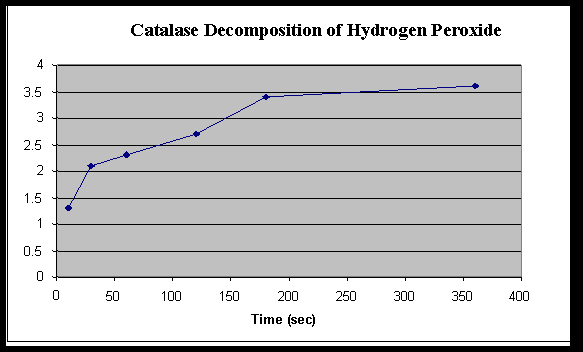
8. Below is a sample graph of possible data obtained for oxygen consumption by germinating peas up to about 8 degrees Celsius. Draw in predicted results through 45 degree Celsius. Explain your predictions.


The amount of oxygen consumed will steadily increase until the temperature reaches a point at which the enzymes become denatured.


9. What is the purpose of KOH in this experiment? The purpose of the KOH was to remove the effect of carbon dioxide from the readings.


10. Why did the vial have to be completely sealed around the stopper? The vial had to be completely sealed so that gases couldn’t escape and water couldn’t leak into the respirometer.


11. If you used the same experimental design to compare the rates of respiration of a 25 g. reptile and a 25 g. mammal, at 10 degrees Celsius, what results would you expect? Explain your reasoning. The reptile would use less oxygen because it is cold-blooded and wouldn’t be as active at a colder temperature as the mammal would.


12. If respiration in a small mammal were studied at both room temperature (21°C) and 10°C, what results would you predict? Explain your reasoning. The respiration of the small mammal would be higher at 10 degrees Celsius because it would need more energy to keep its normal body temperature.


13. Explain why water moved into the respirometers’ pipettes. Water moved into the respirometer’s pipettes because pressure decreased when the amount of oxygen was decreased.


14. Design an experiment to examine the rates of cellular respiration in peas that have been germinating for 0, 24, 48, and 72 hours. What results would you expect? Why?


Set up five respirometers containing beads, non-germinating peas, peas that have germinated for one day, peas that have germinated for two days, and peas that have germinated for three days. Measure the water readings in intervals of five minutes for twenty minutes. The peas that have been germinating for three days will have the highest rate of respiration and the beads will have the lowest rate of respiration.


15. According to your graph, what happens to the rate of oxygen consumed by germinating peas over time? What does this indicate to you? The rate of oxygen consumption is fairly constant.


16. How did the KOH affect the water movement in the respirometer? It allows more water into the pipette.


17. Which of the two pea types, germinating or non-germinating, consumes the most oxygen? Why? Germinating peas consume more oxygen because they are growing and are more active than non-germinating peas.


18. What was the effect of temperature on pea respiration? Warmer temperatures allow for the peas to respire at a faster rate.


19. During aerobic respiration, glucose is broken down to form several end products. Which end products contain the carbon atoms from glucose? The hydrogen atoms from glucose? The oxygen atoms from glucose? The energy stored in the glucose molecules? Carbon dioxide contains the carbon, water contains the hydrogen, both carbon dioxide and water contain the oxygen, and ATP contains the energy.


20. What is fermentation? What are the two types of fermentation? What organisms use fermentation? Fermentation is a catabolic process that makes a limited amount of ATP from glucose without an electron transport chain and that produces an end-product such as ethyl alcohol or lactic acid. The two types of fermentation are alcoholic and lactic acid fermentation. Plants use alcoholic while animals use lactic acid.


21. Draw a Venn diagram showing how respiration and fermentation are similar and how they differ.


22. What are the three pathways involved in the complete breakdown of glucose to carbon dioxide and water? What reaction is needed to join two of these pathways? What are the substrates and products of this reaction and where does it take place? The three pathways are glycolysis, the electron transport chain, and the Krebs Cycle. The reaction of the pyruvate joining with CoA enzyme and NAD to produce acetyl CoA, NADH, and carbon dioxide. The acetyl CoA goes to the Krebs Cycle and NADH to the electron transport chain in the mitochondria.

23. Write the letter of the pathway that best fits each of the following processes.

Pathway

a. Glycolysis

b. Krebs Cycle

c. Electron Transport System

Process

1. Carbon dioxide is given off b.

2. Water is formed c.

3. PGAL a.

4. NADH becomes NAD+ c.

5. Oxidative phosphorylation c.

6. Cytochrome carriers c.

7. Pyruvate a.

8. FAD becomes FADH2 b.

24. Calculate the energy yield of glycolysis and cellular respiration per glucose molecule. Distinguish between substrate-level phosphorylation and oxidative phosphorylation. Where does the energy for oxidative phosphorylation come from? 36 ATPs are formed per glucose moelcule. Four of the ATPs are formed from substrate level and 32 from oxidative.


Substrate

Oxidative Total
Glycolysis 2 4 6
Transition 0 6 6
Krebs 2 22 24
Total 4 32 36


Error Analysis:

Some of the errors that could have occurred during the experiment were water leaking into the respirometers, gas escaping the respirometers, water temperature in the bath changing, and mathematical mistakes.

Discussion and Conclusion:

This lab showed that germinating peas consumed more oxygen at a faster rate than the non-germinating peas and the beads did. The non-germinating peas and the beads didn’t consume hardly any oxygen at all. It also showed that the respiration rate of germinating peas was faster than the respiration rate of non-germinating peas. Finally, this experiment showed that respiration rates increase as the temperature increases. This shows that temperature and respiration rates are directly proportional to each other.

AP Lecture Guide 29-30 – Plant Diversity


AP Biology: CHAPTER 29 & 30- PLANT DIVERSITY


1. Chart the four phyla of the plant kingdom. Include common names of each, the approximate

number of extant species, and the major characteristics.

a. _______________________________________________________________________

__________________________________________________________________________

b. _______________________________________________________________________

__________________________________________________________________________

c. _______________________________________________________________________

__________________________________________________________________________

d. _______________________________________________________________________

__________________________________________________________________________

2. Why are Charophyceans thought to be ancestors of land plants?

__________________________________________________________________________

__________________________________________________________________________

__________________________________________________________________________

3. List several adaptations of land plants significant for terrestrial survival.

__________________________________________________________________________

__________________________________________________________________________

__________________________________________________________________________

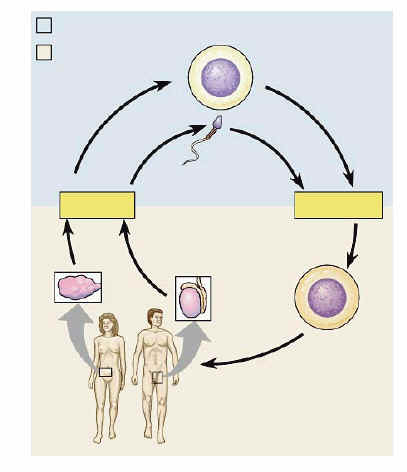
4. Label the generic diagram to explain Alternation of Generations.

5. Describe a few features common to Bryophytes.

__________________________________________________________________________

__________________________________________________________________________

6. What is the dominant phase of the moss life cycle?

__________________________________________________________________________

__________________________________________________________________________

7. List a couple of adaptations of Pteridophytes (ferns) not seen in Bryophytes.

__________________________________________________________________________

__________________________________________________________________________

8. What is the dominant phase of the fern life cycle? _________________________________

__________________________________________________________________________

9. How is the reduced gametophyte an adaptation for seeded plants?

__________________________________________________________________________

__________________________________________________________________________

10. What is the significance of the seed? ___________________________________________

__________________________________________________________________________

__________________________________________________________________________

11. What was the advantage of pollen? _____________________________________________

__________________________________________________________________________

__________________________________________________________________________

12. List the four phyla of gymnosperms. Which is the most common? _____________________

__________________________________________________________________________

__________________________________________________________________________

13. Identify five differences between monocots and dicots.

a. _______________________________________________________________________

b. _______________________________________________________________________

c. _______________________________________________________________________

d. _______________________________________________________________________

e. _______________________________________________________________________

14. What is the adaptive value of the flower to plants? _________________________________

__________________________________________________________________________

__________________________________________________________________________

15. Describe the role of ovaries and ovules in the flowering plants.

__________________________________________________________________________

__________________________________________________________________________

16. List several features of angiosperms that aid in seed dispersal.

__________________________________________________________________________

__________________________________________________________________________

__________________________________________________________________________


AP Lab 3 Sample 4 Mitosis


Lab 3     Mitosis & Meiosis


Introduction


All cells come from other cells. New cells are formed during cell division which involves both the replication of the cell’s nucleus and division of the cytoplasm. The two kinds of cellular division are mitosis and meiosis. Mitosis usually makes body cells, somatic cells. Mitosis is used in adult cells for asexual reproduction, regeneration, and the maintenance and repair of body parts. The process called meiosis makes gametes, sperm and eggs, and spores in plants. Gamete or spore cells have half the chromosomes that the parent cell has.

Mitosis is the first of the cell divisions studied in this lab. It is easily observed in cells that are growing at a fast paces such as whitefish blastula or onion root tips, which are used in this lab. The onion root tips have the highest percentage of cells going through mitosis. The whitefish blastula is formed directly after the egg is fertilized. This is a period of a fast paced growth and numerous cellular divisions where mitosis can be observed. Just before mitosis the cell is in interphase, a part of the cell cycle where the cell has a distinct nucleus and nucleoli. Next is prophase, where the chromatin thickens into distinct chromosomes and the nuclear envelope breaks open releasing them into the cytoplasm. The first signs of the spindle apparatus begin to appear. Next the cell begins metaphase, where the spindle attaches to the centromere of each chromosome pair and moves them to the middle of the cell. This level position is called the metaphase plate. Then anaphase begins when the chromatids are separated and pulled to the opposite poles. The final stage is telophase where the nuclear envelope is reformed and the chromosomes gradually uncoil. Cytokinesis then may occur forming a cleavage furrow and then the two daughter cells will separate.

Meiosis is more complex and involves two nuclear divisions. The two divisions are called Meiosis I and Meiosis II. These two divisions result in the production of four haploid gametes. This process allows increased genetic variation due to crossing over where genes can be exchanged. The process, like mitosis, depends on interphase to replicate the DNA. Meiosis begins with prophase I. In this stage, homologous chromosomes move together to form a tetrad. This is where crossing over occurs resulting in the recombination of genes. Metaphase I moves the tetrads to the metaphase plate in the middle of the cell, and anaphase I reduces the tetrads to their original two stranded form and moves them to opposite poles. Telophase I then prepares the cell for its second division. Meiosis II is just like mitosis except that the daughter cells are haploid instead of diploid. DNA replication does not occur in interphase II, and prophase II, metaphase II, anaphase II, and telophase II occur as usual. The only change is the number of chromosomes.


Hypothesis


Mitosis is easily observed in the whitefish blastula and the onion root tip. Meiosis and crossing over occurs in the production of gametes, in animals, and spores, in plants.


Materials


Lab 3A. 1

The materials used in this lab are as follows: light microscopes, prepared slides of whitefish blastula and onion root tips, pencil, and paper.

Lab 3A. 2

The materials used in this lab are as follows: light microscopes, prepared slides of onion root tips, paper, and pencil.

Lab 3B. 1

The materials used in this section of the lab are as follows: a chromosome simulation kit, pencil and paper.

Lab 3B. 2

The materials used in this section of the lab are as follows: light microscopes, prepared slides of Sordaria fimicola, pencil, and paper.


Methods


Lab 3A. 1

Observe prepared slides of whitefish blastula and onion root tips under the 10X and 40X objectives. Sketch and identify each section of cell division.

Lab 3A. 2

Observe every cell and determine what stage the cell is in. Count at least 200 cells total, separating them into groups of the same phase. Consider it takes 24 hours for the onion root-tip cells to complete the cell cycle.

Lab 3B. 1

Use the lab book to show how to make the chromosomes. The simulation kit has plenty of beads to use. There are red and yellow beads to be used to show the different chromatids. There is also a piece that resembles half of a centromere which has a magnet to connect to another one.

Lab 3B. 2

Use a light microscope to observe the prepared slide and record all data.

Results

Lab 3A. 1

The sketches below show the phases of mitosis for the onion root-tip.


The sketches below show the phases of mitosis for the whitefish blastula.


Why is it more accurate to call mitosis “nuclear replication” rather than “cellular division”?


In mitosis, two new nuclei are formed and the cytokinesis is just part mitosis.


Explain why the whitefish blastula and onion root tip are selected for a study of mitosis.


The blastula is generally a ball of cells that are rapidly going under mitosis. The onion root-tip is an area where mitosis also occurs very rapidly.

Lab 3A. 2

The table below shows the data collected for this lab.


Number of Cells

Field 1 Field 2 Field 3 Total
Interphase 86 38 53 177 78.67 1132.8
Prophase 9 5 7 21 9.33 134.4
Metaphase 6 2 5 13 5.78 83.2
Anaphase 3 1 2 6 2.67 38.48
Telophase 3 1 3 7 3.11 44.8
225


If your observations had not been restricted to the area of the root tip that is actively dividing, how would your results have been different?


There would have been less cell division since most of the plant’s growth occurs at the root-tip.


Based on the data in the table above, what can your infer about the relative length of time an onion root-tip cell spends in each stage of cell division?


The most time of an onion root-tip cell’s life is in interphase. Prophase is the next most common phase that the cells spend in.

Lab 3B. 1


List three major differences between the events of mitosis and meiosis.


Mitosis has only one nuclear division while meiosis has two. Mitosis also makes two diploid cells and meiosis makes four haploid cells. Crossing over is also only found in meiosis.


Compare mitosis and meiosis with respect to each of the following:


Mitosis Meiosis
Chromosome number of parent cells 2n 2n
Number of DNA replications 1 1
Number of divisions 1 2
Number of daughter cells produced 2 4
Chromosome number of daughter cells 2n n
Purpose Repair and growth Gamete and spore production


How are Meiosis I and Meiosis II different?


Meiosis I ends in two chromosomes with two chromatids and Meiosis II ends in four chromosomes with only one chromatid.


How do oogenesis and spermatogenesis differ?


Oogeneis forms the eggs and spermatogenesis forms the sperm.


Why is meiosis important for sexual reproduction?


Meiosis makes the chromosome number come out in half so that fertilization can come back and restore the diploid number.

Lab 3B. 2


Number of 4:4 Number of Asci Showing Crossover Total Asci % Asci Showing Crossover Divided by 2 Gene to Centromere Distance (Map Units)
39 19 58 9.5 9.5 map units


Draw a pair of chromosomes in MI and MII, and show how you would get a 2:4:2 arrangement of ascospores by crossing over.


Error Analysis


No errors were reported in this lab but there could have been. The cells in Lab 3A. 1 could have been miscounted or not counted.


Conclusion


From the data collected in this experiment, it can be concluded that the mitotic stages of the whitefish blastula and the onion root-tip can be observed with a light microscope. The time spent in each phase of mitosis can be recorded and it is concluded that the most time spent in a stage is in interphase. It can also be concluded that the least time spent in a stage is in telophase. It is also understood that someone can simulate meiosis using a chromosome simulation kit. On the last part of the lab, Lab 3B. 2, one could conclude that more asci do not cross over than do the number of asci that do cross over.

BACK


AP Plant Study Guide-8b


Unit 8B – Plants
Know the following:

  • water potential of a turgid plant cell in pure water
  • adaptations of hydrophytes
  • what occurs if guard & surrounding epidermal cells are K+ deficient
  • how stomata are opened & closed
  • what must the plant expend for bulk flow of water in the root apoplast
  • which part of an oat seedling detects the direction of light
  • effect of gibberellins on the aleurone layer of seeds
  • how plant hormones determine the bending of plants toward light
  • what hormone might produce normal growth in a mutant dwarf plant
  • what can function as a sink in plants
  • why does photosynthesis decrease in wilting leaves
  • what are epiphytes
  • what is chlorosis
  • what soil characteristics would be the least productive to plant growth
  • what happens to most water taken up by a plant
  • how solutes move in plants according to the pressure-flow hypothesis of phloem transport
  • what causes guttation to occur
  • why does most of the water in xylem move upward in a tree
  • what property of water causes cohesion of its molecules
  • function of companion cells
  • what 2 elements make up most of the dry weight of plants
  • what could be the harmful effect of spraying a fungicide on a woodlot
  • what do carnivorous plants supplement by eating insects
  • why is nitrogen fixation so important
  • what would be characteristics of soil well suited for plant growth
  • what is the function of micronutrients in plants
  • what elements are micronutrients needed by plants
  • what elements are macronutrients needed by plants
  • what is meant by double fertilization
  • what are some “vegetables” that technically are fruits
  • why is sexual reproduction an advantage to plants
  • what  is the megaspore mother cell & what does it do
  • what do male gametophytes produce in plants
  • name 4 flower parts that are modified leaves
  • what is the function of a seed’s radicle
  • what forms pollen on a plant
  • what do the 2 sperm nuclei fertilize in plants
  • what causes seed germination
  • what floral parts are involved in pollination & fertilization
  • what things can function in signal transduction in plants
  • what is needed by a short-day plant for it to flower
  • what type of tropism do vines use to grow toward tropical trees
  • why do plants use changes in photoperiods instead of air temperature changes to trigger dormancy
  • what is needed to get poinsettias to bloom  early in December
  • do plant hormones act the same on all root & stem tissues
  • what hormone is involved in the rapid opening & closing of stomata
  • what effect do auxins have on stem cuttings that are to be rooted


AP Lab 3 Sample 3 Mitosis


Lab 3    Mitosis and Meiosis


Introduction:


All new cells come from previously existing cells. New cells are formed by karyokinesis- the process in cell division which involves replication of the cell’s nucleus and cytokinesis-the process in cell division which involves division of the cytoplasm. Two types of nuclear division include mitosis and meiosis. Mitosis typically results in new somatic, or body, cells. Mitotic cell division is involved in the formation of an adult organism from a fertilized egg, asexual reproduction, regeneration, and maintenance or repair of body parts. Meiosis results in the formation of either gametes in animals or spores in plants. The cells formed have half the chromosome number of the parent cell.

Mitosis is best observed in cells that are growing at a rapid pace, such as in the whitefish blastula or onion root cell tips. The root tips contain a special growth region called the apical meristem where the highest percentage of cells are undergoing mitosis. The whitefish blastula is formed immediately after the egg is fertilized, a period of rapid growth and numerous cell divisions where mitosis can be observed.

There are several stages included in before, during, and following mitosis. Interphase occurs right before a cell enters mitosis. During interphase, the cell will have a distinct nucleus with one or more nucleoli, which is filled with a fine network of threads of chromatin. During interphase, DNA replication occurs. After duplication the cell is ready to begin mitosis. Prophase is when the chromatin thickens until condensed into distinct chromosomes. The nuclear envelope dissolves and chromosomes are in the cytoplasm. The first signs of the microtubule-containing spindle also begin to appear. Next the cell begins metaphase. During this phase, the centromere of each chromosome attaches to the spindle and are moved to the center of the cell. This level position is called the metaphase plate. The chromatids separate and pull to opposite poles during the start of anaphase. Once the two chromatids are separate, each is called a chromosome. The last stage of mitosis is telophase. At this time, a new nuclear envelope is formed and the chromosomes gradually uncoil, forming the fine chromatin network seen in interphase. Cytokinesis may occur forming a cleavage furrow that will form two daughter cells when separated.

Meiosis is more complex than mitotic stages and involves two nuclear divisions called Meiosis I and Meiosis II. They result in the production of four haploid gametes and allow genetic variation because of crossing over of genetic material. Prior the process, interphase replicates the DNA. During prophase I, the first meiotic stage, homologous chromosomes move together to form a tetrad and synapsis also begins. This is where crossing over occurs, resulting in the recombination of genes. In Metaphase I, the tetrads move to the metaphase plate in the middle of the cell as on mitotic metaphase. Anaphase I brings the tetrads back to their original two stranded form and moves them to opposite poles. During Telophase I, the centriole is finished and the cell prepares for a second division. In Meiosis II, in Prophase II, centrioles move to opposite ends of the chromosome group. In Metaphase II, the chromosomes are centered within the center of each daughter cell. Anaphase II involves the centromere of the chromatids separating. Telophase II occurs when the divided chromosomes separate into different cells, known as haploid cells.

Sordaria fimicola, an ascomycete fungus, can be used to demonstrate the results of crossing over during meiosis. It spends most of its life haploid and only becomes diploid when the fusion of the mycelia of two different strains results in the fusion of two different types of haploid nuclei to form a diploid nucleus. Meiosis, followed by mitosis, in Sordaria results in the formation of eight haploid ascospores contained within a sac called an ascus. They are contained in a perithecium, a fruiting body, until mature enough to be released. The arrangement of spores directly reflects whether or not crossing over occurred. If an ascus has four tan ascospores in a row and four black ascospores in a row -4:4 arrangement, then no crossing over has taken place. If the asci has black and tan ascospores in sets of two -2:2:2:2 arrangement, or two pairs of black ascospores and four tan ascospores in the middle -2:4:2 arrangement, then crossing over has taken place.


Hypothesis:


The stages of mitosis can be examined in whitefish blastula and onion root cell tips by using a microscope. The process of crossing over and the stages of meiosis only occur during the creation of gametes and spores.


Materials:


Exercise 3A

The materials necessary for this exercise are a light microscope, prepared slides of whitefish blastula, onion root cell tips, pencil, and paper.

Exercise 3B

For this portion of the lab, materials needed are a bag of color-coded connecting beads and magnetized “centromeres,” several trays, and labels marked interphase, prophase, metaphase, anaphase, and telophase.


Methods:


Exercise 3A.1: Observing Mitosis

During this experiment, prepared slides of whitefish blastula and onion root tips should be observed under the 10X and 40X objectives of a light microscope. A cell in each stage of mitosis should be identified and sketched.

Exercise 3A.2: Time for Cell Replication

In this section of the lab, use the highest power objective on the microscope to observe and count every cell in the field of view. The cells should be counted according to the stage of mitosis they are in. At least 200 cells and 2 fields of view should be examined and counted. The percentage of cells in each stage is then recorded and the amount of time spent in each phase is calculated.

Exercise 3B.1: Simulation of Meiosis

For this portion of the experiment, a chromosome simulation kit will be used to demonstrate meiosis. Two sets of two strands with each set a different color, are connected to simulate DNA replication in both of the homologous pairs, the stage called interphase. Next, the chromosomes were entwined to represent synapsis in the stage known as prophase. Sections of beads were entwined between the pairs as in crossing over and aligned at the equator. Beads of each pair exchange places, representing metaphase. Next, anaphase was simulated by the homologous pairs being separated to opposite sides of the tray, or in terms of the “chromosomes,” the cell. Pushing the chromosomes into two separate cells, or trays, mimicked telophase.

Meiosis II was simulated as well. Prophase II is shown by the separation of the two beads, but no true change. The chromosomes again move to the equator during metaphase II, and in anaphase II, the two chromatids are separated and moved to opposite poles. Telophase II separates the chromosomes into four different cells.

Exercise 3B.2: Crossing Over during Meiosis in Sordaria

Prepared slides of Sordaria fimicola were observed under a light microscope. The asci were identified as either 4:4 or asci showing crossover. These readings were recorded. The percentage of each and map units were calculated.


Results:


Exercise 3A


Whitefish Blastula

Onion Root Cell Tips


Why is it more accurate to call mitosis “nuclear replication” rather than “cellular division”? It is more accurate to describe mitosis as “nuclear replication” because the cell does not divide in any of the mitotic steps. The entire process of mitosis is a series of steps that divides the nucleus into two separate nuclei at opposite poles. When a cell is truly split, the process is known as cytokinesis.


Explain why the whitefish blastula and onion root tips are selected for a study of mitosis. The blastula is what is formed directly following fertilization and, therefore, the cell is growing and many of the phases can be seen at this time. Onion root tip cells are also specimens that include a large amount of cell growth and a high percentage of cells experiencing mitotic activities.


Table 1: Number of Cells in Each Stage of Mitosis and Amount of Time Spent in Each Stage


Number of Cells


Field 1


Field 2

Total
 

Interphase

71 101 172 73.2% 1054.0
 

Prophase

13 15 28 12.0% 171.6
 

Metaphase

12 13 25 10.6% 153.2
 

Anaphase

1 2 3 1.3% 18.4
 

Telophase

3 4 7 3.0% 42.9
 

Total Cells Counted

235


If your observations had not been restricted to the area of the root tip that is actively dividing, how would your results differ? The majority of the cells would be in the stage of interphase and the results would be more difficult to gain and inaccurate.


Based on the data in Table 3.1, what can you infer about the relative length of time an onion root-tip cell spends in each stage of cell division? Prophase is the longest stage of mitosis (though Interphase, which occurs prior mitosis, takes up the most time of the cell’s life). Then, based on the data gained, the time spent in each stage decreases as you go further along.


Exercise 3B


List three major differences between the events of mitosis and meiosis. In mitosis, the nucleus divides once, and in meiosis, the nucleus is divided twice. Mitosis produces two identical daughter cells and meiosis produces up to four different cells. Synapsis and crossing over do not take place in mitosis, but do in meiosis.


Compare mitosis and meiosis with respect to each of the following.

Table 2: Comparing Mitosis and Meiosis


Topic Being Compared


Mitosis


Meiosis


Chromosome number of Parent Cells

Diploid (2n) Diploid (2n)
 

Number of DNA Replications

Once Once
 

Number of Divisions

One Two
 

Number of Daughter Cells

Two Four
 

Chromosome Number of Daughter Cells

Diploid (2n) Haploid (n)
 

Purpose

Growth and repair Production of gametes or spores


How are Meiosis I and Meiosis II different? Meiosis I begins with a tetrad and separates the homologous pairs. Meiosis II separates the two sister chromatids into haploids.


How do oogenesis and spermatogenesis differ? Oogenesis produces egg cells and spermatogenesis produces sperm cells.


Why is meiosis important for sexual reproduction? In meiosis the chromosome number is reduced to n so that it can be fertilized and void of any related (fertilized 2n) defects. Crossing- over occurs during meiosis, allowing for variations in the organisms created.


Table 3: The Number of Crossovers and Non-Crossovers


Number of 4:4


Number of Asci Showing Crossover


Total Asci


% Asci Showing Crossover Divided by 2


Gene to Centromere Distance (Map Units)

59 68 127 26.8% (1)


2. Draw a pair of chromosomes in MI and MII, and show how you would get a 2:4:2 arrangement of ascospores by crossing over.

Error Analysis:


Because the results gathered in the lab were based mostly on observations and sketching, chances of error are slim. However, when counting the number of cells in specific stages in Exercise 3A, mistakes could have occurred. When identifying these stages in Exercise 3A, mistakes were also possible.


Discussion and Conclusion:


The stages of mitosis were observed and timed in Exercise 3A. These stages are prophase, metaphase, anaphase, and telophase. Prophase is the most time-consuming phase, while anaphase is the least time-consuming. Mitosis is just one portion of a cell’s life. The longest time of a cell’s life (73% to be exact) is spent in interphase, a phase just prior to prophase. During this phase, DNA replication takes place. Prophase involves the first signs of cell division with a thickening of the chromatin threads until the chromatin is condensed to chromosomes. In metaphase the chromosomes move to the center of the spindle and the centromere attaches to the spindle. During anaphase the chromatids are separated and moved to opposite ends of the poles. The final stage, telophase, involves the condensation of the chromosomes and the formation of a new nuclear envelope. Following telophase, cytokinesis may occur and the cytoplasm will be divided into two cells.

During the first section of Exercise 3B, the stages of meiosis were simulated using magnetic beads and centromeres with trays serving as the “cell.” Crossing over in Sordaria was observed using a microscope in the second portion of Exercise 3B. Using the information, the map units were then determined. The distance of the gene relative to the centromere in the Sordaria was 26.8 map units.

BACK