Properties of Water


Properties of Water


Introduction:

Water’s chemical description is H2O. As the diagram to the left shows, that is one atom of oxygen bound to two atoms of hydrogen. The hydrogen atoms are “attached” to one side of the oxygen atom, resulting in a water molecule having a positive charge on the side where the hydrogen atoms are and a negative charge on the other side, where the oxygen atom is. This uneven distribution of charge is called polarity. Since opposite electrical charges attract, water molecules tend to attract each other, making water kind of “sticky.” As the right-side diagram shows, the side with the hydrogen atoms (positive charge) attracts the oxygen side (negative charge) of a different water molecule. (If the water molecule here looks familiar, remember that everyone’s favorite mouse is mostly water, too). This property of water is known as cohesion.

All these water molecules attracting each other mean they tend to clump together. This is why water drops are, in fact, drops! If it wasn’t for some of Earth’s forces, such as gravity, a drop of water would be ball shaped — a perfect sphere. Even if it doesn’t form a perfect sphere on Earth, we should be happy water is sticky. Water is called the “universal solvent” because it dissolves more substances than any other liquid. This means that wherever water goes, either through the ground or through our bodies, it takes along valuable chemicals, minerals, and nutrients.

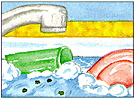
Water, the liquid commonly used for cleaning, has a property called surface tension. In the body of the water, each molecule is surrounded and attracted by other water molecules. However, at the surface, those molecules are surrounded by other water molecules only on the water side. A tension is created as the water molecules at the surface are pulled into the body of the water. This tension causes water to bead up on surfaces (glass, fabric), which slows wetting of the surface and inhibits the cleaning process. You can see surface tension at work by placing a drop of water onto a counter top. The drop will hold its shape and will not spread.

In the cleaning process, surface tension must be reduced so water can spread and wet surfaces. Chemicals that are able to do this effectively are called surface active agents, or surfactants. They are said to make water “wetter.” Surfactants perform other important functions in cleaning, such as loosening, emulsifying (dispersing in water) and holding soil in suspension until it can be rinsed away. Surfactants can also provide alkalinity, which is useful in removing acidic soils.

Pre-Lab Questions (Click here)

Materials:

Box of small paper clips, small plastic container, eyedropper, cup, stirring rod, water, liquid soap, plastic tray

Procedure (Part A) Cohesiveness of Water:

  1. Estimate how many paper clips will fit into a completely full cup of water. Record this number in data table 1.
  2. Place your small container on a tray to contain any water that may spill.
  3. Fill a plastic cup with tap water.
  4. Pour tap water from your cup into your small container.
  5. Continue to add water by eyedropper until the top surface appears rounded.
  6. Slowly add paper clips one at a time to the cup keeping count of all paper clips that you add.
  7. Stop adding paper clips to the container whenever water spills from the top.
  8. Record your paper clip count. Compare the actual number of paper clips to the estimated number.

Procedure (Part B) Soap’s effect on Surface Tension:

  1. Again estimate how many paper clips will fit into a completely full cup of soapy water. Record this number in data table 2.
  2. Place your small container on a tray to contain any water that may spill.
  3. Fill a plastic cup with tap water.
  4. Add several drops of liquid soap & use a stirring rod to mix.
  5. Pour soapy water from your cup into your small container.
  6. Continue to add soapy water by eyedropper until the top surface appears rounded.
  7. Slowly add paper clips one at a time to the cup keeping count of all paper clips that you add.
  8. Stop adding paper clips to the container whenever water spills from the top.
  9. Record your paper clip count. Compare the actual number of paper clips to the estimated number.

Data:

Table 1


Cohesiveness of Tapwater
Estimated Number of Paper Clips Actual Number of paper Clips Difference


Table 2


Cohesiveness of Soapy water
Estimated Number of Paper Clips Actual Number of paper Clips Difference


Questions: 

1. How did your estimated number compare to your actual number?

2. What happened to the surface of the water as more clips were added?


3. What property of water was shown in Part A?

4. How is this property of water used in nature?

5. Explain why water shows surface tension.


6. Explain why water is a polar molecule and include a diagram of several water molecules in a drop of water.


7. In order to clean a surface, what must happen to surface tension?


8. What is the job of a surfactant?


9. Name a surfactant used in Part B?

10. Using your data from Part B, explain what proof you gathered in Part B to support your answer to question 9.


Plant Classification Study Guide

PLANT EVOLUTION AND CLASSIFICATION

1. There are more than ________________ different plant species.

2. Plants share Four Characteristics:
A._________________________________________________________________

    B._________________________________________________________________

    C._________________________________________________________________

    D._________________________________________________________________

3. In their characteristics plants are most similar to the ________________________.

4. Plants and Green Algae Have these Characteristics in Common:
A.__________________________________________________________________

    B.__________________________________________________________________

    C.__________________________________________________________________

    D.__________________________________________________________________

5. There are also some important Difference:
A.__________________________________________________________________

    B.__________________________________________________________________

    C.__________________________________________________________________

    D.__________________________________________________________________

6. All plants are photosynthetic, multicellular, __________________________ organisms, and can _________________________  _________________________.

7.  A ____________________ is a ripen ovary that surrounds the seeds of angiosperms.

8. All plants probably evolved from ______________________   __________________.

9. One of the greatest problems that encountered by the first land plants was the need for
___________________________.

10.   How does water aid the fertilization of some organisms? ______________________
____________________________________________________________________

11.   _________________________ of _______________________ means that there are TWO
phases in the life cycle of plants:

    A.  The first phase: ___________________  ______________________ phase that produces ________________________ and _______________________.

    B. The second phase: ___________________  _____________________ phase that produces ________________________.

12.  Sexual reproduction ensures there will be __________________________  ______________________ in plants.

13.  The type of vascular tissue that transports organic compounds is ____________________________.

14.   The _____________________ is a waxy, waterproof layer that coats the parts of a plant
exposed to air.

15.   The earliest plants were probably __________________, and had NO true ___________,
____________________, or ______________________.

16.   __________________ is a hard compound that strengthens cell walls, enabling cells to support additional weight.

17.  The 12 Phyla of plants can be divided into two groups based on the presence of __________________________  ___________________________.

18. One adaptation that help land plants to slow the evaporation of water was a
____________________________.

19. The type of vascular tissue that transports water is _________________________.

20. This type of angiosperm has parallel leaf venation __________________________.

21. The waxy covering on plant surfaces is called _____________________________.

22.  The plant material in peat bogs decomposes very ________________________ because the bogs are ____________________________.

23. How many plant phyla produce seeds? _____________________

24. What type of gymnosperm produces fleshy seeds? ____________________________

25. What is the photosynthetic phase of a moss called? ______________________________

26.  Bryophytes, instead of roots, they have long, thin strands of cells called ____________________ that attach the plant to the soil.

27.   Vascular plants absorb water from the soil through underground structures called
_____________________.  They also provide a plant with ___________________.

28.  Non-woody plants are usually called ___________________________.

29.  _____________________ carries organic compounds in any direction depending on the plant’s needs.

30.   In order to reproduce, a nonvascular plant must have ________________________.

31.   Rhizoids are long, thin strands of cells that resemble ________________________.

32.   The roots of vascular plants absorb water and _________________________  _________________________.

33. What is the non-photosynthetic phase of a moss called ____________________________.

34. Gymnosperms produce “_____________________” seeds, while angiosperms produce _______________________ protected inside a _____________________________.

35. This type of angiosperm has net leaf venation __________________________.

36. The _________________________ allow for the exchange of carbon dioxide and oxygen.

37. Sphagnum is often used to ______________________ soil and help it ____________________  __________________________.

38.   A ___________________ is a protective structure that contains a plant
__________________, and _________________  __________________.

39.   A __________________ is a structure that develops in plants with flowers and contains the
____________________.

40.  Nonvascular plants are distinguished by the absence of ______________________ and ____________________________.

41. All nonvascular plants are collectively called _______________________________.

42.   Vascular plants are classified into one of Two Types: _______________________ or
________________________________ plants.

43.   What are the Four Phyla of Seedless Vascular Plants? ________________________,
________________________, ______________________, ________________________.

44.   What are the Five Phyla of Seed Vascular Plants? _______________________,
_________________________, _________________________,
________________________, and  ______________________________.

45.  Vascular seed plants are subdivided into TWO general categories according to the type of seeds they produce: _________________________________ and
____________________________________.

46. A ____________________________ is a special reproductive structure composed of hard scales, that produces seeds without a fruit.

47.   ____________________ are vascular plants that produce seeds lacking a protective
_______________________.  They are often called _______________  _________.

48.  A seed is a _________________________ embryo inside a __________________________  _____________________.

49.   The _____________________ are vascular plants that produce seeds enclosed and
__________________ by a __________________.

50.   All angiosperms produce _________________ and _________________.

51.   The protective structure that contains the seed or seeds of an angiosperm is the
______________________.

52. One way of distinguishing among the many types of angiosperms is by counting the number of seed leaves or ________________________.

53.  Angiosperms with only ONE cotyledon are called _______________________________  or simply  _____________________.

54.  An angiosperm whose embryo has TWO cotyledons are called __________________________________ or simply _______________________.

56.   Plants that produce seed protected by a fruit are called _______________________________.

57.   A dicot is an angiosperm whose embryo has Two _______________________.

58. Plants remove carbon dioxide from the air by the process of ________________________.

59. Bryophytes are _______________-growing plants that live in _____________________  ________________________________.

60. All vascular plants have __________________________ tissues and _____________________________ of _________________________________.

61. True roots, stems, and leaves are characteristics of all ______________________  _________________________.

62. What are the primary functions of spores and seeds?

63. In what ways do green algae differ from plants?

64. Why do nonvascular plants have to live in moist environments?

65. Name three bryophytes, and identify their common characteristics.

66. Which plant phylum contains the tallest and most massive plants?  Is this a phylum of nonvascular, seedless vascular, or seed plants?

67.  Conifers are often found living at high elevations in locations with cold, dry winters.  What characteristic enables them to retain their leaves in these conditions?


Plant Analytical Questions

Plant Analytical Questions

Plant Structures and Function

Part 1: Use the following diagram of a seedling to answer these questions.

  1. What tropisms are being exhibited by the various parts of this seedling?


  1. What hormones are involved in these responses?


Part 2: Use the diagram below to complete lines a – f.

The diagrams represent three conditions of day & night length. A short-day plant, with a critical night length of 14 hours, and a long-day plant, with a critical night length of 8 hours, are grown under each condition. On lines a – f, indicate whether each plant will flower under each condition.


Plant Reproduction


PLANT REPRODUCTION
All Materials © Cmassengale


PLANT LIFE CYCLES: 

  • A life cycle includes all of the stages of an organism’s growth and development
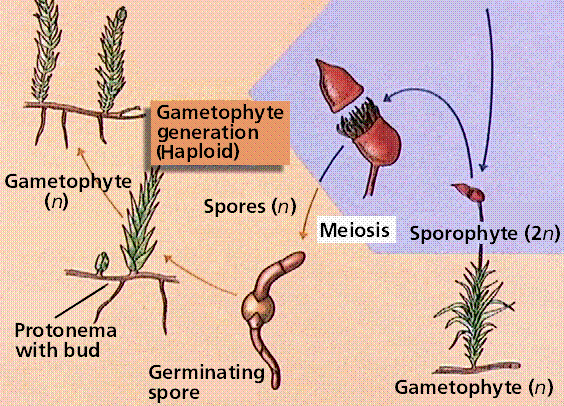
  • A plant’s life cycle involves two alternating multicellular stages – a Diploid (2n) sporophyte stage and a Haploid (1n) gametophyte stage
  • This type of life cycle is called Alternation of Generations

Moss Characteristics: 

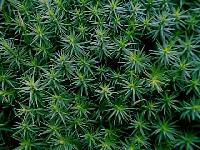
  • Nonvascular (pass water cell-to-cell)
  • Seedless (reproduce by spores)
  • Low growing
  • Phylum Bryophyta (also includes liverworts & hornworts)
  • Grow on moist brick walls, in sidewalks, as thick mats on forest floors, and on the shaded side of trees

  • Can survive periodic dry spells, reviving when water becomes available
  • Require water for fertilization so sperm can swim to egg
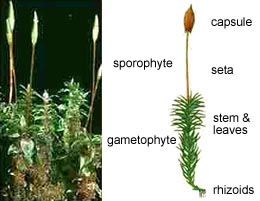
  • Rhizoids (root like structures) anchor mosses
  • Have waxy covering called cuticle on aerial parts to prevent desiccation 

 Moss Life Cycle:

  •  Dominant form of a moss is a clump of leafy green gametophytes (photosynthetic)
  •  Moss alternates between a haploid (1n) gametophyte and diploid (2n) sporophyte
  • Gametophyte generation produces gametes (eggs & Sperm)
  • Sporophyte generation forms at the top of the gametophytes and produces spores 
  • Stalk-like sporophytes lack chlorophyll
  • Capsule at the top of the sporophyte forms haploid (1n) spores

Sexual reproduction in Moss:

  • Moss produce 2 kinds of jacketed gametes — eggs & sperm
  • Egg producing organ is called the archegonium
  • Eggs are larger and nonmotile
  • Sperm producing organ is called the antheridium
  • Sperm are smaller, flagellated cells
  • Antheridia & archegonia are both part of the gametophyte plant
  • Fertilization can occur only during or soon after RAIN  when the gametophyte is covered with Water
  • Sperm swim to the egg by following a trail of chemicals released by the egg in the water
  • Fertilization produces a zygote that becomes a sporophyte
  • Mature sporophytes produce homosporous spores (all the same type)
  • Mature capsules open & release spores spread by wind
  • Spores landing on moist places germinate into protonema that become new gametophytes

 Asexual Moss Reproduction:

  • Small pieces may break off from a gametophyte & become a new plant (fragmentation)
  • Small buds called gemmae may be washed off by rain and develop new moss plants

Fern Characteristics & Life Cycle:

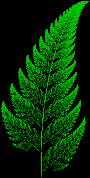
  • Largest group of seedless, vascular plants
  • Grow in moist places
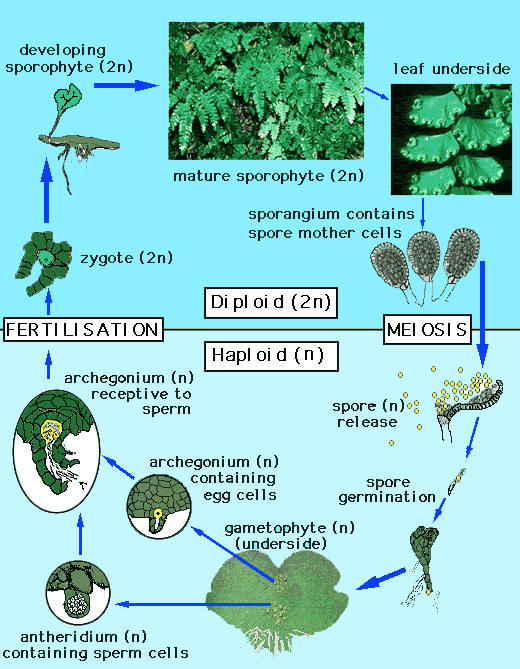
  • Goes through alternation of generations 
  • Sporophyte phase is the dominant stage
  • Fern gametophytes are small, flat plants anchored to the soil by root-like rhizoids
  • Antheridia & archegonia form on the underside of fern gametophytes

  • Sperm swim to egg through water droplets to form zygote (fertilized egg)
  • Zygotes form new sporophytes with roots, stems, & leaves
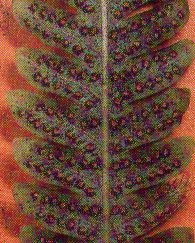
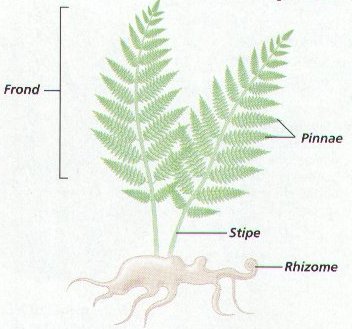
  • Spore cases called sori form on the underside of fern fronds (leaves)

  • Ferns are homosporous (single type of spore formed)


  • New fronds form from an underground stem called the rhizome
  • Vascular tissue carries nutrients & water between the parts of the fern
  • Fronds are compound leaves attached by a short stalk called the stipe to the underground stem or rhizome

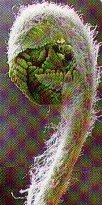
  • Immature fronds or fiddleheads are coiled

Characteristics & Life Cycle of Conifers:

  • Called gymnosperms
  • Have naked seeds that develop on scales of the female cones
  • Sporophyte is the dominant stage
  • Adapted to cooler climates
  • Called evergreens (pine, cedar, spruce, fir…)
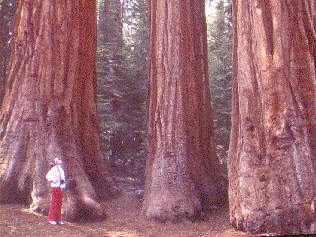
  • Giant Redwood is one of the Earth’s largest organisms
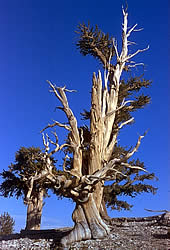
  • Bristlecone Pines are the oldest living organisms (some more than 5000 years old)


Giant Redwood Bristlecone Pine


  • Produce 2 types of spores (heterosporous)
  • Male spores called microspores grow into male gametophytes
  • Female spores called megaspores grow into female gametophytes
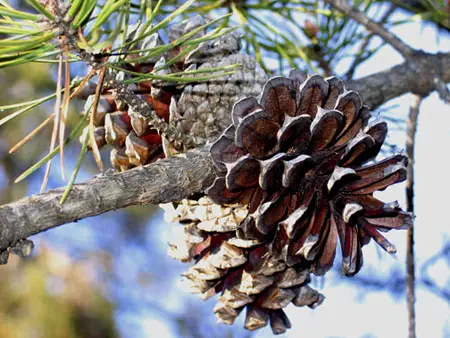
  • A Pine cone is the female cone on a pine tree
  • Male cones on pine trees are smaller & grow in clusters at the tips of branches
  • Both male & female cones appear on the same tree


Female Cones Male Cones


  • The pine life cycle takes 2-3 years from the formation of cones until seeds are released
  • Female cones have spirally-arranged scales with ovules at their base
  • Female cones produce sticky resin
  • Ovules contain an egg that will develop into a seed 
  • Male cones produce large amounts of pollen in the spring that is spread by wind to the female cones
  • Resin traps the pollen so pollination can occur
  • A tube from the pollen grain takes a year to grow to the ovule so a sperm can fertilize the egg and form seeds

Angiosperms or Flowering Plants:

  • Bright colors, attractive shapes, and fragrant aromas help flowering plants attract their pollinators (insects, birds, mammals…)
  • Flowers without bright colors and pleasing odors are usually wind or water pollinated (grasses)
  • Called angiosperms
  • Flowers, the reproductive part of a plant,  have a swollen base or receptacle to attach to the stem
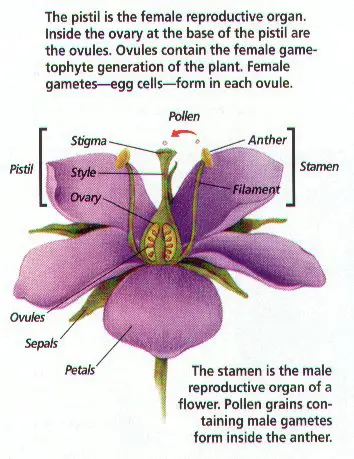
  • Flowers have 4 whorls (modified leaves) attached to the receptacle — petals, sepals, pistils, and stamen
  • Pistils (innermost whorl) are the female part of the flower, while Stamens are the male part
  • Sepals (outermost whorl) are found below the petals and may look leaf-like (some may be the same color as petals)
  • Sepals enclose the flower bud before it opens 
  • Sepals are collectively called the calyx
  • Petals are often colorful to attract pollinators
  • Petals are collectively called the corolla

  • Monocot flower parts are arranged in multiple of THREES, while dicots are in multiples of FOUR or FIVE
  • Perfect flowers have both stamens & pistils (rose)
  • Imperfect flowers are either a male (pistillate) or female (staminate) flower (pumpkin or melons)
  • Some angiosperms have both male & female flowers on the SAME plant (monoecious)
  • Other angiosperms have entire male OR female plants (dioecious)

Female Reproductive Structures:

  • Called carpals
  • Carpals may be fused to form the pistil
  • Produce eggs
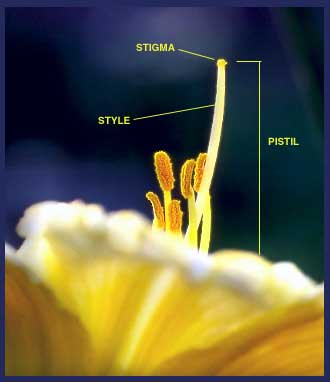
  • Composed of 3 parts — stigma, style, and ovary
  • Stigma is located at the top and may be sticky or have hairs to hold pollen grains landing there
  • Style is a stalk-like connection between the stigma and the ovary
  • Ovary is the enlarged base containing ovules with eggs


Pistil

Male Reproductive organs:

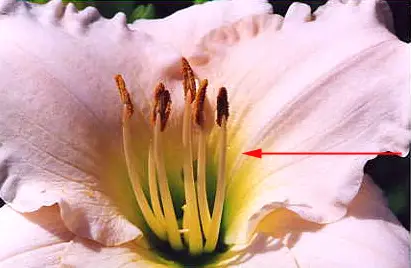
  • Called stamens
  • Produce pollen
  • Composed of 2 parts — filament & anther (pollen sac)
  • Anthers produce pollen grains containing sperm
  • Filament is stalk-like & supports the pollen sacs


Stamen

Angiosperm Life Cycle:

  • Undergo alternation of generations
  • Sporophyte is dominant phase
  • Gametophytes (flowers) form male & female gametes
  • Anthers form pollen grains from microspores 
  • Pollen grains contain 2 cells — tube cell & generative cell (sperm)
  • Two protective layers called integuments surround the megasporangium
  • The entire structure including the integuments is the ovule and becomes the seed
  • Each ovule has 4 megaspores (three disintegrate)
  • The remaining megaspore undergoes mitosis to produce a large cell & polar nuclei 
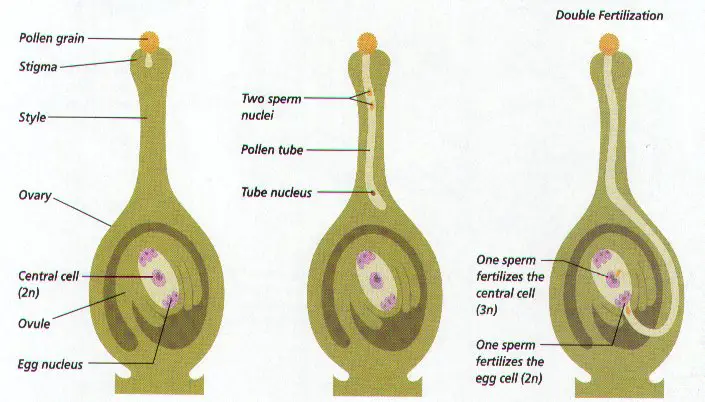
  • When pollen lands on the stigma, a pollen tube grows through the style to the ovary
  • Two sperm travel down the pollen tube — one fertilizes the egg and the other join with polar nuclei to form endosperm (stored food for Seed)
  • Called Double Fertilization

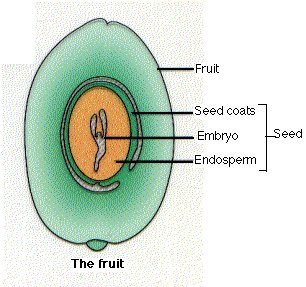
  • After fertilization, ovule becomes the seed and the ovary & surrounding tissues form a protective fruit
  • A fruit is a ripened ovary with seeds (apple, melon, cocklebur…)
  • When seed land on moist soil, they germinate (sprout) and form new sporophyte plants

Pollination:

  • Wind, water, and animals help spread pollen
  • As pollinators drink nectar or eat the fruit, pollen gets on their bodies and is spread to other flowers
  • Self pollination occurs whenever pollen from a flower lands on the stigma of that SAME flower (pea plants)
  • Cross pollination occurs whenever pollen is spread to a different flower producing hybrids (more gene combinations)

Seeds & Fruit:

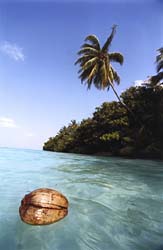
  • Fruits are adaptations for dispersing seeds (coconuts float, cockleburs catch onto animal fur, some seeds eaten by birds aren’t digestible…)
  • More energy is required to produce seeds than spores because they contain stored food
  • Seeds may be dormant (inactive) for weeks or years protected by their seed coat
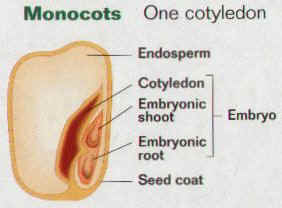
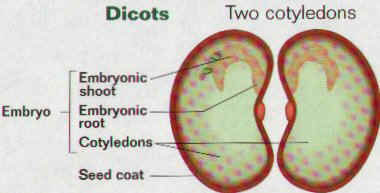
  • Seeds contain a plant embryo and endosperm

  • Many fruits are fleshy & their seeds aren’t digested by the animals that eat them
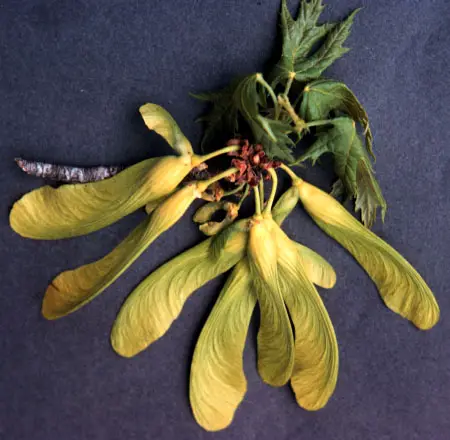
  • Heavy seeds have adaptations such as wing-like structures (maple) or prickly coats (cocklebur) to help them disperse


maple seeds Cockleburs Coconut


  • Fruits may be dry or fleshy
  • Three types of fruits exist — simple, aggregate, & multiple
  • Simple fruits (apple) form from One pistil on a flower
  • Aggregate fruits (raspberry) form from several pistils on a flower
  • Multiple fruits (pineapple) form several flowers growing close together
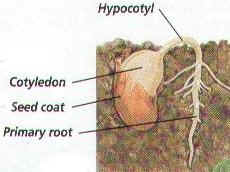
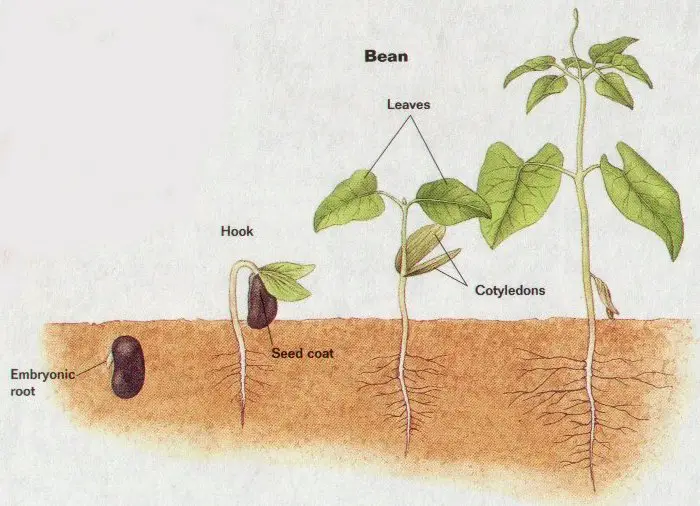
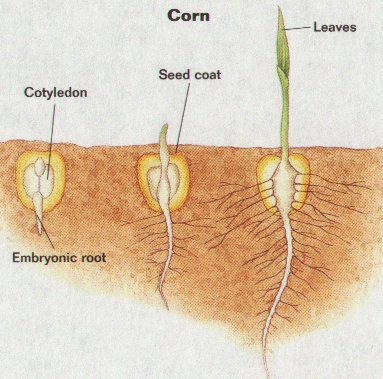
  • Cotyledons are leaf-like structures of the plant embryo
  • Monocot seeds have one seed leaf (Cotyledon), while dicots have two cotyledons


  • The epicotyl is the part of the plant embryo ABOVE the cotyledon & becomes the stem
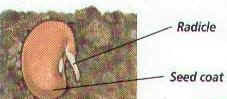
  • The radicle is the part of the plant embryo BELOW the cotyledon & becomes the root
  • The hypocotyl is the part of the plant embryo BETWEEN the cotyledon &  the radicle
  • The hilium is a scar along the seed edge where it was attached to the ovary
  • In monocot seeds like corn, a sheath called the coleoptile grows out of the ground to protect the newly emerging plant

Germination:

  • Many seeds require environmental factors, such as Water, Oxygen, and Temperature to trigger germination
  • Some seeds only germinate after exposure to extreme cold or after passing through an animal’s digestive tract
  • Water must FIRST be absorbed by the seed to break the seed coat & activate enzymes to change starch in the endosperm or cotyledons into simple sugars for energy
  • The radicle emerges first

  • Once the seed coat opens, OXYGEN is needed for cellular respiration carried on by the embryo plant
  • The shoot (hypocotyl & embryonic leaves) begin to grow, synthesize chlorophyll, and carry on photosynthesis

  • After the stored food is used up in dicots, the cotyledons fall off


Dicot Seed Germination

  • In Monocots like corn, the Cotyledon remains underground and transfers nutrients to the growing Embryo.

Asexual Reproduction in Plants:

  • Asexual reproduction is FASTER and produces well-adapted offspring
  • Called vegetative reproduction
  • Occurs from non-reproductive parts such as roots, stem, or leaves
  • Runners, Rhizomes, Bulbs, and Tubers can be used to produce new plants
  • Cutting is taking a piece of Stem or Leaf and growing a new plant
  • Grafting occurs whenever 2 cut ends of plant stems are fused
  • Layering occurs when aerial roots touch soil & start growing new plants

Plant Pigments and Photosynthesis


Plant Pigments and Photosynthesis


Introduction:
In this laboratory you will separate plant pigments using chromatography. You will also measure the rate of photosynthesis in isolated chloroplasts. The measurement technique involves the reduction of the dye DPIP. The transfer of electrons during the light-dependent reactions of photosynthesis reduces DPIP, changing it from blue to colorless.

Exercise 4A: Plant Pigment Chromatography:
Paper chromatography is a useful technique for separating and identifying pigment and other molecules from cell extracts that contain a complex mixture of molecules. The solvent moves up the paper by capillary action, which occurs as a result of the attraction of solvent molecules to the paper and the attraction of the solvent molecules to one another. As the solvent moves up the paper, it carries along any substances dissolved in it. The pigments are carried along at different rates because they are not equally soluble in the solvent and because they are attracted, to different degrees, to the fibers of the paper through the formation of intermolecular bonds, such as hydrogen bonds.

Beta carotene, the most abundant carotene in plants, is carried along near the solvent front because it is very soluble in the solvent being used and because it forms no hydrogen bonds with cellulose. Another pigment , Xanthophyll differs from carotene in that it contains oxygen. Xanthophyll is found further from the solvent font because it is less soluble in the solvent and has been slowed down by hydrogen bonding to the cellulose. Chlorophyll’s contain oxygen and nitrogen and are bound more tightly to the paper than the other pigments. Chlorophyll a is the primary photosynthetic pigment in plants. A molecule of chlorophyll a is located at the reaction center of the photo systems. The pigments collect light energy and send it to the reaction center. Carotenoids also protect the photosynthetic systems from damaging effects of ultraviolet light.

Procedure:
1. Obtain a 250 mL beaker which has about 2 cm of solvent at the bottom. Cover the beaker with aluminum foil to prevent the vapors from spreading. It is also suggested this work be done under a fume hood.

2. Cut a piece of filter paper which will be long enough to reach the solvent. Draw a line about 1.0 cm from the bottom of the paper. See Figure 4.1 below.

Figure 4.1

3. Use a quarter to extract the pigments from spinach leaf cells. Place a small section of leaf on the top of the pencil line. Use the ribbed edge of the coin to to crush the leaf cells. Be sure the pigment line is on top of the pencil line. Use a back and forth movement exerting firm pressure through out.

4. Place the chromatography paper in the cylinder. See Figure 4.2 below. Do not allow the pigment to touch the solvent.

Figure 4.2


5. Cover the beaker. When the solvent is about 1 cm from the top of the paper, remove the paper and immediately mark the location of the solvent front before it evaporates.

6. Mark the bottom of each pigment band. Measure the distance each pigment migrated from the bottom of the pigment origin to the bottom of the separated pigment band. Record the distance that each front, including the solvent front, moved in Table 4.1 Depending on the species of plant used, you may be able to observe 4 or 5 pigment bands.

Table 4.1

Distance moved by Pigment Band (millimeters)

Band Number Distance (mm) Band Color
1
2
3
4
5

Distance Solvent Front Moved _________________

Analysis of Results:
The relationship of the distance moved by a pigment to the distance moved by the solvent is a constant called Rf . It can be calculated for each of the four pigments using the formula:


Rf = distance pigment migrated (mm)_____
distance solvent front migrated (mm)

Record your Rf values in Table 4.2

Table 4.2

___________________________ = Rf for carotene (yellow to yellow -orange)
___________________________ = Rf for xanthophyll (yellow)
___________________________ = Rf for Chlorophyll a (bright green to blue green)
___________________________ = Rf for Chlorophyll b (yellow green to olive green)

Topics for Discussion:
1. What factors are involved in the separation of the pigments?

_______________________________________________________________________________

_______________________________________________________________________________

_______________________________________________________________________________

_______________________________________________________________________________

_______________________________________________________________________________

2. Would you expect the Rf value of a pigment to be the same if a different solvent were used? Explain.

_______________________________________________________________________________

_______________________________________________________________________________

_______________________________________________________________________________

_______________________________________________________________________________

_______________________________________________________________________________

3. What type of chlorophyll does the reaction center contain? What are the roles of the other pigments?

_______________________________________________________________________________

_______________________________________________________________________________

_______________________________________________________________________________

_______________________________________________________________________________

_______________________________________________________________________________

Exercise 4B: Photosynthesis / The Light Reaction:
Light is a part of a continuum of radiation or energy waves. Shorter wavelengths of energy have a greater amounts of energy. For example, high-energy ultraviolet rays can harm living things. Wavelengths of light within the visible spectrum of light power photosynthesis. when light is absorbed by leaf pigments, electrons within each photosystem are boosted to a higher energy level and this energy level is used to produce ATP and to reduce NADP to NADPH. ATP and NADPH are then used to incorporate CO2 into organic molecules, a process called carbon fixation.

Design of the Exercise:
Photosynthesis may be studied in a number of ways. For this experiment, a dye-reduction technique will be used. The dye-reduction experiment tests the hypothesis that light and chloroplasts are required for the light reactions to occur. In place of the electron accepter, NADP, the compound DPIP ( 2.6-dichlorophenol-indophenol), will be substituted. When light strikes the chloroplasts, electrons boosted to high energy levels will reduce DPIP. It will change from blue to colorless.

In this experiment, chloroplasts are extracted from spinach leaves and incubated with DPIP in the presence of light. As the DPIP is reduced and becomes colorless, the resultant increase in light transmittance is measured over a period of time using a spectrophotometer. The experimental design matrix is presented in Table 4.3.

Table 4.3: Photosynthesis Setup

Cuvettes

1

Blank


2

Unboiled Chloroplasts Dark

3

Unboiled Chloroplasts Light

4

Boiled Chloroplasts Light

5

No
Chloroplasts

Phosphate Buffer 1 ml. 1 ml. 1 ml. 1 ml. 1 ml.
Distilled Water 4 ml. 3 ml. 3 ml. 3 ml. 3 ml + 3 drops
DPIP —- 1 ml. 1 ml. 1 ml. 1 ml.
Unboiled Chloroplasts 3 drops 3 drops 3 drops —- —-
Boiled Chloroplasts —- —- —- 3 drops —-

Procedure:
1. Turn on the spectrophotometer to warm up the instrument and set the wavelength to 605 nm by adjusting the wavelength control knob.

2. While the spectrophotometer is warming up, your teacher may demonstrate how to prepare a chloroplast suspension from spinach leaves.

3. Set up an incubation area that includes a light, water flask, and test tube rack. The water in the flask acts as a heat sink by absorbing most of the light’s infrared radiation while having little effect on the light’s visible radiation.

Figure 4.2: Incubation Setup

Flood Light ——-Water Heat Sink——-Cuvettes


4. Your teacher will provide you with two beakers, one containing unboiled chloroplasts. Be sure to keep these on ice at all times.

5. At the top rim, label the cuvettes 1,2,3,4, and 5, respectively. Using lens tissue, wipe the outside walls of each cuvette ( Remember: handle cuvettes only near the top). Using foil paper, cover the walls and bottom of cuvette 2. Light should not be permitted inside cuvette 2 because it is a control for this experiment.

6. Refer to Table 4.3 to prepare each cuvette. Do not add unboiled or boiled chloroplasts yet. To each cuvette, add 1 ml of phosphate buffer.

7. Bring the spectrophotometer to zero by adjusting the amplifier control knob until the meter reads 0% transmittance. Cover the top of cuvette 1 with Parafilm@ and invert to mix. Insert cuvette 1 into the sample holder and adjust the instrument to 100% transmittance by adjusting the light -control knob. Cuvette 1 is the blank to be used to recalibrate the instrument between readings. For each reading, make sure that the cuvettes are inserted into the sample holder so that they face the same way as in the previous reading.

8. Obtain the unboiled chloroplast suspension, stir to mix, and transfer three drops to cuvette 2. Immediately cover and mix cuvette 2. Then remove it from the foil sleeve and insert it into the spectrophotometer’s sample holder, read the % transmittance, and record it as the time 0 reading in Table 4.4 . Replace cuvette 2 into the foil sleeve, and place it into the incubation test tube rack. Turn on the flood light. Take and record additional readings at 5,10,and 15 minutes. Mix the cuvette’s contents just prior to each readings. Remember to use cuvette 1 occasionally to check and adjust the spectrophotometer to 100% transmittance.

9. Obtain the unboiled chloroplast suspension, mix, and transfer three drops to cuvette 3. Immediately cover and mix cuvette 3. Insert it into the spectrophotometer’s sample holder, read the % transmittance, and record it in Table 4.4 . Replace cuvette 3 into the incubation test tube rack. Take and record additional readings at 5,10,and 15 minutes. Mix the cuvette’s contents just prior to each readings. Remember to use cuvette 1 occasionally to check and adjust the spectrophotometer to 100% transmittance.

10. Obtain the boiled chloroplast suspension, mix, and transfer three drops to cuvette 4. Immediately cover and mix cuvette 4. Insert it into the spectrophotometer’s sample holder, read the % transmittance, and record it in Table 4.4 . Replace cuvette 4 into the incubation test tube rack. Take and record additional readings at 5,10,and 15 minutes. Mix the cuvette’s contents just prior to each readings. Remember to use cuvette 1 occasionally to check and adjust the spectrophotometer to 100% transmittance.

11. Cover and mix the contents of cuvette 5. Insert it into the spectrophotometer’s sample holder, read the % transmittance, and record it in Table 4.4 . Replace cuvette 5 into the incubation test tube rack. Take and record additional readings at 5,10,and 15 minutes. Mix the cuvette’s contents just prior to each readings. Remember to use cuvette 1 occasionally to check and adjust the spectrophotometer to 100% transmittance.

Table 4.4: Transmittance (%)

Time (minutes)

Cuvette 0 5 10 15
2 Unboiled /Dark
3 Unboiled/ Light
4 Boiled / Light
5 No Chloroplasts

Analysis of Results:
Plot the percent transmittance from the four cuvettes on the graph below
.

a. What is the dependent variable? ____________________________________________

b. What is the independent variable? __________________________________________

Graph Title: __________________________________________________________________

Graph 4.1

Topics for Discussion:
1. What is the purpose of DPIP in this experiment?

___________________________________________________________________________

___________________________________________________________________________

___________________________________________________________________________

2. What molecule found in chloroplasts does DPIP “replace” in this experiment? _________________

3. What is the source of the electrons that will reduce DPIP? _________________________________

4. What was measured with the spectrophotometer in this experiment? ____________________________________________________________________________

____________________________________________________________________________

____________________________________________________________________________

____________________________________________________________________________

5. What is the effect of darkness on the reduction of DPIP? Explain.

____________________________________________________________________________

____________________________________________________________________________

____________________________________________________________________________

____________________________________________________________________________

6. What is the effect of boiling the chloroplasts on the subsequent reduction of DPIP? Explain.

____________________________________________________________________________

____________________________________________________________________________

____________________________________________________________________________

____________________________________________________________________________

7. What reasons can you give for the difference in the percent transmittance between the live chloroplasts that were incubated in the light and those that were kept in the dark?

_____________________________________________________________________________

_____________________________________________________________________________

_____________________________________________________________________________

_____________________________________________________________________________