Darwin Events AP


Darwin Day Events
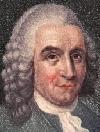
CHARLES DARWIN


Darwin Trivia Game Questions:


When was Charles Darwin born?
What was the name of the ship on which he was the naturalist?
What islands were the main source of his findings?
What was the complete title of his original book?
What famous American president shares the same birth date?
How long was his voyage scheduled to last?

“Darwin Trivia Game”
The Galapagos Islands

Adaptations of the Galapagos Finches
  The “Missing” Link

Darwin “Fortune” Cookies
Darwin only took with him a simple microscope on the Beagle to observe microscopic organisms.
When Darwin was sixteen, his father took him out of school because he felt that Charles was wasting time, and he sent him to Edinburgh University.
Charles Darwin was born on February 12, 1809 in Shrewsbury, England.
Darwin transferred to Cambridge to study the theology of the Church of England wanting to become an Anglican priest.
“Changes From Within”

Lyrics & music by:  Nicole Higham
Sung by:  Brett Rabeneck, Bradley Wise, & Carrie Steves

Changes From Within
Verse 1:
Once I read a book, and this is what it said,
That the Origin of Species, came from Darwin’s head.
He studied all the life, from some islands of the west,
and distinguished adaptations, and who survived the best.
He was much more successful than scientists before,
And his use of common logic, convinced them even more.
Chorus:
And it read:
You take two monkeys, and you put them to the test,
Check out their different habitats, and see nature at its best.
According to Darwin, a species can begin,
From an individual that changes from within.

Verse 2:
Natural selection, a theory he derived
Sys the strongest just get stronger while the weakest don’t survive.
So he published his ideas, he was sort of in a bind
There was another man, who wasn’t far behind.
Their ideas were the same, their timing coincided,
But Darwin finished first, and in the glory he delighted.

Verse 3:
About all of his theory, that I choose to sing about
Some people think it’s true, while others have their doubts.
To me it’s quite reasonable, to have either point of view
But think about it carefully, no matter what you do.
For starters think about that which, you really do believe
For me this includes a little story about Adam and Eve.

2nd Chorus:
I appreciate your patience, as an audience you’ve been kind
I bet this kind of song, wasn’t what you had in mind
I’ll leave you with this list of things that really matter most,
There’s life and love and happiness, but first the Holy Ghost.

Burying a Darwin Day Time Capsule

BACK


Evolution Quiz 2

Name: 

Theory of Evolution 


True/False
Indicate whether the sentence or statement is true or false.
1.
Within populations, divergence leads to speciation.
2.
Genetic similarities between species is evidence of common ancestry.
3.
Shared common traits are a clue to common ancestry.
4.
The pelvic (hip) bones of a snake are vestigial organs.
5.
Darwin would have explained giraffes having long necks as a trait that allowed the fittest to survive.
6.
Darwin was the first scientist to propose that living things evolve.
7.
Most organisms produce more offspring than can possibly survive.
 

Multiple Choice
Identify the letter of the choice that best completes the statement or answers the question.
8.
The change that results in a species being better suited to its environment is known as
a.
reproduction.
c.
adaptation.
b.
variation.
d.
selection.
9.
New species form
a.
when ecological races diverge more and more.
b.
because of natural selection.
c.
when members of the same species become adapted to new environments.
d.
All of the above
10.
Natural selection causes
a.
changes in the environment.
b.
plants and animals to produce more offspring than can survive.
c.
changes in the frequency of certain alleles in a population.
d.
All of the above
11.
The theory of evolution predicts that
a.
closely related species will show similarities in nucleotide sequences.
b.
if species have changed over time, their genes should have changed.
c.
closely related species will show similarities in amino acid sequences.
d.
All of the above
12.
Mutations are important to the understanding of evolution because they increase the
a.
value of natural selection of animals
c.
use of organs in animals
b.
production of variations in animals
d.
differentiation of animal embryos
13.
The human appendix is an example of a structure that is
a.
homologous
c.
a variation
b.
acquired
d.
vestigial
14.
The modern theory of evolution supports the concept that inheritable variations within a species may result from
a.
recombination of genes during fertilization
c.
changes in autosomes
b.
use and disuse
d.
acquired characteristics
15.
The occurrence of the same blood protein in a group of species provides evidence that these species
a.
evolved in the same habitat
c.
descended from a common ancestor
b.
evolved in different habitats
d.
descended from different ancestors
16.
According to modern ideas of evolution, the fittest individuals are those that
a.
are stronger
c.
are best adapted to their environment
b.
move faster
d.
have the largest brains
17.
After all the grass was eaten, early horses had to stretch for food on trees.  Consequently these horses developed longer legs and necks. This statement is consistent with the views of
a.
Darwin only
c.
both men
b.
Lamarck only
d.
neither man
18.
It has been observed that white mice live in areas with white soil and brown mice live in areas with dark soil.  Which statement best describes the situation?
a.
All organisms tend to increase in numbers at a geometric rate
b.
In each generation, the number of individuals in a species remains constant
c.
There is a struggle to survive
d.
Variations are passed to offspring.  Favorable variations aid survival and reproduction
19.
Squirrels on the north rim of the Grand Canyon differ in many respects from those on the south rim (the river prevents passage from one to the other).  Which statement best describes the situation?
a.
In each generation, the number of individuals in a species remains constant
b.
Variations, which may be inherited, are found among individuals in each species
c.
The inheritance of favorable variations may eventually lead to the development of a new species
d.
All organisms tend to increase in numbers at a geometric rate
20.
The idea of the survival of the fittest is part of the explanation of the theory of evolution called
a.
use and disuse
c.
natural selection
b.
inheritance of acquired characteristics
d.
continuity of the germ plasm
21.
The process of change with time during successive generations among living things is
a.
evolution
c.
extinction
b.
law of use and disuse
d.
none of these
22.
Which of the following is an example of a morphological adaptation?
a.
hibernation
c.
an enzyme
b.
crab’s claws
d.
migration
23.
Competition between individuals of a species occurs primarily because of
a.
a scarcity of resources
c.
low birth rates
b.
advantageous variations
d.
acquired characteristics
24.
The book, Origin of the Species, was written by
a.
Charles Darwin
c.
Jean Baptiste de Lamarck
b.
Alfred Russell Wallace
d.
Thomas Malthus
25.
Variation is most important to Darwin’s theory of evolution because it
a.
provides material on which natural selection acts
b.
allows individuals to explore new habitats
c.
minimizes competition within a species
d.
allows individuals to make the best use of limited resources
26.
Evolutionary change is a(n)
a.
assumption
c.
collection of hypotheses
b.
fact
d.
debatable opinion
27.
Unlike Lamarck’s theory of evolution, Darwin’s theory included the idea
a.
that species change over time
b.
of natural selection
c.
that acquired characteristics are inherited
d.
that organisms change by a desire to better themselves
28.
According to Darwin, the process in which organisms best suited to their environment survive and reproduce is called
a.
convergent evolution
c.
natural selection
b.
divergent evolution
d.
artificial selection
29.
Genes that are active during the early development of fishes, birds, and humans are the shared heritage from a(an)
a.
fish
c.
common ancestor
b.
bird
d.
early human
30.
Darwin began to formulate his concept of evolution by natural selection after
a.
experimentation with animals.
b.
observations of many species and their geographical location.
c.
reading the writings of Wallace.
d.
agreeing with Lamarck about the driving force behind evolution.
31.
Charles Lyell’s work suggests that
a.
Earth is many millions of years old.
b.
Earth is several thousand years old.
c.
all fossils were formed in the last 1000 years.
d.
all rocks on Earth contain fossils.
32.
Which is a major concept included in Lamarck’s theory of evolution?
a.
Change is the result of survival of the fittest.
b.
Body structure can change according to the actions of the organism.
c.
Population size decreases the rate of evolution.
d.
Artificial selection is the basis for evolution.
33.
An adaptation is an inherited characteristic that can be
a.
physical or behavioral.
b.
physical or geographical.
c.
acquired during the organism’s lifetime.
d.
the result of artificial selection.
34.
The hypothesis that species change over time by natural selection was proposed by
a.
James Hutton.
b.
Jean-Baptiste Lamarck.
c.
Thomas Malthus.
d.
Charles Darwin.
35.
Charles Darwin’s theory of evolution explains all of the following EXCEPT
a.
how species become extinct.
b.
how inherited traits are passed from parent to offspring.
c.
how species change over time.
d.
how evolution takes place in the natural world.


Check Your Work     Reset

Cow Eye Dissection Worksheet


Cow Eye Dissection
Worksheet


1. Tell three observations you made when you examined the surface of the eye:

  1. ______________________________
  2. ______________________________
  3. ______________________________

2. Identify the following structures:

  1. cornea
  2. tear gland-
  3. optic nerve
  4. iris-
  5. pupil-
  6. retina

3. Name the three layers you sliced through when you cut across the top of the eye:

  1. ______________________________
  2. ______________________________
  3. ______________________________

4. Match the following parts of the eye to their function: (ciliary body, sclera, iris, retina, lens, & tapetum lucidum)

____________________ Contains the photoreceptors for vision.
____________________ The colored portion of the eye.
____________________ This structure changes shape to focus light on the retina.
____________________ The opening in the iris through which light passes.
____________________ The iridescent portion of the choroid layer in nocturnal animals.
____________________Consists of muscles, which control and shape the lens.
____________________ The white of the eye.

4. Use the pictures below to name the parts of the eye:

  1. ________________________________________
  2. ________________________________________
  3. ________________________________________
  4. ________________________________________
  5. ________________________________________
  6. ________________________________________
  7. ________________________________________
  8. ________________________________________
  9. ________________________________________
  10. ________________________________________
  11. ________________________________________
  12. ________________________________________
BACK

Clam Dissection Questions


  Clam Dissection Questions


Pre-lab:
1. Give the kingdom, phylum, and class for the clam.


2. Describe the body of bivalves.

3. How do bivalves move?

4. Why are they called bivalves?

5. Is their digestive tract complete or incomplete?  Explain your answer.


6. Do bivalves show cephalization?  Explain your answer.


7. What are siphons & what is their purpose?


8. How can you distinguish a mussel from a clam?


9. Adults are usually sessile, but the larva or _________________ is free-swimming.

10. Are bivalves protostomes or deuterostomes?

11. Their body cavity is called the _____________ cavity.

12. Body organs make up the ___________ mass and are protected by the _____________ which secretes the ___________.

13. Is circulation open or closed?

14. Give several examples of bivalves.

Lab Questions:
1. What is the oldest part of a clam’s shell called and how can it be located?


2. What do the rings on the clam’s shell indicate?

3. Name the clam’s siphons.

4. What holds the two shells together?

5. What muscles open & close the clam?

6. Describe the inside lining of the shell.

7. What is the function of the tooth-like projections at the dorsal edge of the clam’s valves?

8. Where is the mantle located in the clam?  What is its function?


9. Describe the clam’s foot.


10. What is the mantle cavity?


11. How do clams breathe?

12. What helps direct water over the gills?

13. Where are the palps found and what is their function?


14. Describe the movement of food from the current siphon through the digestive system of the clam.


15. Where is the clam’s heart located?


16. What are the parts of the clam’s nervous system?


17. Why are clam’s referred to as “filter feeders”?


18. Label the internal structures of the clam and draw arrows showing the pathway of food as it travels to the clam’s stomach:

BACK


Crayfish Dissection


Crayfish Dissection


By Day:    Day 1        Day 2        Day 3

By Region: External Anatomy    Internal Anatomy

By Topic:      Skeletal       Integumentary     Cardiovascular     Muscular    Endocrine    Nervous
Reproductive     Respiratory    Excretory    Digestive


You must create a series of labeled drawings that illustrate the structures outlined below:

Day 1

I. Abdomen – Ventral View          (Day 1)         top

Place the crayfish supine (ventral surface up) on the dissecting tray and DRAW the following:


  1. Telson (What is the telson’s function?)
  2. Uropod  (Describe the location of the Uropod to the telson.   How do the add to the telson’s function?)
  3. Anus (In which of the two structures above did you find the anus? 1 or 2 way digestive system?)
  4. Swimmerets -numbered in pairs, 1-5 w/ the 5th one the most posterior (What is their function, and how is it different from the telson’s function?)
  5. Is your Crayfish a male or a female (Note the anterior-most swimmeret.   In the male, its function is to guide the sperm toward the female during copulation; as such, it will be enlarged, and pointed anteriorly in the male.  In the female there is no difference between the swimmerets)?  (Describe the appearance of the crayfish’s swimmerets in your answer.)
  6. Walking Legs (How many are there?  In terms of this feature alone, is this organism closer to an insect, or an arachnid?)
  7. Chelipeds – some people like this meat the best . . . (What is their function?)


II. Head – Ventral View             (Day 1-2)         top


  1. Mandibles – 2 – hard & white  (What are they equivalent to in humans?  How is their action – think direction of movement – different from that of humans?)
  2. Maxilla – softer w/ jagged edges  (Given the difference in texture, how is their function different from that of the mandibles?)
  3. Maxillapeds, or “mouth-feet” -3 pairs  (What is their function?  Why not use the Chelipeds?)
  4. Green Gland Ducts – (From what organ do they open out?  What is the equivalent organ in humans? What is the purpose of the duct?  Is its location at all disturbing to you?)


II. Cephalothorax – Dorsal View             (Day 1-2)         top

  1. Rostrum (What is cephalization?  Given that, what organ would you expect to be inside the rostrum?)
  2. Eyes (Does this organism have binocular vision – depth perception, why or why not?)


    Eye


  3. Carapace (What is the function of the carapace?  What two body systems in humans perform equivalent functions?  The support function is in reference to one system in particular; given the external location of the carapace, explain the name of the type of system compared to our own, internal variety.  The support function implies specifically the attachment of organs of what body system to the inside of the carapace?

Day 2

Make a Dorsal Midline Incision from the posterior end of the thorax to the posterior end of the rostrum using the rounded scissors w/ the rounded end down! Open the carapace and pin it back.

III. Thorax – Dorsal View, Part I          (Day 2)         top

  1. Heart & Ostia – the opening on the heart’s superior surface (Is this a sign of an open or closed circulatory system?  Differentiate between the two in your answer.)
  2. Gills (What are they equivalent to in humans?  To what body system do they belong?  Why are the gills so feathery – i.e., how does this aid in their function?)
  3. Cardiac Stomach -draw whole (There appear to be fibers attached to the outside of the stomach.  What is their purpose in relation to the stomach and the esophagus?)

IV. Thorax – Dorsal View, Part II         (Day 2)         top

  1. Remove one gill and draw on high power (What is the red/pink material within each “finger” of each gill?  How does this material relate to the function of the gill?)
  2. GENTLY remove one walking leg, and you will see that a gill is attached to each walking leg.  (How is this important to the function of the gills?  In your answer refer to the different requirements of the body during times of high physical activity, and how they are related to the gill-walking leg connection.)
  3. Cut open the Cardiac Stomach and draw the Gastric Mill – reddish-brown lateral “teeth” – on high power  (What is their function?  What type of digestion involves the gastric mill?  Do we accomplish that type of digestion in our own stomach?)

Day 3

V. Thorax – Dorsal View, Part III         (Day 3)         top

Gently remove the Heart.

  1. The Intestine (Given its location posterior to the stomach, what is its function?  What function of the stomach is lacking in the intestine?)
  2. The Hepatopancreas Gland (What two organs is this equivalent to in humans?  What are some of the functions of this gland?  How is its location important to its function?)
  3. The Seminifierous Tubules or Ovaries  (What is the function of each? To what body system do these belong?  Which of the two does your specimen contain?  How is this related to the swimmerets?)


VI. Thorax – Dorsal View, Part IV         (Day 3)         top

Gently remove the Cardiac Stomach.

  1. Esophagus  (Describe how it’s position relative to the stomach is different from the worm and the human.)
  2. Green Gland (What is/are the equivalent organ(s) in humans?   Do/does the analogous organ(s) appear in pairs in humans?  To what body system do the green glands belong?  What organ in our equivalent body system is missing in the crayfish?)
  3. Brain (Describe the appearance of the brain and the nerves in terms of the type of symmetry.  There are nerves that are attached to the front and the back of the brain.  Describe the function of both the anterior and the posterior nerve pairs.)

VII. Abdomen – Dorsal View, Part I       (Day 3)        top

Make a Dorsal Midline Incision from the anterior end of the abdomen to the posterior end of the abdomen using the rounded scissors w/ the rounded end down! Open the exoskeleton and pin it back.


In order for a Crayfish to determine BALANCE, it must insert a grain of sand in one of it’s appendages.
Every time it molts and makes a new exoskeleton, it must get a new grain of sand!
(In what part of the body is that function taken up by the human body?)


  1. Dorsal Blood Vessel  (Is this vessel sending the blood to, or away from, the heart?  What name would we give to that type of vessel in our body?)
  2. Large Intestine (How is the location of this organ related to the name of this section of the body [it is NOT a tail]?  What is the function of the large intestine?  Given it’s contents, is it wise, or unwise, to eat it when eating a lobster?  Explain.)
  3. Abdominal Flexor Muscles  (How do muscles function, by shortening,   lengthening, of both?  Moving the abdominal flexor muscles will cause flexion, but what is flexion?  How will the abdomen – it is NOT a tail – change shape during flexion?  What direction will the crayfish move during flexion?  Given the size and strength of the muscle, during what circumstances would the crayfish use this muscle over its walking legs?)

VIII. Abdomen – Dorsal View, Part II        (Day 3)        top

Gently remove the Abdominal Flexor Muscles.

  1. Ventral Blood Vessels  (Given that there is no main ventral blood vessel, how does the blood return to the heart?  Is this a sign of an open or closed circulatory system?)
  2. Ventral Nerve Cord  (To what phylum does the crayfish belong?   How is the location of the nerve cord different from creatures in our own phylum?   Name our own nerve cord.  How is the protection of the nerve cord different in both phyla?)

Drawings:

  1. Use a PENCIL!!

  2. Make the drawings “larger than life” size, as the specimens are so small.

  3. Draw the general shape (outline) and location of the organs, as the squiggles so many of you use to “shade” your drawings make your drawings sloppy and hard to interpret.

  4. Include Labels on all drawings.

  • Labels should start outside the drawing, and be connected to the structure by arrows with tips (===>).

  • The Tip of the arrow should be touching the structure.

  • Be sure to include the magnification for any drawings done with the dissecting microscope.

Hang on to the drawings; they will all be handed in later, together with some questions to answer!


Day 1        Day 2        Day 3         top

Modified from  Lazaroff Biology