Chromatography of Pigments Write Up

Chromatography of Pigments Write Up

Introduction:

  • Explain paper chromatography
  • Describe the Greek origins of the word chromatography
  • Explain how paper chromatography is used
  • Explain how chromatography separates liquids into their individual components
  • Explain the purpose of the paper
  • Explain what is used as the developer
  • Explain how the separation process actually takes place
  • Explain the movement of the different components up the paper
  • Tell what a chromatogram is
  • What is the Rf value and give the formula for obtaining this value
  • How do scientists use Rf values

Hypothesis:

  • Write a statement explaining the lab objective of using paper chromatography to separate pigments

Materials:

  • In sentence form, write a statement listing the materials required for this lab.

Procedure:

  • In paragraph form, write the procedures for completing this lab

Results:

  • Include your chromatography strip. 
  • Complete Data Table 1
  • Write out and answer the questions on the lab. Remember to write and underline the question, but do NOT underline the answer

Conclusion (Write in paragraph form):

  • Restate your hypothesis
  • Tell the distance traveled by the solvent and by each color
  • Compare the Rf value for each color and explain any similarities and differences
  • Explain why some colors moved further than others
  • Explain any errors you might have made in lab that could have affected your results

Chapter 9 – Cellular Respiration

Chapter 9    Cellular Respiration: Harvesting Chemical Energy    Lecture Outline

Overview

·         To perform their many tasks, living cells require energy from outside sources.

·         Energy enters most ecosystems as sunlight and leaves as heat.

·         Photosynthesis generates oxygen and organic molecules that the mitochondria of eukaryotes use as fuel for cellular respiration.

·         Cells harvest the chemical energy stored in organic molecules and use it to regenerate ATP, the molecule that drives most cellular work.

·         Respiration has three key pathways: glycolysis, the citric acid cycle, and oxidative phosphorylation.

A. The Principles of Energy Harvest

1. Cellular respiration and fermentation are catabolic, energy-yielding pathways.

·         The arrangement of atoms of organic molecules represents potential energy.

·         Enzymes catalyze the systematic degradation of organic molecules that are rich in energy to simpler waste products with less energy.

·         Some of the released energy is used to do work; the rest is dissipated as heat.

·         Catabolic metabolic pathways release the energy stored in complex organic molecules.

·         One type of catabolic process, fermentation, leads to the partial degradation of sugars in the absence of oxygen.

·         A more efficient and widespread catabolic process, cellular respiration, consumes oxygen as a reactant to complete the breakdown of a variety of organic molecules.

°         In eukaryotic cells, mitochondria are the site of most of the processes of cellular respiration.

·         Cellular respiration is similar in broad principle to the combustion of gasoline in an automobile engine after oxygen is mixed with hydrocarbon fuel.

°         Food is the fuel for respiration. The exhaust is carbon dioxide and water.

·         The overall process is:

°         organic compounds + O2 à CO2 + H2O + energy (ATP + heat).

·         Carbohydrates, fats, and proteins can all be used as the fuel, but it is most useful to consider glucose.

°         C6H12O6 + 6O2 à 6CO2 + 6H2O + Energy (ATP + heat)

·         The catabolism of glucose is exergonic with a D G of −686 kcal per mole of glucose.

°         Some of this energy is used to produce ATP, which can perform cellular work.

2. Redox reactions release energy when electrons move closer to electronegative atoms.

·         Catabolic pathways transfer the electrons stored in food molecules, releasing energy that is used to synthesize ATP.

·         Reactions that result in the transfer of one or more electrons from one reactant to another are oxidation-reduction reactions, or redox reactions.

°         The loss of electrons is called oxidation.

°         The addition of electrons is called reduction.

·         The formation of table salt from sodium and chloride is a redox reaction.

°         Na + Cl à Na+ + Cl−

°         Here sodium is oxidized and chlorine is reduced (its charge drops from 0 to −1).

·         More generally: Xe− + Y à X + Ye−

°         X, the electron donor, is the reducing agent and reduces Y.

°         Y, the electron recipient, is the oxidizing agent and oxidizes X.

·         Redox reactions require both a donor and acceptor.

·         Redox reactions also occur when the transfer of electrons is not complete but involves a change in the degree of electron sharing in covalent bonds.

°         In the combustion of methane to form water and carbon dioxide, the nonpolar covalent bonds of methane (C—H) and oxygen (O=O) are converted to polar covalent bonds (C=O and O—H).

°         When methane reacts with oxygen to form carbon dioxide, electrons end up farther away from the carbon atom and closer to their new covalent partners, the oxygen atoms, which are very electronegative.

°         In effect, the carbon atom has partially “lost” its shared electrons. Thus, methane has been oxidized.

·         The two atoms of the oxygen molecule share their electrons equally. When oxygen reacts with the hydrogen from methane to form water, the electrons of the covalent bonds are drawn closer to the oxygen.

°         In effect, each oxygen atom has partially “gained” electrons, and so the oxygen molecule has been reduced.

°         Oxygen is very electronegative, and is one of the most potent of all oxidizing agents.

·         Energy must be added to pull an electron away from an atom.

·         The more electronegative the atom, the more energy is required to take an electron away from it.

·         An electron loses potential energy when it shifts from a less electronegative atom toward a more electronegative one.

·         A redox reaction that relocates electrons closer to oxygen, such as the burning of methane, releases chemical energy that can do work.

3. The “fall” of electrons during respiration is stepwise, via NAD+ and an electron transport chain.

·         Cellular respiration does not oxidize glucose in a single step that transfers all the hydrogen in the fuel to oxygen at one time.

·         Rather, glucose and other fuels are broken down in a series of steps, each catalyzed by a specific enzyme.

°         At key steps, electrons are stripped from the glucose.

°         In many oxidation reactions, the electron is transferred with a proton, as a hydrogen atom.

·         The hydrogen atoms are not transferred directly to oxygen but are passed first to a coenzyme called NAD+ (nicotinamide adenine dinucleotide).

·         How does NAD+ trap electrons from glucose?

°         Dehydrogenase enzymes strip two hydrogen atoms from the fuel (e.g., glucose), oxidizing it.

°          The enzyme passes two electrons and one proton to NAD+.

°          The other proton is released as H+ to the surrounding solution.

·         By receiving two electrons and only one proton, NAD+ has its charge neutralized when it is reduced to NADH.

°         NAD+ functions as the oxidizing agent in many of the redox steps during the catabolism of glucose.

·         The electrons carried by NADH have lost very little of their potential energy in this process.

·         Each NADH molecule formed during respiration represents stored energy. This energy is tapped to synthesize ATP as electrons “fall” from NADH to oxygen.

·         How are electrons extracted from food and stored by NADH finally transferred to oxygen?

°         Unlike the explosive release of heat energy that occurs when H2 and O2 are combined (with a spark for activation energy), cellular respiration uses an electron transport chain to break the fall of electrons to O2 into several steps.

·         The electron transport chain consists of several molecules (primarily proteins) built into the inner membrane of a mitochondrion.

·         Electrons released from food are shuttled by NADH to the “top” higher-energy end of the chain.

·         At the “bottom” lower-energy end, oxygen captures the electrons along with H+ to form water.

·         Electron transfer from NADH to oxygen is an exergonic reaction with a free energy change of −53 kcal/mol.

·         Electrons are passed to increasingly electronegative molecules in the chain until they reduce oxygen, the most electronegative receptor.

·         In summary, during cellular respiration, most electrons travel the following “downhill” route: food à NADH à electron transport chain à oxygen.

B. The Process of Cellular Respiration

1. These are the stages of cellular respiration: a preview.

·         Respiration occurs in three metabolic stages: glycolysis, the citric acid cycle, and the electron transport chain and oxidative phosphorylation.

·         Glycolysis occurs in the cytoplasm.

°         It begins catabolism by breaking glucose into two molecules of pyruvate.

·         The citric acid cycle occurs in the mitochondrial matrix.

°         It completes the breakdown of glucose by oxidizing a derivative of pyruvate to carbon dioxide.

·         Several steps in glycolysis and the citric acid cycle are redox reactions in which dehydrogenase enzymes transfer electrons from substrates to NAD+, forming NADH.

·         NADH passes these electrons to the electron transport chain.

·         In the electron transport chain, the electrons move from molecule to molecule until they combine with molecular oxygen and hydrogen ions to form water.

·         As they are passed along the chain, the energy carried by these electrons is transformed in the mitochondrion into a form that can be used to synthesize ATP via oxidative phosphorylation.

·         The inner membrane of the mitochondrion is the site of electron transport and chemiosmosis, processes that together constitute oxidative phosphorylation.

°         Oxidative phosphorylation produces almost 90% of the ATP generated by respiration.

·         Some ATP is also formed directly during glycolysis and the citric acid cycle by substrate-level phosphorylation.

°         Here an enzyme transfers a phosphate group from an organic substrate to ADP, forming ATP.

·         For each molecule of glucose degraded to carbon dioxide and water by respiration, the cell makes up to 38 ATP, each with 7.3 kcal/mol of free energy.

·         Respiration uses the small steps in the respiratory pathway to break the large denomination of energy contained in glucose into the small change of ATP.

°         The quantity of energy in ATP is more appropriate for the level of work required in the cell.

2. Glycolysis harvests chemical energy by oxidizing glucose to pyruvate.

·         During glycolysis, glucose, a six carbon-sugar, is split into two three-carbon sugars.

·         These smaller sugars are oxidized and rearranged to form two molecules of pyruvate, the ionized form of pyruvic acid.

·         Each of the ten steps in glycolysis is catalyzed by a specific enzyme.

·         These steps can be divided into two phases: an energy investment phase and an energy payoff phase.

·         In the energy investment phase, the cell invests ATP to provide activation energy by phosphorylating glucose.

°         This requires 2 ATP per glucose.

·         In the energy payoff phase, ATP is produced by substrate-level phosphorylation and NAD+ is reduced to NADH by electrons released by the oxidation of glucose.

·         The net yield from glycolysis is 2 ATP and 2 NADH per glucose.

°         No CO2 is produced during glycolysis.

·         Glycolysis can occur whether O2 is present or not.

3. The citric acid cycle completes the energy-yielding oxidation of organic molecules.

·         More than three-quarters of the original energy in glucose is still present in the two molecules of pyruvate.

·         If oxygen is present, pyruvate enters the mitochondrion where enzymes of the citric acid cycle complete the oxidation of the organic fuel to carbon dioxide.

·         After pyruvate enters the mitochondrion via active transport, it is converted to a compound called acetyl coenzyme A or acetyl CoA.

·         This step is accomplished by a multienzyme complex that catalyzes three reactions:

1.       A carboxyl group is removed as CO2.

2.       The remaining two-carbon fragment is oxidized to form acetate. An enzyme transfers the pair of electrons to NAD+ to form NADH.

3.       Acetate combines with coenzyme A to form the very reactive molecule acetyl CoA.

·         Acetyl CoA is now ready to feed its acetyl group into the citric acid cycle for further oxidation.

·         The citric acid cycle is also called the Krebs cycle in honor of Hans Krebs, who was largely responsible for elucidating its pathways in the 1930s.

·         The citric acid cycle oxidizes organic fuel derived from pyruvate.

°         The citric acid cycle has eight steps, each catalyzed by a specific enzyme.

°         The acetyl group of acetyl CoA joins the cycle by combining with the compound oxaloacetate, forming citrate.

°         The next seven steps decompose the citrate back to oxaloacetate. It is the regeneration of oxaloacetate that makes this process a cycle.

°         Three CO2 molecules are released, including the one released during the conversion of pyruvate to acetyl CoA.

·         The cycle generates one ATP per turn by substrate-level phosphorylation.

°         A GTP molecule is formed by substrate-level phosphorylation.

°         The GTP is then used to synthesize an ATP, the only ATP generated directly by the citric acid cycle.

·         Most of the chemical energy is transferred to NAD+ and FAD during the redox reactions.

·         The reduced coenzymes NADH and FADH2 then transfer high-energy electrons to the electron transport chain.

·         Each cycle produces one ATP by substrate-level phosphorylation, three NADH, and one FADH2 per acetyl CoA.

4. The inner mitochondrial membrane couples electron transport to ATP synthesis.

·         Only 4 of 38 ATP ultimately produced by respiration of glucose are produced by substrate-level phosphorylation.

°         Two are produced during glycolysis, and 2 are produced during the citric acid cycle.

·         NADH and FADH2 account for the vast majority of the energy extracted from the food.

°         These reduced coenzymes link glycolysis and the citric acid cycle to oxidative phosphorylation, which uses energy released by the electron transport chain to power ATP synthesis.

·         The electron transport chain is a collection of molecules embedded in the cristae, the folded inner membrane of the mitochondrion.

°         The folding of the cristae increases its surface area, providing space for thousands of copies of the chain in each mitochondrion.

°         Most components of the chain are proteins bound to prosthetic groups, nonprotein components essential for catalysis.

·         Electrons drop in free energy as they pass down the electron transport chain.

·         During electron transport along the chain, electron carriers alternate between reduced and oxidized states as they accept and donate electrons.

°         Each component of the chain becomes reduced when it accepts electrons from its “uphill” neighbor, which is less electronegative.

°         It then returns to its oxidized form as it passes electrons to its more electronegative “downhill” neighbor.

·         Electrons carried by NADH are transferred to the first molecule in the electron transport chain, a flavoprotein.

·         The electrons continue along the chain that includes several cytochrome proteins and one lipid carrier.

°         The prosthetic group of each cytochrome is a heme group with an iron atom that accepts and donates electrons.

·         The last cytochrome of the chain, cyt a3, passes its electrons to oxygen, which is very electronegative.

°         Each oxygen atom also picks up a pair of hydrogen ions from the aqueous solution to form water.

°         For every two electron carriers (four electrons), one O2 molecule is reduced to two molecules of water.

·         The electrons carried by FADH2 have lower free energy and are added at a lower energy level than those carried by NADH.

°         The electron transport chain provides about one-third less energy for ATP synthesis when the electron donor is FADH2 rather than NADH.

·         The electron transport chain generates no ATP directly.

·         Its function is to break the large free energy drop from food to oxygen into a series of smaller steps that release energy in manageable amounts.

·         How does the mitochondrion couple electron transport and energy release to ATP synthesis?

°         The answer is a mechanism called chemiosmosis.

·         A protein complex, ATP synthase, in the cristae actually makes ATP from ADP and Pi.

·         ATP uses the energy of an existing proton gradient to power ATP synthesis.

°         The proton gradient develops between the intermembrane space and the matrix.

·         The proton gradient is produced by the movement of electrons along the electron transport chain.

·         The chain is an energy converter that uses the exergonic flow of electrons to pump H+ from the matrix into the intermembrane space.

·         The protons pass back to the matrix through a channel in ATP synthase, using the exergonic flow of H+ to drive the phosphorylation of ADP.

·         Thus, the energy stored in a H+ gradient across a membrane couples the redox reactions of the electron transport chain to ATP synthesis.

·         From studying the structure of ATP synthase, scientists have learned how the flow of H+ through this large enzyme powers ATP generation.

·         ATP synthase is a multisubunit complex with four main parts, each made up of multiple polypeptides:

1.       A rotor in the inner mitochondrial membrane.

2.       A knob that protrudes into the mitochondrial matrix.

3.       An internal rod extending from the rotor into the knob.

4.       A stator, anchored next to the rotor, which holds the knob stationary.

·         Protons flow down a narrow space between the stator and rotor, causing the rotor and its attached rod to rotate.

°         The spinning rod causes conformational changes in the stationary knob, activating three catalytic sites in the knob where ADP and inorganic phosphate combine to make ATP.

·         How does the inner mitochondrial membrane generate and maintain the H+ gradient that drives ATP synthesis in the ATP synthase protein complex?

°         Creating the H+ gradient is the function of the electron transport chain.

°         The ETC is an energy converter that uses the exergonic flow of electrons to pump H+ across the membrane from the mitochondrial matrix to the intermembrane space.

°         The H+ has a tendency to diffuse down its gradient.

·         The ATP synthase molecules are the only place that H+ can diffuse back to the matrix.

°         The exergonic flow of H+ is used by the enzyme to generate ATP.

°         This coupling of the redox reactions of the electron transport chain to ATP synthesis is called chemiosmosis.

·         How does the electron transport chain pump protons?

°         Certain members of the electron transport chain accept and release H+ along with electrons.

°         At certain steps along the chain, electron transfers cause H+ to be taken up and released into the surrounding solution.

·         The electron carriers are spatially arranged in the membrane in such a way that protons are accepted from the mitochondrial matrix and deposited in the intermembrane space.

°         The H+ gradient that results is the proton-motive force.

°         The gradient has the capacity to do work.

·         Chemiosmosis is an energy-coupling mechanism that uses energy stored in the form of an H+ gradient across a membrane to drive cellular work.

·         In mitochondria, the energy for proton gradient formation comes from exergonic redox reactions, and ATP synthesis is the work performed.

·         Chemiosmosis in chloroplasts also generates ATP, but light drives the electron flow down an electron transport chain and H+ gradient formation.

·         Prokaryotes generate H+ gradients across their plasma membrane.

°         They can use this proton-motive force not only to generate ATP, but also to pump nutrients and waste products across the membrane and to rotate their flagella.

5. Here is an accounting of ATP production by cellular respiration.

·         During cellular respiration, most energy flows from glucose à NADH à electron transport chain à proton-motive force à ATP.

·         Let’s consider the products generated when cellular respiration oxidizes a molecule of glucose to six CO2 molecules.

·         Four ATP molecules are produced by substrate-level phosphorylation during glycolysis and the citric acid cycle.

·         Many more ATP molecules are generated by oxidative phosphorylation.

·         Each NADH from the citric acid cycle and the conversion of pyruvate contributes enough energy to the proton-motive force to generate a maximum of 3 ATP.

°         The NADH from glycolysis may also yield 3 ATP.

·         Each FADH2 from the citric acid cycle can be used to generate about 2 ATP.

·         Why is our accounting so inexact?

·         There are three reasons that we cannot state an exact number of ATP molecules generated by one molecule of glucose.

1.       Phosphorylation and the redox reactions are not directly coupled to each other, so the ratio of number of NADH to number of ATP is not a whole number.

°         One NADH results in 10 H+ being transported across the inner mitochondrial membrane.

°         Between 3 and 4 H+ must reenter the mitochondrial matrix via ATP synthase to generate 1 ATP.

°         Therefore, 1 NADH generates enough proton-motive force for synthesis of 2.5 to 3.3 ATP.

°         We round off and say that 1 NADH generates 3 ATP.

2.       The ATP yield varies slightly depending on the type of shuttle used to transport electrons from the cytosol into the mitochondrion.

°         The mitochondrial inner membrane is impermeable to NADH, so the two electrons of the NADH produced in glycolysis must be conveyed into the mitochondrion by one of several electron shuttle systems.

°         In some shuttle systems, the electrons are passed to NAD+, which generates 3 ATP. In others, the electrons are passed to FAD, which generates only 2 ATP.

3.       The proton-motive force generated by the redox reactions of respiration may drive other kinds of work, such as mitochondrial uptake of pyruvate from the cytosol.

°         If all the proton-motive force generated by the electron transport chain were used to drive ATP synthesis, one glucose molecule could generate a maximum of 34 ATP by oxidative phosphorylation plus 4 ATP (net) from substrate-level phosphorylation to give a total yield of 36–38 ATP (depending on the efficiency of the shuttle).

·         How efficient is respiration in generating ATP?

°         Complete oxidation of glucose releases 686 kcal/mol.

°         Phosphorylation of ADP to form ATP requires at least 7.3 kcal/mol.

°         Efficiency of respiration is 7.3 kcal/mol times 38 ATP/glucose divided by 686 kcal/mol glucose, which equals 0.4 or 40%.

°         Approximately 60% of the energy from glucose is lost as heat.

§         Some of that heat is used to maintain our high body temperature (37°C).

·         Cellular respiration is remarkably efficient in energy conversion.

C. Related Metabolic Processes

1. Fermentation enables some cells to produce ATP without the help of oxygen.

·         Without electronegative oxygen to pull electrons down the transport chain, oxidative phosphorylation ceases.

·         However, fermentation provides a mechanism by which some cells can oxidize organic fuel and generate ATP without the use of oxygen.

°         In glycolysis, glucose is oxidized to two pyruvate molecules with NAD+ as the oxidizing agent.

°         Glycolysis is exergonic and produces 2 ATP (net).

°         If oxygen is present, additional ATP can be generated when NADH delivers its electrons to the electron transport chain.

·         Glycolysis generates 2 ATP whether oxygen is present (aerobic) or not (anaerobic).

·         Anaerobic catabolism of sugars can occur by fermentation.

·         Fermentation can generate ATP from glucose by substrate-level phosphorylation as long as there is a supply of NAD+ to accept electrons.

°         If the NAD+ pool is exhausted, glycolysis shuts down.

°         Under aerobic conditions, NADH transfers its electrons to the electron transfer chain, recycling NAD+.

·         Under anaerobic conditions, various fermentation pathways generate ATP by glycolysis and recycle NAD+ by transferring electrons from NADH to pyruvate or derivatives of pyruvate.

·         In alcohol fermentation, pyruvate is converted to ethanol in two steps.

°         First, pyruvate is converted to a two-carbon compound, acetaldehyde, by the removal of CO2.

°         Second, acetaldehyde is reduced by NADH to ethanol.

°         Alcohol fermentation by yeast is used in brewing and winemaking.

·         During lactic acid fermentation, pyruvate is reduced directly by NADH to form lactate (the ionized form of lactic acid) without release of CO2.

°         Lactic acid fermentation by some fungi and bacteria is used to make cheese and yogurt.

°         Human muscle cells switch from aerobic respiration to lactic acid fermentation to generate ATP when O2 is scarce.

§         The waste product, lactate, may cause muscle fatigue, but ultimately it is converted back to pyruvate in the liver.

·         Fermentation and cellular respiration are anaerobic and aerobic alternatives, respectively, for producing ATP from sugars.

°         Both use glycolysis to oxidize sugars to pyruvate with a net production of 2 ATP by substrate-level phosphorylation.

°         Both use NAD+ as an oxidizing agent to accept electrons from food during glycolysis.

·         The two processes differ in their mechanism for oxidizing NADH to NAD+.

°         In fermentation, the electrons of NADH are passed to an organic molecule to regenerate NAD+.

°         In respiration, the electrons of NADH are ultimately passed to O2, generating ATP by oxidative phosphorylation.

·         More ATP is generated from the oxidation of pyruvate in the citric acid cycle.

°         Without oxygen, the energy still stored in pyruvate is unavailable to the cell.

°         Under aerobic respiration, a molecule of glucose yields 38 ATP, but the same molecule of glucose yields only 2 ATP under anaerobic respiration.

·         Yeast and many bacteria are facultative anaerobes that can survive using either fermentation or respiration.

°         At a cellular level, human muscle cells can behave as facultative anaerobes.

·         For facultative anaerobes, pyruvate is a fork in the metabolic road that leads to two alternative routes.

°         Under aerobic conditions, pyruvate is converted to acetyl CoA and oxidation continues in the citric acid cycle.

°         Under anaerobic conditions, pyruvate serves as an electron acceptor to recycle NAD+.

·         The oldest bacterial fossils are more than 3.5 billion years old, appearing long before appreciable quantities of O2 accumulated in the atmosphere.

°         Therefore, the first prokaryotes may have generated ATP exclusively from glycolysis.

·         The fact that glycolysis is a ubiquitous metabolic pathway and occurs in the cytosol without membrane-enclosed organelles suggests that glycolysis evolved early in the history of life.

2. Glycolysis and the citric acid cycle connect to many other metabolic pathways.

·         Glycolysis can accept a wide range of carbohydrates for catabolism.

°         Polysaccharides like starch or glycogen can be hydrolyzed to glucose monomers that enter glycolysis.

°         Other hexose sugars, such as galactose and fructose, can also be modified to undergo glycolysis.

·         The other two major fuels, proteins and fats, can also enter the respiratory pathways used by carbohydrates.

·         Proteins must first be digested to individual amino acids.

°         Amino acids that will be catabolized must have their amino groups removed via deamination.

°         The nitrogenous waste is excreted as ammonia, urea, or another waste product.

·         The carbon skeletons are modified by enzymes and enter as intermediaries into glycolysis or the citric acid cycle, depending on their structure.

·         Catabolism can also harvest energy stored in fats.

·         Fats must be digested to glycerol and fatty acids.

°         Glycerol can be converted to glyceraldehyde phosphate, an intermediate of glycolysis.

°         The rich energy of fatty acids is accessed as fatty acids are split into two-carbon fragments via beta oxidation.

°         These molecules enter the citric acid cycle as acetyl CoA.

·         A gram of fat oxides by respiration generates twice as much ATP as a gram of carbohydrate.

·         The metabolic pathways of respiration also play a role in anabolic pathways of the cell.

·         Intermediaries in glycolysis and the citric acid cycle can be diverted to anabolic pathways.

°         For example, a human cell can synthesize about half the 20 different amino acids by modifying compounds from the citric acid cycle.

°         Glucose can be synthesized from pyruvate; fatty acids can be synthesized from acetyl CoA.

·         Glycolysis and the citric acid cycle function as metabolic interchanges that enable cells to convert one kind of molecule to another as needed.

°         For example, excess carbohydrates and proteins can be converted to fats through intermediaries of glycolysis and the citric acid cycle.

·         Metabolism is remarkably versatile and adaptable.

3. Feedback mechanisms control cellular respiration.

·         Basic principles of supply and demand regulate the metabolic economy.

°         If a cell has an excess of a certain amino acid, it typically uses feedback inhibition to prevent the diversion of intermediary molecules from the citric acid cycle to the synthesis pathway of that amino acid.

·         The rate of catabolism is also regulated, typically by the level of ATP in the cell.

°         If ATP levels drop, catabolism speeds up to produce more ATP.

·         Control of catabolism is based mainly on regulating the activity of enzymes at strategic points in the catabolic pathway.

·         One strategic point occurs in the third step of glycolysis, catalyzed by phosphofructokinase.

·         Allosteric regulation of phosphofructokinase sets the pace of respiration.

°         This enzyme catalyzes the earliest step that irreversibly commits the substrate to glycolysis.

°         Phosphofructokinase is an allosteric enzyme with receptor sites for specific inhibitors and activators.

°         It is inhibited by ATP and stimulated by AMP (derived from ADP).

§         When ATP levels are high, inhibition of this enzyme slows glycolysis.

§         As ATP levels drop and ADP and AMP levels rise, the enzyme becomes active again and glycolysis speeds up.

·         Citrate, the first product of the citric acid cycle, is also an inhibitor of phosphofructokinase.

°         This synchronizes the rate of glycolysis and the citric acid cycle.

·         If intermediaries from the citric acid cycle are diverted to other uses (e.g., amino acid synthesis), glycolysis speeds up to replace these molecules.

·         Metabolic balance is augmented by the control of other enzymes at other key locations in glycolysis and the citric acid cycle.

·         Cells are thrifty, expedient, and responsive in their metabolism.



Chromatography of Plant Pigments 3


Chromatography of Plant Pigments


Introduction:


Can chromatography be used to separate mixtures of chemical substances? The purpose of this experiment is to answer this question. In paper chromatography, a liquid sample flows down a vertical strip of absorbent paper, on which the components of a mixture are deposited in specific directions and locations. Chromatography is a tool used to examine and separate mixtures of chemical substances. Chromatography is essential to the separation of pure substances from complex mixtures. Separation results in a chromatographically pure substance. Chromatography allows you to determine the properties of chemical substances.

The relationship between the chromatography paper, mixture, and the solvent is very important in all chromatographic separations. The solvent has to dissolve the mixture that should be separated. The paper must also absorb the components of the mixtures selectively and reversibly. The substances making up the mixture must be evenly dispersed in the water. Chromatography is a simple and inexpensive tool for separating and identifying chemical mixtures if all these things are done.


Hypothesis:


Paper can be used to separate mixed chemicals.


Materials:


The materials used in this lab are filter paper, test tube, rubber stopper, paper clip, metric ruler, black felt-tip pen, pencil, calculator, and water.


Methods:


First, bend a paper clip so that it’s straight with a hook at one end. Push the straight end of the paper clip into the bottom of a cork stopper. Then, hang a thin strip of filter paper on the hooked end of the paper clip and insert the paper strip into the test tube. The paper should not touch the sides and should almost touch the bottom of the test tube. Next, remove the paper strip from the test tube. Now draw a solid 5-mm-wide band about 25 mm from the bottom of the paper, using a black felt tip pen. After this, use a pencil to draw a line across the paper strip 10 cm above the black band. Then, put the filter paper back into the test tube with the bottom of the paper in the water and the black band above the water. Observe what happens as the liquid travels up the paper and record the changes you see. When the solvent has reached the pencil line, remove the paper from the test tube. Let the paper dry on the desk. Finally, with a metric ruler, measure the distances from the starting point to the top edge of each color. Record the data in a data table and calculate a ratio for each color by dividing the distance, the color traveled by the distance the solvent traveled.


Results:


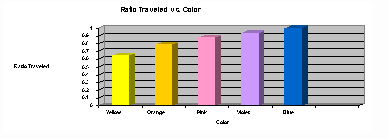
The results of the chromatography experiment are shown in a chart and a graph.


Color of ink (list in order) Distance traveled by each color (mm) Distance solvent traveled (mm) Ratio traveled = distance color moved divided by distance solvent moved
Yellow 70 108 0.65
Orange  

85


108


0.79

Pink 95  

108


0.88

Violet 102  

108


0.94

Blue 108  

108


1.00


Questions:

1. How many colors separated from the black ink? Five colors separated from the ink: yellow, orange, pink, violet, and blue.


2. What served as the solvent for the ink? Water served as the solvent for the ink.


3. As the solvent traveled up the paper, which color of ink appeared first? Dark blue appeared first.


4. List the colors in order from top to bottom that separated from the black ink? The colors separated in the order of: blue, violet, pink, orange, and yellow.


5. In millimeters, how far did the solvent travel? The solvent traveled 108 mm.


6. From your results, what can you conclude is true about black ink? Black ink is a mixture of several different colors.


7. Why did the inks separate? The inks separated because black ink is a mixture of different pigments that are soluble in water, have different molecular characteristics, and travel different distances.


8. Why did some inks move a greater distance? Some inks move a greater distance because molecules in ink have different characteristics, like how readily they are absorbed by paper. This means that the ink least readily absorbed by paper will travel farthest from the starting mark and the ink most readily absorbed by paper will be the closest to the starting mark. All of the different color inks that were separated were different in how readily they are absorbed by paper.

Error Analysis:


There are a few errors that could have changed the results. First, there could be inaccurate measurements of how far every color traveled or how far the water traveled up the filter paper. Another error could occur when calculating the ratio traveled, Rf value. Also, a longer test tube could have been used by different groups which would make the filter strip longer. This means that a group could have detected another color because they had more room on their filter paper. This also could have affected the ratios. Finally, the groups could have put different amounts of black ink on the filter paper.


Conclusion:


The hypothesis that paper can be used to separate mixed chemicals was correct. The different colored inks mixed together give the black its color. The five colors that separated from the black ink were blue, violet, pink, orange, and yellow. Blue appeared first and then was followed by violet, pink, orange, and yellow. The colors separated the way they did because they have different molecular characteristics, like how readily they were absorbed by the paper and their solubility in water. Blue was most readily absorbed by the paper and soluble by water, while yellow was the least.

BACK


Charles Robert Darwin


Charles Robert Darwin
Darwin and Evolution


History of Evolution:

  • Plato & Aristotle believed species were fixed & could be arranged according to their complexity
  • In the mid eighteenth century, Carolus Linnaeus developed a system of classification that described the fixed features of species and revealed God’s divine plan
  • George Cuvier, in the eighteenth century to explain changes in the fossil record, proposed that a whole series of catastrophes (extinctions) and re-populations from other regions had occurred giving the appearance of change over time
  • Prior to Darwin, it was thought that the world was young & species did not change
  • In 1831, at the age of 22, Charles Darwin accepted a naturalist position aboard the ship HMS Beagle & began a five-year voyage around the world
  • Darwin’s many observations led him to the idea that species slowly change

C. Late Eighteenth Century Contributions

1.
a. George Cuvier (1769-1832), a distinguished French vertebrate zoologist, was the first to use
comparative anatomy to develop a system of classifying animals.
b. He founded the science of paleontology, the study of fossils, and suggested that a single fossil bone
was all he needed to deduce the entire anatomy of an animal.
c. .
d. Cuvier was also a staunch advocate of special creation and fixity of species; this presented him with
a serious problem when geological evidence of a particular region showed a succession of life forms
in the earth’s strata.
e. Catastrophism is the term applied to Cuvier’s explanation of fossil history, the belief held by Cuvier
that catastrophic extinctions occurred, after which repopulation of surviving species took place,
giving an appearance of change through time.
2. Lamarck’s Theory of Evolution
a. Lamarck (1744-1829) was first to state that descent with modification occurs and that organisms
become adapted to their environments.
b. Lamarck was an invertebrate zoologist and held ideas different from Cuvier.
c. Unfortunately, he saw the drive for perfection as inherent in all living things.
d. Inheritance of acquired characteristics was the Lamarckian belief that organisms become adapted to
their environment during their lifetime and pass on these adaptations to their offspring.
e. He believed the increasing complexity of life forms in strata is the result of a natural tendency toward
perfection inherent in all living things.
f. Experiments fail to uphold Lamarck’s inheritance of acquired characteristics; molecular mechanism of
inheritance show phenotypic changes do not result in genetic changes that can be passed on.

18.2. Darwin’s Theory of Evolution

A. Darwin’s Background

1. His nature was too sensitive to pursue medicine; he attended divinity school at Cambridge.
2. He attended biology and geology lectures and was tutored by the Reverend John Henslow.
3. Henslow arranged his trip on the HMS Beagle; Darwin was an observant student of nature.

B. Geology and Fossils

1. His study of geology and fossils caused him to concur with Lyell that the observed massive geological
changes were caused by slow, continuous processes.
a. In his book Principles of Geology, Charles Lyell presented arguments to support a theory of geological
change proposed by James Hutton.
b. In contrast to catastrophists, Hutton proposed that the earth was subject to slow but continuous
geological processes (e.g., erosion and uplifting) that occur at a uniform rate.
c. Darwin took Lyell’s book on the voyage of the HMS Beagle.
2. Fossil Evidence
a. The Argentina coast had raised beaches; he witnessed earthquakes raising the earth several feet.
b. Marine shells occurred far inland and at great heights in the Andes.
c. Fossils of huge sloths and armadillo-like animals suggested modern forms were descended from
extinct forms with change over time.

C. Biogeography

1. Biogeography is the study of the geographic distribution of life forms on earth.
2. Darwin’s comparison of the animals of South America and the Galapagos Islands caused him to conclude
that adaptation to the environment can cause diversification, including origin of new species.
3. Patagonian hares replaced rabbits in the South American grasslands.
4. The greater rhea found in the north was replaced by the lesser rhea in the south.
5. The Galapagos Islands
a. These volcanic islands off the South American coast had fewer types of organisms.
b. Island species varied from the mainland species, and from island-to-island.
c. Each island had a variation of tortoise; long and short necked tortoises correlated with different vegetation.
d. Darwin’s Finches
1) Finches on the Galapagos Islands resembled a mainland finch but there were more types.
2) Galapagos finch species varied by nesting site, beak size, and eating habits.
3) One unusual finch used a twig or thorn to pry out insects, a job normally done by a woodpecker.
4) The finches posed questions to Darwin: did they descend from one mainland ancestor, did islands
allow isolated populations to evolve independently, and could present-day species have resulted
from changes occurring in each isolated population?

D. Natural Selection and Adaptation

1. Darwin decided adaptations develop over time; he sought a mechanism by which adaptations might arise.
2. Natural selection was proposed by both Alfred Russel Wallace and Darwin as a driving mechanism of
evolution caused by environmental selection of organisms most fit to reproduce, resulting in adaptation.
3. Because the environment is always changing, there is no perfectly-adapted organism.
4. Preconditions for natural selection
a. The members of a population have random but heritable variations.
b. In a population, many more individuals are produced each generation than an environment can support.
c. Some individuals have adaptive characteristics that enable them to survive and reproduce better.
5. Consequences of natural selection
a. An increasing proportion of individuals in succeeding generations have the adaptive characteristics.
b. The result of natural selection is a population adapted to its local environment.
6. Natural selection can only utilize variations that are randomly provided; therefore, there is no directedness
or anticipation of future needs.
7. Extinction occurs when previous adaptations are no longer suitable to a changed environment.

E. Organisms Have Variations

1. In contrast to the previous world-view, variations are highly significant.
2. Darwin suspected, but did not have today’s evidence, that variation is completely random.
3. New variations are as likely to be harmful as helpful.
4. Variations that make adaptation possible are those that are passed on generation to generation.
5. Darwin could not state the cause of variations because genetics was not yet established.

F. Organisms Struggle to Exist

1. Darwin and Wallace both read an essay by Thomas Malthus, a clergyman and socio-economist.
2. Malthus proposed that human populations outgrow resources and death and famine were inevitable.
3. Darwin applied this to all organisms; resources were not sufficient for all members to survive.
4. Therefore, there is a constant struggle for existence; only certain members survive and reproduce.

G. Organisms Differ in Fitness

1. Organisms whose traits enable them to reproduce to a greater degree have a greater fitness.
a. Fitness is a measure of an organism’s reproductive success.
b. Black western diamondback rattlesnakes are more likely to survive on lava flows; lighter-colored
rattlesnakes are more likely to survive on desert soil.
2. Darwin noted that humans carry out artificial selection.
a. Early humans likely selected wolf variants; consequently, desirable traits increase in frequency in
subsequent generations and produced the varieties of domestic dogs.
b. Many crop plant varieties can be traced to a single ancestor.
c. In nature, interactions with the environment determine which members reproduce more.
d. Evolution by artificial or natural selection occurs when more fit organisms reproduce and leave more
offspring that the less fit.

H. Organisms Become Adapted

1. An adaptation is a trait that helps an organism be more suited to its environment.
2. Unrelated organisms living in the same environment often display similar characteristics.
3. Because of differential reproduction, adaptive traits increase in each succeeding generation.

I. On Origin of Species by Darwin

1. After the HMS Beagle returned to England in 1836, Darwin waited over 20 years to publish.
2. He used the time to test his hypothesis that life forms arose by descent from a common ancestor and
that natural selection is a mechanism by which species can change and new species arise.
3. Darwin was forced to publish Origin of Species after reading a similar hypothesis by Alfred Russel Wallace.

18.3. Evidence for Evolution

A. Common Descent Adapted

1. The hypothesis of common descent is supported by many lines of evidence.
2. The more varied the evidence, the more certain it becomes.
3. Darwin synthesized much of the current data but biochemical research was yet to come.

B. Fossils Evidence

1. The fossil record is the history of life recorded by remains from the past.
2. Fossils are at least 10,000 years old and include skeletons, shells, seeds, insects trapped in amber,
and imprints of leaves.
3. The fossil record traces history of life and allows us to study history of particular organisms.
4. Fossil evidence supports the common descent hypothesis; fossils can be linked over time because they
reveal a similarity in form, despite observed changes.
5. Transitional forms reveal links between groups.
a. Caudipteryx is between dinosaurs and birds.
1) This Chinese fossil shows some dinosaurs had feathers on arms, tail and probably body.
2) Advantages during running and escape gave rise to birds once lift-off occurred.
b. Eustheopteron is an amphibious fish.
c. Seymouria is a reptile-like amphibian.
d. Therapsids were mammal-like reptiles.
6. The fossil record allows us to trace the history of the modern-day horse Equus.
a. Earliest fossils show an ancestral Hyracotherium the size of a dog, with cusped low-crowned molars,
four toes on each front foot, three on each hind foot — all adaptations for forest living.
b. When forests were replaced by grasslands, the intermediates were selected for durable grinding teeth,
speed, etc. with an increase in size and decrease in toes.
c. Living organisms resemble most recent fossils in the line of descent; underlying similarities allow us
to trace a line of descent over time.

C. Biogeographical Evidence

1. Biogeography studies the distribution of plants and animals worldwide.
2. Distribution of organisms is explained by related forms of evolving in one locale and spreading to
other accessible areas.
a. Darwin observed South America had no rabbits; he concluded rabbits originated elsewhere.
b. Biogeography explains the many finch species on the Galapagos Islands but not the mainland.
3. Physical factors, such as the location of continents, determine where a population can spread.
a. Cacti are restricted to North American deserts and euphorbia grow in African deserts.
b. Marsupials arose when South America, Antarctica, and Australia were joined; Australia separated
before placental mammals arose, so only marsupials diversified in Australia.

D. Anatomical Evidence

1. Organisms have anatomical similarities when they are closely related because of common descent.
a. Homologous structures in different organisms are inherited from a common ancestor.
b. Analogous structures are inherited from a unique ancestors and have come to resemble each other
because they serve a similar function.
c. Vertebrate forelimbs contain the same sets of bones organized in similar ways, despite their dissimilar functions.
2. Vestigial Structures are remains of a structure that was functional in some ancestor but is no longer
functional in the organism in question.
a. Most birds have well-developed wings; some bird species have reduced wings and do not fly.
b. Humans have a tailbone but no tail.
c. Presence of vestigial structures is explained by the common descent hypothesis; these are traces of
an organism’s evolutionary history.
3. Embryological development reveals a unity of plan.
a. During development, all vertebrates have a post-anal tail and paired pharyngeal pouches.
1) In fishes and amphibian larvae, the pouches become gills.
2) In humans, first pair of pouches becomes a cavity of middle ear and auditory tube; second pair
becomes tonsil, while third and fourth pairs become thymus and parathyroid glands.
3) Above features are explained if fishes are ancestral to other vertebrate groups.

E. Biochemical Evidence

1. Almost all living organisms use the same basic biochemical molecules, e.g., DNA, ATP, and many
identical or nearly identical enzymes.
2. Organisms utilize the same DNA triplet code and the same 20 amino acids in their proteins.
3. Many organisms share same introns and types of repeats, which is remarkable since there is no obvious
functional reason why these components need to be so similar.
4. This is substantiated by analysis of degree of similarity in amino acids for cytochrome c among organisms.
5. These similarities can be explained by descent from a common ancestor.
6. Life’s vast diversity has come about by only a slight difference in the same genes.

F. Because it is supported by so many lines of evidence, evolution is no longer considered a hypothesis.

1. Evolution is one of the great unifying theories of biology.
2. In science, theory is reserved for those conceptual schemes that are supported by a large number of
observations or a large amount of experimental evidence and have not been found lacking.


evolution–process of change through time

Evolution includes the change in characteristics of populations through generations.
Thus, existing life forms have evolved from earlier life forms.

Evolutionary theory is a unifying principle for the biological sciences.
It provides an explanation for the differences in structure, function, and behavior
among life forms.

Through radioactive dating with uranium, geologists
estimate the age of the earth at about 4.6 billion years. (It is assumed that the earth
is at least as old as the oldest rocks and minerals composing its crust.)

fossils: direct or indirect remains of organisms preserved in media such as sedimentary rock, amber, ice, or tar

Fossils have been found that indicate organisms existed well over 3 billion years ago. These organisms were simple, single-celled organisms.

Law of Superposition: the higher up you go in an undisturbed rock stratum, the
younger the rock layers become

** Upper, undisturbed strata generally contain fossils of more complex organisms,
whereas, the lower strata contain fossils of simpler life forms.
(Tendency toward increasing complexity over time.)

** When comparing fossils in undisturbed strata, fossils can be found in
upper strata which, although different from fossils in lower strata, resemble
those fossils. This suggests links between modern forms and older forms, as
well as divergent pathways from common ancestors.

adaptations–changes in organisms which make them better suited to their environment

Gene mutations can be caused by such agents as radiation and chemicals.  When they occur in sex cells, the mutations can be passed on to the offspring; if they occur in other cells, they can be passed on to body cells only.  The experiences an organism has during its lifetime can affect its offspring only if the genes in its own sex cells are changed by the experience.

biological adaptation — changes in structures, behaviors, or physiology that enhance survival and reproductive success in a particular environment

Theory of Natural Selection

Darwin–(1859) Book–“On Origin of Species”

–stated his theory of Natural Selection

— Natural selection and its evolutionary consequences provide a scientific explanation of the fossil record of ancient life-forms, as well as the molecular and structural similarities observed among the diverse species of living organisms.

(Theory of Natural Selection)

1. Overproduction — Within a population more offspring are born than can possibly survive.

2. Competition — since the number of individuals in a population tends to remain constant from generation to generation, a struggle for survival is suggested

3. Survival of the Fittest — The individuals who survive are the ones best adapted to exist in their environment due to the possession of variations that maximize their fitness.

4. Reproduction — Variations assist or hinder individuals in their struggle for survival.
The best adapted individuals survive and reproduce, passing on  the favorable variations to their offspring.

5. Speciation — as time and generations continue, adaptations are perpetuated in individuals and new species may evolve from a common ancestor.

adaptive variations–those variations which assist an organisms survival

(Weaknesses of Darwin’s Theory)

1. Darwin didn’t explain how variations arose.
2. He did not distinguish between hereditary and environmental variations.
3. Darwin believed that both environmental and hereditary variations were inherited.

Some Sources of Variation in Modern Natural Selection Theory

1. The genetic basis for variation within a species is provided by mutations and sexual reproduction. (crossing over and recombination)

2. Mutations are spontaneous and provide the raw material for evolution.

(Modern Natural Selection Theory)

1.)  All species of the potential to increase in numbers.

2.)  There is a finite amount of resources for any species.   Species tend to make too many
organisms for these resources.

3.)  Species will show genetic variability due to mutation, crossing over, and
genetic recombination (during fertilization) of genes.

4.)  The scarce finite resources of the environment will select those offspring better able to survive and leave offspring.

Variation within a species increases the likelihood that at least some members of the species will survive under changed environmental conditions.

** Traits which are beneficial to the survival of an organism in a particular environment tend to be retained and passed on, and therefore, increase in frequency within a population.

** Traits which have a low survival value to organisms tend to diminish in
frequency from generation to generation.

** If environmental conditions change, traits that were formerly associated with a
low survival value may, in a changed environment, have greater survival value and
increase accordingly.

(Examples of Evolution in Modern Times)

1. Peppered moth — light colored vs. dark colored (industrialization influence) Manchester, England
2. Insect resistance to insecticides. (Resistance is not in response to the insecticide. The insecticide acts as a selecting agent.)
3. Bacterial resistance to antibiotics.

** Evolutionary factors operate on population — but not on individual organisms.

speciation: formation of two or more different  species from one original population

Evolution does not necessarily mean long term progress is going to go in a certain direction.   Evolutionary changes often appear to be like the growth of a bush: Some branches survive from the beginning with little or no change, many die out altogether, and others branch out repeatedly, sometimes giving rise to more complex organisms.

Note the divergence of the various groups from a common ancestor and the fact that some branches became extinct.

Extinction of a species occurs when the environment changes and the adaptive characteristics of a species are insufficient to allow its survival.   Fossils indicate that many organisms that lived long ago are extinct.   Extinction of a species is common; most of the species that have lived on earth no longer exist.

The SPECIES is the most fundamental unit of classification.

The purpose of biological classification is to show how organisms are related.  Organisms are branched into hierarchies or groups based on structural similarities and evolutionary relationships.

Small differences between parents and offspring can accumulate in successive generations so that descendants become very different from their ancestors.

**  The degree of kinship between organisms or species can be estimated from the similarity of their
DNA sequences; this similarity often closely matches organisms’ or species’ classification based on anatomical similarities.

Origin of Life

1.)  3 to 4 billion years ago — it is thought the first primitive single-celled life appeared on earth

2.) These original unicellular organisms added of carbon dioxide to the environment.

3.) Some autotrophs evolved a means of using the carbon dioxide added to do photosynthesis

4.) Autotrophic activity added free oxygen to the atmosphere. Some autotrophs
and heterotrophs evolved mechanisms by which they used this oxygen to
derive their energy. (aerobic respiration)

5.) About a billion years ago, increasingly complex multicellular organisms began to evolve.

**  The great diversity of organisms is the result of billions of years of evolution that has filled available niches with life-forms.

Chromatography of Simulated Plant Pigments


Chromatography of Simulated Plant Pigments


Introduction
    This experiment is conducted to investigate the components Plant Pigments separating visibly. There are a couple of different types of components in plant pigments, and they became clearly visible during this lab. The most important and abundant chemical pigment found in plants is chlorophyll. This pigment exists in two forms; chlorophyll a and chlorophyll b. Chlorophyll absorbs two main colors from light quite well. These are blue, and red. The chlorophyll reflects green light very well, however, the two different types of chlorophyll have their maximum absorption at different wavelengths of light. Chlorophyll a, being the main photosynthetic pigment, has a primary purpose to convert light energy to chemical energy used by the plant itself. Chlorophyll b absorbs light in a region of the spectrum apart from the dominant chlorophyll, and transfers the energy it produces to chlorophyll a. Along with chlorophyll b in transferring their energy produced to the dominant chlorophyll, two other pigments that are found in plants are carotenes and xanthophylls, which are orange and yellow respectively. Since chlorophyll is such a dominant pigment in green plants, this domination hides the color of the carotenes and xanthophylls in the leaves. This causes most plant leaves to appear green most of the time. During the autumn, however, the chlorophyll starts to break down, causing the carotenes and xanthophylls to show their bright red, orange and yellow colors.
These brilliant colors can be separated another way. This different technique, known as paper chromatography, separates mixtures in a liquid into individual components. The technique is based on the fact that each substance in a mixture has a specific affinity for a solid surface and a specific solubility in different solvents. By this method, the solid surface is the cellulose fibers in the chromatography paper, and the solvent is the solution that was placed in the bottom of the developing chamber.
This separation takes place through a process of absorption and capillary action. Just a small drop of the mixture, in this case plant pigment to be separated, is placed at the bottom of the strip of chromatography paper. The chromatography paper is then placed in the developing chamber with a solvent, which wicks up the paper, pulling the solvent up the paper by capillary action, and the mixture of pigments is dissolved as the solvent passes over it. The different components of the mixture move upward at different rates. A compound with greater solubility will travel farther than one with less solubility. The pigments then show up as color streaks on the chromatography paper. These substances have formed a pattern called a chromatogram on the chromatography paper.
The Rf values for each pigment is calculated to establish the relative rate of migration for each pigment. This value represents the ratio of the distance a pigment traveled on the chromatogram relative to the distance the solvent front moved.
Scientists use the Rf value of a sample to identify the molecule. Any molecule in a given solvent matrix system has a uniquely consistent Rf value. The formula for this value is as follows:

Rf = Distance each pigment traveled ¸ Distance solvent front traveled


Hypothesis
    Using paper chromatography, the pigments that give a leaf its color can be separated and observed to determine the Rf value of each pigment and their function during photosynthesis.


Materials
For this experiment the following items are used — one chromatography reaction chamber, one paper chromatography strip, one capillary pipette, a pencil and paper, calculator, ruler, 50 ml beaker, colored pencils, approximately 10 ml of solvent depending on the size of the reaction chamber, scissors, and simulated plant pigment.


Procedure
Use scissors to cut the bottom of the chromatography paper to a tapered end. Measure the strip and cut the length to equal slightly longer than the reaction chamber. Draw a faint pencil line at the bottom of the tapered end and use a capillary pipette to add some simulated plant pigment to this line. Add 5-10 ml of solvent to the reaction chamber. Extend the chromatography strip through the slit in the lids of the reaction chamber and carefully lower the strip into the chamber so the tapered end is in the solvent and the pencil line is above the solvent level. Make sure the strip does not touch the walls of the chamber and do not bump the chamber as the pigments begin to separate. After the pigments have completely separated and the solvent front has reached the top of the chamber, remove the strip and mark the solvent front with a pencil line before it evaporates. Measure and record the distance the solvent and each pigment traveled. Use a calculator to determine the Rf values for each pigment.


Data


Table 1

Band # Pigment Color Migration distance (mm) Rf value
1 Carotene Orange 59mm .94
2 Xanthophyll Yellow 56mm .89
3 Chlorophyll a Light green 29mm .46
4 Chlorophyll b Dark green 14mm .22
Solvent 63mm

Questions
1. Describe what happened to the original spot of simulated plant pigments?
  The solvent separated  the original spot by wicking up the solvent while dissolving the various pigments in the spot.
2. List some other uses of chromatography?  Chromatography can be used to separate various mixtures of subtances, liquids and gases.
3. Which of the 4 pigments migrated the furthest and why?  carotene ( orange) because it was the most soluble in the solvent
4. Which type of chlorophyll was the most soluble?  chlorophyll a
5. Explain why leaves change color in the fall?  In Autumn, chlorophyll starts to break down which allows the other brilliant plant pigment colors to show. These pigments include the red, orange, and yellow colors.
6. What is the function of plant pigments in photosynthesis?  Plant pigments trap light energy and convert it into chemical energy that can be used by the plant to make glucose or sugar.

Error Analysis
The chromatography paper touched the sides of the chamber during the waiting time which caused the migration to go slightly to the side instead of straight to the top. Also the strip was bent at the top so there could have been a slight error in measuring the migration of the solvent  front.

Conclusion
Paper chromatography proved to be an accurate method of separating and observing the various colors of plant pigments. The pigments dissolved in the solvent and migrated upward. The colors were observed and their migration distances measured & recorded. The
Rf value of each pigment was determined by dividing its migration by the migration of the solvent.  It was determined that 4 pigments were present in the original spot — carotene, xanthophyll, chlorophyll a, and chlorophyll b. Carotene was the most soluble, while chlorophyll b was the least soluble.