Cell Respiration
Overview:
In this experiment, you will work with seeds that are living but dormant. A seed contains an embryo plant and a food supply surrounded by a seed coat. When the necessary conditions are met, germination occurs, and the rate of cellular respiration greatly increases. In this experiment you will measure oxygen consumption during germination. You will measure the change in gas volume in respirometers containing either germinating or non-germinating pea seeds. In addition, you will measure the rate of respiration of these peas at two different temperatures.
Objectives:
Before doing this laboratory you should understand:
- how a respirometer works in terms of the gas laws; and
- the general processes of metabolism in living organisms.
After doing this laboratory you should be able to:
- calculate the rate of cell respiration from experimental data.
- relate gas production to respiration rate; and
- test the effect of temperature on the rate of cell respiration in ungerminated versus germinated seeds in a controlled experiment.
Introduction:
Cellular respiration is the release of energy from organic compounds by metabolic chemical oxidation in the mitochondria within each cell. Cellular respiration involves a series of enzyme-mediated reactions. The equation below shows the complete oxidation of glucose. Oxygen is required for this energy-releasing process to occur.
C6H12O6 + 6O2 —–> 6 CO2 + 6 H2O + 686 kilocalories of energy / mole of glucose oxidized
By studying the equation above, you will notice there are three ways cellular respiration could be measured. One could measure the:
1. Consumption of O2 ( How many moles of oxygen are consumed in cellular respiration?)
2. Production of CO2 ( How many moles of carbon dioxide are produced by cellular respiration?)
3. Release of energy during cellular respiration.
In this experiment, the relative volume of O2 consumed by germinating and non-germinating (dry) peas at two different temperatures will be measured.
Background Information:
A number of physical laws relating to gases are important to the understanding of how the apparatus that you will use in this exercise works. The laws are summarized in the general gas law that states:
PV = nRT
where
P is the pressure of the gas,
V is the volume of the gas,
n is the number of molecules of gas,
R is the gas constant ( its value is fixed), and
T is the temperature of the gas (in K0).
This law implies the following important concepts about gases:
1. If temperature and pressure are kept constant, then the volume of the gas is directly proportional to the number of molecules of gas.
2. If the temperature and volume remain constant, then the pressure of the gas changes in direct proportion to the number of molecules of gas present.
3. If the number of gas molecules and the temperature remain constant, then the pressure is inversely proportional to the volume.
4. If the temperature changes and the number of gas molecules is kept constant, then either pressure or volume ( or both ) will change in direct proportion to the temperature.
It is also important to remember that gases and fluids flow from regions of high pressure to regions of low pressure.
In this experiment, the CO2 produced during cellular respiration will be removed by potassium hydroxide (KOH) and will form solid potassium carbonate (K2CO3) according to the following reaction.
CO2 + 2 KOH —-> K2CO3 + H2O
Since the carbon dioxide is being removed, the change in the volume of gas in the respirometer will be directly related to the amount of oxygen consumed. In the experimental apparatus if water temperature and volume remain constant, the water will move toward the region of lower pressure. During respiration, oxygen will be consumed. Its volume will be reduced, because the carbon dioxide produced is being converted to a solid. The net result is a decrease in gas volume within the tube, and a related decrease in pressure in the tube. The vial with glass beads alone will permit detection of any changes in volume due to atmospheric pressure changes or temperature changes. The amount of oxygen consumed will be measured over a period of time. Six respirometers should be set up as follows:
| Respirometer |
Temperature |
Contents |
| 1 |
Room |
Germinating seeds |
| 2 |
Room |
Dry Seeds and Beads |
| 3 |
Room |
Beads |
| 4 |
100C |
Germinating Seeds |
| 5 |
100C |
Dry Seeds and Beans |
| 6 |
100C |
Beads |
Procedure:
1.Prepare a room-temperature bath (approx. 25 degrees Celsius) and a cold-water bath (approx. 10 degrees Celsius).
2.Find the volume of 25 germinating peas by filling a 100mL graduated cylinder 50mL and measuring the displaced water.
3.Fill the graduated cylinder with 50mL water again and drop 25 non-germinating peas and add enough glass beads to attain an equal volume to the germinating peas.
4.Using the same procedure as in the previous two steps, find out how many glass beads are required to attain the same volume as the 25 germinating peas.
5.Repeat steps 2-4. These will go into the 10-degree bath.
6.To assemble 6 respirometers, obtain 6 vials, each with an attached stopper and pipette. Number the vials. Place a small wad of absorbent cotton in the bottom of each vial and, using a dropper, saturate the cotton with 15% KOH (potassium hydroxide). It is important that the same amount of KOH be used for each respirometer.
7.Place a small wad of dry, nonabsorbent cotton on top of the saturated cotton.
8.Place the first set of germinating peas, dry peas & beads, and glass beads in the first three vials, respectively. Place the next set of germinating peas, dry peas & beads, and glass beads in vials 4, 4, and 6, respectively. Insert the stopper with the calibrated pipette. Seal the set-up with silicone or petroleum jelly. Place a weighted collar on each end of the vial. Several washers around the pipette make good weights.
9.Make a sling of masking tape attached to each side of the water baths. This will hold the ends of the pipettes out of the water during an equilibration period of 7 minutes. Vials 1, 2, and 3 should be in the room temperature bath, and the other three should be in the 10 degree bath.
10.After 7 min., put all six set-ups entirely into the water. A little water should enter the pipettes and then stop. If the water continues to enter the pipette, check for leaks in the respirometer.
11.Allow the respirometers to equilibrate for 3 more minutes and then record the initial position of the water in each pipette to the nearest 0.01mL (time 0). Check the temperature in both baths and record. Record the water level in the six pipettes every 5 minutes for 20 minutes.
Table 5.1: Measurement of O2 Consumption by Soaked and Dry Pea Seeds at Room Temperature (250C) and 100C Using Volumetric Methods.
Temp
(oC) |
Time
(min) |
Beads Alone |
Germinating Peas |
Dry Peas and Beans
|
|
|
Reading at time X |
Diff* |
Reading at time X |
Diff* |
Corrected Diff. ^ |
Reading at time X |
Diff* |
Corrected diff ^ |
|
Initial – 0 |
|
|
|
|
|
|
|
|
|
0-5 |
|
|
|
|
|
|
|
|
|
5- 10 |
|
|
|
|
|
|
|
|
|
10 -15 |
|
|
|
|
|
|
|
|
|
15-20 |
|
|
|
|
|
|
|
|
|
Initial – 0 |
|
|
|
|
|
|
|
|
|
0-5 |
|
|
|
|
|
|
|
|
|
5- 10 |
|
|
|
|
|
|
|
|
|
10 -15 |
|
|
|
|
|
|
|
|
|
15-20 |
|
|
|
|
|
|
|
|
* difference = ( initial reading at time 0) – ( reading at time X )
^ corrected difference = ( initial pea seed reading at time 0 – pea seed reading at time X) – ( initial bead reading at time X).
Analysis of Results:
1. In this investigation, you are investigating both the effect of germination versus non-germination and warm temperature versus cold temperature on respiration rate. Identify the hypothesis being tested in this activity.
_______________________________________________________________________
_______________________________________________________________________
2. This activity uses a number of controls. Identify at least three of the control, and describe the purpose of each control.
_______________________________________________________________________
_______________________________________________________________________
_______________________________________________________________________
_______________________________________________________________________
_______________________________________________________________________
_______________________________________________________________________
3. Graph the results from the corrected difference column for the germinating peas and dry peas at both room temperature and 100C.
a. What is the independent variable? ____________________________________________________
b. What is the dependent variable? ______________________________________________________
Graph Title: _____________________________________________________________________
Graph 5.1

4. Describe and explain the relationship between the amount of oxygen consumed and time.
_______________________________________________________________________
_______________________________________________________________________
_______________________________________________________________________
_______________________________________________________________________
5. From the slope of the four lines on the graph, determine the rate of oxygen consumption of germinating and dry peas during the experiments at room temperature and 100C. Recall that rate = delta Y/delta X.
Table 5.2
| Condition |
Show Calculations Here |
Rate in ml.O2 / min |
| Germinating Peas/100C |
|
|
| Germinating peas /Room Temperature |
|
|
| Dry peas/100C |
|
|
| Dry Peas /Room Temperature |
|
|
6. Why is it necessary to correct the readings from the peas with the readings from the beads?
_______________________________________________________________________
_______________________________________________________________________
_______________________________________________________________________
_______________________________________________________________________
7. Explain the effect of germination ( versus non-germination) on peas seed respiration.
_______________________________________________________________________
_______________________________________________________________________
_______________________________________________________________________
_______________________________________________________________________
8. What is the purpose of KOH in this experiment?
_______________________________________________________________________
_______________________________________________________________________
_______________________________________________________________________
_______________________________________________________________________
9. Why did the vial have to be completely sealed around the stopper?
_______________________________________________________________________
_______________________________________________________________________
_______________________________________________________________________
_______________________________________________________________________
10. If you used the same experimental design to compare the rates of respiration of a 25 g. reptile and a 25 g. mammal, at 100C, what results would you expect/ Explain your reasoning.
_______________________________________________________________________
_______________________________________________________________________
_______________________________________________________________________
_______________________________________________________________________
_______________________________________________________________________
_______________________________________________________________________
11. If respiration in a small mammal were studied at both room temperature (210C) and 100C, what results would you predict? Explain your reasoning.
_______________________________________________________________________
_______________________________________________________________________
_______________________________________________________________________
_______________________________________________________________________
12. Explain why water moved into the respirometer pipettes.
_______________________________________________________________________
_______________________________________________________________________
_______________________________________________________________________
________________________________________________________________________

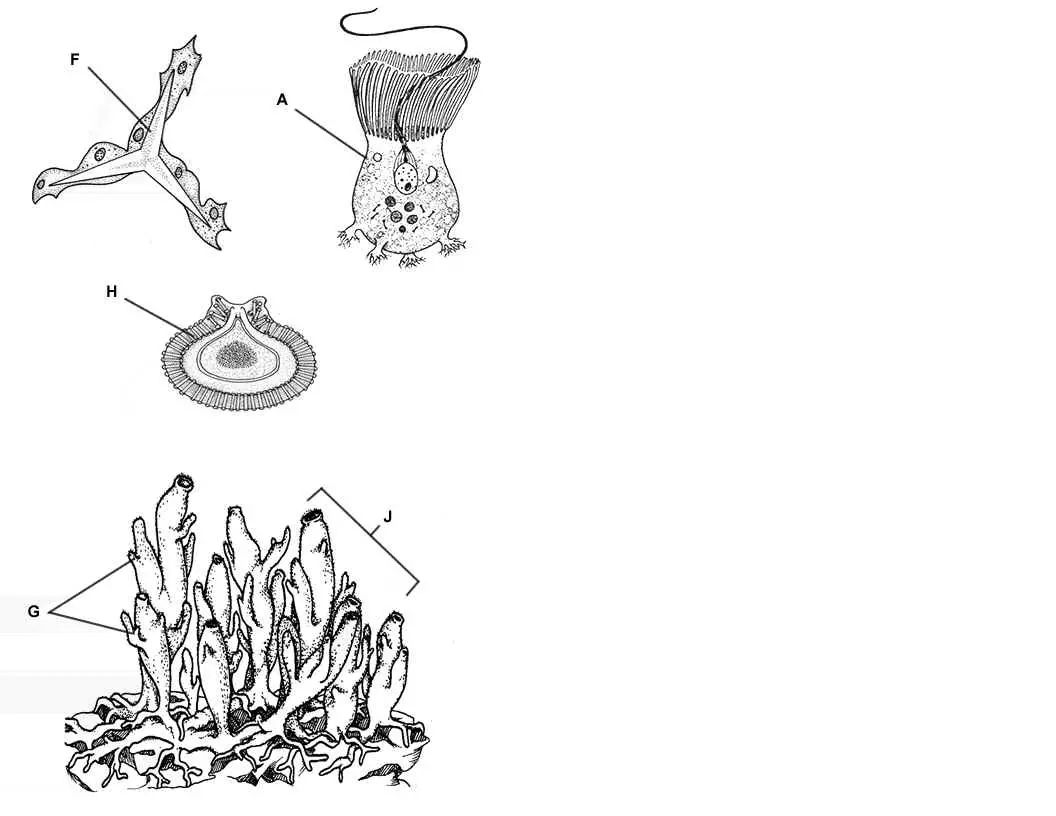
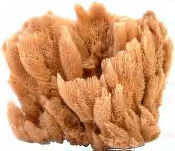 Sponges – A Coloring Worksheet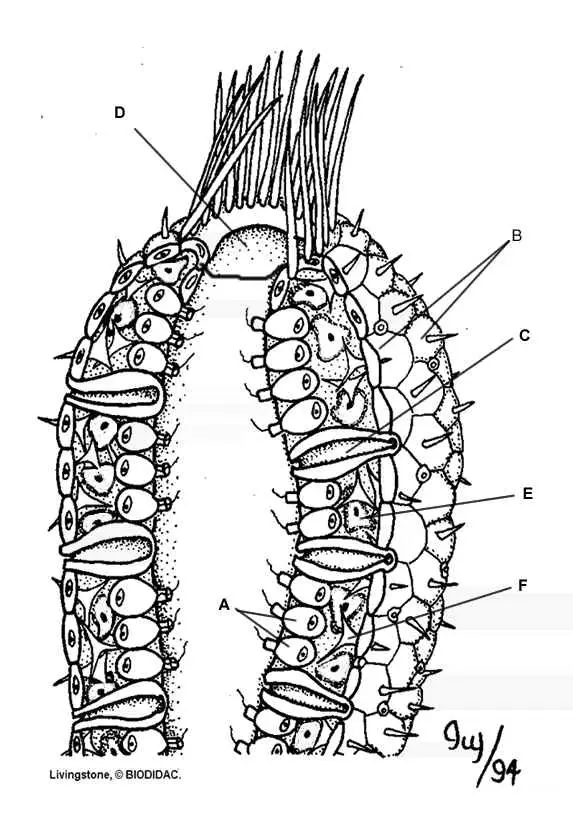



 Insulin is needed because it reduces blood glucose levels in the blood. It causes cells, especially fat and muscle cells, to absorb glucose from the blood. The glucose is needed for cellular respiration or converted into glycogen. The glycogen is stored in the liver or the muscles for future use in cellular respiration.