Ecology Quiz

%CODE1%

Ecology Quiz


Test your knowledge of Ecology!

1. A cold biome characterized by permafrost under the surface?
a) Taiga
b) Tundra
c) Deciduous forest
d) Savanna2. An organism that feeds on plants and animals?
a) Carnivore
b) Omnivore
c) Epiphyte
d) Herbivore

3. All of the following are abiotic factors except:
a) Tree
b) Temperature
c) pH
d) Sunlight

4. Corals would be found in which zone:
a) Oceanic
b) Estuary
c) Neritic
d) Benthic

5. Which of the following is not part of the nitrogen cycle:
a) Ammonification
b) Transpiration
c) Nitrification
d) Rhizobacteria

BACK

Elephants Can

%CODE1%

Elephants Can’t Jump
& Other Freaky Scientific Facts

Welcome to a Fun Site about Science!

Did you know that elephants can’t jump even though they have the same number of bones in their feet as other mammals?
The bones in an elephant’s foot are more closely packed together than other mammals so they do not have the flexibility or spring mechanisms that would enable them to jump.
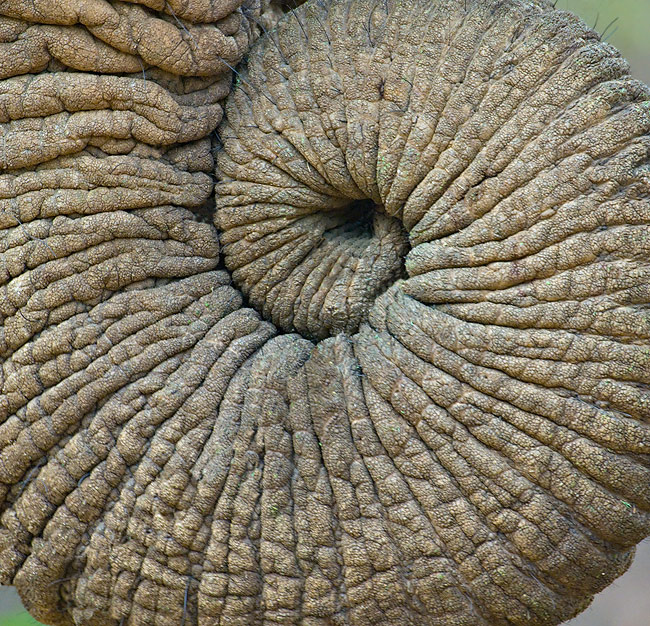
How many bones are in an elephant’s trunk? The elephant’s trunk has numerous muscles but NO BONE.


What is a baby oyster called? They are called spats!
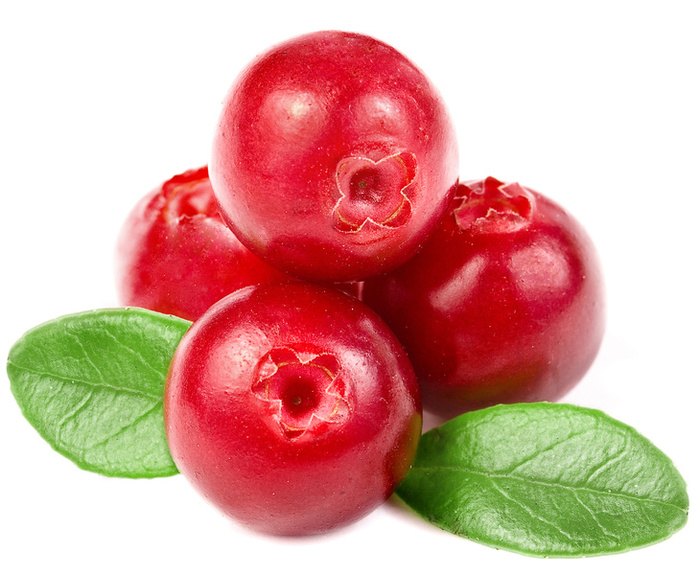
Three fruits are native to North America. Cranberries, Concord grapes, and blueberries!
What was the name of the captain and the ship on which Darwin made his famous voyage? Captain Fitzroy on the H.M.S. Beagle
A Swedish botanist, naturalist, physician and zoologist — Who am I? Carolus Linnaeus
Protozoan can move by cilia, flagella, or pseudopodia.
Give an example of a protist that moves by each of these means.

Include your NAME & PERIOD
cheryl.massengale@russellvilleschools.net


Google   


When were you born?

Darwinian Evolution – PreAP Biology

%CODE1%

Javascript not enabled


Name:     ID: 


Email: 

Darwinian Evolution – PreAP Biology
  

Multiple Choice
Identify the choice that best completes the statement or answers the question.
 
 1.
Which of the following are examples of fossils?
a.
shells or old bones
b.
any traces of dead organisms
c.
insects trapped in tree sap
d.
All of the above
 
 2.
Animal fossils may form when
a.
an animal is buried by sediment.
b.
an animal is buried on the ocean floor, in swamps, in mud, or in tar pits.
c.
an animal’s tissue is replaced by harder minerals.
d.
All of the above
 
 3.
Darwin drew ideas for his theory from observations of organisms on
a.
the Samoan Islands.
b.
Manhattan Island.
c.
the Hawaiian Islands.
d.
the Galápagos Islands.
 
 4.
The species of finches that Darwin observed differed in the shape of their beaks. According to Darwin, all of these species probably
a.
had a common ancestor.
b.
had migrated from Africa.
c.
had descended from similar birds in Africa.
d.
ate the same diet.
 
 5.
Darwin thought that the animals of the Galápagos Islands were similar to those of the nearby coast of South America because
a.
the animals’ ancestors had migrated from South America to the Galápagos Islands.
b.
the animals had all been brought to the islands by humans.
c.
the islands had slowly drifted away from the mainland.
d.
the animals in both places had evolved in nearly identical environments
 
 6.
According to Darwin, evolution occurs
a.
only through artificial selection.
b.
during half-life periods of 5,715 years.
c.
because of natural selection.
d.
so rapidly that it can be observed easily.
 
 7.
When Darwin published his first book about evolution, he included all of the following ideas except
a.
the idea that species change slowly over time.
b.
the idea that some organisms reproduce at a greater rate than others.
c.
the idea that species are permanent and unchanging.
d.
the idea that some species become better suited to their environment than others.
 
 8.
The major idea that Darwin presented in his book The Origin of Species was that
a.
species change over time and never compete with each other.
b.
animals change, but plants remain the same over time.
c.
species may change in small ways but cannot give rise to new species.
d.
species change over time by natural selection.
 
 9.
Natural selection is the process by which
a.
the age of selected fossils is calculated.
b.
organisms with traits well suited to their environment survive and reproduce more successfully than organisms less suited to the same environment.
c.
acquired traits are passed on from one generation to the next.
d.
All of the above
 
 10.
Populations of the same species living in different places
a.
do not vary.
b.
always show balancing selection.
c.
are genetically identical to each other.
d.
become increasingly different as each population becomes adapted to its own environment.
 
 11.
Scarcity of resources and a growing population are most likely to result in
a.
decreased homology.
b.
increased genetic variation.
c.
increased competition.
d.
convergent evolution.


nar001-1.jpg
 
 12.
Refer to the illustration above. An analysis of DNA from these organisms would indicate that
a.
they have identical DNA.
b.
they all have the same number of bones.
c.
their nucleotide sequences show many similarities.
d.
they all have the same number of chromosomes.
 
 13.
Refer to the illustration above. The similarity of these structures is one form of evidence that the organisms
a.
share a common ancestor.
b.
all grow at different rates.
c.
evolved instantaneously.
d.
live for a long time.
 
 14.
Refer to the illustration above. The bones labeled “X” can be referred to as
a.
vestigial structures.
b.
sequential structures.
c.
homologous structures.
d.
fossil structures.
 
 15.
Which of the following is most likely a vestigial structure?
a.
the human tailbone
c.
flower color
b.
the beak of a finch
d.
a fossil of a snail
 
 16.
Homologous structures in organisms provide evidence that the organisms
a.
share a common ancestor.
b.
must have lived at different times.
c.
have a skeletal structure.
d.
are now extinct.
 
 17.
Anatomical structures that appear to be derived from a functional structure in an ancestor, but that currently do not serve an important function, are called
a.
inorganic.
c.
fossilized.
b.
mutated.
d.
vestigial.
 
 18.
The beak of a bird and the beak of a giant squid evolved independently and serve the same function. The beaks are
a.
divergent structures.
c.
analogous structures.
b.
homologous structures.
d.
hybrid structures.
 
 19.
Evidence that evolution occurs includes all of the following except
a.
acquired characteristics.
b.
similarities and differences in proteins and DNA sequences between organisms.
c.
the fossil record.
d.
homologous structures among different organisms.
 
 20.

Cytochrome c is a protein that is involved in cellular respiration in all eukaryotic organisms. Human cytochrome c contains 104 amino acids. The following table compares human cytochrome c with cytochrome c from a number of other organisms.


Organism
Number of cytochrome c amino acids
that differ from human cytochrome c amino acids
Chickens
18
Chimpanzees
0
Dogs
13
Rattlesnakes
20
Rhesus monkeys
1
Yeasts
56
   

Which of the following is not a valid inference from these data?

a.
Chimpanzees are more closely related to humans than yeasts are.
b.
The cytochrome c of chimpanzees differs from that of rhesus monkeys by only one amino acid.
c.
Dogs are more closely related to humans than chickens are.
d.
All of the proteins produced by chimpanzees and humans are identical.
 
 21.
The accumulation of differences between populations that once formed a single population is called
a.
coevolution.
b.
adaptation.
c.
divergent evolution.
d.
cumulative differentiation.
 
 22.
Over millions of years, plants and their pollinators have
a.
coevolved.
c.
become parasites.
b.
crossbred.
d.
become competitive.
 
 23.

mc023-1.jpg

Refer to the illustration above. While the shark and dolphin are similar in appearance, dolphins evolved from ancestors that were very different from sharks. The current similarity between sharks and dolphins is an example of

a.
coevolution.
c.
convergent evolution.
b.
biogeography.
d.
divergent evolution.
 
 24.
What is the idea developed by Charles Lyell which states that the geologic processes that shaped Earth in the past continue to operate in the same way today?
a.
inheritance of acquired characteristics
b.
catastrophism
c.
uniformitarianism
d.
descent with modification
 
 25.
The idea of inheritance of acquitted characteristics was proposed by
a.
Charles Darwin.
c.
Jean-Baptiste Lamarck.
b.
George Cuvier.
d.
Charles Lyell.
 
 26.
Which of the following describes a population?
a.
dogs and cats living in Austin, Texas
b.
four species of fish living in a pond
c.
dogwood trees in Middletown, Connecticut
d.
roses and tulips in a garden
 
 27.
The movement of alleles into or out of a population due to migration is called
a.
mutation.
c.
nonrandom mating.
b.
gene flow.
d.
natural selection.
 
 28.
What type of population is most susceptible to loss of genetic variability as a result of genetic drift?
a.
large populations
b.
medium-sized populations
c.
small populations
d.
populations that fluctuate in size
 
 29.
A change in the frequency of a particular gene in one direction in a population is called
a.
directional selection.
b.
acquired variation.
c.
chromosome drift.
d.
stabilizing selection.
 
 30.
The type of selection that may eliminate intermediate phenotypes is
a.
direction selection.
b.
disruptive selection.
c.
polygenic selection.
d.
stabilizing selection.
 
 31.
Directional selection tends to eliminate
a.
both extremes in a range of phenotypes.
b.
one extreme in a range of phenotypes.
c.
intermediate phenotypes.
d.
None of the above; it causes new phenotypes to form.
 
 32.
The large, brightly colored tail feathers of the male peacock are valuable to him because
a.
they attract potential predators.
b.
they warn off potential competitors for mates.
c.
they attract potential mates.
d.
they attract people who provide them with food.
 
 33.
The hypothesis that evolution occurs at an irregular rate through geologic time is known as
a.
directional evolution.
b.
directional equilibrium.
c.
punctuated equilibrium.
d.
punctuated evolution.


         Start Over

Biochemistry PCC

%CODE1%

Javascript not enabled

Name: 


Biochemistry PCC


Multiple Choice
Identify the choice that best completes the statement or answers the question.
 1.
At what temperature is water most dense?
a.
0 degrees Celsius
b.
1 degrees Celsius
c.
4 degrees Celsius
d.
10 degrees Celsius
e.
100 degrees Celsius
 2.
Which property of water enables living things to survive in it?
a.
high heat of vaporization
b.
high specific heat
c.
degree of surface tension
d.
cohesion
e.
density of ice
 3.
Which characteristic of water makes the existence of pH possible?
a.
ionization
b.
polarity
c.
adhesion
d.
cohesion
e.
None of the above.
 4.
Which of the following types of biologist would need an understanding of chemistry?
a.
molecular biologist
b.
ecologist
c.
evolutionary biologist
d.
botanist
e.
All of the above.
 5.
All of the following are inorganic compounds except:
a.
glucose.
b.
hydrochloric acid.
c.
sodium chloride.
d.
sodium hydroxide.
e.
water.
 6.
An element is defined as a substance that:
a.
is composed of more than one kind of atom.
b.
is held together by covalent bonds.
c.
cannot be broken into simpler substances by chemical reactions.
d.
cannot burn.
e.
is soluble in both acid and water.
 7.
Which of the following determines the type of element?
a.
the number of electrons
b.
the number of protons
c.
the number of neutrons
d.
the number of valence electrons
e.
the number of energy levels
 8.
Which of the following elements is not responsible for a significant portion of the mass of living organisms?
a.
O
b.
S
c.
N
d.
H
e.
C
 9.
An element found in minute quantities in living organisms is called:
a.
a heavy element.
b.
a vitamin.
c.
an organic compound.
d.
an isotope.
e.
a trace element.
 10.
Select the incorrectly matched pair:
a.
The 1st principal energy level contains 1 orbital.
b.
The 2nd principal energy level contains 4 orbitals.
c.
The 1st principal energy level contains a maximum of 2 electrons.
d.
The 2nd energy level contains a maximum of 10 electrons.
e.
All of the above are correctly matched.
 11.
Chlorine has seven electrons in its valence shell. The number of electrons it must gain to complete its valence shell is:
a.
one.
b.
two.
c.
three.
d.
seven.
e.
eight.
 12.
An atom has six protons and eight neutrons. Its atomic mass is ____________ atomic mass units.
a.
two
b.
four
c.
six
d.
eight
e.
fourteen
 13.
This determines the chemical properties of an element:
a.
the atomic number.
b.
the atomic weight.
c.
the number of energy levels.
d.
the number of valence electrons.
e.
orbitals.
 14.
The difference between an electrically neutral atom and an ion is that:
a.
an ion has an unequal number of protons and electrons, while an atom has an equal number.
b.
an ion has an equal number of protons and electrons, while an atom has an unequal number.
c.
an atom has an unequal number of neutrons and protons, while an ion has an equal number.
d.
an atom has its electrons in orbitals, while an ion has its electrons in its nucleus.
e.
an atom must have an equal number of neutrons and electrons, while an ion does not.
 15.
The difference between a stable isotope and a radioisotope is that:
a.
the stable isotope emits radiation.
b.
the radioisotope emits radiation.
c.
the stable isotope emits light.
d.
the stable isotope absorbs radiation.
e.
the radioisotope has an unequal number of protons and electrons.
Figure 02-01
Use the figure below to answer the corresponding questions.nar001-1.jpg

 16.
Figure 02-01 represents:
a.
two isotopes of the same element.
b.
two different elements.
c.
two different ions.
d.
an acid and a base.
e.
a cation and an anion.
 17.
The atomic mass of the atom identified as A in Figure 02-01 is:
a.
2.
b.
6.
c.
8.
d.
12.
e.
18.
 18.
The difference between the two atoms in Figure 02-01 is:
a.
pH.
b.
the number of electrons.
c.
the number of protons.
d.
the number of neutrons.
e.
electric charge.
 19.
Radioisotopes are used in all of the following scientific applications except:
a.
dating fossils.
b.
determining the sequence of genetic information in DNA.
c.
localization of a drug, such as marijuana.
d.
the treatment of cancer.
e.
monitoring changes in the salinity of an estuary.
 20.
Isotopes differ from each other with respect to the number of:
a.
protons.
b.
electrons.
c.
neutrons.
d.
protons and electrons.
e.
neutrons and protons.
 21.
When a chemical reaction is at equilibrium:
a.
the forward reaction is going faster.
b.
the reverse reaction is going faster.
c.
the forward and reverse reactions are proceeding at equal rates.
d.
the forward reaction stops.
e.
the reverse reaction stops.
 22.
Any chemical interaction between atoms:
a.
involves neutrons.
b.
may potentially involve any electron.
c.
involves protons.
d.
involves only valence electrons.
e.
involves only the nuclear subatomic particles.
 23.
The molecular mass of C6H12O6 is 180 amu. 0.25 moles of this substance contain:
a.
180 daltons.
b.
45 g.
c.
1.8 g.
d.
45 daltons.
e.
180 g.
 24.
How many molecules are present in one mole of C6H12O6?
a.
1.7 ´ 10-10 molecules
b.
1.3 ´ 1010 molecules
c.
5 molecules
d.
1.7 ´ 1022 molecules
e.
6.02 ´ 1023 molecules
Figure 02-02
Use the figure below to answer the corresponding questions.nar002-1.jpg

 25.
Figure 02-02 represents:
a.
elemental helium.
b.
molecular hydrogen.
c.
molecular helium.
d.
a water molecule.
e.
molecular oxygen.
 26.
The type of bond illustrated in Figure 02-02 is:
a.
an ionic bond.
b.
a polar bond.
c.
a single covalent bond.
d.
a hydrogen bond.
e.
a double covalent bond.
 27.
Select the covalent bond that involves 2 electrons:
a.
single
b.
double
c.
triple
d.
Both A and B.
e.
Both A and C.
 28.
The representation H – O – H is known as:
a.
a structural formula.
b.
a simplest formula.
c.
a molecular formula.
d.
a Lewis structure.
e.
an orbital diagram.
 29.
Which of the following choices correctly identifies a reactant in the following chemical equation? CO2 + H2O « H2CO3
a.
carbonic acid
b.
oxygen
c.
water
d.
sugar
e.
carbon monoxide
 30.
In a chemical reaction, the product is:
a.
generally written on the right side of the equation.
b.
always in equilibrium with the reactants.
c.
the substance that is generated by the reaction.
d.
only joined by an ionic bond.
e.
Both A and C.
 31.
A covalent bond:
a.
can form only between identical atoms.
b.
involves a sharing of only one pair of electrons.
c.
is always polar.
d.
may be polar or nonpolar depending on the atoms involved.
e.
always forms between identical molecules.
 32.
In a water molecule, because oxygen is more electronegative than hydrogen, the shared electrons are more commonly found around the ____________ nucleus than the ____________ nucleus.
a.
oxygen; hydrogen
b.
hydrogen; oxygen
c.
hydrogen; other hydrogen
d.
oxygen; nitrogen
e.
nitrogen; oxygen
 33.
The covalent bond between a hydrogen atom and the oxygen atom in water is formed when:
a.
hydrogen gains an electron from oxygen.
b.
hydrogen and oxygen share an electron pair.
c.
hydrogen and oxygen both lose electrons from their outer shells.
d.
hydrogen and oxygen both gain electrons in their outer shells.
e.
hydrogen gains an electron from oxygen.
 34.
Covalently bonded atoms with similar electronic negativities are:
a.
ionic.
b.
polar.
c.
nonpolar.
d.
partially positive.
e.
partially negative.
 35.
An atom becomes a cation if:
a.
it gains one or more electron.
b.
it loses one or more electron.
c.
it shares electrons.
d.
one or more of its electrons changes energy levels.
e.
it emits radiation.
 36.
In the formation of common table salt, sodium and chlorine interact because:
a.
sodium and chlorine share a pair of electrons.
b.
sodium and chlorine share two pairs of electrons.
c.
chlorine donates seven electrons to sodium.
d.
there is no electron exchange.
e.
sodium donates one electron to chlorine.
 37.
Table salt dissolves easily in water because:
a.
water can form covalent linkages with salt molecules.
b.
water can remove electrons from the chloride ion, which causes the latter to dissociate from the sodium and dissolve.
c.
water can add electrons to the sodium ion.
d.
water is polar and salt is nonpolar. Nonpolar compounds are more soluble in polar solvents because they are able to form strong covalent bonds that result in a breaking up of the molecule being dissolved.
e.
the partial positive charge of the hydrogens in the water molecule can associate with the negative charge of the chloride ion, and the partial negative charge of the oxygen of the water molecule can associate with the positive charge of the sodium atom.
 38.
Which one of the following atoms would most likely be involved in an ionic bond?
a.
hydrogen
b.
oxygen
c.
sodium
d.
Both A and B.
e.
Both A and C.
 39.
The process whereby water molecules surround ions during the process of dissolving is called:
a.
reduction.
b.
hydration.
c.
buffering.
d.
oxidation.
e.
vaporization.
 40.
Which component becomes oxidized in the following chemical reaction?
4 Fe + 3 O2 ® 2 Fe2O3
a.
water
b.
iron
c.
oxygen
d.
rust
e.
hydrogen
 41.
Which component is the oxidizing agent in the following chemical reaction?
4 Fe + 3 O2 ® 2 Fe2O3
a.
water
b.
iron
c.
oxygen
d.
rust
e.
hydrogen
 42.
Which of the following statements is not correct?
a.
Water heats up and cools down very quickly.
b.
The amount of heat required to raise the temperature of 1 g of water 1 °C is one calorie.
c.
Due to hydrogen bonds, water has a high surface tension.
d.
Large bodies of water have relatively constant temperatures.
e.
When one gram of water evaporates, it removes heat.
 43.
It takes one calorie of heat to raise the temperature of one gram of water one degree Celsius at sea level. This is referred to as the _______________________ of water.
a.
heat of fusion
b.
heat of vaporization
c.
specific heat
d.
heat of transformation
e.
heat of homeostasis
 44.

Which characteristic of water molecules directly contributes to the remarkable “water walking” success of the aquatic insects pictured in the accompanying figure?

mc044-1.jpg

a.
hydrogen bonds
b.
capillary action
c.
nonpolar covalent bonds
d.
ionic bonds
e.
adhesive forces
 45.
The cohesiveness between water molecules is due largely to:
a.
hydrogen bonds.
b.
polar covalent bonds.
c.
nonpolar covalent bonds.
d.
ionic bonds.
e.
hydrophobic interactions.
 46.
A stalk of celery is placed in a solution of blue colored dye. After one hour, the leaves have blue fluid in their veins. Which property of water is being demonstrated?
a.
adhesion and cohesion
b.
evaporation and cooling
c.
lower density as a solid than as a liquid
d.
high specific heat
e.
surface tension
 47.
Evaporative cooling is a process whereby ____________ moving ____________ molecules vaporize, thus ____________ large amounts of heat.
a.
slow; water; adding
b.
fast; water; removing
c.
slow; oxygen; adding
d.
fast; oxygen; removing
e.
fast; carbon dioxide; removing
 48.
In a mixture, which one would be present in the least amount?
a.
solvent
b.
solute
c.
water
d.
Both A and B.
e.
Both A and C.
 49.
This characteristic of a molecule determines the ability of hydrogen bonds to form between it and hydrogen:
a.
A non polar atom
b.
An atom with a partial positive charge
c.
An atom with a partial negative charge
d.
None of the above.
e.
All of the above.
 50.
A pH of 4 is ____________ times more ____________ than a pH of 7.
a.
3; basic
b.
3; acidic
c.
1000; neutral
d.
1000; basic
e.
1000; acidic
 51.
What is the OH- concentration of a solution having a pH of 2?
a.
1 ´ 10-12
b.
1 ´ 10-10
c.
1 ´ 10-7
d.
1 ´ 10-2
e.
1 ´ 10-1
 52.
When a small amount of hydrochloric acid (HCl) is added to a solution of Na2HPO4, the pH of the solution does not change markedly. The pH also does not change drastically when a small amount of sodium hydroxide (NaOH) is added to this same solution. Based on these observations, the compound Na2HPO4 is:
a.
able to donate hydrogen atoms to HCl.
b.
able to remove hydrogen ions from the OH- of NaOH.
c.
acting as a buffer.
d.
an enzyme facilitating the reaction between HCl and NaOH.
e.
All of the above.
 53.
A salt is a compound in which the hydrogen ion of _________________ is replaced by some other cation.
a.
a base
b.
an acid
c.
an anion
d.
a hydroxide ion
e.
water
 54.
Which concentration(s) results in a pH of 7?
a.
higher concentrations of hydrogen ions than hydroxide ions
b.
higher concentrations of hydroxide ions than hydrogen ions
c.
equal concentrations of hydroxide ions than hydrogen ions
d.
Both A and B.
e.
None of the above.
 55.
Identify the chemical(s) that act(s) as a buffer in human blood:
a.
bicarbonate
b.
hydrogen ions
c.
carbon dioxide
d.
water
e.
None of the above.
 56.
Identify the hydrogen ion concentration that represents the lowest pH from the following list:
a.
1 ´ 10-3
b.
1 ´ 10-4
c.
1 ´ 10-7
d.
1 ´ 10-11
e.
1 ´ 10-14
 57.
Which of the following has a pH closest to that of human blood?
a.
beer
b.
coffee
c.
rain water
d.
sea water
e.
oven cleaner
 58.
Which of the following would most likely form electrolytes in water?
a.
glucose
b.
ethanol
c.
An organic compound
d.
An inorganic compound
e.
None of the above.
 59.
Which of the following is not a property of carbon?
a.
Carbon-to-carbon bonds are limited to single bonds.
b.
Carbon has four valence electrons.
c.
Carbon can form bonds to various other atoms.
d.
Two carbon atoms can share three electron pairs with each other.
e.
Carbon-to-carbon bonds are strong.
 60.
What aspect of long carbon chains makes them ideal for forming the backbones of long biomolecules?
a.
The carbon atom itself is strong and hard to split.
b.
Carbon can form a maximum of five covalent bonds with other atoms.
c.
Carbons can form a maximum of three covalent bonds with other atoms.
d.
Carbon-to-carbon covalent bonds are strong.
e.
Carbon-to-carbon hydrogen bonds are weak and transitory.
 61.
The highly polarized nature of compounds containing carboxyl groups can be attributed to:
a.
the presence of two highly electronegative carbon atoms.
b.
the presence of two highly electropositive carbon atoms.
c.
the presence of two highly electronegative oxygen atoms.
d.
the presence of two highly electropositive oxygen atoms.
e.
None of the above.
 62.

The number of electron pairs shared between carbon 2 and 3 in the accompanying figure is:

mc062-1.jpg

a.
one.
b.
one and a half.
c.
two.
d.
three.
e.
None of the above.
 63.

The two molecules in the following figure represent:

mc063-1.jpg

a.
ionized structures.
b.
enantiomers.
c.
secondary structures.
d.
geometric isomers.
e.
polymers.
 64.
This functional group is weakly basic because it can accept an H+ ion:
a.
hydroxyl
b.
carbonyl
c.
amino
d.
phosphate
e.
sulfhydryl
 65.
This functional group forms cross bridges that help stabilize protein tertiary structure:
a.
hydroxyl
b.
carbonyl
c.
amino
d.
phosphate
e.
sulfhydryl
 66.
The chemical interactions of large hydrocarbons are largely determined by:
a.
their solubility in water.
b.
their functional groups.
c.
their polar nature.
d.
isomerization of these hydrocarbons into other forms.
e.
the hydrogens bonded to the carbon atoms.
 67.
Hydrocarbons are hydrophobic because:
a.
the covalent bonds between hydrogen and carbon are nonpolar.
b.
they contain functional groups.
c.
they exist as isomers.
d.
Both A and B.
e.
Both A and C.
 68.
Which pair is mismatched?
a.
monsaccharide:maltose
b.
disaccharide:sucrose
c.
polysaccharide:cellulose
d.
None of these pairs are correctly matched.
e.
All of these pairs are correctly matched.
 69.
Which of these terms is most inclusive?
a.
monosaccharide
b.
starch
c.
polysaccharide
d.
disaccharide
e.
carbohydrate
 70.
Glucose dissolves in water because:
a.
it ionizes.
b.
it is a polysaccharide.
c.
it has polar hydroxyl groups that interact with polar water molecules.
d.
it has a very reactive primary structure.
e.
it is hydrophobic.
 71.
Carbohydrate molecules:
a.
serve as structural components of human cell walls.
b.
form the regulatory compounds known as enzymes.
c.
are a source of energy.
d.
help protect vital organs from damage.
e.
contain the genetic information of a cell.
 72.
A chemical reaction in which organic compounds are synthesized from their building blocks is called:
a.
hydrolysis.
b.
condensation.
c.
oxidation.
d.
reduction.
e.
dissociation.
Figure 03-01
Use the figure below to answer the corresponding questions.nar003-1.jpg

 73.
The process illustrated in Figure 03-01 is called:
a.
condensation.
b.
protein synthesis.
c.
hydrolysis.
d.
dehydration synthesis.
e.
denaturation.
 74.
The products of the process in Figure 03-01 are:
a.
amino acids.
b.
molecules of glycerol.
c.
representative of a glycoside linkage.
d.
enzymes.
e.
monosaccharides.
 75.
Which one of the following carbohydrates is the most structurally complex?
a.
sucrose
b.
fructose
c.
cellulose
d.
glucose
e.
a disaccharide
 76.
In which of the following reactions must the equivalent of a water molecule be added in order to break a bond?
a.
fatty acids + glycerol ® fat
b.
glucose + fructose ® sucrose
c.
glycogen ® glucose
d.
alanine + glycine ® dipeptide
e.
glucose ® cellulose
 77.
Which of the following illustrates hydrolysis?
a.
the reaction of two monosaccharides to form a disaccharide
b.
the reaction of two amino acids to form a dipeptide
c.
the reaction of a hydrogen atom and a hydroxide ion to form water
d.
the reaction of a fat to form glycerol and fatty acids
e.
the formation of ATP from ADP and inorganic phosphate
 78.
The difference between a hexose and a pentose is that:
a.
a hexose is saturated, and a pentose is undersaturated.
b.
a hexose is hydrophilic, and a pentose is hydrophobic.
c.
a hexose always has six hydroxyl groups, and a pentose always has five.
d.
a hexose always has six carbons, but a pentose always has five carbons.
e.
a hexose can be polymerized, but a pentose cannot.
 79.
Monosaccharides are water soluble because:
a.
they contain a large number of methyl groups.
b.
they have a large number of polar hydroxyl groups.
c.
they have at least one double bond between adjacent carbons.
d.
they have large numbers of nonpolar carbons in their backbones.
e.
they can form ring structures.
 80.
A carbohydrate energy storage molecule found in animal liver and muscle cells is:
a.
starch.
b.
glycogen.
c.
cellulose.
d.
fatty acids.
e.
cholesterol.
 81.
Amyloplasts are organelles that store:
a.
fat.
b.
starch.
c.
protein.
d.
lipids.
e.
DNA.
 82.
The major function(s) of lipids includes:
a.
storing energy.
b.
serving as structural components of cellular membranes.
c.
serving as hormones.
d.
Both A and B.
e.
A, B, and C are correct.
 83.
The hydrolysis of triacylglycerol will yield:
a.
three fatty acids and one glycerol.
b.
three glycerols and one fatty acid.
c.
two fatty acids and three glycerols.
d.
one fatty acid, one amino acid, and one glucose.
e.
one fatty acid, one phosphate, and one glycerol.
 84.
A molecule of a saturated triacylglycerol contains:
a.
the maximum number of double bonds between carbons in the fatty acid chains.
b.
the maximum number of triple bonds between carbons in the fatty acid chains.
c.
the maximum number of hydrogen atoms in the fatty acid chains.
d.
fatty acid chains with both amino and carboxyl groups.
e.
alternating single and double bonds between carbons in the fatty acid chains.
 85.
Which of the following statements concerning unsaturated fats is correct?
a.
They are more common in animals.
b.
They have no double bonds in the carbon chains of their fatty acids.
c.
They are generally liquids at room temperature.
d.
They contain more hydrogen than do saturated fats having the same number of carbon atoms.
e.
They have fewer fatty acids per fat molecule than do saturated fats.
 86.
The major difference between a structural lipid, such as those in cell membranes, and a storage fat is the fact that the structural lipid:
a.
most commonly contains phosphate.
b.
does not contain glycerol.
c.
has four fatty acids attached to glucose.
d.
is entirely hydrophobic.
e.
is nonpolar.
 87.
An amphipathic molecule has:
a.
two polar ends.
b.
two hydrophobic ends.
c.
a hydrophobic and a hydrophilic portion.
d.
only one hydrophobic end.
e.
only one hydrophilic end.
 88.

The most abundant molecules in this structure are:

mc088-1.jpg

a.
structural proteins.
b.
polysaccharides.
c.
triacylglycerols.
d.
phospholipids.
e.
polypeptides.
 89.
Which of the following molecules is not grouped with the lipids?
a.
prostaglandins
b.
steroids
c.
cholesterol
d.
carotenoids
e.
None of the above, all are lipids.
 90.
The hydrogenation process used to make margarine from cooking oil produces fatty acids that:
a.
are known to increase the risk of cardiovascular disease.
b.
contain fewer double bonds.
c.
can contain rearrange double bonds to the cis configuration.
d.
Both A and B are correct.
e.
A, B, and C are correct.
 91.
Which statement is false?
a.
Trans fatty acids are unsaturated.
b.
Trans fatty acids are more solid at room temperature than cis fatty acids.
c.
Unsaturated fatty acids are liquid at room temperature.
d.
Saturated fatty acids are solid at room temperature.
e.
All of these statements are true.
 92.
The major function(s) of proteins includes:
a.
catalyzing chemical reactions.
b.
controlling the expression of genes.
c.
strengthening and protecting cells and tissues.
d.
Both A and B.
e.
A, B, and C are correct.
 93.
There are 20 different amino acids in the proteins that make up the tissues of living organisms. The primary difference between these amino acids is in their:
a.
R or variable groups.
b.
number of potassium groups.
c.
number of phosphate groups.
d.
number of carbonyl groups.
e.
number of asymmetric carbons.
Figure 03-02
Use the figure below to answer the corresponding questions.nar004-1.jpg

 94.
In Figure 03-02, ionic attractions would form between the R groups of which amino acids?
a.
1 and 3
b.
2 and 4
c.
3 and 5
d.
4 and 6
e.
None of the above.
 95.
Hydrophobic interactions would occur between the R groups of which two amino acids in Figure 03-02?
a.
1 and 4
b.
2 and 5
c.
3 and 6
d.
2 and 4
e.
3 and 5
 96.
Which of the following is responsible for the alpha-helical structure of proteins?
a.
hydrophobic interactions
b.
nonpolar covalent bonds
c.
ionic interactions
d.
hydrogen bonds
e.
polar covalent bonds
 97.
At which level of protein structure are peptide bonds most important?
a.
primary
b.
secondary
c.
tertiary
d.
quaternary
e.
globular
 98.
Proteins with alpha helical forms exhibit this property:
a.
strength
b.
elasticity
c.
heat stability
d.
rigidity
e.
All of the above.
 99.
Which of the following would help stabilize a protein the most?
a.
alpha helix
b.
beta pleated sheet
c.
hydrogen bonds
d.
hydrophobic interactions
e.
disulfide bonds
 100.
Some proteins are important biological buffers because:
a.
they react with water to produce carbon dioxide, which neutralizes acids.
b.
they contain weakly acidic and weakly basic groups.
c.
they are able to absorb great amounts of carbon dioxide during condensation reactions.
d.
they produce carbonic acid upon hydrolysis.
e.
All of the above.
 101.
The tertiary structure of proteins is typified by the:
a.
association of several polypeptide chains by weak bonds.
b.
order in which amino acids are joined in a peptide chain.
c.
bonding of two amino acids to form a dipeptide.
d.
folding of a peptide chain to form an alpha helix.
e.
three-dimensional shape of an individual polypeptide chain.
 102.

All of the following types of chemical bonds are responsible for maintaining the tertiary structure of this polypeptide except:

mc102-1.jpg

a.
ionic bonds.
b.
hydrogen bonds.
c.
hydrophobic interactions.
d.
disulfide bonds.
e.
peptide bonds.
 103.
Regulatory proteins:
a.
defend against foreign invaders.
b.
store nutrients.
c.
catalyze a specific chemical reaction.
d.
control the expression of specific genes.
e.
strengthen and protect cells and tissues.
 104.
Molecular chaperones are proteins that mediate the folding process of:
a.
other proteins.
b.
amino acids.
c.
lipids.
d.
DNA.
e.
sugars.
 105.

The following amino acid would be characterized as __________ based on the chemical properties of its side chain.

mc105-1.jpg

a.
nonpolar
b.
acidic
c.
basic
d.
hydrophilic
e.
electrically charged
 106.
Which of the following statements is true of proteins?
a.
Proteins lose some or all of their normal activity if their three-dimensional structure is disrupted.
b.
Proteins are composed of ribose, phosphate, and a nitrogen-containing base.
c.
The activity of proteins is independent of temperature and pH.
d.
Denaturation is usually reversible.
e.
All proteins are enzymes.
 107.

If the differently shaded portions of this molecule represent different polypeptide chains, then this figure is representative of:

mc107-1.jpg

a.
an amino acid.
b.
the quaternary structure of a protein.
c.
a steroid hormone.
d.
cellulose.
e.
a carotenoid.
 108.
Which of the following statements is false?
a.
DNA is usually composed of two nucleotide strands.
b.
DNA contains deoxyribose.
c.
DNA does not normally contain uracil.
d.
The nucleotides of DNA are linked by phosphodiester linkages.
e.
DNA does not normally contain a phosphate group.
 109.
ATP is important in living organisms because:
a.
like all other nucleic acids, it stores hereditary information.
b.
like RNA, it acts as a source code for the formation of proteins.
c.
it can transfer some of its energy to other chemicals.
d.
it is an important structural component of cell membranes.
e.
it is easily converted to starch for long-term storage.
 110.
Which of the following statements best summarizes the differences between RNA and DNA?
a.
RNA is a protein and DNA is a nucleic acid.
b.
DNA is a polymer and RNA is a monomer.
c.
DNA comprises the genes, while RNA is a direct participant in the process of protein synthesis.
d.
RNA is a single-stranded form of DNA.
e.
DNA is the primary energy currency of all cells.
 111.
Analysis of a certain complex compound shows that it contains phosphate groups, ribose groups, and pyrimidines. Based on this information, which of the following is the best description of this compound?
a.
It is most likely ribonucleic acid.
b.
It is DNA.
c.
It is an inorganic compound.
d.
It contains thymine.
e.
It is a polypeptide.
 112.
Which of the following are most directly arranged from DNA structure?
a.
polysaccharides
b.
polypeptides
c.
nucleotides
d.
triglycerides
e.
fatty acids
 113.
This molecule transmits heredity information:
a.
cholesterol
b.
adenosine triphosphate
c.
nucleic acid
d.
fatty acid
e.
polysaccharide
Figure 03-03
Use the figure to answer the corresponding questions.
nar005-1.jpg
 114.
The molecular fragment represented in Figure 03-03 is:
a.
ATP.
b.
RNA.
c.
a protein.
d.
a nucleotide.
e.
a polysaccharide.
 115.
The type of connection between the atoms at the point labeled 1 in Figure 03-03 is:
a.
a peptide bond.
b.
a glycoside linkage.
c.
a disulfide bond.
d.
a phosphodiester linkage.
e.
a hydrogen bond.
 116.

Which portion of the following molecule is easily transferred and therefore responsible for the energy transfer property of this molecule?

mc116-1.jpg

a.
1
b.
2
c.
3
d.
1 and 2
e.
None of the above.
 117.
Ester linkages would not be formed during condensation reactions that produce:
a.
polysaccahrides.
b.
triacylglycerols.
c.
polypeptides.
d.
nucleic acids.
e.
All of the above contain ester linkages that are formed during condensation reactions.
 118.
Which monomer is incorrectly matched with the corresponding polymer?
a.
Amino acids are used to build proteins.
b.
Monosaccharides are used to build polysaccharides.
c.
Fatty acids are used to build nucleic acids.
d.
Glucose molecules are used to build starches.
e.
All of these monomers are correctly matched with the corresponding polymer.


Check Your Work     Start Over

Cell Membrane & Transport Study Guide

%CODE1%

Javascript not enabled

Name: 

Cell membrane & Transport Quiz


True/False
Indicate whether the statement is true or false.
 1.
During diffusion, molecules diffuse from a region where their concentration is low to a region where their concentration is higher, until the particles are evenly dispersed.
 2.
When the concentration of dissolved particles outside a cell is equal to the concentration of dissolved particles inside the cell, the cell solution is isotonic.
 3.
Membranes are selectively permeable if they allow only certain substances to move across them.
 4.
A cell placed in a strong salt solution would probably burst because of osmosis.
 5.
Water will diffuse out of a cell when the cell is placed in a hypertonic solution.
 6.
Osmosis is the diffusion of starch molecules through a selectively permeable membrane.
 7.
The binding of specific molecules to ion channels controls the ability of particular ions to cross the cell membrane.
 8.
To pass through a cell membrane, water requires carrier proteins.
 9.
In facilitated diffusion, carrier proteins require energy to transport substances across the cell membrane.
 10.
The transport of specific particles down their concentration gradient through a membrane by carrier proteins is known as facilitated diffusion.
 11.
Diffusion is an active process that requires a cell to expend a great deal of energy.
 12.
Diffusion through ion channels is a form of active transport.
 13.
Facilitated diffusion moves molecules and ions against their concentration gradient, while active transport moves molecules and ions down their concentration gradient.
 14.
Passive transport uses ATP to move molecules against their concentration gradient.
 15.
In active transport, energy is required to move a substance across a cell membrane.
 16.
The sodium-potassium pump requires energy to move ions across the cell membrane.
 17.
The sodium-potassium pump moves sodium ions and potassium ions against their concentration gradient.
 18.
The sodium-potassium pump transports sodium ions out of a cell while causing potassium ions to move into the cell.
 19.
The sodium-potassium pump uses ATP.
 20.
Exocytosis is a process that uses vesicles to capture substances and bring them into a cell.
 21.
Exocytosis helps the cell rid itself of wastes.
 22.
During the process of exocytosis, the cell membrane extends to engulf substances that are too big to pass through the cell membrane.
 23.
Exocytosis does not use energy to expel proteins from the cell.
 24.
Receptor proteins pump sodium ions into a cell.
 25.
Receptor proteins may cause the formation of a second messenger molecule inside a cell.
 26.
A receptor protein sends signals into a cell by transporting a specific molecule through the cell membrane.
 

Modified True/False
Indicate whether the statement is true or false.  If false, change the identified word or phrase to make the statement true.
 27.
One way that cells maintain homeostasis is by controlling the movement of substances across the cell membrane. _________________________


 28.
The cell membrane is made up of a double layer called the DNA bilayer. _________________________


 29.
A phospholipid is made up of a lipid “head” and two fatty acid “tails.” _________________________


 30.
The nonpolar tails of a phospholipid are attracted to water. _________________________


 31.
Cell-surface markers face the inside of the cell. _________________________


 32.
A concentration gradient exists when one area has a higher concentration of a substance than another area does. _________________________


 33.
The movement down a concentration gradient is called diffusion. _________________________


 34.
When the solute concentration outside a cell is equal to the solute concentration inside the cell, the cell’s environment is hypotonic. _________________________


 35.
A cell placed in a high salt solution would swell because of osmosis. _________________________


 36.
Osmosis is the diffusion of starch molecules through a selectively permeable membrane. _________________________


 37.
To pass through a cell membrane, water requires carrier proteins. _________________________


 38.
Facilitated diffusion is an active process that requires a cell to expend a great deal of energy. _________________________


 39.
Passive transport uses ATP to move molecules against their concentration gradient. _________________________


 40.
Exocytosis is a process that uses vesicles to capture substances and bring them into a cell. _________________________


 41.
Cells use exocytosis to export proteins modified by the Golgi apparatus. _________________________


 42.
Cells communicate by sending chemical signals that carry information to other cells. _________________________


 43.
Receptor proteins bind only to signals that match the specific color of the binding site. _________________________


 44.
Receptor proteins may cause the formation of a second messenger molecule inside the cell. _________________________


Multiple Choice
Identify the choice that best completes the statement or answers the question.
 45.
As a result of diffusion, the concentration of many types of substances
a.
always remains greater inside a membrane.
b.
eventually becomes balanced on both sides of a membrane.
c.
always remains greater outside of a membrane.
d.
becomes imbalanced on both sides of a membrane.
nar001-1.jpg
 46.
Refer to the illustration above. The process shown is called
a.
osmosis.
c.
active transport.
b.
facilitated diffusion.
d.
diffusion.
 47.
Refer to the illustration above. The process shown is called
a.
osmosis.
c.
active transport.
b.
facilitated diffusion.
d.
diffusion.
 48.
Diffusion is the movement of a substance
a.
only through a lipid bilayer membrane.
b.
from an area of low concentration to an area of higher concentration.
c.
only in liquids.
d.
from an area of high concentration to an area of lower concentration.
 49.
The dispersal of ink in a beaker of water is an example of
a.
diffusion.
c.
active transport.
b.
osmosis.
d.
endocytosis.
 50.
The diffusion of water into or out of a cell is called
a.
solubility.
c.
selective transport.
b.
osmosis.
d.
endocytosis.
 51.
Osmosis is a type of
a.
active transport.
c.
facilitated diffusion.
b.
passive transport.
d.
endocytosis.
 52.
A cell will swell when it is placed in a(n)
a.
hypotonic solution.
c.
isotonic solution.
b.
hypertonic solution.
d.
None of the above
 53.
The interior portion of a cell membrane forms a nonpolar zone that
a.
allows polar molecules to pass through the membrane.
b.
allows food to pass through the membrane.
c.
prevents ions and most large molecules from passing through the membrane.
d.
None of the above
 54.
Ions move through ion channels by
a.
endocytosis.
c.
passive transport.
b.
diffusion.
d.
active transport.
 55.
Ion channel gates close the pores of some ion channels in response to
a.
stretching of the cell membrane.
b.
a change in electrical charge.
c.
the binding of specific molecules to the channel.
d.
All of the above
 56.
Proteins that act like selective passageways in the cell membrane are known as
a.
marker proteins.
c.
receptor proteins.
b.
channel proteins.
d.
None of the above
 57.
Transport proteins that allow ions to pass through the cell membrane are called
a.
receptor proteins.
c.
ion channels.
b.
marker proteins.
d.
None of the above
 58.
Sugar molecules cross the cell membrane by
a.
active transport.
c.
osmosis.
b.
facilitated diffusion.
d.
gated channels.
 59.
Proteins involved in facilitated diffusion are
a.
carrier proteins.
c.
Both (a) and (b)
b.
receptor proteins.
d.
None of the above
 60.
Sugar molecules can enter cells through the process of
a.
exocytosis.
c.
osmosis.
b.
facilitated diffusion.
d.
ion pumps.
 61.
Which of the following does not require energy?
a.
diffusion
c.
active transport
b.
endocytosis
d.
sodium-potassium pump
 62.
Unlike passive transport, active transport
a.
requires energy.
b.
moves substances down their concentration gradient.
c.
does not involve carrier proteins.
d.
All of the above
 63.
Both active transport and facilitated diffusion involve
a.
ATP.
b.
movement against a concentration gradient.
c.
carrier proteins.
d.
All of the above
 64.
Which of the following is a form of active transport?
a.
osmosis
c.
facilitated diffusion
b.
diffusion
d.
sodium-potassium pump
 65.
The sodium-potassium pump
a.
is a carrier protein
c.
is located in the cytoplasm of a cell.
b.
uses passive transport.
d.
transports sugar molecules.
 66.
The sodium-potassium pump usually pumps
a.
potassium ions out of the cell.
b.
sodium ions into the cell.
c.
potassium ions into the cell.
d.
only potassium ions and sugar molecules.
 67.
The sodium-potassium pump
a.
increases the concentration of sodium ions inside a cell.
b.
decreases the concentration of sodium ions inside a cell.
c.
increases the concentration of potassium ions inside a cell.
d.
Both (b) and (c)
 68.
Proteins and polysaccharides that are too large to move into a cell through diffusion or active transport move in by
a.
exocytosis.
c.
the sodium-potassium pump.
b.
endocytosis.
d.
None of the above
 69.
Molecules that are too large to be moved through the membrane can be transported into the cell by
a.
osmosis.
c.
exocytosis.
b.
endocytosis.
d.
diffusion.
 70.
Molecules that are too large to be moved across a cell membrane can be removed from the cell by
a.
diffusion.
c.
endocytosis.
b.
exocytosis.
d.
osmosis.
 71.
Ridding the cell of materials by discharging the materials in vesicles is called
a.
osmosis.
c.
exocytosis.
b.
diffusion.
d.
endocytosis.
nar002-1.jpg
 72.
Refer to the illustration above. What happens when the structure labeled A binds to the structure labeled B?
a.
Information is sent into the cell.
c.
The cell begins to undergo mitosis.
b.
Proteins enter the cell.
d.
None of the above
 73.
Refer to the illustration above. What happens when the structure labeled A binds to the structure labeled B?
a.
Information is sent into the cell.
c.
The cell begins to swell.
b.
Proteins enter the cell.
d.
Ions enter the cell.
 74.
Refer to the illustration above. The structure labeled B in the diagram is an example of a(n)
a.
channel protein.
c.
receptor protein.
b.
signal molecule.
d.
ion pump.
 75.
Signal molecules bind to
a.
carbohydrates.
c.
receptor proteins.
b.
marker proteins.
d.
transport proteins.
 76.
When a signal molecule binds to a receptor protein, the receptor protein may
a.
change the permeability of the membrane.
b.
cause the formation of a second messenger molecule.
c.
catalyze certain chemical reactions in the cell.
d.
All of the above
 77.
Which of the following transmit information into a cell by binding to signal molecules?
a.
channel proteins
c.
marker proteins
b.
receptor proteins
d.
end proteins
 78.
cell membrane : cell ::
a.
window : house
c.
door : house
b.
roof : house
d.
wall : house
 79.
Which type of molecule forms the cell membrane?
a.
protein
c.
nucleic acid
b.
phospholipid
d.
carbohydrate
 80.
Phospholipids are molecules that have
a.
one polar phosphate head and two polar fatty acid tails.
b.
one polar phosphate head and two nonpolar fatty acid tails.
c.
one polar phosphate head and one polar fatty acid tail.
d.
one nonpolar phosphate head and two polar fatty acid tails.
 81.
The interior of the lipid bilayer of a cell membrane forms a nonpolar zone that
a.
allows most polar molecules to pass through the membrane.
b.
allows food to pass through the membrane.
c.
repels ions and most polar molecules.
d.
makes the membrane permeable to most molecules.
nar004-1.jpg
 82.
Refer to the illustration above. The structure labeled A is composed of
a.
lipids.
c.
proteins.
b.
carbohydrates.
d.
DNA.
 83.
Refer to the illustration above. The structure labeled D is a(n)
a.
cell-surface marker.
c.
enzyme.
b.
receptor protein.
d.
transport protein.
 84.
Refer to the illustration above. The structure labeled C is a(n)
a.
cell-surface marker.
c.
enzyme.
b.
receptor protein.
d.
transport protein.
 85.
Proteins in the cell membrane that identify the cell are called
a.
cell-surface markers.
c.
enzymes.
b.
receptor proteins.
d.
transport proteins.
 86.
As a result of diffusion, the concentration of many types of substances
a.
always remains greater inside a membrane.
b.
eventually becomes balanced on both sides of a membrane.
c.
always remains greater outside of a membrane.
d.
becomes imbalanced on both sides of a membrane.
 87.
Diffusion is the movement of a substance
a.
only through a lipid bilayer membrane.
b.
from an area of low concentration to an area of higher concentration.
c.
only in liquids.
d.
from an area of high concentration to an area of lower concentration.
 88.
The dispersal of ink in a beaker of water is an example of
a.
diffusion.
c.
active transport.
b.
osmosis.
d.
endocytosis.
 89.
Proteins that serve as tunnels for specific substances through the lipid bilayer are
a.
cell-surface markers.
c.
receptor proteins.
b.
channel proteins.
d.
enzymes.
 90.
Sugar molecules cross the cell membrane by
a.
active transport.
c.
osmosis.
b.
facilitated diffusion.
d.
simple diffusion.
 91.
Which of the following does not require energy?
a.
diffusion
c.
active transport
b.
endocytosis
d.
sodium-potassium pump
 92.
Ions move through ion channels by
a.
endocytosis.
c.
passive transport.
b.
simple diffusion.
d.
active transport.
 93.
The diffusion of water into or out of a cell is called
a.
solubility.
c.
selective transport.
b.
osmosis.
d.
endocytosis.
 94.
Osmosis is a type of
a.
active transport.
c.
simple diffusion.
b.
passive transport.
d.
endocytosis.
 95.
How does water pass through the cell membrane?
a.
directly through the lipid bilayer
b.
through a water ion pump
c.
through water carrier proteins
d.
through channel proteins just for water
 96.
Which of the following statements about an isotonic solution and a cell is correct?
a.
The solution has the same solute concentration that the cytoplasm does.
b.
The solution has a higher solute concentration than the cytoplasm does.
c.
A cell in the solution will lose water.
d.
A cell in the solution will gain water.
 97.
Unlike passive transport, active transport
a.
requires energy.
b.
moves substances down their concentration gradient.
c.
does not involve carrier proteins.
d.
moves water across the cell membrane.
 98.
Both active transport and facilitated diffusion involve
a.
ATP.
b.
movement against a concentration gradient.
c.
carrier proteins.
d.
channel proteins.
 99.
Which of the following is a form of active transport?
a.
osmosis
c.
facilitated diffusion
b.
simple diffusion
d.
sodium-potassium pump
 100.
The sodium-potassium pump
a.
is a carrier protein.
c.
is located in the cytoplasm of a cell.
b.
uses passive transport.
d.
transports sugar molecules.
 101.
The sodium-potassium pump usually pumps
a.
potassium ions out of the cell.
b.
sodium ions into the cell.
c.
potassium ions into the cell.
d.
only potassium ions and sugar molecules.
 102.
How many potassium ions does the sodium-potassium pump move into a cell if it moves six sodium ions out of the cell?
a.
two
c.
six
b.
four
d.
eight
 103.
Proteins and polysaccharides that are too large to move into a cell through diffusion or active transport move in by
a.
exocytosis.
c.
the sodium-potassium pump.
b.
endocytosis.
d.
channel proteins.
 104.
Molecules that are too large to be moved across a cell membrane can be removed from the cell by
a.
diffusion.
c.
endocytosis.
b.
exocytosis.
d.
osmosis.
 105.
Removing materials from a cell in vesicles is called
a.
osmosis.
c.
exocytosis.
b.
diffusion.
d.
endocytosis.
 106.
Which of the following descriptions of hormones is correct?
a.
signal molecules distributed throughout the body
b.
signal molecules that affect all cells in the body
c.
target molecules that communicate through direct contact
d.
target molecules that originate outside the body
 107.
Signal molecules bind to
a.
carbohydrates.
c.
receptor proteins.
b.
marker proteins.
d.
transport proteins.
 108.
Which of the following transmit information into a cell by binding to signal molecules?
a.
channel proteins
c.
marker proteins
b.
receptor proteins
d.
signal proteins
 109.
What change takes place in the cell membrane if a signal molecule causes a transport protein to open?
a.
permeability change
c.
formation of a second messenger
b.
activation of an enzyme
d.
change in chemical reactions
 

Completion
Complete each statement.
 110.
The random motion of particles of a substance that causes the substance to move from an area of high concentration to an area of lower concentration is called ____________________.

 111.
The diffusion of ____________________ through cell membranes is called osmosis.

 112.
Substances always flow from an area of high concentration to an area of ____________________ concentration.

 113.
When the concentration of free water molecules is higher outside a cell than inside the cell, water will diffuse ____________________ the cell.

 114.
If a cell is placed in a(n) ____________________ solution, water will flow out of the cell.

 115.
If a cell is placed in a(n) ____________________ solution, water will flow into the cell.

 116.
If a cell is placed in a(n) ____________________ solution, water flows into the cell at a rate that is equal to the rate at which water flows out of the cell.

 117.
Diffusion of ions through ion channels is a form of ____________________ transport.

 118.
If the interior of a typical cell is negatively charged, ____________________ charged ions will not require energy to diffuse into the cell using an ion channel.

 119.
In facilitated diffusion, ____________________ proteins are used to transport substances down their concentration gradient.

 120.
In ____________________ ____________________, carrier proteins do not require energy to transport amino acids into a cell.

 121.
Carrier proteins ____________________ shape to transport sugars to the interior of cells.

 122.
A cell does not expend ____________________ when diffusion takes place.

 123.
Active transport requires the use of ____________________ by a cell.

 124.
The ____________________-____________________ pump transports ions against their concentration gradients.

 125.
The sodium-potassium pump uses energy supplied by ____________________.

 126.
The sodium-potassium pump prevents the accumulation of ____________________ ions inside the cell.

 127.
The movement of a substance into a cell by a vesicle is called ____________________.

nar003-1.jpg
A
B
 128.
Refer to the illustration above. The process shown in figure B is called ____________________.

 129.
Refer to the illustration above. Cells often engulf extracellular particles and fluid, as shown in figure A. This is called ____________________.

 130.
Refer to the illustration above. The process shown in figure B is called ____________________.

 131.
Refer to the illustration above. The process shown in figure A is called ____________________.

 132.
Receptor proteins can change the ____________________ of the cell membrane.

 133.
Receptor proteins may act as ____________________, catalyzing certain chemical reactions inside the cell.

 134.
In the cell membrane, proteins that transmit information into the cell by responding to signal molecules are called ____________________.

 135.
One way cells maintain homeostasis is by controlling the movement of substances across the cell ____________________.

 136.
A(n) ____________________ is a specialized lipid made of a phosphate head and two fatty acid tails.

 137.
The phosphate head of a phospholipid is attracted to water because it is ____________________.

 138.
The fatty acid tails of a phospholipid are repelled by water because they are ____________________.

 139.
The phospholipids form a barrier through which only small, ____________________ substances can pass.

 140.
Ions and most polar molecules are repelled by the ____________________ interior of the lipid bilayer.

 141.
____________________ – ____________________ markers are attached to the cell surface and have sugars attached to their protein.

 142.
Proteins that aid in moving substances into and out of cells are called ____________________ proteins.

 143.
____________________ are proteins in the cell membrane that help with important biochemical reactions inside the cell.

 144.
____________________ proteins enable a cell to sense its surroundings by binding to certain substances outside the cell.

 145.
To reach equilibrium, substances always flow from an area of high concentration to an area of ____________________ concentration.

 146.
When one area has a higher concentration than another area does, a concentration ____________________ exists.

 147.
Substances diffuse through a cell membrane either through the lipid bilayer or through ____________________ proteins.

 148.
Oxygen and carbon dioxide pass through the lipid bilayer by ____________________ diffusion.

 149.
Diffusion of ions through ion channels is a form of ____________________ transport.

 150.
Carrier proteins change ____________________ to transport substances to the interior of cells.

 151.
A cell does not expend ____________________ when diffusion takes place.

 152.
The diffusion of ____________________ through cell membranes is called osmosis.

 153.
When the concentration of free water molecules is higher outside a cell than inside the cell, water will diffuse ____________________ the cell.

 154.
If a cell is placed in a(n) ____________________ solution, water will flow out of the cell.

 155.
If a cell is placed in a(n) ____________________ solution, water will flow into the cell.

 156.
If a cell is placed in a(n) ____________________ solution, water flows into the cell at a rate that is equal to the rate at which water flows out of the cell.

 157.
Active transport requires the use of ____________________ by a cell.

 158.
The ____________________ – ____________________ pump transports ions against their concentration gradients.

 159.
The sodium-potassium pump uses energy supplied by ____________________.

 160.
The sodium-potassium pump prevents the accumulation of ____________________ ions inside the cell.

 161.
The movement of a substance into a cell by a vesicle is called ____________________.

 162.
A signaling cell produces a signal that is detected by a ____________________ cell.

 163.
Light is an environmental ____________________ for the flowering of some plants.

 164.
In the cell membrane, proteins that bind to specific signal molecules and respond are called ____________________ proteins.

 165.
Receptor proteins can change the ____________________ of the cell membrane.

 166.
Receptor proteins may act as ____________________, triggering certain chemical reactions inside the cell.


Short Answer
 167.
In addition to its function as a gatekeeper, what are three other functions of the cell membrane?

 168.
What makes up the lipid bilayer?

 169.
In the lipid bilayer, what causes one layer of polar heads to face the cell’s cytoplasm and the other layer of heads to face the cell’s surroundings?

 170.

 171.
What are four types of proteins in cell membranes?

 172.
What exists across a cell membrane if equilibrium is not reached?

 173.
What is the difference between how a molecule crosses the cell membrane in simple diffusion and in facilitated diffusion?

 174.
What are two types of transport proteins?

 175.
Why are some water molecules not free to move across the cell membrane?

 176.
Explain why osmosis is a form of facilitated diffusion.

 177.
What specific carrier protein moves sodium ions out of a cell and potassium ions into a cell?

 178.
What is the function of the cell membrane during endocytosis?

 179.
What are hormones, how are they distributed, and what cells do they affect?

 180.
What happens to a receptor protein once it binds to a signal molecule?

 181.
How can the cell’s response to a signal cause a permeability change?

 

Check Your Work     Start Over