|
Multiple Choice
Identify the choice that best completes the statement or answers the question.
|
|
1. |
Which of the following is not a characteristic of at least some mollusks?
|
a.
|
a pseudocoelomate body plan |
|
b.
|
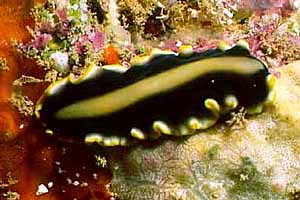
bilateral symmetry |
|
c.
|
a mantle |
|
d.
|
an open circulatory system |
|
|
2. |
Which of the following has a true coelom?
|
a.
|
flatworm |
c.
|
rotifer |
|
b.
|
roundworm |
d.
|
mollusk |
|
|
3. |
The evolution of a coelom was significant because
|
a.
|
more food could be stored within it. |
|
b.
|
more wastes could be stored before excretion. |
|
c.
|
it enabled development of more complex organ systems. |
|
d.
|
it eliminated the need for a circulatory system. |
|
|
4. |
mollusks : a mantle ::
|
a.
|
pseudocoelomate animals : true body cavities |
|
b.
|
roundworms : single-opening digestive tract |
|
c.
|
roundworms : coelom |
|
d.
|
mollusks : a coelom |
|
|
5. |
The cilia of a trochophore
|
a.
|
allow attachment to the ocean bottom. |
|
b.
|
create currents for drawing in food. |
|
c.
|
cover the entire larval body. |
|
d.
|
are necessary for reproduction. |
|
|
6. |
Trochophores
|
a.
|
occur in some mollusks’ life cycles. |
|
b.
|
possess a belt of cilia around their bodies. |
|
c.
|
occur in some annelids’ life cycles. |
|
d.
|
All of the above |
|
|
7. |
A characteristic structure found in many mollusks is the radula, which is involved in
|
a.
|
jet propulsion. |
c.
|
eating. |
|
b.
|
opening and closing of the shell. |
d.
|
reproduction. |
|
|
8. |
Which of the following is a correct pairing?
|
a.
|
phylum Platyhelminthes—hydra |
|
b.
|
phylum Nematoda—planaria |
|
c.
|
phylum Mollusca—octopus |
|
d.
|
phylum Annelida—roundworm |
|
|
9. |
All of the animal phyla that evolved after the mollusks
|
a.
|
are vertebrates. |
c.
|
have a coelom. |
|
b.
|
are prokaryotes. |
d.
|
lack mesoderm. |
|
|
10. |
All of the following are classes of the phylum Mollusca except
|
a.
|
bivalves. |
c.
|
gastropods. |
|
b.
|
cephalopods. |
d.
|
pseudopods. |
|
|
11. |
Which of the following mollusks have a closed circulatory system?
|
a.
|
snails |
c.
|
slugs |
|
b.
|
cephalopods |
d.
|
gastropods |
|
|
12. |

Refer to the illustration above. Which two organisms have mantles?
|
a.
|
1 and 3 |
c.
|
1 and 4 |
|
b.
|
2 and 3 |
d.
|
2 and 4 |
|
|
13. |
Jet propulsion is the usual means of locomotion in water for
|
a.
|
octopuses. |
c.
|
squids. |
|
b.
|
gastropods. |
d.
|
bivalves. |
|
| |
|
|
|
14. |
Refer to the illustration above. This organism is a
|
a.
|
bivalve. |
c.
|
trochophore. |
|
b.
|
cephalopod. |
d.
|
gastropod. |
|
|
15. |
Refer to the illustration above. Movement of this organism is dependent upon structure
|
a.
|
1. |
c.
|
3. |
|
b.
|
2. |
d.
|
None of the above |
|
|
16. |
Shells of mollusks
|
a.
|
may consist of one or more pieces. |
|
b.
|
provide protection. |
|
c.
|
allow for the attachment of muscles. |
|
d.
|
All of the above |
|
|
17. |
Adductor muscles are responsible for
|
a.
|
moving the valves of bivalves. |
|
b.
|
extending the feet of mollusks. |
|
c.
|
pumping the hearts of mollusks. |
|
d.
|
fanning the gills of aquatic mollusks. |
|
|
18. |
In an open circulatory system,
|
a.
|
water is drawn into the mantle cavity to provide oxygen to body tissues. |
|
b.
|
lungs branch into small tubules to provide oxygen to tissues. |
|
c.
|
wastes are eliminated directly to the environment from the tissues. |
|
d.
|
blood is released directly into spaces in the body tissues. |
|
|
19. |
Twisting of the visceral mass of gastropods is called
|
a.
|
extension. |
c.
|
torsion. |
|
b.
|
inversion. |
d.
|
conversion. |
|
|
20. |
Among the various species of gastropods, respiration may take place
|
a.
|
with gills. |
|
b.
|
through the skin. |
|
c.
|
within the mantle cavity. |
|
d.
|
All of the above |
|
|
21. |
All of the cephalopods
|
a.
|
have eight tentacles. |
|
b.
|
are predators. |
|
c.
|
possess protective shells. |
|
d.
|
are filter feeders. |
|
|
22. |
Jet propulsion in a squid is the result of
|
a.
|
rapid closing of the organism’s shell. |
|
b.
|
strong contractions of the tentacles. |
|
c.
|
high-pressure discharge of fluid from the organism’s mouth. |
|
d.
|
the pumping of water through the siphon. |
|
|
23. |
The only cephalopod that has retained its external shell is the
|
a.
|
cuttlefish. |
c.
|
octopus. |
|
b.
|
chambered nautilus. |
d.
|
squid. |
|
|
24. |
Segmented worms are known as
|
a.
|
nematodes. |
c.
|
planarians. |
|
b.
|
annelids. |
d.
|
arthropods. |
|
|
25. |
Each segment of an annelid
|
a.
|
is capable of reproduction. |
|
b.
|
has a well-developed brain that allows the annelid to learn simple tasks. |
|
c.
|
has a pseudocoelom. |
|
d.
|
may contain some organ systems that duplicate systems in other segments. |
|
|
26. |
An example of segmentation in humans is the
|
a.
|
digestive system. |
c.
|
vertebral column. |
|
b.
|
skin. |
d.
|
brain. |
|
|
27. |
The most significant evolutionary advancement of annelids over mollusks is believed to be
|
a.
|
the ability to burrow. |
c.
|
segmentation. |
|
b.
|
the existence of a true coelom. |
d.
|
cephalization. |
|
|
28. |

Refer to the illustration above. Which two organisms have segmented body plans?
|
a.
|
3 and 4 |
c.
|
1 and 4 |
|
b.
|
2 and 4 |
d.
|
2 and 3 |
|
|
29. |
true coelom : mollusks and annelids ::
|
a.
|
tentacle : annelids |
c.
|
valve : annelids |
|
b.
|
siphon : annelids |
d.
|
segmentation : annelids |
|
|
30. |
Coordinated movements of an earthworm’s body segments are possible because of the
|
a.
|
development of an advanced brain. |
|
b.
|
ventral nerve cord and ganglia that carry impulses to the muscles. |
|
c.
|
presence of a true coelom in the earthworm’s body. |
|
d.
|
existence of a complete digestive system. |
|
|
31. |
earthworm movement : circular muscles and setae ::
|
a.
|
earthworm digestion : circular muscles and setae |
|
b.
|
earthworm digestion : seminal receptacles |
|
c.
|
earthworm reproduction : pharynx |
|
d.
|
earthworm respiration : skin |
|
|
32. |
Small tubules that collect wastes from the coelom of annelids and discharge the wastes from the body are called
|
a.
|
nephridia. |
c.
|
bivalves. |
|
b.
|
radulae. |
d.
|
spicules. |
|
|
33. |
The digestive tube of the earthworm is divided into three regions. Which of the following is not among these regions?
|
a.
|
crop |
c.
|
radula |
|
b.
|
intestine |
d.
|
gizzard |
|
|
34. |
Which of the following is (are) not part of an earthworm’s body?
|
a.
|
a heart |
c.
|
nephridia |
|
b.
|
gills |
d.
|
a typhlosole |
|
|
35. |
The clitellum of an earthworm
|
a.
|
contains the heart. |
|
b.
|
is associated with reproduction. |
|
c.
|
acts as a primitive respiratory system. |
|
d.
|
is necessary for movement. |
|
|
36. |
Earthworms are considered to be beneficial to the environment because
|
a.
|
they help release nutrients into the soil. |
|
b.
|
they aerate the soil as they move through it. |
|
c.
|
they break up the soil in which they live. |
|
d.
|
All of the above |
|
|
37. |
squid motion : siphon ::
|
a.
|
annelid motion : siphon |
|
b.
|
annelid breathing : nephridia |
|
c.
|
earthworm circulation : closed circulatory system |
|
d.
|
annelid motion : tentacles |
|
|
38. |
The body of the water leech
|
a.
|
has suckers on the front and back. |
c.
|
is segmented. |
|
b.
|
has no parapodia. |
d.
|
All of the above |
|
|
39. |
Leeches
|
a.
|
use suckers to aid in movement. |
c.
|
are segmented. |
|
b.
|
may be parasitic. |
d.
|
All of the above |
|
|
40. |
leeches : blood ::
|
a.
|
earthworms : small animals |
|
b.
|
earthworms : blood |
|
c.
|
marine polychaetes : small animals |
|
d.
|
marine polychaetes : blood |
|
|
Completion
Complete each statement.
|
| |
41. |
The ____________________ larva is a characteristic of some mollusks and annelids.
|
| |
42. |
Constant beating of ____________________ in the mantle cavity of a clam causes a continuous stream of water to pass over the gills.
|
| |
43. |
A tonguelike scraping organ used by some mollusks in feeding is called the ____________________.
|
| |
44. |
An organ known as the ____________________ is an abrasive, tonguelike structure found in some mollusks.
|
| |
45. |
A snail can pull its head into its mantle cavity because the cavity has moved to the anterior of the animal during a twisting process called ____________________ that occurs during development.
|
| |
46. |
Water is drawn into the body of a clam through tubes called ____________________.
|
| |
47. |
A bivalve’s shells close when the pair of ____________________ contract.
|
| |
48. |
Structures in earthworms that function as simple kidneys are called ____________________.
|
| |
49. |
The only living cephalopod that has retained its external shell is the _________________________.
|
| |
50. |
Snails and slugs belong to the class of mollusks called ____________________.
|
| |
51. |
Earthworms belong to the phylum ____________________.
|
| |
52. |

Refer to the illustration above. Structure X is the ventral ____________________ cord.
|
| |
53. |
In anterior segments of annelids, several ganglia are fused to form the ____________________, which is the brain of these organisms.
|
| |
54. |
An earthworm’s ____________________ produces a tube made of mucus and chitin that contains the eggs and sperm and allows development of an earthworm’s offspring.
|
| |
55. |
Bristles that exist along the sides of an annelid are called ____________________.
|
| |
56. |
Some leeches are ____________________; they feed on the blood of other animals.
|
| |
57. |
The ____________________ are annelids that have many setae and parapodia, generally live in marine environments, and have antennae.
|