Reptiles


Reptiles
by Cheryl Massengale

help
You must have a Java plugin installed and enabled to be able to use this interactive crossword puzzle. If you do have Java installed, it may be disabled, or there could have been a problem downloading the Java applet that this puzzle needs.

Note that Windows XP and Internet Explorer 6 do not come with Java pre-installed. You can get a Java plugin at the official Java website.

Create crosswords for free with EclipseCrossword. Download it today and you can be making your own crossword puzzle in minutes!

Biology Resources

Latin Help Sites

Resource Sites


Biology Text

 Username: leestudent
Password: leecolts1


Modern Biology

Username: sbiology104
Password: p5p8s

Campbell Biology Username: tbillingsley
Password: biology2
 

Holt Biology

Username: bstudent100
Password: x6s6

McDougal Littell
Username: leeacademy
Password: leeacademy
Glencoe Biology
Username: BDOL04
Password: zAfaqase5u
Pearson Biology
Username: mhsbiobennett
Password: biology 
Glencoe 2012!
No Username or Password Needed!

Vertebrate Projects


Vertebrate Project


Choose one of the following activities to turn in at the conclusion of the unit study of vertebrates.

  1. Watch and record a 60 minute program on a vertebrate group. Write a summary of the program, create a worksheet to be answered from the video, and supply a key for the worksheet answers.
  2. Create a portfolio of pictures and descriptions of the most dangerous sharks in the world. Write a report on sharks to include with your portfolio and tell what can be done to avoid shark attack and what should be done if an attack occurs.
  3. Research the migration pattern of one of the following — gray whale, caribou, Arctic wolf, or a species of bats. Include a map of the animal’s migration route, season when the migration occurs, and a description of the animal’s feeding and mating habits.
  4. Construct, on poster board, a phylogenetic tree for a vertebrate group (fish, amphibian, reptile, bird, or mammal). Include pictures of the organisms on your tree and write a short paper describe the evolution of this group.
  5. Construct a scrapbook of 20 pictures of one mammal order. Pictures may not be Xeroxed or computer generated! Include the name and a brief description with each picture.
  6. Make a three-dimensional collage of one group of marine vertebrates. The shape of the collage must illustrate something from the marine environment or a marine organism. Include a brief description of the marine environment and organisms you chose for your collage.
  7. Make a photographic album of pictures of birds. (Pictures will not be returned!) Include the common and scientific name & a brief description of each bird.
  8. Read the book, Silent Spring, by Rachel Carson and write a book report.
  9. Build a model of the digestive tract of  an herbivore such as a cow. Be sure to include the dentition and an explanation of how this animal’s digestive tract is adapted to its diet.
  10. Construct a display of the hearts of these 3 vertebrate groups — fish, amphibian, bird or mammal. Use modeling clay to make cross-sections of the hearts showing chambers and valves. Identify all parts of the hearts on your display.


Virus Model Instructions

Virus Models

Use viral pictures from your textbook or from a website to construct a 3-dimensional model of a virus. Your model must meet the following criteria:

  • Must be 3-dimensional
  • Must show the two main parts of the virus — nucleic acid core & protein coat or capsid
  • Model must have string attached & be ready to hang
  • Must include a label with your the name of the virus, your name, & class period

The following rules for constructing you model must also be followed:

  • Must be light enough & small enough to hang and not “bump” other students heads
  • Must be sturdy (use plenty of glue & securely attach your string)
  • Can’t be made out of food products
  • May not have sharp points (no toothpicks)
  • May not be made of anything flammable (no matches)
  • Should be made of inexpensive materials

Types of viruses that make good models:


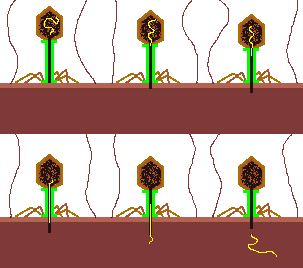
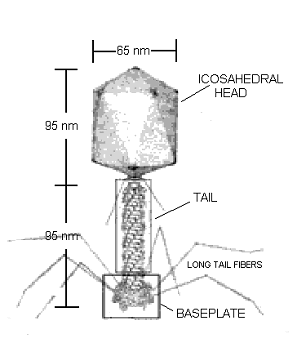
Bacteriophage


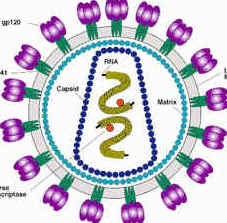
Retrovirus


HIV Organisation of the HIV-1 Virion


Rabies


Tobacco Mosaic Virus


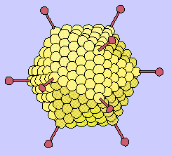
Adenovirus


Models will be graded based on the following:

  • Level of difficulty (will receive the most weight in grading)
  • Accuracy
  • Colorfulness
  • Creativity of building materials
Back