Who Ate the Cheese


Who Ate the Cheese?!
Introduction:

DNA isolation from blood, hair, skin cells, or other genetic evidence left at the scene of a crime can be compared with the DNA of a criminal suspect to determine guilt or innocence. This is due to the fact that every person has a different sequence. Scientists use a small number of sequences of DNA that are known to vary among individuals, and analyze those to get a possibility of a match.  DNA is isolated, cut using restriction enzymes and sorted by size by gel electrophoresis. DNA is placed in a gel and an electrical charge is applied to the gel. The positive charge is at the top and the negative charge is at the bottom. Because DNA has a slightly negative charge, the pieces of DNA will be attracted to the bottom. The smaller pieces move more quickly towards the bottom than the larger pieces. The DNA can then be analyzed.

Objectives:

In this simulation you will examine crime scene evidence to determine who is responsible for eating the Queen’s special imported Lindbergher Cheese (yes, the stinky cheese). You will model the process of electrophoresis and DNA fingerprinting.

ROYAL GUARD INCIDENT REPORT

Incident Data

Incident Type: Theft Complaint Status Pending DNA results
Processed by: Chief Wiggam Other Officers: Officer Li Gase

Property

Property Code: Rare cheese Owner’s Name Queen Elizabeth
Name: Lindbergher Value: $12,000

Burglary Data

Method of Entry: Unknown, no evidence of force on doors or windows.

Narrative: The cheese was allegedly stolen from the Queen’s sitting room the night before the grand ball. The cheese was listed as a gift from the Manchurian diplomat. Officer Li Gase dusted for fingerprints and found none on the table or doors, the maid claimed that they had been wiped clean earlier. The wheel of cheese was on a platform in the sitting room, and half of it had been eaten. We took pictures of the half eaten cheese and sent it to the lab for further tests. Edna N. Zime, the lab technician said that saliva samples could be taken from the teeth imprints of the cheese that was left behind.

Suspect Data

Suspect Number: 1
Name: Princess Dubbah Elix
Description of Suspicion: The princess was seen entering the sitting room earlier in the evening. She is well known for her love of cheese.

Suspect Number 2
Name: Electra Foresis
Description of Suspicion: Electra was recently involved in a relationship with the Manchurian diplomat that sources say ended badly. Her motive may have been to sabotage the diplomat’s gift to the Queen.

Suspect Number 3
Name: Ada Nine
Description of Suspicion: Ada was the maid in charge of cleaning the sitting room. She had access to the cheese.

Suspect Number 4
Name: Gene Tics
Description of Suspicion: Gene is the leader of the local Cheese-Makers Guild, he may not have wished for Queen Elizabeth to have cheese from anywhere but his own guild.

Crime Lab Data

Crime Lab Investigator R. Renee Lab Technician Edna N. Zime
List of Evidence Received Plastic bag with cheese crumbs List of Procedures Used DNA extraction
Polymerase Chain Reaction
DNA restriction Analysis

Narrative: After receiving the package with the plastic bag marked Crime Scene, the DNA was extracted. Because the sample was so mall, the DNA was amplified using the polymerase chain reaction. We isolated the DNA from the four suspects and compared them to the crime scene DNA using DNA restriction analysis.

Results: See attached DNA Results

DNA Evidence Evaluation:

1. Turn your paper strips (DNA sequences) so that the side with the bases is facing you. The restriction enzyme cuts at every point it finds C C G G, always cutting between the C and the G. Label the back of the slips with the suspect number so that you don’t get them confused after cutting. Use scissors to cut the DNA sequence at the C C G G points.

2. Count the number of base pairs (bp) in each piece of DNA that you created. Record the base pair number on the back side of the DNA fragment.

3. Make an enlarged chart like the one shown. Your teacher will give you paper for this. Use a ruler to ensure that the lengths are uniform.

4. Tape your DNA fragments to the chart, using the base pair numbers as a guideline for fragment placement.

5. Compare the crime scene DNA to the suspects and indicate on your chart, which suspect is guilty of eating the cheese.


ANALYSIS:

1. On your chart, label the positive (+) and the negative (-) ends. Circle the suspect’s DNA who matches the DNA at the crime scene and write the name of the suspect.

2. For each of the following tasks performed in the activity, describe what they are actually simulating.

Cutting the DNA into fragments:


Taping the DNA onto the large paper:


3. For each word below, describe how it relates to DNA Fingerprinting:

Polymerase Chain Reaction:


Gel Electrophoresis:


Restriction Enzyme:


BACK

Study of Biology pptQ


Study of Biology
ppt Questions

What is Biology?

1. Define biology.


2. What are organisms?

3. Name 5 groups of organisms.


4. Living things share common _______________.

5. What is the basic unit of life that makes up all organisms?

6. To survive, populations of organisms must be able to _____________ offspring.

7. All organisms have a _________ code carried in  a molecule called _______.

8. Organisms require ____________ such as food and need __________ for their activities.

9. Living things _________ to their environment.

10. Organisms must maintain what type of internal environments ?

11. What does evolve mean?


12. Do groups or individuals evolve?

Characteristics

13. All ____________ are made of cells.

14. Most cells are so __________, they can’t be seen without a microscope.

15. What is cytoplasm?


16. What surrounds all cells?

17. What is the function of the cell membrane?


18. Cells are complex and highly ___________.

19. What are organelles and give an example?


20. The simplest type of cells are known as ______________.

21. Describe prokaryotic cells.


22. Name one of the most common prokaryotes.

23. More complex cells are called ______________.

24. Eukaryotes have a true _________ and _________________ organelles.

25. Name 3 types of eukaryotic cells.

26. Organisms can be grouped by their __________ of cells.

27. Define unicellular organisms.

28. What are multicellular organisms?


Reproduction

29. When organisms reproduce they pass what on to their offspring?

30. Name 2 types of reproduction.

31. What type of reproduction involves 2 parents?

32. A fertilized egg is called a ___________.

33. Are sexually reproduce organisms genetically identical to their parents?

34. asexual reproduction involves a _____________ parent or _________.

35. In asexual reproduction, a single cell __________ to form two new cells.

36. How do asexually reproduced organisms genetically compare  to their parents?

Genetic Code

37. What carries the genetic code for all organisms?

38.DNA stands for ____________________ ___________.

39. Do all organisms have DNA?

40. What does DNA code for in a cell?

41. Why are proteins so important to cells?


Growth and Development 

42. Name the stages of development in the life of a frog.


43. Name two ways that organisms grow.

44. When organisms change into adults they ___________ and may change.

Requiring Food and Energy

45. What organisms can make their own food?

46. What is a photoautotroph and give an example.


47. What food making process is used by photoautotrophs?

48. What do chemoautotrophs use to get energy?

49. ___________ cannot make their own food.

50. How do heterotrophs meet their food requirements?

51. Name 3 groups of heterotrophs.

52. Explain the difference among herbivores, carnivores, and omnivores.


53. Define metabolism.


54. All metabolic processes require ____________.

55. What is the ultimate energy for all life on earth?

56. What metabolic process uses sunlight for energy?

57. Write the balanced overall equation for the photosynthesis process and label the reactants & products.


58. What metabolic process releases the chemical energy stored in food?

59. Write the balanced overall equation for cellular respiration .


60. Name several environmental factors that organisms respond to.


61. Give an example of an organism responding to their environment to promote survival.


62. Define homeostasis.


63. Give 3 examples of internal conditions in which organisms must maintain stability.


64. Why do populations evolve?


65. What record do we have that populations evolve?

Organization Levels

66. Name 3 nonliving levels into which life is organized.

67. At what level of organization does life begin?

68. Cells organize into ____________.

69. What makes up organs?

70. Organs working together become a ____________, and these working together make the entire _____________.

71. From simplest to most complex, list the levels of life above organism.

72. What is the most inclusive level of life?


BACK

Taxonomy PPT Questions

Taxonomy
ppt Questions

Classification

1. How many known species are there?

2. What percent of all organisms that have ever lived is this?

3. Are all organisms on Earth today identified?

4. Define classification.


5. What is another term for classification?

6. What do you call scientists that study classification?

7. Classifying organisms makes naming organisms more _____________ and _____________.

8. Classifying prevents ____________ or inaccurate naming.

9. Give two examples of misnomers and explain why they aren’t correct.


10. What language is used for scientific naming?

11. Sometimes, scientific names may be ___________ instead of Latin.

12. Why don’t scientists around the world just use more simple, common names for organisms?


13.What language is universally used by scientists for naming?

14. Who was the first taxonomist and what two groups did he place organism in?


15. How did Aristotle subdivide his two groups?


16. Who was first to use Latin for scientific naming?

17. What was the problem with Ray’s names?

18. What 18th century taxonomist developed the naming system still used today?

19. How did Linnaeus group his organisms?

20. Who is the “father of taxonomy”?

Binomial Nomenclature

21. What is Linnaeus’s naming system called?

22. Explain binomial nomenclature.


23. Besides Latin, what other language is sometimes used for scientific names?

24. How do scientific names appear in print?

25. What must be done to a scientific name when you are writing it?

26. Give an example of a common and scientific name for an animal.


27. Where can you find the rules for naming organisms?

28. All scientific names must be approved by ________________ ___________ ______________.

29. Why do naming congresses have to approve names?


Taxonomic Groups

30. What is a taxon?


31. What is plural for taxon?

32.There is a ______________ of groups that goes from the broadest grouping to the most _____________ grouping.

33. Name the 8 taxon in order from broadest to most specific.


34. What is the NEWEST and BROADEST taxon?

35. Instead of the taxon phylum, what other taxon is used for plants at this level?

36. What is the most specific taxon?

37. Write the sentence used to help remember the 8 most important taxonomic levels.


38. Complete the following taxonomic table:


Classification for Humans
Taxonomic Level Taxon
Domain
Kingdom
Phylum
Class
Order
Family
Genus
Species


Domains of Organisms

39. How many domains are there?

40. Name the 3 Domains.


41. What are the main characteristics of Archaea and Eubacteria?


42. What are the main characteristics of the Domain Eukarya?


43. What Domain of organisms probably evolved first?

44. Where do Archaea live? Give some examples.


45.Name an Archaean.

46. Where are eubacteria found?


47. Some bacteria cause ______________ but many act as decomposers & are important to the ______________.

48. Some members of eubacteria live in the __________ of animals.

Kingdoms

49. The Domain Eukarya is divided into how many kingdoms?

50. List the 4 kingdoms of Eukarya and tell what organisms are in each group.


51. Which 2 kingdoms contain all multicellular members?

52. List the main characteristics of the Kingdom Protista.


53. Microscopic organisms found in pond water are most likely in the kingdom _______________.

54. All members of the Kingdom Fungi are _____________ except for unicellular ____________.

55. What type of heterotrophic organism are fungi?

56. Explain what it means to be an absorptive heterotrophic.


57. The cell walls of fungi are made of ______________.

58. Members of the kingdom Plantae are all ________________ and _____________.

59. What do plants use as their energy to make food?

60. Name the food making process of plants.

61. Plant cell walls are made of _______________.

62. Members of the Kingdom Animalia contain all of the multicellular _____________ on Earth.

63. Animals are ______________ heterotrophs that feed on __________ or other __________.

64. Define ingestive heterotroph.


65. Complete the following table for characteristics of each kingdom:

Kingdom Organization Type of Nutrition Examples
Protista
Fungi
Plantae
Animalia

66. A Genera may contain a number of different ___________.

67. What Genera is an exception to this?

68. Which Kingdom has the largest number of different kinds of organisms?

69. What two groups are in the plant kingdom?


Basis for Modern Taxonomy

70. List three examples of things used as a basis for modern taxonomy.

     a.

     b.

     c.

71. What are homologous structures?


72. What is an embryo?

73. At the molecular level, similarities in ___________, __________, or the __________ __________ sequence of proteins can be a basis for grouping organisms together.

74. Give an example of homologous structures show similarities among organisms in the same taxon.


75. Name 5 organisms that have similar embryonic development. To what taxon do these organisms belong?


76. What is a cladogram?


77. Using the following cladogram, name the organisms that share 4 of the 5 characteristics.

78. What characteristic(s) do the grouper and lamprey share?


79. What characteristic is found in all the animals EXCEPT the lancelet?

80. What is a dichotomous key?


81. When using a dichotomous key, you should make sure you ___________ both characteristics and either ____________ the organism OR go to ____________ set of characteristics.


82. Use the following dichotomous key to identify the picture of each organism.


1a Tentacles present – Go to 2
1b Tentacles absent – Go to 6
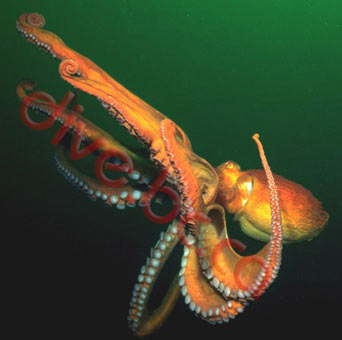
2a Eight Tentacles – Octopus
2b More than 8 tentacles – 3
3a Tentacles hang down – go to 4
3b Tentacles upright–Sea Anemone
4a Balloon-shaped body–Jellyfish
4b Body NOT balloon-shaped – 5


Teddy Graham Natural Selection Lab

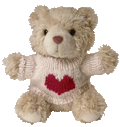
Natural Selection in Teddy Grahams

Introduction

You are a bear-eating monster. There are two kinds of bears that you like to eat: happy bears and sad bears. You can tell the difference between them by the way they hold their hands. Happy bears hold their hands high in the air, and sad bears hold their hands down low. Happy bears taste sweet and are easy to catch. Sad bears taste bitter, are devious and hard to catch. Because of this you only eat happy bears. The happy trait in bears is caused by the expression of a recessive allele. The homozygous recessive condition is being happy. The sad trait is caused by a dominant allele. New bears are born every year (when they are hibernating in their den, the cardboard box), and the birth rate is one new bear for every old bear left from last year.

Materials:

Teddy Bear Grahams, lab worksheet, pencil

Procedure:

1. Obtain a population of 10 bears and record he number of happy and sad bears and the total population number. Using the equation for Hardy-Weinberg equilibrium, calculate the frequencies of both the dominant and recessive alleles and the genotypes that are represented in the population. Example: If 5 of the 10 bears are happy, then 10 out of 20 alleles would be happy alleles. Therefore the q2 number would be 0.5. You must then determine the q number by taking the square of 0.5.

2. Now, go hunting! Eat 3 happy bears. (If you do not have 3 happy bears then eat the difference in sad bears.)

3. Once you have consumed the bears obtain a new generation from your den (the box). You should only remove seven additional bears from the den for a total of 14 bears.

4. Repeat the procedures again. Be sure to record the number of each type of bear and the total population.

Table:


Generations P2 (sad) 2pq (sad) q2 (happy) P q
1. Initial
2.
3.
4.


Questions:

1. Describe what is happening to the genotype and allele frequencies in the population of Teddy Grahams?


2. What would you expect to happen if you continued the selection process for additional generations?


3. How would the frequencies change if you were to now select for the sad bears?


4. Why doesn’t the recessive allele disappear from the population? How is it protected?


TRAINING – HOW TO USE SMART BOAR

TRAINING – HOW TO USE SMART BOARDS
http://www.teacheronlinetraining.com/complimentary/ – Online training(60 minutes)
SMART BOARD FORUMS
Learn and share with other educators.
http://smartboardrevolution.ning.com/ – All SMART Board educators, unite! Let’s share ideas, tips, and lesson files and collaborate to maximize our students’ learning.
http://projects.minot.k12.nd.us/groups/smarttechnologies/ – SMART board Technology site: area to share and learn.
LESSONS AND TEMPLATES
http://www1.center.k12.mo.us/edtech/SB/templates.htm – Templates available for K-12 classes. http://eduscapes.com/sessions/smartboard/ – all grades
http://www1.center.k12.mo.us/edtech/resources/SBsites.htm – Interactive sites to use with your SMART board.
GAMES AND QUIZZES
Class Tools – Use this site to create your own interactive games using your curriculum.
http://tinyurl.com/27sbntd – Classroom games and quizzes, and other teacher resources
http://www.jigsawdoku.com/ – Jig Saw Doku http://tinyurl.com/25km2uo – SMART Boards and the Fifty Nifty States and Capitals
SCIENCE
http://www.getbodysmart.com/index.htm – AN ONLINE TEXTBOOK ABOUT HUMAN ANATOMY AND PHYSIOLOGY
SOCIAL STUDIES
http://tinyurl.com/25km2uo – SMART Boards and the Fifty Nifty States and Capitals