Lab 11a Behavior Ap


Lab 11   Animal Behavior
Introduction:


Ethology is the study of animal behavior. An animal’s behavior is its response to sensory input. There are three types of behaviors: orientation, agonistic, and mating.

Orientation behaviors take the animal to its most favorable environment. Taxis is when an animal moves toward or away from a stimulus. Taxis is often characterized by light, heat, moisture, sound, or chemicals. Kinesis is another type of movement that involves orientation. Kinesis is a movement that is random and doesn’t involve a stimulus. So an animal would respond to light by moving everywhere in random directions.

Agonistic behavior is when animals respond to each other in aggressive or submissive movements. Like the hair on dogs backs when they get ready to fight. Another excellent example is the Betta fish, which is sometimes studied in labs.

Mating behaviors are activities that involve finding, courting, and mating with a member of the same species. An example would be a peacock fluffing up its feathers to attract females.


Hypothesis:


Pill bugs will prefer the wet side to the dry side of the petri dishes because they are used to living in dark moist conditions, such as under rocks or in rotting trees.


Materials:


Materials used in this experiment involved: a double petri dish combination, 10 pillbugs, bedding material, scissors, pencils, 2 pieces of filter paper, a piece of black construction paper, and a watch.


Methods:

Place 10 pillbugs in the petri dishes along with a little bedding material in each container. Observe them for about 10 minutes noting any observations that are characteristic to the bugs. Once that is done, take a piece of filter paper and soak it in water, then put the wet piece in the bottom of one of the containers. Put the other dry paper in the bottom of the other container. Put 5 pillbugs on each side and count how many bugs there are on each side every 30 seconds for 10 minutes.

Our designed experiment involved the same methods except substituting filter paper with a piece of black construction paper. Cut out the circular paper from a sheet of black paper and put it in one of the containers along with some bedding material. Place 5 pillbugs on each side and count how many there are on each side every 30 seconds for 10 minutes.


Results:

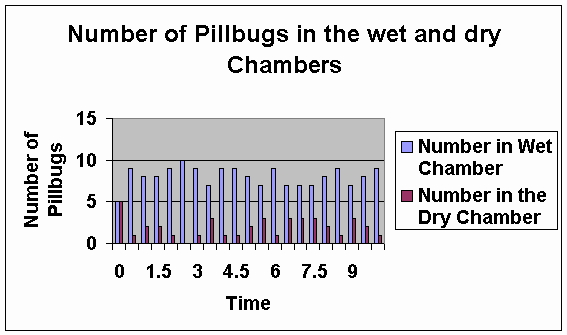
Table 11.1


Time (mins)


Number in wet Chamber


Number in dry Chamber

0 5 5
.5 9 1
1.0 8 2
1.5 8 2
2.0 9 1
2.5 10 0
3.0 9 1
3.5 7 3
4.0 9 1
4.5 9 1
5.0 8 2
5.5 7 3
6.0 9 1
6.5 7 3
7.0 7 3
7.5 7 3
8.0 8 2
8.5 9 1
9.0 7 3
9.5 8 2
10.0 9 1


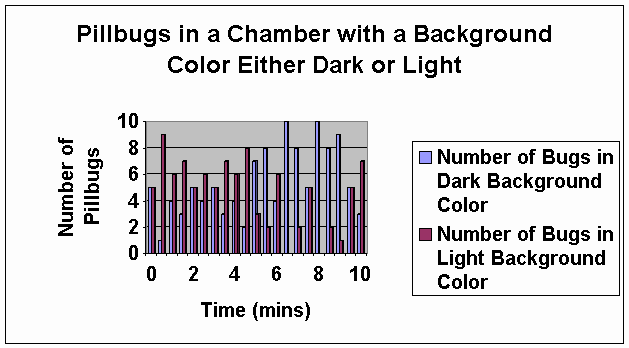
Table 11.2


Time (Mins) Number in wet Chamber Number in dry Chamber
0 5 5
.5 9 1
1.0 6 4
1.5 7 3
2.0 5 5
2.5 6 4
3.0 5 5
3.5 7 3
4.0 6 4
4.5 8 2
5.0 3 7
5.5 2 8
6.0 6 4
6.5 0 10
7.0 2 8
7.5 5 5
8.0 0 10
8.5 2 8
9.0 1 9
9.5 5 5
10.0 7 3


1. What conclusion do you draw from your data? Explain physiological reasons for the behavior observed in this activity.

– The bugs preferred it in the wet conditions. They probably like it there because they live in place like that, under rocks or in trees or just in the soil. That is probably the only way they can keep cool and obtain moisture.


2. Obtain results from all lab groups in your class. With respect to humidity, light temperature, and other environmental conditions, which types of environment do isopods prefer? How do the data support these conclusions? Give specific examples.

– Our class didn’t exchange data with each other.


3. How do isopods locate appropriate environments?

– They use their antennae for a lot of their locating. One thing that I observed was they did use their antennae when they were walking around. They probably don’t have very good eyesight.


4. If you suddenly turned a rock over and found isopods under it, what would you expect them to be doing? If you watched the isopods for a few minutes, how would you expect to see their behavior change?

– I would expect them to scurry around, probably find and tunnel and go down it to keep out of the sunlight. If you found one that wasn’t already underground, I would probably see it walking out in the grass, looking for another object to go under.


5. Is the isopod’s response to moisture best classified as kinesis, or taxis? Explain your response.

– I think it’s best classified as kinesis because they moved around in random directions. Some of them just sat there while the others were moving around.


1. Select one of the variable factors above, and develop a hypothesis concerning the pillbug’s response to the factor.

– Background Color- I hypothesize that the pillbugs will prefer the dark background color over the light background color because they are used to living in dark places for most of their lives.


2. Use the material available in your classroom to design an experiment. Remember that heat is generated by lamps.

A) State the objective of your experiment.

– To see if background color has anything to do with behavioral responses in pillbugs to their environment.


B) List the materials you will use.

– Scissors, black construction paper, pillbugs, petri dish containers, and bedding material, as well as a watch.


C) Outline your procedure in detail.

– Our designed experiment involved the same methods as the real experiment except substituting filter paper with a piece of black construction paper. Cut out the circular paper from a sheet of black paper and put it in one of the containers along with some bedding material. Place 5 pillbugs on each side and count how many there are on each side every 30 seconds for 10 minutes.


Error Analysis:


Not many things could have drastically changed our results. All we had to do was to watch them and watch the time. If the bugs were forced into one of the chambers then that could have changed our results. Also if we hadn’t had kept a good time method then we could have been lost.


Conclusions:


The bugs like it in the wet environment because that is what it’s used to. It’s an easy way to get water and stay cool in their environment. They also liked the dark background because, again, that is what they are used to in their environment, under rocks or other things.


Lab 3 Sample Ap Mitosis & Meiosis


Mitosis and Meiosis


Introduction
There are two types of nuclear division, mitosis and meiosis. Mitosis is usually used for the growth and replacement of somatic cells, while meiosis produces the gametes or spores used in an organism’s reproduction.

Mitosis is the first of these studied in this lab. It is easily observed in cells that are growing at a rapid pace such as whitefish blastula or onion root tips, which are used in this lab. The root tips contain an area called the apical meristem that has the highest percentage of cells undergoing mitosis. The whitefish blastula is formed directly after the egg is fertilized. This is a period of rapid growth and numerous cellular divisions where mitosis can be observed.

Just before mitosis the cell is in interphase. In this part of the cell cycle the cell will have a distinct nucleus and nucleoli where the thin threads of chromatin are duplicated. After duplication the cell is ready to begin mitosis and its starts with a step called prophase. In prophase, the chromatin thicken into distinct chromosomes and the nuclear envelope breaks open releasing them into the cytoplasm. The first signs of the spindle begin to appear. Next the cell begins metaphase, where the spindle attaches to the centromere of each chromosome and moves them to the same level in the middle of the cell. This level position is called the metaphase plate. Anaphase begins when the chromatids are separated and pulled to opposite poles. Then, the final stage is telophase. The nuclear envelope is reformed and the chromosomes gradually uncoil. Cytokinesis may occur, in which case, a cleavage furrow will form and the two daughter cells will separate.

Meiosis is more complex and involves two nuclear divisions. The two divisions are called Meiosis I and Meiosis II and they result in the production of four haploid gametes. This process allows increased genetic variation due to crossing over where genes can be exchanged. The process, like mitosis, depends on interphase to replicate the DNA. Meiosis begins with Prophase I. In this stage, homologous chromosomes move together to form a tetrad and synapsis begins. This is where crossing over occurs resulting in the recombination of genes. Metaphase I moves the tetrads to the metaphase plate in the middle of the cell, and Anaphase I reduces the tetrads to their original two stranded form and moves them to opposite poles. Telophase I then prepares the cell for its second division. Meiosis II generally resembles mitosis except that the daughter cells are haploid instead of diploid. DNA replication does not occur in Interphase II, and prophase, metaphase, anaphase, and telophase occur as usual. The only change is the number of chromosomes.

The process of crossing over can be easily studied in Sordaria fimicola, an ascomycete fungus. Sordaria form a set of eight ascospores called an ascus. They are contained in a perithecium until they are mature and ready for release. Crossing over can be observed in the arrangement and color of these asci. If an ascus has four tan ascospores in a row and four black ascospores in a row (4:4 arrangement), then no crossing over had taken place. However, if the asci has black and tan ascospores in sets of two (2:2:2:2 arrangement) or two pairs of black ascospores and four tan ascospores in the middle (2:4:2 arrangement), then crossing over had taken place.


Hypothesis
Mitosis occurs in whitefish blastula and onion root tip, and it is easily observable. Meiosis and crossing over occurs in the production of gametes and spores.

Materials
This lab requires prepared slides of whitefish blastula, onion root tips, and Sordaria, pencil, paper, a light microscope, and a chromosome simulation kit.


Methods
Exercise 3A.1: Observing Mitosis

Prepared slides of whitefish blastula and onion root tips were observed under the 10X and 40X objectives. A cell in each stage of mitosis were identified, and then sketched.

Exercise 3A.2: Time for Cell Replication

Using a high power objective, every cell in a field of view was observed. Each cell was counted as being in one of the stages of mitosis and recorded. At least 200 cells and 3 fields of vision were counted and recorded. Next, the percentage of cells in each stage was recorded and the amount of time spent in each phase was calculated.

Exercise 3B.1: Simulation of Meiosis

In this part of the lab, a chromosome simulation kit was used to demonstrate meiosis. Two strands of the same color were connected to simulate DNA replication in both of the homologous pairs. Next, the chromosomes were entwined to represent synapsis. Sections of beads were switched between the pairs as in crossing over and were aligned at the equator. Next, anaphase was simulated as the homologous pairs were separated and then telophase was simulated by pushing the chromosomes into two separate cells (circles).

Meiosis II was simulated as well. The DNA is not replicated in Interphase II. The chromosomes again move to the equator and in Anaphase II the two chromatids were separated and moved to opposite poles. Telophase II separates them into four different cells.

Exercise 3B.2: Crossing Over during Meiosis in Sordaria

Prepared slides of Sordaria fimicola were observed under a light microscope. Over 100 asci were identified as either 4:4 or asci showing crossover and recorded. The percentage of each and the map units were calculated.

Results

Whitefish Blastula

Onion Root Tip

Table 3.1: Time for Cell Replication


Number of Cells

Field 1 Field 2 Field 3 Total
 

Interphase

42 36 47 125 61.27% 14 hours 42 minutes
 

Prophase

10 13 18 41 20.10% 4 hours 49 minutes
 

Metaphase

6 5 4 15 7.35% 1 hour 46 minutes
 

Anaphase

2 3 2 7 3.43% 49 minutes
 

Telophase

7 5 4 16 7.84% 1 hour 59 minutes

204


Table 3.2: Compare Mitosis and Meiosis


Mitosis


Meiosis


Chromosome number of parent cells

Diploid (2n) Diploid (2n)
 

Number of DNA replications

Once Once
 

Number of divisions

One Two
 

Number of daughter cells produced

Two Four
 

Chromosome number of daughter cells

Diploid (2n) Haploid (n)
 

Purpose

Growth and repair Production of gametes or spores


Simulation of the Meiosis I

Table 3.3: Sordaria


Number of 4:4


Number of Asci Showing Crossover


Total Asci


% Asci Showing Crossover Divided by 2


Gene to Centromere Distance (Map Units)

53 64 117 27.35% 27.35


Meiosis with Crossing Over – 2:4:2 Arrangement

Questions:

Why is it more accurate to call mitosis “nuclear replication” rather than “cellular division”?

It is more accurate to say “nuclear replication” to describe mitosis because the actual cell splitting occurs in cytokinesis. The whole process of mitosis is a series of steps that split the nucleus into two separate nuclei at opposite poles.

Explain why the whitefish blastula and onion root tips are selected for a study of mitosis.

The blastula is a hollow ball of cells that forms from the fertilization of an egg. Rapid growth occurs and numerous cellular divisions making mitosis in various stages easy to observe. Onion root tips are also a region of high percentage of cells going through mitosis because this is where most of the root growth takes place.

If your observations had not been restricted to the area of the root tip that is actively dividing, how would your results differ?

There would be virtually no cells undergoing division, so many more of the cells observed would have been in interphase where they elongate an differentiate.

Based on the data in Table 3.1, what can you infer about the relative length of time an onion root-tip cell spends in each stage of cell division?

Prophase is the longest stage of mitosis and then going in sequential order each decreases in the length of time it takes to complete.

List three major differences between the events of mitosis and meiosis.

In mitosis, the nucleus is only divided once, while in meiosis the nucleus is divided twice. Another difference is that mitosis produces two identical daughter cells, but meiosis produces up to four different daughter cells. Also, synapsis and crossing over do not take place in mitosis, but do take place in meiosis.

How are Meiosis I and Meiosis II different?

Meiosis I begins with a tetrad and separates the homologous pairs. Meiosis II separates the two sister chromatids.

How do oogenesis and spermatogenesis differ?

Oogenesis produces an egg cell, while spermatogenesis produces sperm cells.

Why is meiosis important for sexual reproduction?

In meiosis the chromosome number is reduced to n so that it can be fertilized. Also, meiosis allows for crossing over, which results in variations in organisms.

Error Analysis
There was little chance for error in this lab. It was mostly observation and sketching. However in Exercise 3A.2, the numbers for telophase were off. The calculations obtained for its time were too high; it should have been the shortest stage of meiosis. This may be caused by misidentifying the stages or counting the daughter cells as two different cells. Misidentification could have caused errors in the other parts of this lab as well.


Discussion and Conclusion
Mitosis was observed and timed in Lab 3A. The stages of mitosis are prophase, metaphase, anaphase, and telophase, prophase being the longest and telophase the shortest. Meiosis was simulated in Lab 3B and then crossing over was observed in Sordaria and the map units were determined. The gene to centromere distance in the Sordaria was 27.35 map units.

BACK


Lab & AP Sample 2


Plant Pigments and Photosynthesis

Introduction:
Photosynthesis has two main parts, which are the light dependent and the light –independent. In the light-dependent reactions pigments trap energy from light, and this energy is used to split water molecules (photolysis). The light-independent reactions or dark phase of photosynthesis involve the fixing of carbon dioxide. It makes glucose and fructose chains and also releases oxygen , which passes through the stomata of the plant.

Organisms that carry out photosynthesis making their own organic molecules are called autotrophic. Some autotrophic organisms include plants, algae, and blue-green bacteria. Plants have many varieties of pigments, all of which absorb different colors of light. Chlorophyll a is the primary plant pigment and makes up about three-fourths of all the plant pigments. It absorbs red and blue light and is not found in photosynthetic bacteria.

Chlorophyll b is another plant pigment. It absorbs blue-green and orange-red light. Carotenoids are a type of accessory pigment that absorb blue and blue-green light. These pigments are fat soluble and usually masked by chlorophyll a. Anthocyanin is another accessory pigment that absorbs bright red colors. There is also chlorophyll c and d that sometimes take the place of chlorophyll b.

Chromatography is a process used to separate mixtures that can separate plant pigments. This lab uses paper chromatography where a piece of paper is used to wick solvent up to the pigments and separate them according to solubilities. The rate of migration on a chromatogram is the Rf value.


Hypothesis


Plants contain several different pigments, and the rate of photosynthesis in plant cells is directly related to light and temperature.


Materials


Exercise 4A: Plant Pigment Chromatography

This exercise required 1 50-mL graduated cylinder, a small amount of a solvent, a stopper, filter paper, scissors, a pencil, spinach leaves, and a quarter.

Exercise 4B: Photosynthesis/The Light Reaction

The materials needed for this part of the lab were a spectrophotometer, a light, a water flask, a test tube rack, ice, 5 labeled cuvettes, lens tissue, foil, and parafilm. The substances put in the cuvettes were 5 mL of phosphate buffer, approximately 16 mL of distilled water, 9 drops of unboiled chloroplasts, and 3 drops of boiled chloroplasts.


Methods


Exercise 4A: Plant Pigment Chromatography

A 50-mL graduated cylinder was filled with about 1 cm of solvent and then tightly stoppered. The filter paper was then cut to a point on one end, and a line was drawn 1.5 cm above the point. Using the ribbed edge of a quarter, spinach cells were extracted onto the pencil line. This procedure was repeated 8-10 times using a new portion of the leaf each time. The filter paper was then placed in the cylinder with the tip barely touching the solvent and none of the edges touching the sides. When the solvent reached 1 cm below the top of the paper, it was removed from the cylinder. The solvent location was immediately marked, and then the bottom of each pigment band was also marked.

Exercise 4B: Photosynthesis/The Light Reaction

The spectrophotometer was set to 605 nm and allowed to warm up. The chloroplast suspensions were prepared the previous day, part of which were boiled, and stored on ice until they were ready for use. An incubation area was prepared with a flood light, water flask, and test tube rack, by using the flask as a heat sink between the light and the rack. Five cuvettes were numbered respectively and then wiped with lens tissue. The walls and bottom of cuvette 2 were covered with foil and a foil cap was made for the top.

To each cuvette 1 mL of phosphate buffer was added. Then, to cuvette 1 4 mL of distilled water was added, but to cuvettes 2, 3, and 4 3 mL of distilled water was added. Next, 1 mL of DPIP was added to cuvettes 2, 3,and 4. To cuvette 5, 3 mL plus 3 drops of distilled water were added and 1 mL of DPIP. To cuvette 1, 3 drops of unboiled chloroplasts were added.

The spectrophotometer was brought back to zero and the contents of cuvette 1 were mixed by inverting and placed in the sample holder. Cuvette 1 was used periodically through this experiment to recalibrate the spectrophotometer. Three drops of unboiled chloroplasts were added to cuvette 2. After removing the foil sleeve, it was placed in the sample holder and the transmittance was recorded. Additional readings were also taken at 5, 10, and 15 minutes. Next, three drops of unboiled chloroplasts were transferred to cuvette 3. The percent transmittance was recorded at 0, 5, 10, and 15 minutes. Three drops of boiled chloroplasts were added to cuvette 4, and the transmittances were recorded at the same times. Finally, cuvette 5 was mixed and placed in the sample holder. The transmittance readings were recorded.


Results

Table 4.1 Distance Moved by Pigment Band


Band Number


Distance (mm)


Band Color

1. 0 mm Yellow-brown
2. 5 mm Light green
3. 30 mm Green
4. 48 mm Yellow


Distance Solvent Front Moved 60 mm.

Table 4.2 Rf Values


0.8 = Rf for xanthophyll (yellow)

0.5 = Rf for chlorophyll a (bright green to blue green)

0 = Rf for chlorophyll b (yellow green to olive green)


Table 4.4 Transmittance (%)


Cuvette


0


5


10


15


2 Unboiled/Dark

41% 43% 44% 43%
 

3 Unboiled/Light

35% 38% 39% 37%
 

4 Boiled/Light

51% 52% 53% 54%
 

5 No Chloroplasts

57% 57% 56% 55%


Lab 4B Color Chart


Cuvette


Initial Color


Final Color


1

Clear Clear
 

2

Light clear blue Blue/green
 

3

Light clear blue Dark clear blue
 

4

Light clear blue Light clear blue
 

5

Light clear blue Dark clear blue


Questions:
Exercise 4A: Plant Pigment Chromatography


What factors are involved in the separation of the pigments?


The solubility, size of particles, and their attractiveness to the paper are all involved in the separation.


Would you expect the Rf value of the pigment to be the same if a different solvent were used? Explain.


No, the different solubilities of the pigments would change the Rf values. For example chlorophyll b is only soluble to fat solutions.


What type of chlorophyll does the reaction center contain? What are the roles of the other pigments?


The reaction center contains chlorophyll a. The other pigments collect different light waves and transfer the energy to chlorophyll a.


Exercise 4B: Photosynthesis/The Light Reaction


What is the purpose of DPIP in this experiment?


DPIP is the electron acceptor in this experiment.


What molecule found in chloroplasts does DPIP “replace” in this experiment?


DPIP substitutes for the NADP molecules.


What is the source of the electrons that will reduce DPIP?


The electrons come from the photolysis of water.


What was measured with the spectrophotometer in this experiment?


The spectrophotometer measures the percentage of light transmittance through the cuvette due to DPIP reduction.


What is the effect of darkness on the reduction of DPIP? Explain.


The effect of darkness is that no reaction will occur.


What is the effect of boiling the chloroplasts on the subsequent reduction of DPIP? Explain.


Boiling denatures the protein molecules and stops the reduction.


What reasons can you give for the difference in the percent transmittance between the live chloroplasts that were incubated in the light and those that were kept in the dark?


In the dark cuvette, there was no light energy available, so there was no flow of electrons and no photolysis of water, while in the lighted cuvette these processes were allowed to continue.


Error Analysis
In Lab 4A, several mistakes could have been made with the chromatography paper. Too much handling, bending, or allowing the paper to touch the sides of the cylinder could all have affected the outcome of this experiment. The different pigment bands were also difficult to distinguish.

In Lab 4B, the procedure was very complicated and required a lot of pre-lab planning and reading. Incorrect usage of the spectrophotometer or neglecting to recalibrate often enough could have caused errors in this portion of the lab.


Discussion and Conclusion

Lab 4A demonstrated the different plant pigments by chromatography and showed how to calculate Rf values and explained their importance. There are 4-5 main pigments present in plants ranging from green to yellow in color. Lab 4B proves that light and chloroplasts are required for the light reactions of photosynthesis to occur. It showed the effects of boiling, denaturing, which did not allow photosynthesis to occur.

BACK

Lab 5 Ap Sample 4


Cellular Respiration
AP Biology Lab 5


Introduction:
Cellular respiration is the release of energy from organic compounds by metabolic chemical oxidation in the mitochondria within a cell. There are a number of physical laws that relate to gases and are important in the understanding of how the equipment in this lab works. These are summarized as general gas laws that state: PV=nRT where: P stands for pressure of the gas, V stands for the volume of the gas, n stands for the number of molecules of gas there are, R stands for the gas constant, and T stands for the temperature of the gas. A respirometer is the system used to measure cellular respiration. Pressure changes in the respirometer are directly relative to a change in the amount of gas there is in the respirometer as long as the volume and the temperature of the respirometer do not change. To judge the consumption of oxygen in two different respirometers you must reach equilibrium in both respirometers.

Cellular respiration is the procedure of changing the chemical energy of organic molecules into a type that can be used by organisms. Glucose may be oxidized completely if an adequate amount of oxygen is present. The equation for cellular respiration is C6H12O6 + 6O2 à 6CO2 + 6H2O + energy. Carbon dioxide is formed as oxygen is used. The pressure due to CO2 might cancel out any changes due to the consumption of oxygen. To get rid of this problem, a chemical will be added that will selectively take out the carbon dioxide put off. Potassium hydroxide will chemically react with the carbon dioxide by this equation: CO2 + K2CO3 + H2O.


Hypothesis:
The rate of cellular respiration will be higher in germinating peas in cold and room temperature water baths than in that of the beads or non-germinating peas. The cooler temperature in the cold water baths should slow the process of cellular respiration in the peas.


Materials:
The materials used in this lab were the following: a water bath, a graduated cylinder, a thermometer, tape, metal washers, beads, germinating peas, non-germinating peas, beads, beakers, another graduated cylinder, ice, paper, and a pencil are needed for this lab.


Methods:
Obtain a room temperature water bath and a 10-degree Celsius water bath. Add ice to room temperature water and watch the thermometer until the temperature has reached 10-degrees Celsius. For respirometer one, obtain a graduated cylinder and fill it with 50mL of water. Drop in 25 germinating peas and determine the water displacement. Record the volume, remove the peas and place them on a paper towel. For respirometer two, obtain the same graduated cylinder, filled again with 50mL of water. Drop twenty-five of the non-germinating peas in the water and continue adding beads to the water until the same water displacement for the non-germinating peas equals the first result. Remove the contents, and drain the water leaving the peas and beads to dry on a paper towel. For respirometer three, fill the 100mL graduated cylinder with 50mL of water and obtain the first water displacement value by adding just beads to the water in the cylinder. Take out the beads, allow the water to drain, and repeat this same procedure for respirometers 4, 5, and 6, which will be placed in the cooler water. For assembly of the respirometers, obtain 6 vials, each with a stopper and a pipette. Place a small wad of absorbent cotton in the bottom of each vial and using a dropper, saturate the cotton with 15% KOH solution. Make sure the vials are dry on the inside. Do not get KOH on the sides of the respirometer. Place a small wad of non-absorbent cotton on top of the KOH saturated cotton, making sure the same amount is used for each respirometer. Place the first set of peas in their respective vials. Do the same for the second set of peas. Insert the stopper with the calibrated pipette. Place a weighted collar on the end of each vial. Make a sling of masking tape attached to each side of the water baths to hold the pipettes out of the water during the equilibration period of seven minutes. Vials 1, 2, and 3, should rest in the room temperature water while 4, 5, and 6, should rest in the 10-degree Celsius water bath. After seven minutes of equilibration, immerse all 6 respirometers entirely in their designated water baths. Water enters the pipette for a short distance and stops. If the water continues to move into a pipette, check for leaks. Working quickly, arrange the pipettes so the can be read through the water at the beginning of the experiment. These should not be shifted during the experiment. Keep hands out of the water bath after the experiment has started. Make sure a constant temperature is maintained. Allow respirometers to equilibrate three more minutes, record the initial position of the water in each pipette to the nearest .01mL. Check the temperature in both water baths and record in table 5.1. Check and record every five minutes for twenty minutes by repeating the procedure for that task.

Data:


Table 5.1

Beads Alone Germinating Peas Dry peas and Beads
Read-ing @ time X Diff. Reading @ time X Diff. Corrected Diff. Reading @ time X Diff. Corrected Diff.
Initial-0 14.0 ——- 13.5 ——- —– 14.1 —- —-
0-5 14.1 -0.1 13.4 0.1 0.2 14.4 -.3 -.2
5-10 14.0 0 13.2 0.3 0.3 14.5 -.4 -.4
10-15 14.1 -0.1 12.8 0.7 0.8 14.6 -.5 -.4
15-20 14.4 -0.4 12.2 1.3 1.7 14.9 -.8 -.4
Initial-0 14.8 ——- 14.0 ——- —– 15 —- —-
0-5 14.8 0 13.0 1.0 1.0 14.8 .2 .2
5-10 14.7 0.1 12.2 1.8 1.7 14.6 .4 .3
10-15 14.4 0.4 10.3 3.7 3.3 14.4 .6 .2
15-20 14.3 0.5 9.8 4.2 3.7 14.3 .7 .2

Graph 5.1

Table 5.2


Condition Show Calculations Here Rate in mL water/minutes
Germinating peas/ 10degrees Celsius Sloped downward steadily, bigger drop off at the end Rise=1.3

Rate=0.052

Germinating peas/ room temperature Steady drop downward. Rise=4.2

Rate=0.168

Non-germinating peas/ 10degrees Celsius Steadily gained height. Fall=1.5

Rate=0.06

Non-germinating peas/ room temperature Steady fall in rate. Fall=0.7

Rate=0.028


Graph 5.2

Questions:
In this activity, you are investigating both the effects of germination versus non-germination and warm temperature versus cold temperature on respiration rate. Identify the hypothesis being tested on this activity.
The hypothesis of this experiment was: The rate of cellular respiration will be higher in germinating peas in cold and room temperature water baths than in that of the beads or non-germinating peas. The cooler temperature in the cold water baths should slow the process of cellular respiration in the peas.


This activity uses a number of controls. Identify at least three of the controls, and describe the purpose of each. First of all, the water baths held a constant temperature. Secondly, the volume of KOH was constant from vial to vial. Lastly, the equilibration period was identical for all the respirometers.


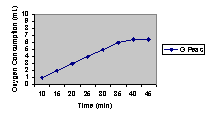
Describe and explain the relationship between the amount of oxygen consumed and time. The amount of oxygen that was consumed was the greatest in the warmer water. The oxygen consumption increased over time in the germinating peas.


Why is it necessary to correct the readings from the peas with the readings from the beads? This is necessary to show the actual rate at which cellular respiration occurs in peas. The beads served as a control variable.


Explain the effects of germination versus non-germination on peas seed respiration. The germinating seeds are alive and growing, therefore respirate to grow.


Explain the results shown in the sample graph in your lab manual. As the temperature increased, the enzymes denatured so germination was inhibited.


What is the purpose of KOH in this experiment? The KOH drops absorbed the carbon dioxide so that it would not cause the put off of that gas to make the readings equilibrate.


Why did the vial have to be completely sealed under the stopper? The stopper at the top of the vial had to be completely sealed so that no gas could leak out of the vial and no water would be allowed into the vial.


If you used the same experimental design to compare the rates of respiration of a 35g mammal at 100 degrees Celsius, what results would you expect? Explain your reasoning. Respiration would be higher in the mammal since they are warm-blooded.


If respiration in a small mammal were studied at both room temperature, 21-degrees Celsius and 10-degrees Celsius, what results would you predict? Explain your reasoning. Respiration would be higher at 21 degrees because the animal would have to keep its body temperature up. The results would multiply at 10-degrees because the mammal would have to keep its body that much warmer in comparison to the room temperature.


Explain why water moved into the respirometer pipettes. While the peas underwent cellular respiration, they consumed oxygen and released carbon dioxide which reacted with the KOH in the vial, resulting in a decrease of gas in the pipette. The water moved into the pipette because the vial and pipette were completely submerged into the bath.


Design an experiment to examine the rates of cellular respiration in peas that have been germinating for 0, 24, 48, and 72, hours. What results would you expect? Why? A person could set up four respirometers which have one of the following: Seeds that have not begun to germinate, seeds germinating for one day, seeds germinating for two days and seeds germinating for three days. The results would probably be that there would be no oxygen used by the seeds that have not germinated yet. The seeds that have been germinating for three days will have the greatest amount of oxygen consumption.

Error Analysis:
Error in this lab could have occurred if the seals on the vials weren’t tight and there was a leak of water into the vials. Another source of error could have been if the KOH had touched the sides of the vial. Also, the absorbent cotton balls that were used for the KOH could have been too saturated. Another source of error could be at the temperature of the water baths. If a close eye wasn’t kept on the temperature, the ten degree Celsius would have fallen in degrees.

Conclusion:
Oxygen consumption in respirometers with germinating peas is greater than in the respirometers with non-germinating peas. Respiration was affected by the temperature of the water bath as well. Respiration occurs faster in the warmer water baths.

BACK


Lab 5 Ap Sample 2 Cell Resp


AP Lab 5  Cell Respiration


Introduction:
Cellular respiration is the release of energy from organic compounds by metabolic chemical oxidation in the mitochondria in each cell. Cellular respiration involves a number of enzyme mediated reactions. The equation for the oxidation glucose is C6H12O6 + O2 à CO2 + H2O + 686 kilocalories per mole of glucose oxidized. There are three ways cellular respiration could be measured. The consumption of O2 (how many moles of O2 are consumed in cellular respiration). Production of CO2 (how many moles of CO2 are produced in cellular respiration?) and the release of energy during cellular respiration. In this lab, the volume of O2 consumed by germinating and non-germinating peas at two different temperatures will be measured.

PV=nRT is the inert gas law. P is the pressure of the gas. V is the volume of the gas. n is the number of molecules of gas. R is the gas constant. T is the temperature of the gas in degrees K. This law tells us several important things about gases. If temperature and pressure are kept constant then the volume of the gas is directly proportional to the number of molecules of the gas. If the temperature and volume remain constant, then the pressure of the gas changes in direct proportion to the number of molecules of gas. If the number of gas molecules and the temperature remain constant, then the pressure is inversely proportional to the volume. IF the temperature changes and the number of gas molecules is kept constant, then either pressure or volume or both will change in direct proportion to the temperature.

In this lab, CO2 , made during cellular respiration will be removed by potassium hydroxide (KOH) and will make potassium carbonate (K2CO3). Carbon dioxide is removed so the change in the volume of gas in the respirometer will be directly proportional to the amount of oxygen that is consumed. In the experiment water will move toward the region of lower pressure. During respiration, oxygen will be consumed and its volume will be reduced to a solid. The result is a decrease in gas volume within the tube, and a related decrease in pressure in the tube. The respirometer with just the glass beads will allow changes in volume due to changes in atmospheric pressure or temperature changes.

Hypothesis:
The respirometer with only germinating peas will have a larger consumption of oxygen and will have a larger amount of CO2 that is converted into K2CO3 than the respirometer with beads and dry peas and the respirometer with beads alone.

Materials:
The materials used in the lab are as follows: a thermometer, 2 water baths, tap water, masking tape, germinating peas, non-germinating (dry) peas, 100 mL graduated n cylinder, 6 vials, 6 rubber stoppers, absorbent and non absorbent cotton, KOH, 5 mL syringe, 6 pipettes, ice, and 6 washers.

Methods:
First, set up both a room temperature 25oC and a 10oC water bath. Make sure you allow time to adjust the temperature in each bath. To obtain a temperature of 10oC add ice to of the baths until the temperature in the bath is 10oC. Next, obtain a 100 mL graduated cylinder and fill it with 50 mL of water. Drop in 25 germinating peas and determine the amount of water that is displaced. Record the volume of the 25 germinating peas. Then remove these peas and place them on a paper towel. They will be used in respirometer 1. Next, refill the graduated cylinder with 50 mL of water and drop 25 non-germinating peas into it. Then drop glass beads into the respirometer until the volume is equivalent to that of the expanded germinating peas. Remove the beads and peas. They will be used in respirometer 2. Next, refill the graduated cylinder with 50 mL of water. Determine how many glass beads would be required to attain a volume that is equivalent to that of the germinating peas. Remove the beads. They will be used in respirometer 3. Then repeat the procedures used above to prepare a second set of germinating peas, dry peas + beads, and beads to be used in respirometers 4,5,and 6.

Assemble the six respirometers by obtaining 6 vials, each with an attached stopper and pipette. Then put a small wad of absorbent cotton in the bottom of each vial and, using the syringe, saturate the cotton with 15 % KOH making sure not to get the KOH on the sides of the respirometer. Then place a small wad of dry cotton on top of the KOH-soaked absorbent cotton. Repeat these steps to make the other five respirometers. Make sure to use about the same amount of cotton in each vial.

Next, place the first set of germinating peas, dry peas + beads and beads in vials 1,2, and 3. Place the second set of germinating peas, dry peas + beads, and beads in vials 4,5, and 6. Insert the stoppers in each vial with the proper pipette. Place a washer on each of the pipettes to be used as a weight.

Make a sling using the masking tape and attach it to each side of the water baths to hold the pipettes out of the water during the equilibration period of 10 minutes. Vials 1,2, and 3, should be in the bath containing water of 25o C. Vials 4, 5, and 6 should be in the bath containing water that is 10oC. After the equilibration period completely immerse all six respirometers in the water completely. Water will enter the pipette for a short distance and stop. If it does not stop, there is a leak. Make sure the pipettes are facing so you can read them. The vials should not be shifted during the experiment and your hands should not be placed in the water during the experiment.

Allow the respirometers to equilibrate for three more minutes and then record the initial water in each pipette time 0. Check the temperature in both baths and record in table 5.1. Every five minutes for 20 minutes, take readings of the water’s position in each pipette, and record the data in table 5.1.

Results:

Table 5.1: the Measurement of Oxygen Consumption by Soaked and Dry Pea Seeds at Room Temperature 25o C and 10oC Using Volumetric methods.

Temp o C Time (min) Reading at time X Diff. Reading at time X Diff. Corrected Diff. Reading at time X Diff. Corrected Diff.
25 Initial- 0 14.4 13.9 14.2
25 0 to 5 14.1 .3 13 .9 .6 14.1 .1 -.2
25 5 to 10 14.0 .4 11.1 2.8 2.4 13.9 .3 -.1
25 10 to 15 13.9 .5 10.3 3.6 3.1 13.7 .5 0
24 15 to 20 13.9 .5 8.8 5.1 4.6 13.5 .7 .2
10 Initial – 0 14.2 14.2 14.7
10 0 to 5 14.8 -.6 14.0 .2 .8 15.2 -.5 .1
10 5 to 10 14.6 -.4 13.5 .7 1.1 15 -.7 -.3
10 10 to 15 14.8 -.6 13.2 .9 1.5 15 -.7 -.1
10 15 to 20 14.9 -.7 12.6 1.6 2.3 15 -.7 0

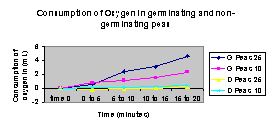
Graph: Consumption of Oxygen for Germinating Peas and Dry Peas at 10oC and 25o C.

Questions:

            1. In this activity, you are investigating both the effect of germination versus non-germination and warm temperature versus cold temperature on respiration rate. Identify the hypothesis being tested in this activity.
The hypothesis being tested in this activity is that the germinating peas in a water bath of 25 o C will have a higher respiration rate than the other vials.

2. This activity uses a number of controls. Identify at least three of the controls, and describe the purpose of each control.

One control is each vial had the same volume. This showed that the volume of the vial did not effect respiration rate. Another control was the vial with beads alone. The beads carried out no respiration. The final control was the 10 minute equilibration period. This allowed the contents of the vials to carry out respiration for a short period of time before they were completely immersed in the water.

  3.Graph the results from the corrected difference column for the germinating and dry peas at both room temperature and at 10oC.

4. Explain the relationship between the amount of oxygen consumed and time.

As time increased oxygen consumption increased.

5. From the slope of the four lines on the graph, determine the rate of oxygen consumption of germinating and dry peas during the experiments at room temperature and at 10o C.

Condition Show Calculations Rate in mL O / minute
Germinating peas at 10oC 2.3-1.5=.8/5 .16mL O2  /minute
Germinating peas at room temperature 4.6-3.1/5 .3mL O2  /minute
Dry peas at 10oC (.1)/5= .02 mL  O2  /minute
Dry peas at room temperature (.2-0 )/5= .04 mL O 2 /minute

    6. Why is it necessary to correct the readings from the peas with the readings from the beads?

The beads carried out no cellular respiration. The peas did. Changes in atmospheric pressure could have caused changes in respiration rate and correcting the readings provided the most accurate results under the given conditions.

7. Explain the effect of germination versus non-germination on pea seed respiration.

Germination causes a higher rate of respiration than the non-germinating peas.

8. Graph the predicted results through 45o C. Explain your prediction.

As the temperature increased cellular respiration increased, but after a certain temperature the respiration rate will start to go down. The peak is the optimal temperature.

9. What is the purpose of KOH in this experiment?

KOH removes carbon dioxide formed during cellular respiration.

10. Why did the vial have to be completely sealed around the stopper.

The stopper was completely sealed to prevent water from entering the respirometer.

11. If you used the same experimental design to compare the rates of respiration of a 25g. reptile and a 25 g. mammal at 10oC what results would you expect? Explain your reasoning.

The mammal would carry out a higher rate of cellular respiration. This is because the mammal maintains a constant temperature that is higher than the temperature of the cold blooded reptiles that will have a temperature of 10 C.

12. If respiration in a small mammal were studied at both room temperature 21 o C and 10oC what results would you predict? Explain your reasoning.

The rate of cellular respiration would be higher at 21 degrees C because the 10 degrees C temperature could cause the overall body of the mammal temperature to drop the most.

13. Explain why water moved into the respirometers’ pipettes.

Water moved into the pipettes because oxygen was being consumed and allowed water to move only partially into the pipette.

14. Design an experiment to examine the rates of cellular respiration in peas that have been germinating for 0, 24, 48, and 72 hours. What results would you expect? Why?

I would use the same format using respirometers to measure the cellular respiration rate of the peas. The peas that had been germinating for 72 hours would have a higher respiration rate because they have a higher energy demand.

Error Analysis:
Several factors could have caused inaccurate results in this experiment. First, not maintaining a constant temperature in the water bath could have caused inaccurate results. Also moving the vials in the water after the experiment began could have caused inaccurate results. Putting your hands in the water bath while the vials were in the water could have caused inaccurate results. Allowing the peas to come into contact with the KOH could have also caused inaccurate results. Finally not having the same amount of cotton in each vial could have caused an error in the results.

Conclusion:
In this experiment the vial with just germinating peas had the greatest consumption of oxygen. This is because germinating peas carried out a more rapid process of cellular respiration than the non-germinating peas. The beads carried out no cellular respiration. The non-germinating peas require less energy than the germinating peas so the dry peas carry out a slower process of cellular respiration. This in turn caused less oxygen to be consumed in the vials with non-germinating peas than the vials with germinating peas. The higher temperature caused cellular respiration to occur at a higher rate which in turn caused a greater consumption of oxygen.

BACK