Chapter 40 AP Intro to Systems Objectives


Chapter 40     Introduction to Animal Structure & Function
Objectives
Functional Animal Anatomy: An Overview
1. Define bioenergetics.
2. Distinguish between anatomy and physiology. Explain how functional anatomy relates to these terms.
Body Plans and the External Environment
3. Explain how physical laws constrain animal form.
4. Explain how the size and shape of an animal’s body affect its interactions with the environment.
5. Define tissue.
6. Distinguish among collagenous fibers, elastic fibers, and reticular fibers.
7. From micrographs or diagrams, correctly identify the following animal tissues, explain how their structure relates to their functions, and note examples of each type.
a. Epithelial tissue
b. Connective tissue
i.  Loose connective tissue
ii. Adipose tissue
iii. Fibrous connective tissue
iv. Cartilage
v.  Bone
vi. Blood
c. Muscle tissue
i.  Skeletal (striated) muscle
ii. Cardiac muscle
iii. Smooth muscle
d. Nervous tissue
i.  Neuron
Introduction to the Bioenergetics of Animals
8. Describe the basic sources of chemical energy and their fate in animal cells.
9. Define biosynthesis.
10. Define metabolic rate and explain how it can be determined for animals.
11. Distinguish between endothermic and exothermic animals.
12. Describe the relationship between metabolic rate and body size.
13. Distinguish between basal metabolic rate and standard metabolic rate. Describe the major factors that influence energy requirements.
14. Describe the natural variations found in the energy strategies of endotherms and ectotherms.
Regulating the Internal Environment
15. Distinguish between regulators and conformers for a particular environmental variable.
16. Define homeostasis. Describe the three functional components of a homeostatic control system.
17. Distinguish between positive and negative feedback mechanisms.
18. Define thermoregulation. Explain in general terms how endotherms and ectotherms manage their heat budgets.
19. Name four physical processes by which animals exchange heat with their environment.
20. Discuss the role of hair, feathers, and adipose tissue in insulation.
21. Explain the role of vasoconstriction and vasodilation in modifying the transfer of body heat with the environment.
22. Describe animal adaptations to facilitate evaporative cooling.
23. Describe thermoregulatory mechanisms utilized by endothermic invertebrates.
24. Explain how ectotherms and endotherms may acclimatize to changing environmental temperatures.
25. Explain the role of heat-shock proteins in helping cells to cope with severe temperature changes.
26. Define torpor, hibernation, estivation, and daily torpor.


BACK


Chapter 41 AP Obj Animal Nutrition


Chapter 41    Animal Nutrition
Objectives
Nutritional Requirements of Animals
1. Compare the bioenergetics of animals when energy balance is positive and when it is negative.
2. Name the three nutrition needs that must be met by a nutritionally adequate diet.
3. Distinguish among undernourishment, overnourishment, and malnourishment.
4. Explain why fat hoarding may have provided a fitness advantage to our hunter-gatherer ancestors.
5. Explain the role of leptin in the regulation of fat storage and use.
6. Define essential nutrients and describe the four classes of essential nutrients.
7. Distinguish between water-soluble and fat-soluble vitamins.
Overview of Food Processing
8. Define and compare the four main stages of food processing.
9. Compare intracellular and extracellular digestion.
The Mammalian Digestive System
10. Describe the common processes and structural components of the mammalian digestive system.
11. Name three functions of saliva.
12. Compare where and how the major types of macromolecules are digested and absorbed within the mammalian digestive system.
13. Explain why pepsin does not digest the stomach lining.Explain how the small intestine is specialized for digestion and absorption.
14. Explain how the small intestine is specialized for digestion and absorption.
15. Describe the major functions of the large intestine.
Evolutionary Adaptations of Vertebrate Digestive Systems
16. Relate variations in dentition and length of the digestive system to the feeding strategies and diets of herbivores, carnivores, and omnivores.
17. Describe the roles of symbiotic microorganisms in vertebrate digestion.
BACK


Build a Bug


Build-a-Bug


Introduction:

Most adult insects have the following characteristics:

    1. A body divided into three parts (head, thorax and abdomen)
    2. Three pairs of legs
    3. Usually one pair of antennae and a pair of compound eyes (a few exceptions to these characteristics are found)
    4. Usually two pairs of wings (absent in many insects such as lice, fleas, ants; flies have one pair of wings)

There are approximately 30 orders of insects. Choose one of the insects from these orders.

INSECT ORDERS

Click on the link to learn more about the characteristics of that order. There are links to specific insects on each page.  Visit the Field Guide Index to see a listing of all insects featured in the Field Guide.

Objective:

Students will build biologically correct insects in order to learn insect structure and adaptations.

Materials:

Any non-food item such as cardboard, egg cartons, clay, wire, felt, Styrofoam, pipe cleaners, nylon stockings, pipe cleaners, paint, glue, string, etc.

Guidelines:

  1. Your model must be an INSECT (i.e. no spiders, mites, ticks, centipedes, or millipedes, please). Note: Your insect does not have to live in the United States.
  2. Your model must be between 6-12 inches long, and sturdy.
  3. Be accurate when building your model (appropriate proportions, true color and form, etc.).
  4. The more detail your model has, the better.
  5. A written description must accompany your model and include:
  • The common name of the insect
  • The name of the order to which it belongs
  • A brief description of the insect’s habitat
  • Where the insect is located geographically
  • At least 2 interesting, and unique facts about the insect you have modeled (i.e. “it has 6 legs and 3 body segments” doesn’t count)
  • Your name and address on model description

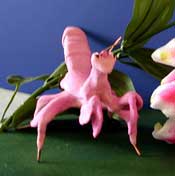
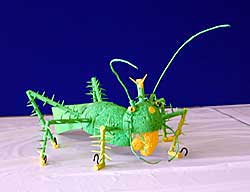
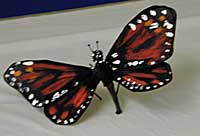
Examples of Models:


Spiny Katydid Monarch
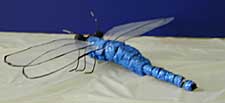
Dragonfly Damselfly Luna Moth
Walking Stick Grasshopper Yellow jacket
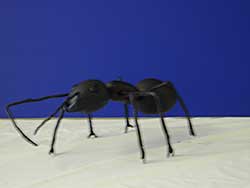
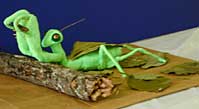
Atlas Moth Carpenter ant Praying Mantid