Bullfrog Skeletal Reconstruction


Bullfrog Skeleton Reconstruction


Introduction:

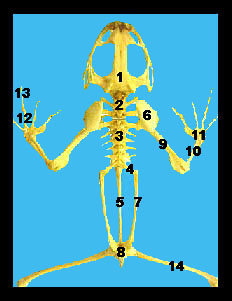
The skeleton of the frog consists chiefly of bony and cartilaginous elements.  The functions of a skeleton include providing support for the body,  protection of delicate internal organs and attachment surfaces for muscles.  In vertebrates, the axial skeleton consists of the skull, vertebral column, sternum (breast bone) and ribs (which are not present in amphibians).  The vertebral column of frogs is made up of 10 vertebrae, the first of which (called the atlas) articulates with the base of the skull.  The atlas is the only cervical vertebra in the frog.  The next seven vertebrae are abdominal vertebrae, which is the large sacrum with two strong transverse processes that join with the ileum.  The last vertebra is the long and highly modified urostyle.  Note:  Most vertebrates have a tail supported by caudal vertebrate, but frogs and toads are atypical in that they lack any tail and are therefore called anurans (“tail less amphibians”).


Lab_9b-17a  

1. Skull
2. Axis Cervical vertebrae)
3. Abdominal vertebrae
4. Cervical Vertebrae
5. Urostyle
6. Scapula
7. Ilium
8. Ischium
9. Humerus
10. Radio-ulna
11. Carpals
12. Metacarpals
13. Phalanges
14. Femur


The appendicular skeleton includes the limbs and the pectoral and pelvic girdles that support them.  In most vertebrates the forelimbs consist of three major bones — the humerus, radius and ulna, along with the smaller bones of the hand (carpals, metacarpals and phalanges).  Note that in the frog the radius and ulna have become fused into a single bone, the radio-ulna.  Likewise, the hindlimbs consist of three major bones — the femur, tibia and fibula, along with the smaller bones that make up the feet (tarsals, metatarsals and phalanges). Once again, in frogs and toads the tibia and fibula have become fused into a single bone, the tibio-fibula.  The pectoral girdle consists of four pairs of bones (the suprascapula, scapula, coracoid, and clavicle).  The last three pairs are connected to the sternum.  In frogs, the pelvic girdle, which supports the hindlimbs, is formed by the fusion of the ilium, ischium and non-ossified pubis.  Each femur fits into a socket on the pelvic girdle called an acetabulum.  Note that the pelvic girdle and limb structure are well adapted for giving a powerful, synchronous thrust of both hind limbs in swimming and jumping

Objective:

By reassembling an amphibian skeleton, students will learn the bones and modifications of a vertebrate.

Materials:

Dermestid beetles, small aquarium with air-vented lid,  dermestid bedding, food, & water supply, freeze-dried bullfrogs, tweezers, small container with lid for bones, 20% H2O2, thin piece of wood, paints, and glue.

Procedure:

  1. Place the freeze dried frog into a small aquarium of dermestid beetles.
  2. Leave the frog skeleton in the aquarium for several days to several weeks until all flesh has been stripped from the skeleton.
  3. Carefully remove all bones from the aquarium and use forceps to carefully pull away any flesh that remains..
  4. Rinse the bones in running water thoroughly.
  5. Bleach the bone in 20% hydrogen peroxide solution until the bones appear white.
  6. Dry the bones and articulate them. (use the above diagram to help in the arrangement of the bones.)
  7. Bones should be mounted on a thin piece of wood.
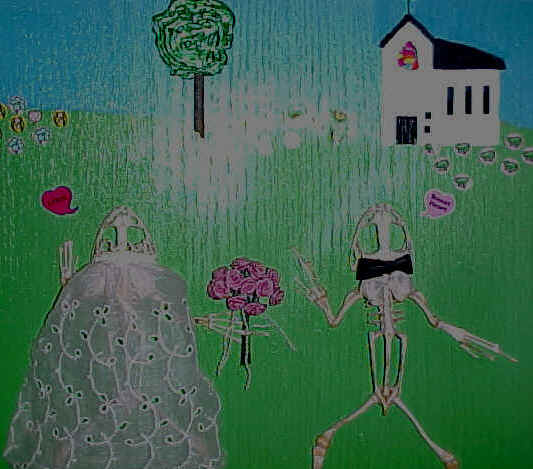
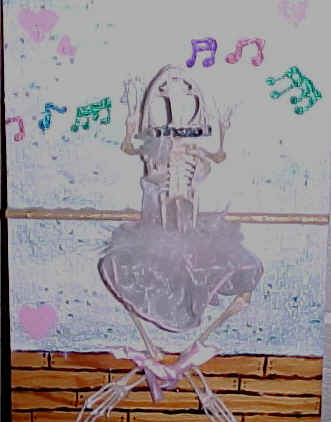
  8. You may be creative and place your frog in a scene of your choosing — playing football or basketball, swimming in a pond, practicing ballet, etc.

Examples:


Biology Second Semester

Biology I Second Semester

Updated May 2007

Week of January 8 assignments:
Read & outline chapter 10 on Nucleic Acids; PowerPoint: Nucleic Acids & protein Synthesis; chapter 10 outline due

Week of January 14 assignments:

Chapter 10 study guide; Lab: Strawberry DNA; Chapter 10 TEST on Nucleic Acids; Read & outline chapters 8 & 12 on genetics

Week of January 21 assignments: 

PowerPoint on genetics; Monohybrid crosses & ratios; Chapter 8 outline due

I have a Dream!  Martin Luther King Holiday

Week of January 28 assignments:
Lab: Karyotyping; Work genetics problems; Notes on genetic disorders; genetics review; TEST on chapters * & 12 genetics; Read chapters 13 & 14 on evolution

Week of February 3 assignments:
Cover section 14.1 and chapter 15 on Charles Darwin & natural selection; Lab: Natural Selection in Peanuts

Week of February 11 assignments:  Interims
study guide on evolution; TEST on chapters13 & 14 Evolution; Read & outline chapter 18 on Taxonomy; PowerPoint notes on taxonomy; Peanut lab write up due

Week of February 18 assignments:
Practice taxonomic keying; Complete taxonomy notes; Chapter 18 TEST on Taxonomy; Read & outline chapters 24 & 25 on bacteria & viruses

Monday Holiday — President’s Day!

Parent-Teacher Conference!

Week of February 25 assignments:
Notes on Sponges & Cnidarians; Assign Invertebrate drawings; study guide & take online quiz; Continue Koch’s lab

Week of March 3 assignments: 

Complete Virus notes; Virus model due; Chapter 25 outline due; TEST on Bacteria & Viruses; Handout & worksheet on plant unit

Week of March 10 assignments: 

Cover nonvascular plants, angiosperms, & gymnosperms

End of Third Nine weeks

   Biology I

Spring Break March 17 – 21!

Week of March 24 assignments:

Plant worksheet due; review for plant test; *UNIT TEST on Plants; Assign ecosystem collage; Start answering ecology unit worksheet


Week of March 31 assignments:

Work on and finish ecology unit worksheet; review for ecology test; TEST on Ecology; Read & outline chapter 35 on Sponges & Cnidarians

Good Friday, April 4th!


Week of April 7 assignments:    

Ecosystem Collage due!; Notes on Sponges & Cnidarians; study guide; Test on Chapter 35 Sponges & Cnidarians; read & outline chapter 36 on Round & Flat worms

Week of April 14 assignments:  Interims
Notes on worms; Chapter 36 outline due; read & outline chapter 37 on Mollusks & Annelids; notes on mollusks & annelids

Biology End-of-Course Exam on Wednesday April 16th and Thursday April 17th!

Week of April 21 assignments:
study guide & take online echinoderm test; Lab: Starfish Dissection; read & outline chapters 41 &42 on fish & amphibians; notes on fish; Scientist/Career Report due!

Week of April 28 assignments: 

Dissect earthworm; *TEST on chapters 36 & 37 Worms & Mollusks; Read & outline chapters 38 & 39 on Arthropods & Insects; Start notes on arthropods

Week of May 5 assignments:
Notes on Insects; review for arthropod test; TEST on chapters 38 & 39 Insects & other Arthropods; read & outline Chapter 40 on Echinoderms

Click frog for jokes

Week of May 12 assignments:
Notes on Echinoderms; Dissect starfish; TEST on Chapter 40 Echinoderms; Read & outline chapters 41 & 42 on fish & amphibians; Assign vertebrate/invertebrate project

Week of May 19 assignments:   Graduation May 23!
Notes on reptiles, birds, and mammals; Read chapters 44 & 45 on birds  mammals; UNIT TEST on Vertebrates; Vertebrate/Invertebrate Project due!; semester Test review

Final Exams  Start  Next Week-   Don’t Forget to study!!!

Week of May 26 assignments:  

Semester Exams Tuesday, Wednesday, & Thursday; Textbooks due!

Final Exams  Start  –   Don’t Forget to study!!!

End of Fourth Nine weeks

    Biology I

Enjoy your summer!  

Arthropod

Arthropods
Non-Insects

Characteristics

  • Makes up 3/4’s of all animal species
  • Includes insects, spiders, scorpions, millipedes, centipedes, crabs, lobsters, & crayfish
  • Arthropod means “jointed foot”
  • Jointed appendages (legs, antenna, mouthparts)
  • Segmented body with paired appendages on each segment)
  • External exoskeleton made of chitin (carbohydrate) & protein for protection & support
  • Exoskeleton has 3 layers — outer waxy layer repels water, middle layer has calcium for extra strength, & inner layer has flexible joints for movement
  • Protostomes (blastopore develops into mouth)
  • Coelomate (mesoderm-lined body cavity)
  • Ventral nervous system
  • Open circulatory system
  • Specialized sensory receptors & high degree of cephalization
  • Have simple or compound eyes & segmented antenna

Movement & Growth

  • Muscles occur in bundles & are attached to inside of exoskeleton on each side of joints
  • Exoskeleton must be periodically molted (shed) for organism to grow
  • Molting called ecdysis
  • Molting hormone released & causes epidermal cells to secrete enzymes that digest & loosen inner exoskeleton
  • New exoskeleton secreted by epidermal cells flexible at first & must harden so arthropod not vulnerable to predators so often stay in hiding after molting
  • Arthropods go through numerous molts


Butterfly Molting Pupal Case

Evolution & Taxonomy

  • Evolved from ancestral arthropod with many body segments each with appendages
  • Modern arthropod segments fused into larger, specialized structures called tagmata
  • Four subphyla
    * Trilobita – extinct trilobites
    * Crustacea – shrimps, lobsters, crayfish, & barnacles
    * Chelicerata – spiders, scorpions, & ticks
    * Uniramia -centipedes, millipedes, & insects

Subphylum Trilobita
Characteristics

  • Includes extinct trilobite
  • Marine
  • Have a head & segmented trunk with one pair of legs on each segment
  • Breathe through gills
  • Single pair of antenna


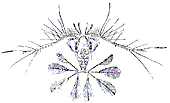
TRILOBITE

Subphylum Chelicerata
Characteristics

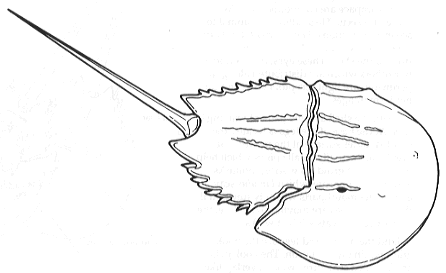
  • Includes 2 classes — Xiphosura (horseshoe crab) and Arachnida (spiders, ticks, scorpions, & mites)
  • Have a cephalothorax (fused head& thorax) and abdomen
  • No antenna
  • Simple eyes or ocelli
  • Have 6 pairs of jointed appendages:
    * Chelicerae – claws or fangs (1 pair)
    * Pedipalps – used for feeding, walking, sensing, transferring sperm (1 pair)
    * Walking legs – movement (4 pairs)
  • Horseshoe crab
    * Marine
    * Not true crabs
    * Fanglike pincers or chelicerae
    * Use book gills to breathe


HORSESHOE CRAB

  • Arachnids
    * Terrestrial
    * Eight legs
    * Chelicerae or fangs with venom
    * Ocelli
    * No antenna
    * Breathe by book lungs &/or tracheal tubes
  • Spiders
    * Arachnid that feeds on insects (carnivores)
    *  Have oval shaped, unsegmented abdomen
    * Cephalothorax connected by narrow waist to abdomen
    * Have 8 simple eyes or ocelli
    * Fangs pierce prey, inject poison, & suck out body fluids
    * Pedipalps on head help sense prey & move it to the mouth
    * Open circulatory system
    * Ostia are openings in heart where blood reenters
    * Body cavity called hemocoel
    * Hemocycanin is oxygen-carrying pigment in blood
    * Have silk glands to make silk & spinnerets to release silk for webs
    * Breathe by book lungs & tracheal tubes
    * Malpighian tubules filter wastes & reabsorb water


GARDEN SPIDER

  • Ticks & Mites
    * Parasitic arachnid
    * Fused cephalothorax & abdomen
    * Most abundant arachnid
    * Need blood meal to molt
    * Mites can damage fruit & feed on dead skin at base of hair follicle
    * Ticks carry Lyme disease & Rocky Mountain Spotted Fever


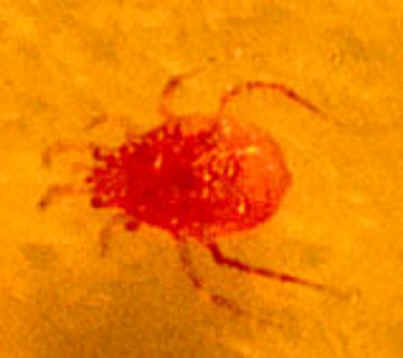
MITE

TICK


  • Scorpions
    * Have a cephalothorax & long segmented abdomen curled over body
    * Prefer dry regions
    * Poisonous stinger on end of abdomen
    * Breathe through book lungs
    * Pedipalps modified into claws
    * Nocturnal predators


SCORPION

Subphylum Crustacea
Characteristics

  • Marine members include shrimp, lobster, copepods, barnacles, & crabs


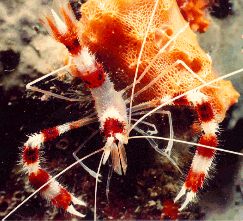
CRAB SHRIMP


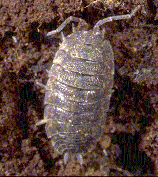
  • Terrestrial crustaceans called isopods include pillbugs & sowbugs


PILLBUG

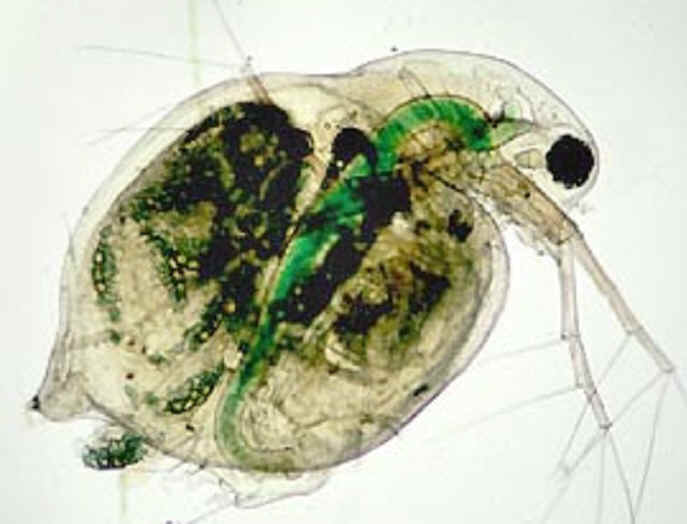
  • Freshwater members include crayfish & Daphnia (water fleas)


DAPHNIA

  • All have jaws are mandibles for chewing or tearing
  • Known as mandibulates
  • Have cephalothorax & abdomen
  • Have 10 pairs of jointed appendages
  • Breathe through gills
  • Barnacles
    * Marine
    * Sessile crustaceans that live in limestone case
    * Filter plankton with 12 appendages called cirri


BARNACLE

  • Isopods (pillbugs & sowbugs)
    * Live on land in dark places
    * Have 7 pairs of legs on a segmented body
    * Can roll into a ball for protection
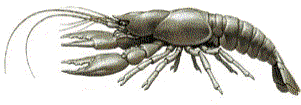
  • Crayfish
    * Cephalothorax made of 13 fused segments & covered by protective carapace
    * Antennules located on head help in balance, touch, & taste
    * Statocysts – balancing organs at the base of antennules
    * Antenna on head used for touch & taste
    * Maxillae – paired mouthparts that move side to side to tear food
    * Maxillipeds – help hold food
    * Chelipeds – claws used to capture food & for protection
    * Mandibles – jaws that move up & down to crush  food
    * Walking legs – 8 pairs used for movement
    * Swimmerets – under abdomen to swim, gas exchange, & protect eggs/young
    * Abdomen ends in flat segment called telson with flat uropods on each side


CRAYFISH

               * Compound eyes on stalks
* Chitinous teeth in stomach grind food
* Wastes leave through anus
*  Green glands filter wastes from blood & help with salt balance
*  Open circulatory system with heart to pump blood to gills & body cells
* Ostia – one way valves allowing blood from dorsal sinus to reenter heart
* Gills attached to walking legs
* Separate sexes that mate in fall & sperm stored in seminal receptacle
*  Eggs attach to swimmerets of female & hatch in several weeks

  • Copepods
    * Largest group of crustaceans
    *  Make up most of the marine plankton
    *  Serve as food for many marine animals
    *  Found in freshwater, marine, & moist terrestrial environments


COPEPOD

Subphylum Uniramia
Characteristics

  • All have antenna, mandibles (jaws), & unbranched appendages
  • Includes 3 classes — Chilopoda (centipedes), Diplopoda (millipedes), & Insecta
  • Known as myriapods
  • Most are terrestrial
  • Exoskeleton prevents desiccation (water loss)

Class Chilopoda

  • Terrestrial centipedes
  • Flattened body with longer legs for fast movement
  • Have 1 pair of legs per body segment
  • Predators
  • Mandibles & maxilla for chewing prey (insects & earthworms)
  • Claw-like appendages or pincers on 1st body segment that can inject venom
  • Can coil up for defense


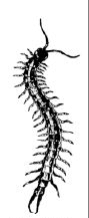
CENTIPEDE

Class Diplopoda

  • Terrestrial millipedes
  • Have 2 pairs of legs per body segment
  • Rounded body
  • Scavengers on decaying vegetation as they burrow through soil
  • Roll into ball when threatened & spray noxious chemical containing cyanide


MILLIPEDE

BACK


Bacteria Culturing Activity


Where are Bacteria Found?  


Introduction:

They’re everywhere. Bacteria are the huddled masses of the microbial world, performing tasks that include everything from causing disease to fixing nitrogen in the soil. The estimated number of bacteria on Earth is five million trillion trillion — that’s a five with 30 zeroes after it.  When people think of bacteria, they likely first consider the nasty ones that cause disease, but the bacteria inside all animals combined — including humans — makes up less than one percent of the total amount. By far the greatest numbers are in the subsurface, soil and oceans.


Objectives:

  1. To take bacterial swabs from various places in the school
  2. To inoculate a petri dish with a bacterial culture
  3. To count bacterial colonies
  4. To determine what kind of environmental conditions influence bacterial growth

Materials: 

Petri dish,  pencil,  incubator, hot water bath, nutrient agar, thermometer

Procedure (Part A): Petri Dish Preparation

  1. Set up a hot water bath at 95oC.
  2. Loosen the caps and place nutrient agar bottle in hot water bath until agar liquefies. (Agar melts above 95oC and remains liquid until cooled to about 45oC.)
  3. Remove agar bottles and allow the agar to cool to about 50-55oC.
  4. Partially lift the cover of the petri dish and pour about 15-20ml of liquid to cover 2/3 of the plate surface.
  5. Lower the lid of the dish and gently swirl the plate to spread the media over all the bottom surface.

  1. Repeat step 5 to fill other petri dishes.
  2. DO NOT MOVE the covered plates until the nutrient agar has solidified.
  3. Once the plates are solidified, turn the plates upside down (presents condensation from getting on the agar surface).
  4. From this moment on, keep the plates upside down (condensation will disappear) in a dark, dust-free place in the room until ready to add bacteria. If plates will not be used for several days, refrigerate them.
  5. Check plates for contamination before proceeding to Part B. Discard contaminated plates.

Materials: 

Petri dish with nutrient agar, sterile cotton swabs, permanent marker, index card with sample location, pencil,  incubator


Procedure (Part B): Collecting Bacteria

  1. Choose an index card to determine your sample location
  2. Turn the petri dish upside down, and using your marker, place your initials, date and sample location along the bottom perimeter of the dish, NOT in the middle
  3. Get your sterile Q-tip, being very careful not to touch the side that will collect your sample. Go to your assigned area and quickly swab and return with your sample! (Sample locations included door handles, water faucets, desk tops, etc.)
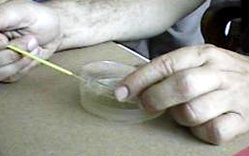
  4. Carefully open your dish just enough to lightly rub your Q-tip in a zigzag pattern across the agar.

  1. Draw what your dish looks like in Figure 1 and record the number of bacterial colonies, if any, present on the agar surface in table 1
  2. Place your petri dish upside down in the incubator to be examined again in a few days.
  3. Recheck the plates after 1 day, 2 days, and 5 days. Count and record the number of bacterial colonies on each plate. If the plate is  completely covered with bacteria, record “lawn” in the data table.
  4.  Ignore “fuzzy” appearing colonies that are actually fungi!

Example of Bacterial Colonies on Plate

Data:

Reminder — Fuzzy Colonies = Fungus not Bacteria

Figure 1 

Day 1                Day 2                Day 5


Table 1:   Number of Colonies on petri dish 

    Location:
Day Number of Colonies


Analysis:  

  1. Compare the number of colonies on your plate on day 5 with the plates collected from other locations. Did any of the areas show a greater number of bacteria? How many clusters of bacteria appear to be growing in each petri dish?
  2. Which petri dish had the most growth? The Least?
  3. Why was the agar sterilized before this investigation?
  4. What kind of environmental conditions seem to influence where bacteria are found?
  5. How can you control the amount of bacteria that you will encounter?
  6. Check the plate that the teacher has had open, exposed to the air for several days. What did you observe and why?

Dispose of the petri dishes carefully!  Place them in a biohazard bag to be autoclaved.

BACK


Bacteria PPT Questions

Bacteria
ppt Q’s

Prokaryote & Eukaryote Evolution

1. What does our current evidence tell us about the evolution of prokaryotes and eukaryotes?


2. About how long ago did eukaryotes evolve from prokaryotes?

3. Name the 2 theories of cellular evolution.


4. Explain the infolding theory.


5. What does endosymbiosis mean?


6. Explain the endosymbiotic theory of cell organelle formation.


7. Name 2 organelles thought to have arisen in this way.


Prokaryotic & Eukaryotic Cells

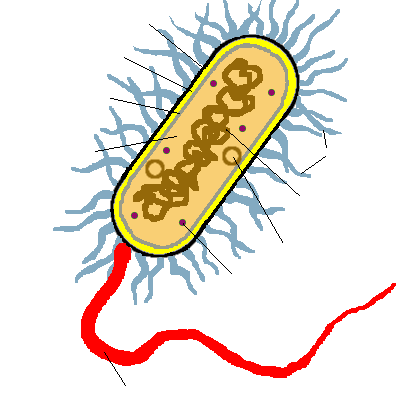
8. Label the parts of this prokaryotic cell.
9. Name several structures that are found in eukaryotic, but NOT prokaryotic cells.


10. What type of cells are the most numerous on Earth?

11. What are the most common type of prokaryotic cells?

12. How old are the earliest prokaryotic fossils?

Classification of Life

13. Name the 3 domains and the organisms found in each.

     a.

     b.

     c.

14. ______________ are found in harsh environments.

15. Give 3 examples of harsh environments in which Archaebacteria can be found.


16. What group is referred to as the true bacteria?

17. What photosynthetic member is in this group?

Characteristics of Bacteria 

18. What must be used to view prokaryotic cells?

19.What cell structures are lacking in prokaryotes?

20. Do bacteria have ribosomes like other types of cells?

21. Describe the genetic material of the bacteria.  be sure to tell where it is found.


22. What surrounds the cytoplasm of bacterial cells?

23.What surrounds the outside of all bacterial cells?

24. Cell walls of true bacteria contain ____________________.

25. Some bacteria have a sticky ____________ around the cell wall to attach to __________ or other bacteria.

26. Besides the circular chromosome, where else can DNA be found inside a bacterial cell?

27. What is the size of most bacterial cells?

28. Compare the size of bacteria to the tip of a pin.


29. ____________ of the bacterial cell membrane are called _______________.

30. What two cellular processes can take place in mesosomes?


31. At what pH do bacteria do best?

32. Most bacteria act as ________________. Why is this so important?


33. How can some bacterial be harmful?  Give an example.


34. name two other important uses for bacteria.


35. What does motile mean?

36. Motile bacteria may have one or more ______________ for movement.

37. Flagella attach to the bacteria by the ___________ ___________.

38. The basal body attaches to the cell through both the cell _________and the cell ___________.

39. What protein makes up bacterial flagella?

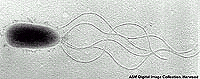
40. Tell how these types of bacteria differ from each other:

     a. Monotrichous

     b. Lophotrichous

     c. Amphitrichous

     d. Peritrichous

41. What type of bacteria is this?
42. What are bacterial pili?


43. How do pili compare to flagella in size?

44. Give three functions of pili.

     a.

     b.

     c.


Bacterial Shapes

45. Name and describe 5 shapes used to classify bacteria. 

     a.

     b.

     c.

     d.

     e.

46. What does each of these prefixes tell you about the bacteria’s shape:

     a. Diplo-

     b. Strepto-

     c. Staphylo-

47. Sketch the shape of these bacteria:

     a. Coccus

     b. Bacillus

     c. Spirillium

     d. Diplococcus

     e. Streptococcus

     f. Staphylococcus

     g. Diplobacillus

48. E. coli is classified as what shape bacteria?

Bacterial Kingdoms

49. How do the cell walls of Archaebacteria differ from the true bacteria?

50. How do the cell membranes differ?

51. Are the ribosomes the same?

52. Are the gene sequences the same?

53. Do Archaebacteria require oxygen?

54. How is there environment different from true bacteria?


55. What are they commonly called?

56. How many groups make up the ancient bacteria and name them?


57. Methanogens live in _____________ environments. What is lacking in this environment?

58. How do methanogens get their energy?


59. Name 3 environments in which methanogens are found.


60. How do methanogens help cows?


61. How did the methanogens get their name?


62. The __________ ___________ live in very salty environments.

63. How do they get their energy?


64. Name two bodies of water in which halophiles are found.


65. ______________ live in extremely hot environments.

66. Thermophiles that also live in acidic conditions are called _____________________.

67. Name 3 habitats in which thermophiles are found.


Kingdom Eubacteria

68.  Most true bacteria are ____________ and come in ________ basic shapes. Name the shapes.


69. Do eubacteria require oxygen?

70. How are they identified?

71. When was gram staining developed?

72. Describe Gram staining.


73. What colors do bacterial cell walls stain?

74. Describe the cell wall of Gram positive bacteria.


75. What color do they stain?

76. Can Gram positive bacteria be treated with antibiotics?

77.Name 5 Gram positive bacteria and tell how they’re used or what they may cause.

     a.

     b.

     c.

     d.

     e.

78. Describe the cell walls of Gram negative bacteria.


79. Are antibiotics effective against Gram negative bacteria?

80. Some photosynthetic Gram negative bacteria make ___________ instead of oxygen.

81. How do some Gram negative bacteria help plants?

82. Where can Rhizobacteria be found and what is their job?


83. _____________ are parasitic bacteria carried by ticks that may cause ___________ disease or _____________ _______________ _____________ fever.

84. Cyanobacteria are Gram ____________ and carry on ______________ to make food.

85. What is the common name for cyanobacteria?

86. What two main pigments do cyanobacteria contain?

87. What colors are cyanobacteria?


88. _______________ is a cyanobacterium that grows in chains.

89. Name the specialized structures on cyanobacteria that help fix nitrogen.

90. How do cyanobacteria cause eutrophication?


91. Spirochetes are Gram __________ bacteria that move by ___________.

92. Describe the motion of spirochetes.

93. Do all spirochetes need oxygen?

94. Spirochetes may be _______________, _______________, or symbiotic.

95. What are enteric bacteria? Give an example.


96. _______________ is an enteric bacterium that causes food poisoning.

97. How do chemoautotrophic bacteria get their energy?


Nutrition, Respiration, and Reproduction

98. Name and describe 4 modes of nutrition in bacteria.

     a.

     b.

     c.

     d.

99. Explain each of the following methods of respiration in bacteria.

     a. Obligate Aerobes-


     b. Obligate Anaerobes-


     c. Facultative Anaerobes-


100. Anaerobes carry on ______________ to release energy from food, while aerobes carry on ____________ _______________.

101. Bacteria reproduce asexually by what method?

102. Before the cell can divide, what must happen?

103. Is binary fission a slow or fast process?

104. How do the new cells compare with each other after binary fission? What are they called?


105. Bacteria can reproduce sexually by ________________.

106. Describe how conjugation occurs.


107. What is the function of pili in conjugation?

108. How do the new cells compare to each other after conjugation?

109. When can bacteria produce spores and why?


110. What are the spores called?

111. How long can an endospore survive?

112. Why are endospores such a problem in health care facilities and in the canning industry?


113. Bacteria can genetically change by _________________ and ____________________.

114. Disease-causing bacteria may become ______________ _____________ when they genetically change.

115. How do bacteria transform?


116. Describe transduction in bacteria and give an example of a product made by bacteria using this method.


Pathenogenic Bacteria

117. What are pathogens?


118. Pathogens may cause ____________.

119. What are toxins?


120. What is the difference between endotoxins and exotoxins?


121. Name a bacterium that produces each type of toxin.

     a. Endotoxin?

     b. Exotoxin?