Energy in Food Writeup

Energy in Food Write Up

Introduction:

Use your lab and your textbook to locate and include the following information in your introduction.

  • What organisms are capable of making their own food?
  • What process do they use to do this?
  • Where do these organisms get their energy for food-making?
  • This energy is captured with the help of what pigment?
  • This energy is stored in what organic molecules?
  • Where exactly in the organic molecules is the energy stored and so it can be used again later? (Hint: Energized electrons form these and then energy is released again when they are broken.)
  • What process takes place in plants & animals to release energy?
  • What gas is required for the process to occur?
  • When foods are “burned” in our bodies, where is the energy being released from? Where did this energy originally come from?
  • What is the usable form of energy for our cells?
  • Define calorimetry and explain how it can be used to measure energy stored in chemical bonds of food.

Hypothesis:

  • Write a statement explaining that calorimetry can be used to detect the amount of energy stored in the chemical bonds of foods.

Materials:

In sentence form, write a statement listing the materials required for this lab.

Procedure:

  • In paragraph form, write the procedures for completing this lab.

Results:

  • Draw and fill in table 1 showing the results of burning
  • Draw and fill in table 2 showing your data analysis for nut calorimetry
  • Write out and answer the questions on the lab. Remember to write and underline the question, but do NOT underline the answer.

Conclusion: (Write in paragraph form.)

  • Restate your hypothesis.
  • Tell how were you able to measure the amount of energy in each nut
  • Did all three nuts contain the same amount of food energy? Explain by giving data from your experiment..
  • Explain why some foods contained more energy than others
  • Tell where this energy originally come from and how it got into the nuts
  • Explain any errors you might have made in lab that could have affected your results

Ecology Worksheet Bi


Ecology


Chapter 19 Ecology


1. What is ecology?

2.. What is the most significant environmental change that is taking place today?

3. What is the sixth mass extinction?

4. What is the ozone layer, what does it do for earth, & what is happening to this layer & why?

5. Explain the green house effect.

6. List in order the ecological levels of organization.

7. What is the biosphere, tell where it extends, & tell why it is so important?

8. Define ecosystems & give an example.

9. What is a community?

10. What is a population?

11. What is the simplest ecological level of organization?

12. Use figure 19-6 on page 364 & explain how Lyme disease affects organisms in an ecosystem.

13. What are biotic factors & list them?

14. What are abiotic factors & list them?

15. Are abiotic factors constant? Explain by giving an example.

16.Organisms are able to survive within a _____________ range of environmental conditions.

17. Graphing the range of conditions an organism can survive is called a __________________ Curve.

18.When organisms adjust their tolerance to abiotic factors, the process is called ___________.

19. Explain how dormancy & migration help organisms escape unsuitable environmental conditions.

20. Define niche

Chapter 20 Populations

21. What is meant by population size?

22. What is meant by population density?

23. Name the 4 processes that determine whether a population will grow, shrink, or remain the same size.

24. What are immigration & emigration & how do they affect population size?

25. What are limiting factors & give some examples?

26. What affect does inbreeding have on small populations?

Chapter 21 Community Ecology

27. Interactions among species are called ____________.

28. List the 5 types of symbioses.

29. Define predator & prey & give an example.

30. What is mimicry & give an example?

31. Define these terms — parasitism, parasite, host, ectoparasites, & endoparasites.

32. When niches overlap, _________________________ results so more than one species are using the limited resources.

33. What are mutualism & commensalism?

34. Define succession.

35. Name & describe the 2 types of succession.

36. What are pioneer species & why are they important?

37. What is a climax community?

Chapter 22 Ecosystems

38. What are producers & what is another name they may be called?

39. What is biomass, why is it important, how does it accumulate, & what is its rate of accumulation called?

40. What is gross primary productivity?

41. All heterotrophs would be ______________________.

42. Define & give an example of each of these consumers — herbivore, carnivore, omnivore, detritivores, & decomposer.

43. Whenever one organism eats another, ________________ is transferred.

44. What are trophic levels?

45. All _______________ belong to the first trophic level, _______________ belong to the
Second trophic level, and the _______________ of herbivores belong to the third trophic level.

46. How many trophic levels do most ecosystems contain?

47. What is a food chain & what always begins the chain?

48. Write an example of a food chain.

49. What is a food web?

50. Draw a diagram of a food web that has at least 4 food chains.

51. Approximately __________ percent of the total energy consumed at one trophic level is incorporated into the organisms in the next level.

52. In terms of energy passage, why will there be many more producers than herbivores and fewer large carnivores than small carnivores?

53. What are biogeochemical cycles, why are they important, & name three?

54. Draw & explain the water cycle. Be sure to color your diagram!

55. List & define the 3 important processes in the water cycle.

56. What is groundwater?

57. What 2 processes form the basis for the carbon cycle?

58. Draw & explain the carbon cycle. Be sure to color your diagram!

59. What purpose do decomposers have in the carbon cycle?

60. Why do organisms need nitrogen?

61. Draw & explain the nitrogen cycle. Be sure to color your diagram!

62. Organisms such as ________________ convert _________________ gas into compounds
Called __________________ during the process known as________________________.

63. Bodies of dead organisms contain mainly in _________________ & _________________.

64. Wastes such as __________________ & _______________ also contain nitrogen that must be recycled.

65. ________________ recycle nitrogen from dead organisms & wastes by changing it into
______________________. The process is called ________________________.

66. Explain nitrification & denitrification.

67. Plants can absorb ____________________ from the soil, but animals obtain nitrogen from
their ___________________.

68. Define biome.

69. List the 7 major biomes.

70. Why don’t mountains belong to any one biome?

71. What is a tundra, where are they found, & tell organisms that would be found tree?

72. What is permafrost & how does it control plant life in the tundra?

73. What are taigas, where would they be found, & what type of vegetation dominates this area?

74. Plants & animals in the taiga must be adapted for long __________________, short
_________________, & ________________________ soil.

75. List some typical animals of the taiga.

76. What characterizes a temperate deciduous forest?

77. Deciduous forests have 4 pronounced ____________________ with _________________
summers, _______________________ winters, and__________________________ than the
taiga.

78. Grasses dominate what biome?

79. Why aren’t there more trees on grassland?

80. What are grasslands called in each of these areas —– North America, Asia, South America, & southern Africa?

81. Describe the soil of grasslands. Because of the soil condition, how is much of the grassland used?

82.What type of animals would be found on grassland?

83. What periodically occurs across grasslands & why doesn’t it kill the grasses?

84. Approximately how much rainfall do deserts receive each year?

85. Are deserts always hot? Explain.

86. What adaptation must desert vegetation make to survive?

87. What types of adaptations must desert animals make to conserve water?

88. What are savannas & where are the best known savannas found?

89. Describe temperature & rainfall on savannas?

90. Name some herbivores & carnivores found on a savanna.

91. Describe the rainy season on a savanna & tell what special problem this poses for the animals & plants there?

92. What are tropical rain forests & where are they located?

93. Rain forests have stable, year-round ______________________ & abundant ____________.

94. Plants in the rainforest must constantly compete for what?

95. Explain the canopy & epiphytes in a rainforest.

96. Describe the plant & animal life in a rainforest.

97. Tropical rainforests are more commonly called _____________________.

98.Oceans cover what percent of the earth’s surface?

99. Draw, label, & color the zones found in the ocean (see figure 22-16). Define each term labeled on your drawing.

100. What are intertidal organisms exposed to & name some intertidal organisms.

101. Which zone in the ocean is the most productive & why?

102. What small organisms are found in the neritic zone & why are they important?

103. In tropical areas, what forms in the neritic zone & why are they important?

104. Which ocean zone has fewer species & why?

105. Where does most of the earth’s photosynthesis take place?

106. Animals in the aphotic zone feed on what?

107. Organisms living deep in the ocean must cope with what 2 problems? Give some examples of deep ocean animals & explain how they adapt to their environmental problems.

108. What are volcanic vents, when were they discovered, & describe the organisms found there?

109. What are estuaries & what special problem do estuary organisms face?

110. What characterizes freshwater zones & give several examples?

111. Name & describe the 2 categories into which ecologists divide lakes 7 ponds?

112. Define a river & describe organisms found there?

Chapter 23 Environmental Science

113. Where do upwellings occur & how are they helpful?

114. Describe the event known as El Nino & tell its effect.

115. Describe chlorofluorocarbons effect on the ozone layer & tell why we should be concerned?

116. Define biodiversity.

117. Define conservation biology & use migratory birds to explain an example of this new discipline?

118. Sometimes species are reintroduced into areas. Use the Gray wolf & describe its reintroduction in the United States.

119. Where are the Everglades located & what is being done to restore them?

BACK


Chromosomes & Human Inheritance Notes


Chromosomes & Human Inheritance
All Materials © Cmassengale


Chromosomes:

  • Thomas Sutton in 1902 proposed that genes are located on chromosomes
  • Called the Chromosome Theory of Inheritance
  • For most of the life of the cell, chromosomes are too elongated to be seen under a microscope & are  called chromatin
  • Before a cell gets ready to divide, each chromosome is duplicated & condenses into short structures
  • Each chromosome is composed of a single, tightly coiled DNA molecule 
  • The two DNA strands are homologous (duplicates) and are held together by the centromere
  • While they are still attached, the duplicated chromosomes are called sister chromatids

  • Fertilization restores the diploid chromosome number and paired condition for alleles in the zygote
  • Chromosomes can be categorized as two types — autosomes & sex chromosomes
  • Autosomes are non-sex chromosomes that are the same number and kind between sexes
  • Sex chromosomes determine if the individual is male or female
  • Sex chromosomes in the human female are XX and those of the male are XY
  • Males produce X-containing and Y-containing gametes; therefore males determine the sex of offspring

Chromosome Numbers:

  • All animals have a characteristic number of chromosomes in their somatic or body cells called the diploid (or 2n) number.
  • The gametes or sex cells (egg & sperm)  contain half the number of chromosomes as a body cell; known as the haploid number (n) of chromosomes


Diploid (2n) numbers of Organisms
Man 46
Dog 78
Fruitfly 8
Crayfish 200
Corn 20


Pedigrees:

  • Also called a family tree
  • Squares represent males and circles represent females
  • Horizontal lines connecting a male and female represent mating
  • Vertical lines extending downward from a couple represent their children
  • A shaded symbol means the individual possess the trait
  • Half-shaded symbols are carriers


Sex Linkage:

  • Thomas Hunt Morgan worked with fruit flies & confirmed that  genes were on chromosomes
    a. Fruit flies are cheaply raised in common laboratory glassware
    b. Females only mate once and lay hundreds of eggs
    c. Fruit fly generation time is short, allowing rapid experiments
  • Experiments involved fruit flies with XY system similar to human system
  • Besides genes that determine sex, sex chromosomes carry many genes for traits unrelated to sex
  • X-linked gene is any gene located on the X chromosome that are missing on the Y chromosome
  • X-linked alleles are designated as superscripts to X chromosome
  • Newly discovered mutant male fruit fly had white eyes


Mutant White-eyed  & Wild, Red-eyed 

  • Cross of white-eyed male with dominant red-eyed female yield expected 3:1 red-to-white ratio; however, all white-eyed flies were males
  • An allele for eye color on the X but not Y chromosome supports the results of the cross
  • Heterozygous females are carriers that do not show the trait but can pass it on
  • Males are never carriers but express the one allele on the X chromosome
  • Red-green color-blindness is X-linked recessive
  • In humans, another well-known X-linked traits is hemophilia (free bleeders that lack clotting factors in their blood)
  • One of the most famous genetic cases involving hemophilia goes back to Queen Victoria who was a carrier for the disorder and married Prince Albert who was normal
  • Their children married other royalty, and spread the gene throughout the royal families of Europe


Royal Pedigree


Example Sex-Linked Problems:

1. What are the results of crossing a colorblind male with a female carrier for colorblindness?


Trait:     Red-Green Colorblindness

Alleles:     XC    normal vision
Xc    colorblindness

XCXc       x    Xc Y

XC Y   Genotypes:    XCXC ,XCY, XCXc, XcY
XC XCXC XCY   Genotypic Ratio: 1:1:1:1
Xc XCXc XcY   Phenotypes:
normal vision female, normal vision male, female carrier, colorblind male


2. What are the results of crossing a colorblind male with a colorblind female?


Trait:     Red-Green Colorblindness

Alleles:     XC    normal vision
Xc    colorblindness

XcXc       x    Xc Y

Xc Y   Genotypes:       XcXc , XcY 
Xc XcXc XcY    Genotypic Ratio: 1:1 ratio
Xc XcXc XcY   Phenotypes:       colorblind female, colorblind male
   Phenotypic ratio:  1:1 ratio


Linked genes:

  • Each chromosomes has 1000’s of genes
  • All genes on a chromosome form a linkage group that stays together except during crossing-over
  • Some genes located on the same chromosome tend to be inherited together
  • Linked genes were discovered by Thomas Hunt Morgan while studying fruit flies
  • Linked alleles do not obey Mendel’s laws because they tend to go into the gametes together
  • Crosses involving linked genes do not give same results as unlinked genes

Chromosome Mapping:

  • Recombinants result from chromosome crossing over during prophase I of meiosis
  • Geneticists can use recombination data to map a chromosome’s genetic loci (position on a chromosome)
  • A genetic map lists a sequence of genetic loci along a particular chromosome
  • Alfred Sturtevant, a student of Morgan, reasoned that different recombination frequencies reflect different distances between genes on a chromosome
  • The farther apart genes are, the greater likelihood of crossing-over
  • The closer together two genes are, the less likely of crossing-over occurring
  • A map unit equals 1% recombination frequency
  • If 1% of crossing-over equals one map unit, then 6% recombinants reveal 6 map units between genes
  • To determine the frequency of recombinants, the following formula is used:
Number of recombinants x 100%
Recombination Frequency =   ———————————————
     Total Number of Offspring


  • Humans have few offspring and a long generation time so biochemical methods are used to map human chromosomes (Human Genome Project)

Chromosome Mutations:

  • Mutations are changes in genes or chromosomes that can be passed on to offspring
  • Mutations increase the number of variations that occur
  • Chromosomal mutations include changes in chromosome number and/or structure
  • Monosomy occurs when an individual has only one of a particular type of chromosome
  • Turner syndrome (X0) is an example of monosomy
  • Trisomy occurs when and individual has three of a particular type of chromosome
  • Examples of trisomy include Klinefelter’s Syndrome (XXY) and Down Syndrome or Trisomy 21 where the individual has three 21st chromosomes
  • Both monosomy & trisomy result when chromosomes fail to separate during meiosis; called nondisjunction
  • Monosomy and trisomy (aneuploidy) occur in plants and animals and may be lethal (deadly)
  • Polyploidy where the offspring have more than two sets of chromosomes occurs often in plants (3n, 4n …)
  • Environmental factors including radiation, chemicals, and viruses, can cause chromosomes to break causing a change in chromosomal structure
  • Inversion occurs when a piece of a chromosome breaks off & reattaches to the same place but in the reverse order
  • Translocation occurs when a chromosome segment breaks off & attaches to a different chromosome
  • Deletions occur when the end of a chromosome breaks off & is lost
  • Cri du chat syndrome (results in retardation & a cat-like cry) is due to a deletion of a portion of chromosome 5
  • Duplications occur when a section of a chromosome is doubled
  • Fragile X Syndrome caused by an abnormal number of repeats (CCG) results in retardation & long, narrow face becomes more pronounced with age

Gene Mutations:

  •  Change in genes caused by change in structure of the DNA
  • DNA bases may be substituted, added, or removed to cause gene mutation
  • When genes are added or removed, the mutation is called a frame shift mutation

Frame shift mutation

  • Adding or Removing genes is called a point mutation

point mutation

  • Sickle cell anemia (red blood cells are C-shaped so can’t carry as much oxygen) is an example of a gene mutation in African Americans

  • Tay-Sachs (a disorder where the nervous system deteriorates) is a fatal gene mutation in Jewish people of Central European Descent
  • Phenylketonuria or PKU occurs from the inability of a gene to synthesize a single enzyme necessary for the normal metabolism of phenylalanine and results in death


Class Data Table Sci Meth & Genetics

Table 2

Class Data on Right hand Width and Length (cm)

Class Period:

Student Gender
(M / F)
Hand Length (cm) Hand Width (cm)
1. M / F
2. M / F
3. M / F
4. M / F
5. M / F
6. M / F
7. M / F
8. M / F
9. M / F
10. M / F
11. M / F
12. M / F
13. M / F
14. M / F
15. M / F
16. M / F
17. M / F
18. M / F
19. M / F
20. M / F
21. M / F
22. M / F
23. M / F
24. M / F

Back

Darwin Events AP


Darwin Day Events
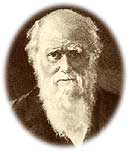
CHARLES DARWIN


Darwin Trivia Game Questions:


When was Charles Darwin born?
What was the name of the ship on which he was the naturalist?
What islands were the main source of his findings?
What was the complete title of his original book?
What famous American president shares the same birth date?
How long was his voyage scheduled to last?

“Darwin Trivia Game”
The Galapagos Islands

Adaptations of the Galapagos Finches
  The “Missing” Link

Darwin “Fortune” Cookies
Darwin only took with him a simple microscope on the Beagle to observe microscopic organisms.
When Darwin was sixteen, his father took him out of school because he felt that Charles was wasting time, and he sent him to Edinburgh University.
Charles Darwin was born on February 12, 1809 in Shrewsbury, England.
Darwin transferred to Cambridge to study the theology of the Church of England wanting to become an Anglican priest.
“Changes From Within”

Lyrics & music by:  Nicole Higham
Sung by:  Brett Rabeneck, Bradley Wise, & Carrie Steves

Changes From Within
Verse 1:
Once I read a book, and this is what it said,
That the Origin of Species, came from Darwin’s head.
He studied all the life, from some islands of the west,
and distinguished adaptations, and who survived the best.
He was much more successful than scientists before,
And his use of common logic, convinced them even more.
Chorus:
And it read:
You take two monkeys, and you put them to the test,
Check out their different habitats, and see nature at its best.
According to Darwin, a species can begin,
From an individual that changes from within.

Verse 2:
Natural selection, a theory he derived
Sys the strongest just get stronger while the weakest don’t survive.
So he published his ideas, he was sort of in a bind
There was another man, who wasn’t far behind.
Their ideas were the same, their timing coincided,
But Darwin finished first, and in the glory he delighted.

Verse 3:
About all of his theory, that I choose to sing about
Some people think it’s true, while others have their doubts.
To me it’s quite reasonable, to have either point of view
But think about it carefully, no matter what you do.
For starters think about that which, you really do believe
For me this includes a little story about Adam and Eve.

2nd Chorus:
I appreciate your patience, as an audience you’ve been kind
I bet this kind of song, wasn’t what you had in mind
I’ll leave you with this list of things that really matter most,
There’s life and love and happiness, but first the Holy Ghost.

Burying a Darwin Day Time Capsule

BACK